working at height offshore

Offshore Substation Work – Life on the Platform

Worker on offshore substation platform in high-visibility PPE, safety harness, and helmet, standing on yellow structure, renewable energy industry.
Offshore substation structure with worker visible on high platform, industrial renewable energy scene, highlighting scale and safety at sea.

A worker carries out inspection and maintenance duties on an offshore substation in the North Sea, operating the platform crane from the upper deck. These platforms are the electrical hub of a wind farm, stepping up the voltage generated by the turbine array before it travels to shore via export cable.

Working at height in this environment requires a specific combination of competency, access controls, and situational awareness. The yellow steelwork and open steel grating give a direct view of what day-to-day work on one of these structures actually looks like.

Explore more from this environment in my Wind Industry portfolio or the People gallery, or get in touch to discuss offshore photography commissions.

Safe Transfers Offshore – CTV to Platform Access

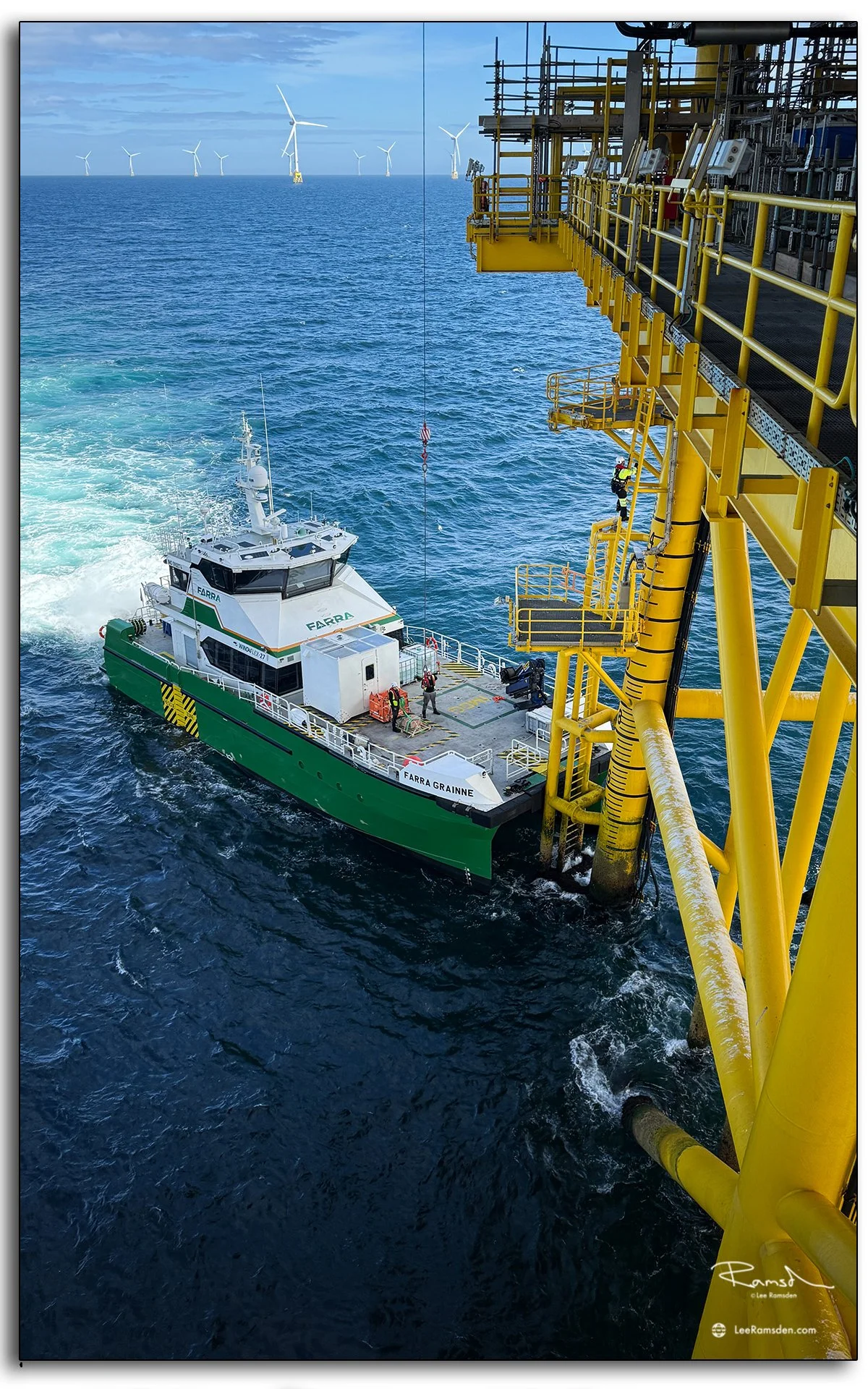
Crew transfer vessel pushed onto offshore wind platform boat landing, North Sea.
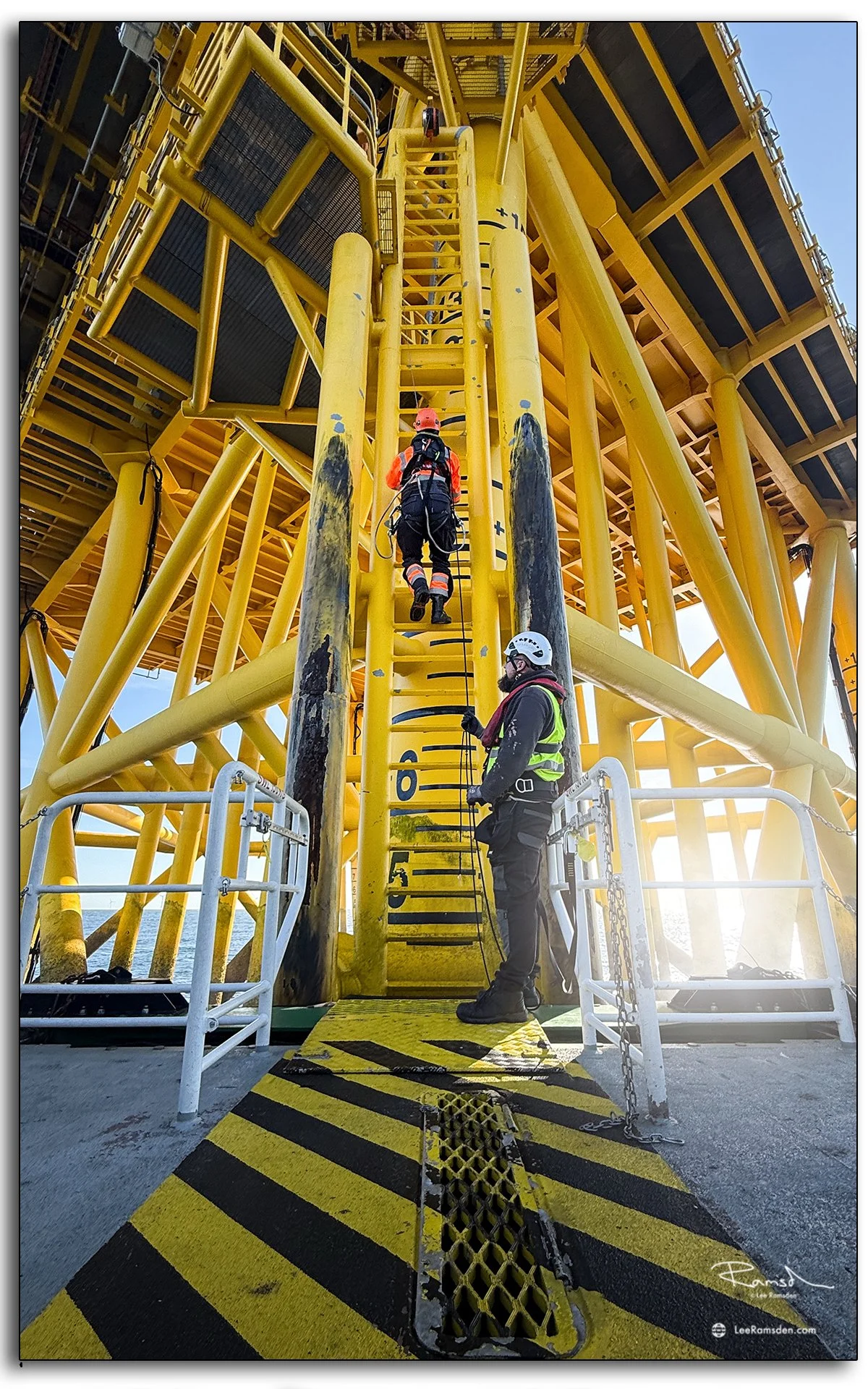
Offshore wind technician ascending boat landing ladder from CTV with self-retracting lifeline attached, North Sea.

The push-on transfer is the standard method of accessing offshore wind platforms by CTV. The vessel holds its bow against the boat landing fenders under engine power, maintaining position against wind and sea state while personnel transfer. It requires constant communication between the master, deck crew, and the person transferring, and the window to move can close quickly if conditions deteriorate.

The first image shows the CTV alongside the boat landing, fenders in contact and the vessel held on. The second captures the technician mid-climb, self-retracting lifeline clipped on, working up the ladder system to the platform deck above.

These transfers happen multiple times a day across every active offshore wind farm. They are routine, but the planning and discipline behind them is consistent: weather limits assessed, briefings completed, equipment checked, and clear signals between vessel and platform before anyone moves.

More from the Wind Industry portfolio and related posts: Offshore Substation at Dusk | Offshore Substation and Wind Turbine Views