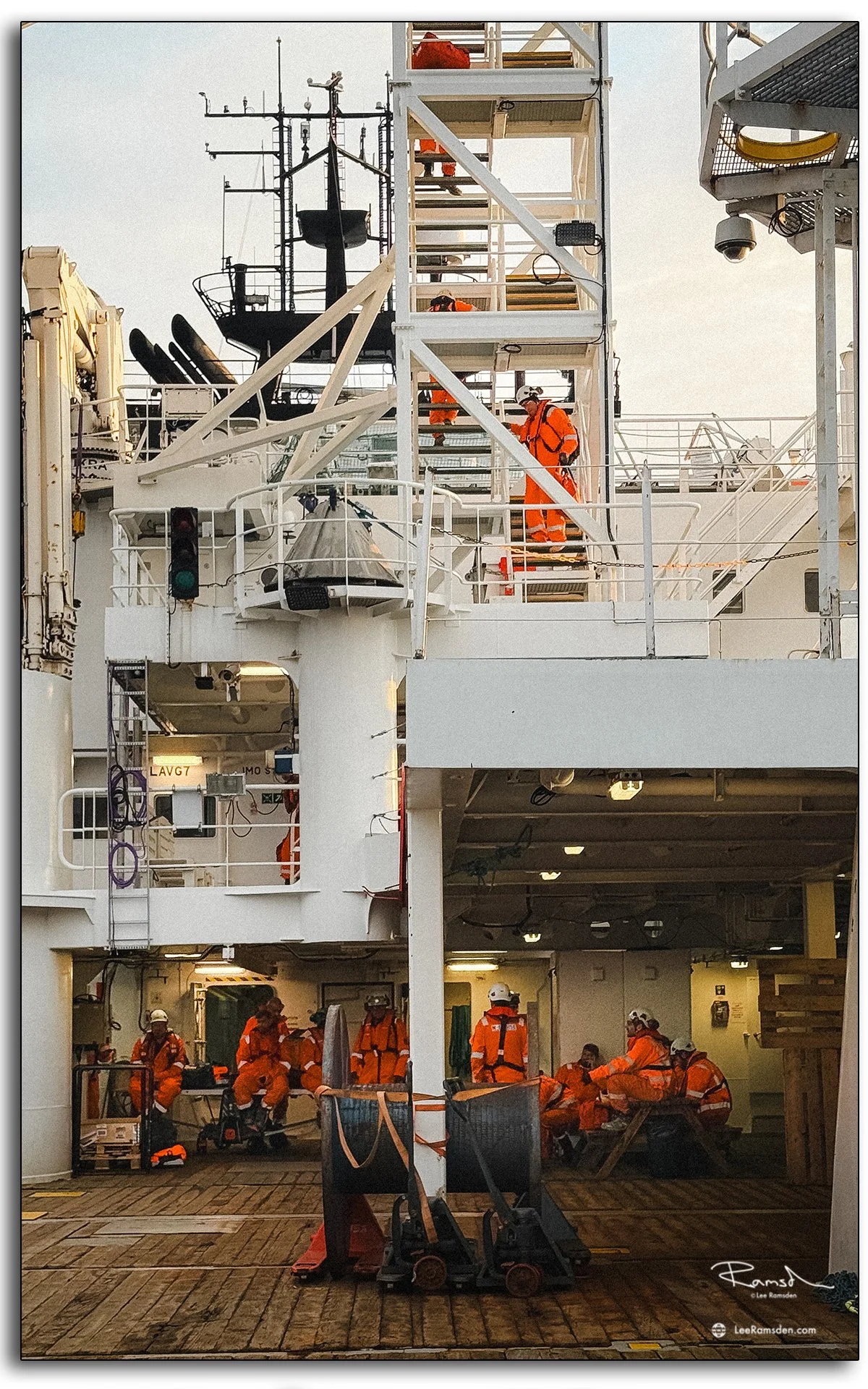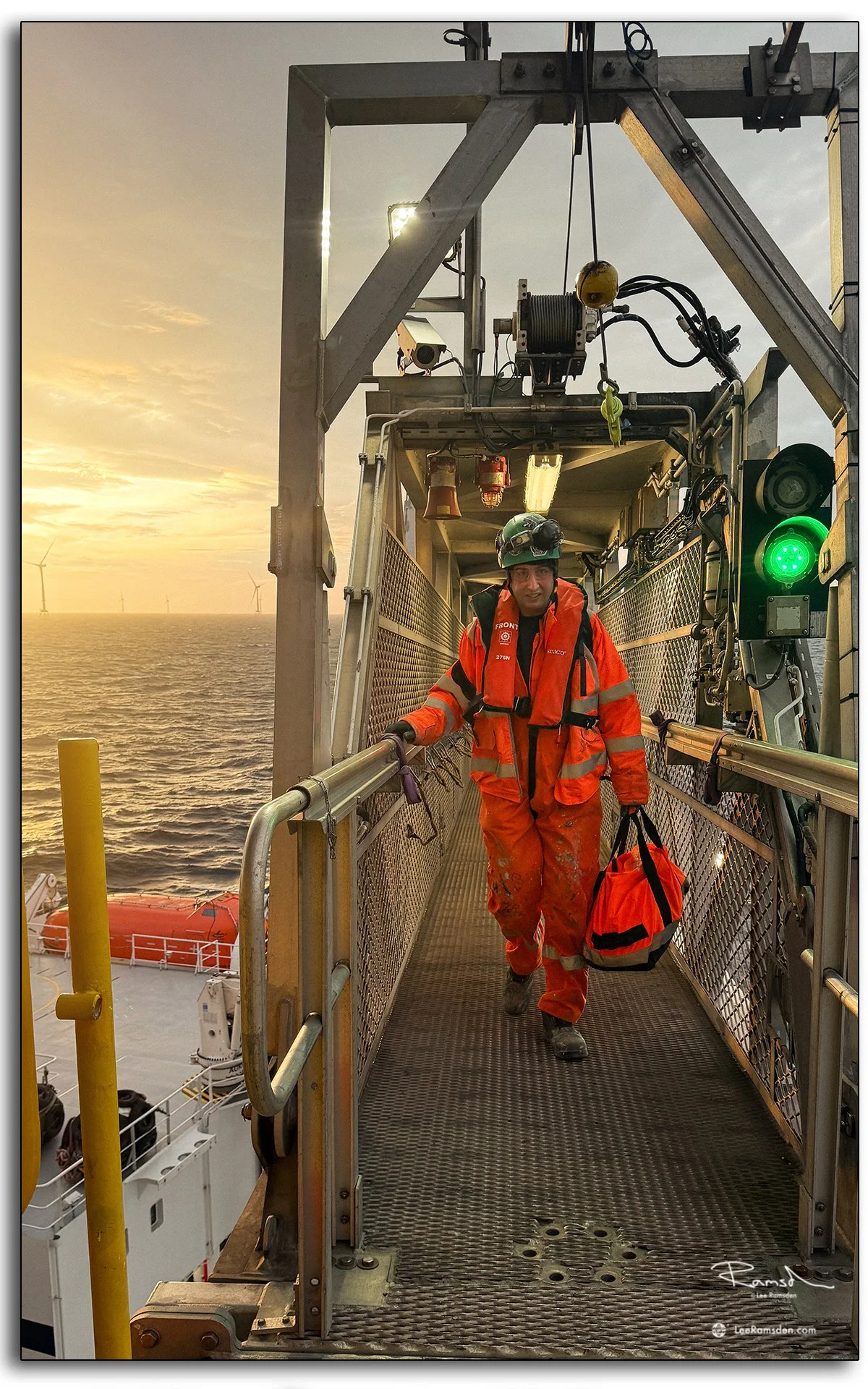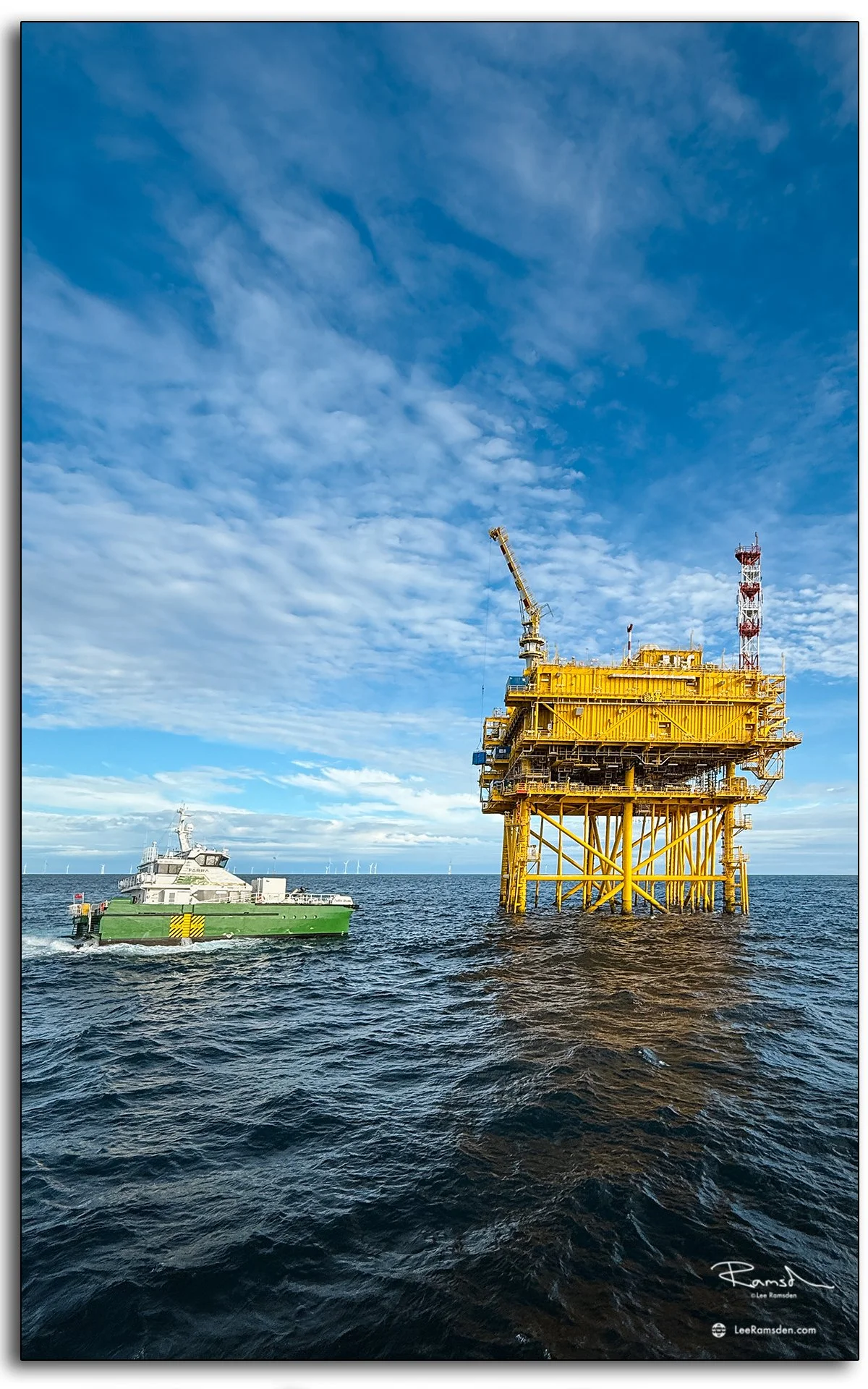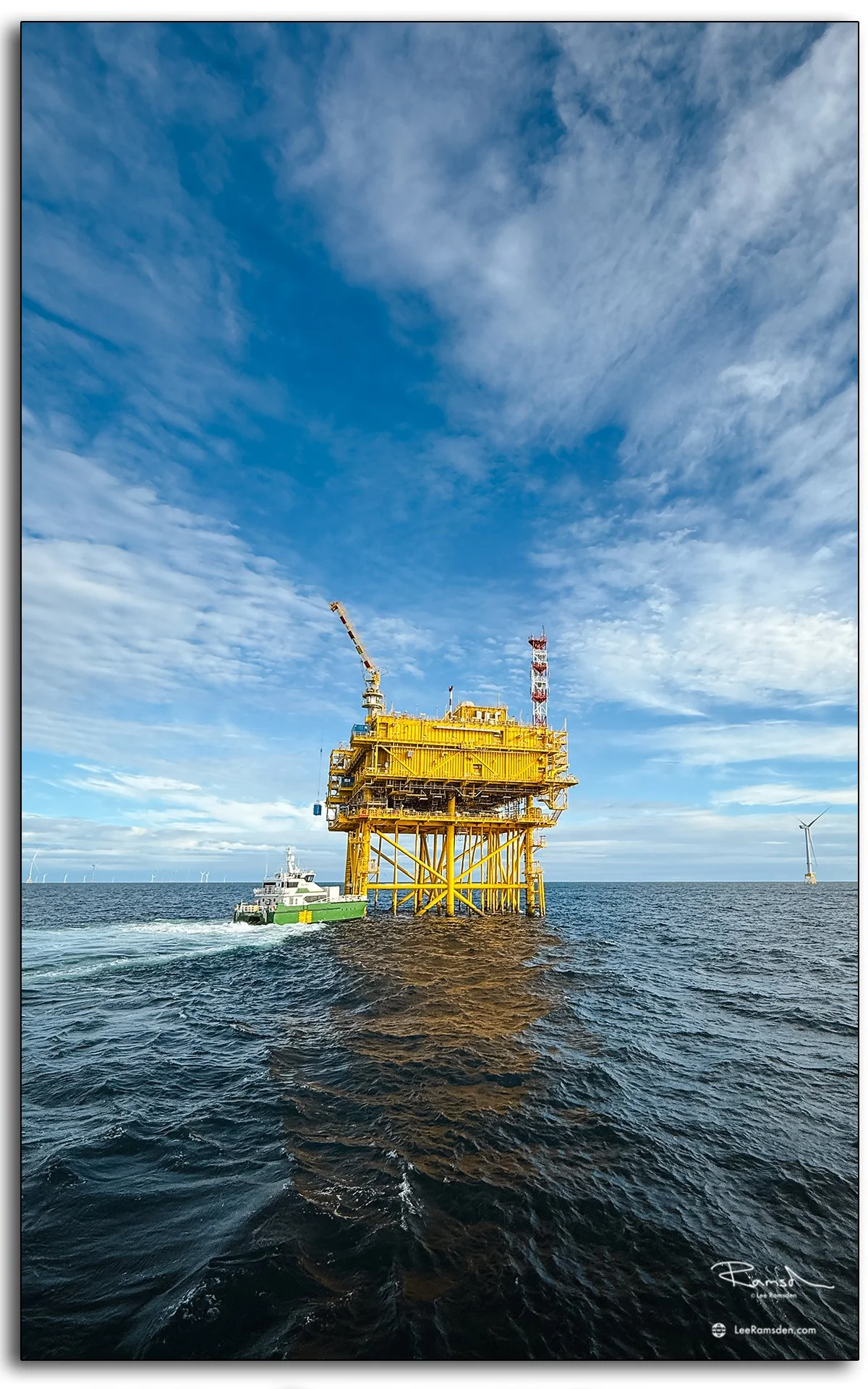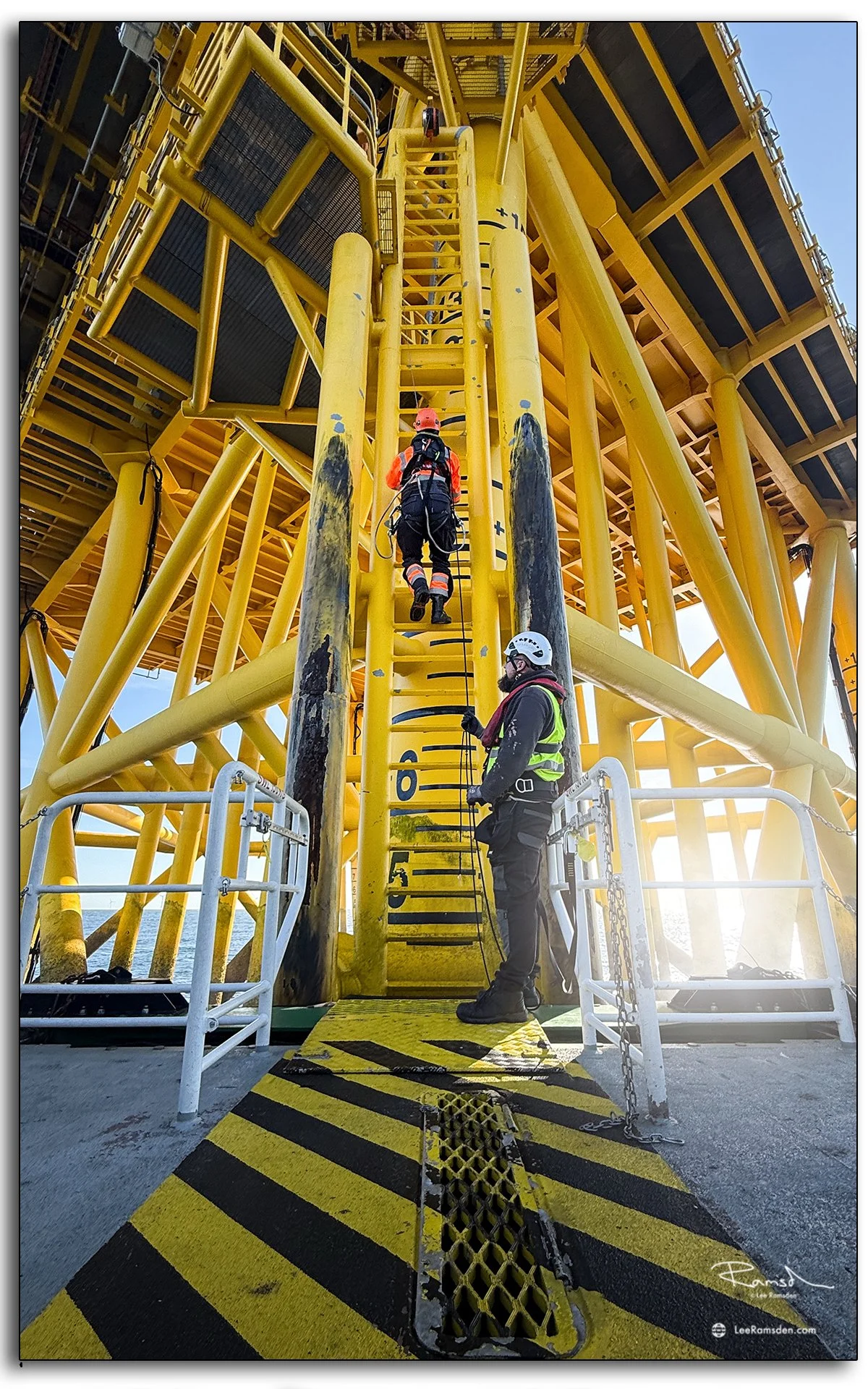
Offshore Substations in the North Sea

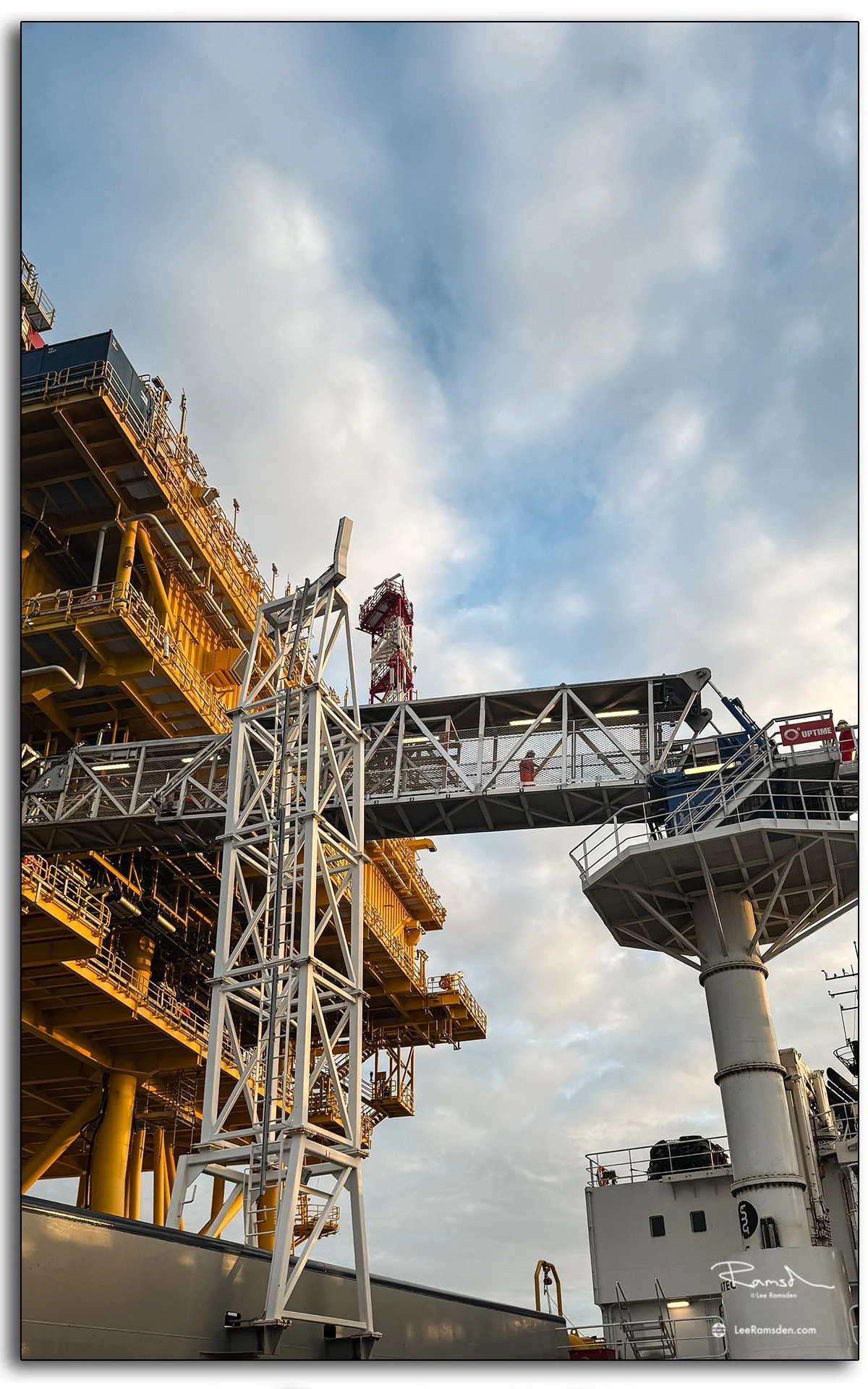
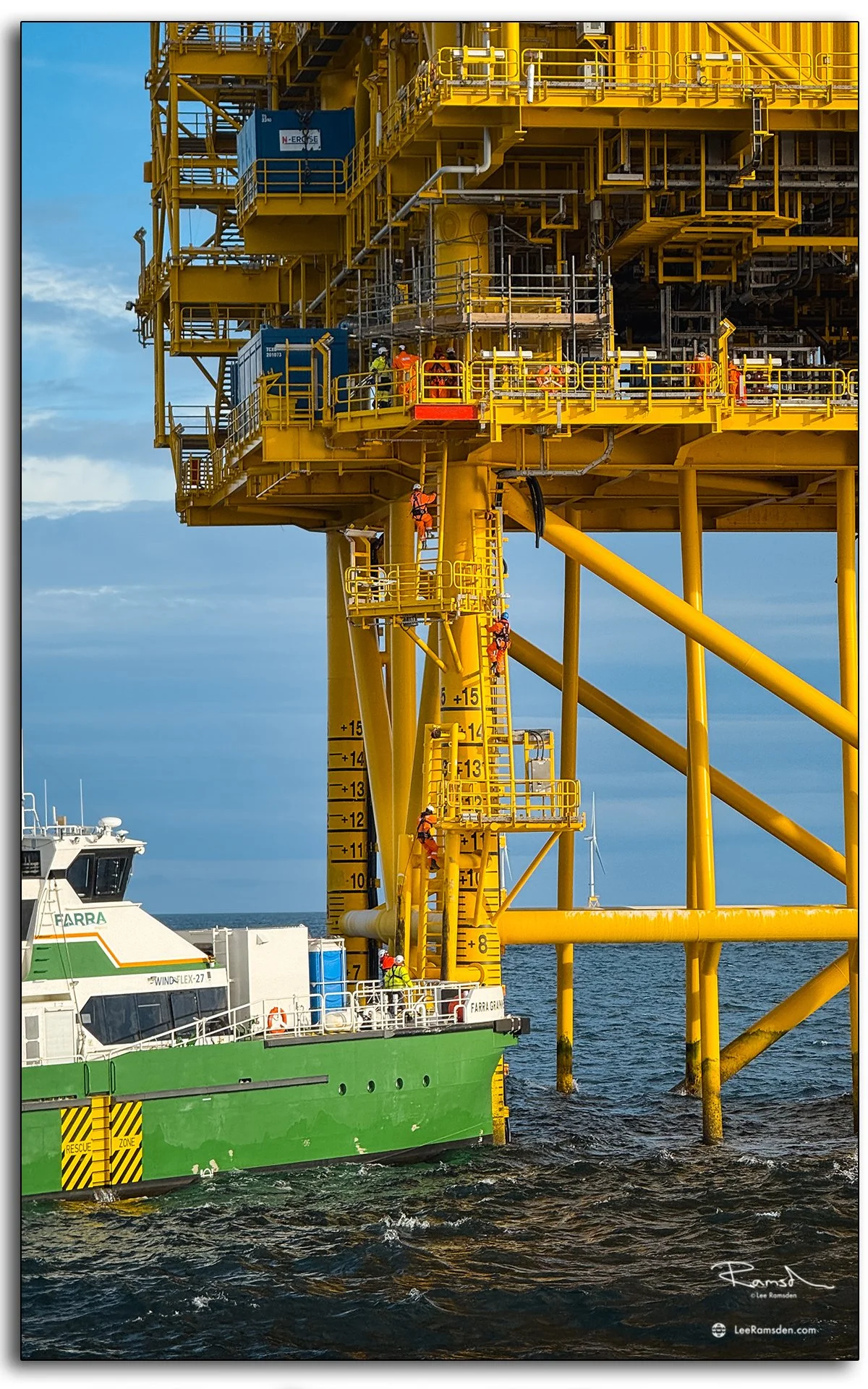
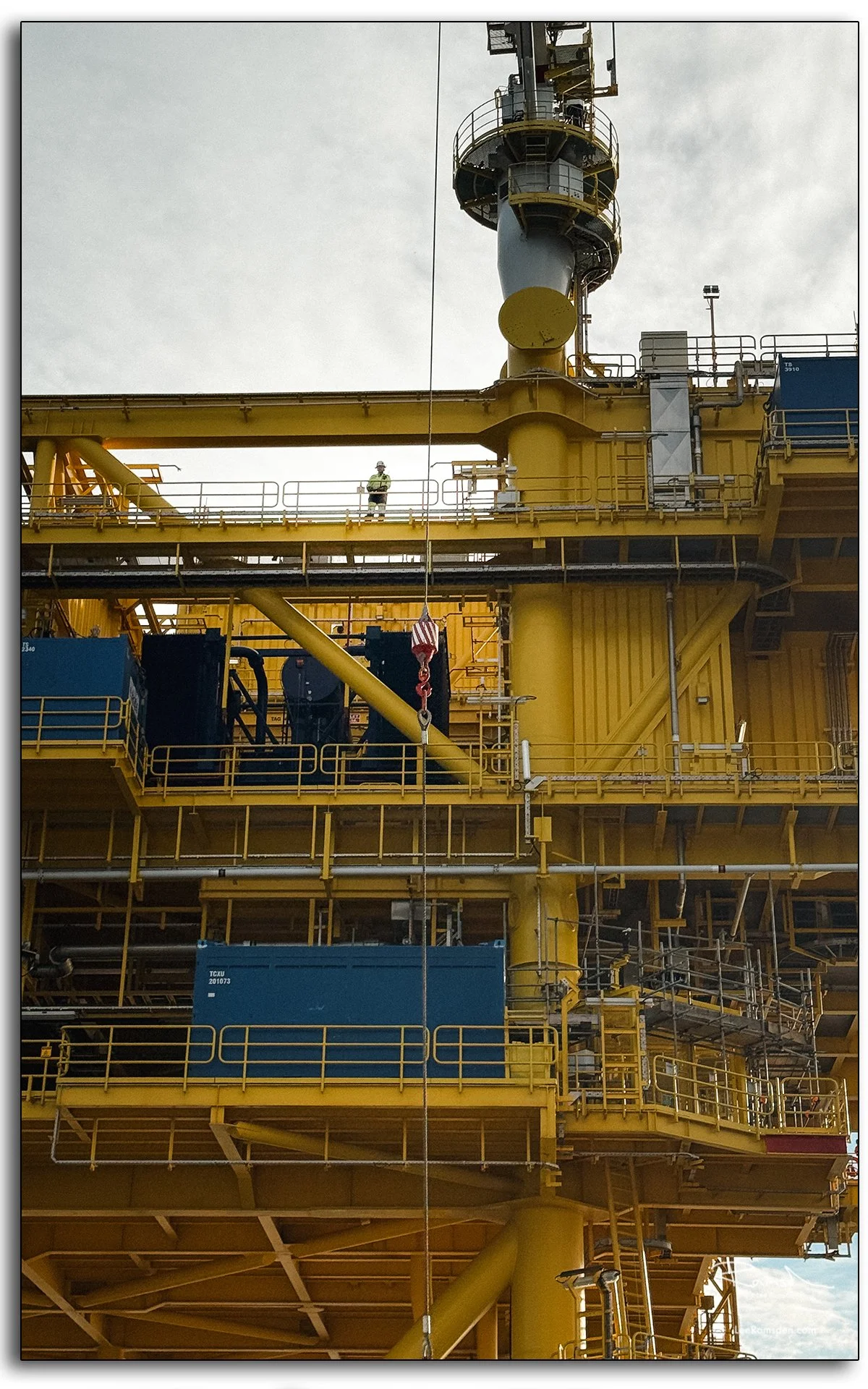
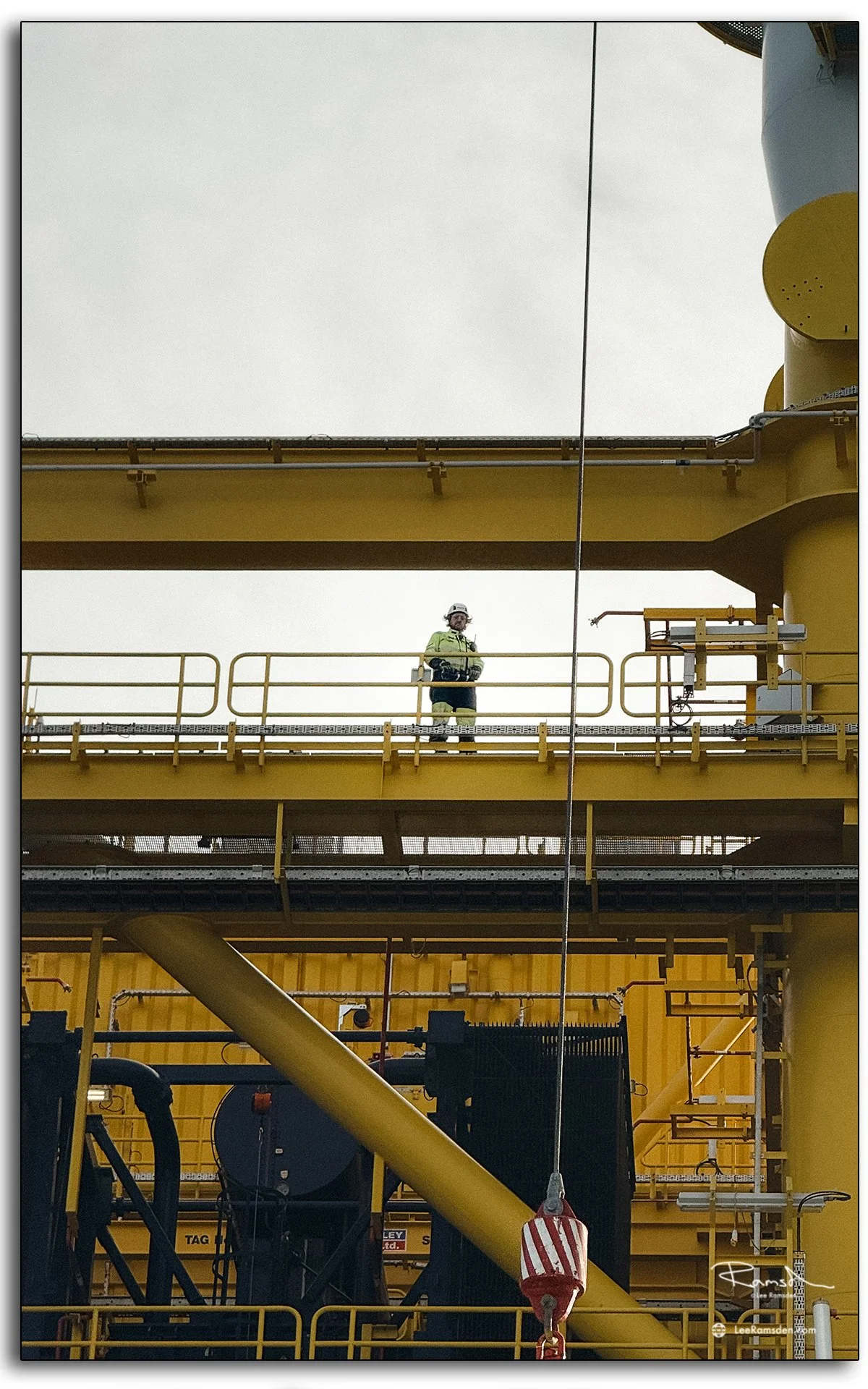
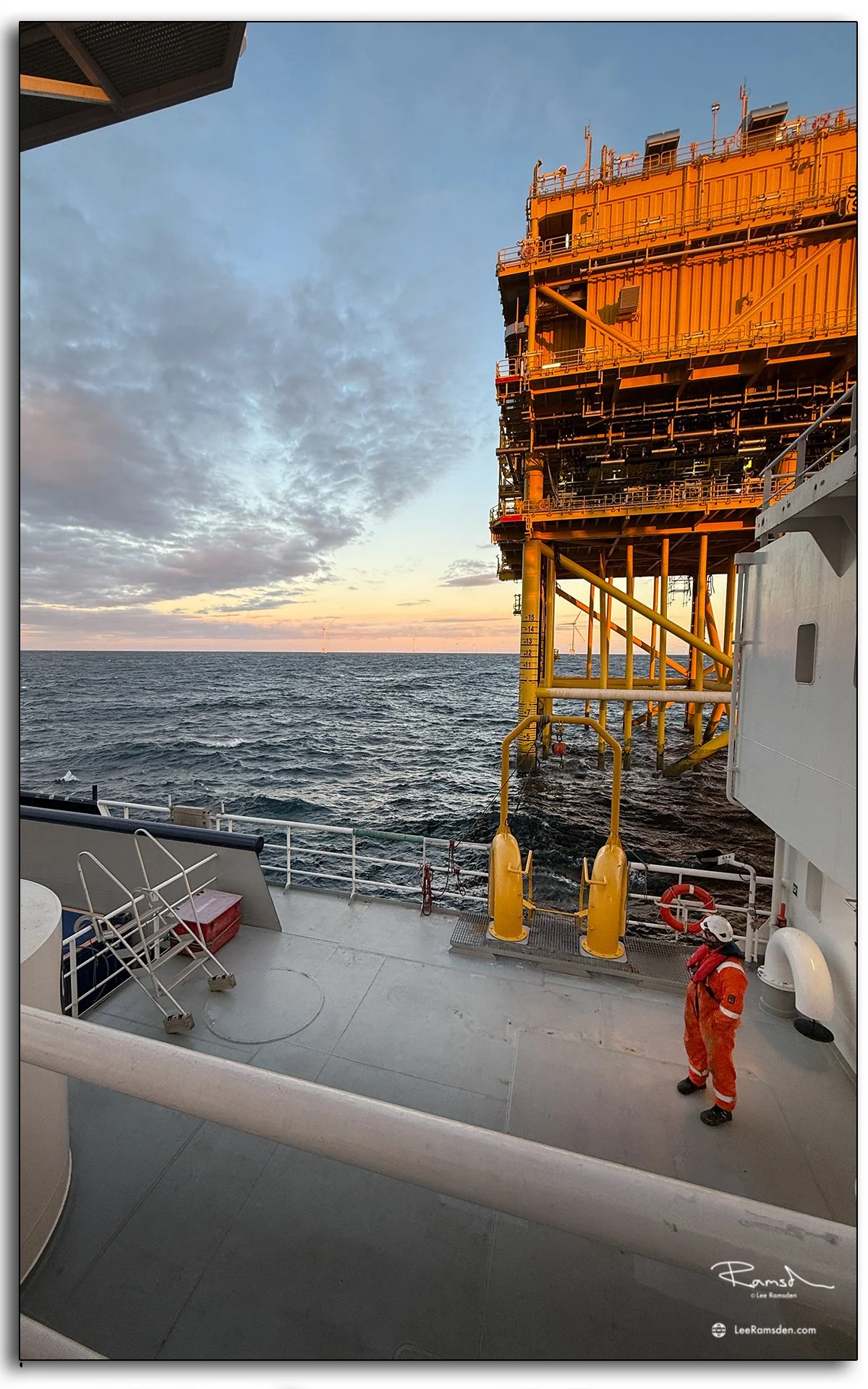
Working offshore often means spending long stretches of time alongside these vast yellow structures – offshore substations. They form the backbone of a wind farm, collecting and exporting the power generated by turbines scattered across the sea.

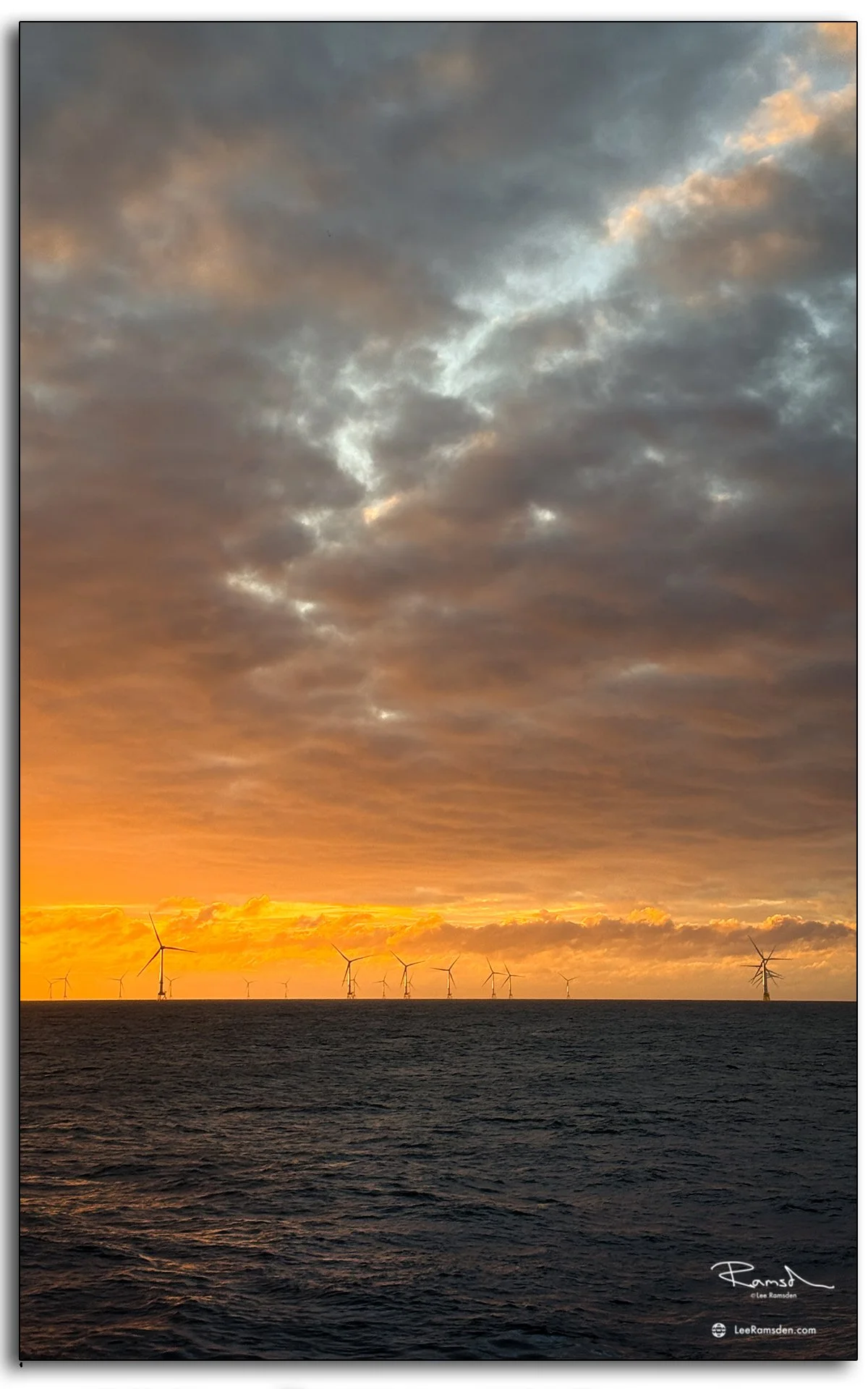
The scale is difficult to appreciate until you’re up close. From the deck of a vessel, the platforms rise high above the water, a complex of steel, stairs, and cables, lit up against the horizon. Depending on the weather, they can look strikingly different – golden in calm sunsets, isolated and moody under stormy skies, or glowing at night when lit against the dark.

For those who work out here, these structures are both workplace and landmark. For those onshore, they remain largely unseen, but they’re critical to delivering renewable energy back to the grid.

The offshore wind industry is a world of steel, sea, and constant change – both technical and natural. Capturing it in black and white strips everything back to structure and contrast, highlighting the balance between industry and environment. For more of my industrial and wind industry work, visit my Wind Industry portfolio.

Cromarty Lighthouse on the Black Isle

These photographs were taken in Cromarty on the Black Isle, looking at the lighthouse from two slightly different angles. The monochrome treatment felt right for this set. It gives the building a more documentary look and pulls it closer to its working history rather than presenting it as a purely scenic coastal landmark.

Cromarty Lighthouse was first established in 1846 to guide vessels from the Moray Firth into the Cromarty Firth. It was designed by Alan Stevenson, part of the famous Stevenson family of lighthouse engineers. 

The light later became automatic in 1985, and it was withdrawn from service in 2006. After decommissioning, the site passed into academic use, and the buildings are now associated with the University of Aberdeen’s Lighthouse Field Station

That history gives the site more weight than a simple lighthouse stop on the coast. It stood at an important entrance to the Cromarty Firth, an area long valued for its sheltered waters and maritime importance. Even now, the building still carries that sense of purpose. 

Cromarty has no shortage of history, but the lighthouse is one of the clearest reminders that this small town was connected to much larger routes, movements and industries at sea.

Cromarty: The Cleopatra Stone and the Firth Beyond

Cromarty is the sort of place where history and industry can sit in the same frame, even when they belong to very different centuries.

These two photographs were taken from the shoreline at Cromarty. One centres on the Cleopatra Stone, photographed in black and white, with the sea and shoreline beyond. The other looks out across the Cromarty Firth towards an offshore rig, with the edge of the town and harbour in the foreground.

Cromarty itself sits on the southern shore of the mouth of the Cromarty Firth, a place long tied to the sea through fishing, shipping and ferry connections. The town also developed a wider maritime importance because of the Firth’s role as a natural harbour. 

That first image brings in the more modern side of the area. Across the water, the Cromarty Firth and nearby Nigg have long been associated with the offshore industry. The fabrication yard at Nigg was originally developed for North Sea oil and gas work in the early 1970s, and the wider Firth has continued to be linked with rig lay-up, refurbishment and energy-sector activity. 

The Cleopatra Stone is one of Cromarty’s more unusual landmarks. Its inscription refers to the Queen Cleopatra, an emigrant ship associated with people leaving the town, and it captures a more emotional side of coastal history than many formal monuments do.

What I like about these images together is the contrast. One is rooted in memory, migration and local identity. The other is about scale, distance and the working landscape that still defines the Firth today. Cromarty can hold both at once without forcing the point.

Photographically, that makes it an interesting place to return to. You are not just looking at a pretty shoreline. You are looking at a location where personal history, harbour life and the North Sea economy all overlap in a relatively small stretch of coast.

SOV Vessel and Offshore Wind Turbines – A Dramatic North Sea Scene

Striking black and white photo of Island Diligence with offshore wind turbine under dramatic skies in the North Sea.
Moody black and white seascape of Island Diligence vessel with offshore wind turbine in the North Sea.

Out in the North Sea, moments like these capture the essence of offshore work – a dynamic mix of weather, engineering, and raw seascape. The Island Diligence, framed against towering wind turbines, feels both small and powerful, holding its own beneath the vast skies.

The heavy clouds and broken sunlight add weight to the images, a reminder of the ever-changing nature of offshore life. From dramatic skies to the still determination of the vessels and turbines, these scenes are never the same twice – which is why I’m always drawn to photograph them.

Photography offshore often blends the unexpected with the industrial – moments that are raw, dramatic, and fleeting. You can see more in my Wind Industry gallery, or explore other Industrial photography across my portfolio.

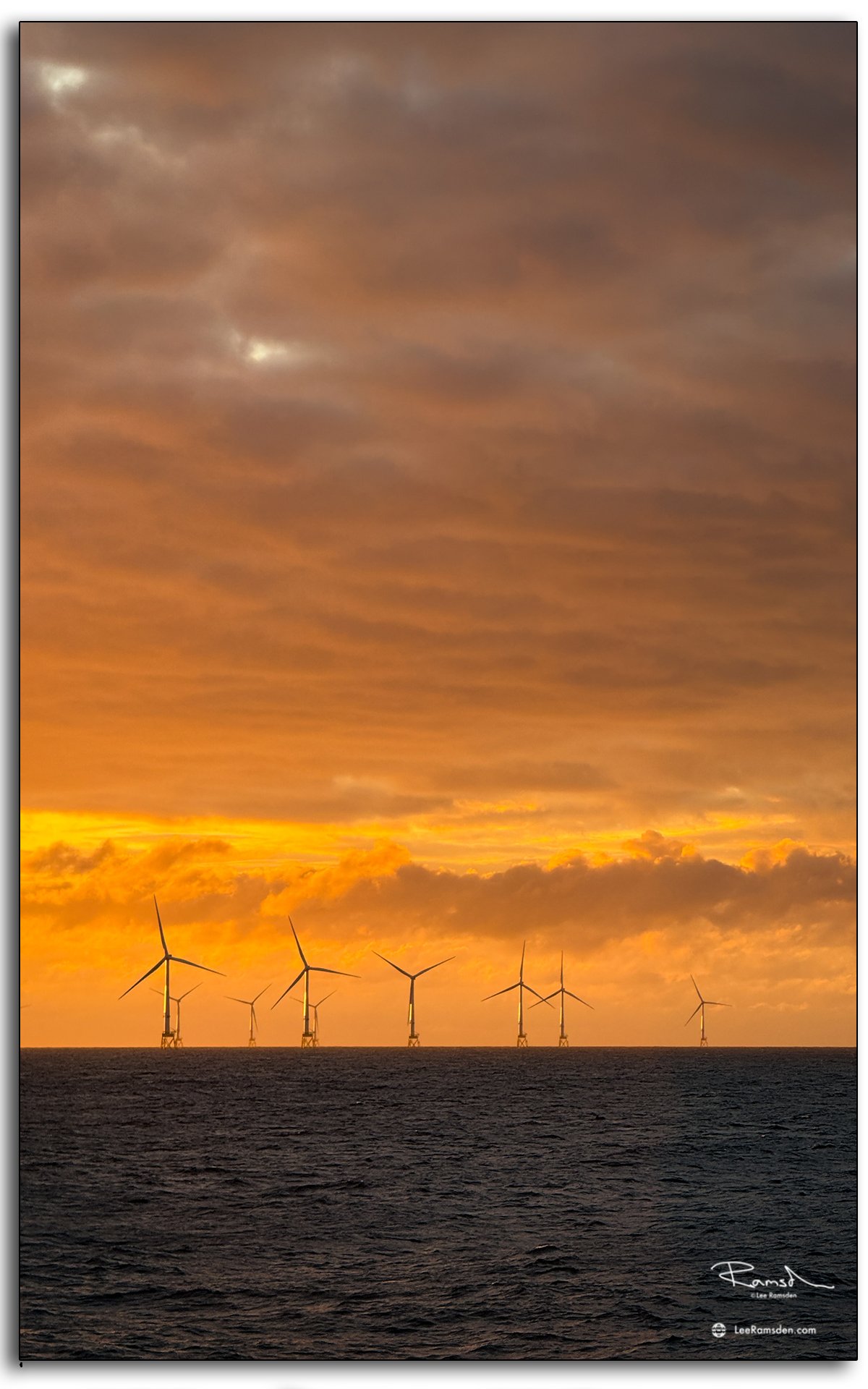
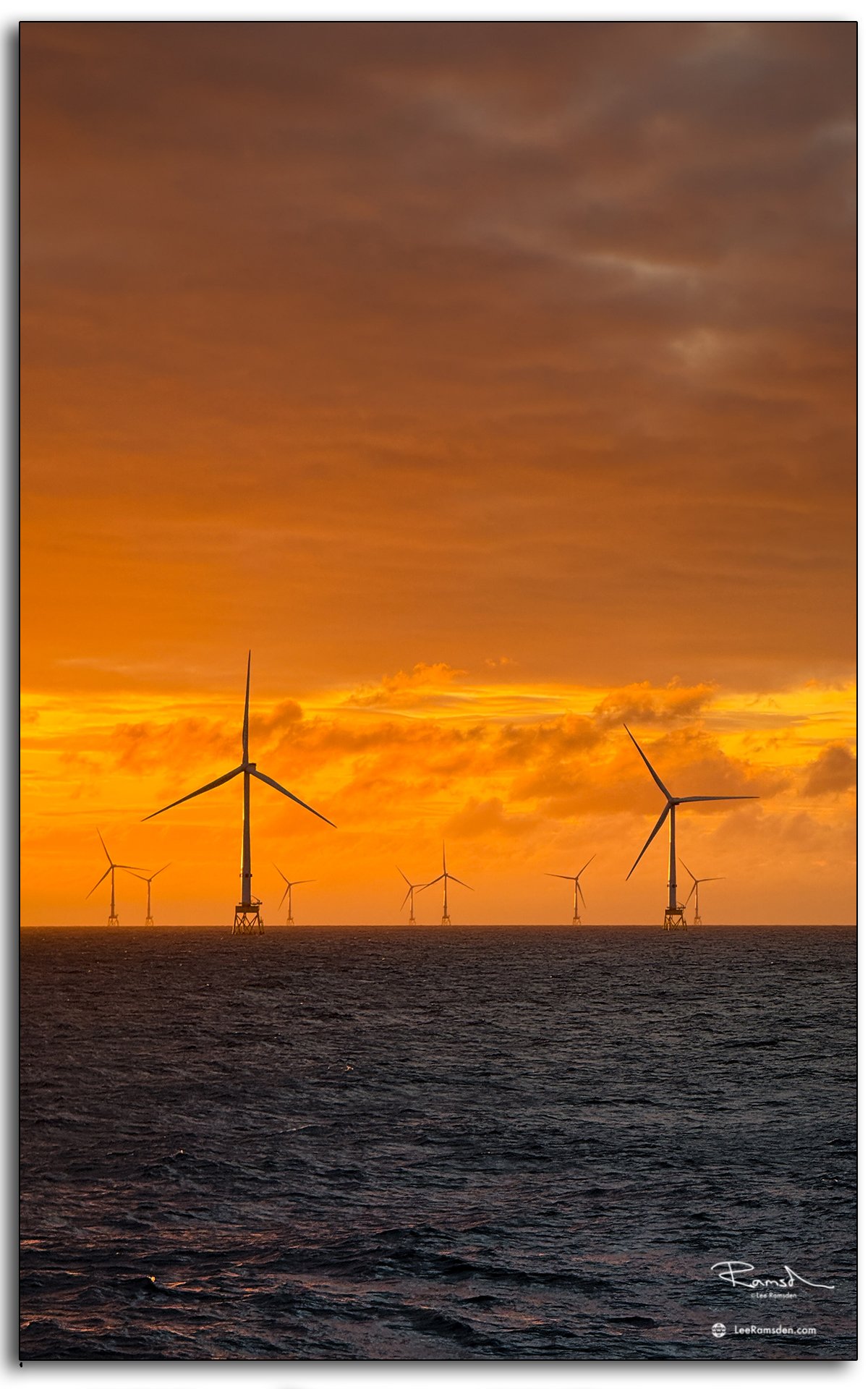
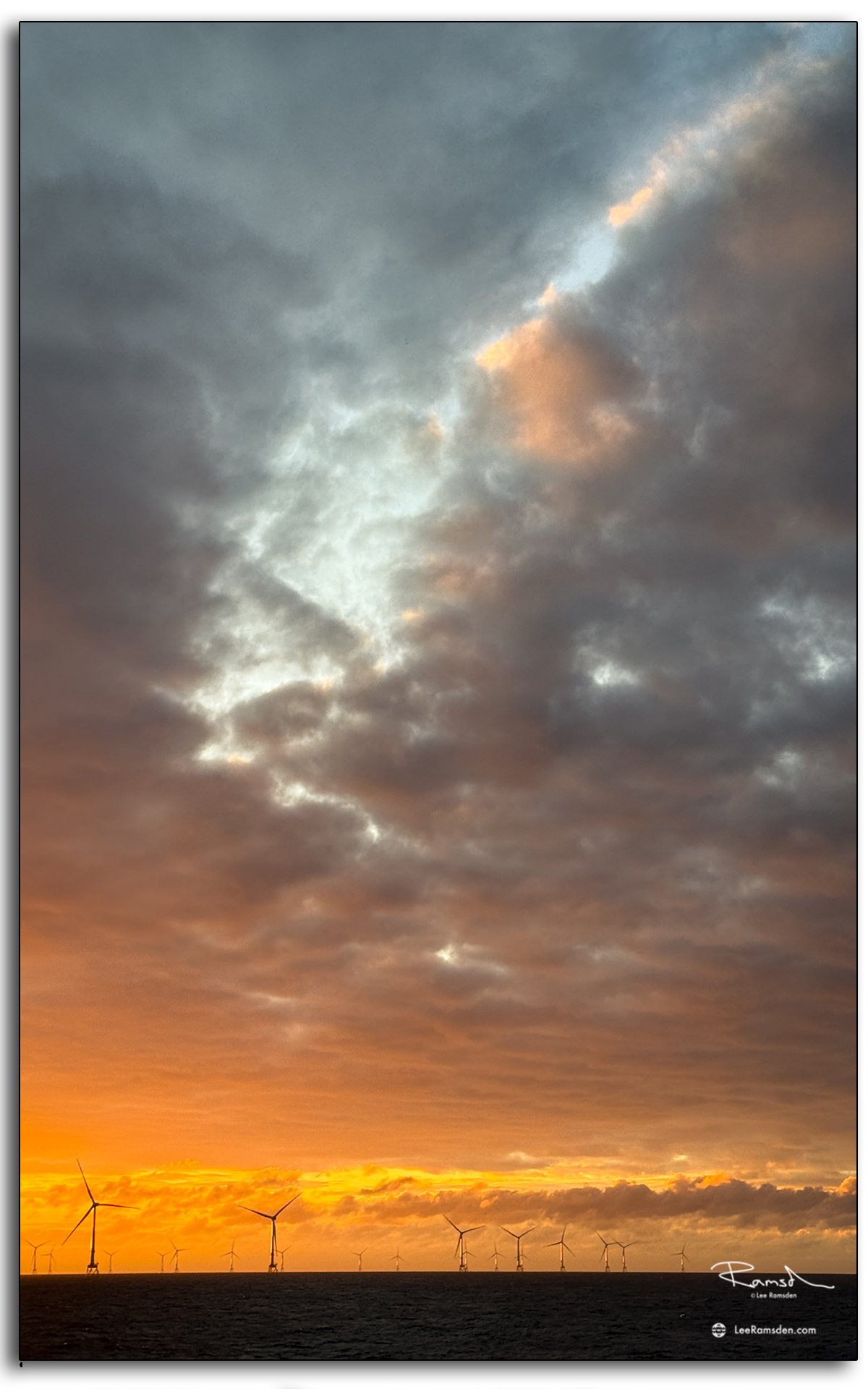
Offshore Sunsets – Wind Turbines at Dusk

Offshore wind farm at sunset with glowing orange horizon and dramatic clouds overhead.
Close-up of turbines silhouetted against a vivid golden sky at sea.

The North Sea never fails to deliver dramatic light, and these evenings offshore were no exception. The sky burned with shades of orange, red, and violet while the turbines stood calmly against the horizon, a striking reminder of the balance between nature and engineering.

From the deck, I watched the light change quickly, painting the sea and sky with intense colour. It’s these fleeting moments that make offshore life unique—long hours of work rewarded with scenes that most people never get to witness.

Wide view of offshore wind turbines under glowing sunset skies.
Row of offshore wind turbines lit by fiery orange clouds and evening light.

These iPhone images capture the stillness of the turbines contrasted with the movement of sea, sky, and birds overhead. A reminder that while technology pushes forward, we’re always working within the rhythm of nature.

See more of my Wind Industry work here.

Norwind Storm at Work

Norwind Storm offshore support vessel approaching a wind farm substation in the North Sea
Norwind Storm vessel at sunrise with wind turbines on the horizon, captured in the North Sea

Out in the North Sea, the Norwind Storm is a familiar sight—steady, purposeful, and always where the work is. These iPhone images capture the vessel alongside the offshore substation, with the wind turbines fading into the haze and the low sun throwing golden light across the water.

From the deck or framed against the open horizon, the Storm stands as a reminder of the constant effort behind the offshore wind industry. The scale of the operation is immense, yet moments like these bring out its quiet beauty.

See more of my work in the Wind Industry portfolio.

Black and White Turbines at Sea

Offshore wind turbine beneath dark skies with light rays breaking through the clouds, captured in monochrome.
Monochrome offshore wind turbine set against moody skies and the North Sea horizon.

The offshore wind farm takes on a different presence in black and white. Without colour, the turbines stand stark against the shifting tones of sea and sky. The heavy clouds and breaking light add a drama that colour often softens, leaving a raw sense of scale and isolation.

These iPhone images strip everything back, reducing the view to light, shadow, and structure — highlighting the resilience of the turbines set against the vastness of the North Sea.

These black and white studies show another side to offshore wind — stripped of colour but rich in atmosphere. See more from my Wind Industry portfolio.

Offshore Walk-to-Work Transfers

Side view of offshore Walk-to-Work bridge extended to platform, photographed at sunrise.
Offshore crew gathered in PPE, preparing to transfer via Walk-to-Work bridge.

Crew transfers offshore are all about routine, discipline, and trust in the equipment. These images show the daily process of moving between vessel and platform via the Walk-to-Work bridge.

Offshore worker in survival suit crossing Walk-to-Work bridge in calm sea conditions.
Worker crossing Walk-to-Work bridge at sunrise, with offshore crew waiting behind.

The W2W system is straightforward in purpose: to give workers safe access. These photographs focus less on the structure and more on the people — the steady flow of personnel, kit bags in hand, crossing in both directions. It’s a reminder that offshore operations are built on repetition and reliability, not just engineering.

This series continues my documentation of offshore work and life at sea. For more, visit my Wind Industry and Industrial galleries.

TRNSMT Festival – Underworld

Festival-goer on train journey to TRNSMT Festival, photographed in black and white.
Festival-goer dancing with drink in hand at TRNSMT Festival under stage lighting.

Glasgow’s TRNSMT Festival always delivers on atmosphere. This year, the iconic electronic duo Underworld took to the King Tut’s Stage, and I caught the energy of their set through a series of quick iPhone shots.

Underworld performing live at TRNSMT Festival on the King Tut’s Stage with bright lights.
King Tut’s Stage at TRNSMT Festival with Underworld performing and crowd watching.

The photos show both sides of a live event — the performers under bright lights and the crowd lost in the moment. From stage silhouettes in heavy smoke to close-up festival moments, the black and white treatment keeps the focus on the emotion and movement rather than the distraction of colour.

This series is part of my ongoing documentation of people and events. For more, take a look at my People gallery or explore wider projects in Places.

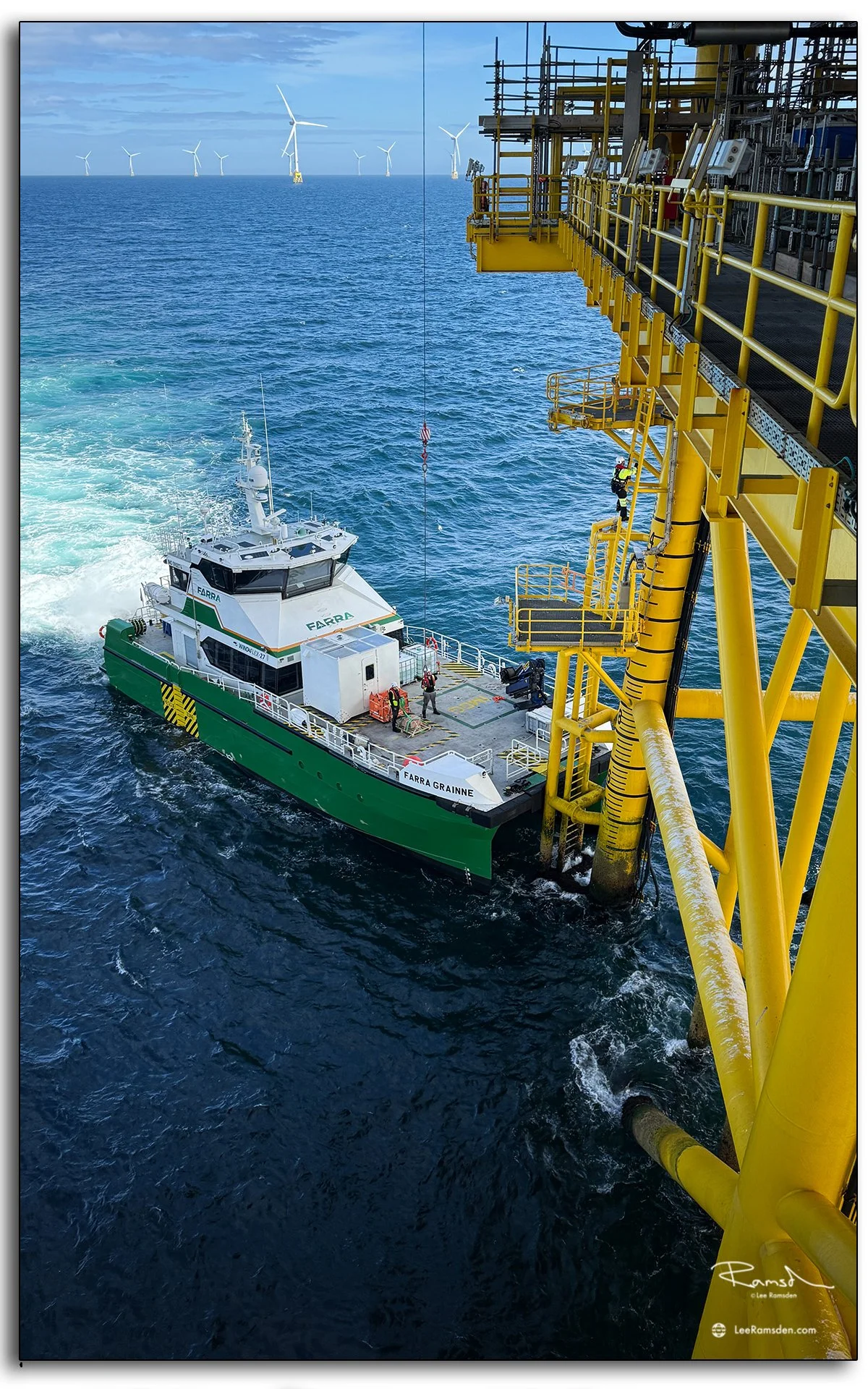
Crew Transfer Vessels in Offshore Wind: Farra Grainne at Work

These images focus on the Farra Grainne, a crew transfer vessel working offshore within a wind farm environment. Taken in calm conditions and clear light, they show the vessel in a few different contexts: close alongside, moving away through the field, and positioned next to the structure during transfer operations.

In offshore wind, crew transfer vessels, usually shortened to CTVs, are a core part of daily operations. Their job is to move technicians and small teams between shore or a mothership base and offshore assets such as turbines and substations. They are specifically designed for that role, and in many projects they remain the preferred transfer solution for sites closer to shore. 

The transfer itself is one of the most important parts of the process. Industry guidance from G+ and the Energy Institute is built around the principle that people should not fall into the sea or become trapped between the vessel and the offshore structure during transfer. That is why vessel design, operating procedures, competence and transfer arrangements matter so much. 

It is easy to look at a wind farm and focus only on the turbines, but the day-to-day operation relies on far more than that. CTVs are one of the clearest examples. They are there to move people, equipment and capability around the site, and without them a lot of offshore maintenance simply would not happen in the same way. General guidance on offshore wind service vessels also notes that CTVs are designed specifically to transport service teams and are commonly fitted for transfer work against offshore structures. 

Evening Light at Arbroath Harbour

Action at Arbroath Harbour as a local leaps from the harbour wall into the sea.
Golden light at Arbroath Harbour with the lighthouse on the horizon.

Arbroath Harbour is always full of character, from the energy of locals leaping into the water to the calm stillness of sunset over the lighthouse. These moments, captured with my iPhone on a warm evening, highlight both the vibrancy of the community and the quiet beauty of the coastline.

Arbroath Signal Tower lighthouse framed by seagulls in flight.
Evening walk at Arbroath Harbour, with golden light reflecting on the water.

Harbour life brings together energy and calm in equal measure. To see more of my work exploring Scotland’s coastline and industry, visit my Places and Industrial portfolios.

Framed Moments with Loxley Colour – Printing & Framing

I’ve always believed that the way photography is displayed is just as important as how it’s shot. Recently, I had several of my images printed and framed through Loxley Colour, and the difference is more than just visual — it’s tactile, elevating, and deeply satisfying.

Loxley Colour is a professional print lab based just outside Glasgow. They’ve been serving photographers for over 30 years, offering hand-crafted prints, fine framing, and a huge selection of frame profiles (37 different styles) to suit everything from rustic to modern. 

For these frames, I chose finishes and mouldings that complement the tones and feel of the photos. The framing gives structure; the print quality, colour accuracy, and materials show every detail clearly. What I love is how light plays on the frame and matting — the edges become part of the experience.

Every print arrived beautifully packaged, with consistent blacks, sharp detail, and faithful colour rendering — exactly what I expect in work I’m proud to show in homes or galleries. Many photographers praise Loxley for the same (colour accuracy, prompt turnaround, and excellent customer service).  If you want your images to stand out, this level of print & framing craftsmanship really makes the difference.

A series of framed photographs hung on a wall, each in a Loxley Colour frame with clean matting and rich tones.
A single framed print showing a beach scene with dog and person, mounted in a dark wood Loxley frame with crisp matting and reflections.

If you care about how a photo is displayed — the edges, the frame, the paper — then lab and framing choices matter. Loxley Colour has become my go-to for remastering prints into showpieces. For more of my work framed and printed, browse the Places or Industrial sections of my gallery.

Urban Seagulls.

Seagull

Urban Seagulls

Seagulls are so familiar in coastal towns that they're easy to overlook photographically. These two black and white images take a closer look at how they occupy man-made environments — not as visitors to the urban landscape, but as permanent residents entirely at home in it.

The first shows a gull perched against a backdrop of concrete and steel, the hard geometry of the structure contrasting with the softness of the bird's plumage. The second places one near a fairground ride — an unlikely combination that works because both belong to the same seaside world.

Shooting in monochrome suits this subject well. Without colour, the focus shifts to form, texture, and the relationship between the bird and its surroundings. Gulls are bold, adaptable, and largely indifferent to people, which makes them easier to photograph candidly than most wildlife.

Both images were taken in the Angus and Aberdeenshire area of Scotland — locations where the boundary between town and coast is never far away.

For more wildlife and coastal photography, explore the Places gallery.

Offshore Substation – The Beating Heart of a Wind Farm

Offshore substation platform illuminated at night, North Sea wind farm.
Offshore substation seen from a vessel bridge in the North Sea.

An offshore substation (OSS) is the critical hub of a wind farm, where the power generated offshore is collected and transmitted back to shore. Sitting high above the waves, it is one of the most striking structures in the renewables industry.

From the vessel bridge, the platform is an impressive sight in the distance, glowing gold against the sea at night. These substations not only represent engineering excellence but also play a vital role in the delivery of clean energy across the UK and beyond.

Exploring and photographing offshore substations is always a privilege—capturing them from both the technical working perspective and as powerful silhouettes on the horizon.

The offshore industry is full of dramatic structures and scenes, from turbines to substations. You can explore more of my work in the Wind Industry portfolio, as well as my wider Industrial and Places collections.

Everyday Scenes in Black and White

Striking black and white photograph of a pigeon perched on a ledge with a city dome in the background, highlighting contrast and simple composition.
Black and white street photo of a lollipop man walking away with a stop sign, his hi-vis jacket and long shadow creating strong visual contrast.

Everyday Scenes in Black and White

Not every photograph needs a dramatic location or a significant subject. These two images are about ordinary moments made graphic by the removal of colour.

The first isolates a pigeon in flight against a clear sky, with architectural detail in the background providing scale and context. It's the kind of shot that comes from slowing down and watching a familiar scene rather than looking for something new.

The second captures a lollipop man walking away from the camera, his shadow stretching long across the pavement. The high contrast and strong directional light reduce the scene to shape and tone — the figure becomes almost abstract, the shadow more present than the man himself.

Black and white street photography works best when it finds structure in the unremarkable. Both of these images are from everyday locations in Scotland, and neither required anything beyond patience and timing.
For more black and white work, visit the main portfolio or explore the Places gallery.

Cromarty War Graves and the Old Churchyard

These two photographs were taken in Cromarty and show two closely connected parts of the same place: the older churchyard ruins and the formal war graves section with its cross at the far end of the cemetery. Together, they say quite a lot about how much history can sit in one small Highland town. 

The first image looks into the old churchyard, where the ruined Gaelic Chapel and older burial ground give the place a much longer timeline than the neat lines of the later war graves. The chapel is associated with the Gaelic-speaking community in Cromarty and now survives as a ruin within the burial ground. 

The second image shows the more formal military section of Cromarty Cemetery, where the graves are arranged around a War Cross in the newer extension. According to the Commonwealth War Graves Commission, the cemetery contains 74 Commonwealth burials from the First World War and 4 from the Second World War

That number feels striking for a small place, but Cromarty had a more significant wartime role than many people realise. The CWGC notes that Cromarty was a net-base and that the Cromarty Military Hospital had 226 beds during the First World War. 
The same CWGC record also points to one of the major reasons the cemetery holds so many wartime burials: HMS Natal was wrecked and overturned by an internal explosion in the channel between Cromarty and Invergordon on 30 December 1915. That event left a lasting mark on the area and helps explain why the war graves section is so prominent here. 

What I like about these images together is the contrast in how remembrance is expressed. One side of the cemetery feels irregular, weathered and local, shaped over time by the town itself. The other is formal and deliberate, with the ordered headstones and cross giving the space a very different rhythm. Both belong to the same landscape, and both reflect different layers of Cromarty’s past. 

Vessel Operations Offshore

Out in the North Sea, the Norwind Storm support vessel takes up position beneath the setting sun — a steady presence against the rolling water and the turbine structures beyond.

These images show the vessel in its working context, sitting alongside the wind farm and substation, with the horizon fading into haze. The black and white treatment suits the industrial scale of the scene, stripping away colour to leave structure, light and movement.

Service operations vessels are a core part of offshore wind O&M. They provide accommodation and logistical support for technicians working on turbines and substations, often remaining on site for extended periods during maintenance campaigns.

This series adds to my Wind Industry collection, alongside wider work across Industrial and Places photography.

Remembrance Poppy Display – St Annes Parish Church

Photo of St Annes Church in Lytham St Annes with a cascade of red poppies flowing from the tower for Remembrance Day
Drone photo of St Annes Church in Lytham St Annes with a cascade of red poppies flowing from the tower for Remembrance Day

Today we remember - those who paid the ultimate price 🎖️,

and the many, many more who’ve quietly checked themselves out since.

You are not forgotten.

Those still fighting their battles.

You are not on your own.

Please talk.

Each year, the Remembrance period brings a powerful stillness to communities across the UK — a pause to reflect on the lives lost in conflict. This striking poppy display at St Annes Parish Church does exactly that.

Thousands of handmade poppies cascade from the church tower to the ground, symbolising the ongoing flow of remembrance from generation to generation. Seen from above, the red trail cuts through the old brickwork and gravestones — a vivid reminder of sacrifice and resilience.

The installation was created by local volunteers, each poppy representing care, memory, and community effort.

Offshore workers portraits.

Offshore Workers Portraits

These portraits were taken on a North Sea asset during an offshore wind operation. Shot in the working environment, they focus on the people behind the project rather than the infrastructure around them.

Offshore portraiture is a different discipline to studio or event work. The subjects are working professionals in a demanding environment, and the images need to reflect that — direct, unposed where possible, and honest about the conditions. There's little room for elaborate setups on a vessel or platform deck, which tends to produce portraits that feel more genuine for it.

The offshore wind industry employs thousands of people in specialist roles — technicians, rope access workers, supervisors, marine crew, and support staff — many of whom spend weeks at a time on rotation. These images are a small record of that working life, shot as part of a wider documentation of North Sea operations.

For more work from offshore wind projects, visit the Wind Industry gallery.

Arbirlot Walks – Fields, Waterfalls and Woodland

Seagulls take flight across a football pitch in Arbroath.
Woman exploring Arbirlot waterfall near Arbroath.
Dog standing in the river below Arbirlot waterfall.
Green barley field beneath a clear blue summer sky.
Dog running on a woodland path near Arbirlot, Scotland.

A short walk through Arbirlot, just outside Arbroath, takes you from open fields into shaded woodland and down to the small waterfall under the old stone bridge. It’s a quiet spot, ideal for a wander with the dog or simply enjoying the scenery. The mix of farmland, riverside paths and that hidden cascade makes it a favourite place for locals to explore.

The waterfall itself, tucked beneath the bridge, is the highlight. Whether standing above it or cooling off below, it’s a reminder of how much variety you can find within a short distance of town.

Exploring places like Arbirlot shows just how much variety is on offer in this part of Scotland. From open coastlines to tucked-away woodland, I’m always drawn to the mix of landscapes nearby. You can see more of my work across Places and People.