Church

Cromarty War Graves and the Old Churchyard

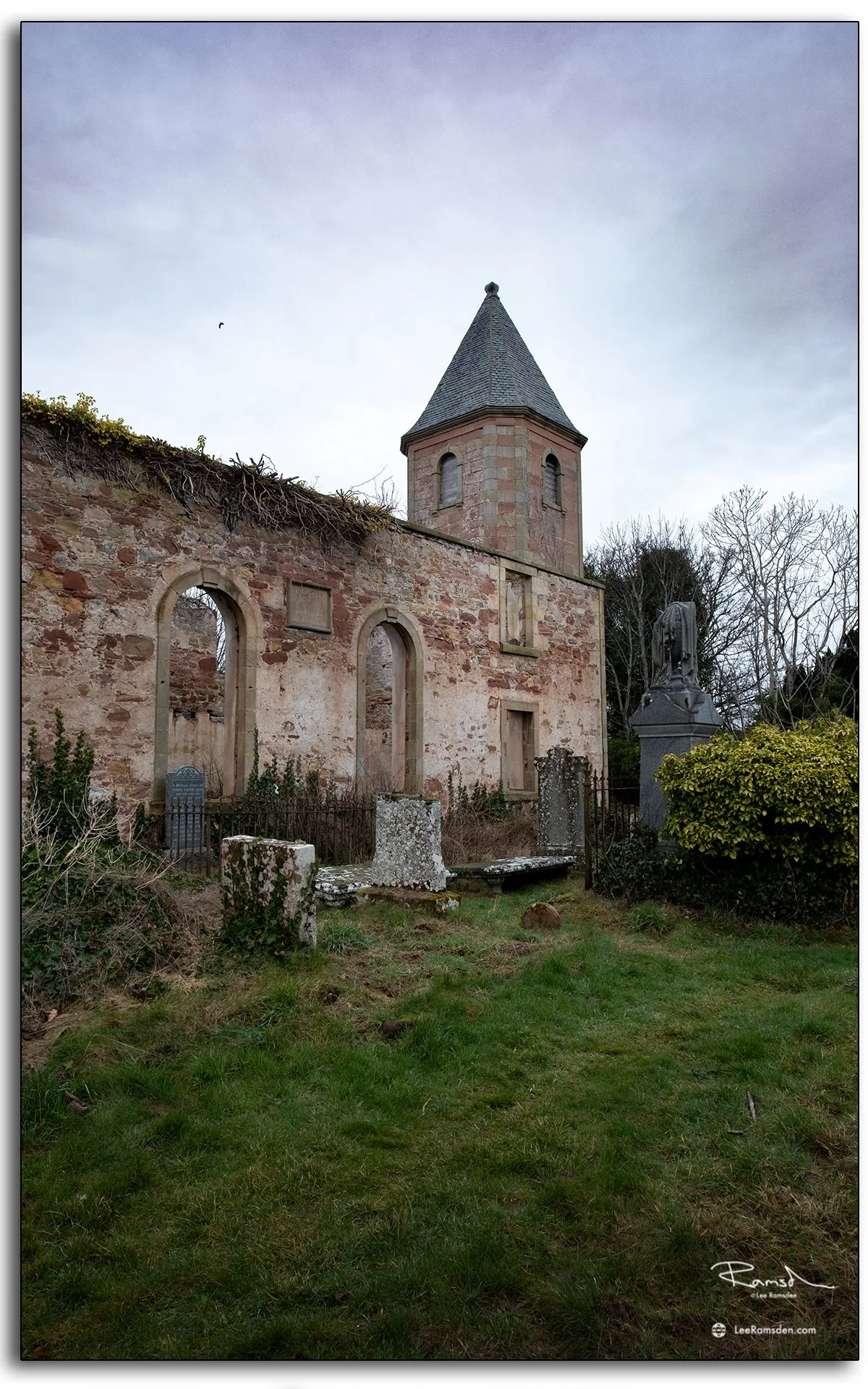
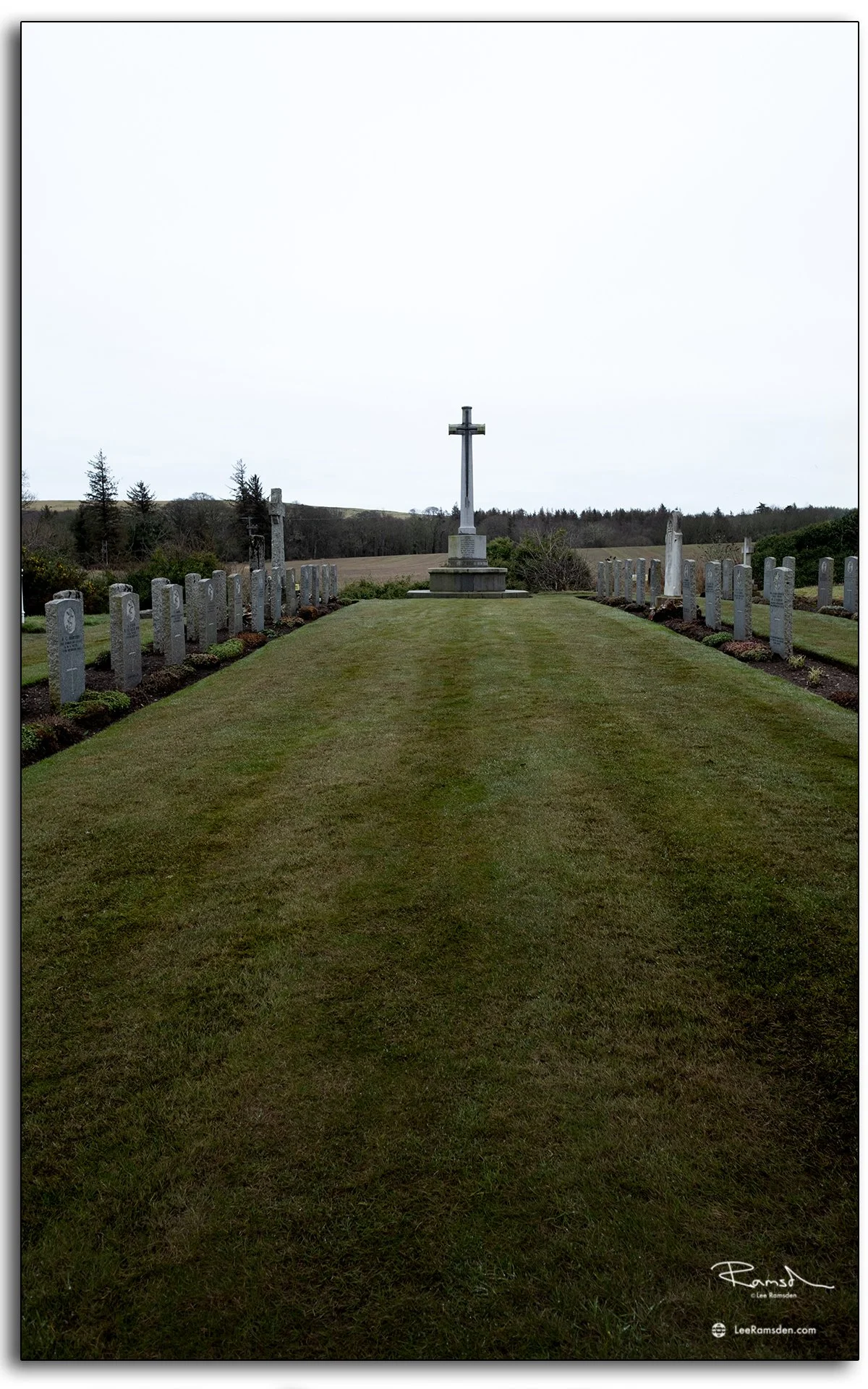
These two photographs were taken in Cromarty and show two closely connected parts of the same place: the older churchyard ruins and the formal war graves section with its cross at the far end of the cemetery. Together, they say quite a lot about how much history can sit in one small Highland town. 

The first image looks into the old churchyard, where the ruined Gaelic Chapel and older burial ground give the place a much longer timeline than the neat lines of the later war graves. The chapel is associated with the Gaelic-speaking community in Cromarty and now survives as a ruin within the burial ground. 

The second image shows the more formal military section of Cromarty Cemetery, where the graves are arranged around a War Cross in the newer extension. According to the Commonwealth War Graves Commission, the cemetery contains 74 Commonwealth burials from the First World War and 4 from the Second World War

That number feels striking for a small place, but Cromarty had a more significant wartime role than many people realise. The CWGC notes that Cromarty was a net-base and that the Cromarty Military Hospital had 226 beds during the First World War. 

The same CWGC record also points to one of the major reasons the cemetery holds so many wartime burials: HMS Natal was wrecked and overturned by an internal explosion in the channel between Cromarty and Invergordon on 30 December 1915. That event left a lasting mark on the area and helps explain why the war graves section is so prominent here. 

What I like about these images together is the contrast in how remembrance is expressed. One side of the cemetery feels irregular, weathered and local, shaped over time by the town itself. The other is formal and deliberate, with the ordered headstones and cross giving the space a very different rhythm. Both belong to the same landscape, and both reflect different layers of Cromarty’s past. 
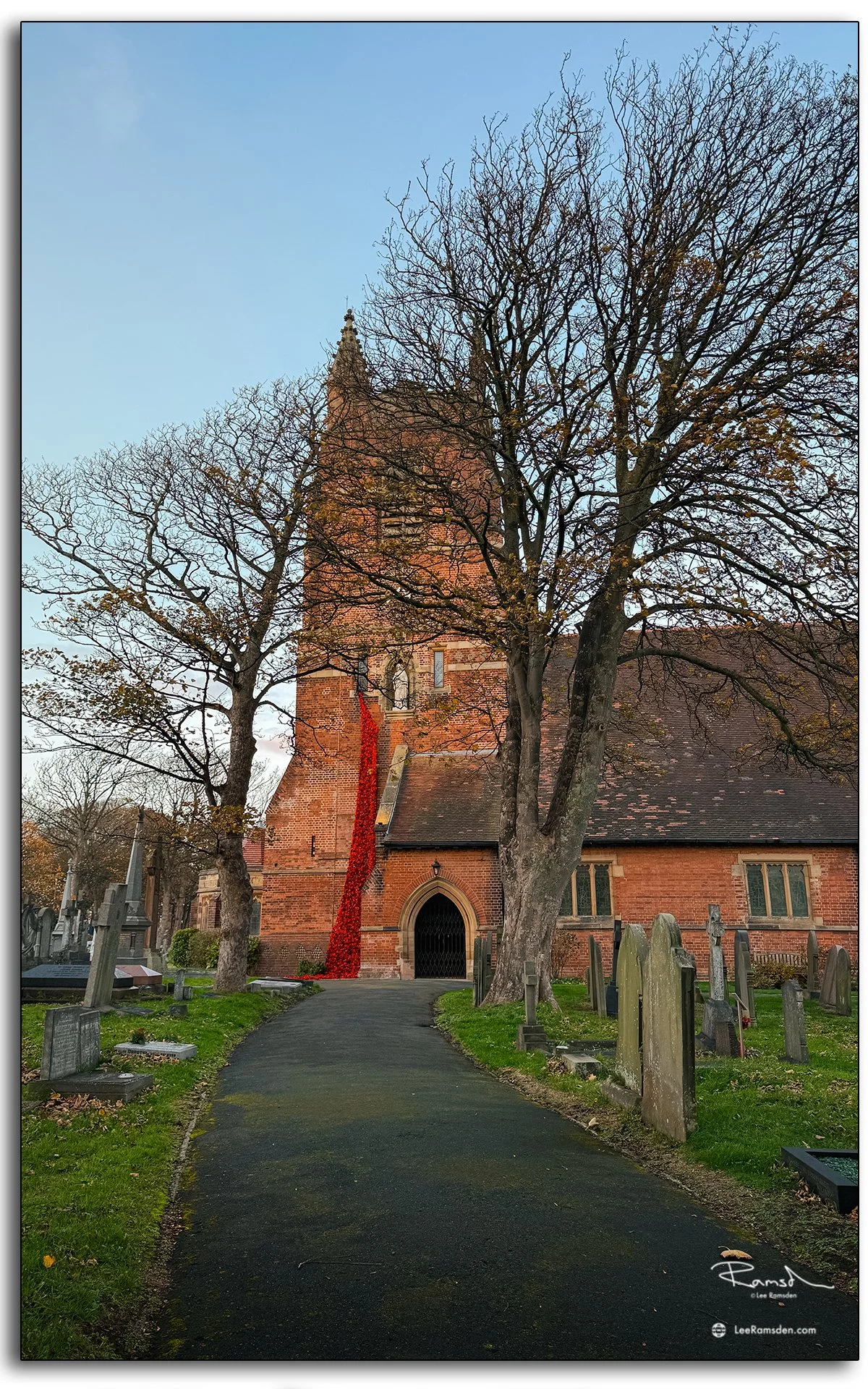
Remembrance Poppy Display – St Annes Parish Church

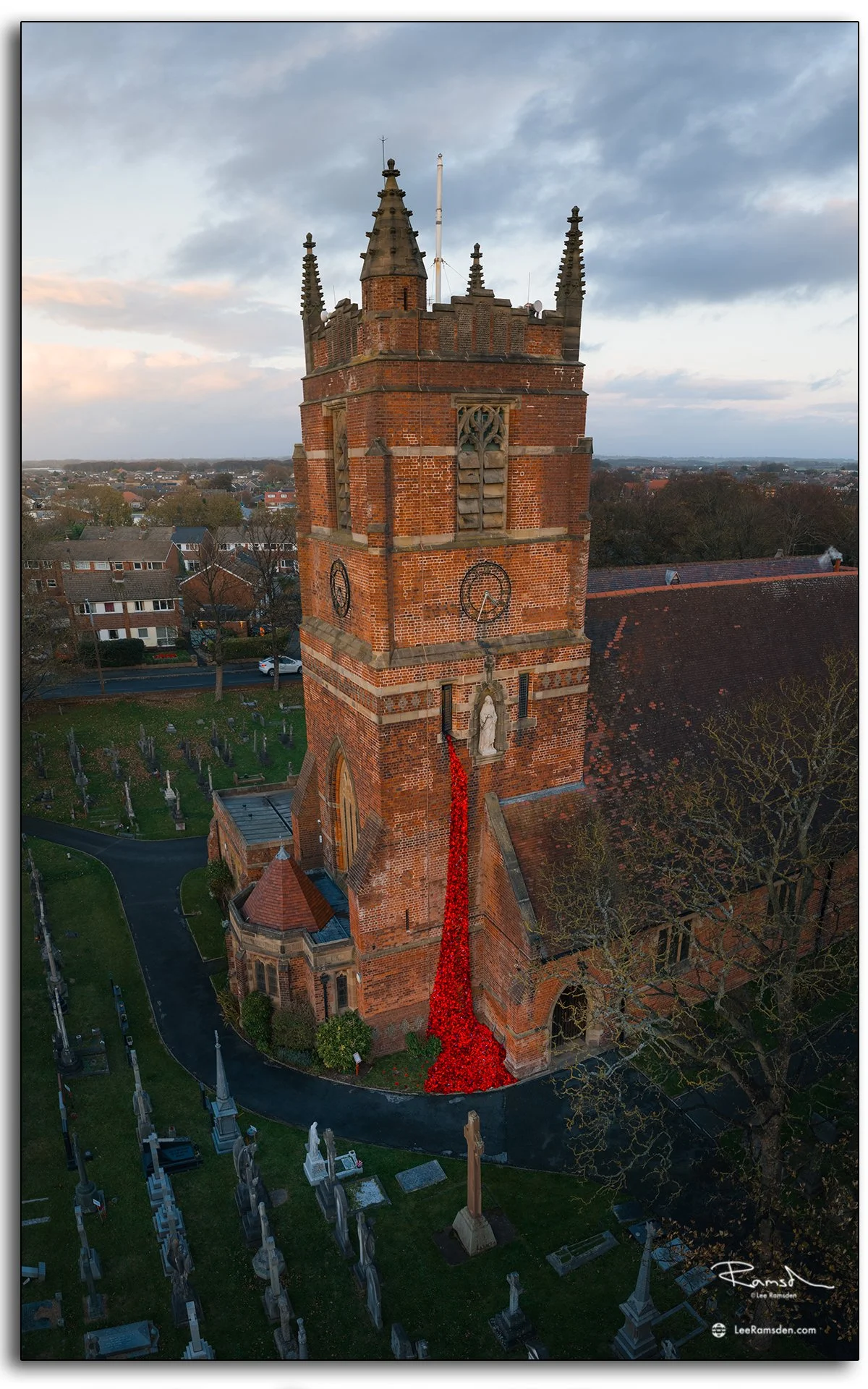
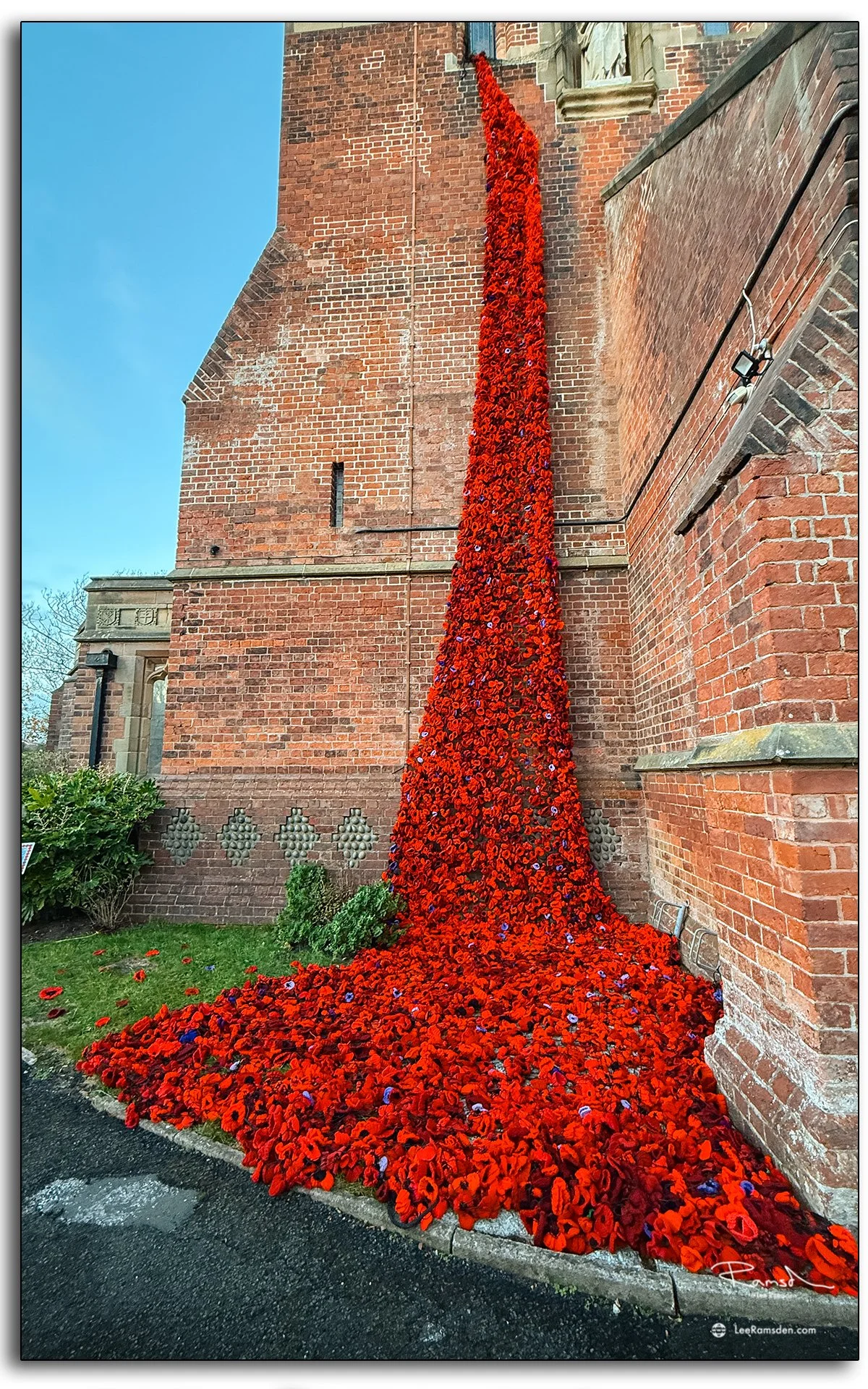
Photo of St Annes Church in Lytham St Annes with a cascade of red poppies flowing from the tower for Remembrance Day
Drone photo of St Annes Church in Lytham St Annes with a cascade of red poppies flowing from the tower for Remembrance Day

Today we remember - those who paid the ultimate price 🎖️,

and the many, many more who’ve quietly checked themselves out since.

You are not forgotten.

Those still fighting their battles.

You are not on your own.

Please talk.

Each year, the Remembrance period brings a powerful stillness to communities across the UK — a pause to reflect on the lives lost in conflict. This striking poppy display at St Annes Parish Church does exactly that.

Thousands of handmade poppies cascade from the church tower to the ground, symbolising the ongoing flow of remembrance from generation to generation. Seen from above, the red trail cuts through the old brickwork and gravestones — a vivid reminder of sacrifice and resilience.

The installation was created by local volunteers, each poppy representing care, memory, and community effort.

St Mary’s Chapel, Rattray – Historic Church Photography in Aberdeenshire

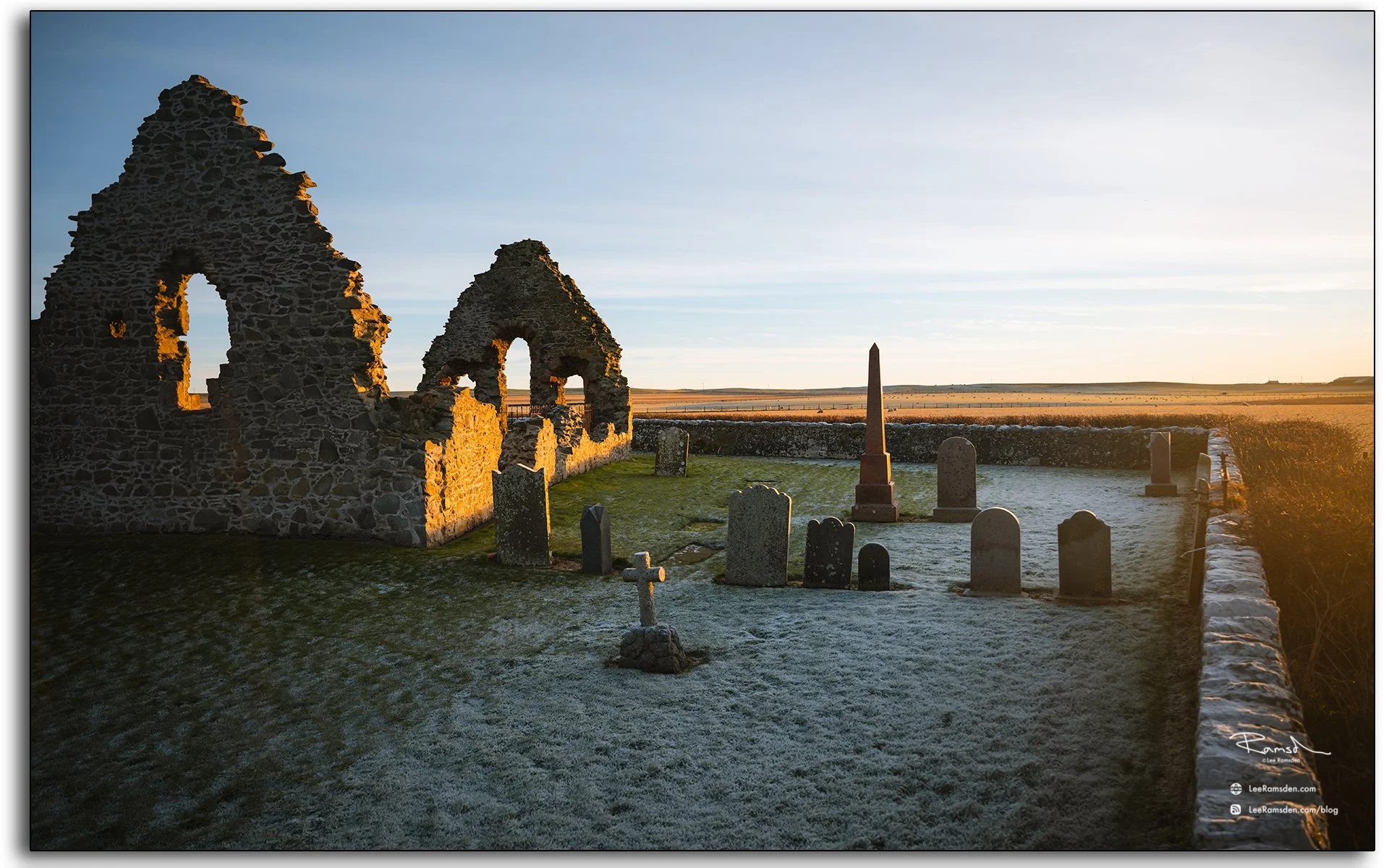
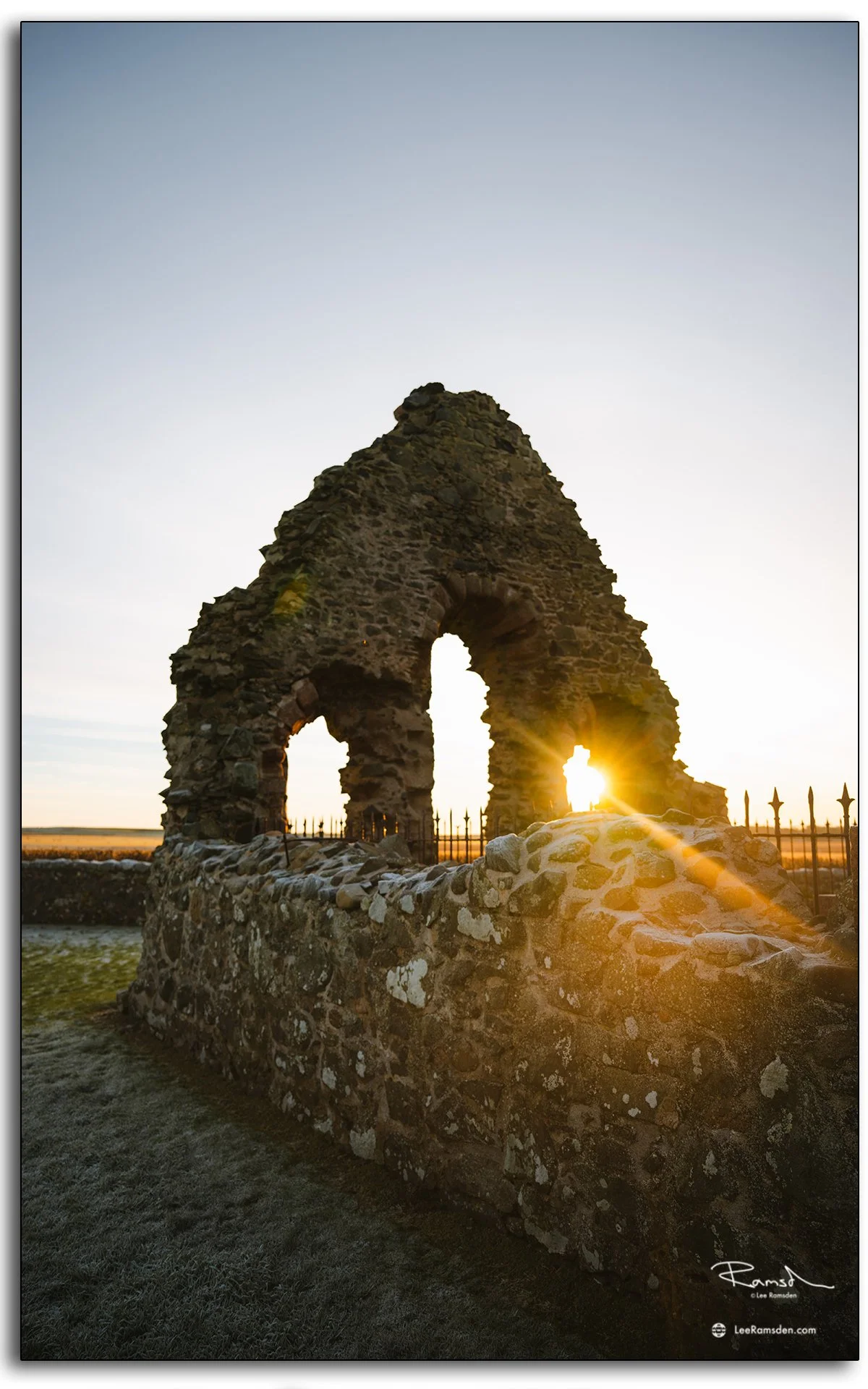
photograph of St Mary’s Chapel in Rattray, Aberdeenshire, Scotland, believed to date back to the early 13th century.

Tucked away in the Buchan countryside near Rattray, St Mary's Chapel is thought to date back to around 1214, making it one of the older surviving ecclesiastical ruins in the north-east of Scotland. Its weathered stone walls are a reminder of a time when this part of Aberdeenshire was a more substantial centre of local life.

These photographs focus on the texture of the stonework and the way the structure sits in the landscape — collapsed in places, but still carrying the proportions and form of a medieval chapel. The site has an unrestored quality to it that sets it apart from more managed heritage locations.

This visit forms part of an ongoing project documenting historic churches and chapels across Scotland, many of which sit quietly in the landscape with little formal recognition. For more church photography, see the Places gallery and the dedicated church posts in the blog.

Montrose Old and St Andrew’s Church – Drone Photography in Angus

Drone photograph of Montrose Old and St Andrew’s Church in Angus, Scotland, showing its tall spire above the town’s skyline.

The spire of Montrose Old and St Andrew's Church is one of the defining features of the Angus town's skyline. The current building dates from the late 18th century, with the distinctive steeple added in 1834. From street level it is striking; from the air the relationship between the church and the surrounding town becomes much clearer.

These drone photographs were taken to show the church in its wider urban setting — the way the spire anchors the High Street, the surrounding rooflines and the grid of the town below. The aerial perspective reveals the church's scale relative to the streets around it in a way that ground-level photography cannot.

Montrose itself has a long history as a trading port and market town, and the church reflects the civic ambition of a prosperous Angus community. It remains a working parish church and a significant local landmark.

This shoot is part of a continuing series on historic churches and town landmarks across Scotland

This work adds to my series on churches, using drone photography to show how historic buildings shape and define modern townscapes.

Former Kirkton of Craig, Parish Church — Drone & Church Architecture, Scotland

Drone photo of Craig Parish Church (1799 Gothic Revival), tower and nave overlooking Montrose Basin in rural Scotland.

Craig Parish Church stands alone in the countryside, built in 1799 and now converted into a residence, yet still holding architectural character. Flying my drone here aimed to capture its Gothic Revival form, the tower, nave, and surrounding grounds under sky and light.

Architectural detail of church stonework and windows at former Craig Parish Church captured from above under open sky.

Designed by Richard Crichton, associate of Robert Adam, this church was one of the earliest examples of the Gothic Revival in Scotland. Its aisled nave and west tower overlook Montrose Basin, and though it’s no longer used for worship, its stonework, proportions, and grounds retain much of its original dignity. The photos show textures in weathered stone, window tracery, rooflines against sky, and its setting in small, quiet grounds. Light plays across the façade — shadows in window recesses, the tower’s silhouette against open air, and the contrast between ancient masonry and the modern skies overhead.

Wide aerial shot of church grounds and church building at Kirkton of Craig set in countryside, rural architectural heritage.

Buildings like this remind me why heritage architecture is a steady theme in my work. For more church architecture and monument photography, check my Places and Drone galleries.

St Vigeans Church

St Vigeans Church sits on a low hill in the ancient village of St Vigeans, on the northern outskirts of Arbroath in Angus. The church is one of the older surviving ecclesiastical sites in the area — the building dates from the 12th century, though the site itself is thought to be older. It was consecrated in 1242 by David de Bernham, Bishop of St Andrews.

The village of St Vigeans takes its name from Saint Fechin of Fore, an Irish monk whose name was anglicised over centuries to Vigean. The church stands on a raised mound that may indicate even earlier pre-Christian use of the site.

These photographs are part of an ongoing project documenting churches and historic buildings across Angus and Scotland. The Church of Scotland parish still serves the local community, and the adjacent Abbots House museum holds an important collection of carved Pictish stones found in the area.

For more church photography, see the Church category in the blog and the Places portfolio.

Fairhaven United Reformed Church - The White Church

Good morning,

Here is a photo following on from my personal project of photographing Church’s.

Although officially Fairhaven United Reformed Church, this church is known locally as The White Church.

The story of the White Church begins at a meeting of the congregation of Lytham Congregational Church in 1899 with the suggestion that there should be a new church in Fairhaven on the estuary of the Ribble on land leased by the Clifton family of Lytham Hall.  A month after the proposal was made they received great encouragement for their vision.  The Congregational Union of England and Wales had commenced a fund to raise half a million guineas for church extension… ‘in view of the rapid increase in population’.

Now there was no stopping them and with scarcely a setback they began raising the money that would be required to build the new church, a church which they all agreed should be a distinctive architectural feature in the district (and it is!).

Four firms were chosen to submit designs. The successful architects were Briggs, Wolstenholme and Thornley of Blackburn who won with a design that imitated some of the features of Byzantine architecture (on the outside that is).  When the church was opened on October 17, 1912, eight years after the opening of the new church hall on May 4 1904, their vision was realised.

https://fairhavenurc.org.uk/

Thanks

Lee

St Annes Parish Church

Hello, I hope that you are well.

Today I would like to share some images taken of the Parish Church of St Annes.

The Above image was lit by attaching LumeCube lights to a drone and flown close by to illuminate different areas. Multiple exposures were taken and then blended in photoshop.

The church is from which the town took its name. It is part of the Church of England and in the Diocese of Blackburn

History

The building of St Annes Church was commissioned by Lady Clifton in the early 1870s and named in memory of her aunt who was called Anne. It was built as a chapel of ease to the then parish church of St Cuthbert in Lytham to benefit the farm labourers and fishermen of the hamlet of Heyhouses, who had difficulty in getting to church on a Sunday morning. It was several miles walk

Lecropt Kirk Parish, Church of Scotland

Lecropt Kirk, Parish, Church, Bridge of Allan, Perthshire, Scotland, Drone Photography, Warship, Worship, Lee Ramsden.jpg

Hello,

This is the Lecropt Kirk Parish, Church of Scotland 🏴󠁧󠁢󠁳󠁣󠁴󠁿.

What an Amazing building, and interesting contrast between the old and modern.

It was built in 1825 now with the M9 adjacent.

Bonus random fact for you, the founder of the special air service (SAS) Major David Stirling was from Lecropt.

Have a great weekend

Keep in touch

Lee

Snow in Dunstable.

I spent Christmas at work on an oil rig,

I was down in the south of England for New Year with family and loved ones.

As you are all aware the weather has been awful of late.

We got it hard in the North Sea over Christmas, I was itching to get home and have a play in the snow with the camera before it all melted.

Well, my luck was in, i’m now in Dunstable and the heavens are open, I set out to get some pictures of the snow. 

<img src="snow scene" alt="Dunstable west street baptist church burial grave yard christianity lee ramsden Bedfordshire"> 

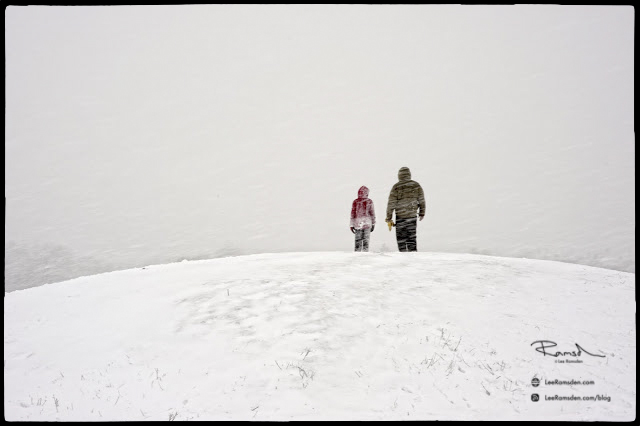
The sky was dark and not looking good, I took a few shots of the people who were wrapped up warm braving the cold. 

Whilst on the retreat back to the house... 

feeling a bit disappointed, as there wasn't much that could be taken. I see the sky start to clear. 

Oh yes, happy days....

I take my time to see what will unfold before my eyes. Some stunning colours started to come out.

I took a few snapshots of the cold and grey. My favourite piece of the weather is the cemetery scene.


<img src="Father and child on the snow" alt="Dunstable downs Ciltern Chilterns Lee Ramsden"> 
<img src=" Dunstable Downs" alt="snow milfs house wives walking dogging dog walking">