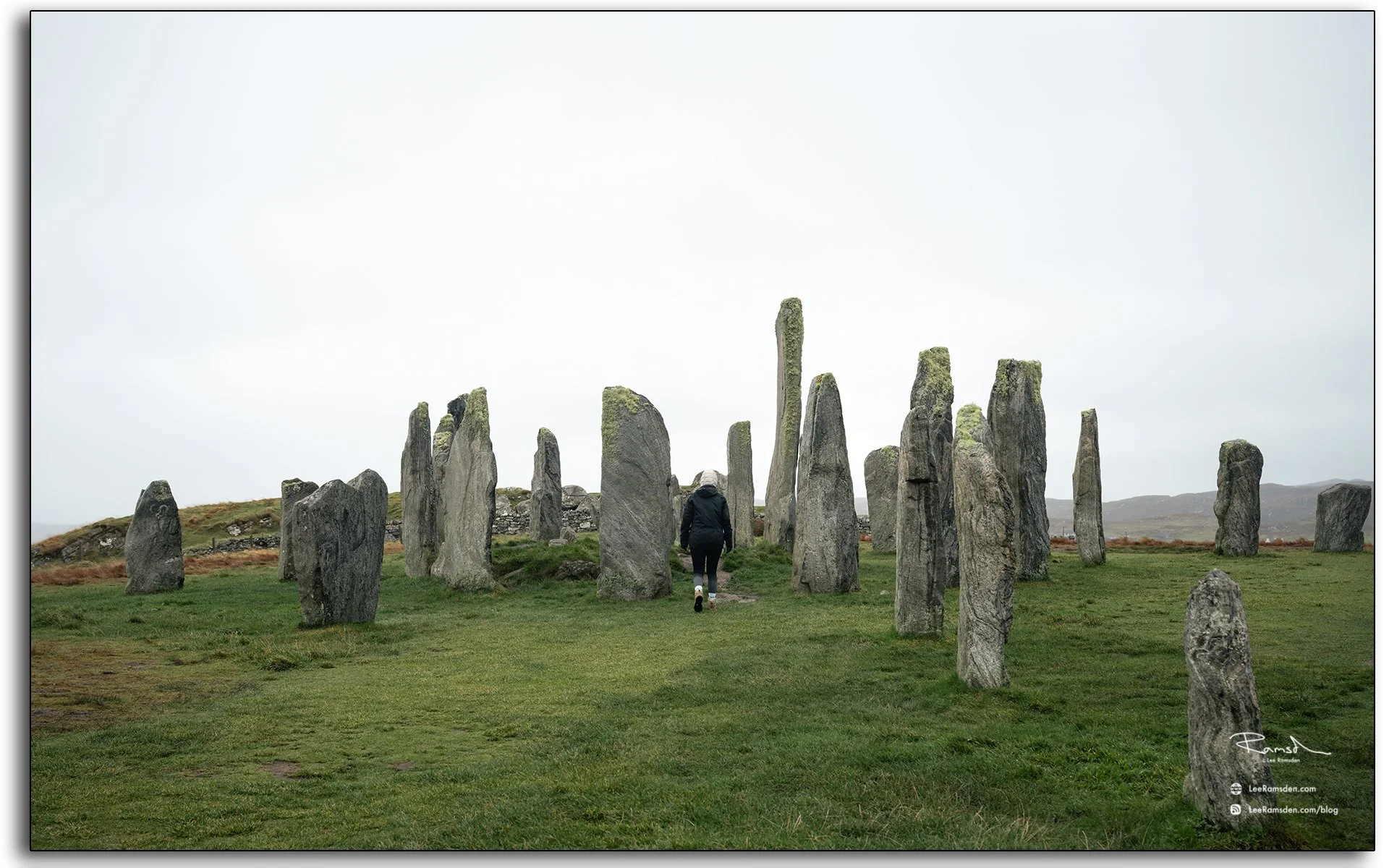
The Callanish Standing Stones are one of the most remarkable prehistoric sites in Scotland — older even than Stonehenge. They date back to around 2900 BC, standing on a ridge above Loch Roag on the Isle of Lewis, exposed to wind and rain.
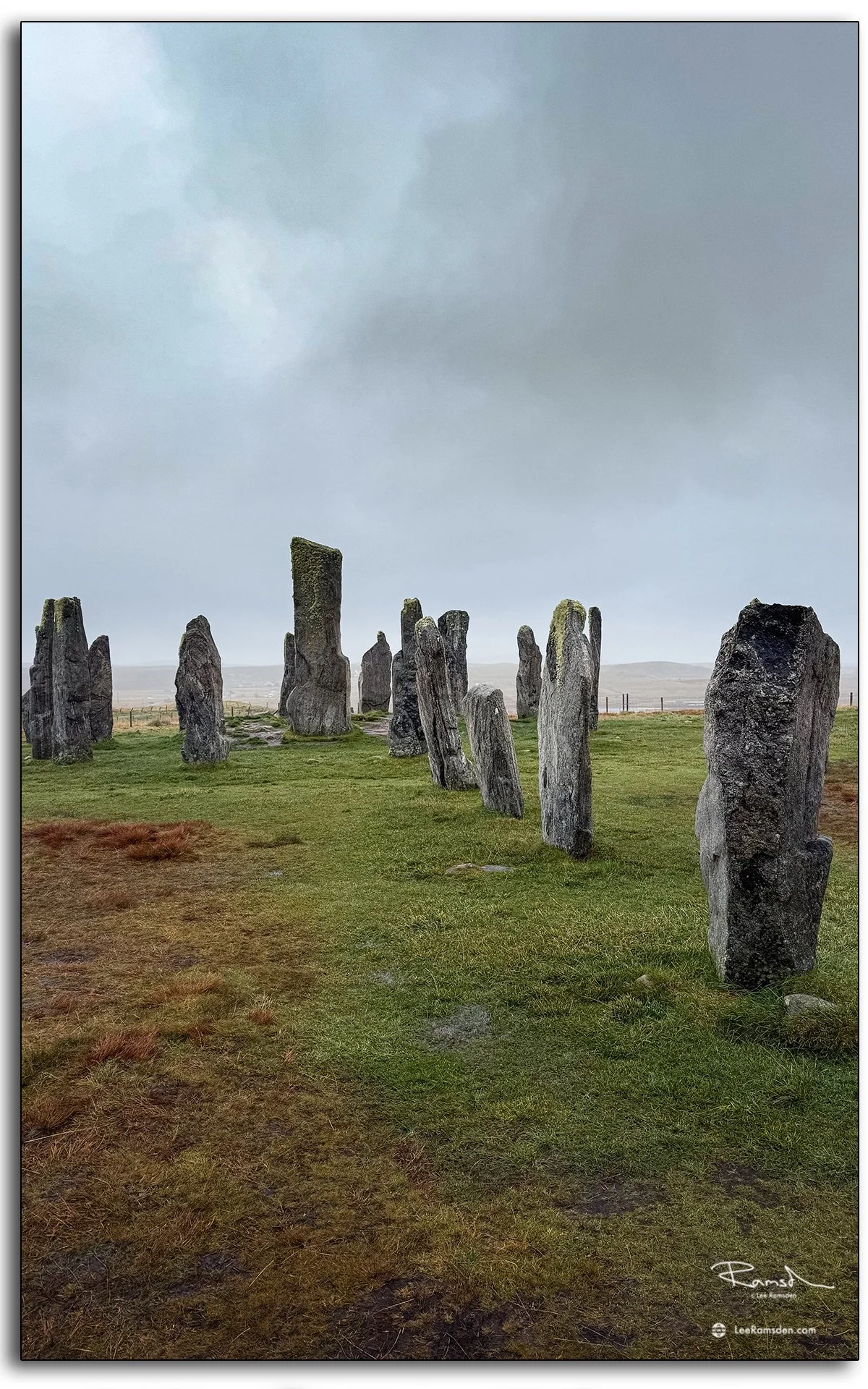
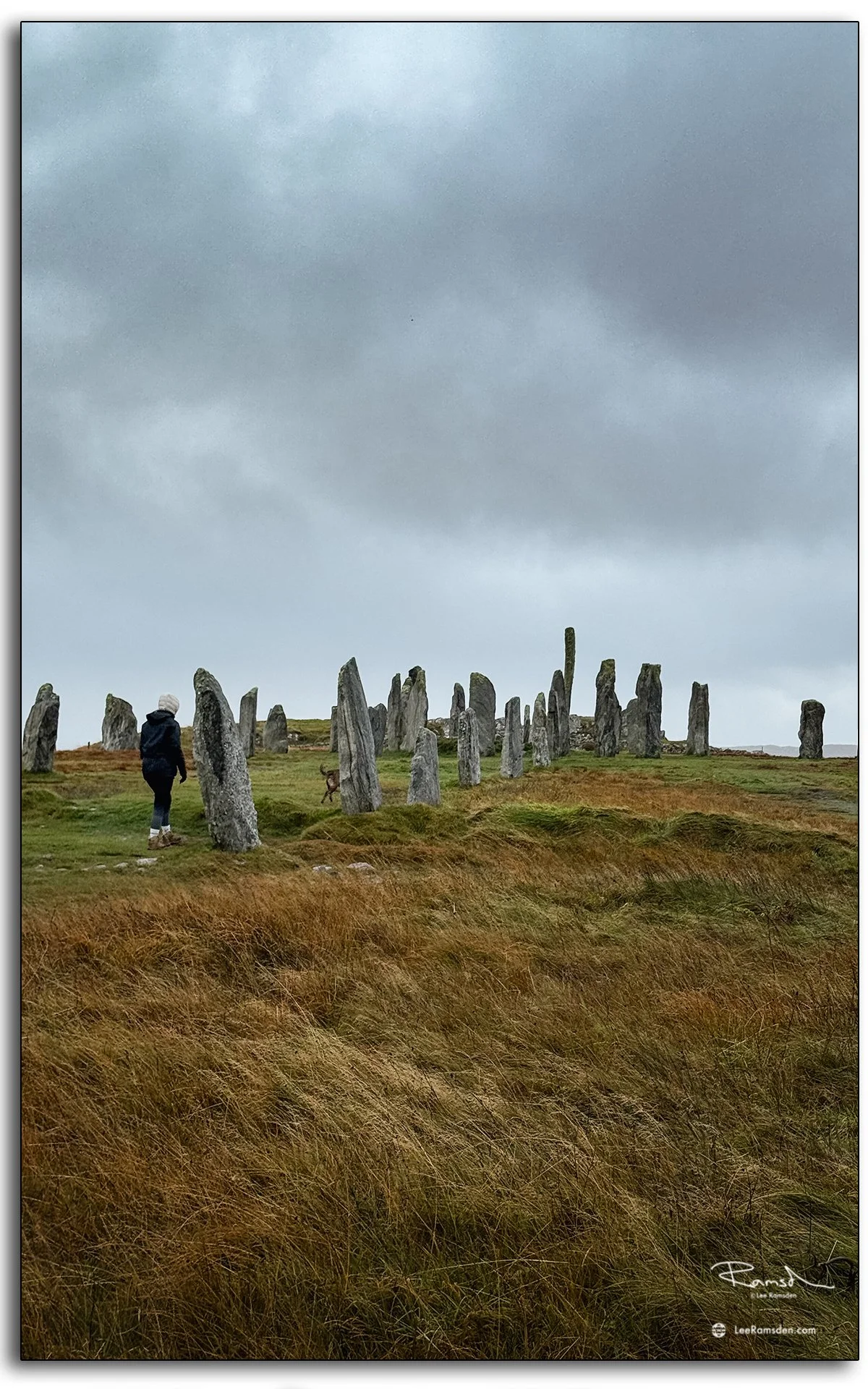
The layout forms a cruciform pattern with a central stone circle — thought to have been used for ritual or astronomical purposes. Some researchers believe the stones align with the moon’s movements, marking key lunar cycles every 18.6 years. Whether or not that’s true, it’s clear they were built with purpose and precision.
Standing among them, you feel the weight of thousands of years. The stones have watched everything: weather, people, beliefs — and yet they remain. There’s no visitor centre soundtrack or polished interpretation needed. Just the sound of the wind and the thought that this place was already ancient when the pyramids were young.
From the blackhouses of Lewis to the Callanish stones, history on these islands isn’t locked away — it’s standing right there in the landscape.
See more from across the Outer Hebrides in my Places collection.