lee ramsden photography

Isle of Harris Coffee Stop

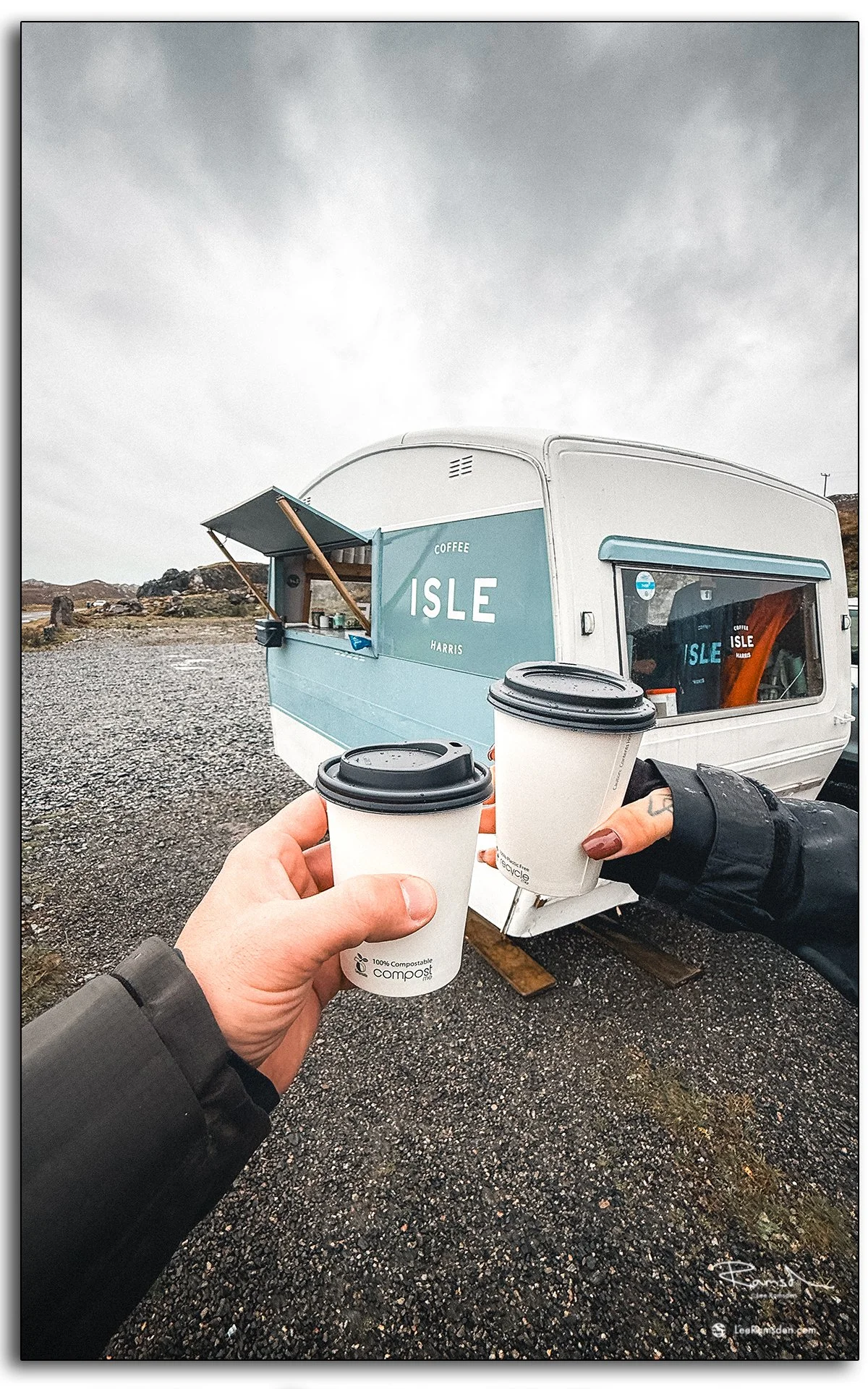
Two takeaway coffees held up in front of the Isle Coffee van on the Isle of Harris, Scotland, during a rainy Hebridean morning.

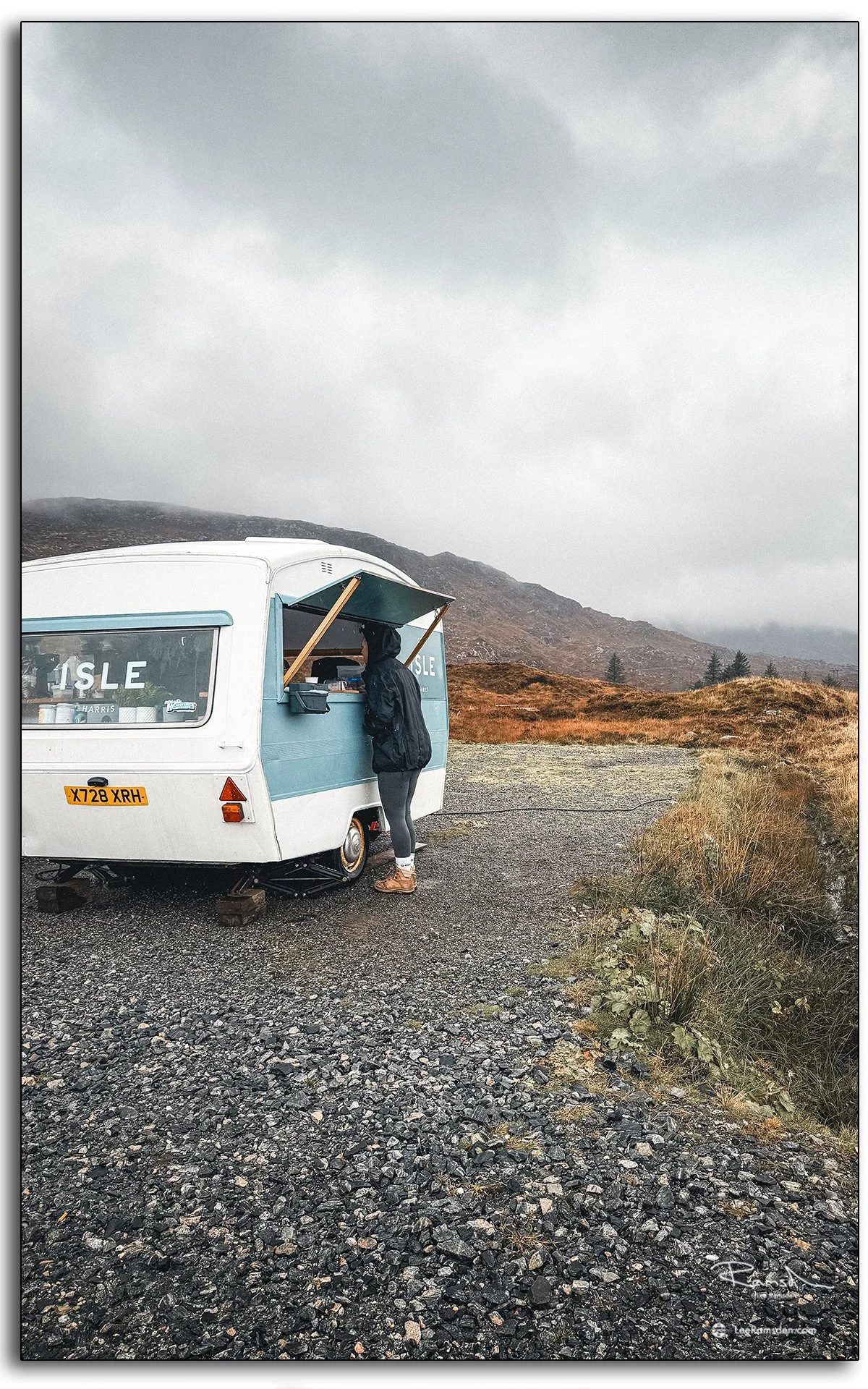
Somewhere between the rain showers and the winding roads of Harris, we found this little caravan café — ISLE Coffee Harris. (Their Instagram page.) A simple setup, just parked off the road with a view that beats any high street chain.

We’d been on the road since early morning, soaked through and windblown, so two coffees from a very friendly Ozzy felt like gold. Sean’s passion for good coffee is clearly evident in the quality that he produces.

Sometimes, it’s not the big landscapes or famous landmarks that stick with you. It’s these moments — hands warming on a cup, rain easing off, and the realisation that there’s nowhere else you’d rather be.

Highland Cattle – Kings of the Scottish Hills

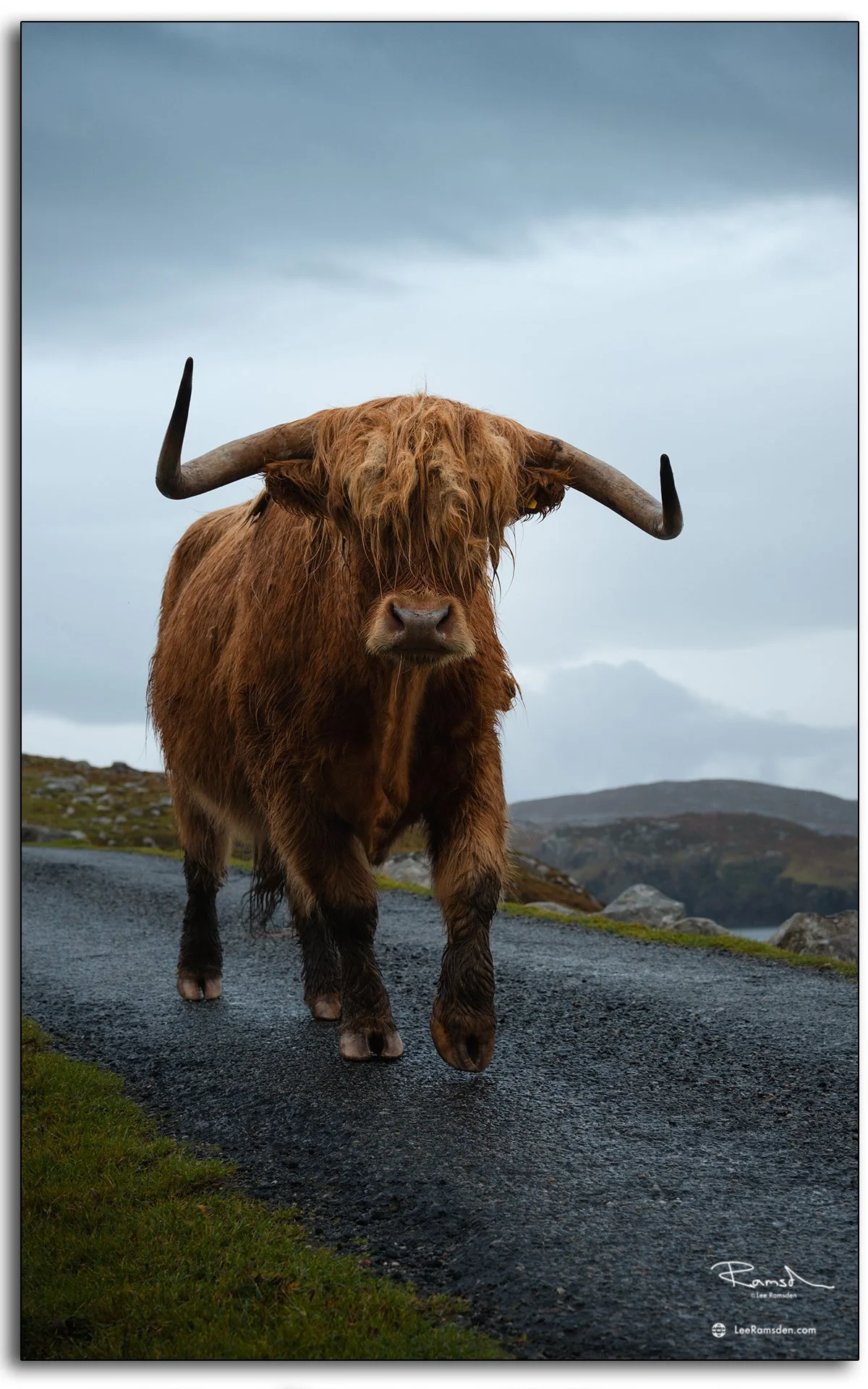
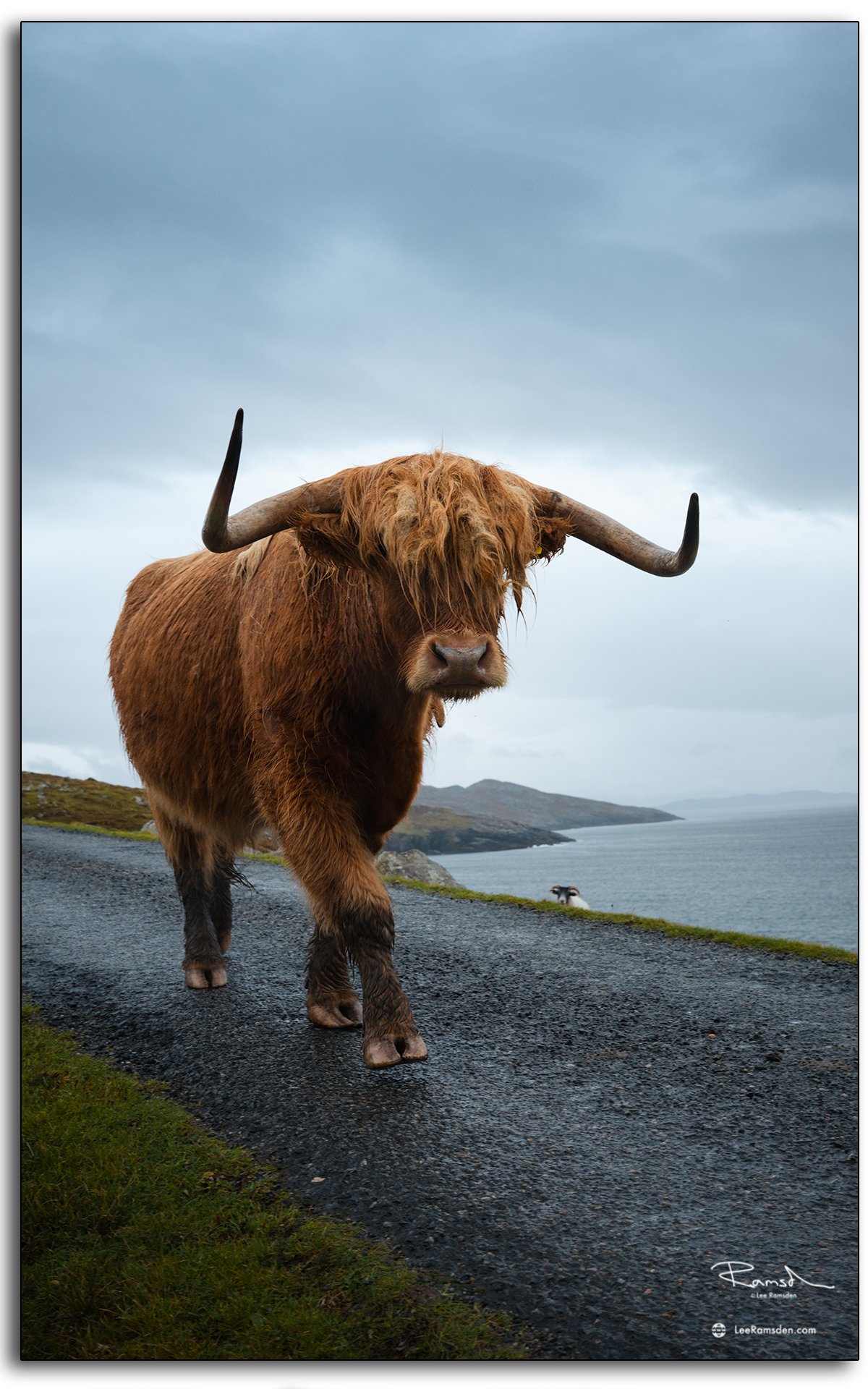
Scottish Highland cow walking along a country road on the Isle of Lewis, with rugged hills and moody Hebridean skies in the background.

If there’s one animal that sums up the Highlands, it’s the Highland cow — or Heilan’ coo

Long horns, shaggy hair, and a calm confidence that makes them look like they own every inch of road they walk on.

These were taken on the Isle of Harris, where the weather changes by the minute and these animals don’t even flinch. They’ve been bred for exactly this — centuries of surviving rough winters, steep ground, and relentless wind. That thick double coat keeps them warm and sheds rain, and it’s also why they can thrive on land where most cattle wouldn’t last a week.

Seeing them up close on a single-track road with the sea behind felt like meeting the true locals of the islands — steady, weathered, and built for this land.

Butt of Lewis Lighthouse – Edge of the Atlantic

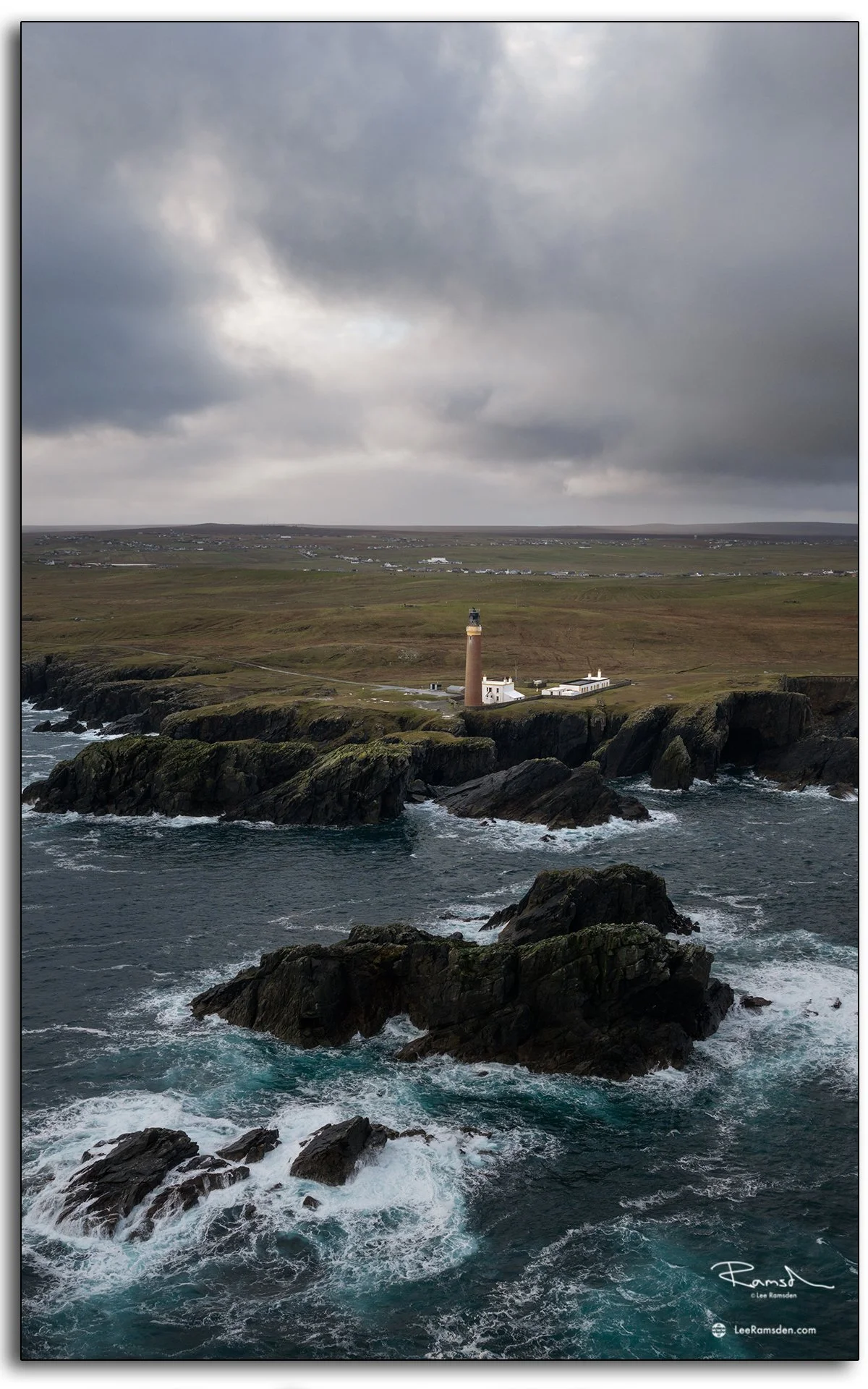
Aerial view of the Butt of Lewis lighthouse on the Isle of Lewis, Scotland, surrounded by dramatic cliffs and crashing Atlantic waves under moody skies.

The Butt of Lewis Lighthouse marks the very northern tip of the Outer Hebrides — officially one of the windiest spots in the UK. It was built in 1862 by David Stevenson, part of the famous family of lighthouse engineers, using local red brick from Runcorn. The design has stood up to more than a century and a half of brutal Atlantic weather — a proper testament to Scottish engineering.

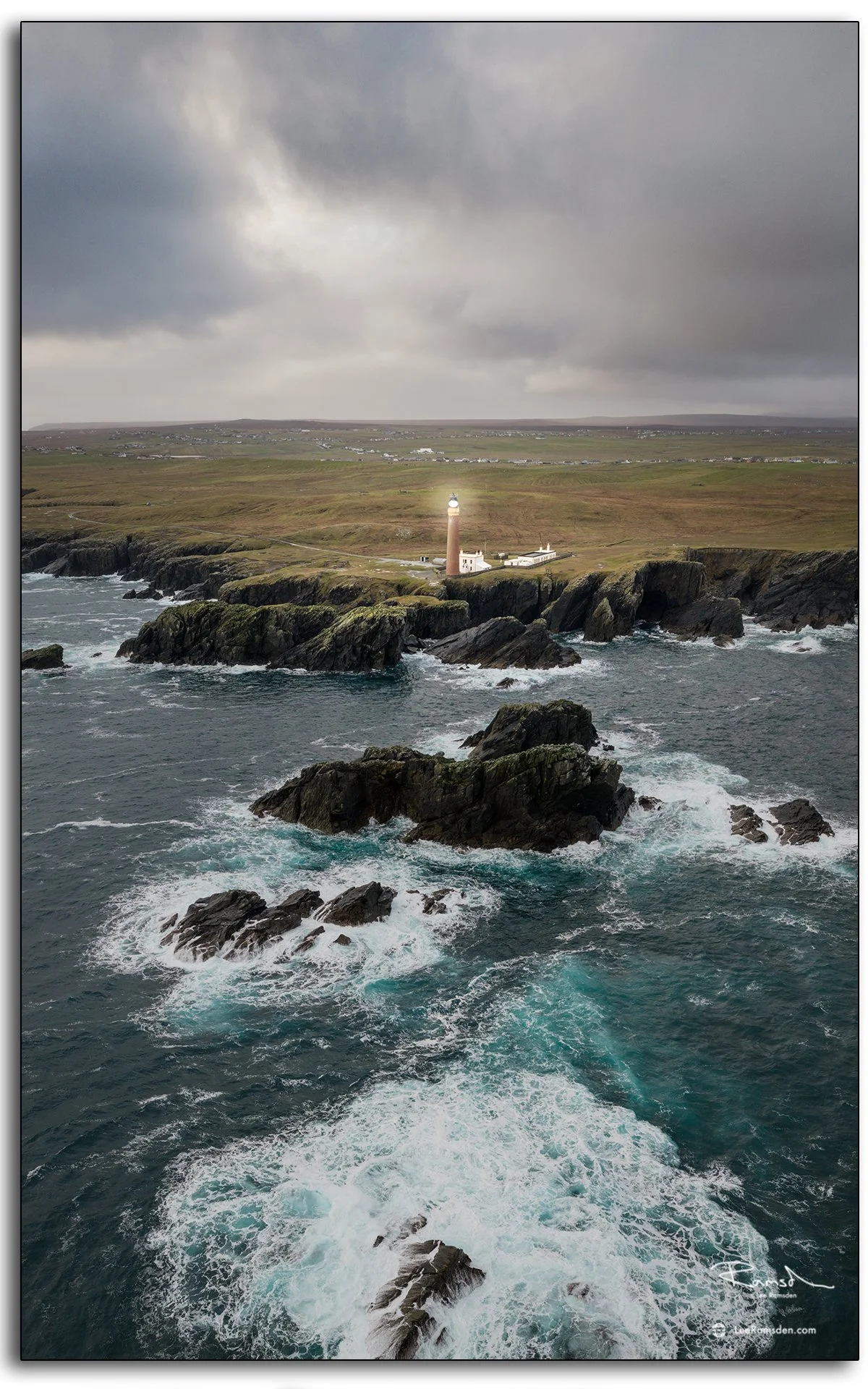
Aerial view of the Butt of Lewis lighthouse on the Isle of Lewis, Scotland, surrounded by dramatic cliffs and crashing Atlantic waves under moody skies.

The lighthouse stands 121 feet tall and guards the point where the Atlantic Ocean meets the Minch. Its beam still cuts through the dark nights, warning passing vessels of the rugged coastline that’s claimed many ships over the years.

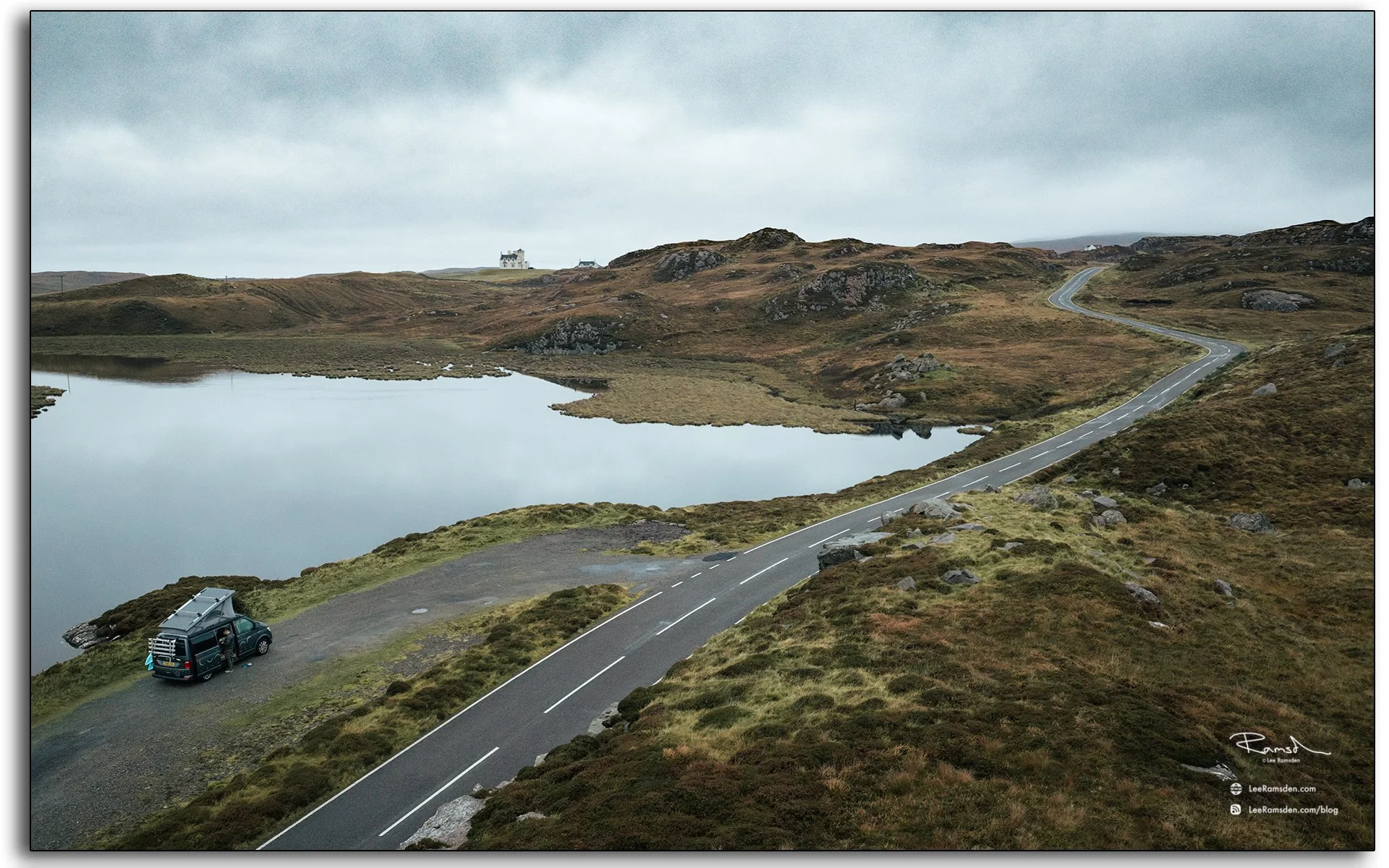
Just south of the lighthouse, the cliffs are dramatic — sheer drops, sea stacks, and the kind of coastal views that make you feel very small. We parked the van overlooking the waves for the night. The wind was relentless, but waking up there, with the surf hammering the rocks below, was worth every shudder of the camper.

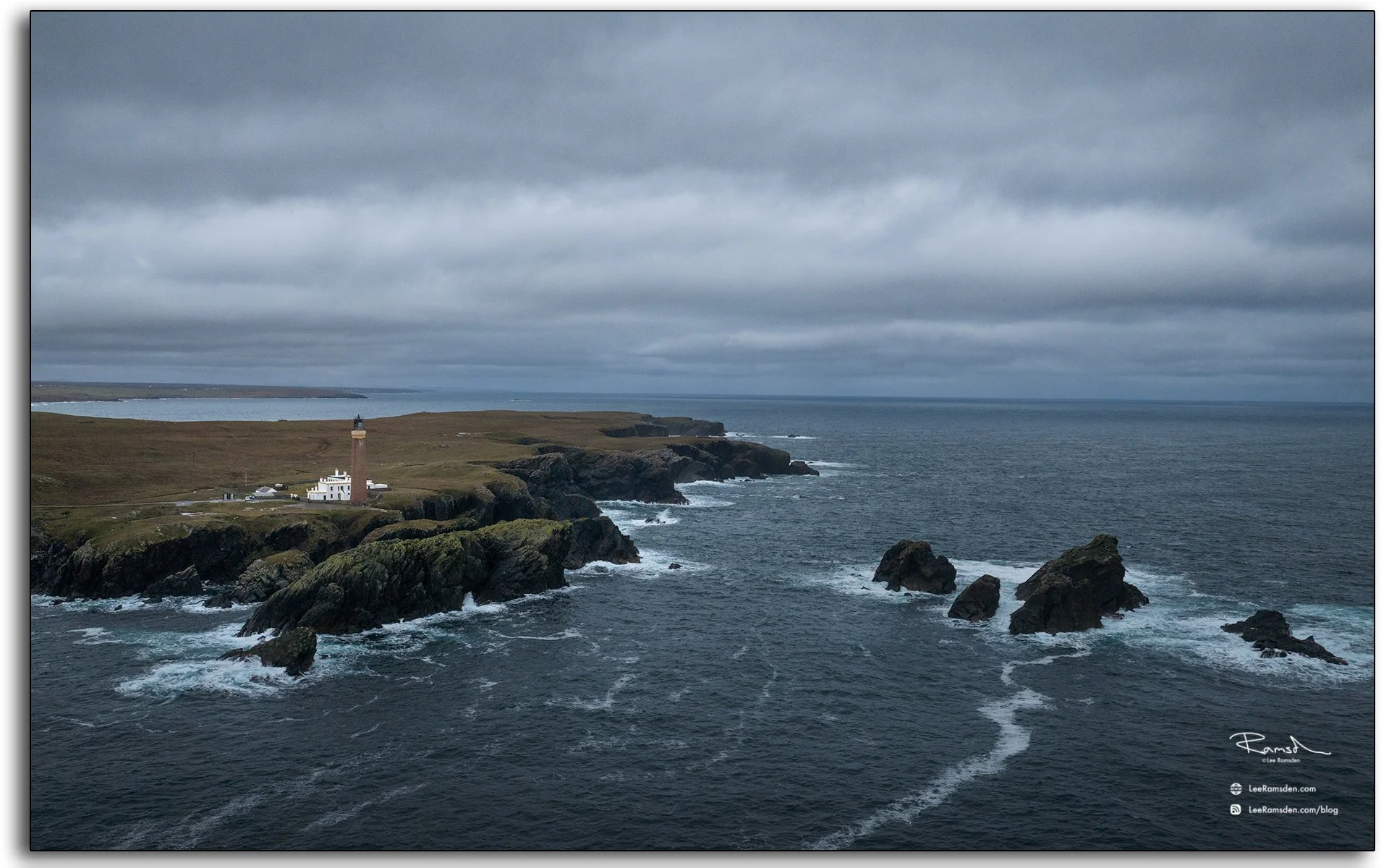
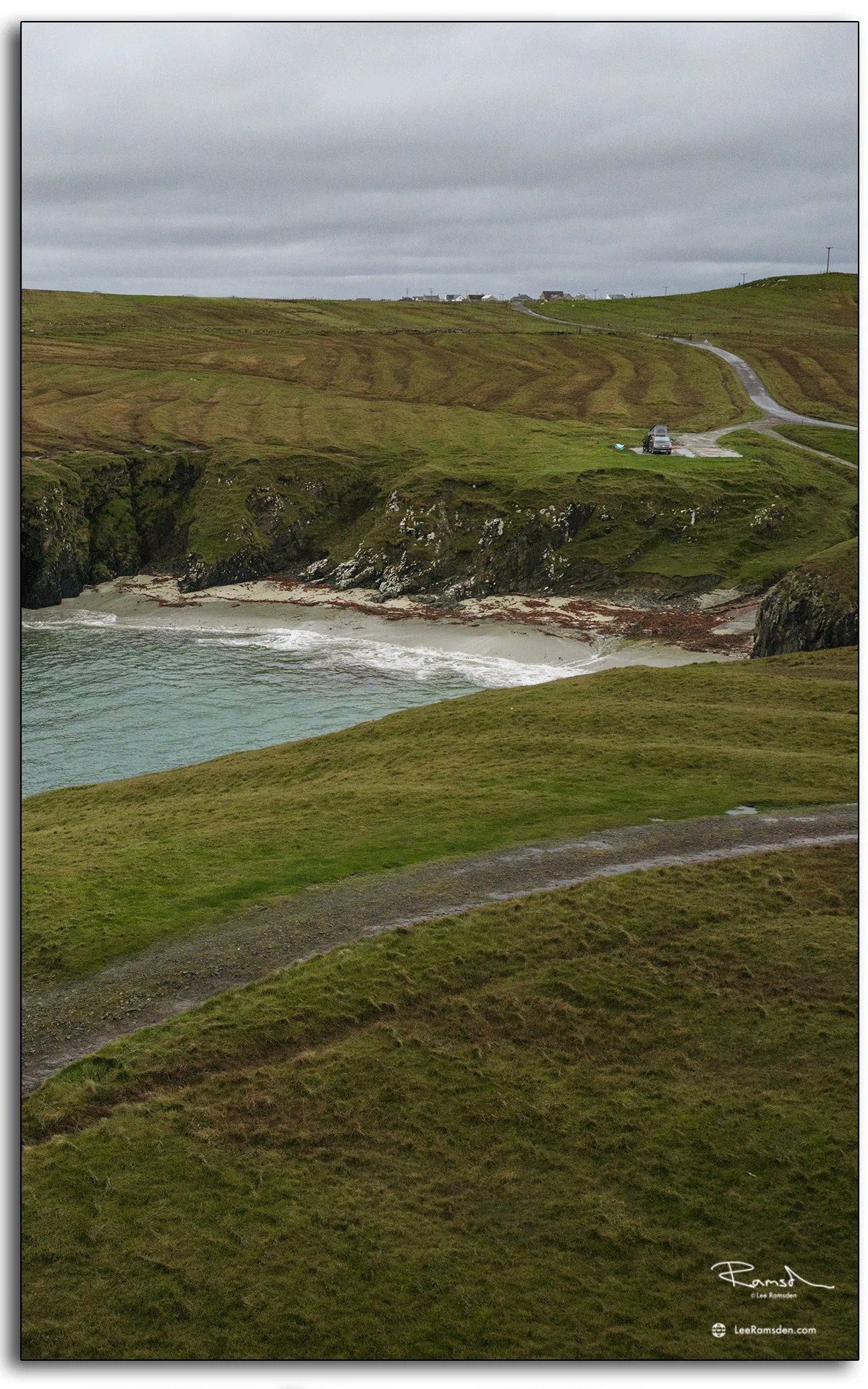
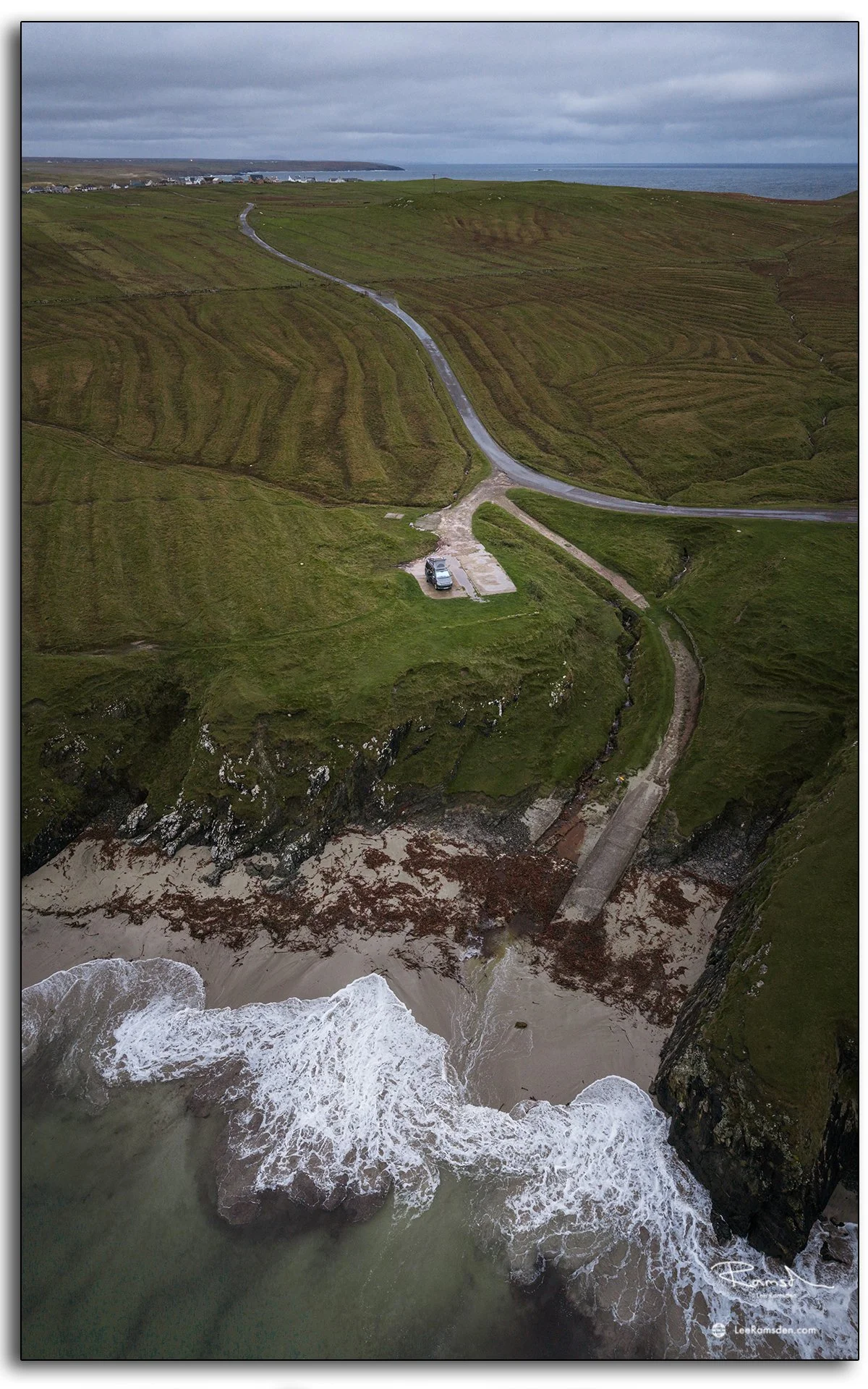
Aerial view of a secluded beach and winding road near the Butt of Lewis, Isle of Lewis, Scotland, showing rugged cliffs and Atlantic waves

It’s easy to forget, looking at this remote headland, how vital places like this once were — guiding mariners through fog and storm before GPS or radar existed. The Butt of Lewis still feels like a working part of the coastline’s history.

From ancient standing stones to lighthouses that still face down the North Atlantic, the Outer Hebrides hold layers of human endurance.

See more coastal and maritime photography in my Wind Industry and Places collections.

Callanish Standing Stones – Isle of Lewis

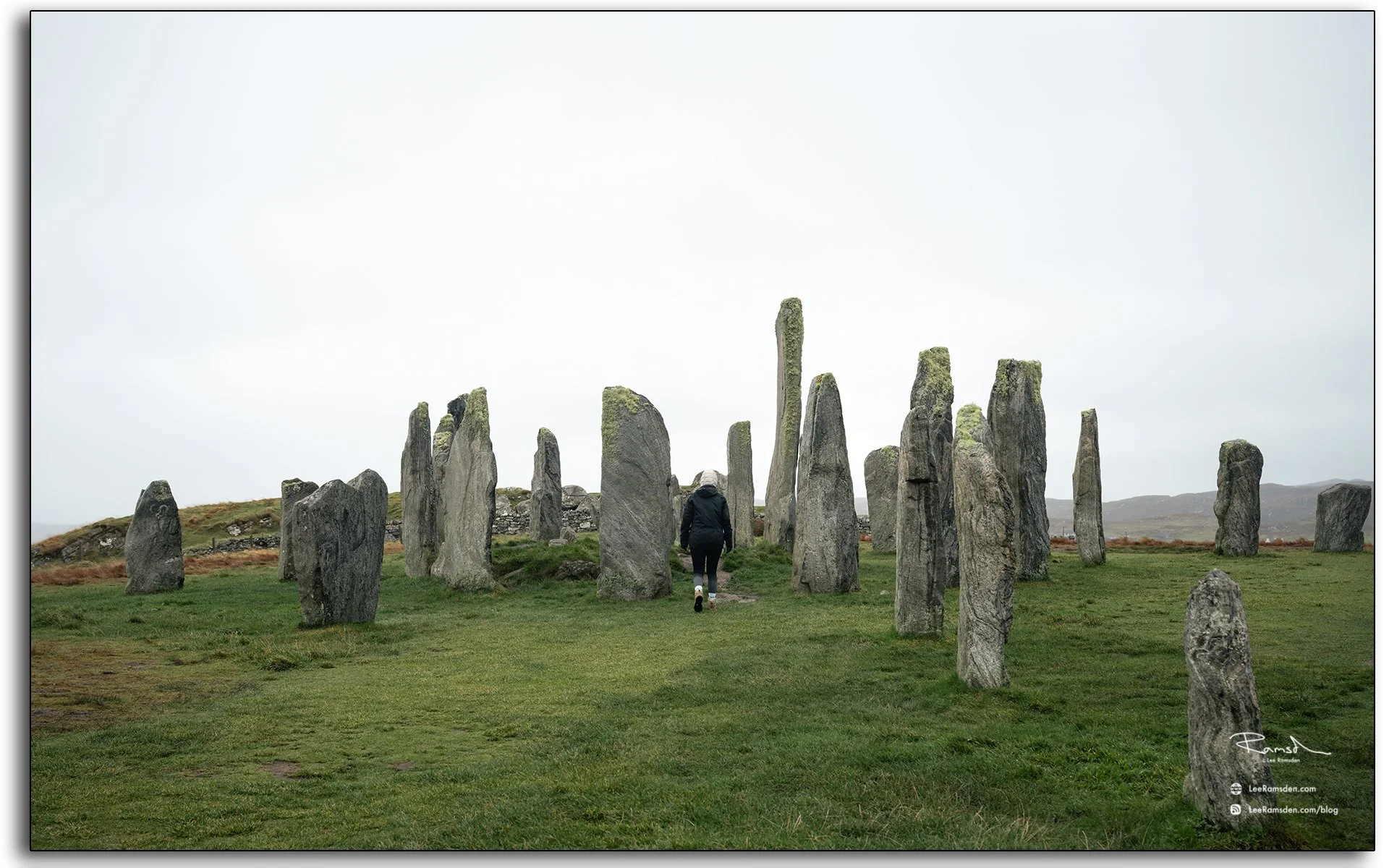
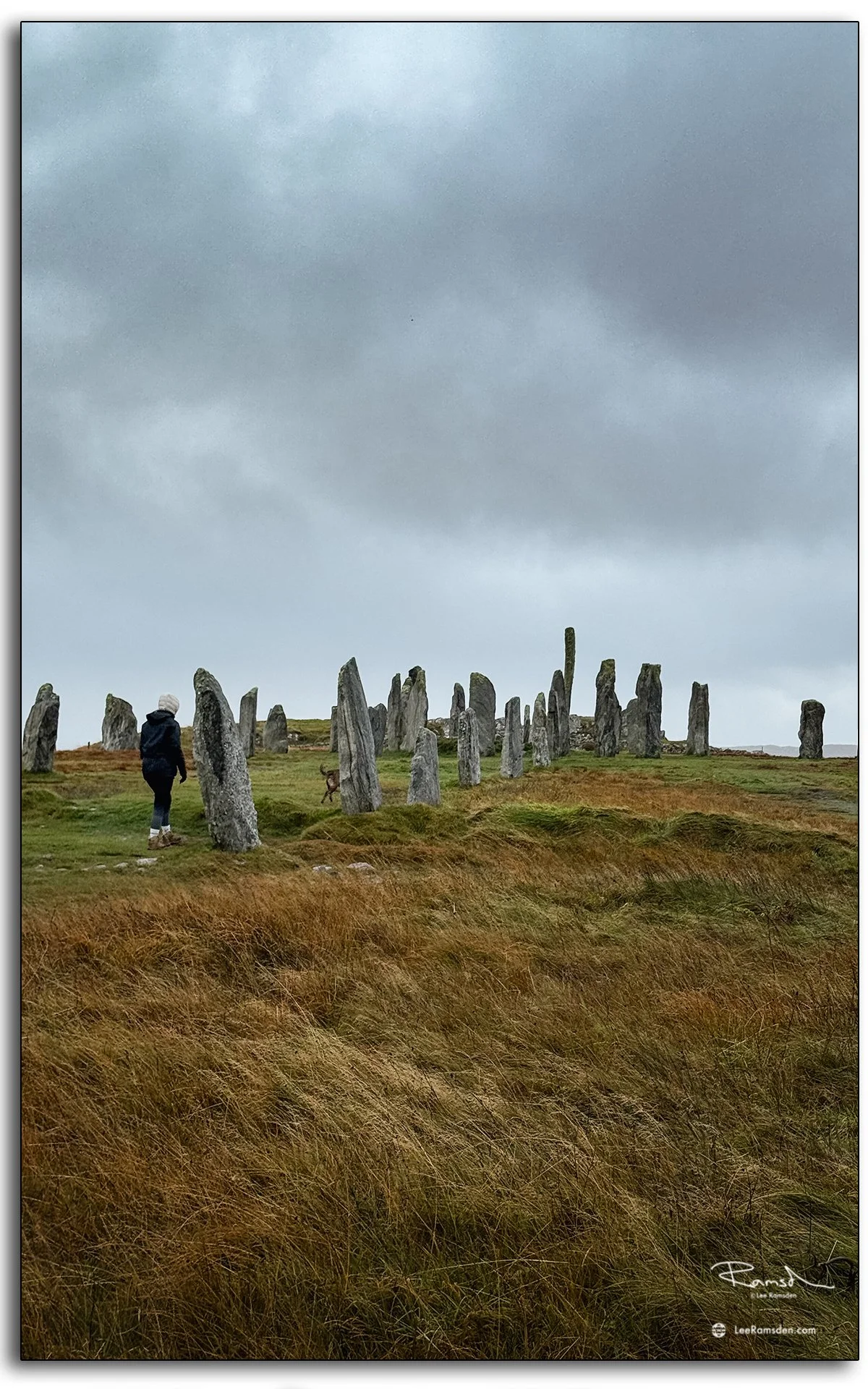
Person walking among the ancient Callanish Standing Stones on the Isle of Lewis, Scotland, surrounded by misty skies and rugged moorland

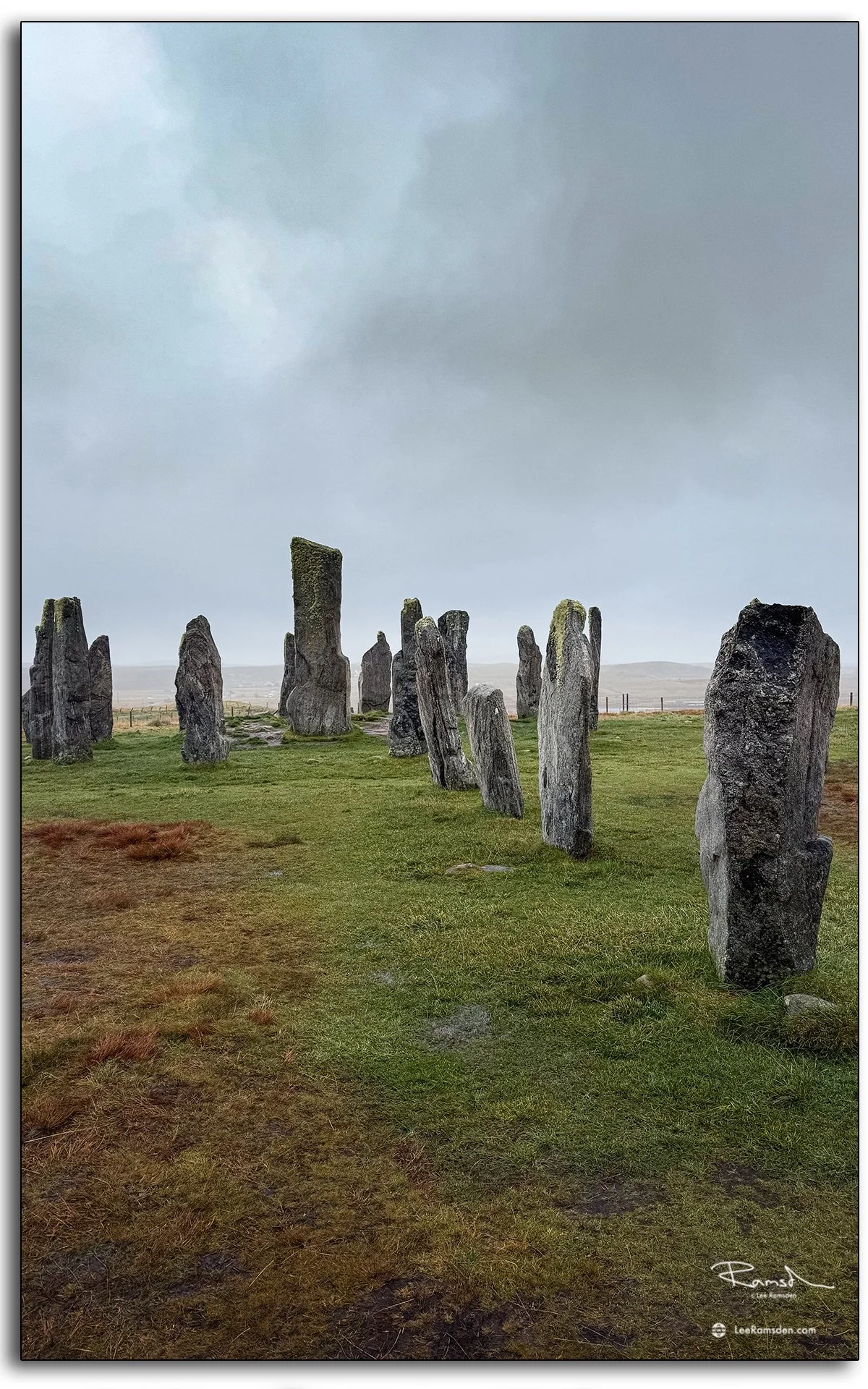
The Callanish Standing Stones are one of the most remarkable prehistoric sites in Scotland — older even than Stonehenge. They date back to around 2900 BC, standing on a ridge above Loch Roag on the Isle of Lewis, exposed to wind and rain.

Person walking among the ancient Callanish Standing Stones on the Isle of Lewis, Scotland, surrounded by misty skies and rugged moorland

The layout forms a cruciform pattern with a central stone circle — thought to have been used for ritual or astronomical purposes. Some researchers believe the stones align with the moon’s movements, marking key lunar cycles every 18.6 years. Whether or not that’s true, it’s clear they were built with purpose and precision.

Standing among them, you feel the weight of thousands of years. The stones have watched everything: weather, people, beliefs — and yet they remain. There’s no visitor centre soundtrack or polished interpretation needed. Just the sound of the wind and the thought that this place was already ancient when the pyramids were young.

From the blackhouses of Lewis to the Callanish stones, history on these islands isn’t locked away — it’s standing right there in the landscape.

See more from across the Outer Hebrides in my Places collection.

The Blackhouses of the Outer Hebrides

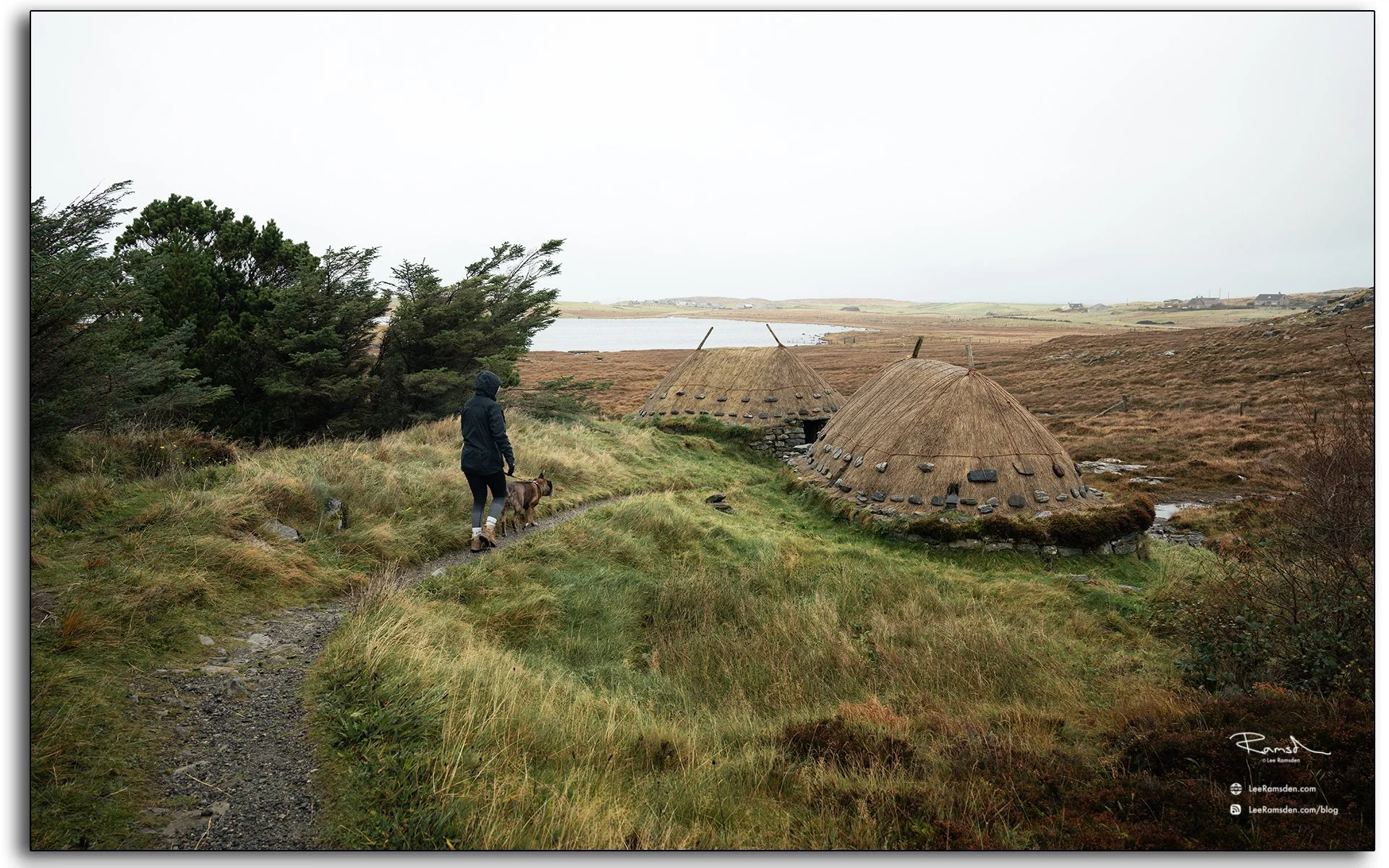
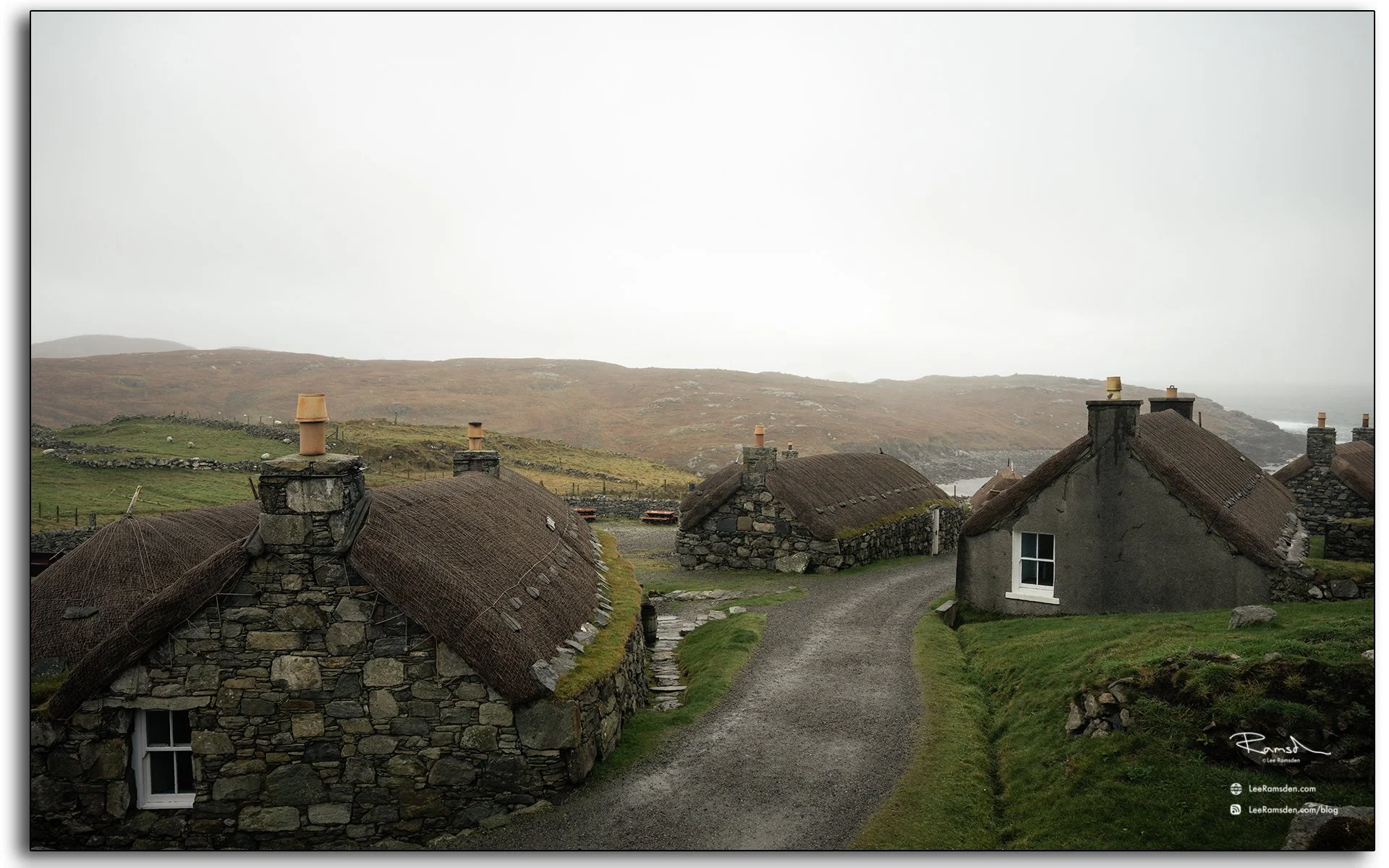
Traditional stone and thatch blackhouses at Gearrannan on the Isle of Lewis, Scotland, showing restored crofting homes surrounded by green grass and moody skies

The blackhouses are among the most striking parts of Hebridean history — not because they’re grand or decorative, but because they’re built from necessity and endurance.

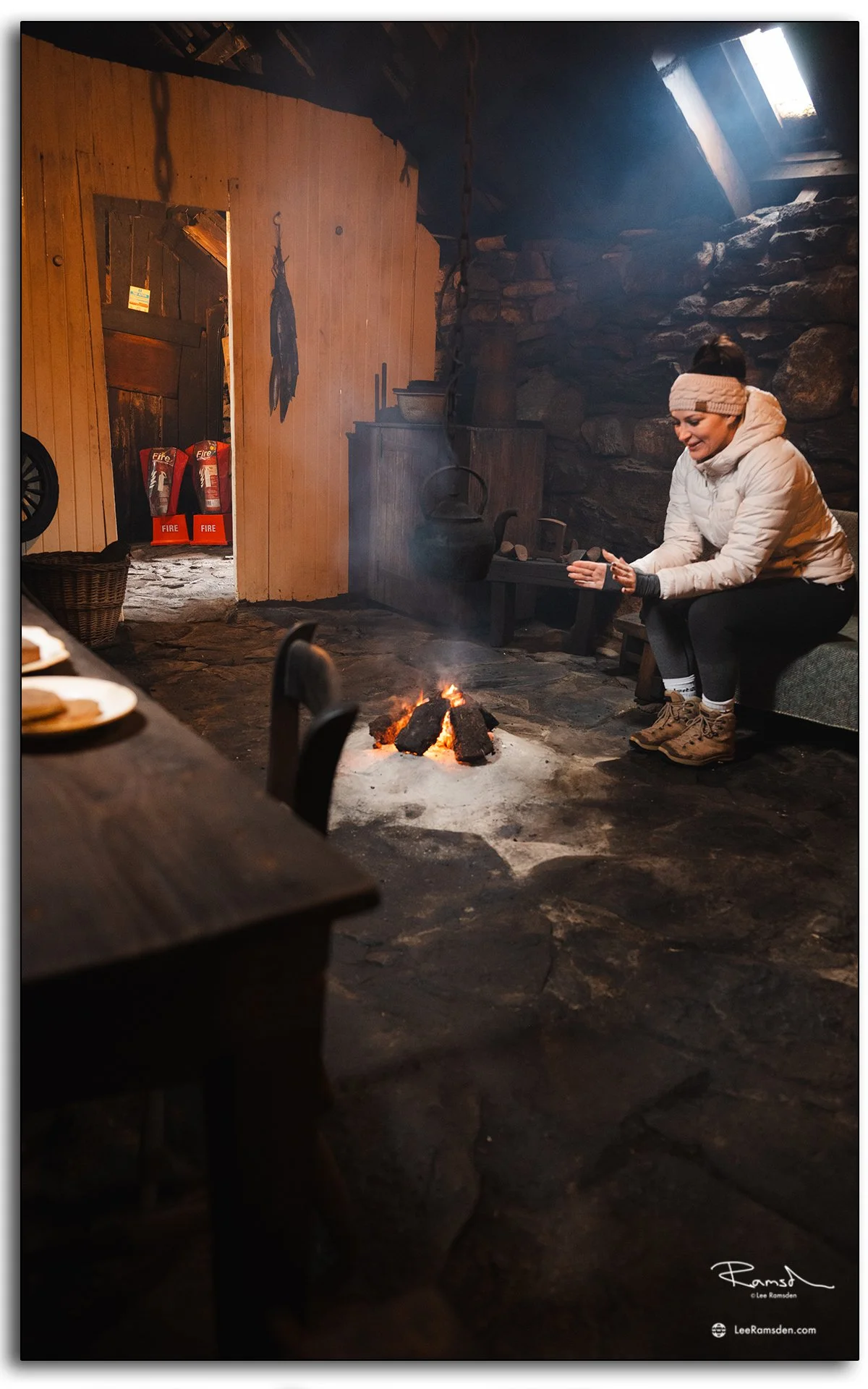
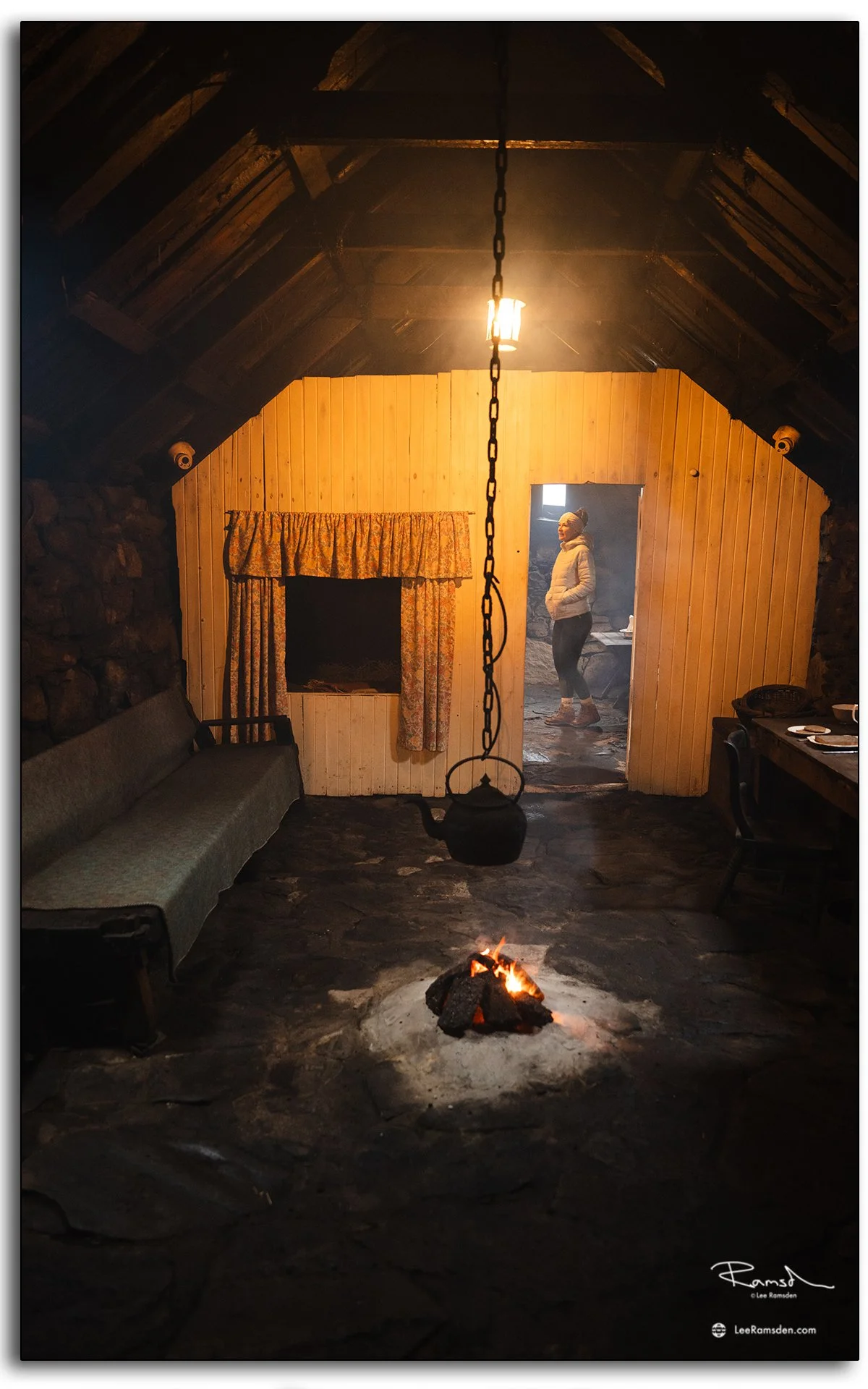
Interior of a traditional blackhouse at Gearrannan on the Isle of Lewis, Scotland, showing an open fire, hanging kettle, and rustic stone-and-wood construction

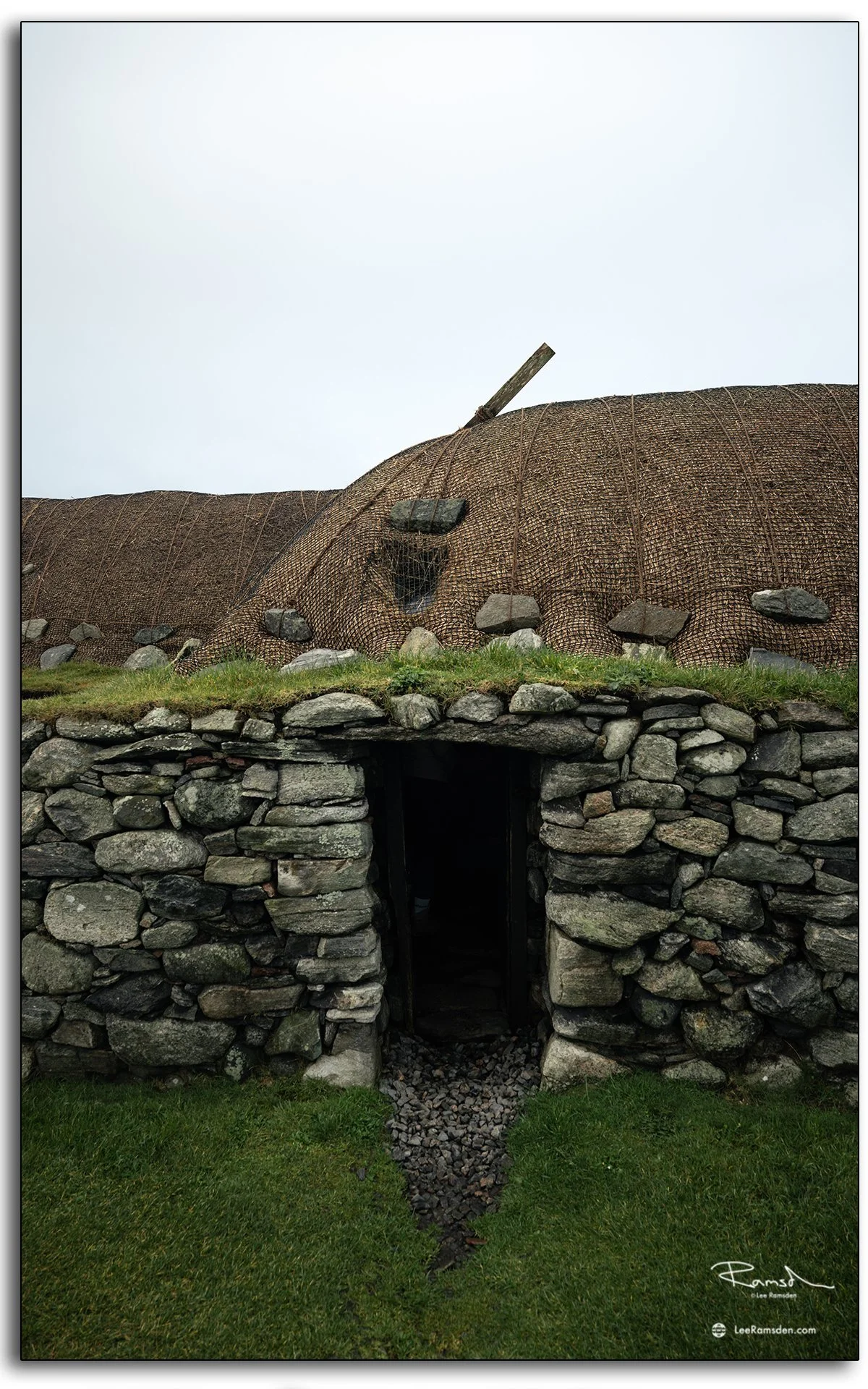
Constructed from stone, turf, and timber, these dwellings were designed to withstand Atlantic weather and make the most of limited materials. Smoke from the central hearth filled the house before escaping through the thatch, helping to preserve it from the elements. Cattle often shared the space with the family, separated by a low wall — warmth was a shared resource.

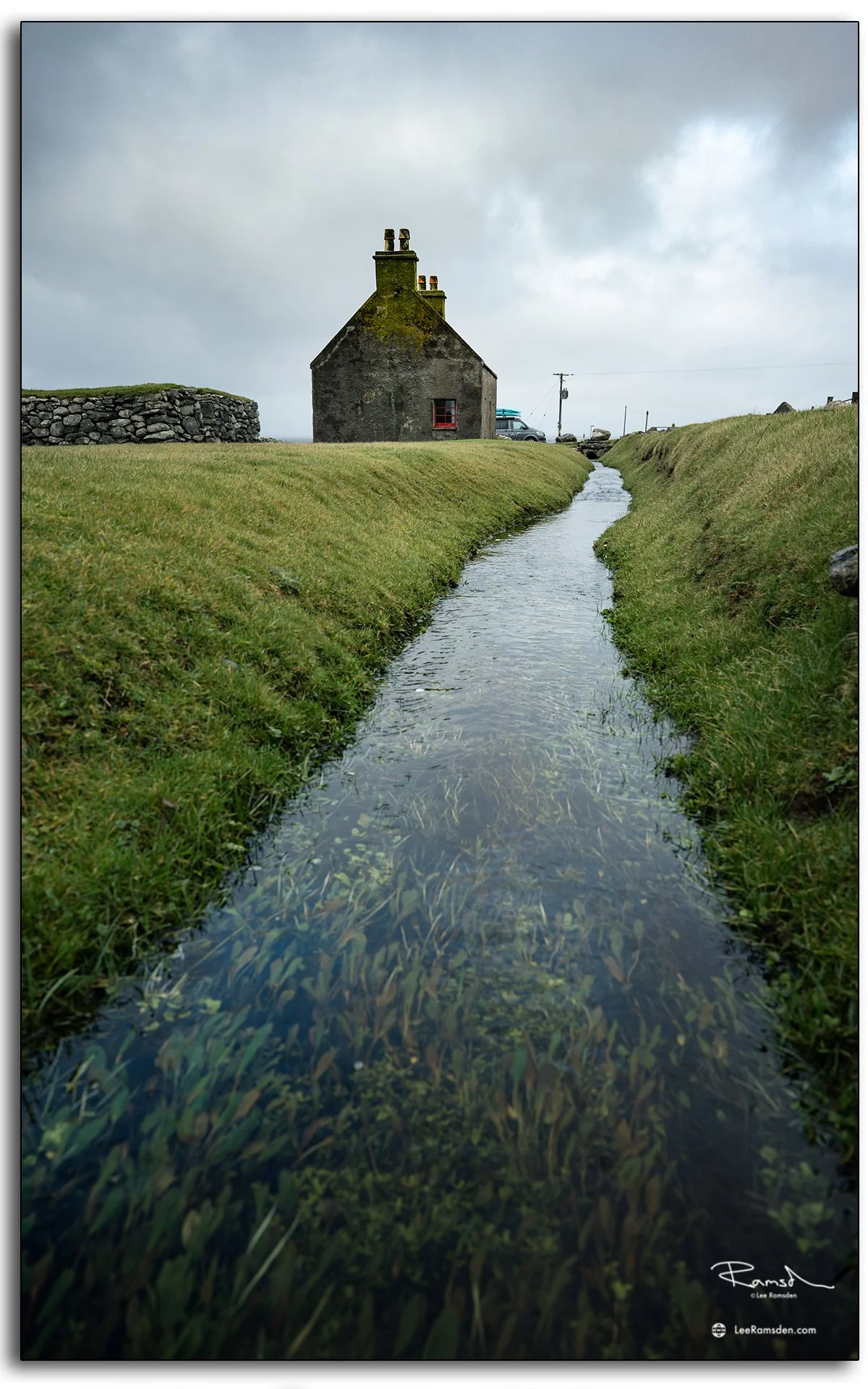
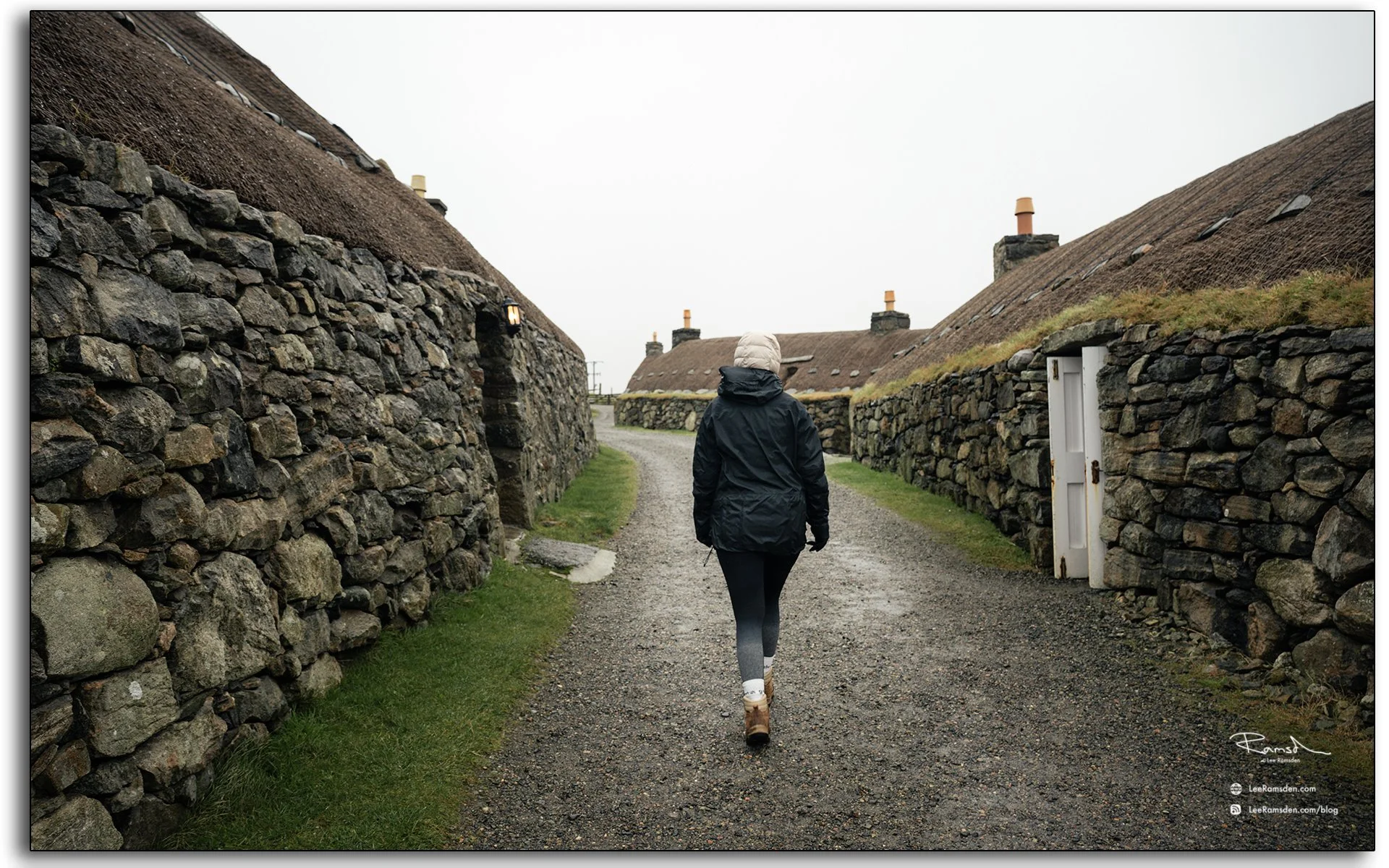
Historic blackhouse with moss-covered chimneys at Gearrannan on the Isle of Lewis, Scotland, viewed along a narrow grassy stream leading toward the sea.
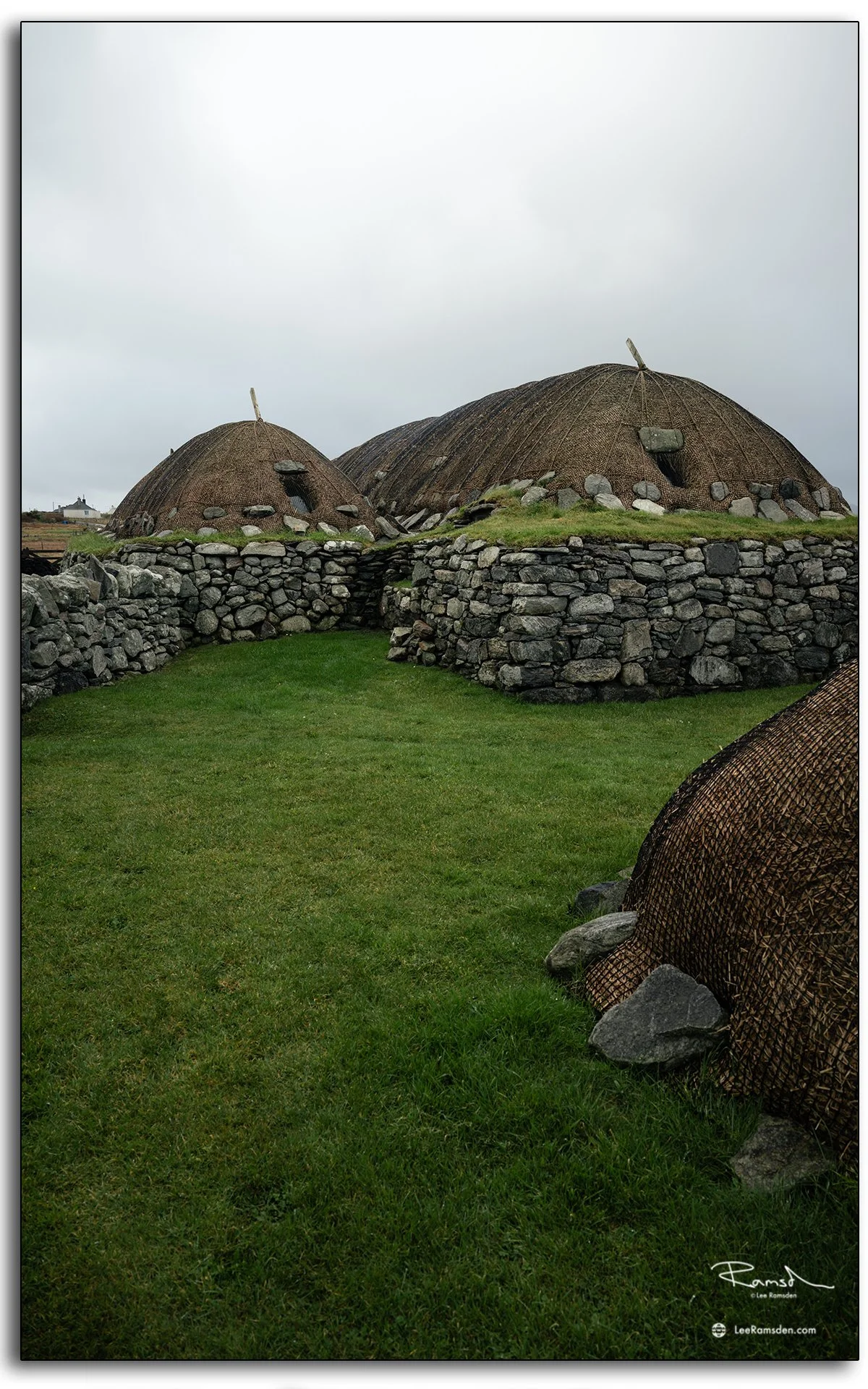
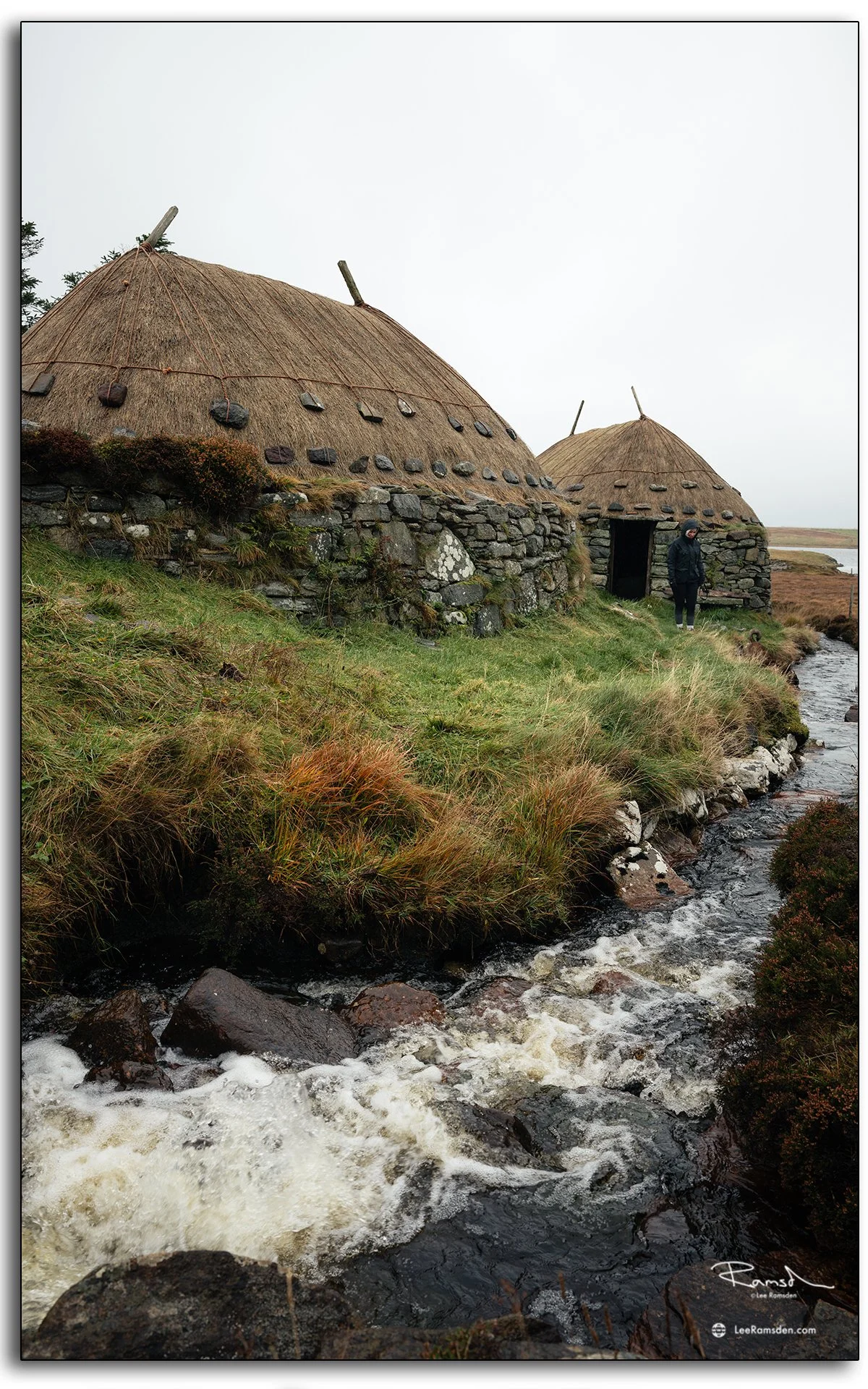
Traditional thatched blackhouses at Arnol on the Isle of Lewis, Scotland, with stone walls beside a flowing stream under grey Hebridean skies

There are a few restored examples scattered across the islands — like those at Arnol on Lewis, Gearrannan, and Norse Mill & Kiln — each one giving a glimpse of how islanders lived just a few generations ago. Standing inside, with the smell of peat smoke hanging in the air and the sound of the wind outside, you get a real sense of what “shelter” meant in its truest form.

Traditional thatched blackhouses at Arnol on the Isle of Lewis, Scotland, with stone walls beside a flowing stream under grey Hebridean skies

For all their simplicity, there’s a quiet sophistication to these buildings — natural insulation, low profiles against the wind, and a design that worked perfectly for their environment. They weren’t built to impress; they were built to survive.

Restored blackhouse village at Gearrannan on the Isle of Lewis, Scotland, featuring traditional stone cottages with thatched roofs overlooking the rugged coastline

Seeing these blackhouses in person connects you to the people who built them — tough, resourceful, and proud of their land.

See more of Scotland’s cultural and coastal heritage in my Places collection.

Footsteps on the Sand – Hushinish beach, Isle of Harris

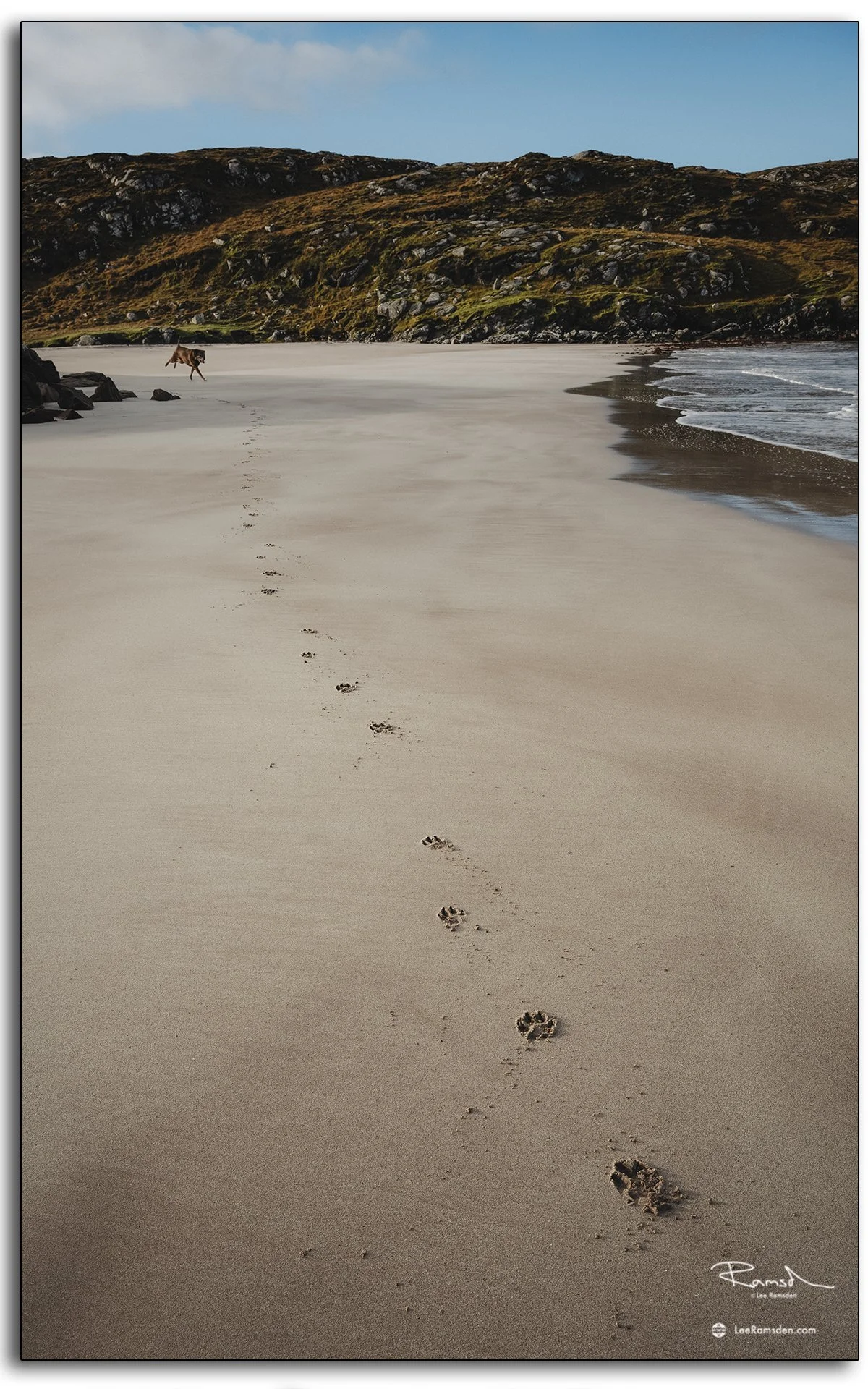
Dog paw prints and running dog along Hushinish Beach on the Isle of Harris, Scotland, leaving footprints in the smooth sand on a calm sunny day
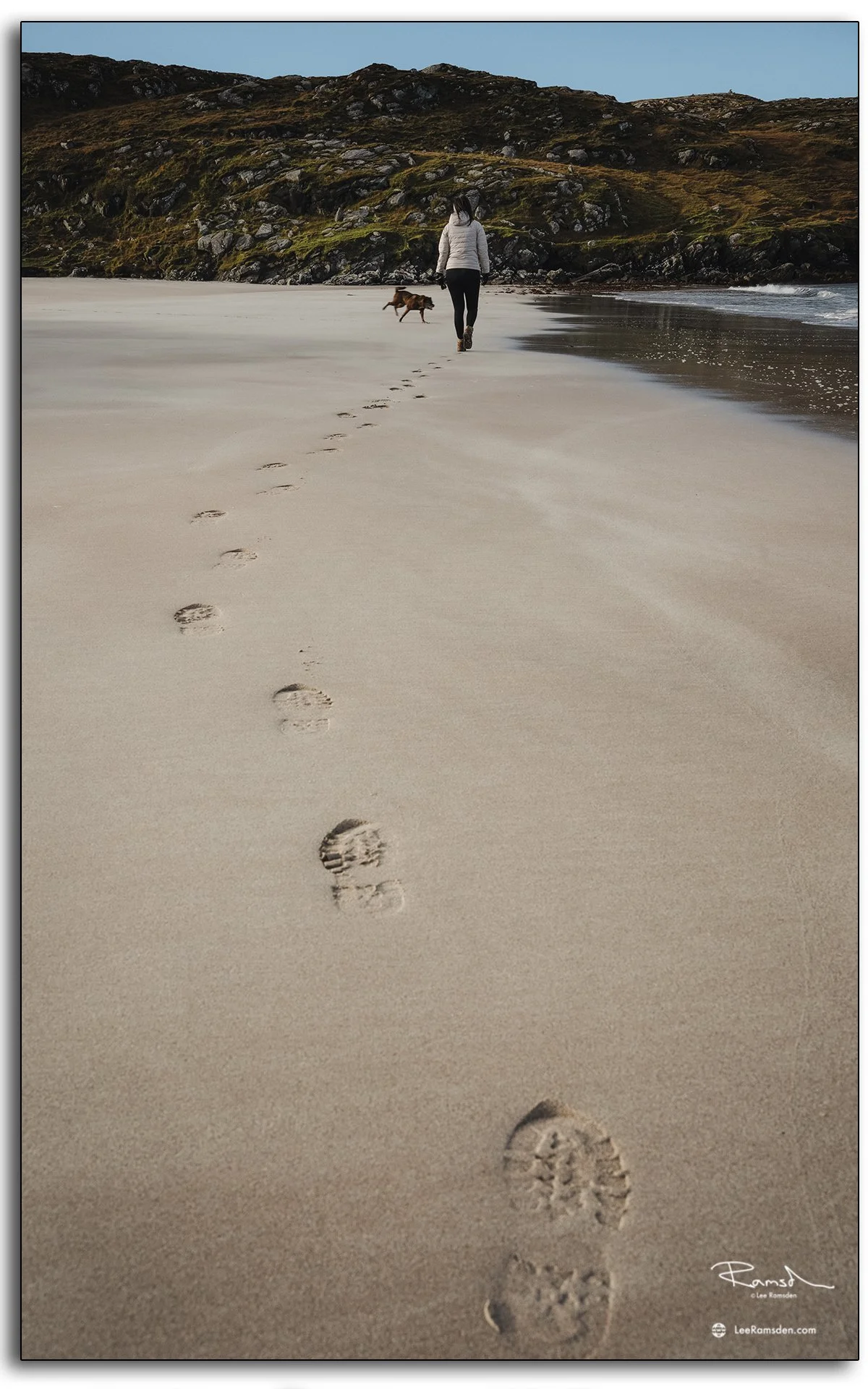
Woman walking with her dog along Hushinish Beach on the Isle of Harris, Scotland, leaving footprints in the smooth sand on a calm sunny day

There’s something grounding about the sound of wet sand underfoot. Each step leaves a mark that’s quickly erased by the tide.

These two frames were taken on the Hushinish beach Isle of Harris, where the beaches stretch further than the eye can see and time seems to slow. Just footsteps and paw prints, tracing a quiet walk at the edge of the Atlantic.

Sometimes the most meaningful photographs are the simplest ones — just space, movement, and a sense of calm.

The Outer Hebrides have a rhythm of their own — part wild, part peaceful, always humbling.

Explore more of Scotland’s coastlines in my Places collection.

Uig Harbour, Isle of Skye

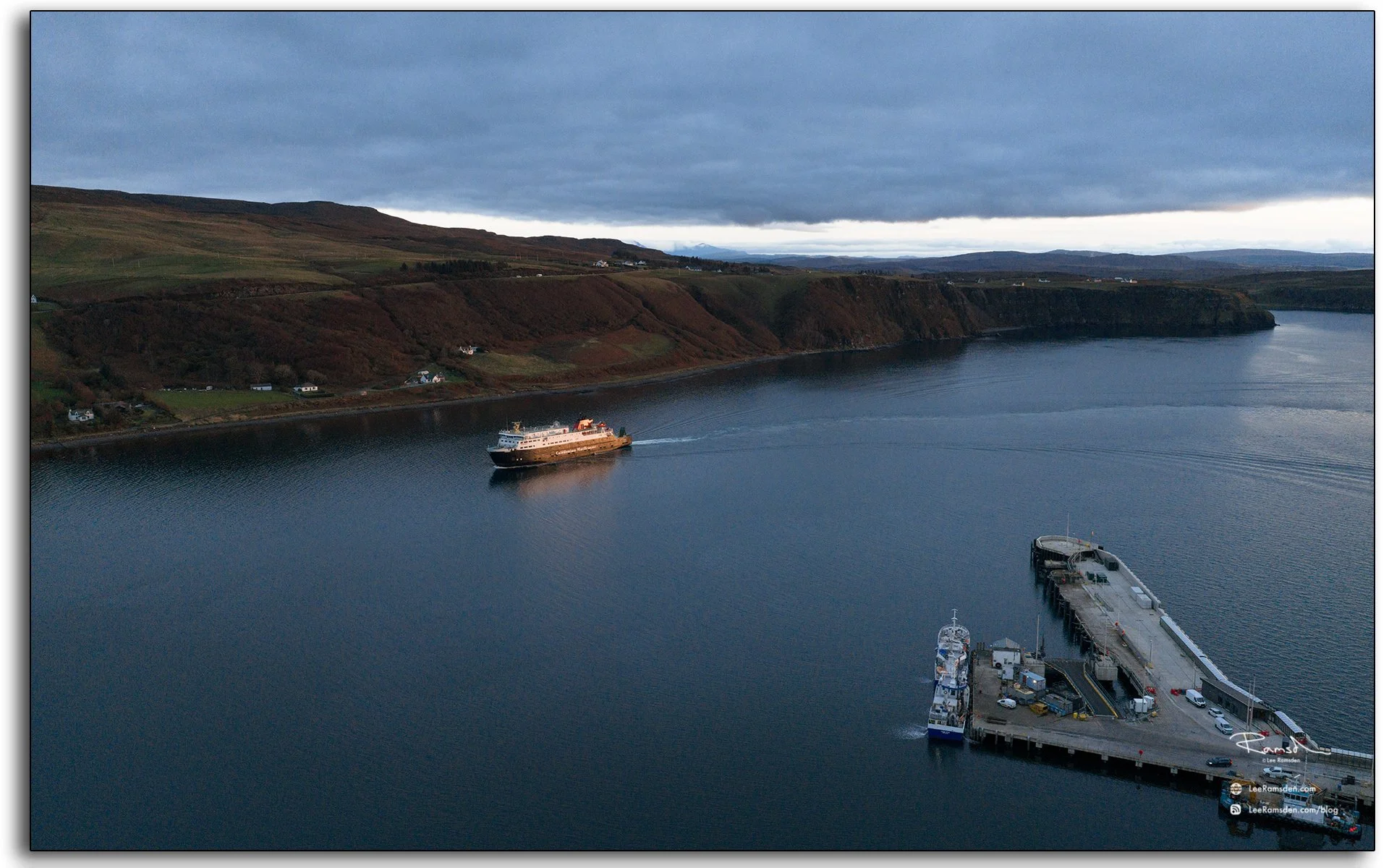
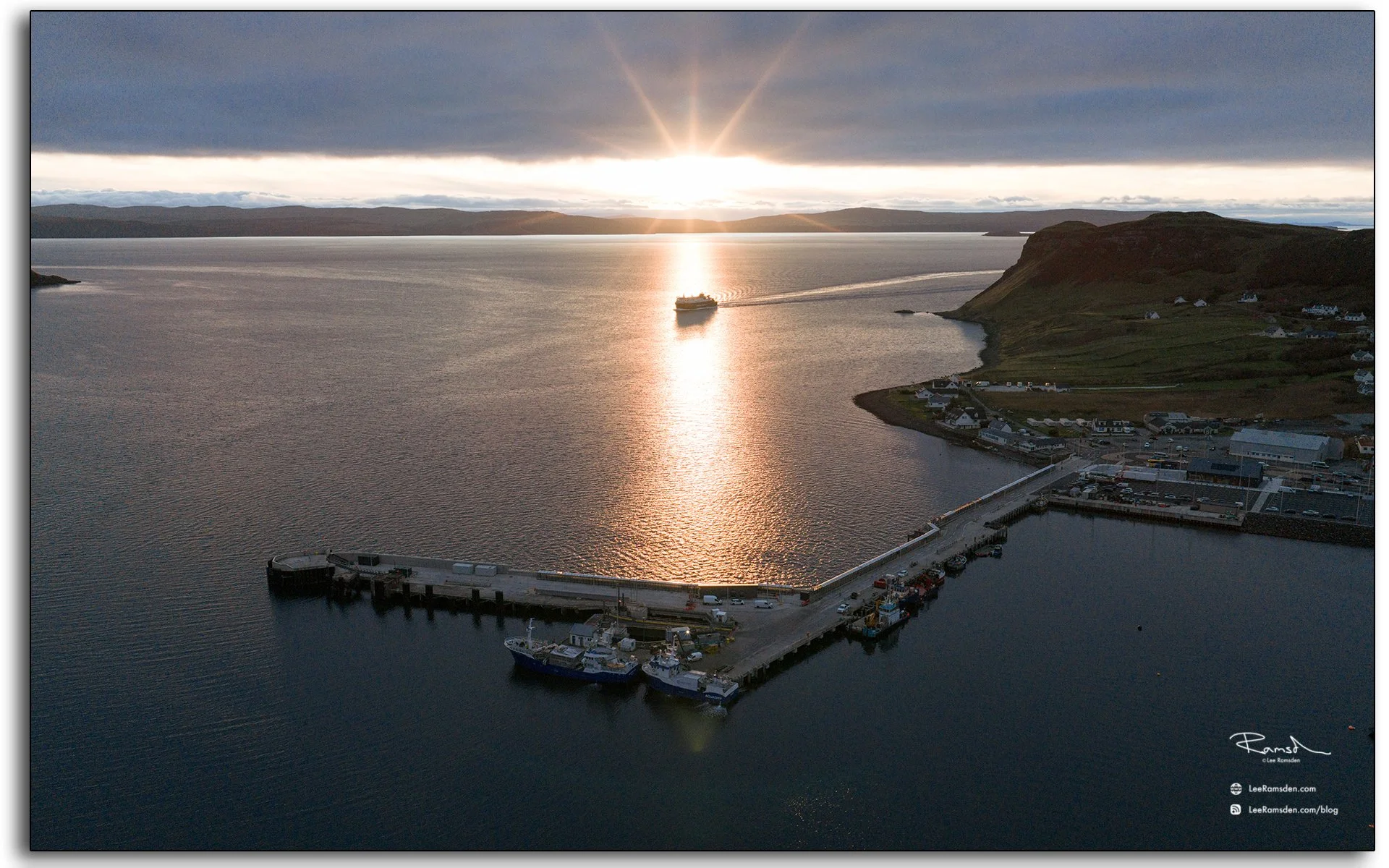
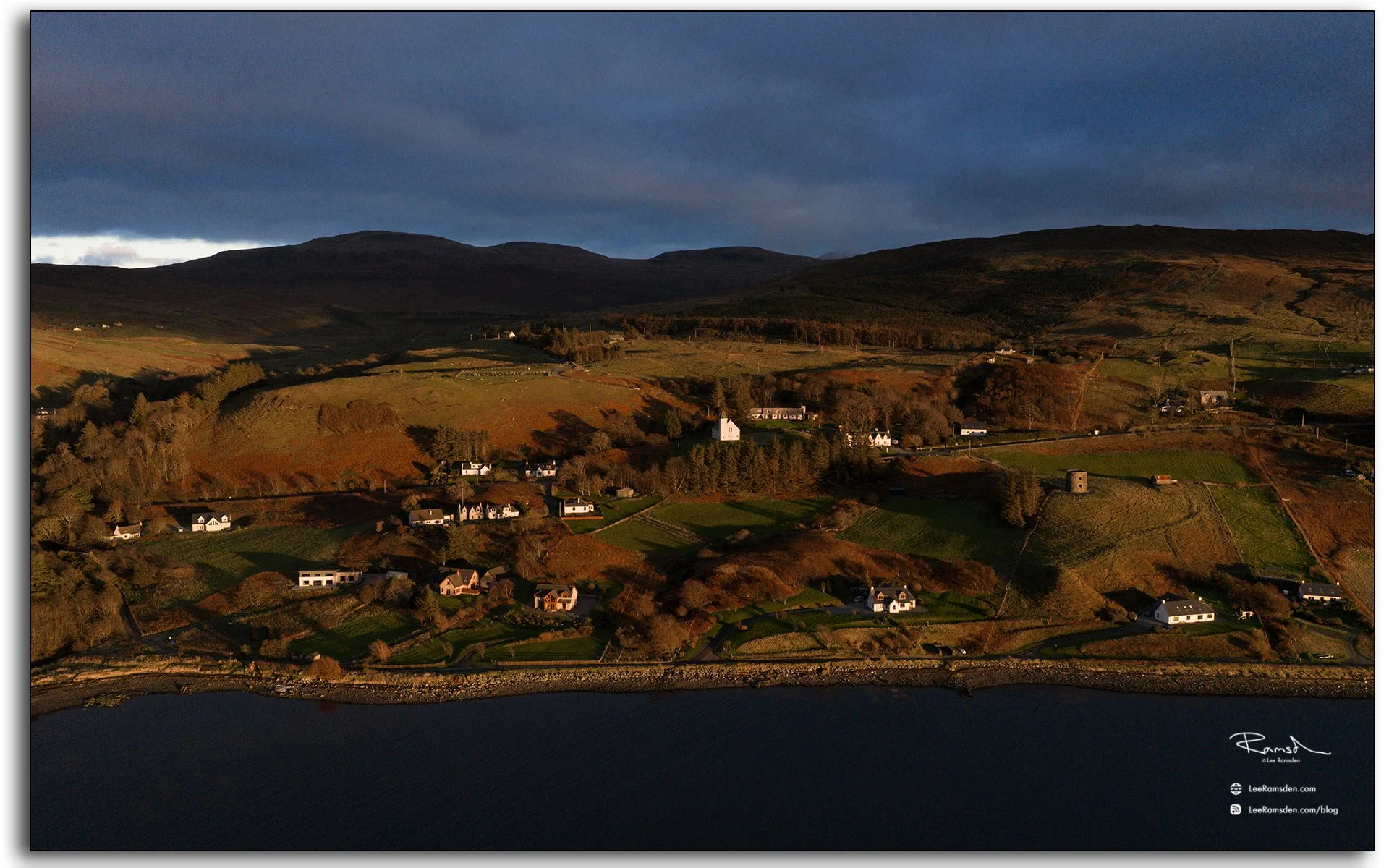
Aerial view of Uig Harbour on the Isle of Skye at sunset, with a ferry sailing across calm waters under a glowing orange sky

Uig sits tucked into the north-west corner of the Isle of Skye, a small harbour village that serves as the main gateway to the Outer Hebrides. Ferries depart from here to Tarbert on Harris and Lochmaddy on North Uist — a vital link between islands, and a rhythm of life that’s played out daily for decades.

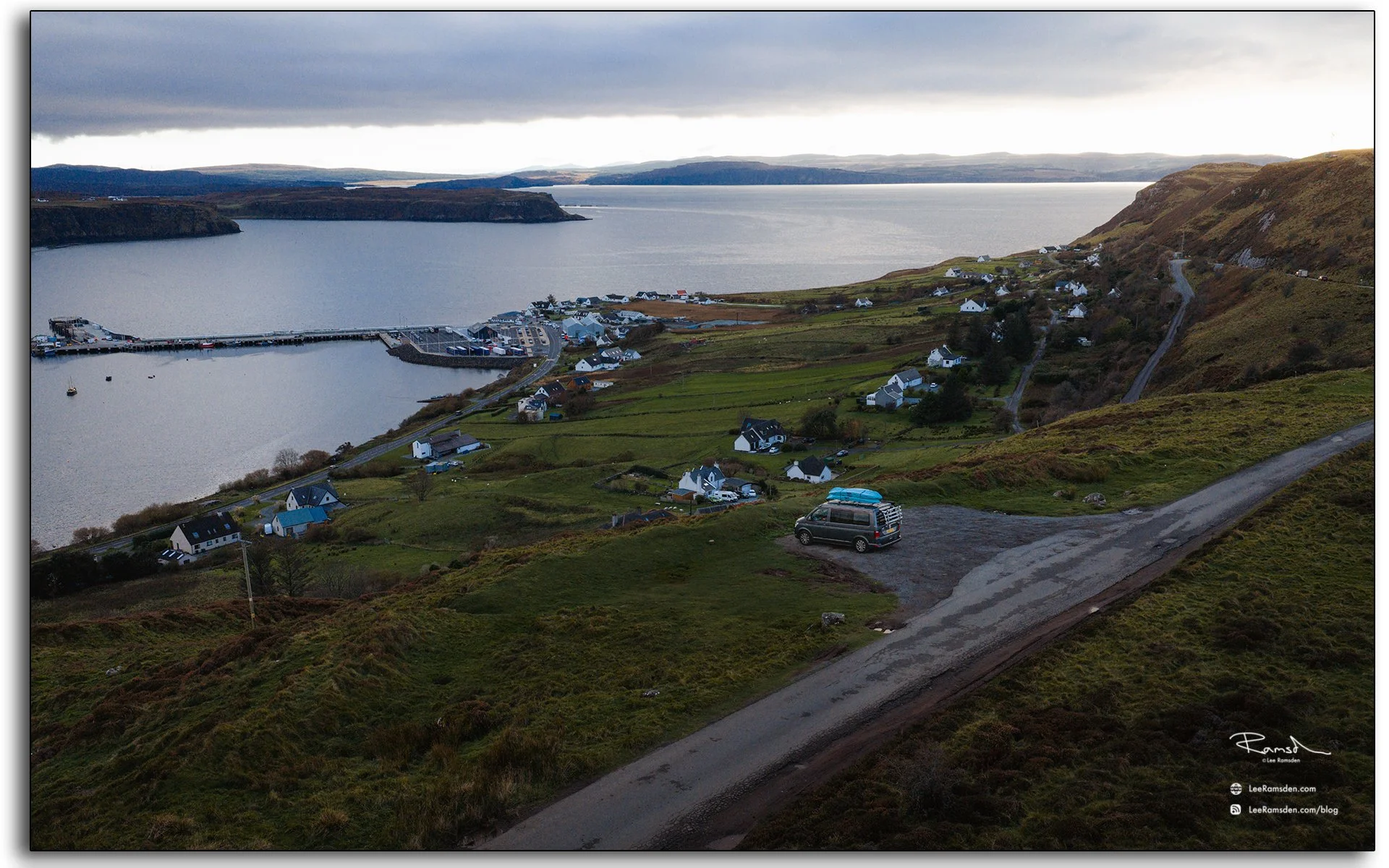
Aerial view overlooking Uig Harbour and village on the Isle of Skye, Scotland, with a camper van parked on the hillside and calm evening light over the bay

Our room for the night. The ferry was booked for 7 am the following morning, and so we had to stay somewhere fairly close to the ferry port.

Aerial view overlooking Uig Harbour and village on the Isle of Skye, Scotland, with a camper van parked on the hillside and calm evening light over the bay
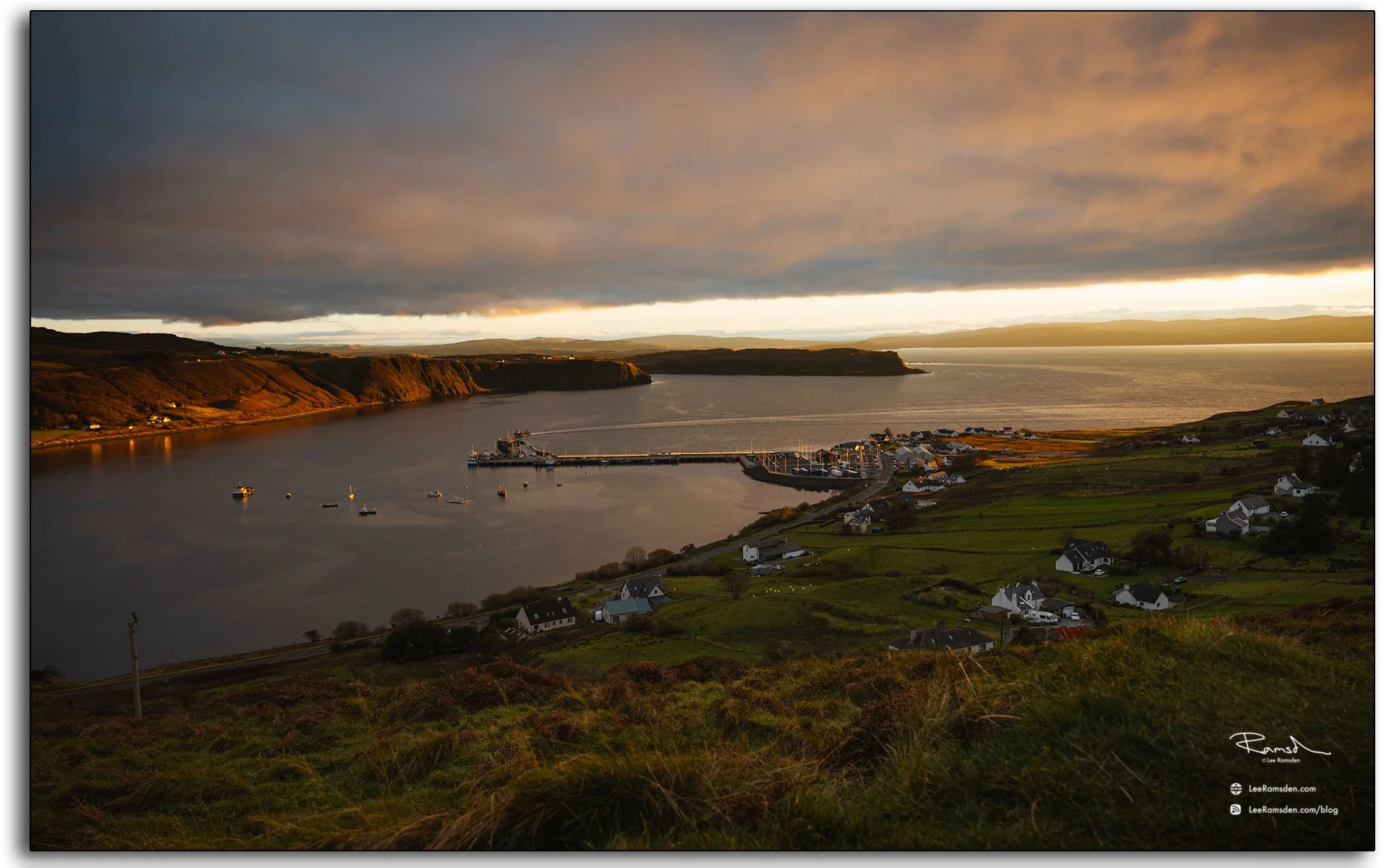
Golden sunset over Uig Harbour on the Isle of Skye, Scotland, with warm light reflecting across the bay and cottages nestled on the hillside

From higher up the hillside, the view stretches across the harbour, cottages, and out toward the Minch. It’s one of those scenes that feels both remote and connected — a place between places.

Aerial view of Uig village on the Isle of Skye, Scotland, during sunset, with warm golden light over fields, cottages, and coastal hills

Isle of Skye’s landscapes shift constantly — one moment you’re surrounded by wild cliffs, the next you’re watching ferries vanish into open sea.

See more from across Scotland’s coastlines in my Places collection.

The Fairy Glen, Isle of Skye

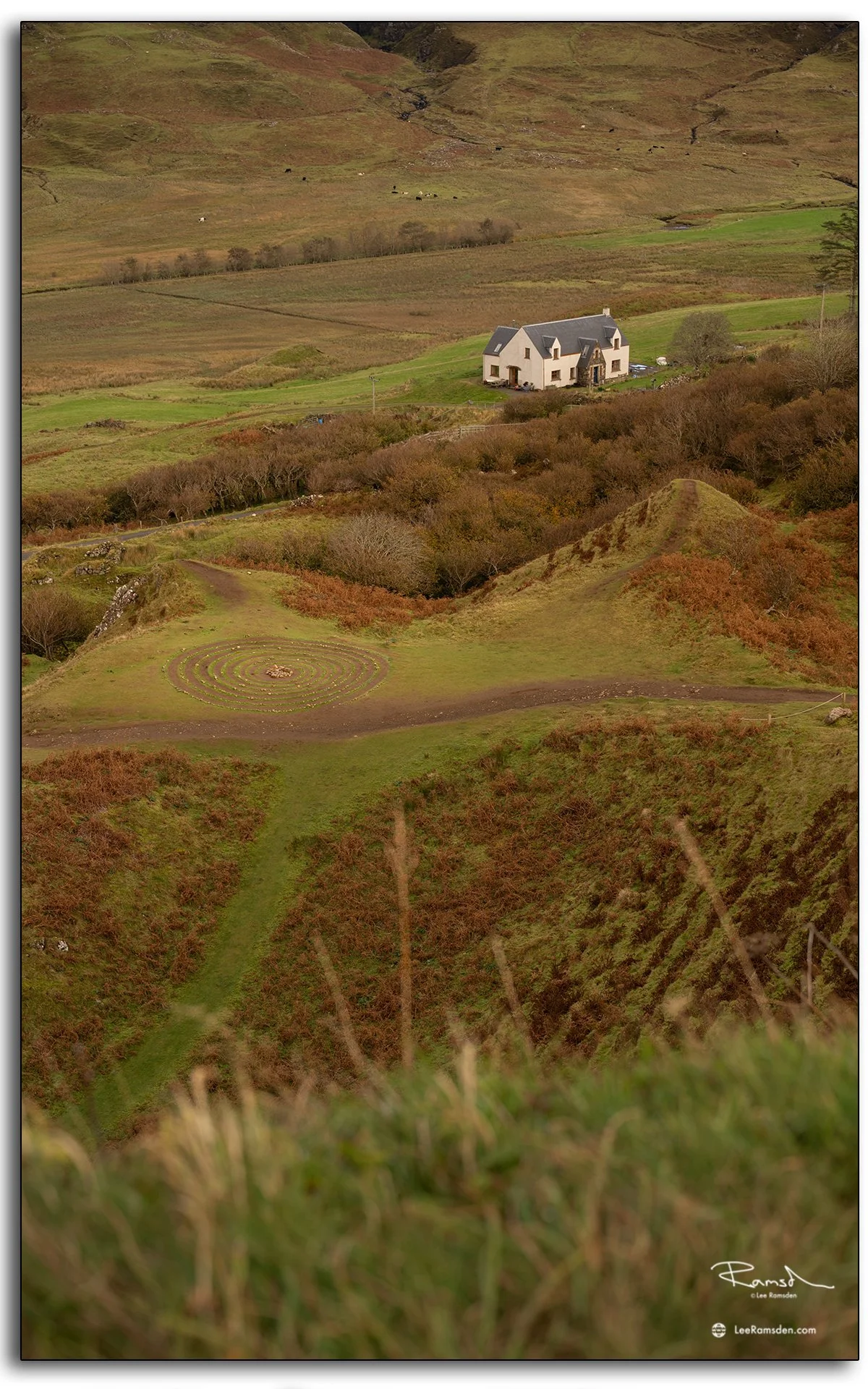
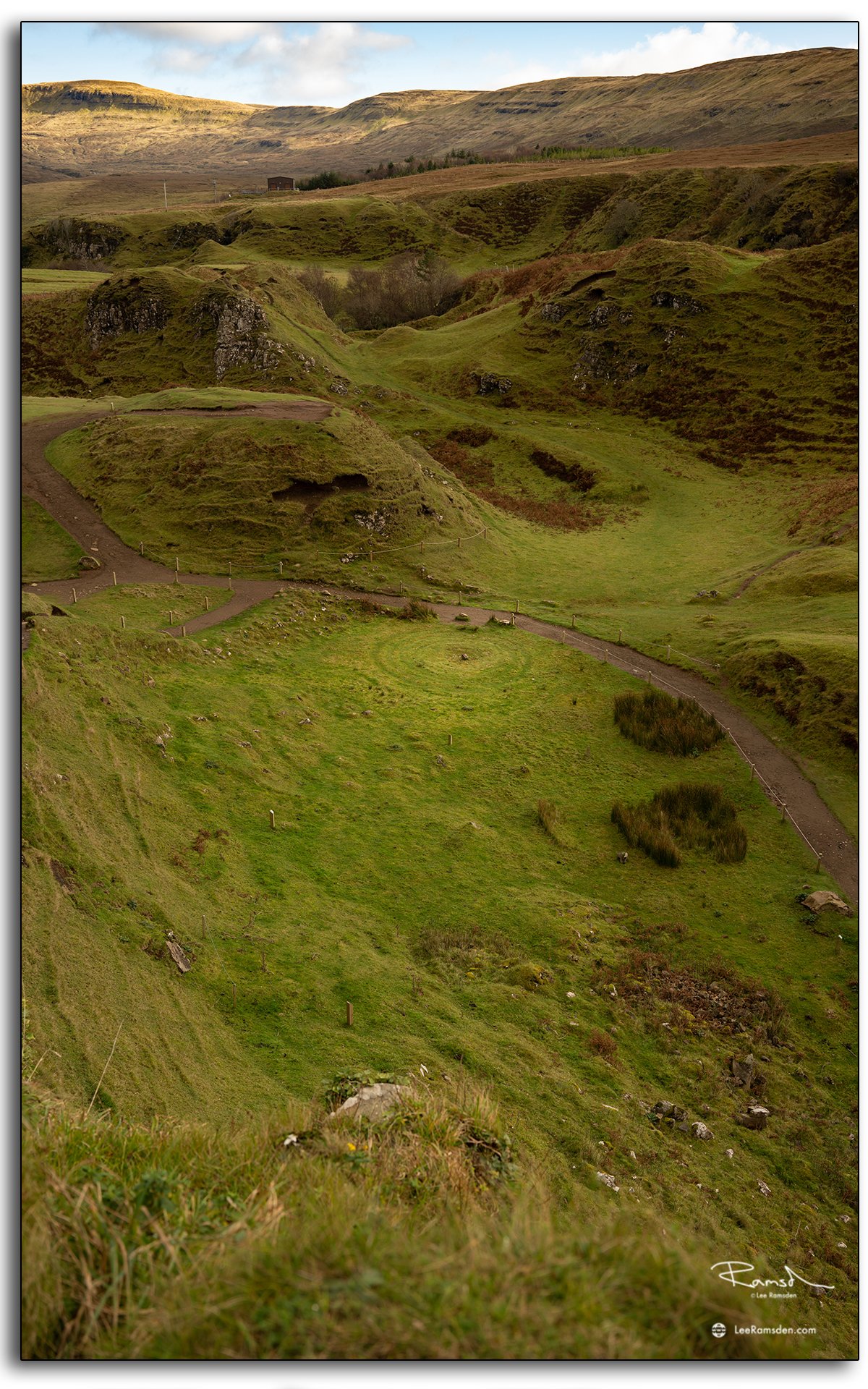
iew over the Fairy Glen on the Isle of Skye, featuring a stone spiral and a lone cottage nestled among rolling green hills

Tucked away near Uig on the Isle of Skye, the Fairy Glen feels like a world between worlds. Rolling green mounds, spiral stone patterns, and strangely sculpted hills give this landscape a mythical quality — as if the earth itself decided to play architect.

Unlike the Fairy Pools, the Fairy Glen isn’t officially signposted. You simply follow a winding single-track road through farmland until the land suddenly dips and rises into something that feels… enchanted. Whether the spiral was laid by visitors or drawn by local folklore doesn’t really matter — standing there, surrounded by silence and wind, it’s easy to see why stories of fairies have lingered here for centuries.

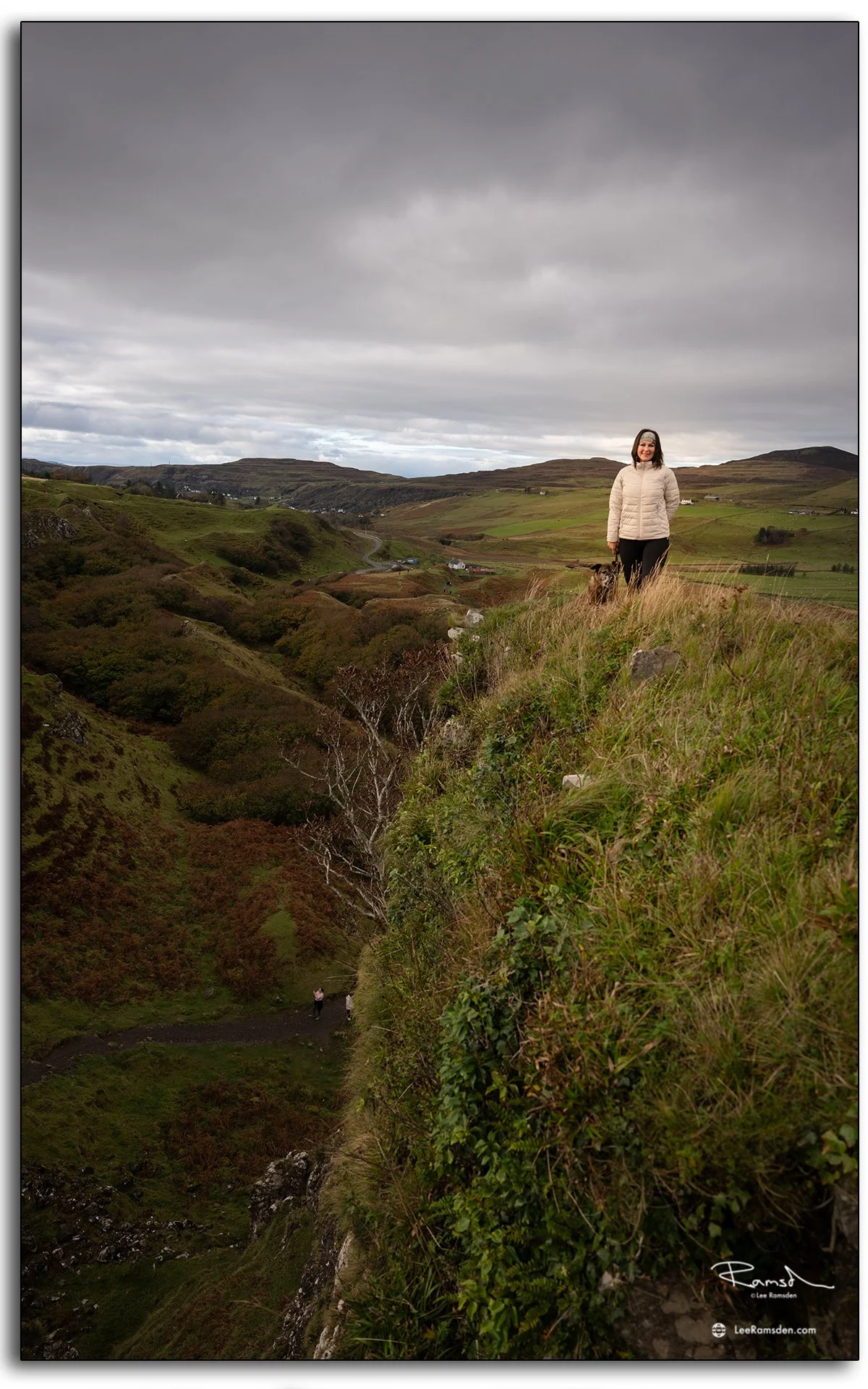
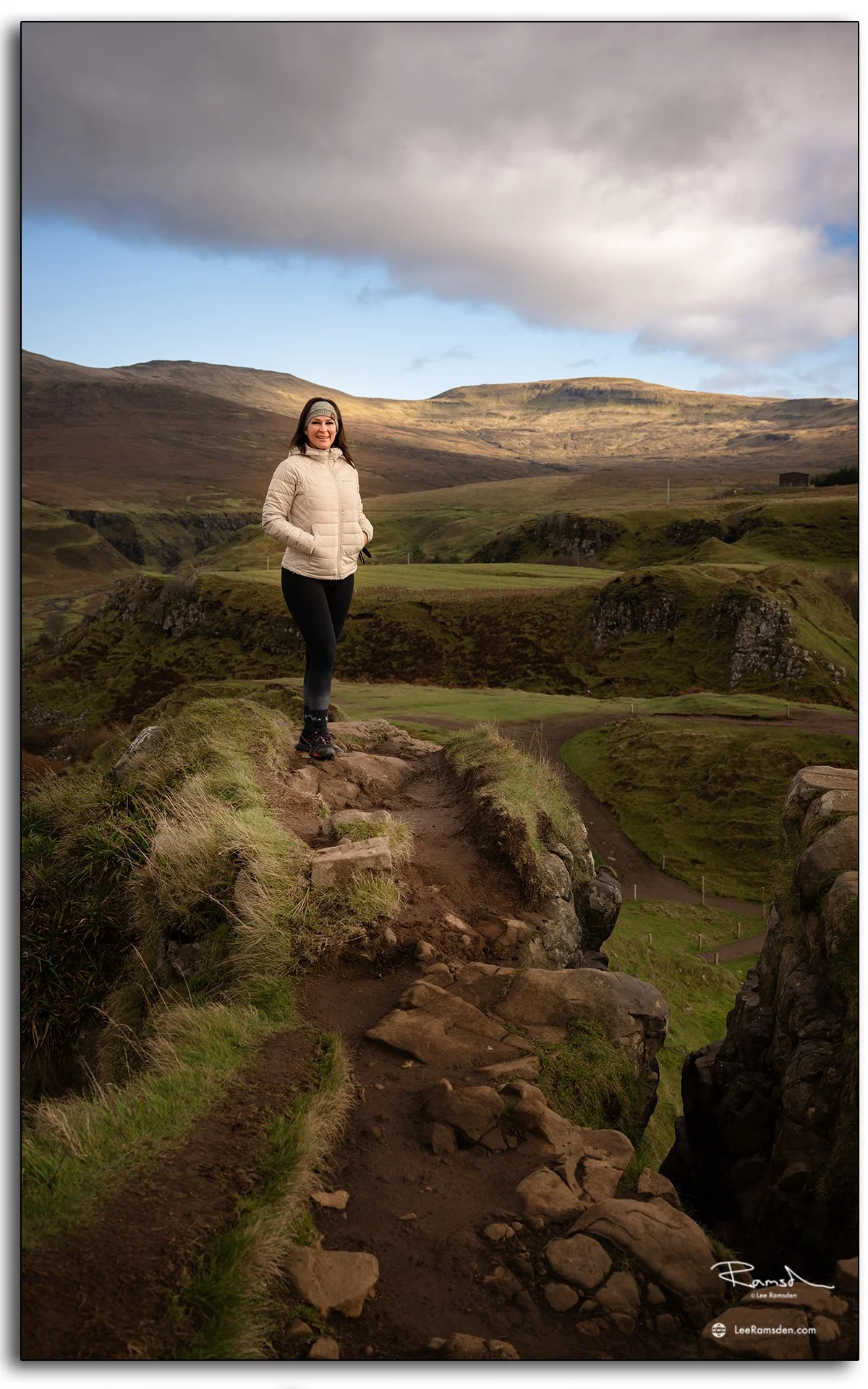
Woman standing on a rocky path overlooking the Fairy Glen on the Isle of Skye, Scotland, with sunlight highlighting the hills behind
Woman standing on a rocky path overlooking the Fairy Glen on the Isle of Skye, Scotland, with sunlight highlighting the hills behind.

On a still day, it feels peaceful. On a cloudy one, mysterious. Either way, the light shifts constantly — a photographer’s dream and challenge rolled into one.

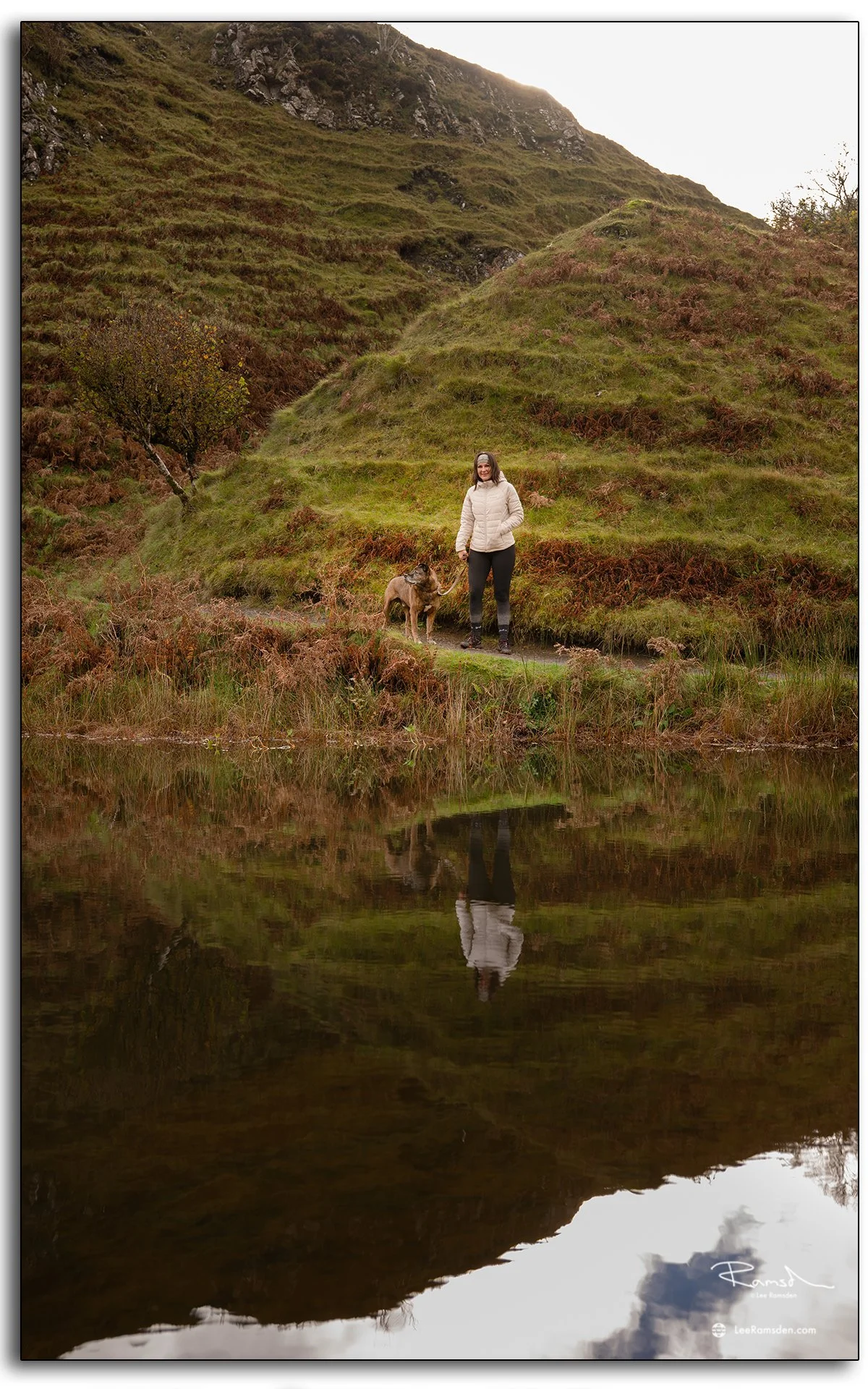
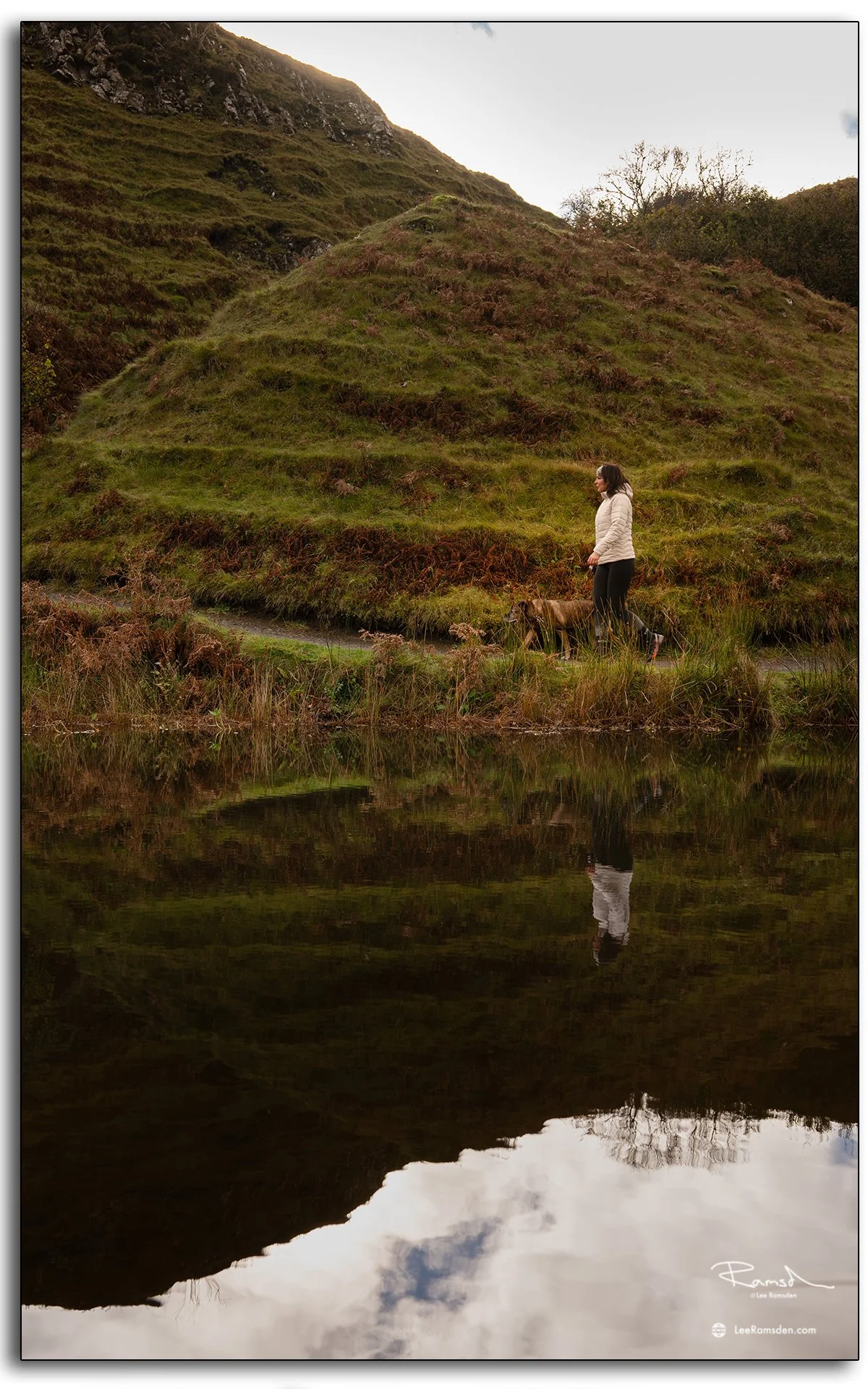
Woman walking beside a calm pond at the Fairy Glen on the Isle of Skye, with her reflection mirrored in the still water and grassy hills behind

Each image in this series captures that sense of otherworldly calm.

The Isle of Skye never disappoints — its landscapes blend legend with raw natural beauty.

See more work from across the islands in my Places collection.

The Fairy Pools, Isle of Skye

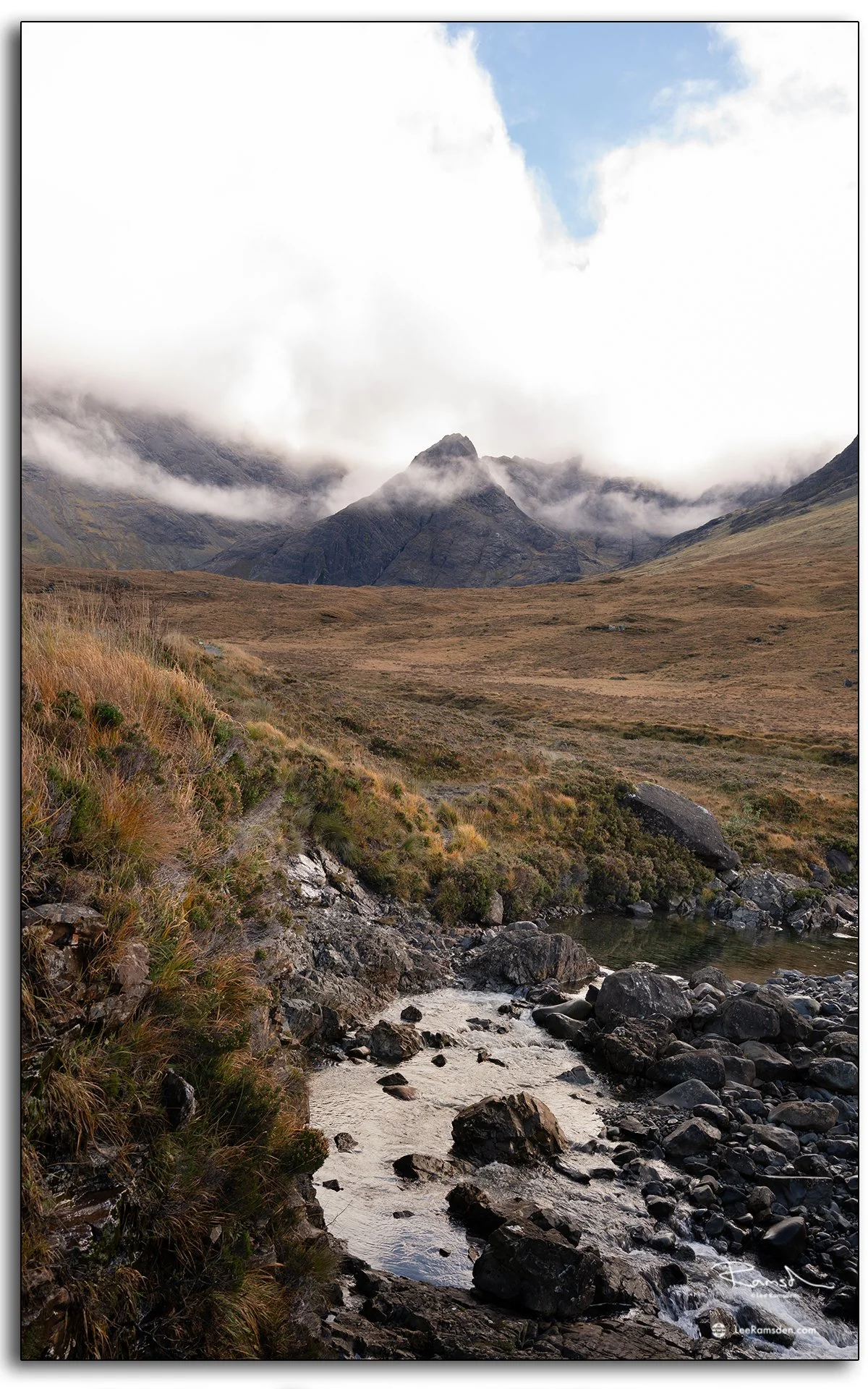
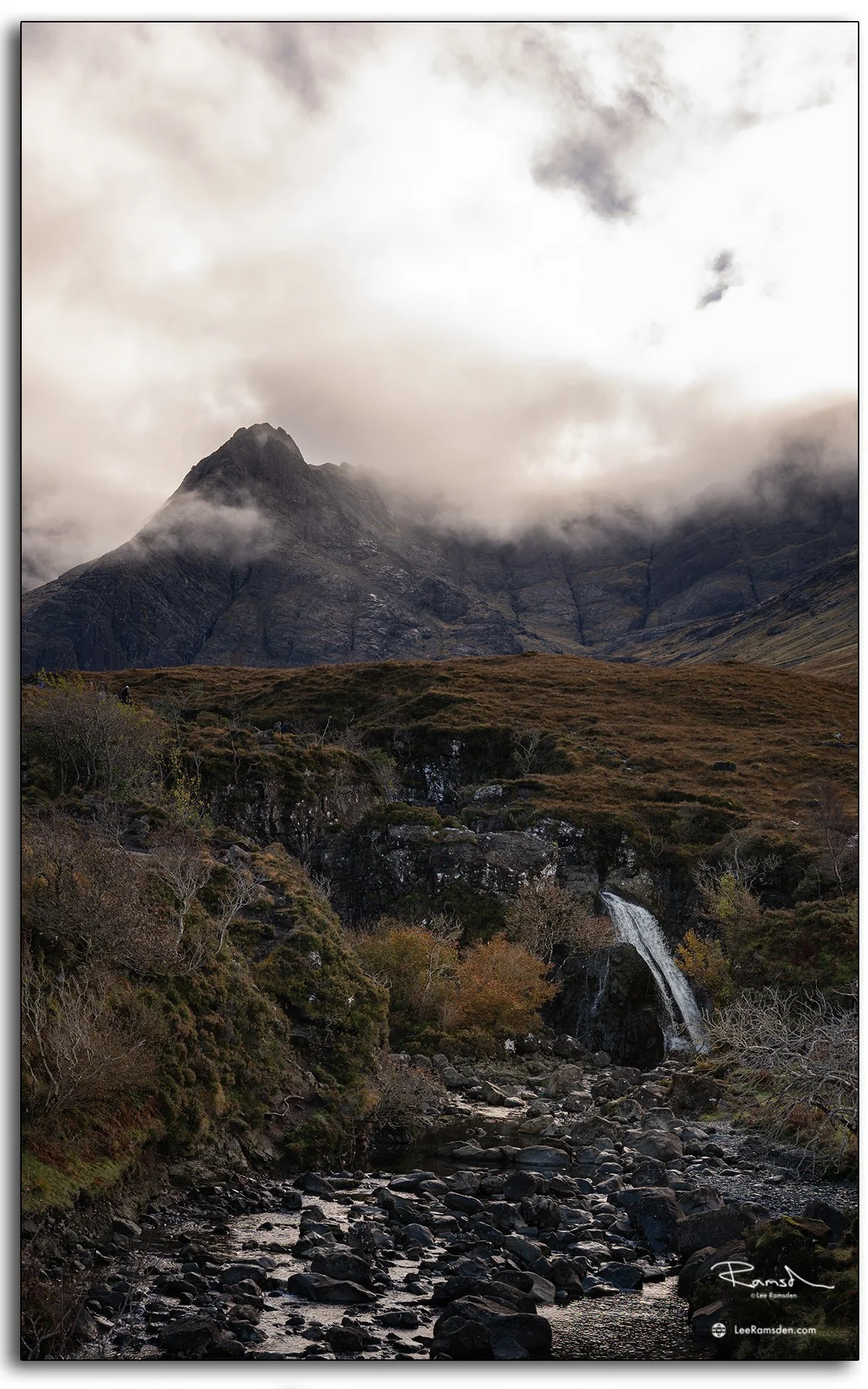
View towards the Cuillin mountains from the Fairy Pools on the Isle of Skye, with mist rolling over rugged peaks and a rocky stream in the foreground.

Beneath the dark peaks of the Black Cuillin lies one of Scotland’s most magical landscapes — the Fairy Pools. Crystal-clear streams tumble down from the mountains, forming a series of small waterfalls and blue-green pools that have become world-famous among photographers, hikers, and those just chasing a moment of stillness in the Highlands.

Even on overcast days — maybe especially then — this place feels alive. The light breaks through fast-moving clouds, illuminating patches of hillside before slipping away again. It’s a rhythm the island lives by: soft, fleeting, and utterly unpredictable.
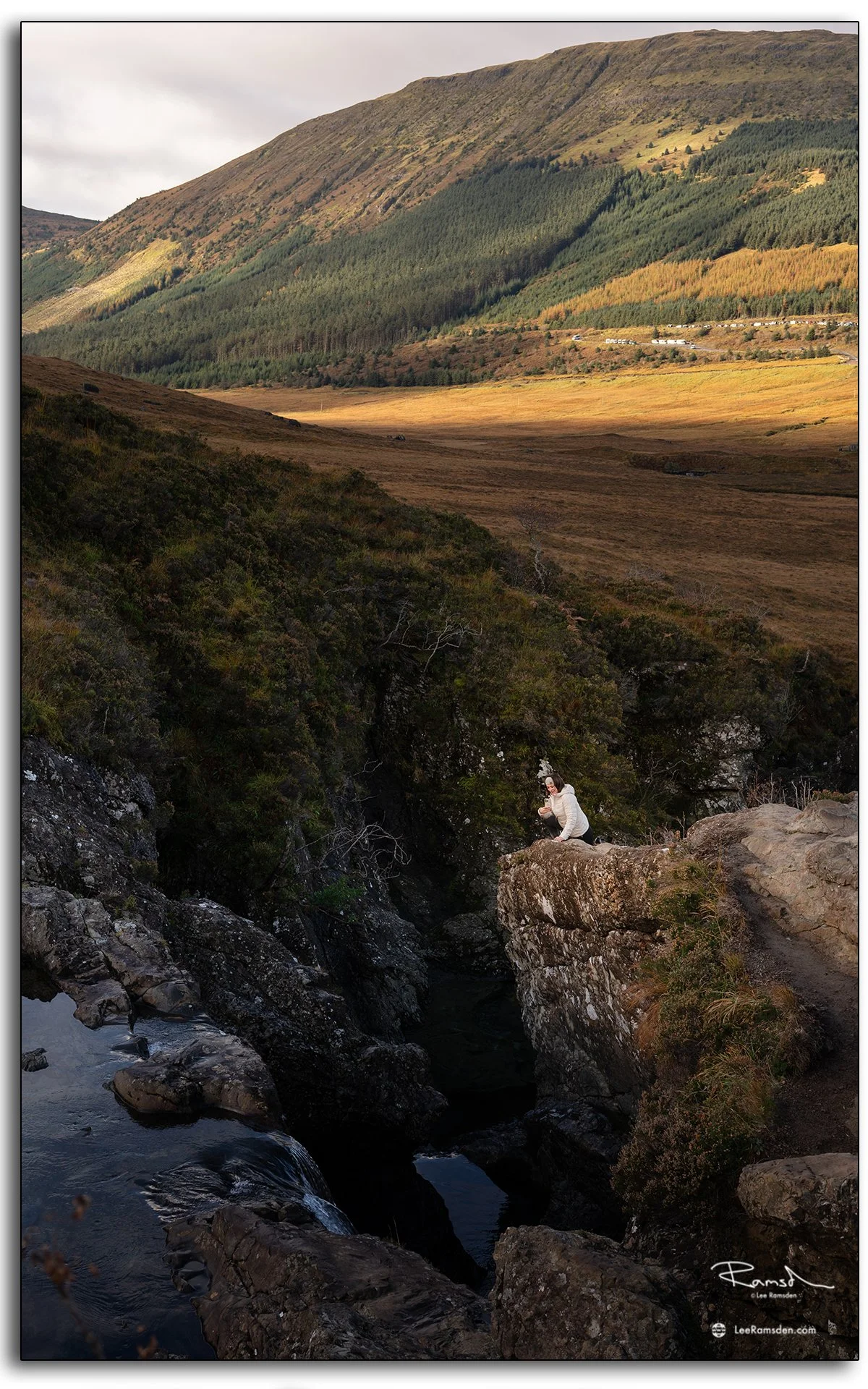
Woman sitting on a rocky ledge overlooking a waterfall at the Fairy Pools on the Isle of Skye, Scotland, surrounded by golden light and rugged hills
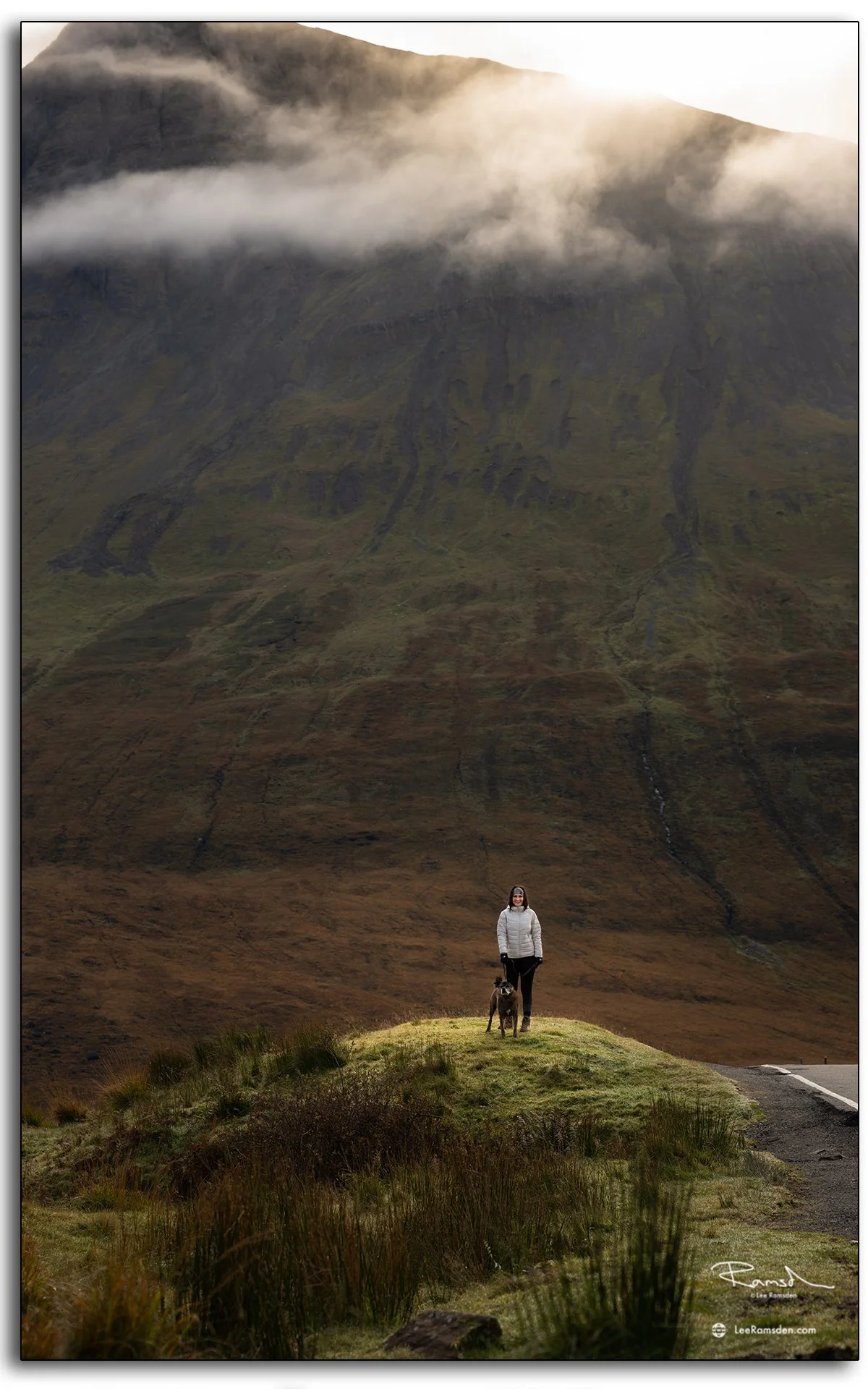
Woman standing with her dog and the foot of a rugged mountain, at the Fairy Pools on the Isle of Skye, Scotland, surrounded by golden light and rugged hills

The pools take their name from local folklore — said to be where fairies once bathed, hidden in the mists that roll down from Glen Brittle. Today, it’s the same timeless mix of wild beauty and otherworldly calm that continues to draw people from all over the world.
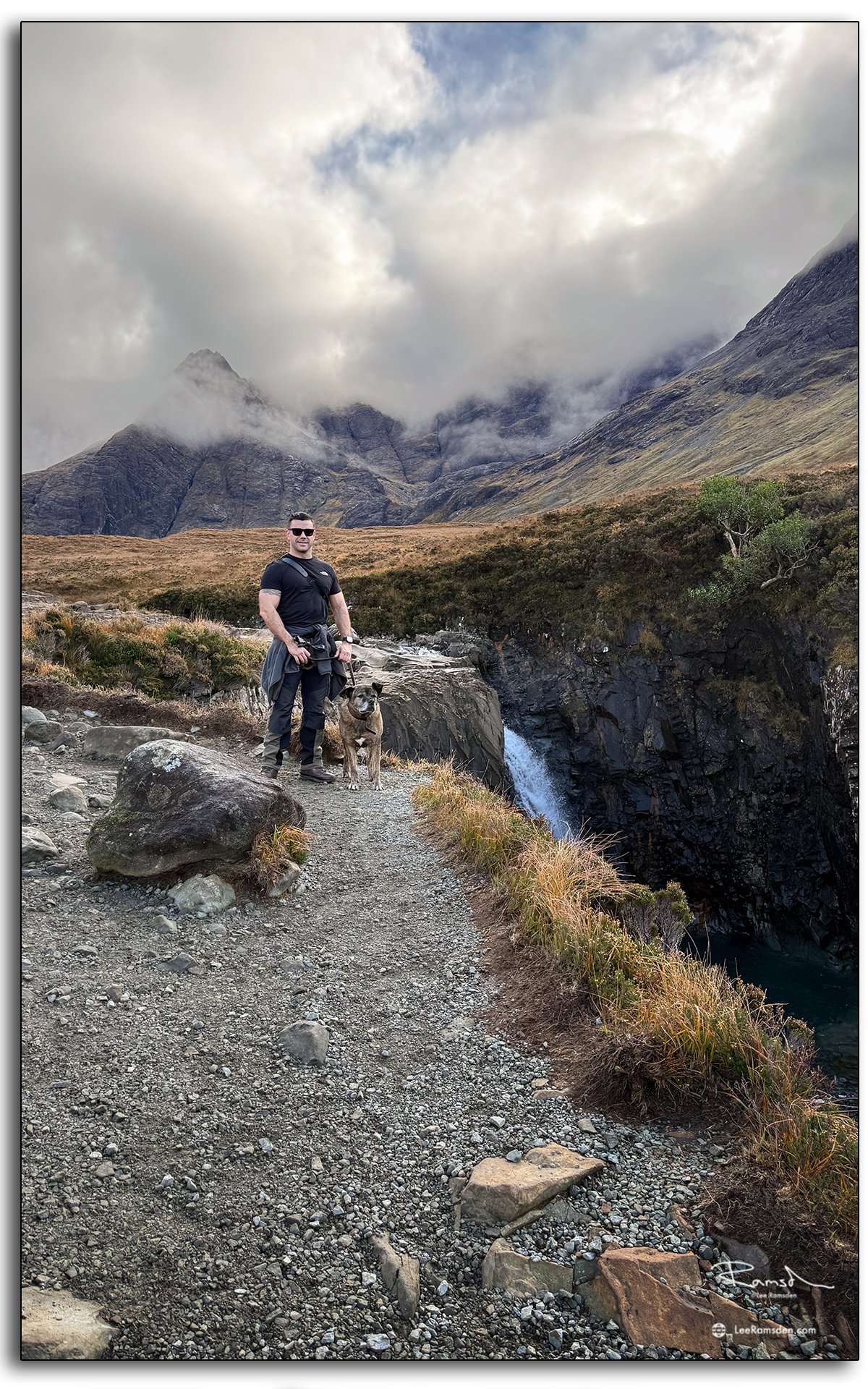
Man with his dog standing on a mountain trail beside a waterfall at the Fairy Pools, Isle of Skye, with dramatic clouds over the Cuillin mountains
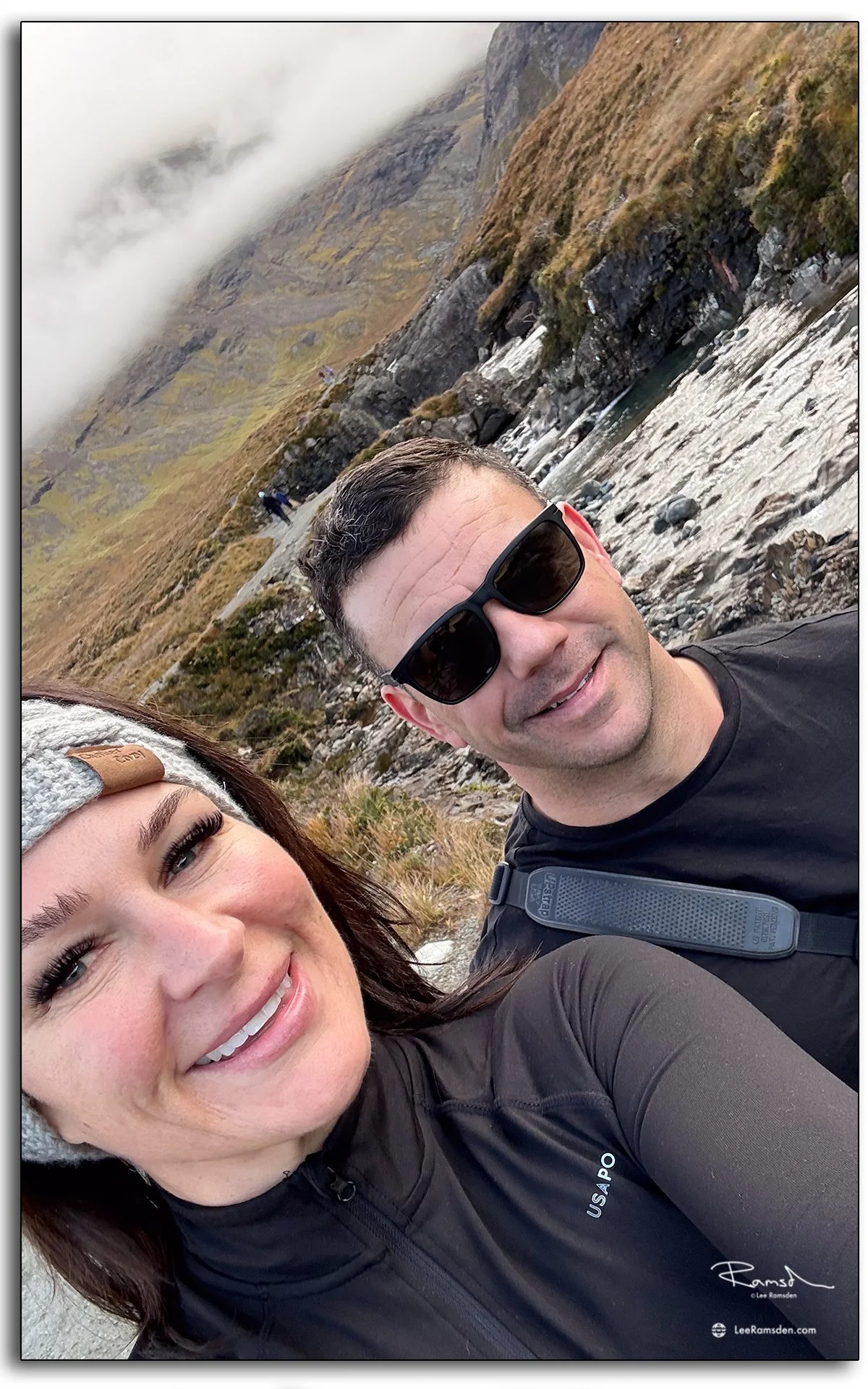
Couple taking a selfie during a hike at the Fairy Pools on the Isle of Skye, Scotland, with rugged cliffs and misty mountains in the background.

Each image here captures that mood: the water’s movement, the texture of volcanic rock, and the play between light and shadow that makes Skye what it is — untamed, dramatic, and impossible to forget.

Scotland never runs short of landscapes that blur the line between myth and reality.

Explore more scenes from across the country in my Places collection, or browse further Scottish landscapes in my Black & White portfolio.

Golden Light Offshore – Turbines at Sunset

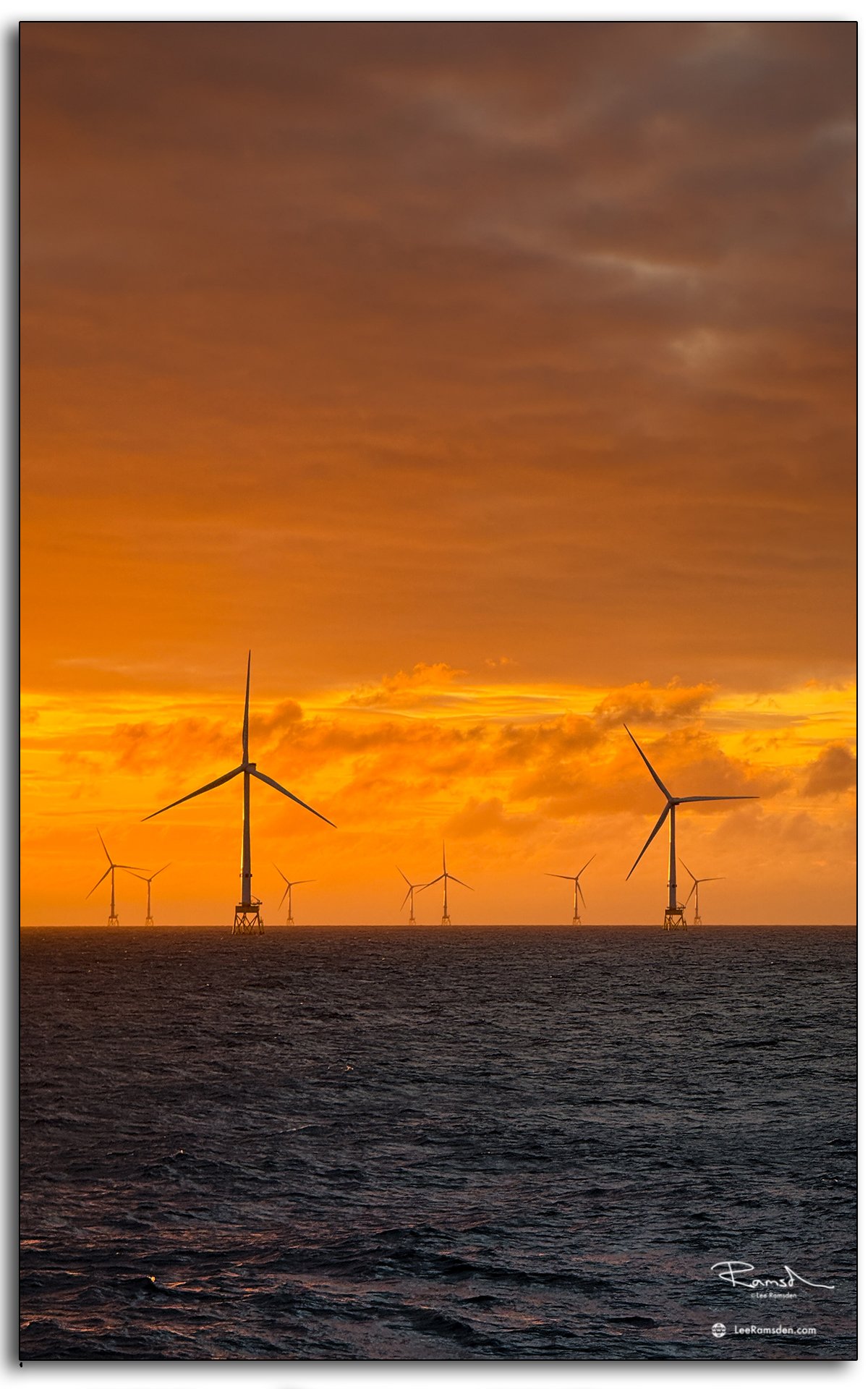
Close view of turbine framed by glowing sunset offshore.
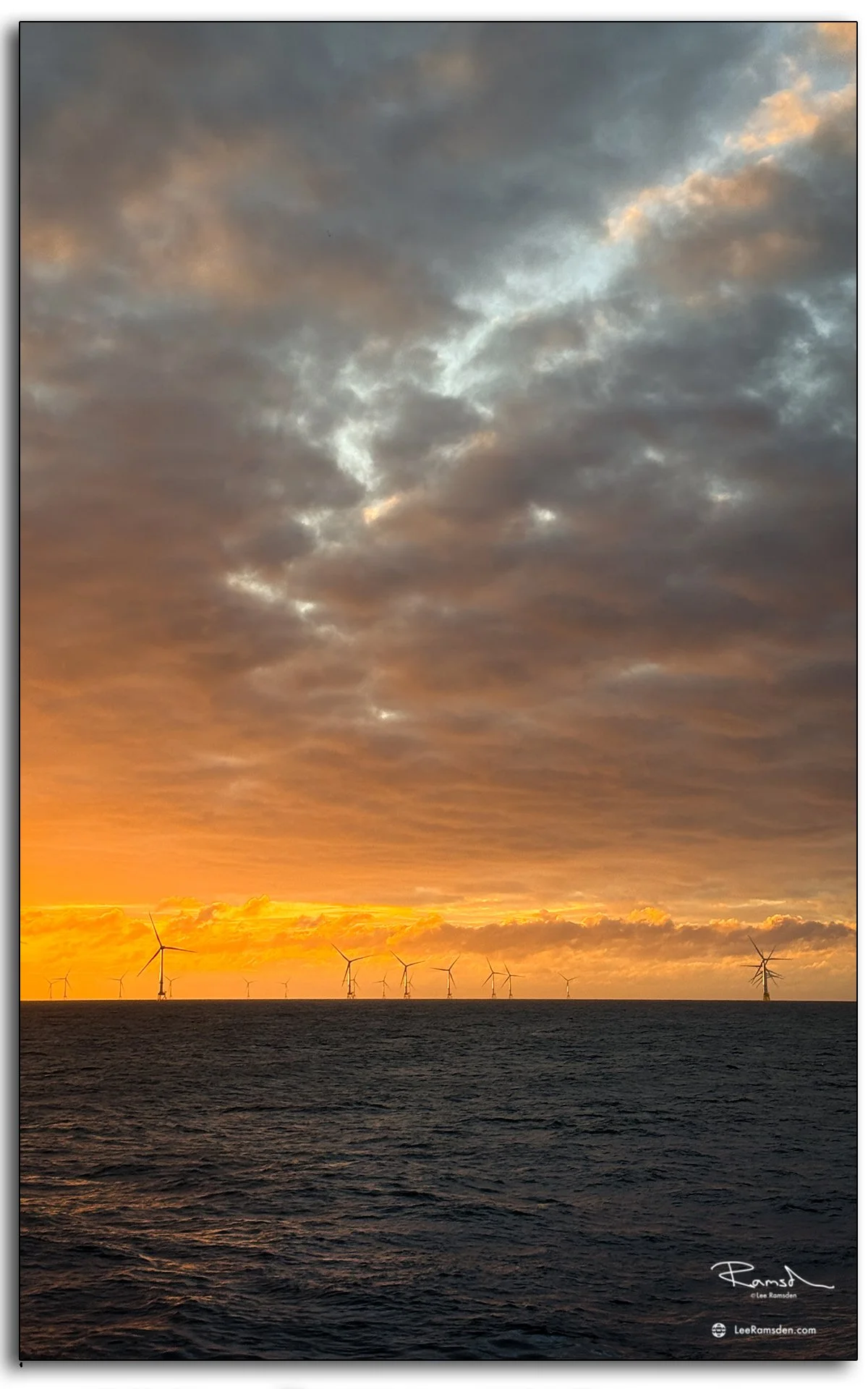
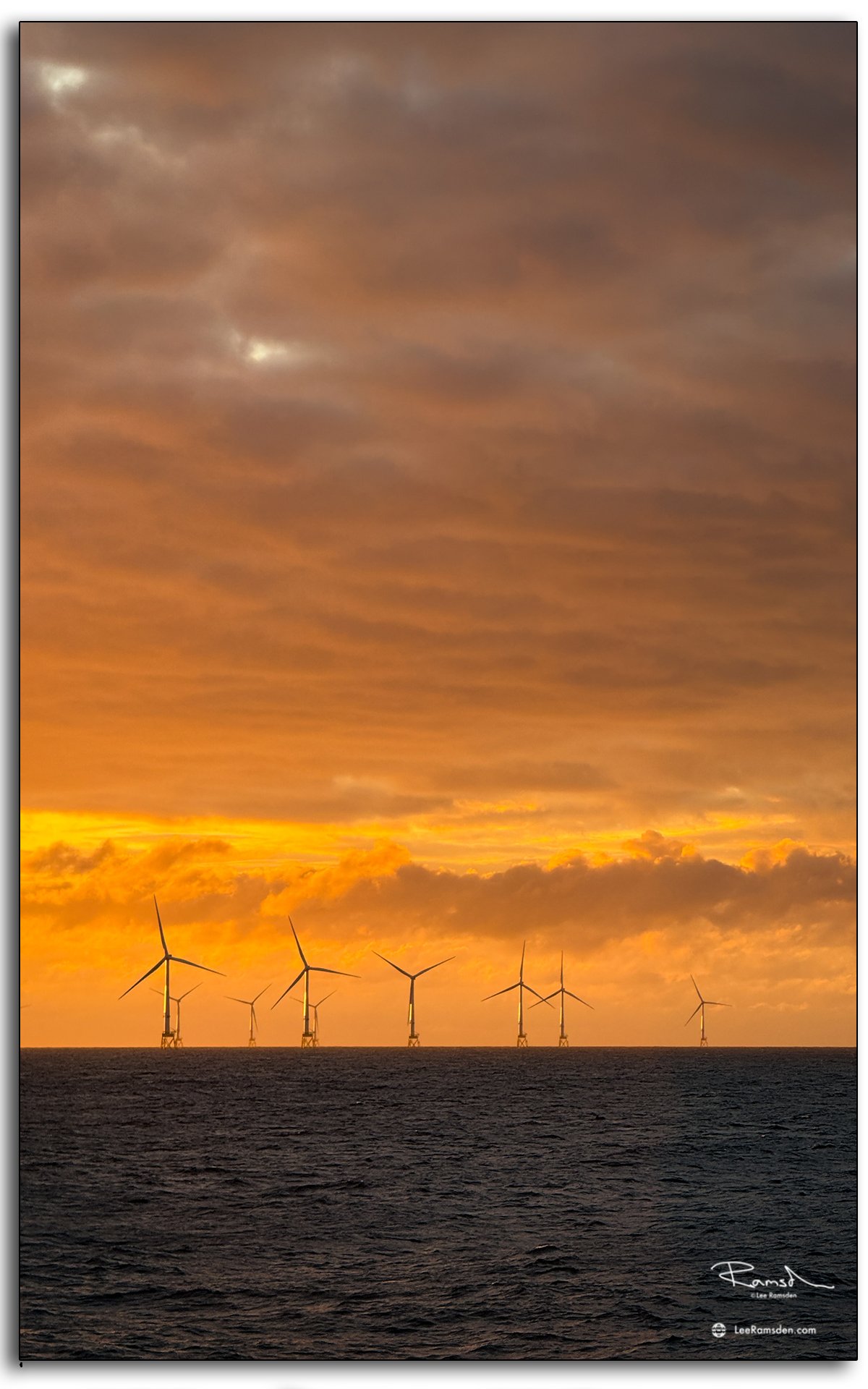
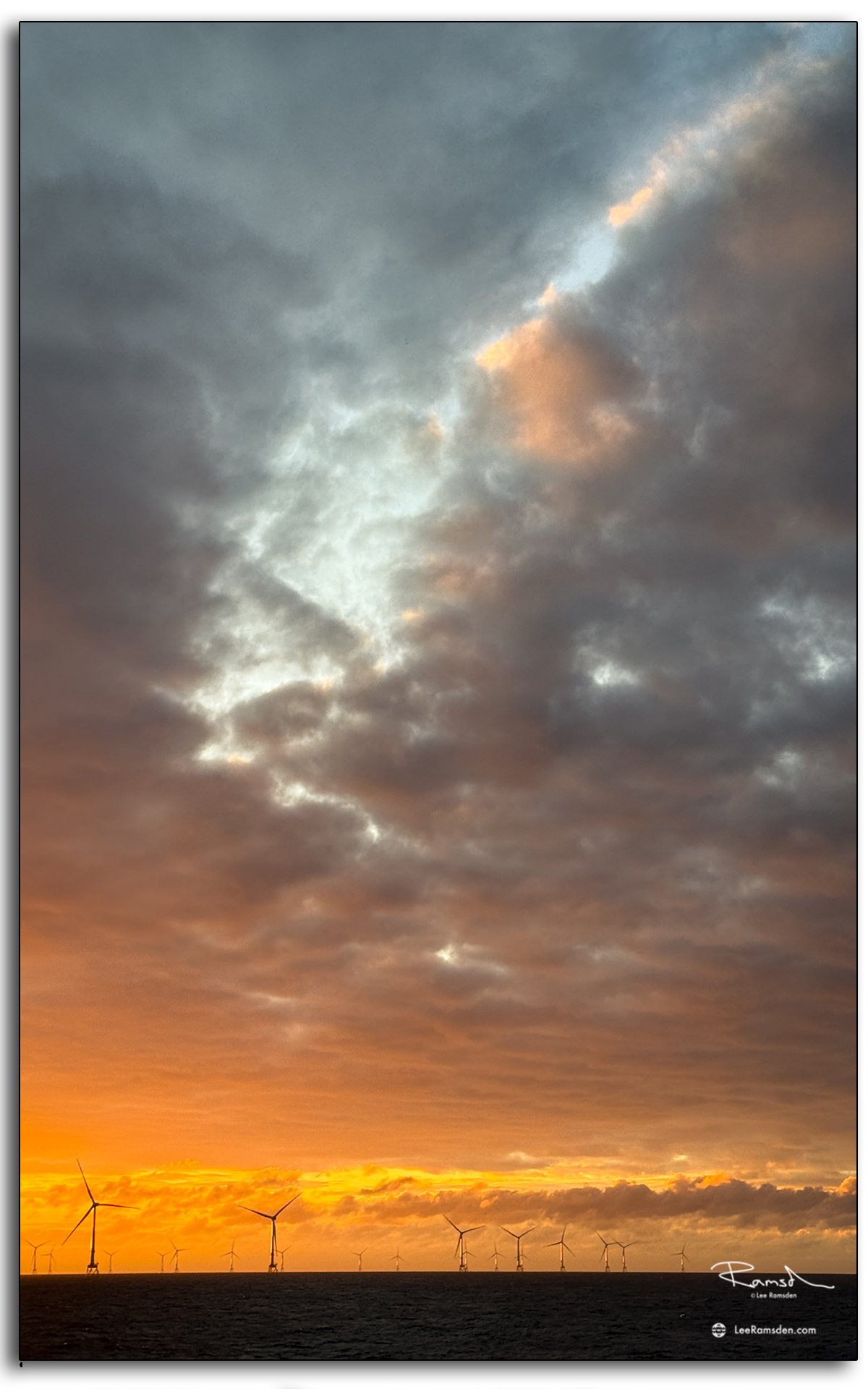
Turbines silhouetted against fiery orange evening skies.
The North Sea never fails to deliver moments of raw beauty. As the sun dips below the horizon, the sky ignites in deep oranges and fiery reds, setting the backdrop for lines of turbines standing firm against the evening swell.

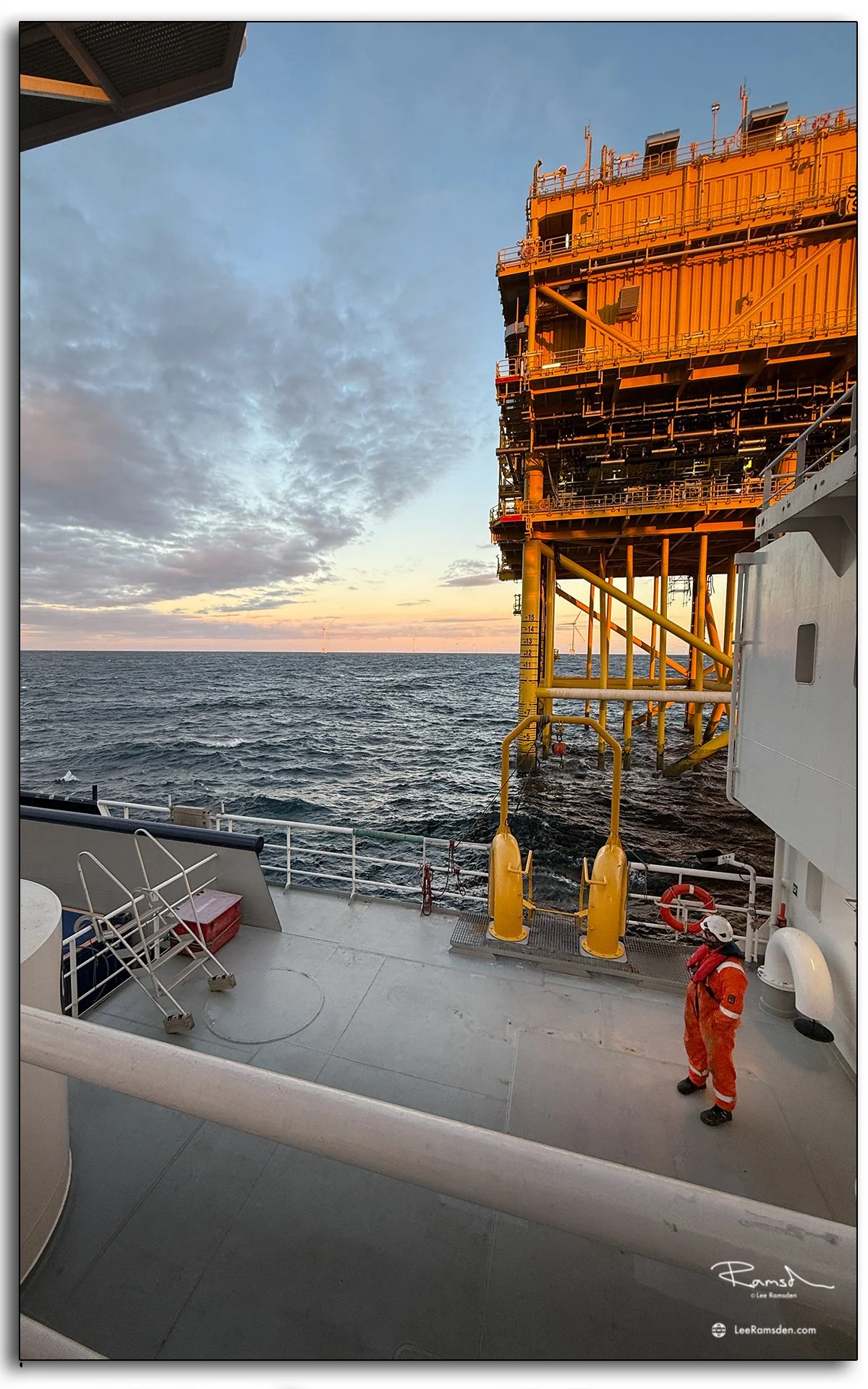
These iPhone images capture the transition between the working day and the quiet power of the sea at dusk. The offshore platforms glow in the last light, while the turbines stretch into the distance, silhouetted against storm-broken clouds. It’s a reminder of the balance between nature and engineering that defines life offshore.

Each evening brings something different, and on this night the dramatic skies felt like a stage curtain closing, leaving the wind farm in a glow of colour that lingers long after the shift ends.

Dramatic sunset sky over North Sea wind turbines.
Row of turbines stretching across the horizon under evening light.

Offshore life is a mix of industry and nature, and evenings like this highlight the beauty within both. To see more of my work across different projects, take a look through my Wind Industry and Industrial portfolios.

Offshore substation platform viewed from vessel deck at golden hour.

Remembrance Poppy Display – St Annes Parish Church

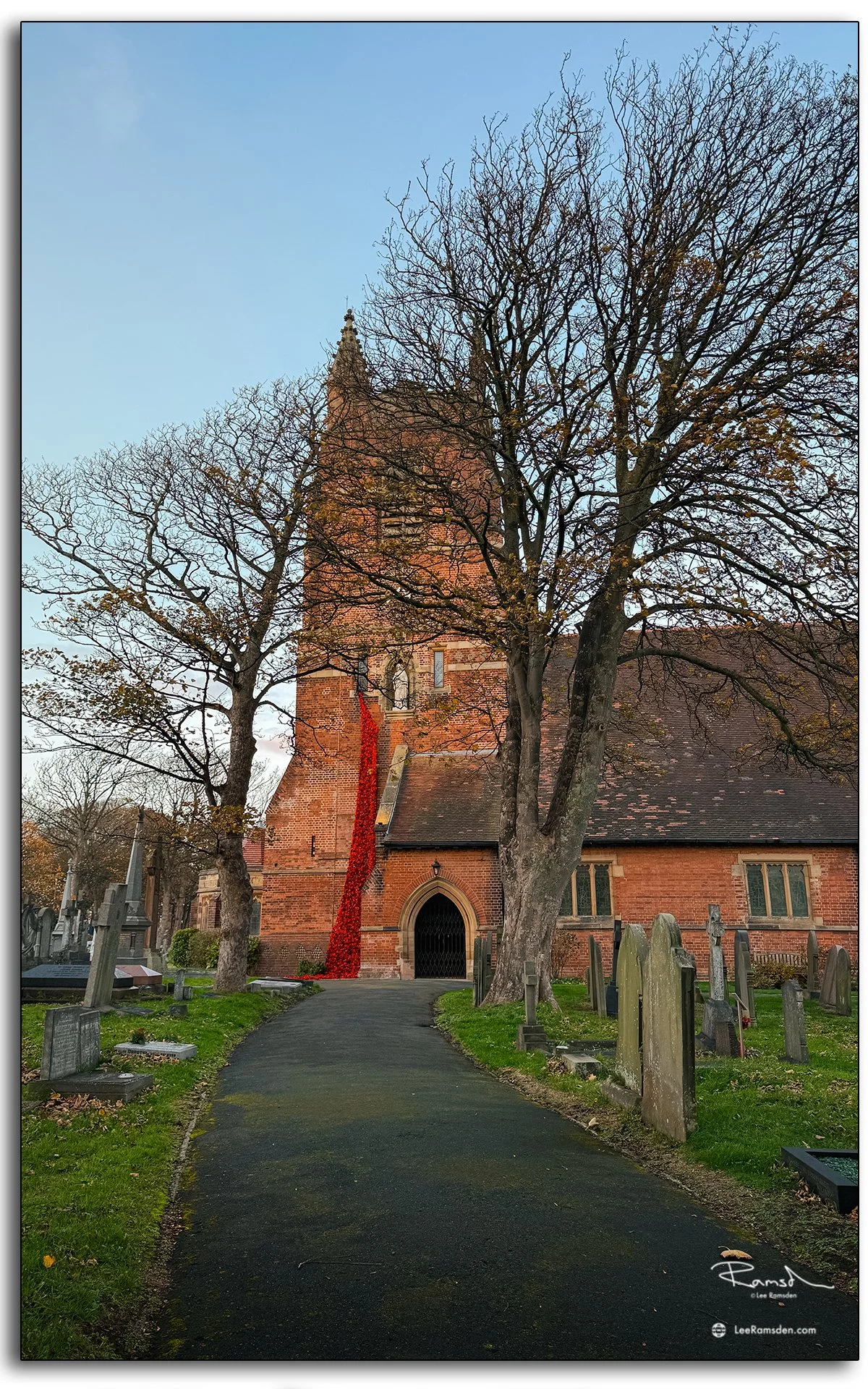
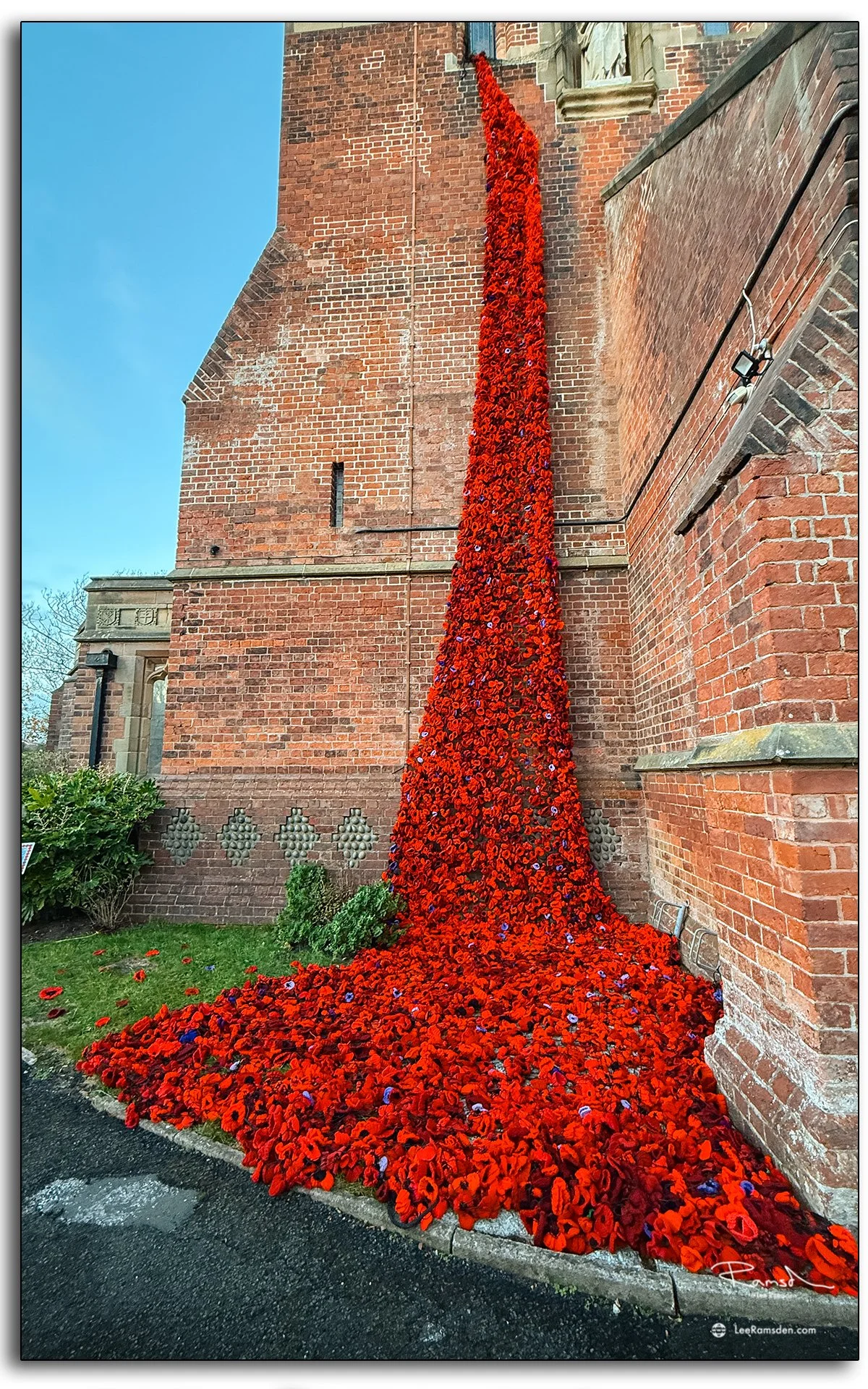
Photo of St Annes Church in Lytham St Annes with a cascade of red poppies flowing from the tower for Remembrance Day
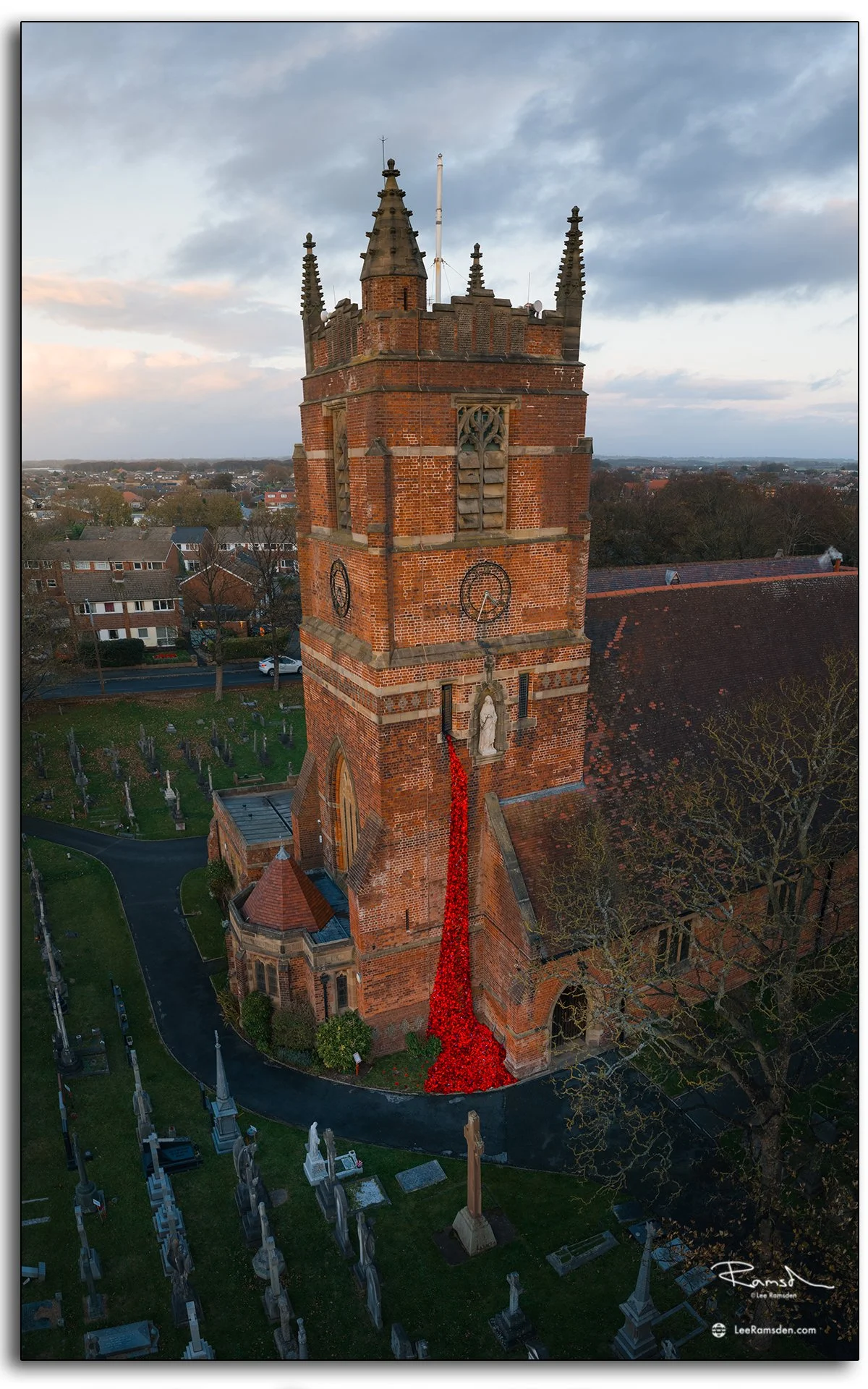
Drone photo of St Annes Church in Lytham St Annes with a cascade of red poppies flowing from the tower for Remembrance Day

Today we remember - those who paid the ultimate price 🎖️,

and the many, many more who’ve quietly checked themselves out since.

You are not forgotten.

Those still fighting their battles.

You are not on your own.

Please talk.

Each year, the Remembrance period brings a powerful stillness to communities across the UK — a pause to reflect on the lives lost in conflict. This striking poppy display at St Annes Parish Church does exactly that.

Thousands of handmade poppies cascade from the church tower to the ground, symbolising the ongoing flow of remembrance from generation to generation. Seen from above, the red trail cuts through the old brickwork and gravestones — a vivid reminder of sacrifice and resilience.

The installation was created by local volunteers, each poppy representing care, memory, and community effort.