industrial photography

Offshore Substations in the North Sea

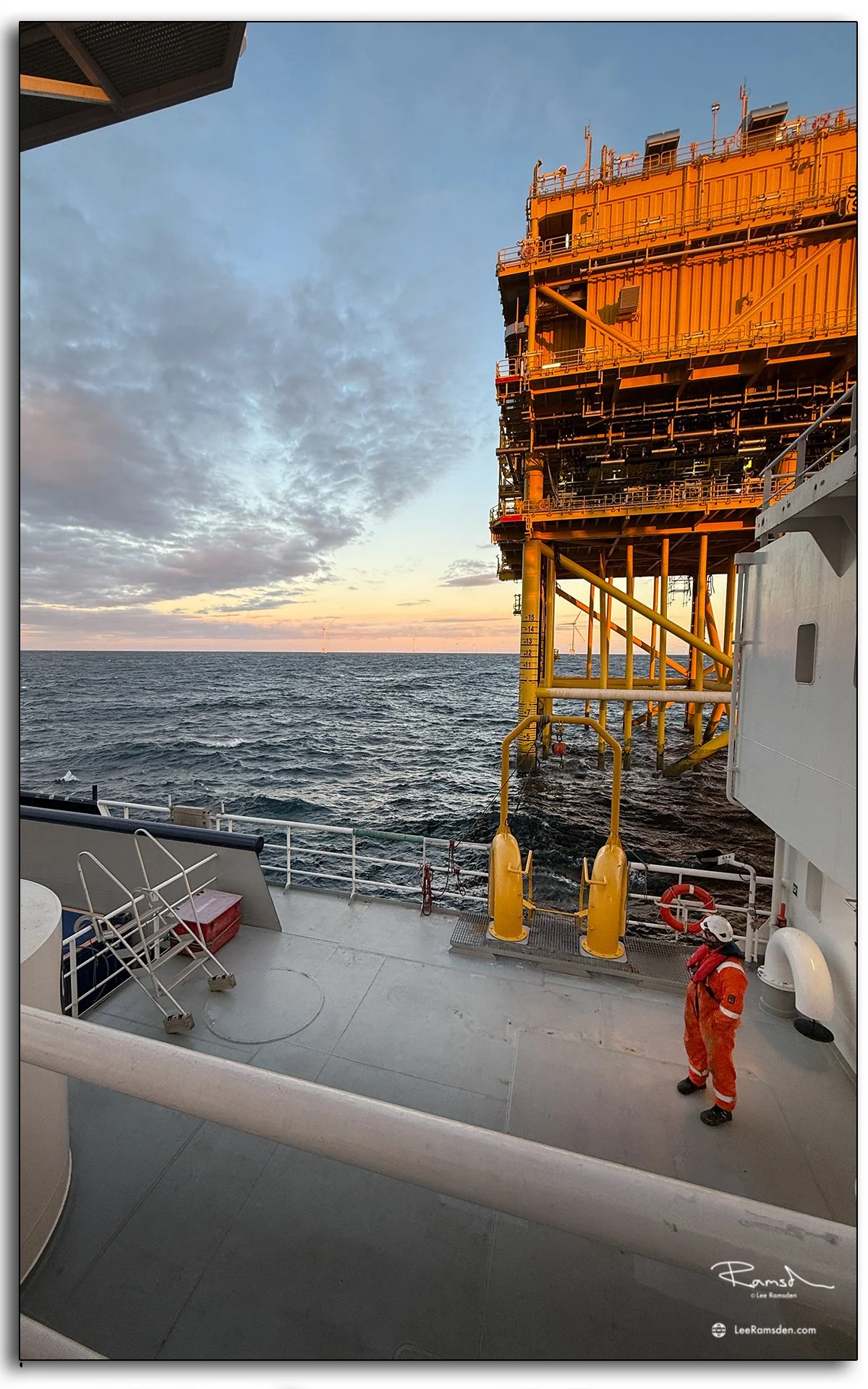
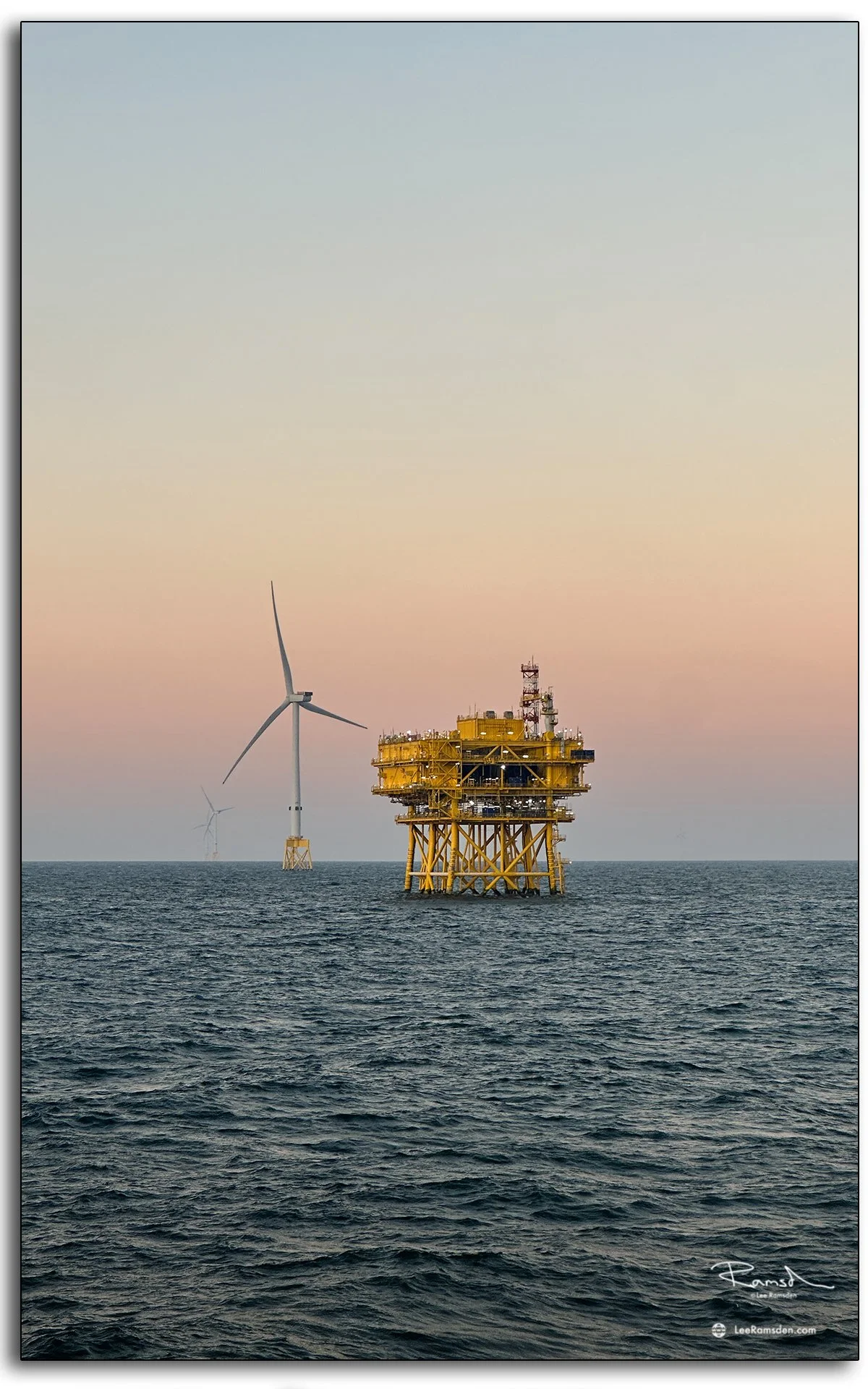
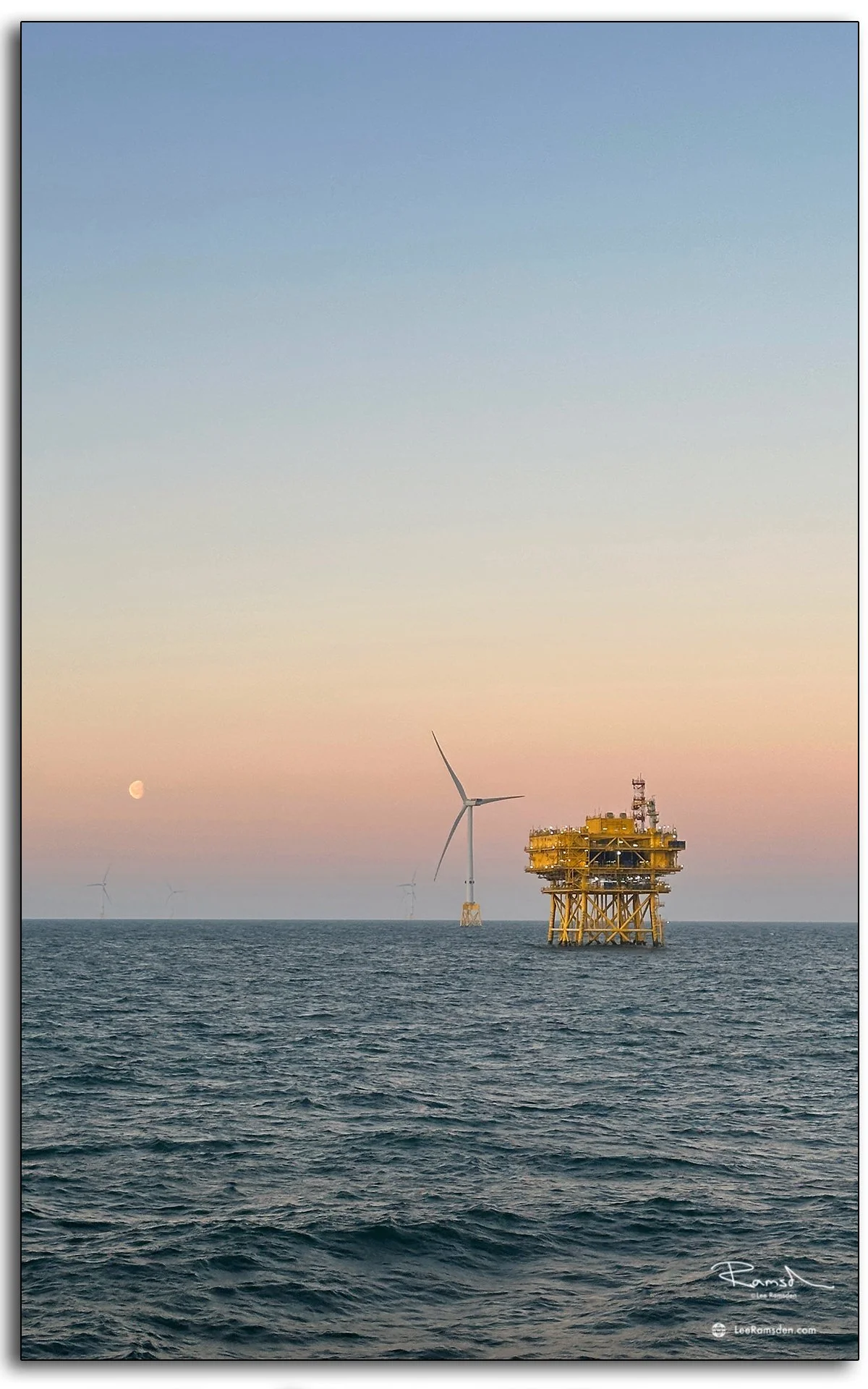
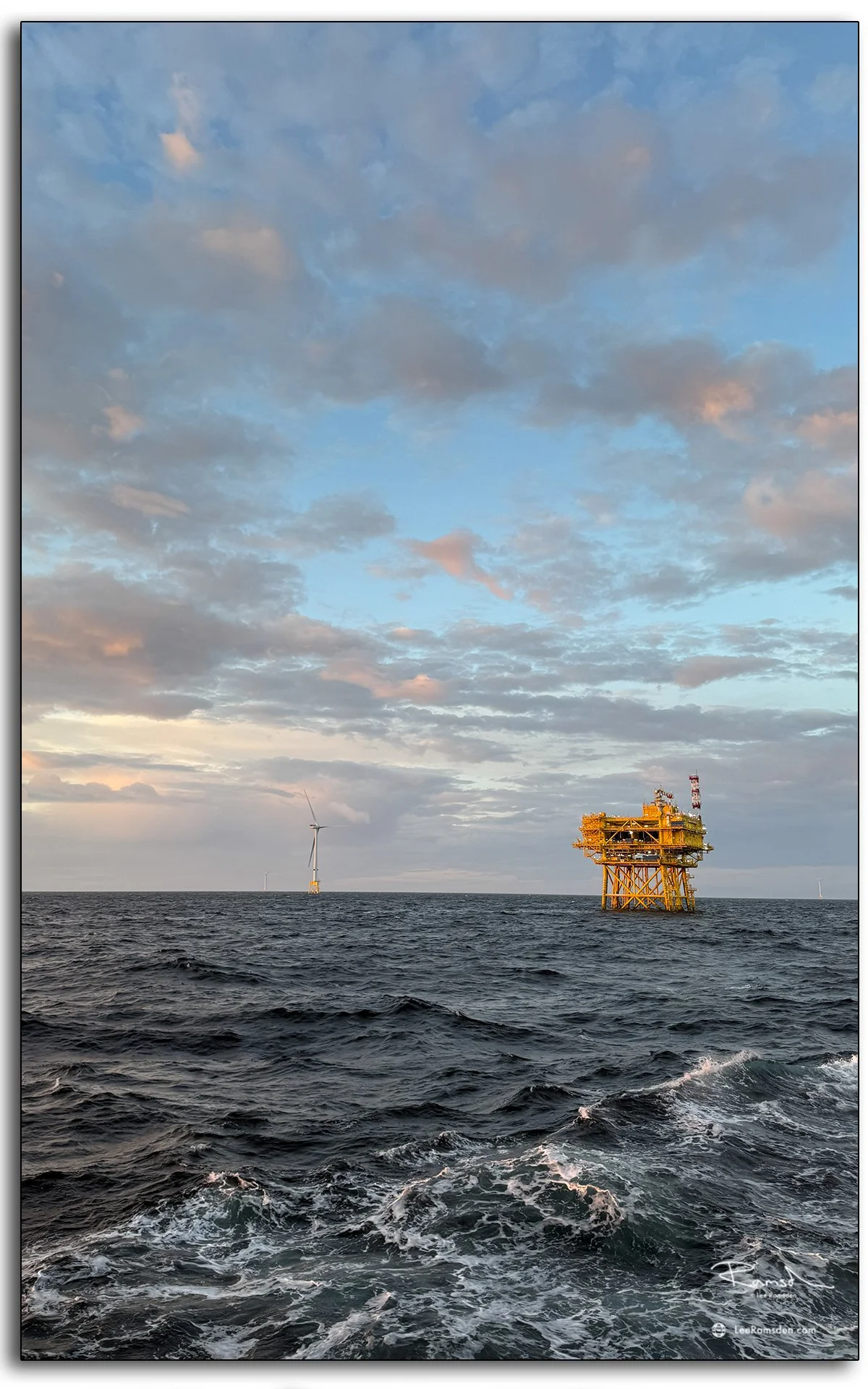
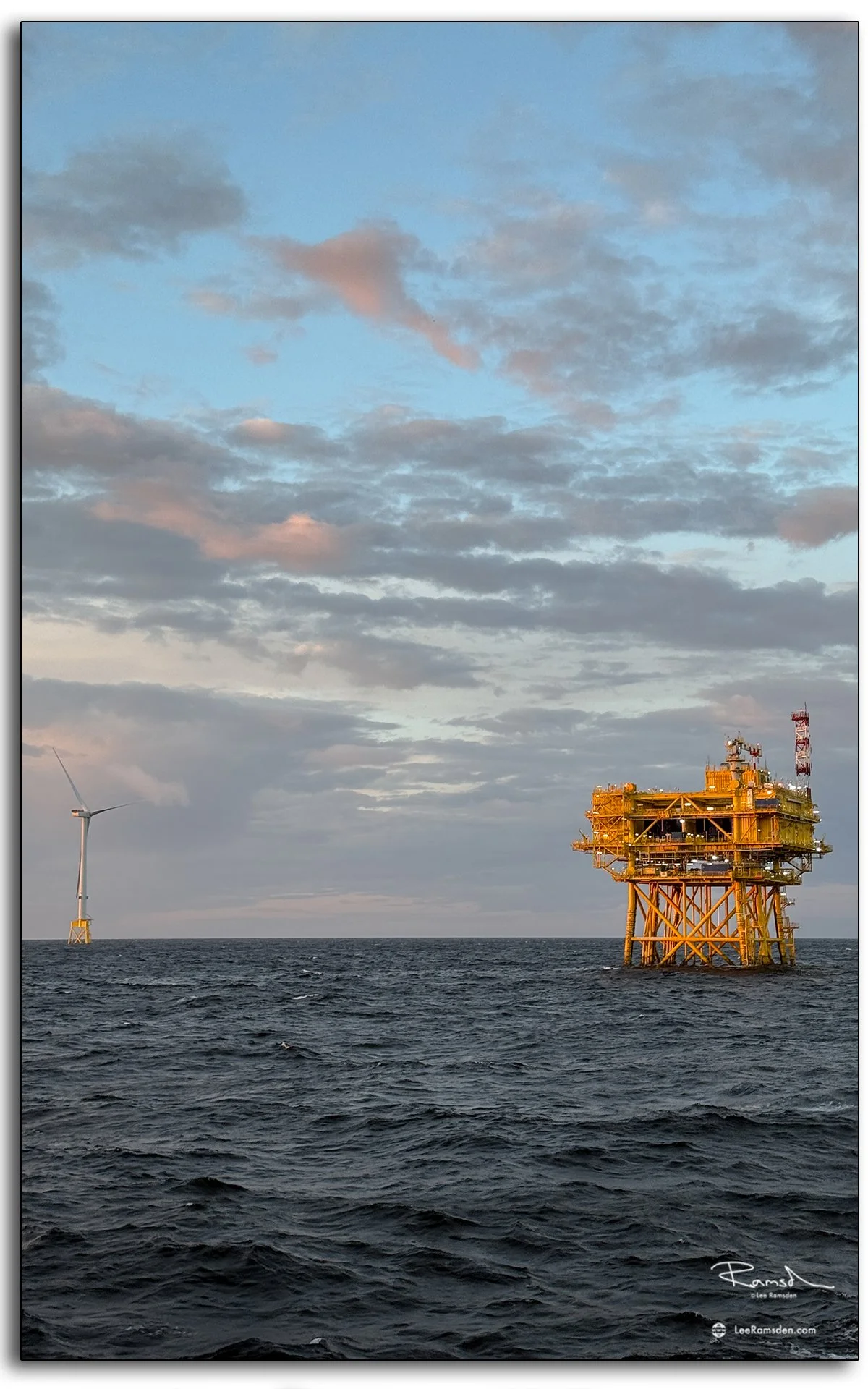
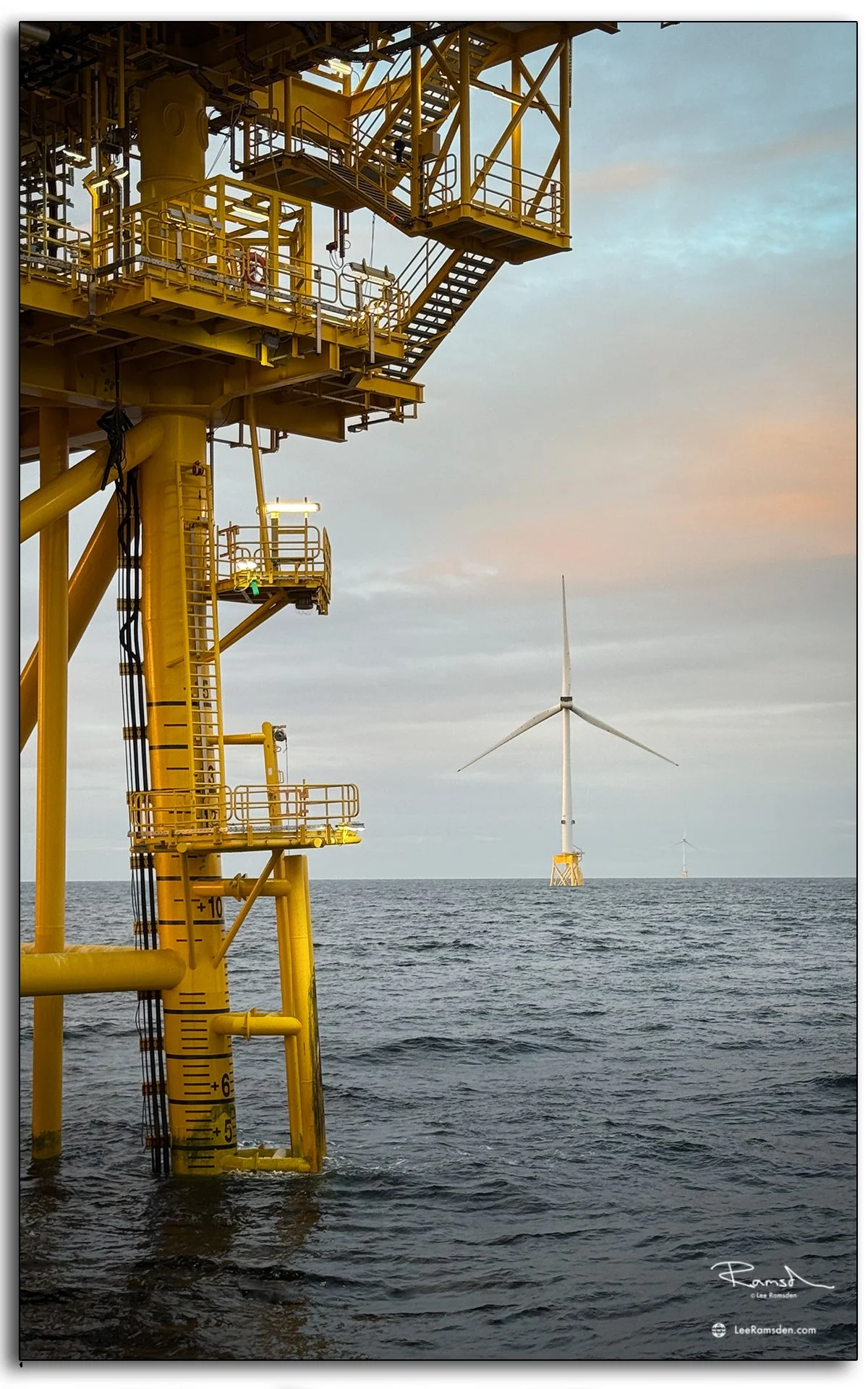
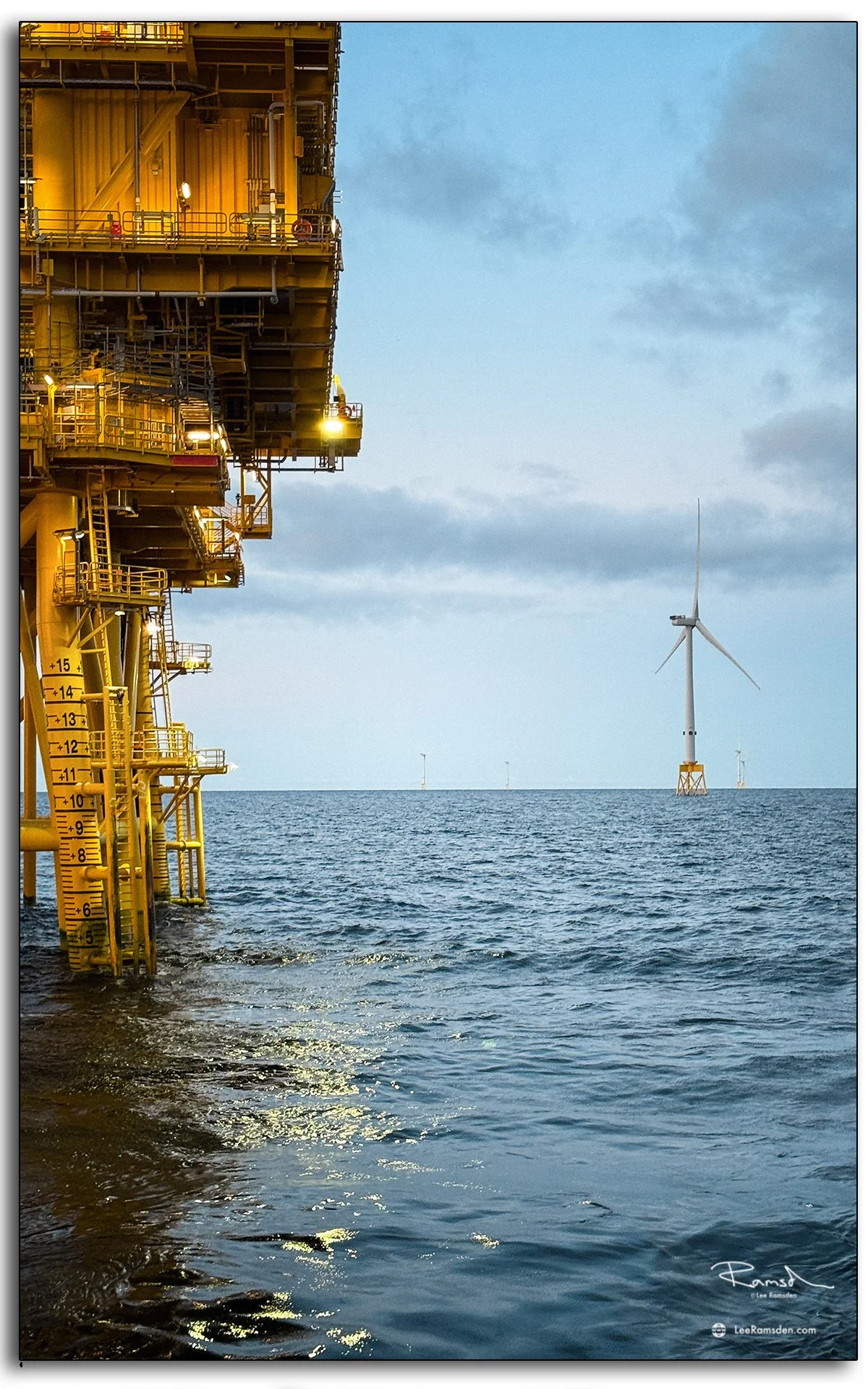
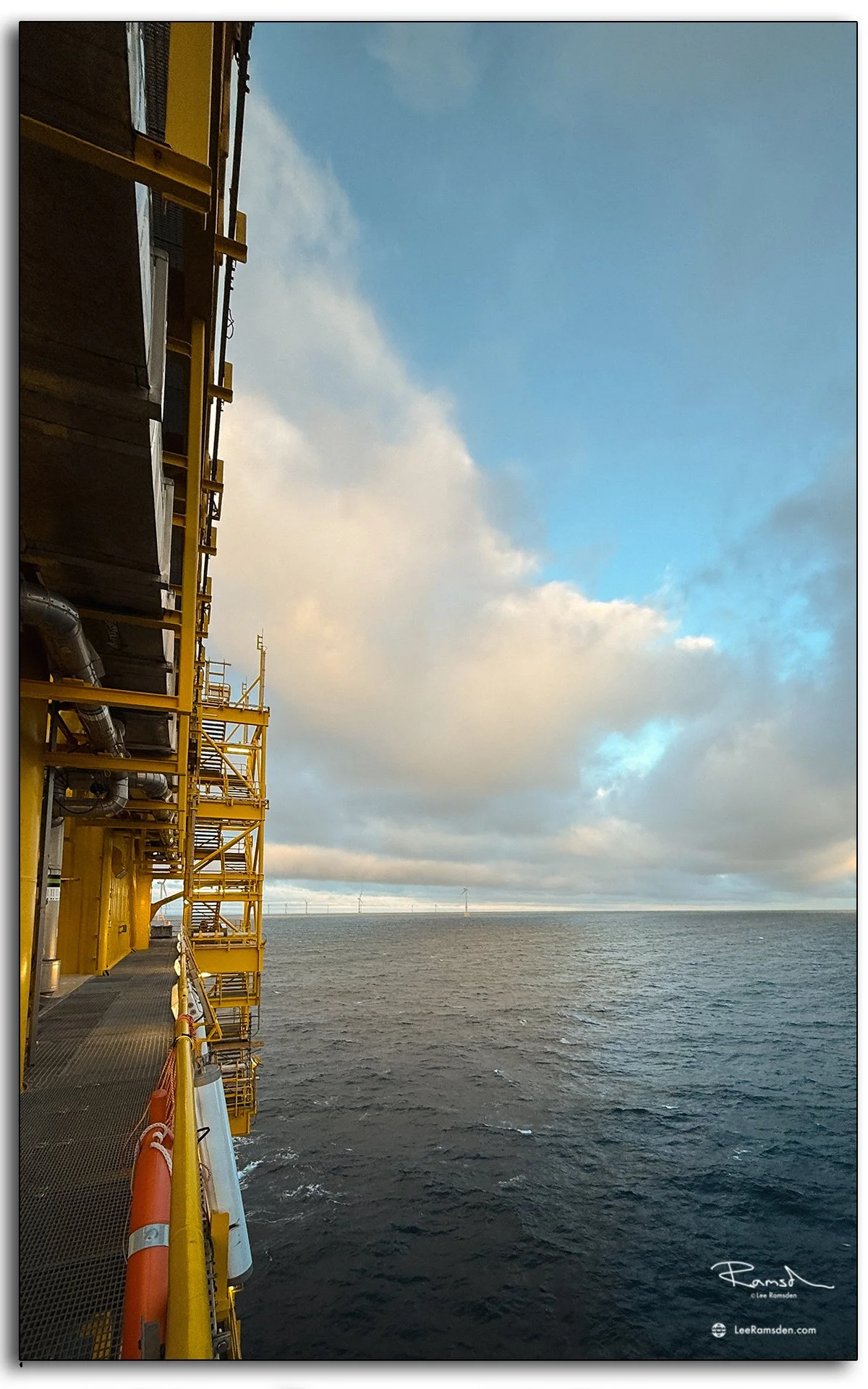
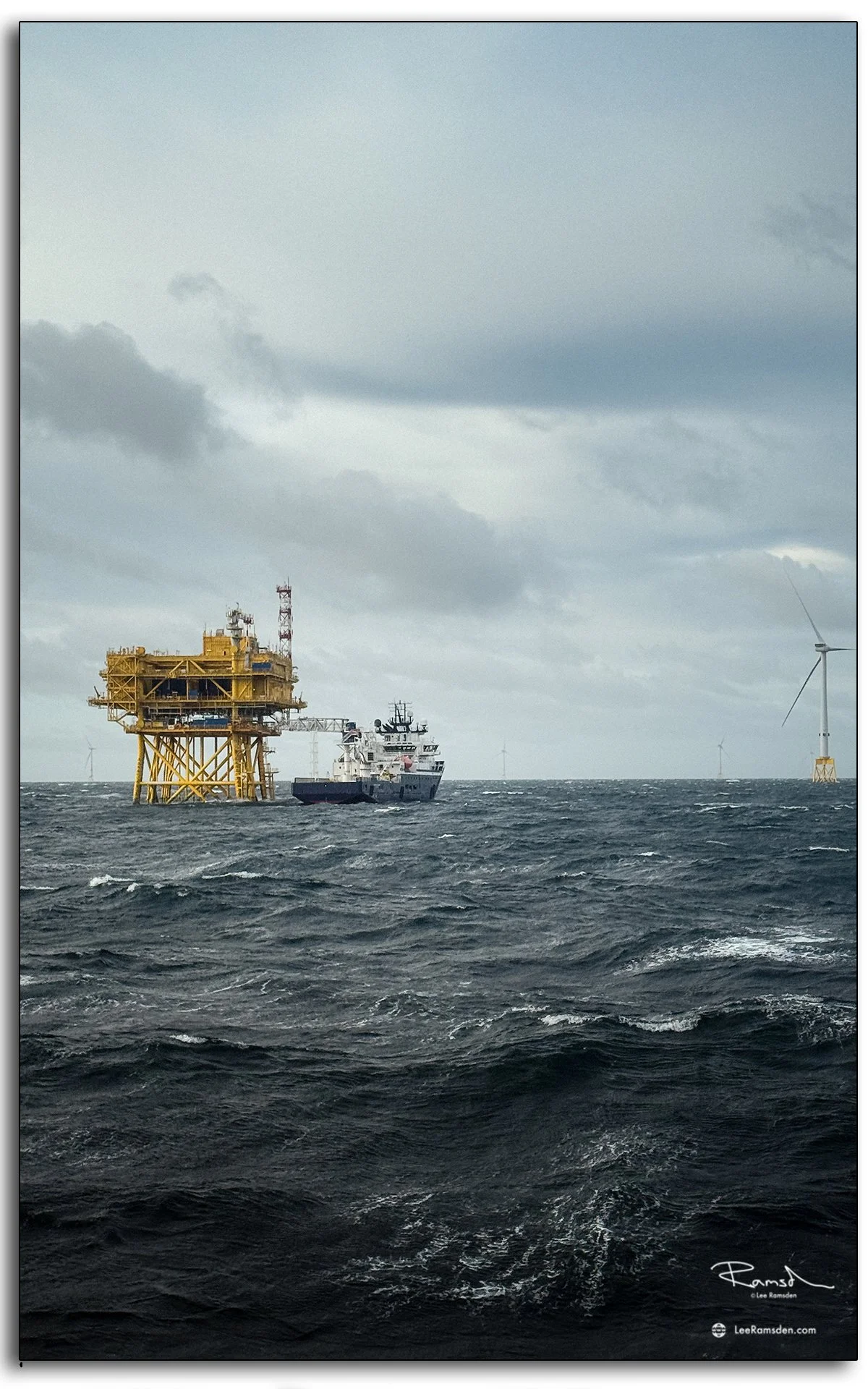
Working offshore often means spending long stretches of time alongside these vast yellow structures – offshore substations. They form the backbone of a wind farm, collecting and exporting the power generated by turbines scattered across the sea.
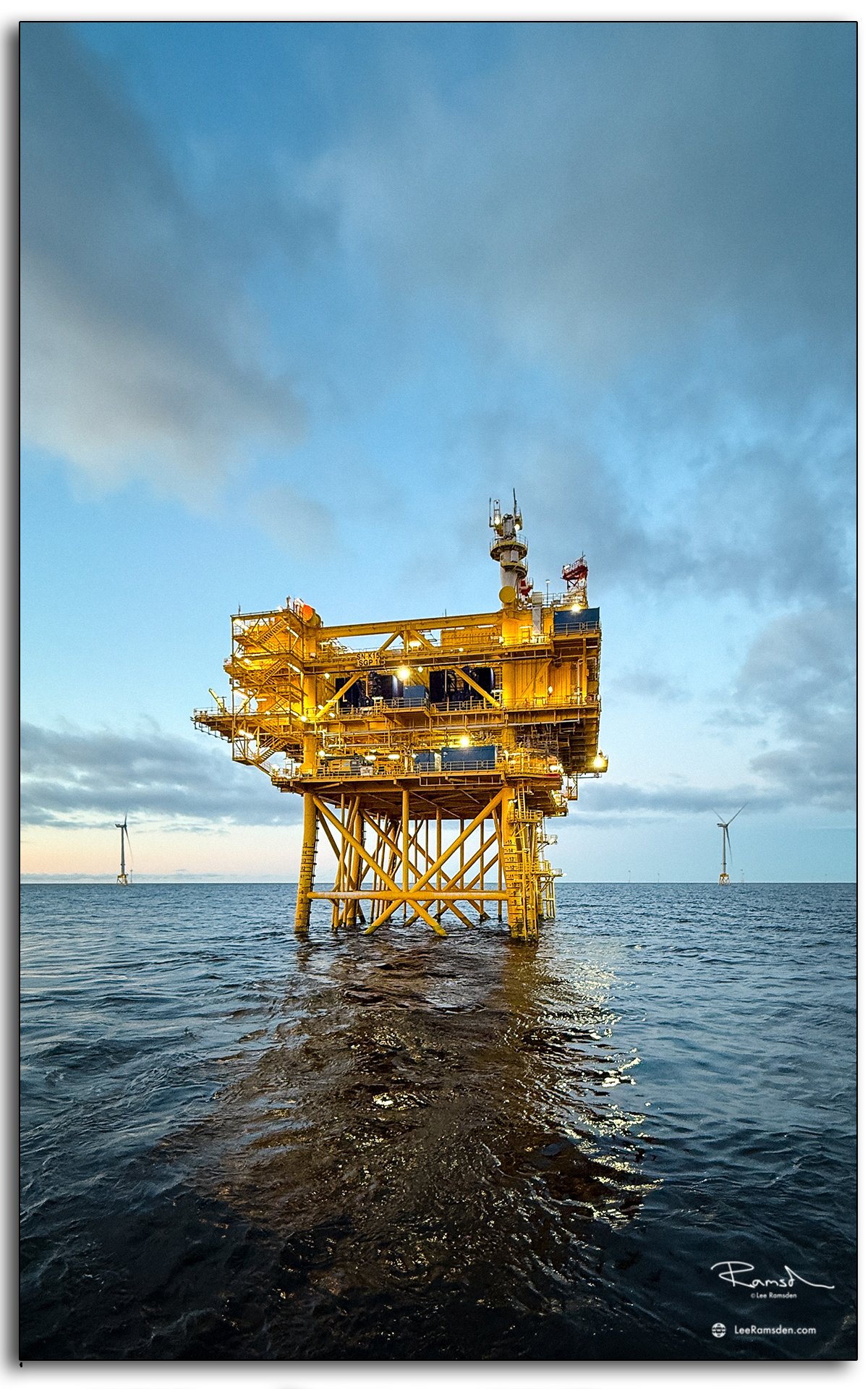
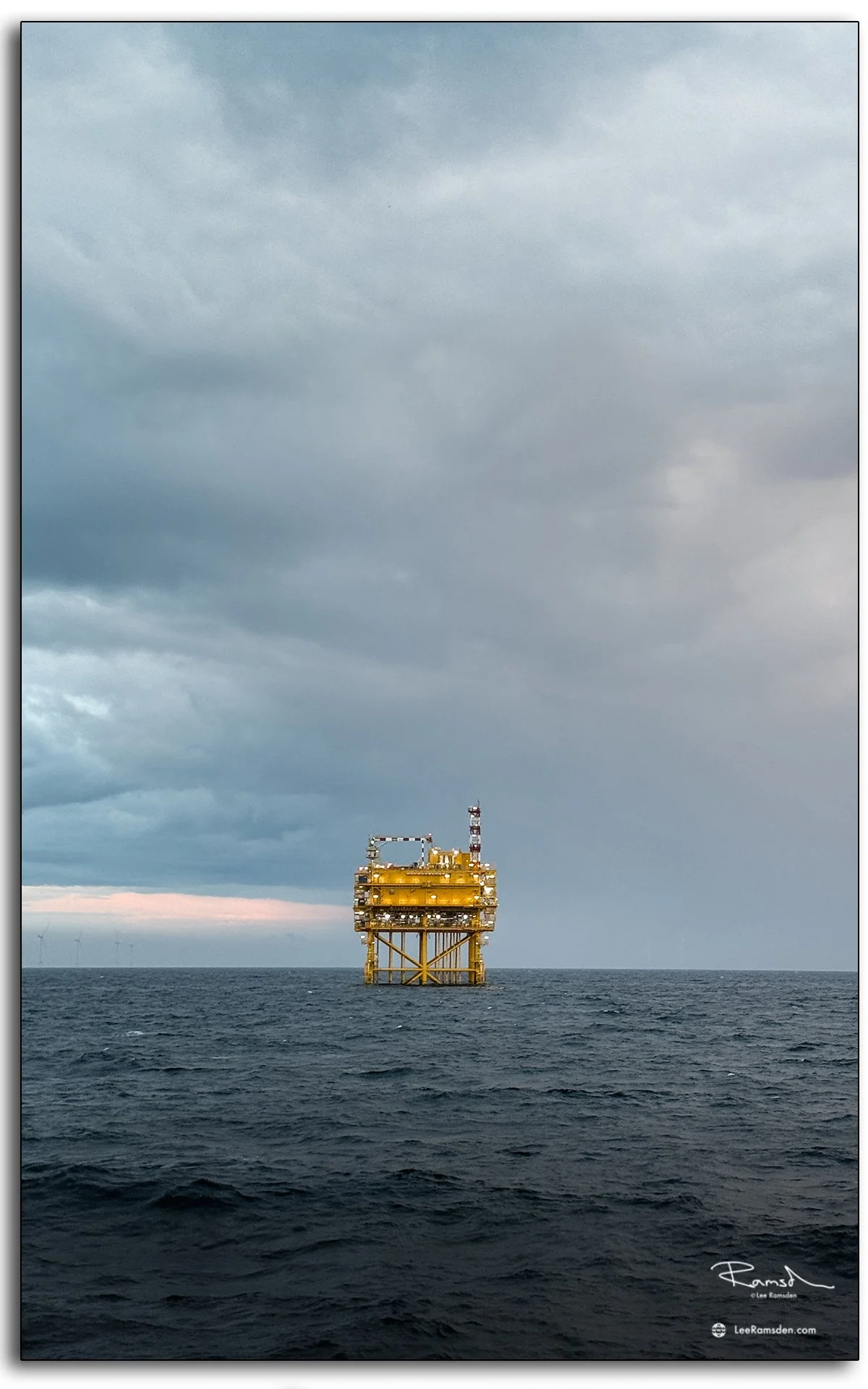
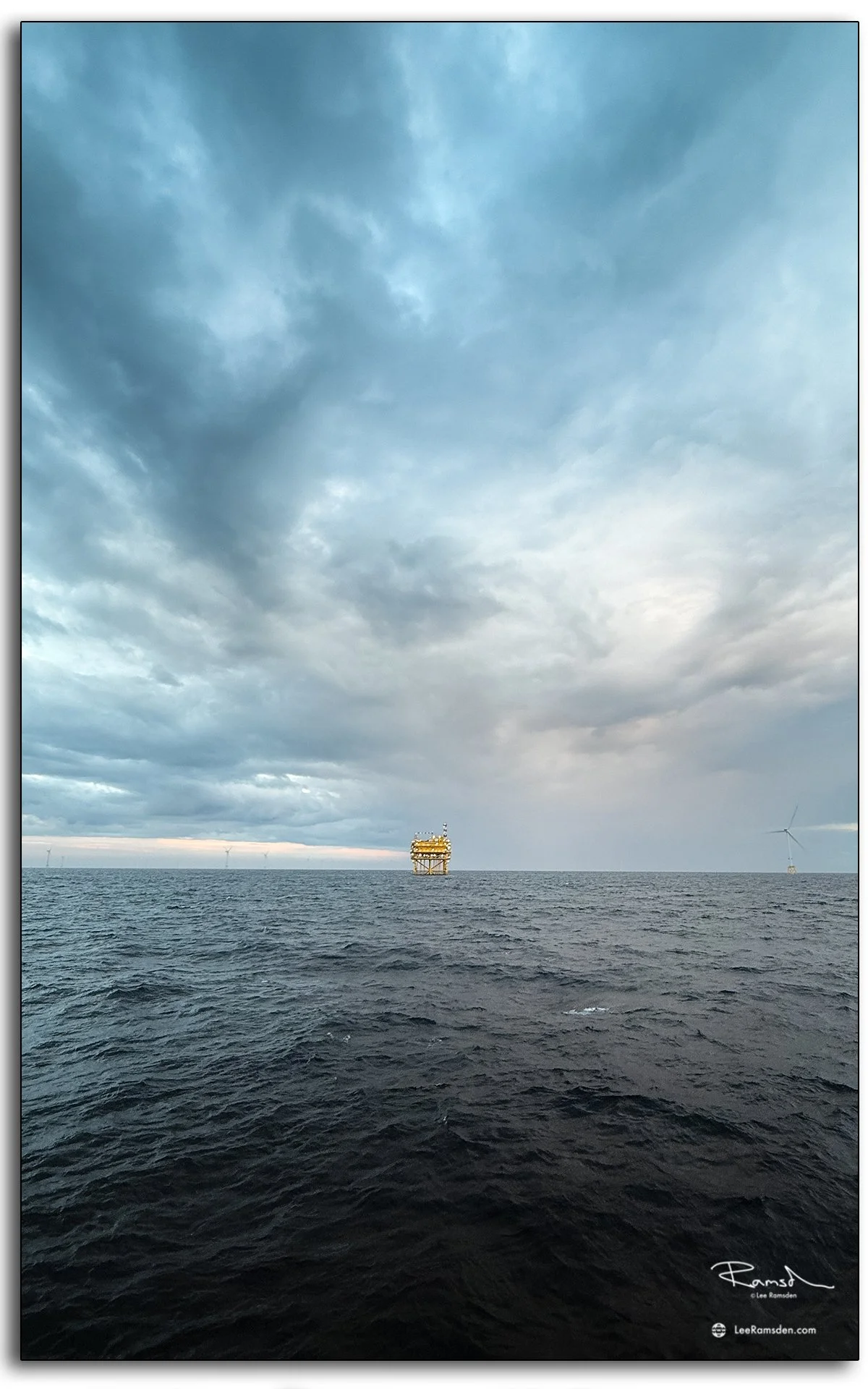
The scale is difficult to appreciate until you’re up close. From the deck of a vessel, the platforms rise high above the water, a complex of steel, stairs, and cables, lit up against the horizon. Depending on the weather, they can look strikingly different – golden in calm sunsets, isolated and moody under stormy skies, or glowing at night when lit against the dark.

For those who work out here, these structures are both workplace and landmark. For those onshore, they remain largely unseen, but they’re critical to delivering renewable energy back to the grid.

The offshore wind industry is a world of steel, sea, and constant change – both technical and natural. Capturing it in black and white strips everything back to structure and contrast, highlighting the balance between industry and environment. For more of my industrial and wind industry work, visit my Wind Industry portfolio.

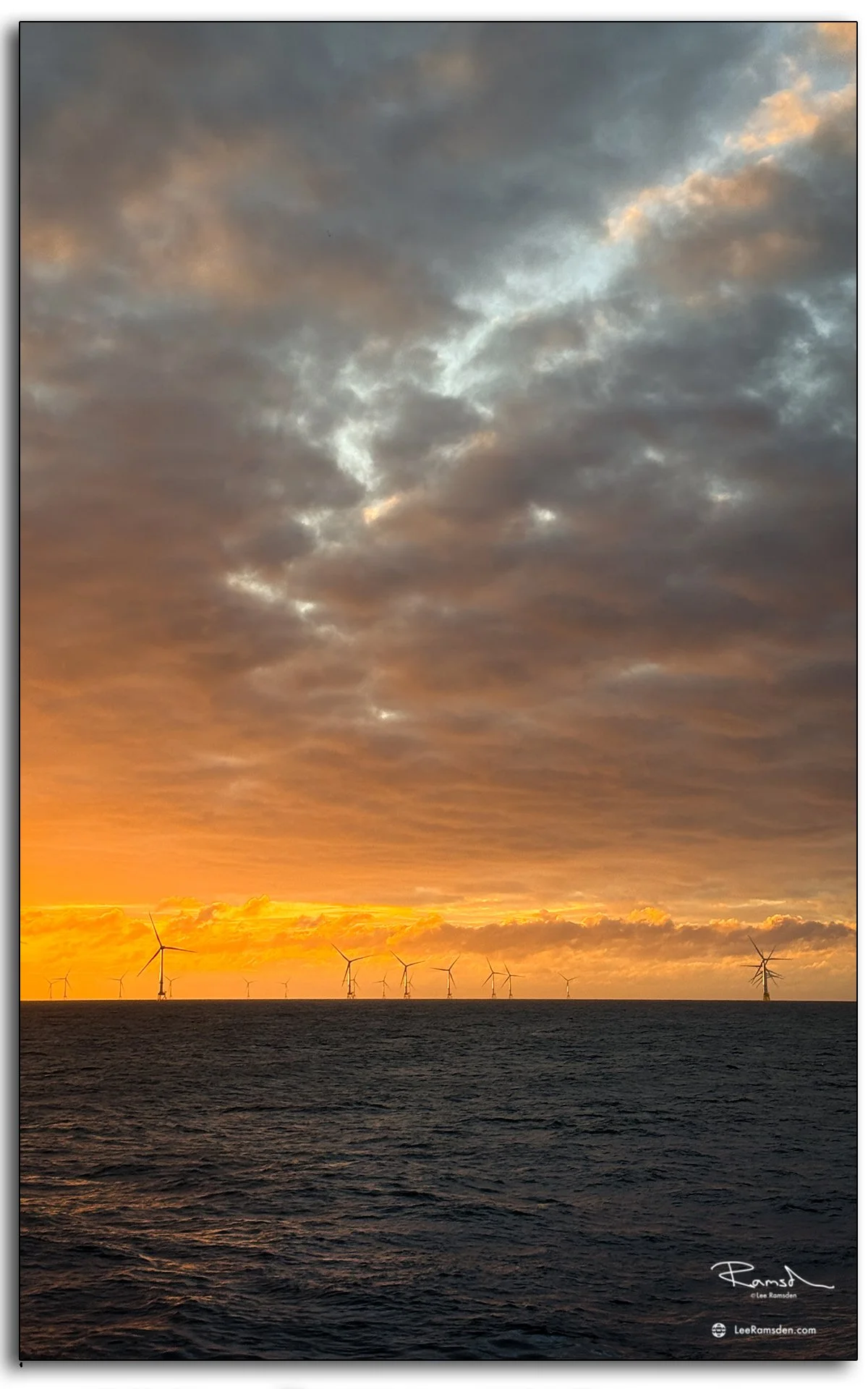
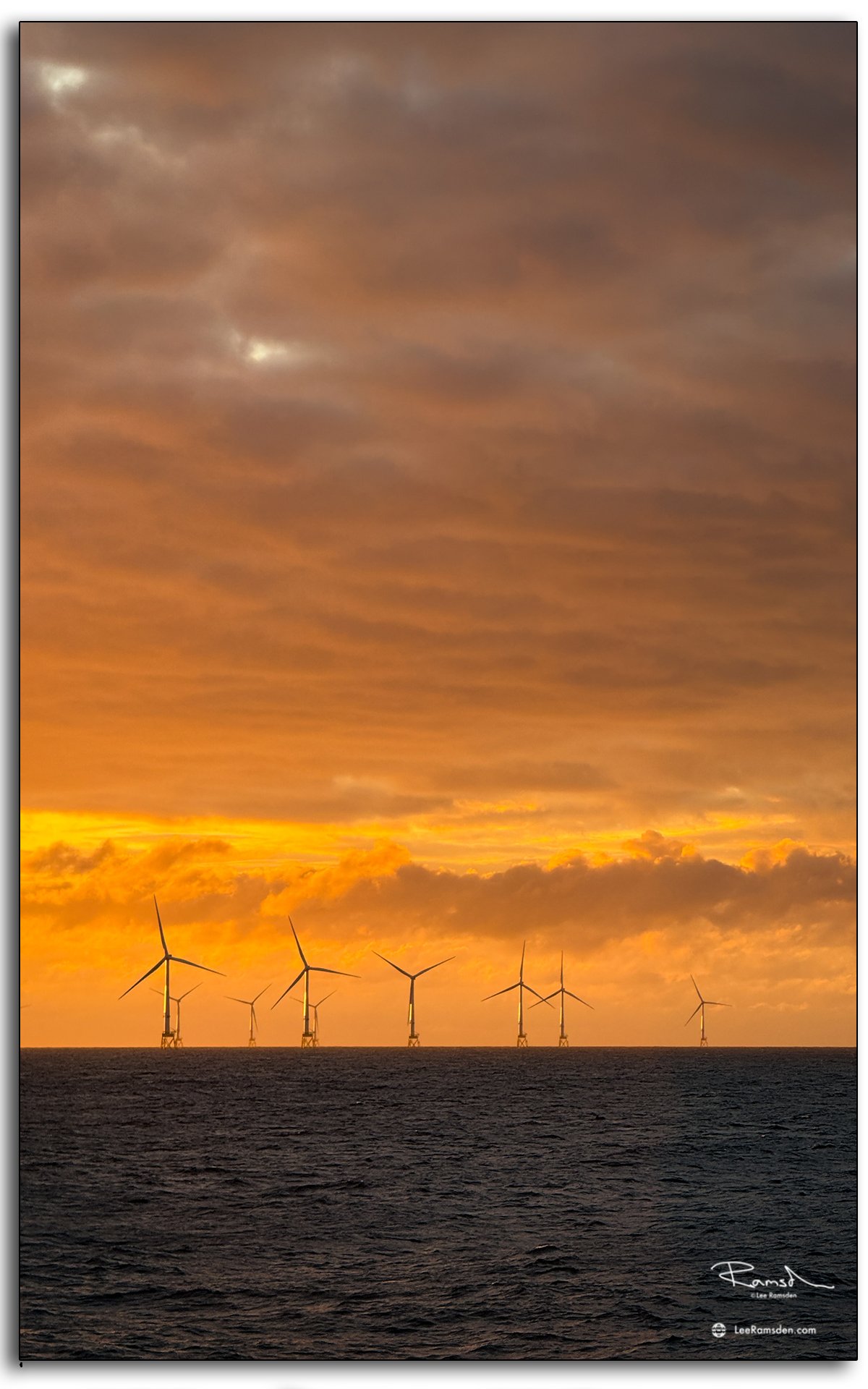
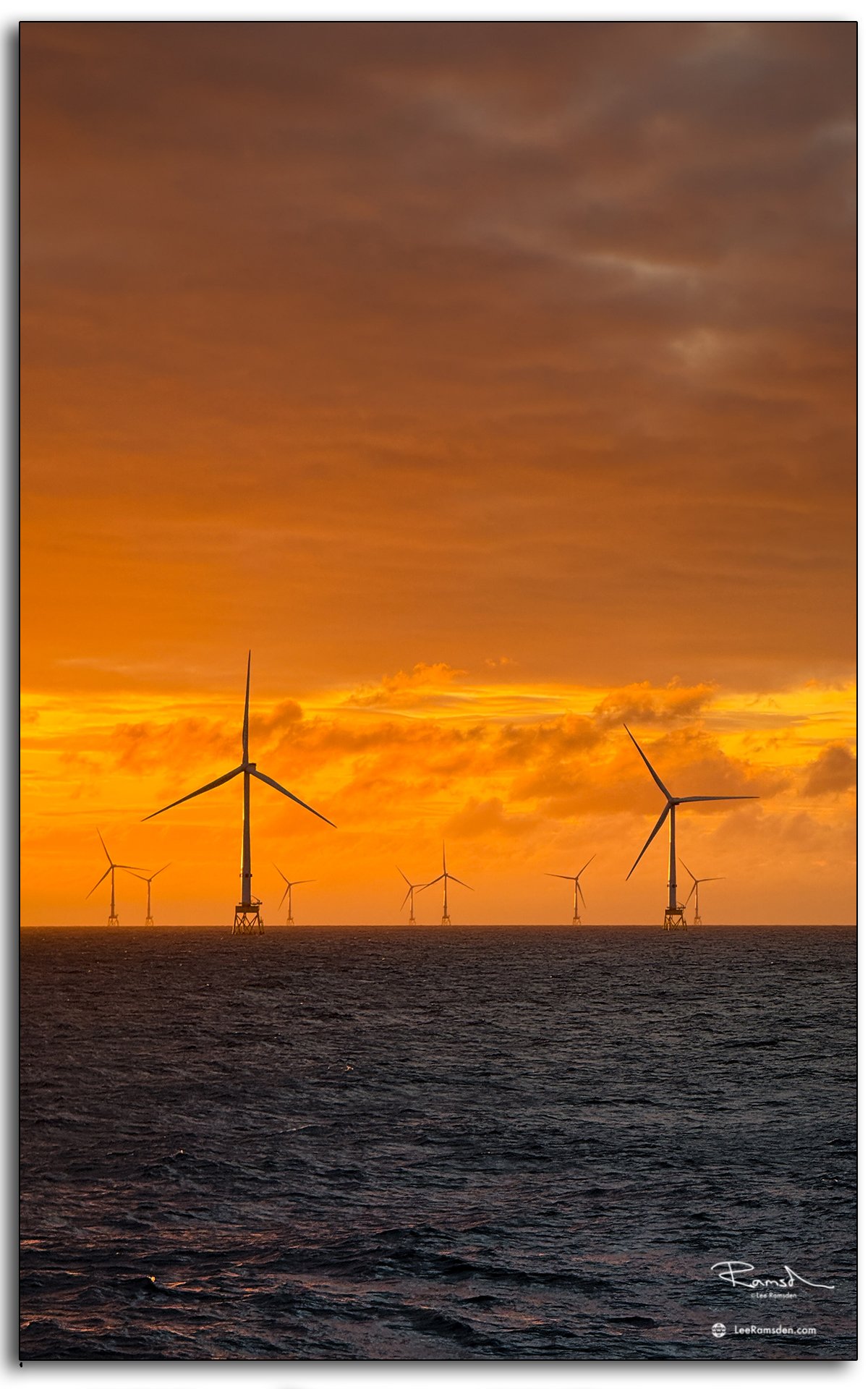
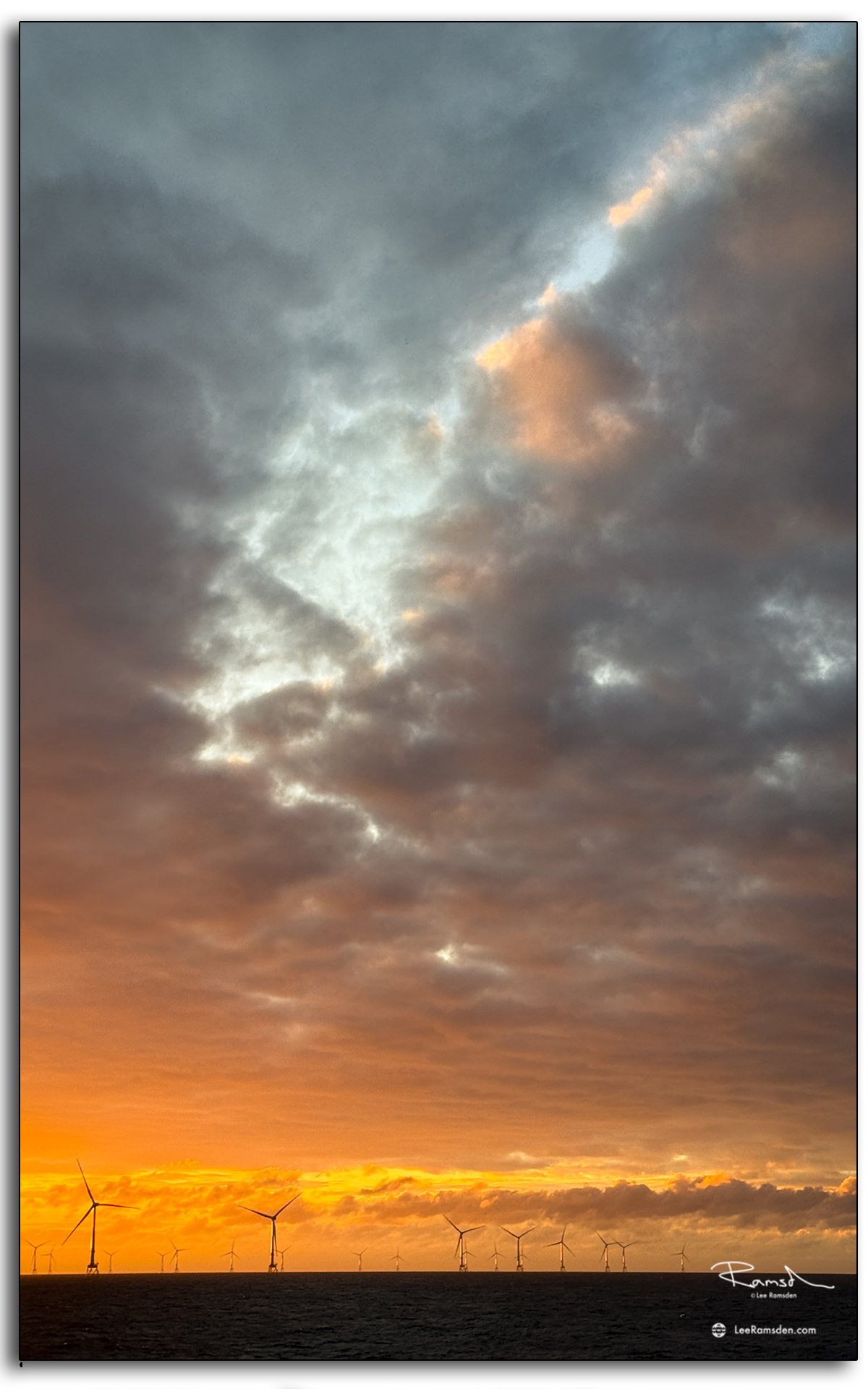
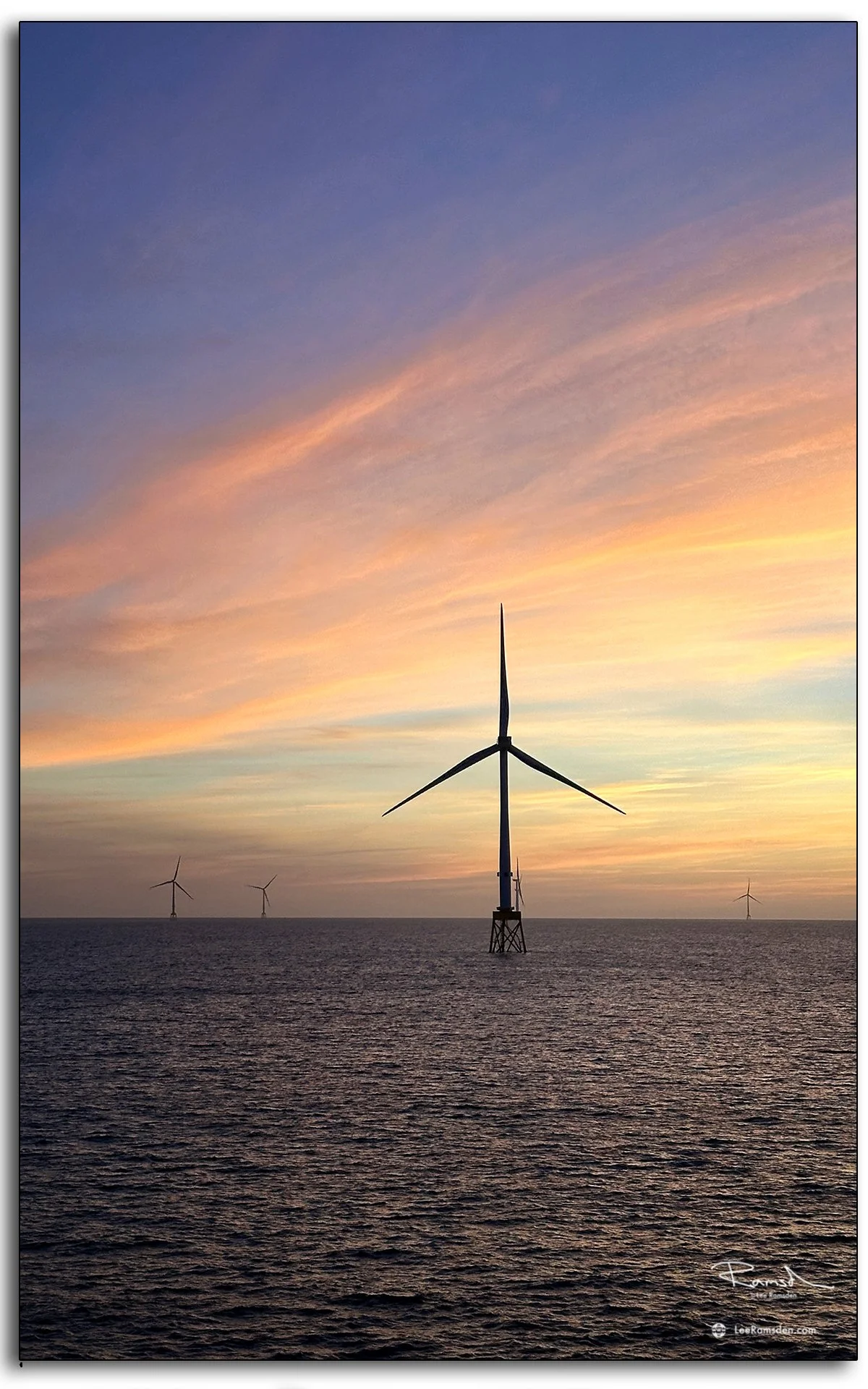
Offshore Sunsets – Wind Turbines at Dusk

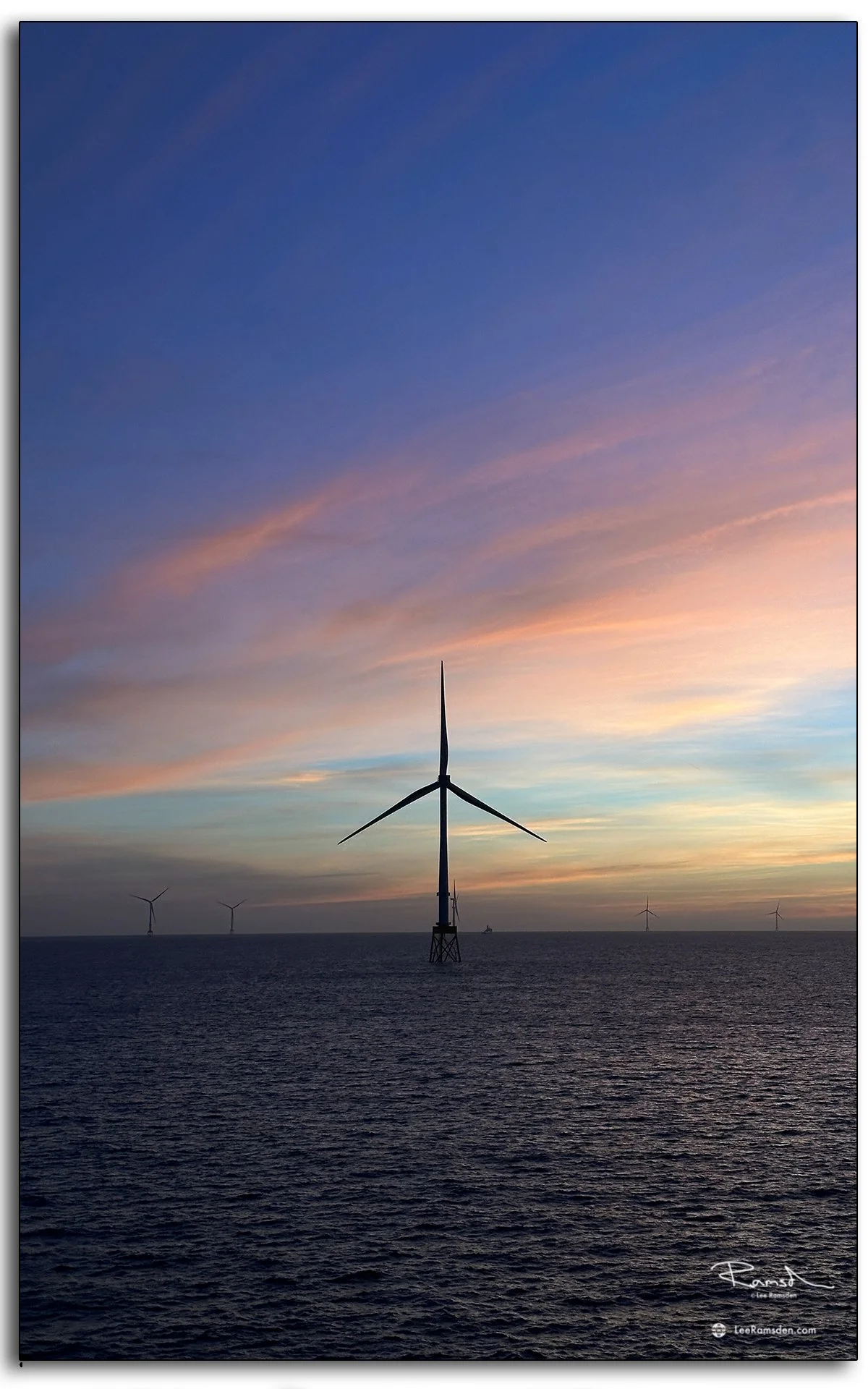
Offshore wind farm at sunset with glowing orange horizon and dramatic clouds overhead.
Close-up of turbines silhouetted against a vivid golden sky at sea.

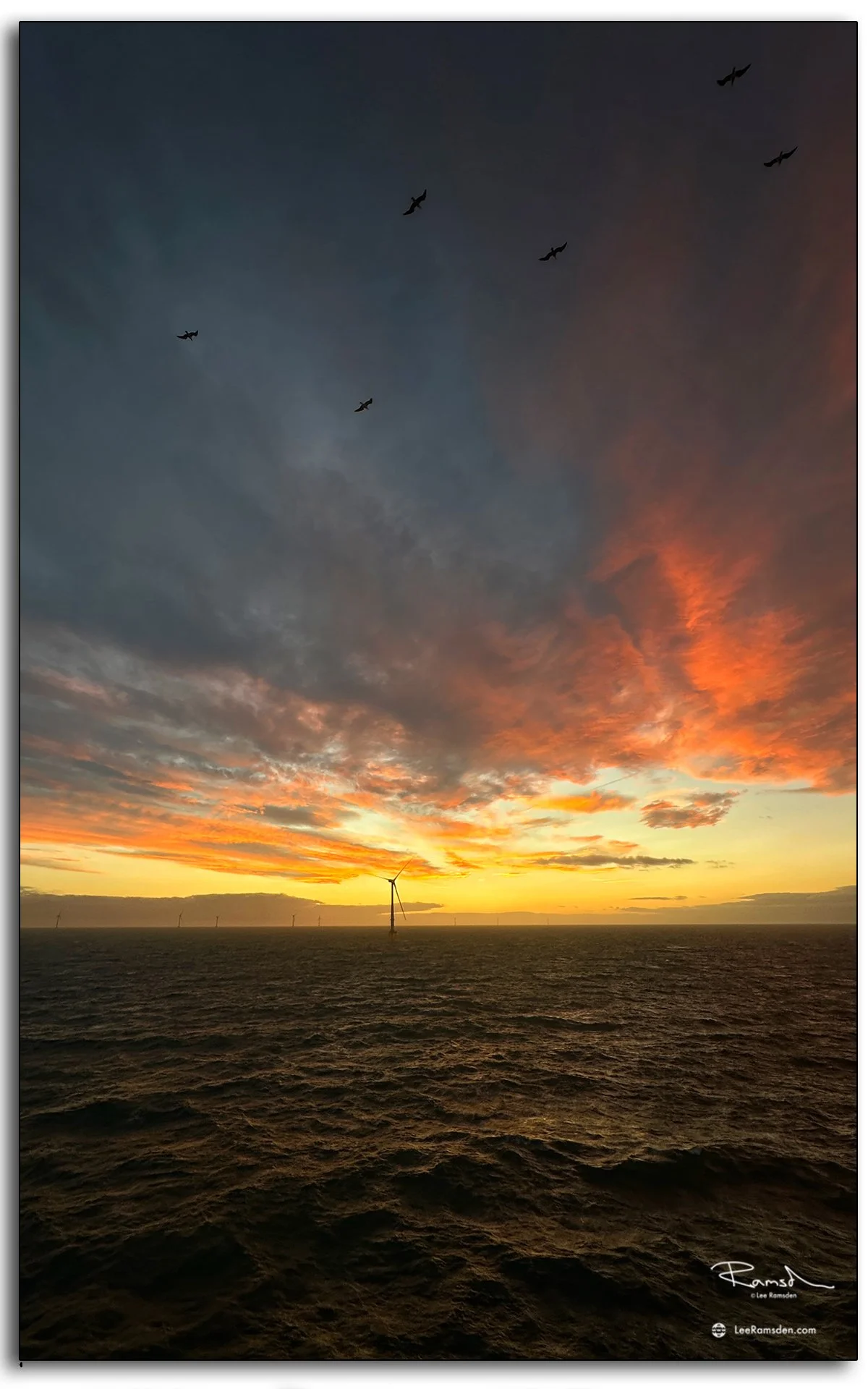
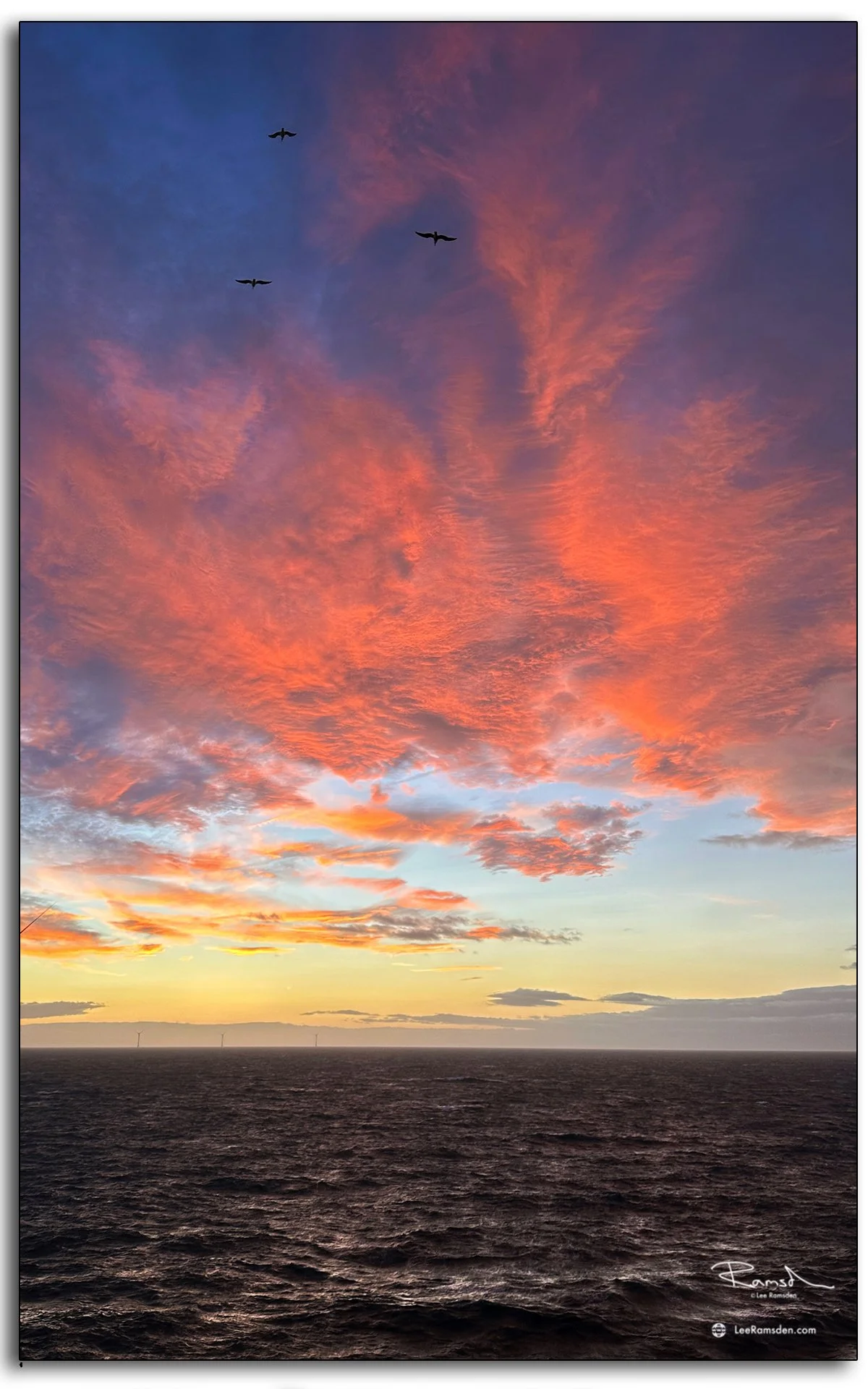
The North Sea never fails to deliver dramatic light, and these evenings offshore were no exception. The sky burned with shades of orange, red, and violet while the turbines stood calmly against the horizon, a striking reminder of the balance between nature and engineering.

From the deck, I watched the light change quickly, painting the sea and sky with intense colour. It’s these fleeting moments that make offshore life unique—long hours of work rewarded with scenes that most people never get to witness.

Wide view of offshore wind turbines under glowing sunset skies.
Row of offshore wind turbines lit by fiery orange clouds and evening light.

These iPhone images capture the stillness of the turbines contrasted with the movement of sea, sky, and birds overhead. A reminder that while technology pushes forward, we’re always working within the rhythm of nature.

See more of my Wind Industry work here.

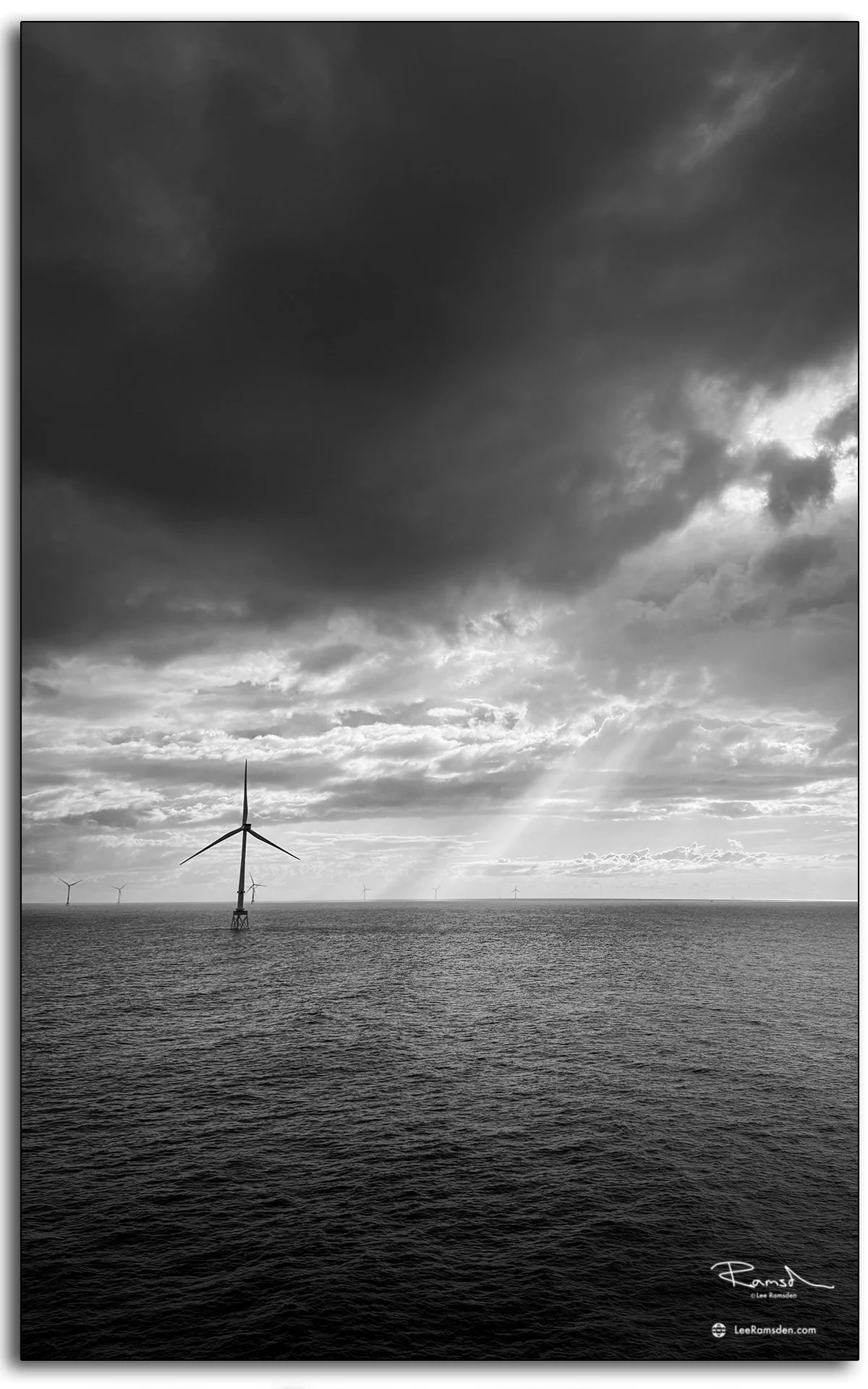
Black and White Turbines at Sea

Offshore wind turbine beneath dark skies with light rays breaking through the clouds, captured in monochrome.
Monochrome offshore wind turbine set against moody skies and the North Sea horizon.

The offshore wind farm takes on a different presence in black and white. Without colour, the turbines stand stark against the shifting tones of sea and sky. The heavy clouds and breaking light add a drama that colour often softens, leaving a raw sense of scale and isolation.

These iPhone images strip everything back, reducing the view to light, shadow, and structure — highlighting the resilience of the turbines set against the vastness of the North Sea.

These black and white studies show another side to offshore wind — stripped of colour but rich in atmosphere. See more from my Wind Industry portfolio.

Offshore Walk-to-Work Transfers

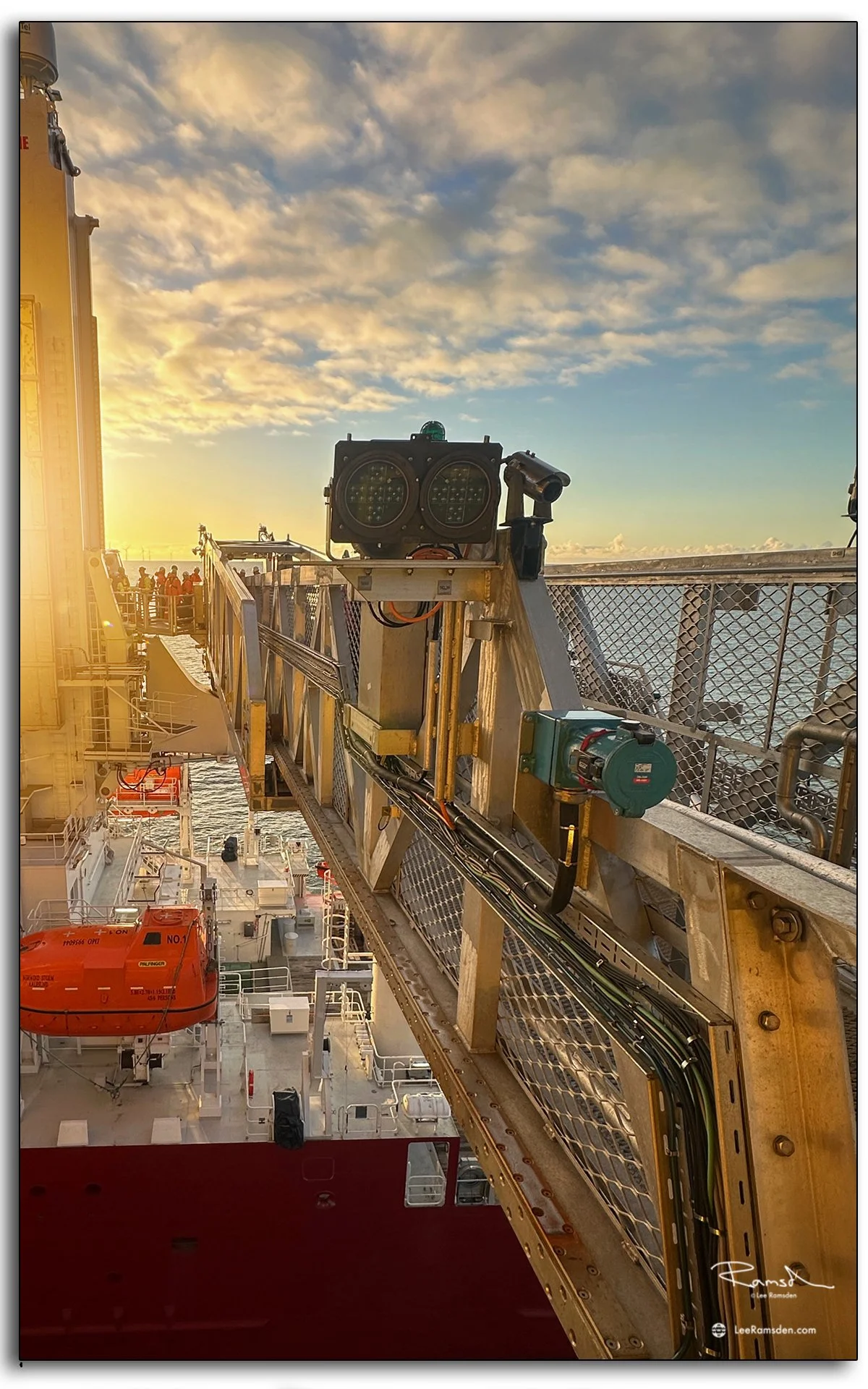
Side view of offshore Walk-to-Work bridge extended to platform, photographed at sunrise.
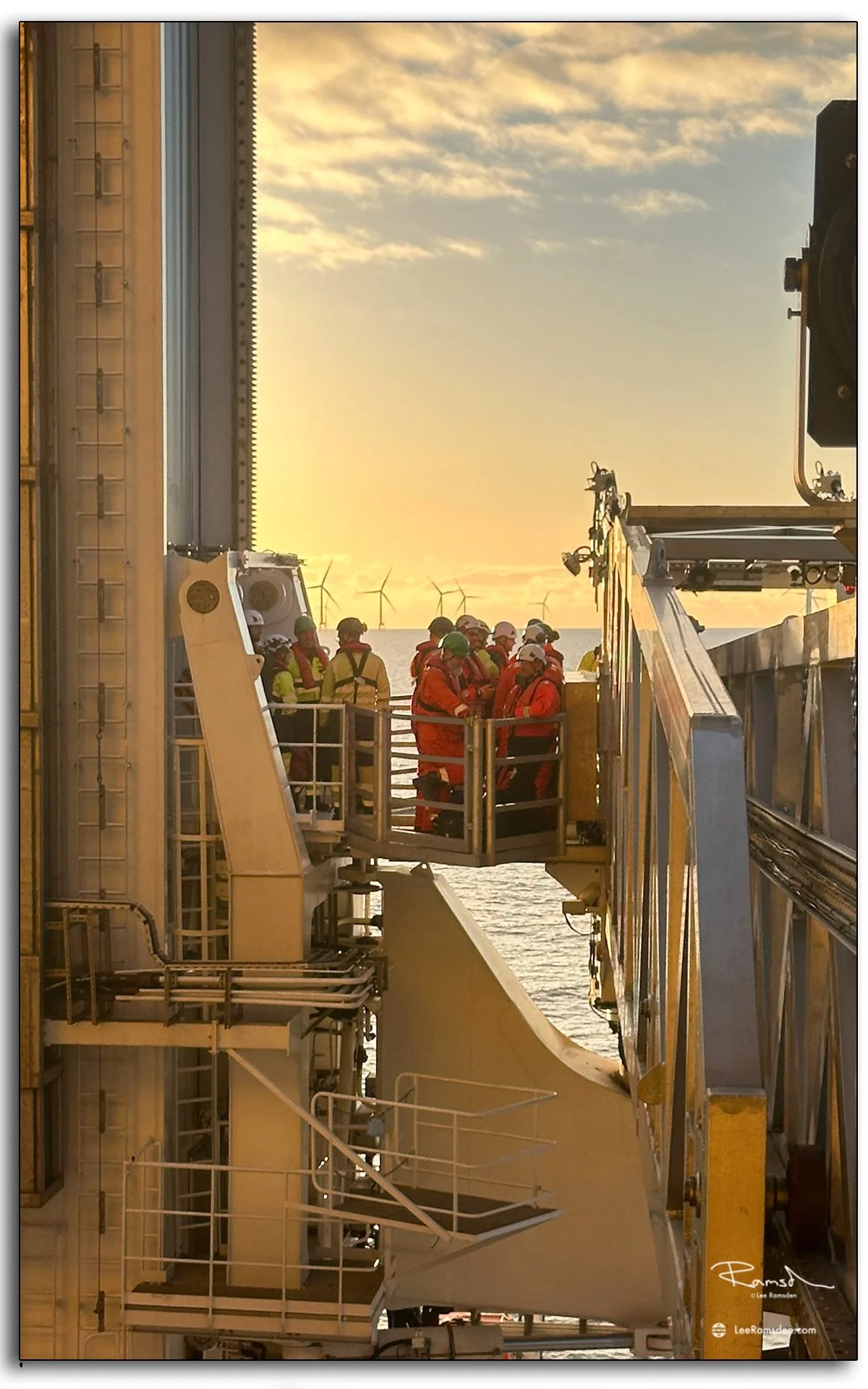
Offshore crew gathered in PPE, preparing to transfer via Walk-to-Work bridge.

Crew transfers offshore are all about routine, discipline, and trust in the equipment. These images show the daily process of moving between vessel and platform via the Walk-to-Work bridge.

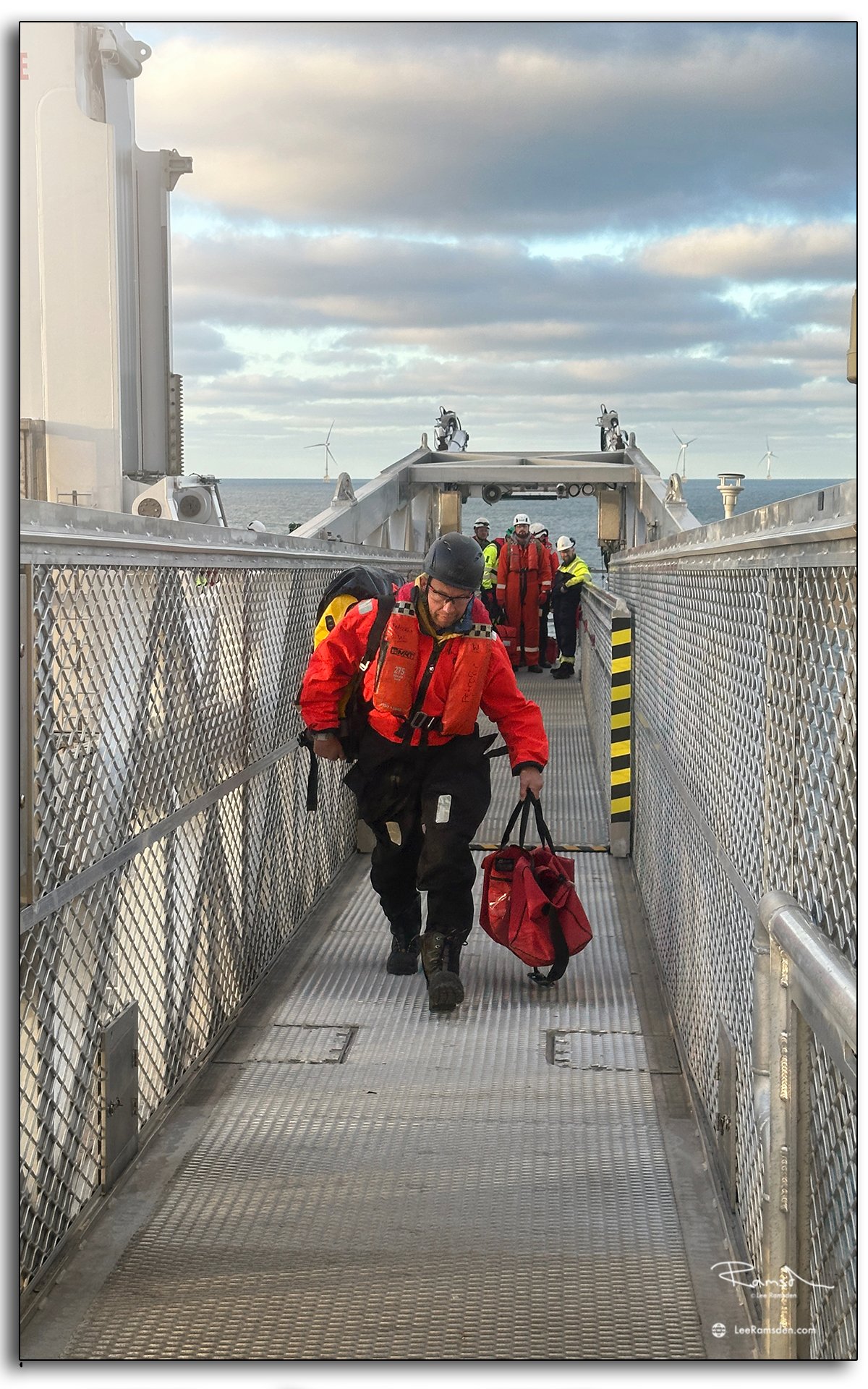
Offshore worker in survival suit crossing Walk-to-Work bridge in calm sea conditions.
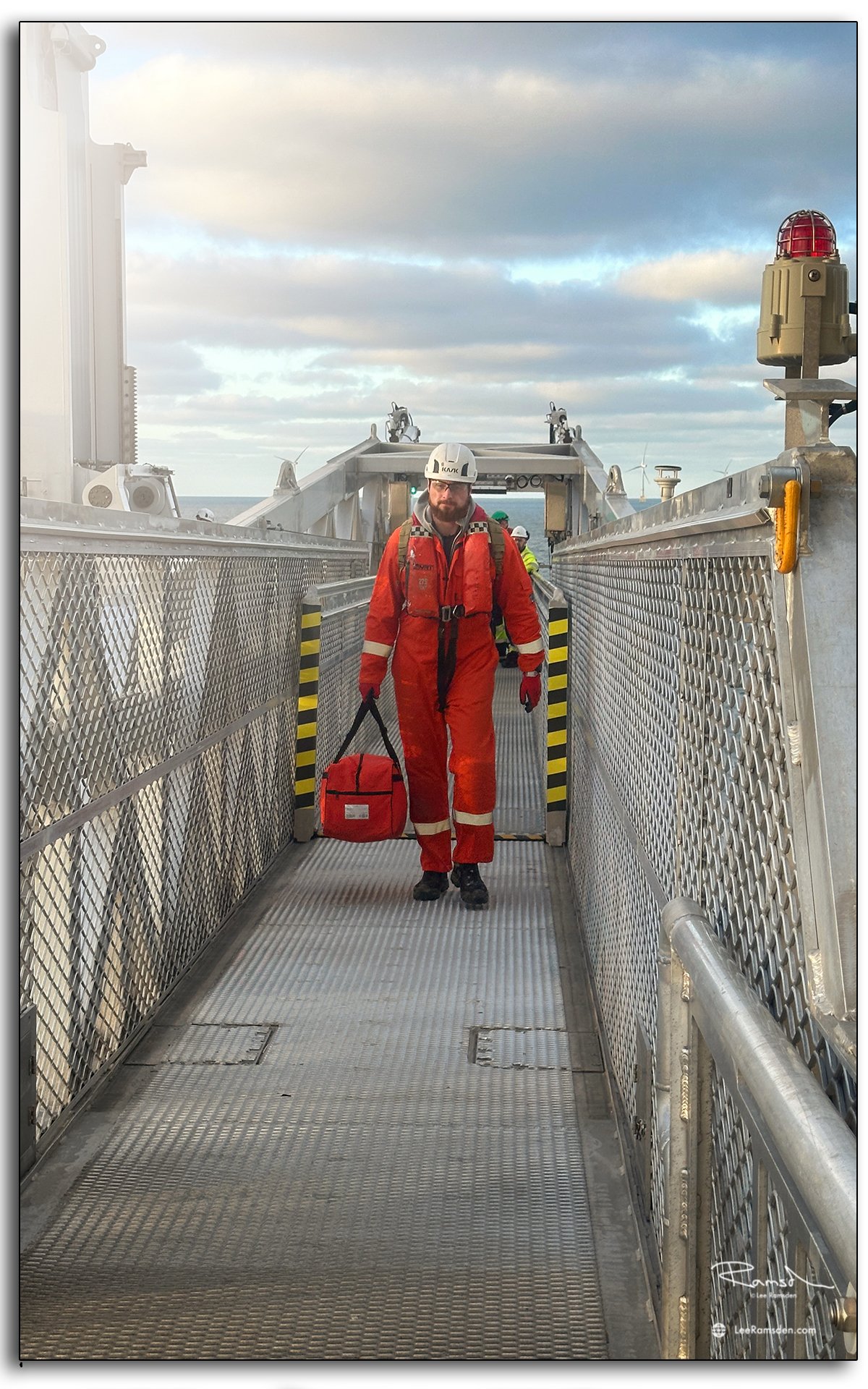
Worker crossing Walk-to-Work bridge at sunrise, with offshore crew waiting behind.

The W2W system is straightforward in purpose: to give workers safe access. These photographs focus less on the structure and more on the people — the steady flow of personnel, kit bags in hand, crossing in both directions. It’s a reminder that offshore operations are built on repetition and reliability, not just engineering.

This series continues my documentation of offshore work and life at sea. For more, visit my Wind Industry and Industrial galleries.

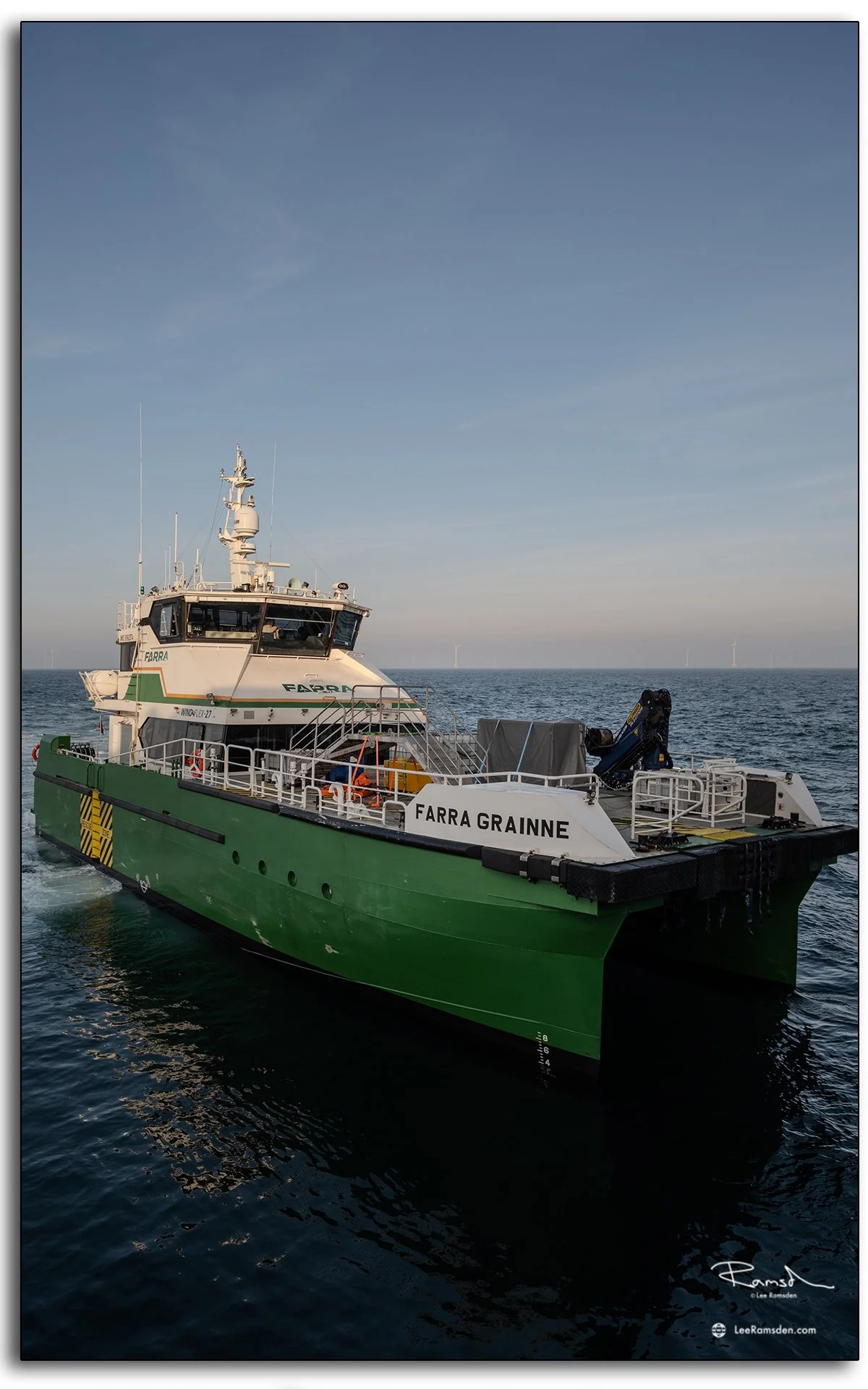
Crew Transfer Vessels in Offshore Wind: Farra Grainne at Work

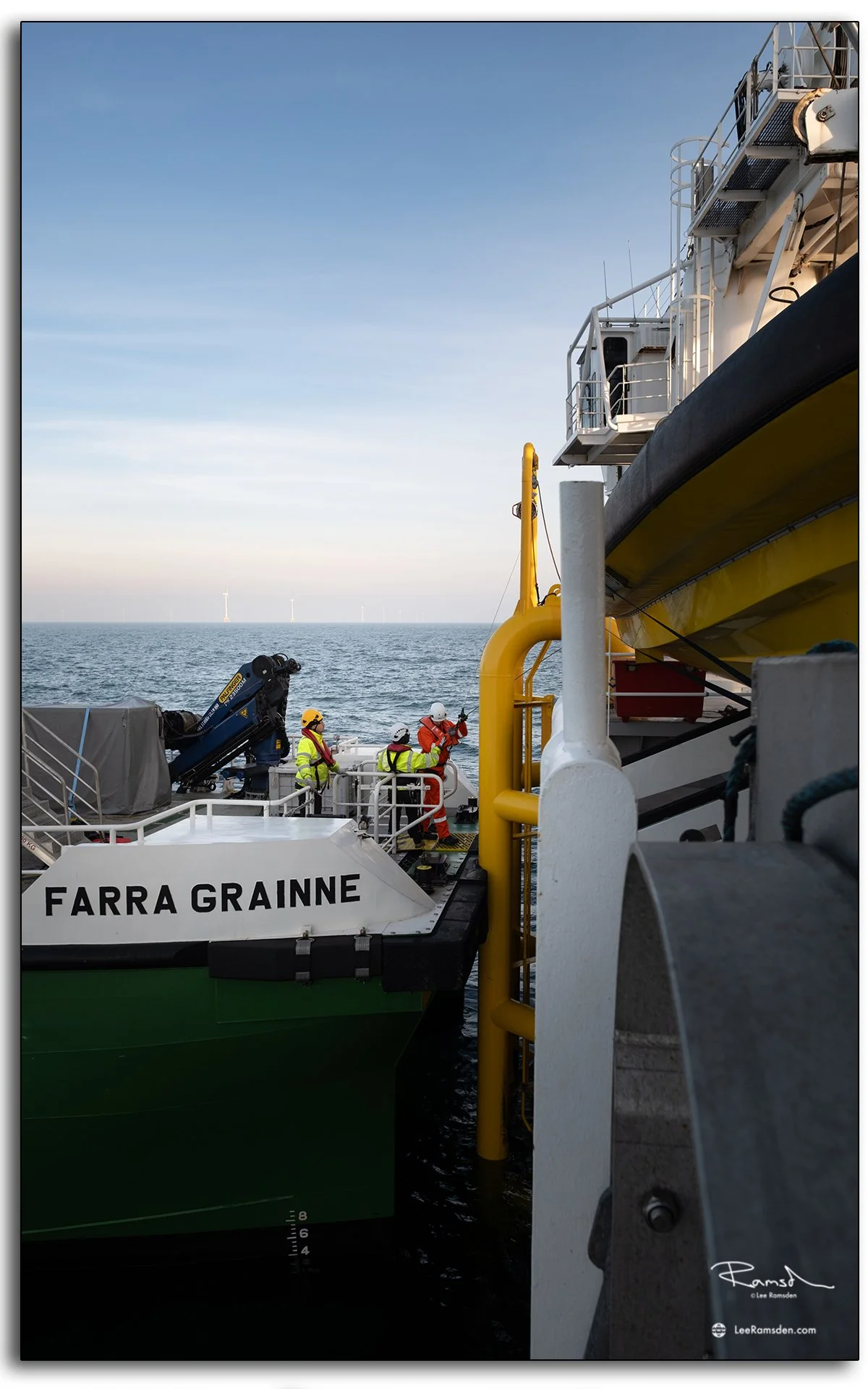
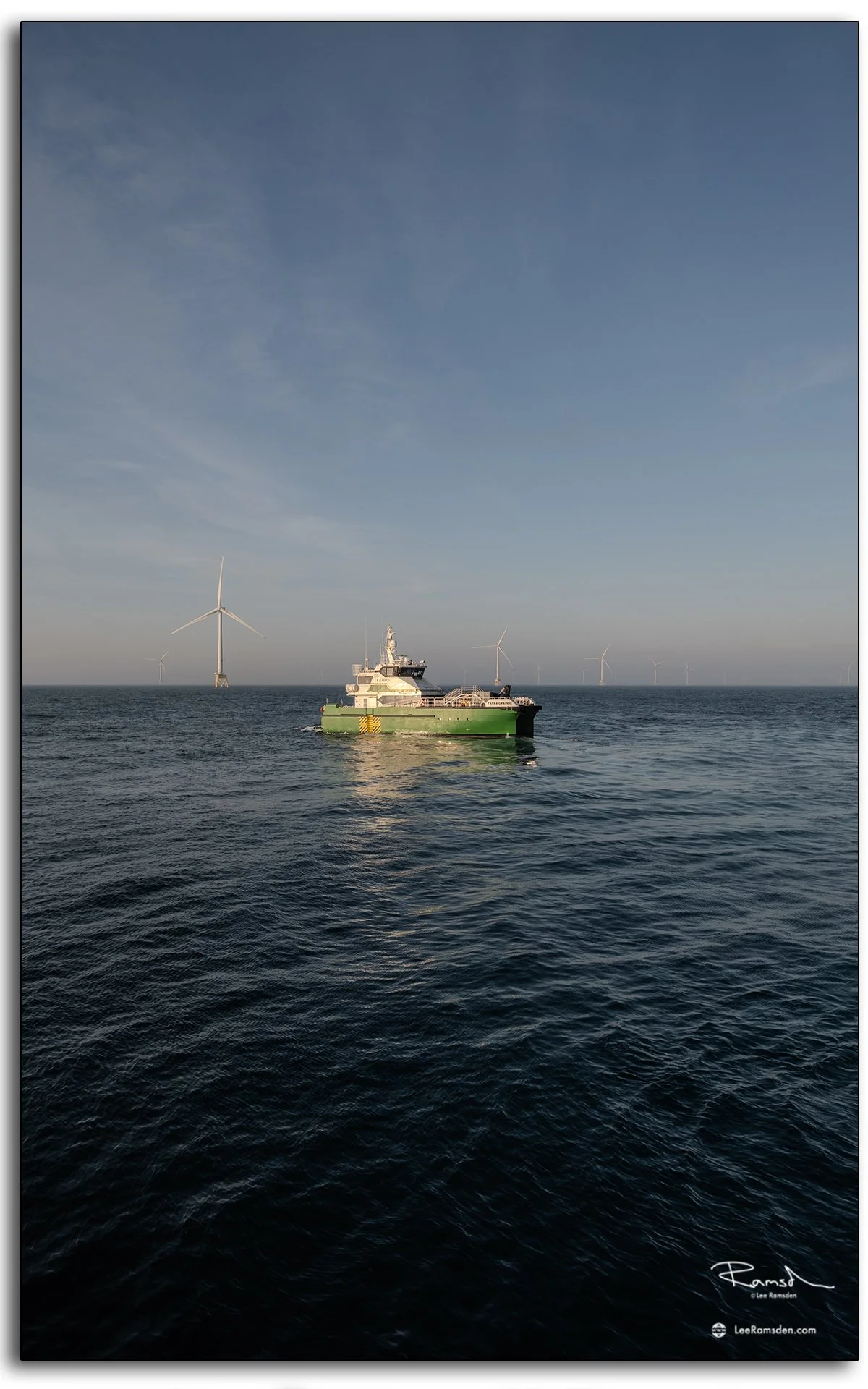
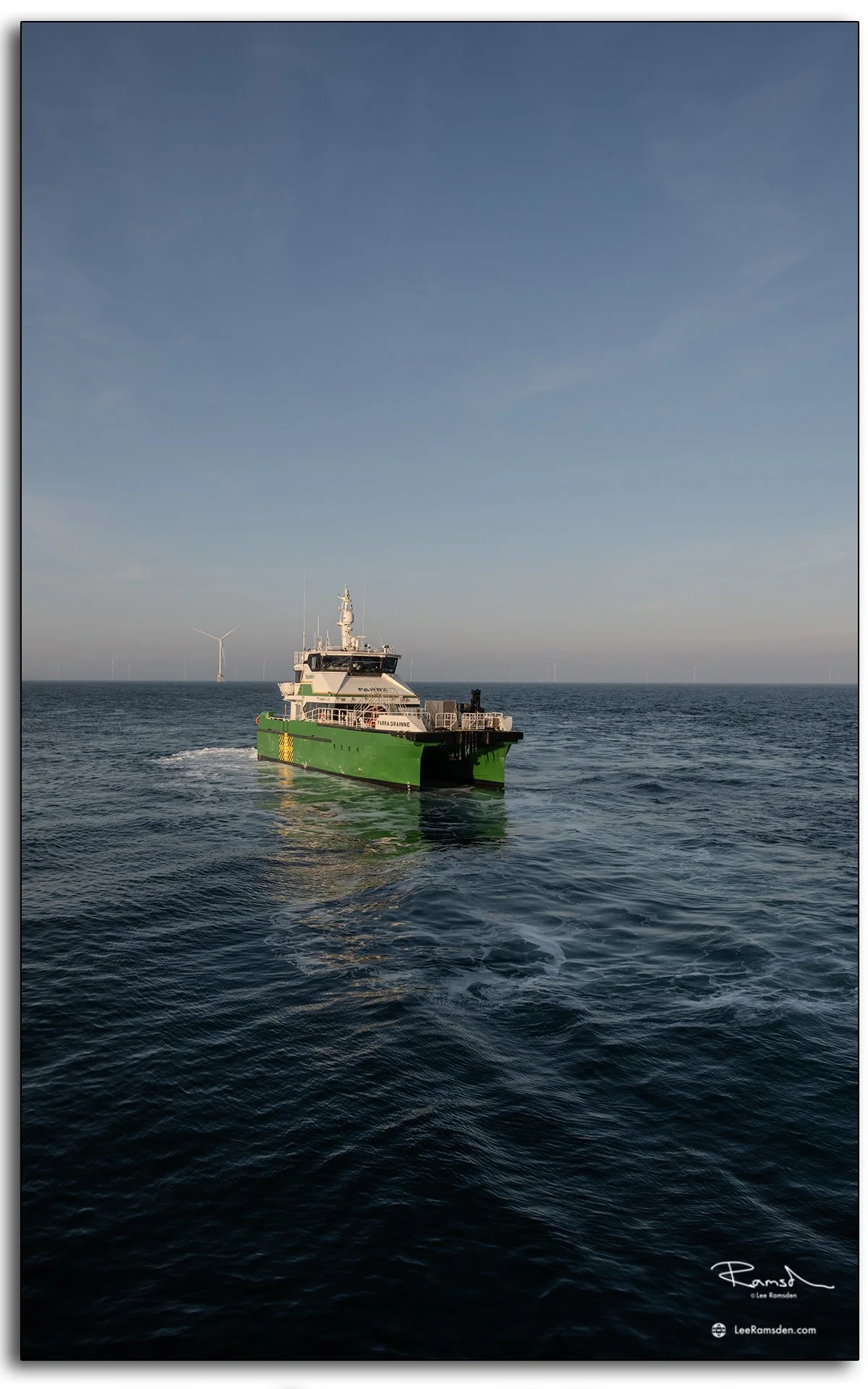
These images focus on the Farra Grainne, a crew transfer vessel working offshore within a wind farm environment. Taken in calm conditions and clear light, they show the vessel in a few different contexts: close alongside, moving away through the field, and positioned next to the structure during transfer operations.

In offshore wind, crew transfer vessels, usually shortened to CTVs, are a core part of daily operations. Their job is to move technicians and small teams between shore or a mothership base and offshore assets such as turbines and substations. They are specifically designed for that role, and in many projects they remain the preferred transfer solution for sites closer to shore. 

The transfer itself is one of the most important parts of the process. Industry guidance from G+ and the Energy Institute is built around the principle that people should not fall into the sea or become trapped between the vessel and the offshore structure during transfer. That is why vessel design, operating procedures, competence and transfer arrangements matter so much. 

It is easy to look at a wind farm and focus only on the turbines, but the day-to-day operation relies on far more than that. CTVs are one of the clearest examples. They are there to move people, equipment and capability around the site, and without them a lot of offshore maintenance simply would not happen in the same way. General guidance on offshore wind service vessels also notes that CTVs are designed specifically to transport service teams and are commonly fitted for transfer work against offshore structures. 

Offshore Substation – The Beating Heart of a Wind Farm

Offshore substation platform illuminated at night, North Sea wind farm.
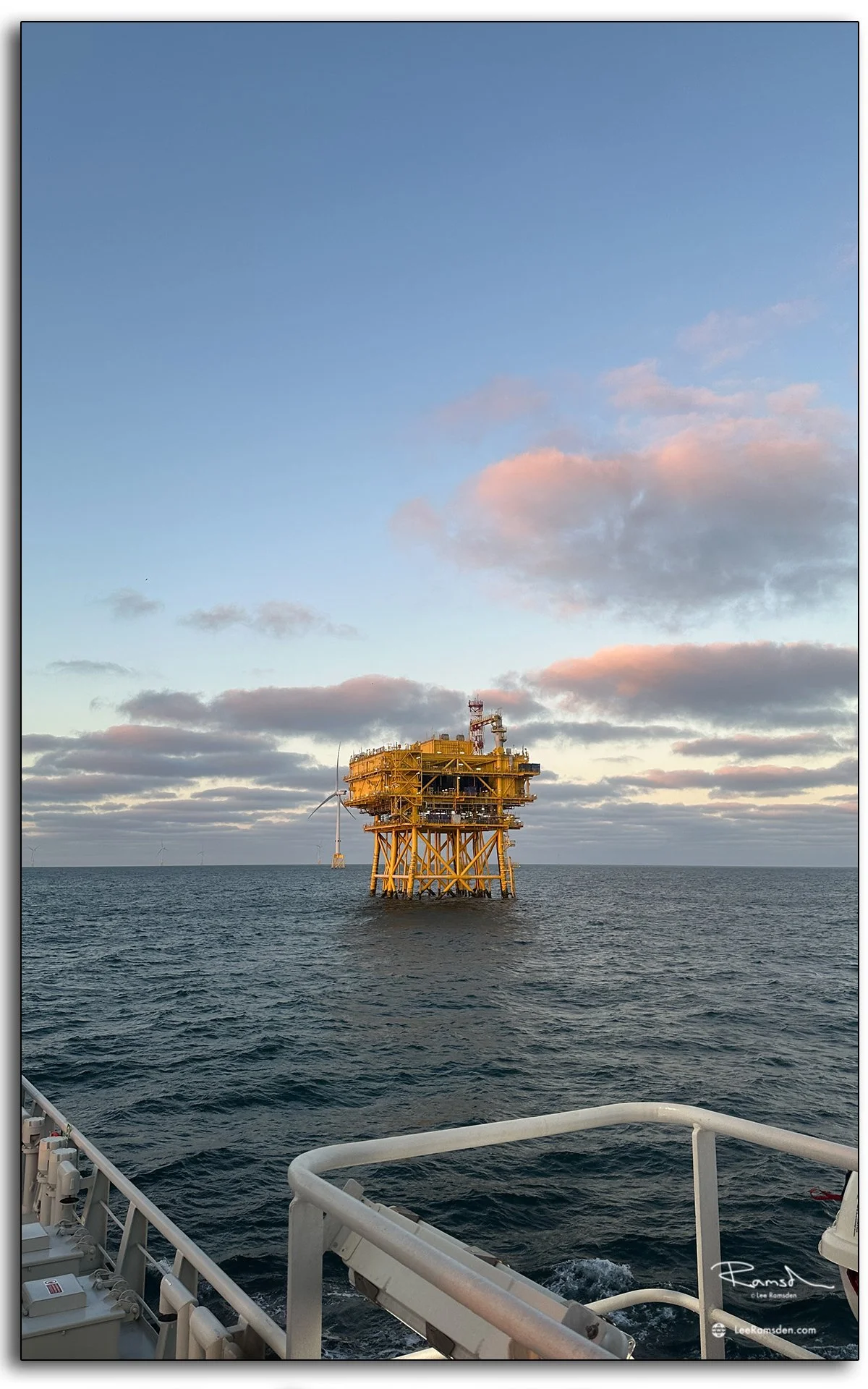
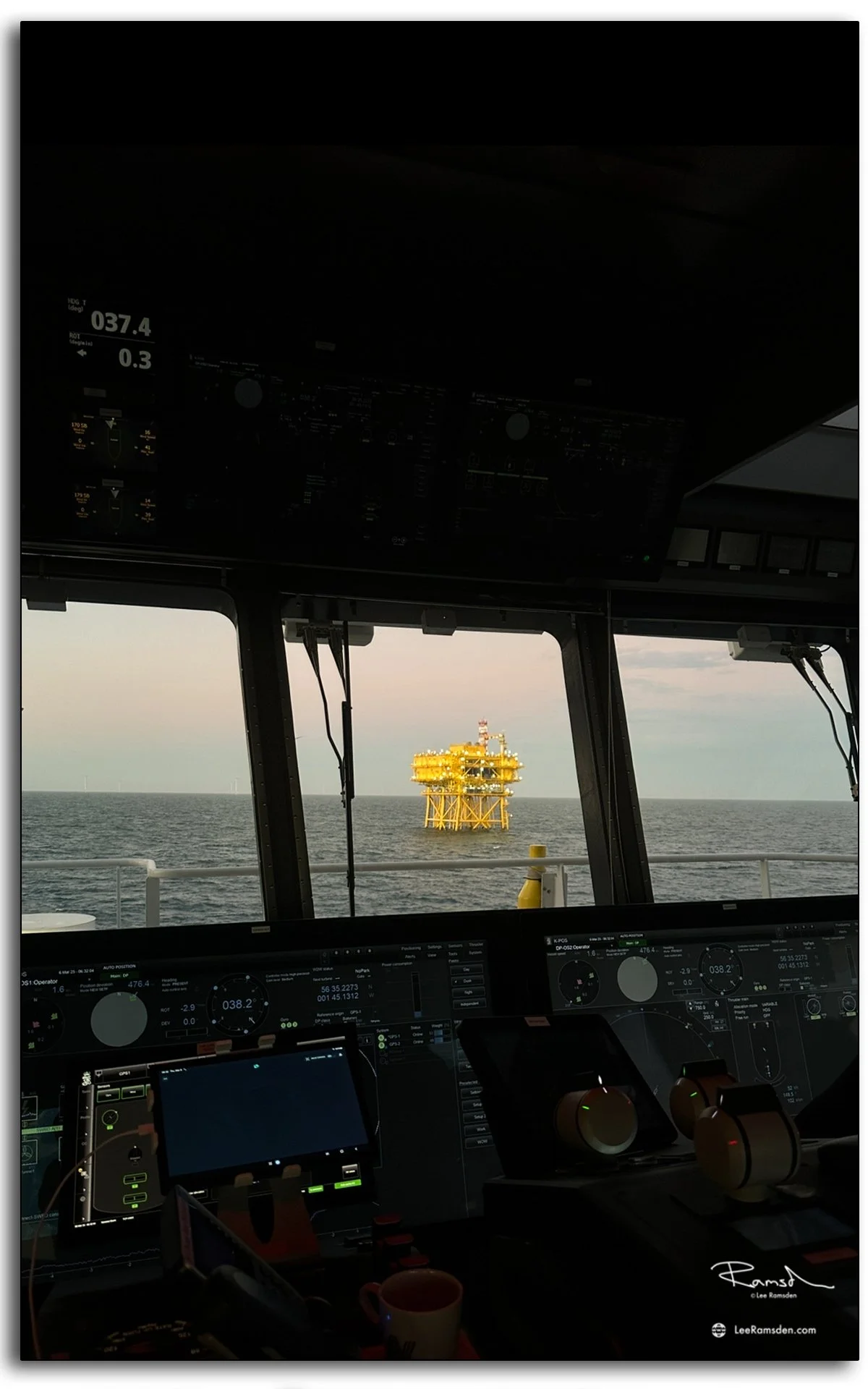
Offshore substation seen from a vessel bridge in the North Sea.

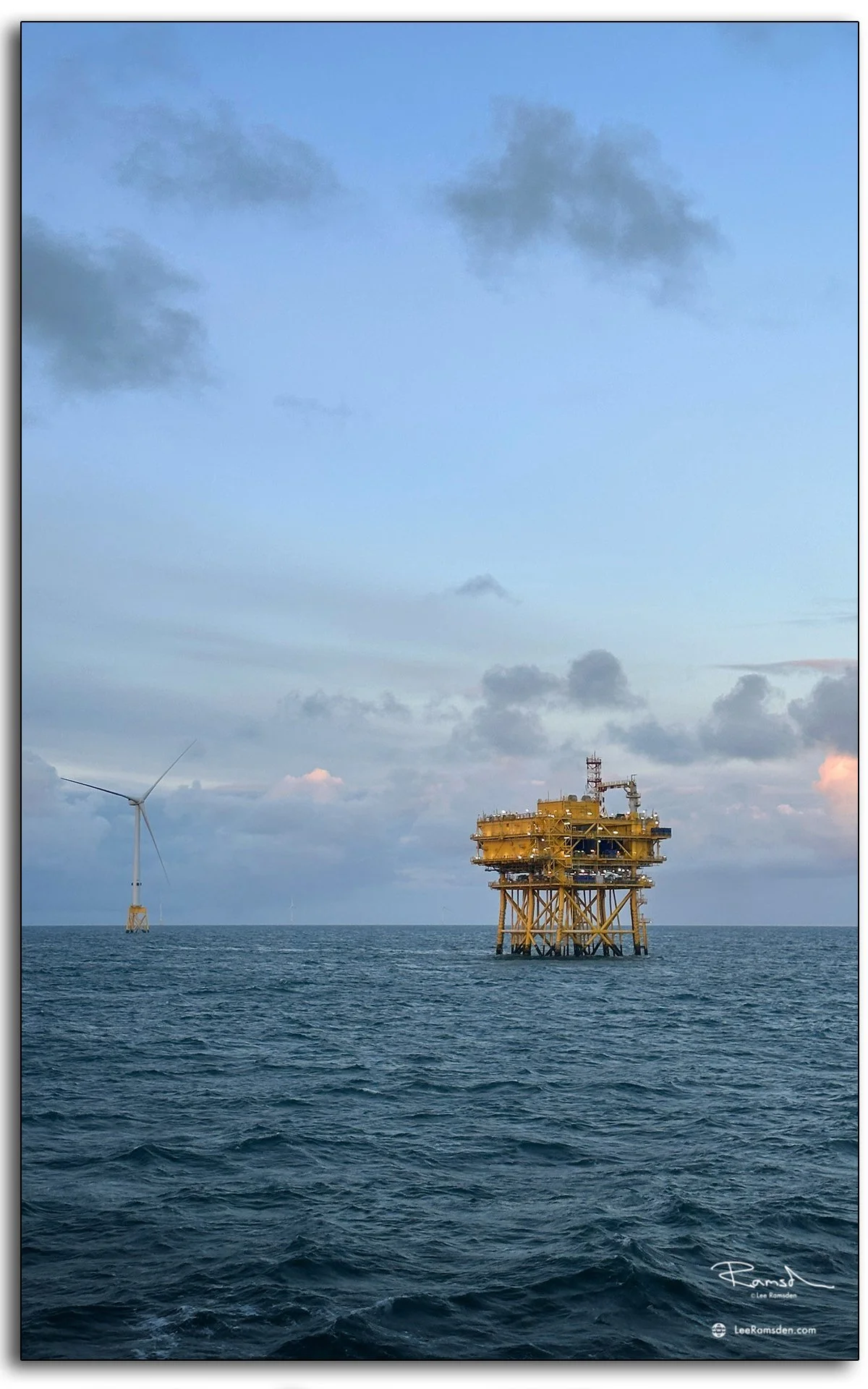
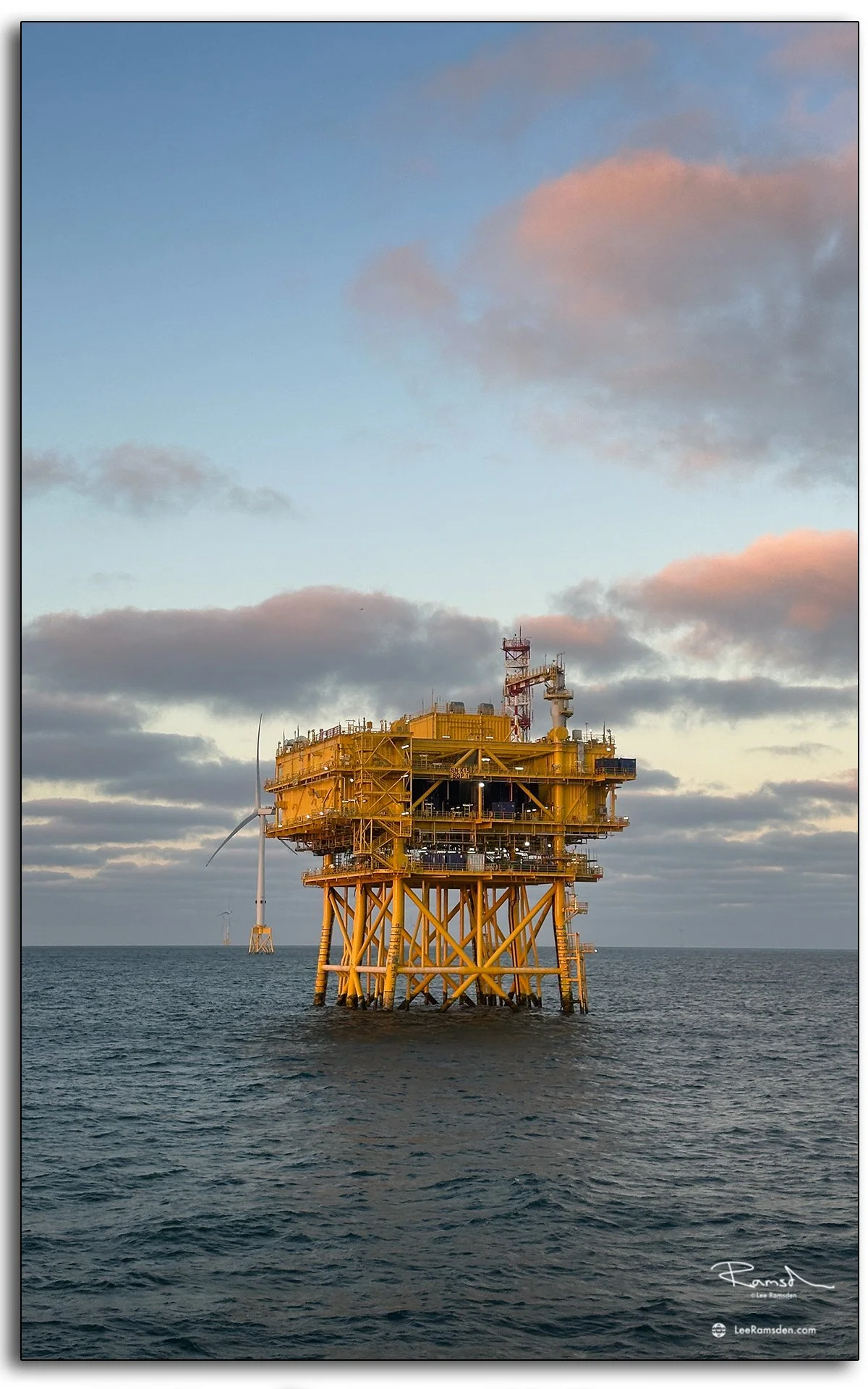
An offshore substation (OSS) is the critical hub of a wind farm, where the power generated offshore is collected and transmitted back to shore. Sitting high above the waves, it is one of the most striking structures in the renewables industry.

From the vessel bridge, the platform is an impressive sight in the distance, glowing gold against the sea at night. These substations not only represent engineering excellence but also play a vital role in the delivery of clean energy across the UK and beyond.

Exploring and photographing offshore substations is always a privilege—capturing them from both the technical working perspective and as powerful silhouettes on the horizon.

The offshore industry is full of dramatic structures and scenes, from turbines to substations. You can explore more of my work in the Wind Industry portfolio, as well as my wider Industrial and Places collections.

Offshore workers portraits.

Offshore Workers Portraits

These portraits were taken on a North Sea asset during an offshore wind operation. Shot in the working environment, they focus on the people behind the project rather than the infrastructure around them.

Offshore portraiture is a different discipline to studio or event work. The subjects are working professionals in a demanding environment, and the images need to reflect that — direct, unposed where possible, and honest about the conditions. There's little room for elaborate setups on a vessel or platform deck, which tends to produce portraits that feel more genuine for it.

The offshore wind industry employs thousands of people in specialist roles — technicians, rope access workers, supervisors, marine crew, and support staff — many of whom spend weeks at a time on rotation. These images are a small record of that working life, shot as part of a wider documentation of North Sea operations.

For more work from offshore wind projects, visit the Wind Industry gallery.

Offshore workers.

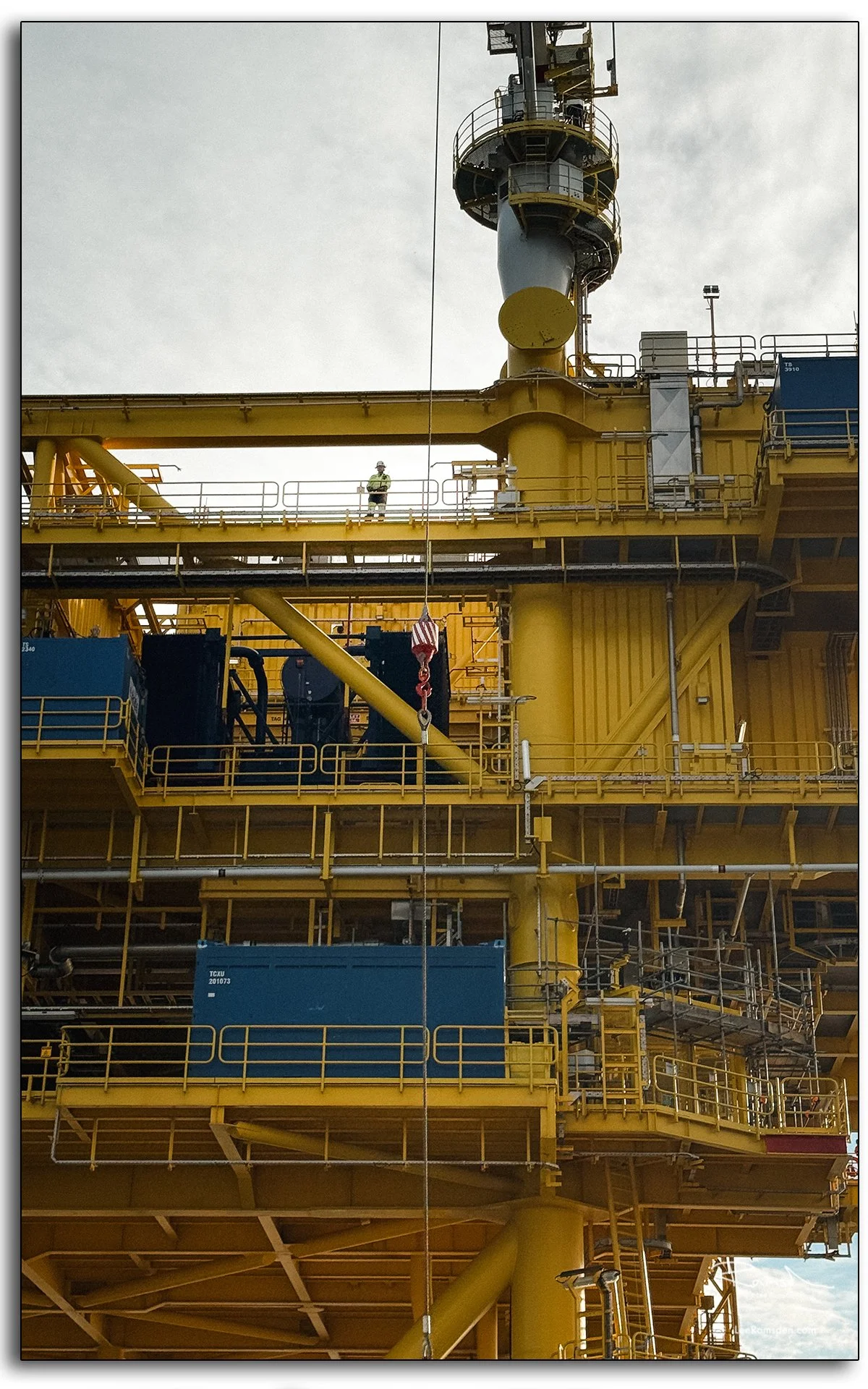
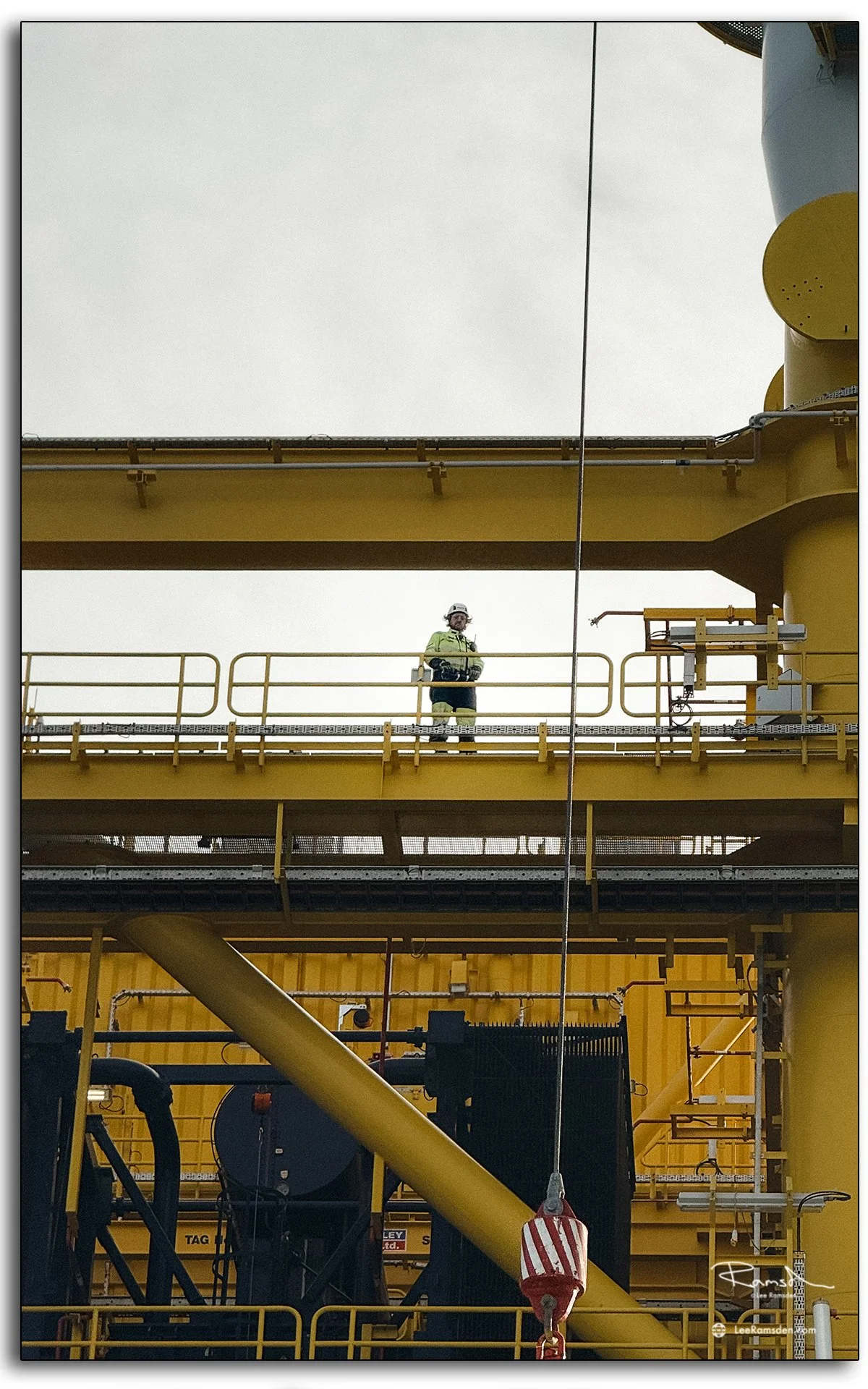
On an offshore wind farm substation, the real story is the people who keep the asset running. This set focuses on routine tasks, safe systems of work, and the teamwork that holds everything together. The aim is simple: clear, direct portraits of workers on the job—no fuss, just the work and the environment.

Two offshore workers on a substation walkway discussing a task beside marked safety barriers.
Offshore wind technician standing by substation equipment on deck, radio clipped to harness.

Part of my ongoing industrial and renewables series. For more, see the renewables and industrial sections of my portfolio.

Jackup Bridge — Offshore Industrial Photography

JB-115 jack-up barge seen side on with legs out of water, showing platform height and offshore structure.

Side view of the JB-115 jack-up barge with legs deployed, showing the height and structure above water.

Close-up of deck machinery and crane structure of JB-115 jack-up barge, industrial photo.

JB-115 is more than just an accommodation jack-up barge; it’s a functional part of offshore life. On boarding, its size, structure, and role become clear — housing, workspaces, crane capacity, and leg height all matter when you’re working miles from land.

The JB-115, owned by JUB, is an MSC SEA-2000 self-elevating unit built in 2009. It houses 64 people with the capacity to increase to 120. Its legs stand 80 meters tall; with a maximum payload of 1,250 tonnes and a 300-ton crane, it handles more than just housing. I captured shots of deck structure, machinery, the legs reaching upward, and the scale of its operations. Whether close-up of welds or distant views of tower and platform, there’s something in the lines, metal, and industrial detail working together.

Platforms like this are where engineering, endurance, and offshore conditions intersect. For more industrial and renewables work, see my Wind Industry and Industrial galleries.

What does your commute to work look like?

Good morning,

Today id like to share a short video of how we access an offshore substation on a windfarm.

After a 1.5hrs CTV (crew transfer vessel) ride, it is a large ladder climb on to the platform.

Where as this may not be for everyone, I will take this, over being stuck in traffic on the M25 every single time!

Scaffolder's shadow.

Good morning,

Today I wanted to share a couple of images from where I was working at height on a telecoms tower. I liked the shadows created of a couple of scaffolders walking by, unaware.

I would love to see your shadow photography,

leave a comment on instagram @lee_ramsden

Thanks,

Lee

Adventure training... or work?

Good morning,

Here are some images of guy conducting specialist rope access, to inspect and repair the coating to an offshore sub station in the North Sea.

Would you enjoy this type of work? Love to hear your thoughts over on Instagram @lee_ramsden

Thanks,

Lee

Flotta Oil Terminal.

Cherry Picker, Flotta, Stromness, Orkney, Scotland, Oil and gas, terminal, repsol, petrofac, industrial, industry, professional, photography, lee ramsden

Hello,

Today id like to share a few images taken at Flotta oil and gas processing terminal.

Heaters, star night, Flotta, Stromness, Orkney, Scotland, Oil and gas, terminal, repsol, petrofac, industrial, industry, professional, photography, lee ramsden

The Flotta Terminal is located on the island of Flotta in the Orkney Islands just north of mainland Scotland. It was commissioned in 1977, with Repsol Sinopec Resources UK Limited becoming the major shareholder and operator in May 2000. The terminal covers a 395-acre site, approximately one-sixth of the area of Flotta Island. Crude oil is imported to the Flotta Oil Terminal from several offshore installations through a 30” subsea pipeline. The pipeline is fed from the following Repsol Sinopec Operated fields; Claymore, Scapa, Piper ‘B’, Tweedsmuir, Tartan, Highlander, Duart, Petronella, Galley and Nexen’s operated Golden Eagle field.

Flotta,-oil-terminal,-Stromness,-KW16-3NP

The crude oil processing facilities consist of three separate crude stabilisation trains operating in parallel. This allows a design maximum plant flowrate of 375,000 bbl/d to be processed between the three trains.

The stabilised crude is then transferred to the Crude Oil Storage area with the Desalter wash water transferred to the Desalter Water Treatment plant.

Cherry picker, cable, lader racking install, Flotta, Stromness, Orkney, Scotland, Oil and gas, terminal, repsol, petrofac, industrial, industry, professional, photography, lee ramsden

There are currently insufficient volumes of gas supply to sustain the operation of the gas processing plant; as such the gas plant facility was decommissioned in 2017/2018. Gas from the overhead stabilisation process is utilised as fuel gas at the hot oil heaters and powerhouse which generate site electricity using duel fuel turbines. Any excess gas is used at the powerhouse, where there is spare generating capacity to allow additional power export to the national grid.

Electricians, containment, Flotta, Stromness, Orkney, Scotland, Oil and gas, terminal, repsol, petrofac, industrial, industry, professional, photography, lee ramsden
Electrician, rope access, cable pulling, Flotta, Stromness, Orkney, Scotland, Oil and gas, terminal, repsol, petrofac, industrial, industry, professional, photography, lee ramsden
Rope access, climbing, electrician, face, Flotta, Stromness, Orkney, Scotland, Oil and gas, terminal, repsol, petrofac, industrial, industry, professional, photography, lee ramsden
Workers, Flotta, Stromness, Orkney, Scotland, Oil and gas, terminal, repsol, petrofac, industrial, industry, professional, photography, lee ramsden

Head for heights.

01 Blackpool tower, history.jpg
02 Blackpool, Tower, Maaintenance, rope access, IRATA, climbing, Lee Ramsden, action, industiral, photographer.jpg

Hello,

How are you? Have you had a good week?

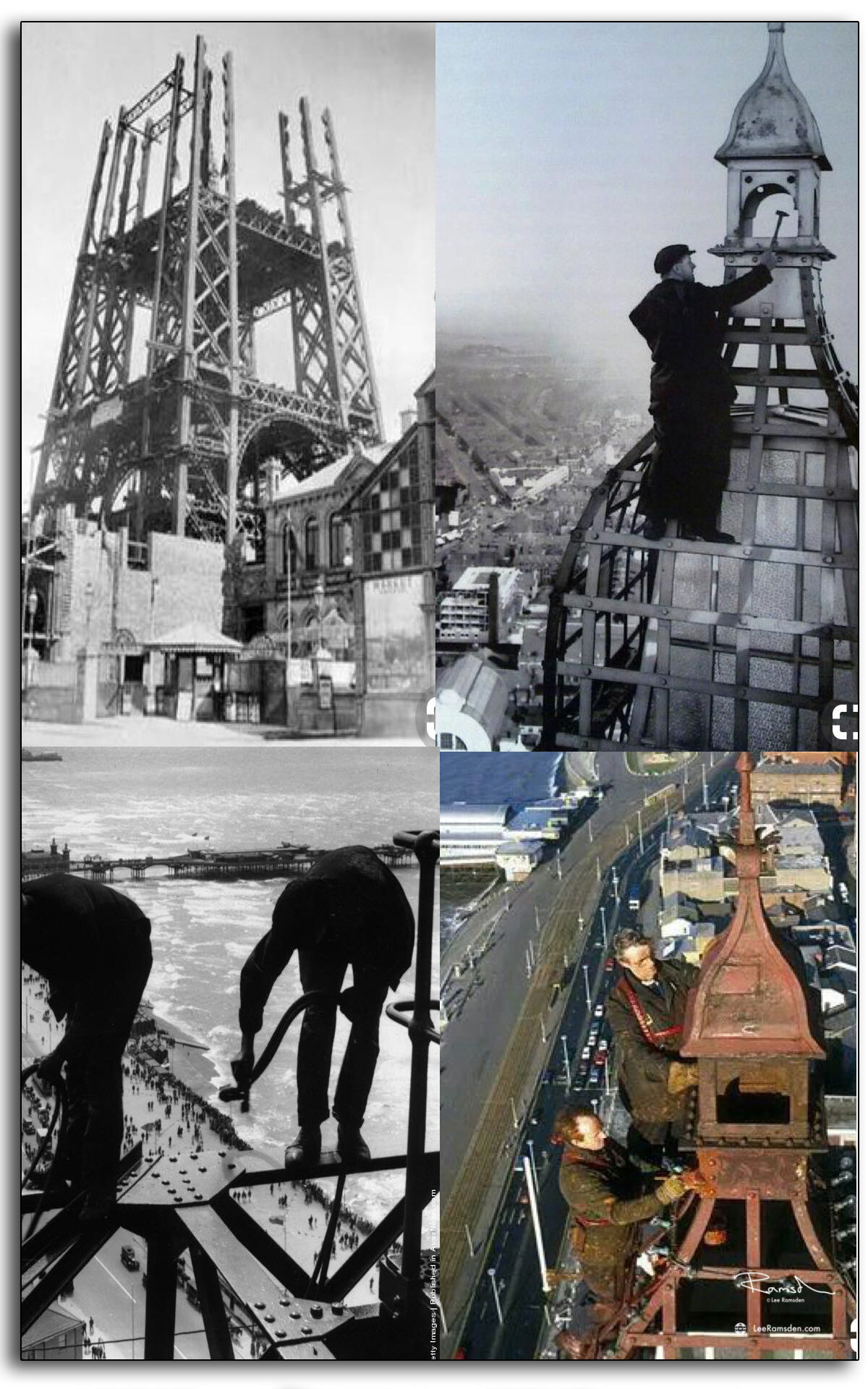
Today id like to share some images of a job on Blackpool Tower.

The above image on the left is obviously not one of mine, but wanted to show how things have changed, and thank god that they have.

The guys in the past had little or no working at height protection.

These days we use advanced techniques such as rope access, to access these hard to reach places safely.

03 Blackpool, Tower, Maaintenance, rope access, IRATA, climbing, Lee Ramsden, action, industiral, photographer.jpg
05 Blackpool, Tower, Maaintenance, rope access, IRATA, climbing, Lee Ramsden, action, industiral, photographer.jpg

I hope that you have a good weekend.

Lee

Platform construction

01 oil and gas; construction; module; build; Aberdeen; Scotland; Worley Parsons, Petrofac, Amec, foster wheeler, building, shipping,tansport.jpg
04 oil and gas; construction; module; build; Aberdeen; Scotland; Worley Parsons, Petrofac, Amec, foster wheeler, building, shipping,tansport.jpg

Hello,

How are you? Have you had a good week?

Today id like to share some images of a North Sea oil and gas platform module.

This module was constructed in Aberdeen but a consortium of companies.

These images were taken are on the day that construction was completed and they were being shipped out to the platform.

03 oil and gas; construction; module; build; Aberdeen; Scotland; Worley Parsons, Petrofac, Amec, foster wheeler, building, shipping,tansport.jpg

Leaving the yard to head to vessel.

05 oil and gas; construction; module; build; Aberdeen; Scotland; Worley Parsons, Petrofac, Amec, foster wheeler, building, shipping,tansport.jpg
06 oil and gas; construction; module; build; Aberdeen; Scotland; Worley Parsons, Petrofac, Amec, foster wheeler, building, shipping,tansport.jpg

Two more parts of the puzzle.

08 oil and gas; construction; module; build; Aberdeen; Scotland; Worley Parsons, Petrofac, Amec, foster wheeler, building, shipping,tansport.jpg
07 oil and gas; construction; module; build; Aberdeen; Scotland; Worley Parsons, Petrofac, Amec, foster wheeler, building, shipping,tansport.jpg

From wagon to shipping vessel.

09 oil and gas; construction; module; build; Aberdeen; Scotland; Worley Parsons, Petrofac, Amec, foster wheeler, building, shipping,tansport.jpg

I hope that you found these interesting,

I was lucky to have followed the construction from design all the way through to execution.

Lee

The Mariner A oil and gas platform

03 Marienr A; Statoil; Equinor; oil and gas platform; north sea; Lee Ramsden; oil rig; platform; asset; Norwegian; sign; helideck.jpg
01 Marienr A; Statoil; Equinor; oil and gas platform; north sea; Lee Ramsden; oil rig; platform; asset; Norwegian; sign; helideck.jpg

Hello,

Today i thought that i would talk about the oil / gas rig that you will have seen images of. I was involved with the construction of this beast. At any one time there was 850 people offshore.

As oil rigs go, this is a one of kind.

The Mariner oilfield is located in the United Kingdom sector of the North Sea, about 150 kilometres (93 mi) east of the Shetland Islands, Scotland, in block 9/11a. It was discovered in 1981 at a depth of about 1,200 metres (3,900 ft) below sea level. Water depth in the area is about 100 metres (330 ft). Estimated recovery is at least 250 million barrels (40×106 m3) of oil. 

As of December 2012 the operator, Statoil (now Equinor), made the investment decision and final approval of the field development plan by the UK authorities is in progress. The plan envisages a production, drilling and quarters platform based on a conventional steel jacket, exporting oil via a floating storage unit.

The oil is heavy and viscous, with API gravities of 12.1°–14.6° and viscosities ranging from 67cp in the field's Maureen reservoir to 508cp in the Heimdal reservoir. The small volume of associated gas will be used as fuel for the platform, and more fuel gas will be imported via a connection to the nearby Vesterled pipeline.

02 Marienr A; Statoil; Equinor; oil and gas platform; north sea; Lee Ramsden; oil rig; platform; asset; Norwegian; sign; helideck.jpg
04 Marienr A; Statoil; Equinor; oil and gas platform; north sea; Lee Ramsden; oil rig; platform; asset; Norwegian; sign; helideck.jpg

In summary

It took over 35 years to work out how to extract this super heavy thick oil. The diluting solution that mixes with the oil, thins it out, and we end up with an even better product. As this platform isn’t on a pipe line, she is connected a large vessel, known as an FSU (floating storage unit) This FSU pumps the diluting solution to the platform, and the platform then pumps back the recovered oil. A large tanker comes into the field every few days to collect the produced oil.

Amazing isn’t it.

Have a good week.


Lee