Farra Grainne

Offshore Substation and CTV Operations

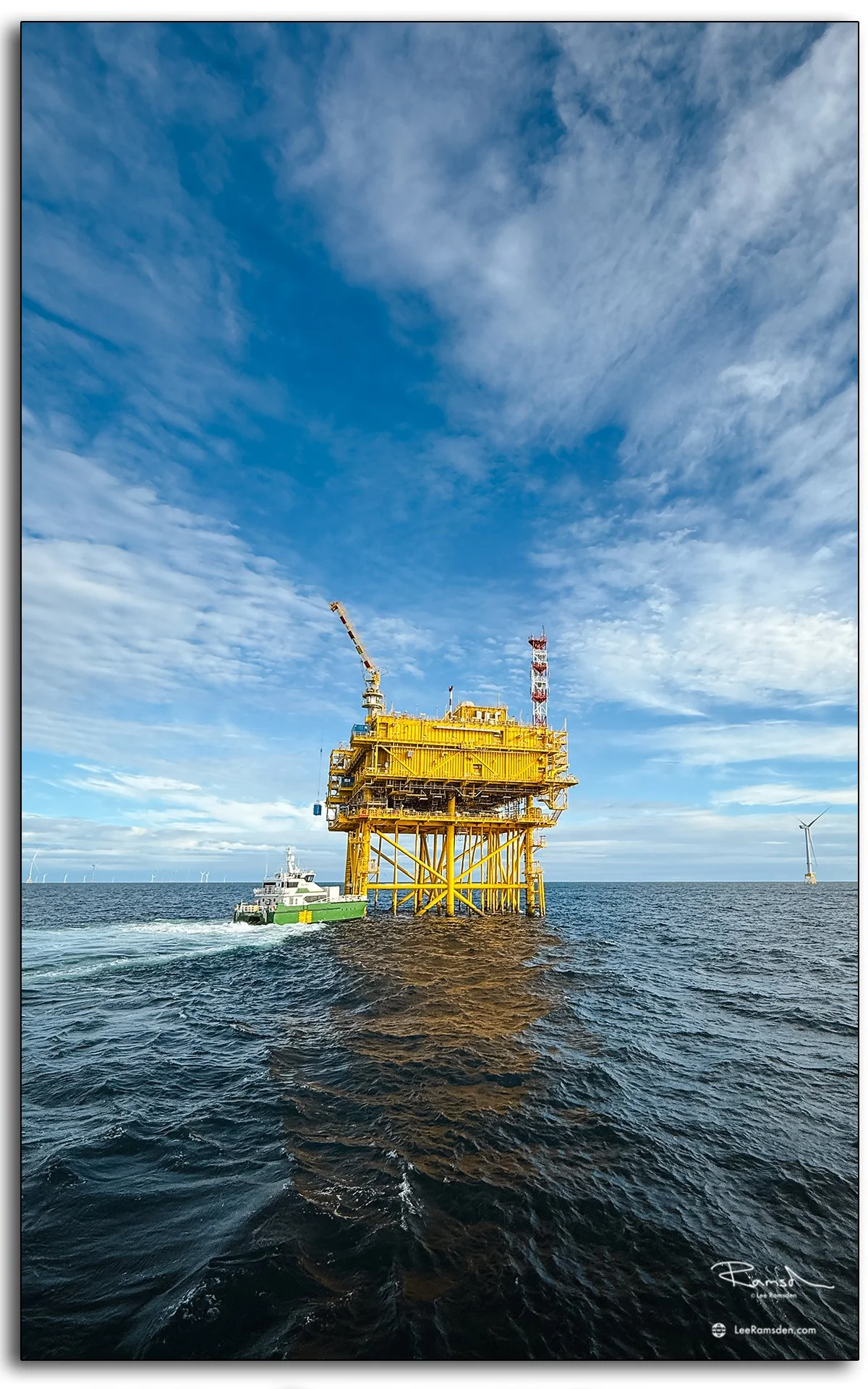
CTV vessel Farra Grainne alongside offshore substation in North Sea wind farm, supporting renewable energy operations at sea
Offshore substation with CTV and wind turbine in background, capturing renewable energy operations in the North Sea.

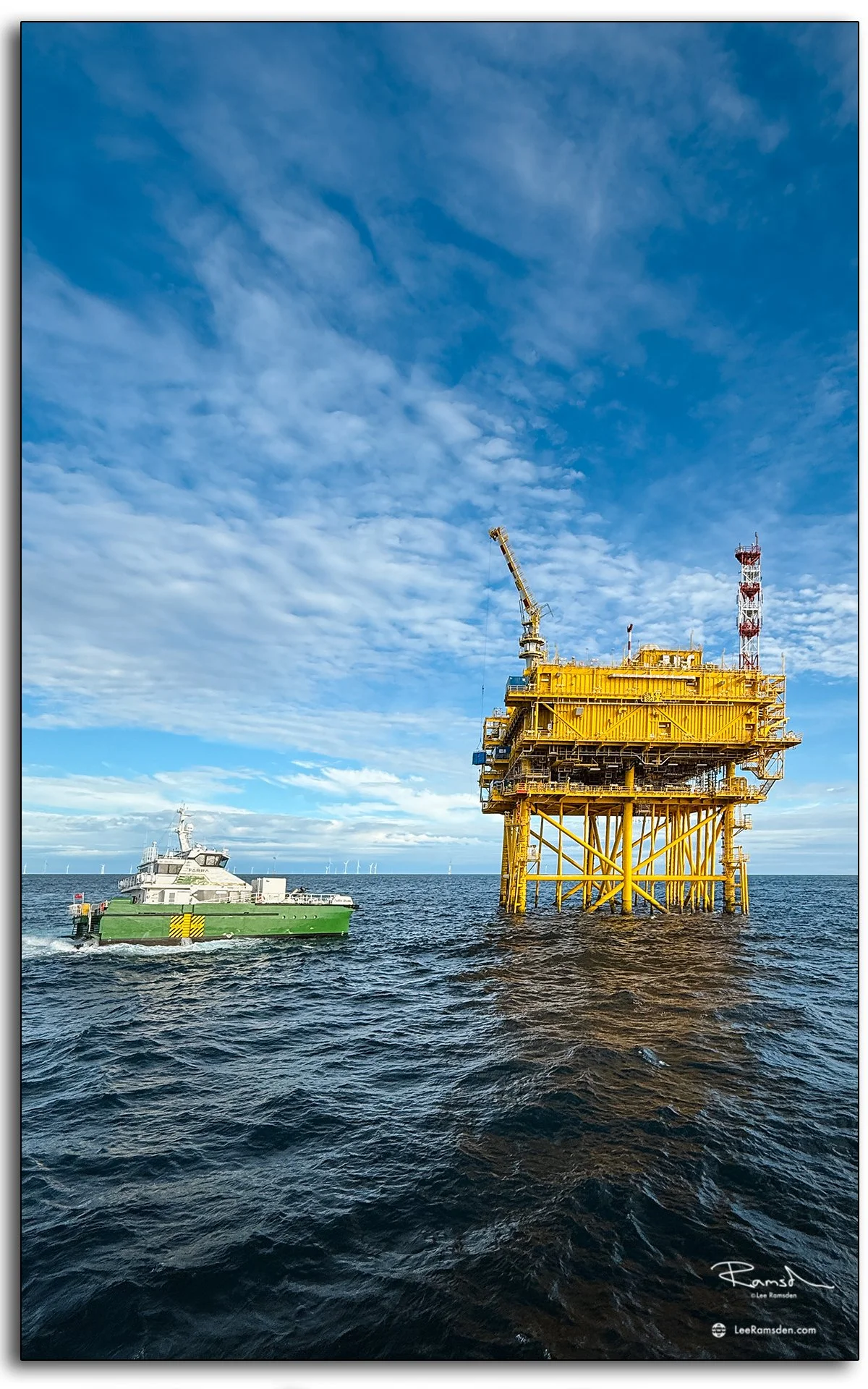
The Farra Grainne CTV sits alongside an offshore substation under clear blue skies in the North Sea. These structures sit at the centre of every offshore wind farm, collecting power from the surrounding turbine array and stepping it up for transmission to shore via export cable.

Offshore substations are finished in safety yellow and visible for miles at sea. The steel jacket structure and equipment decks represent a significant piece of infrastructure, and seeing a CTV working alongside gives a clear sense of the scale involved.

The third image shows the boarding sequence: the vessel holds position on the boat landing while personnel transfer via the ladder system to the platform deck above.

For more from these environments, explore my Wind Industry portfolio or the People gallery, or contact me to discuss offshore photography commissions.
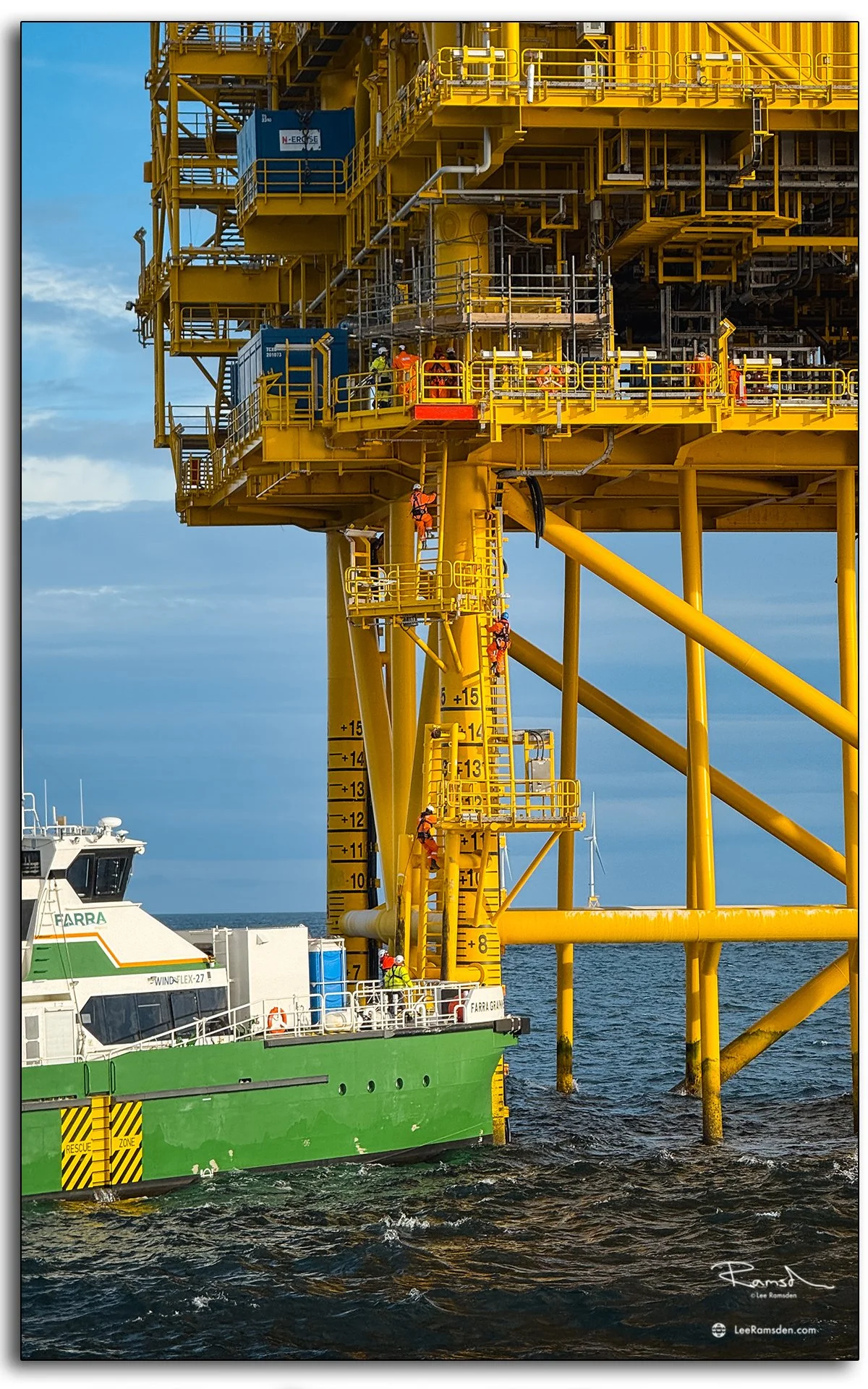
Offshore wind technicians boarding an offshore substation platform via the boat landing ladder from a crew transfer vessel, North Sea.

Crew Transfer Vessels in Offshore Wind: Farra Grainne at Work

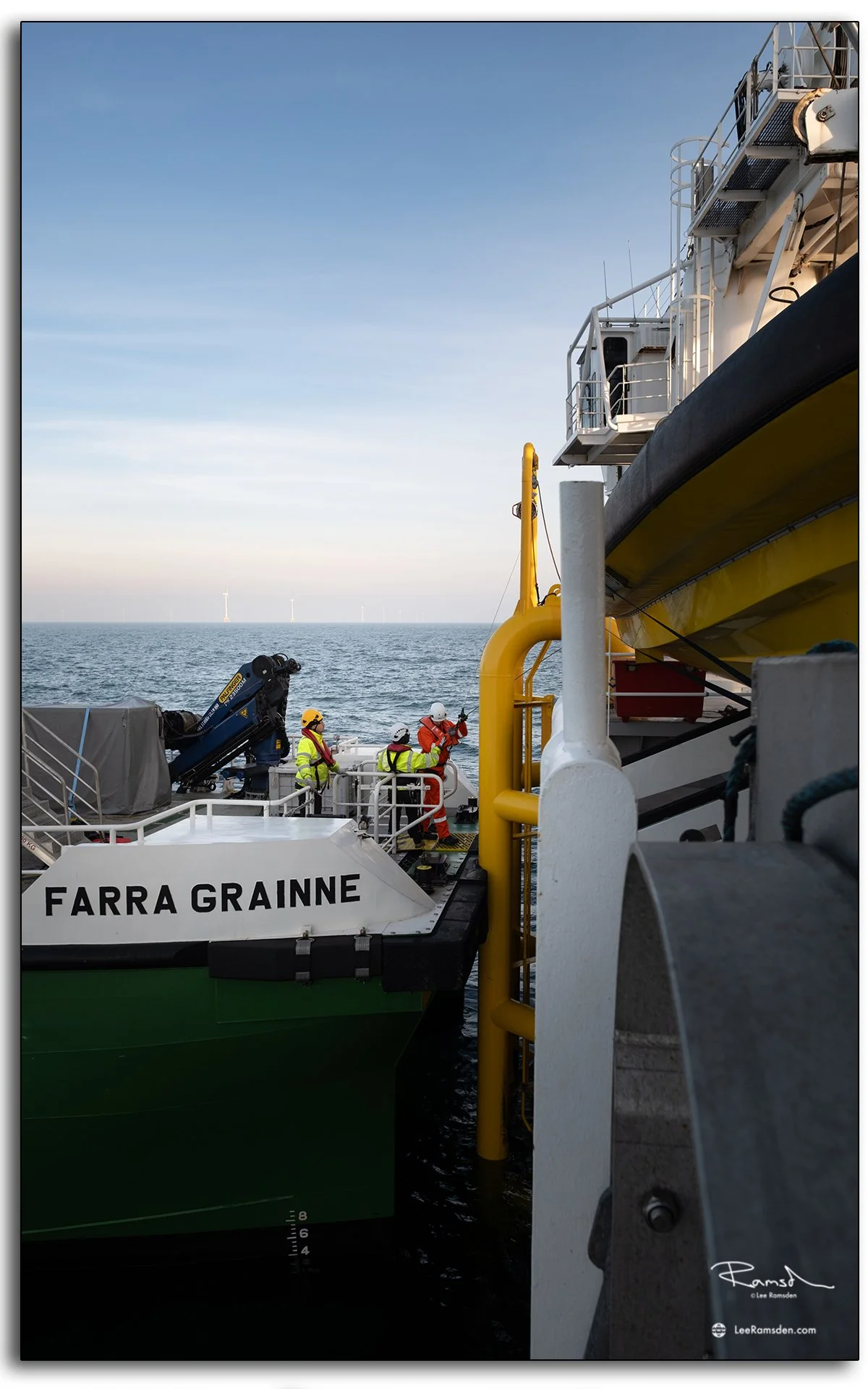
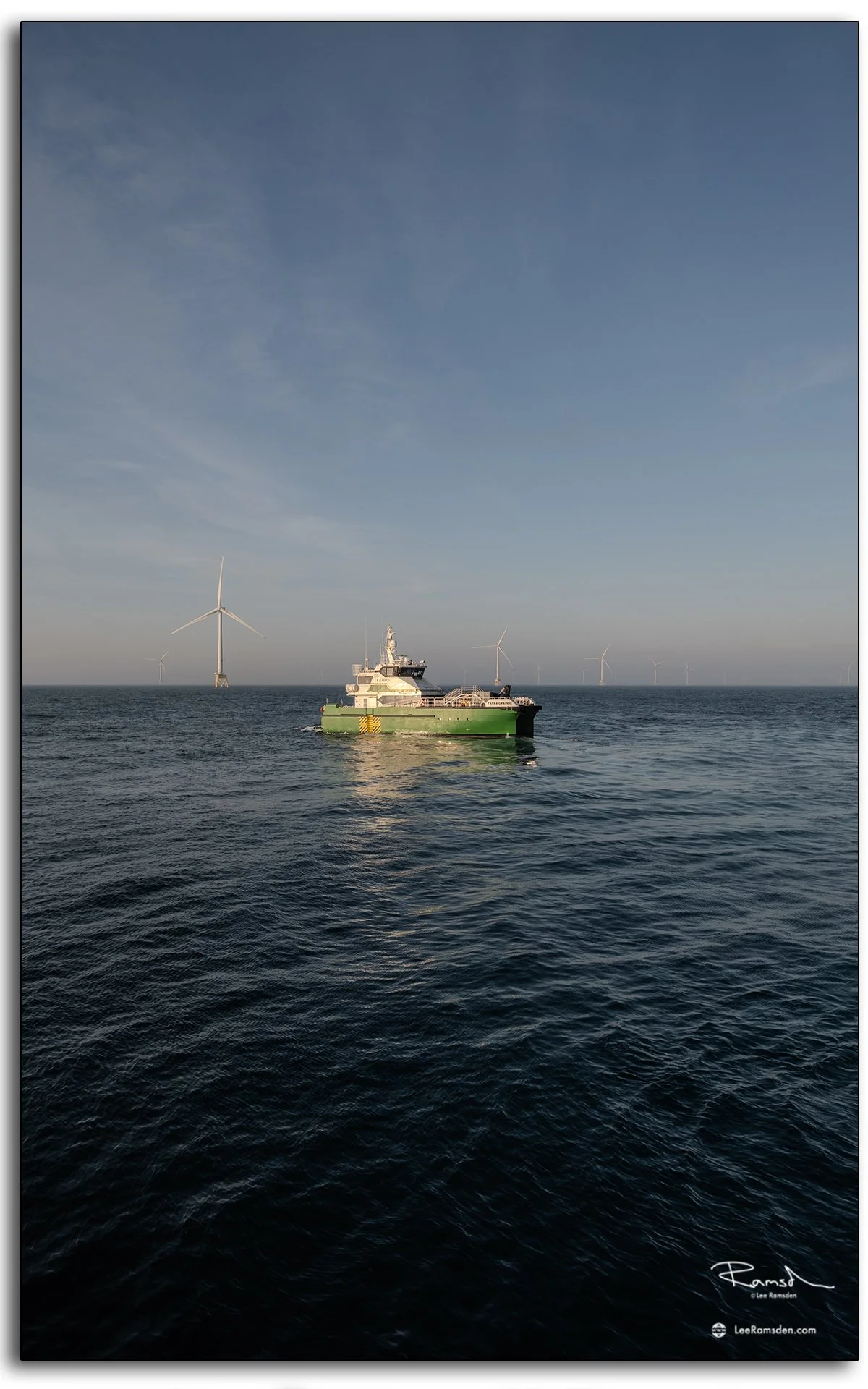
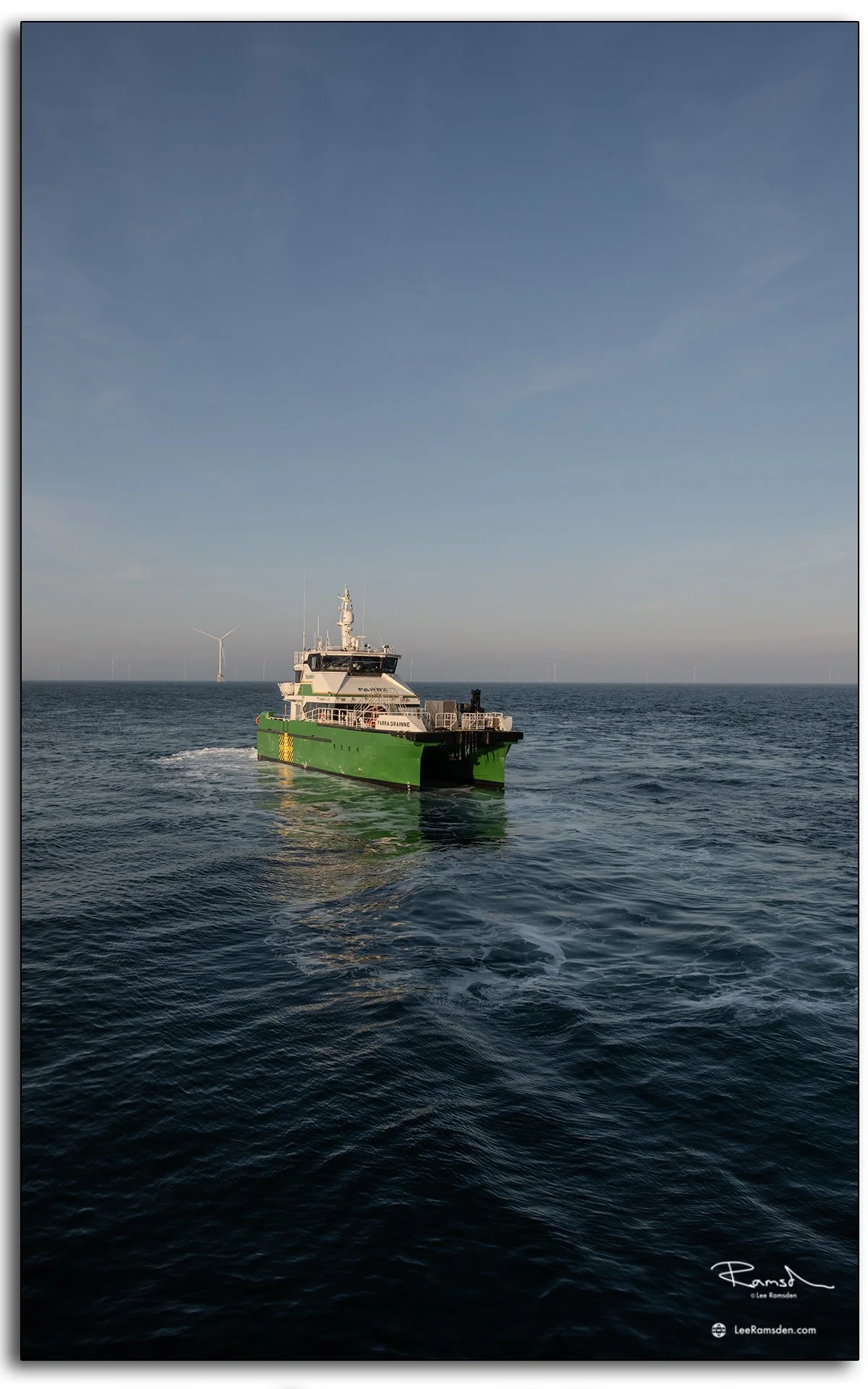
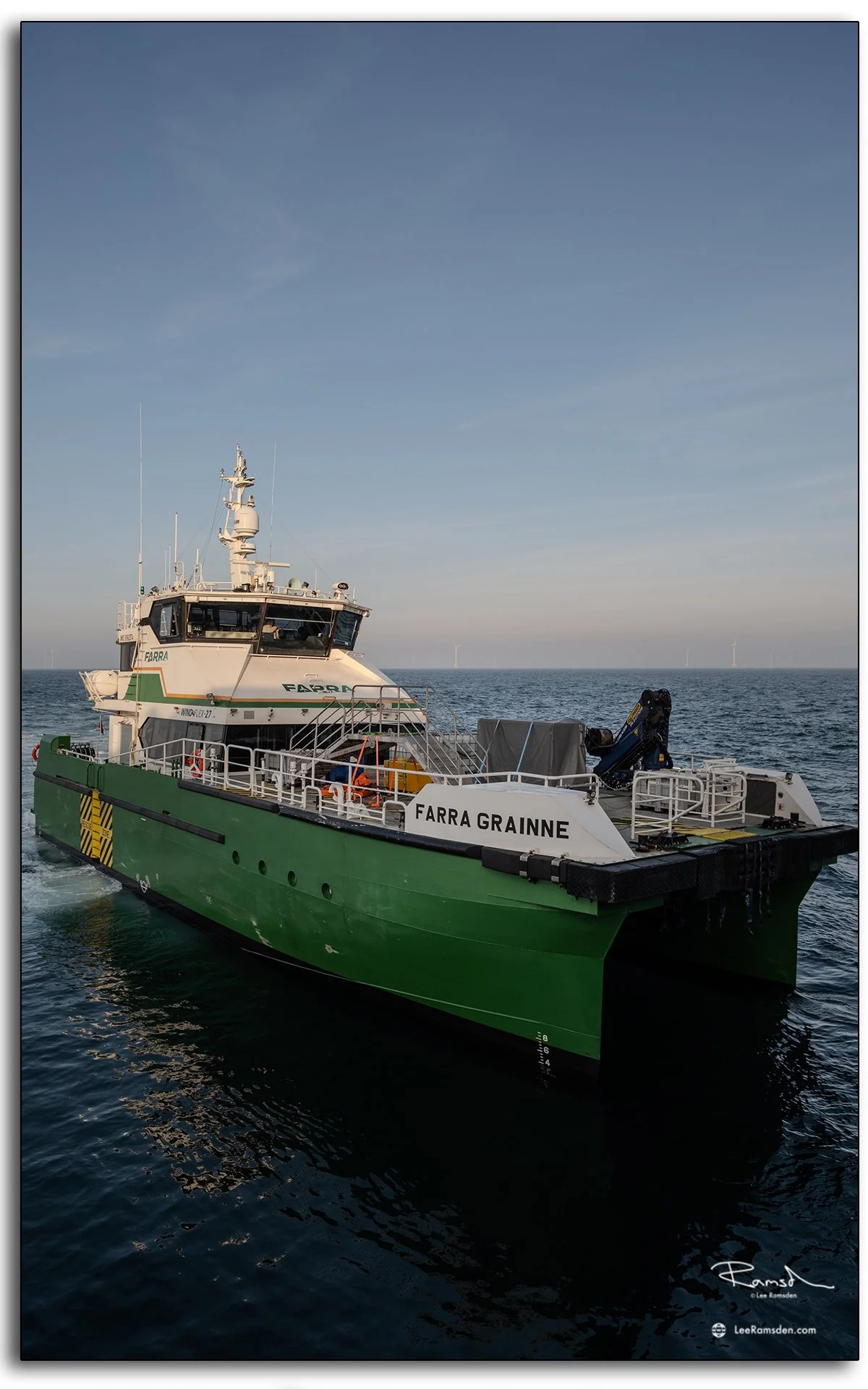
These images focus on the Farra Grainne, a crew transfer vessel working offshore within a wind farm environment. Taken in calm conditions and clear light, they show the vessel in a few different contexts: close alongside, moving away through the field, and positioned next to the structure during transfer operations.

In offshore wind, crew transfer vessels, usually shortened to CTVs, are a core part of daily operations. Their job is to move technicians and small teams between shore or a mothership base and offshore assets such as turbines and substations. They are specifically designed for that role, and in many projects they remain the preferred transfer solution for sites closer to shore. 

The transfer itself is one of the most important parts of the process. Industry guidance from G+ and the Energy Institute is built around the principle that people should not fall into the sea or become trapped between the vessel and the offshore structure during transfer. That is why vessel design, operating procedures, competence and transfer arrangements matter so much. 

It is easy to look at a wind farm and focus only on the turbines, but the day-to-day operation relies on far more than that. CTVs are one of the clearest examples. They are there to move people, equipment and capability around the site, and without them a lot of offshore maintenance simply would not happen in the same way. General guidance on offshore wind service vessels also notes that CTVs are designed specifically to transport service teams and are commonly fitted for transfer work against offshore structures.