North Sea

Rock Dumping Offshore – Simon Stevin in Action

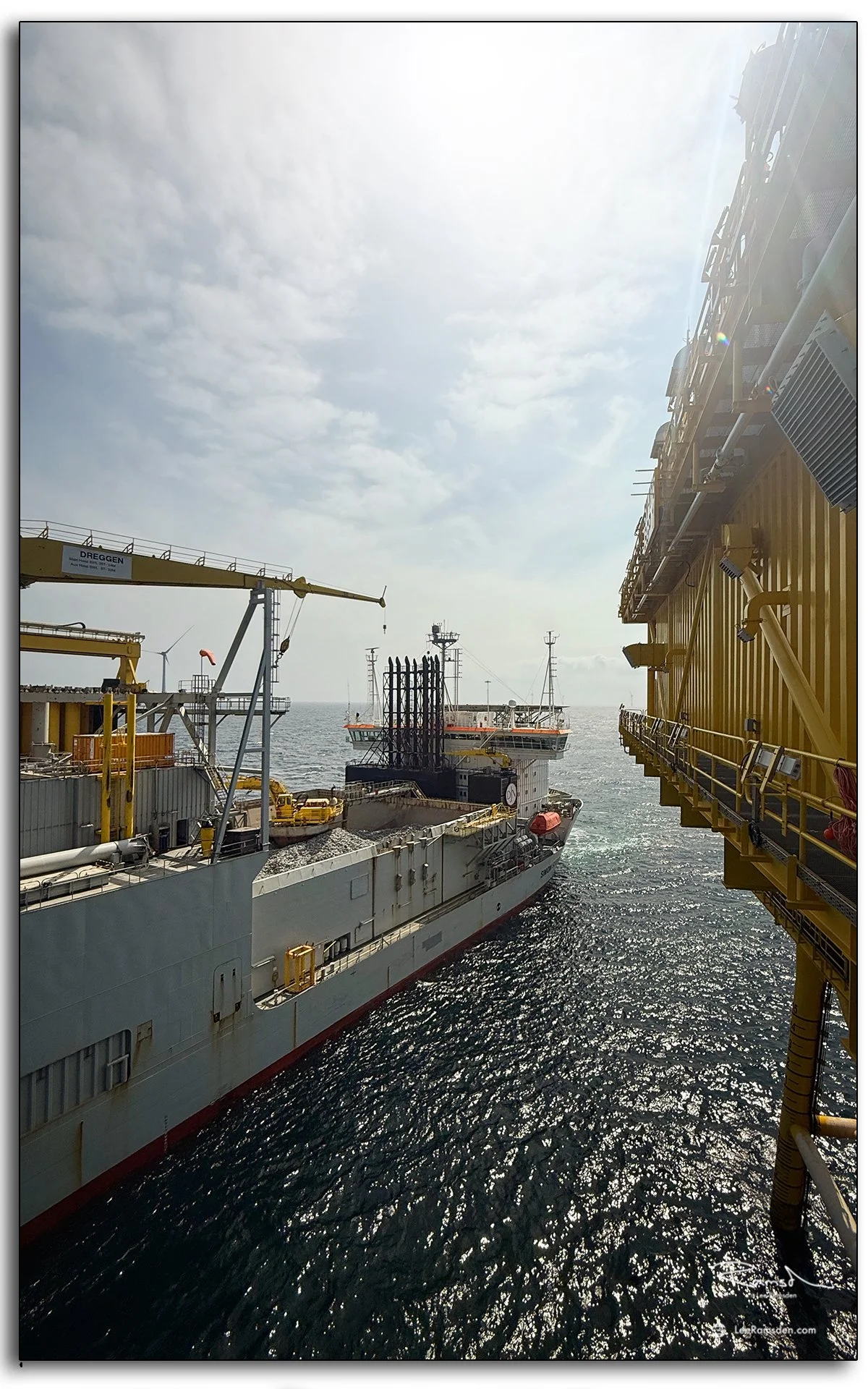
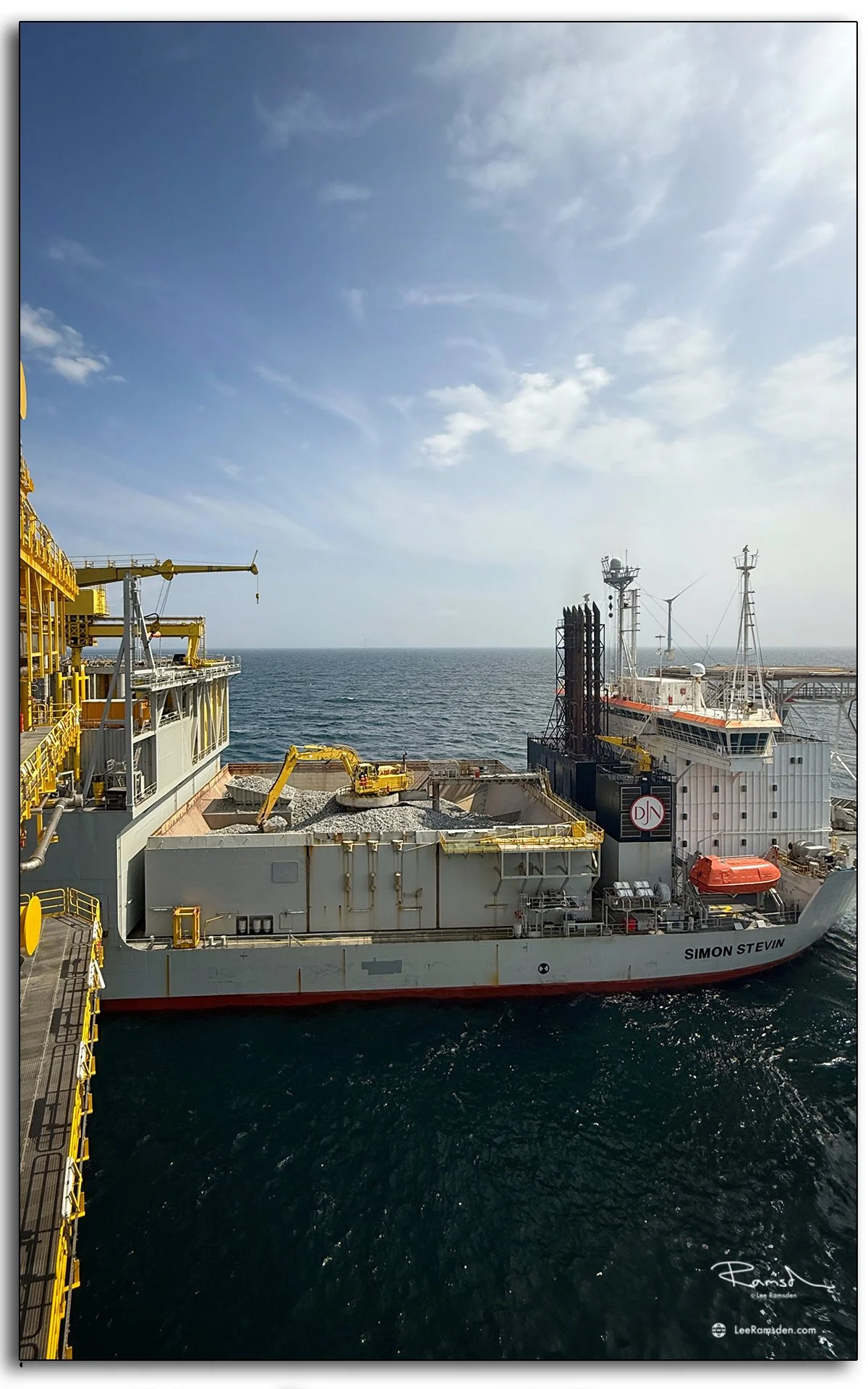
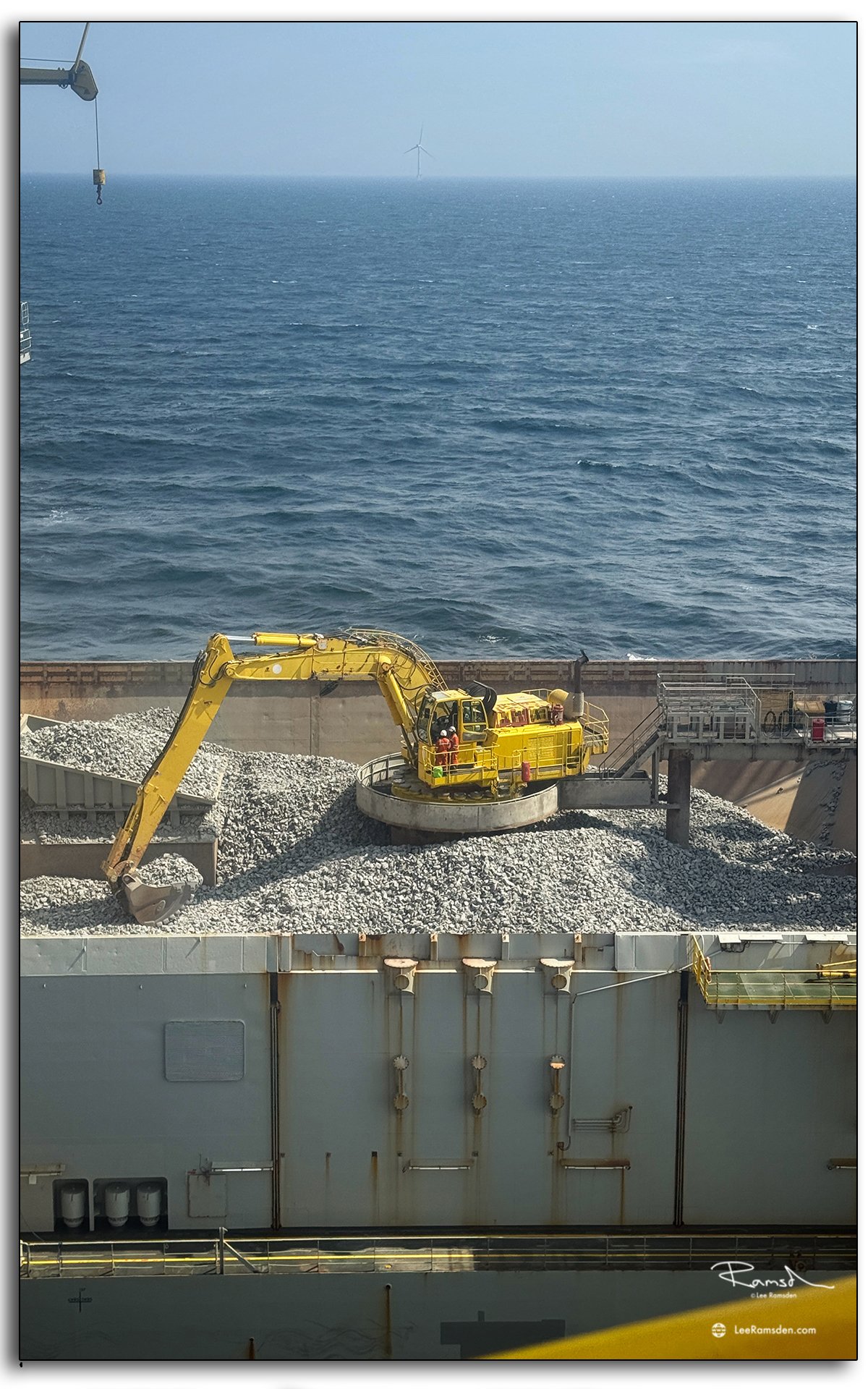
Wide view of Simon Stevin rock dumping vessel with platform and turbines in background
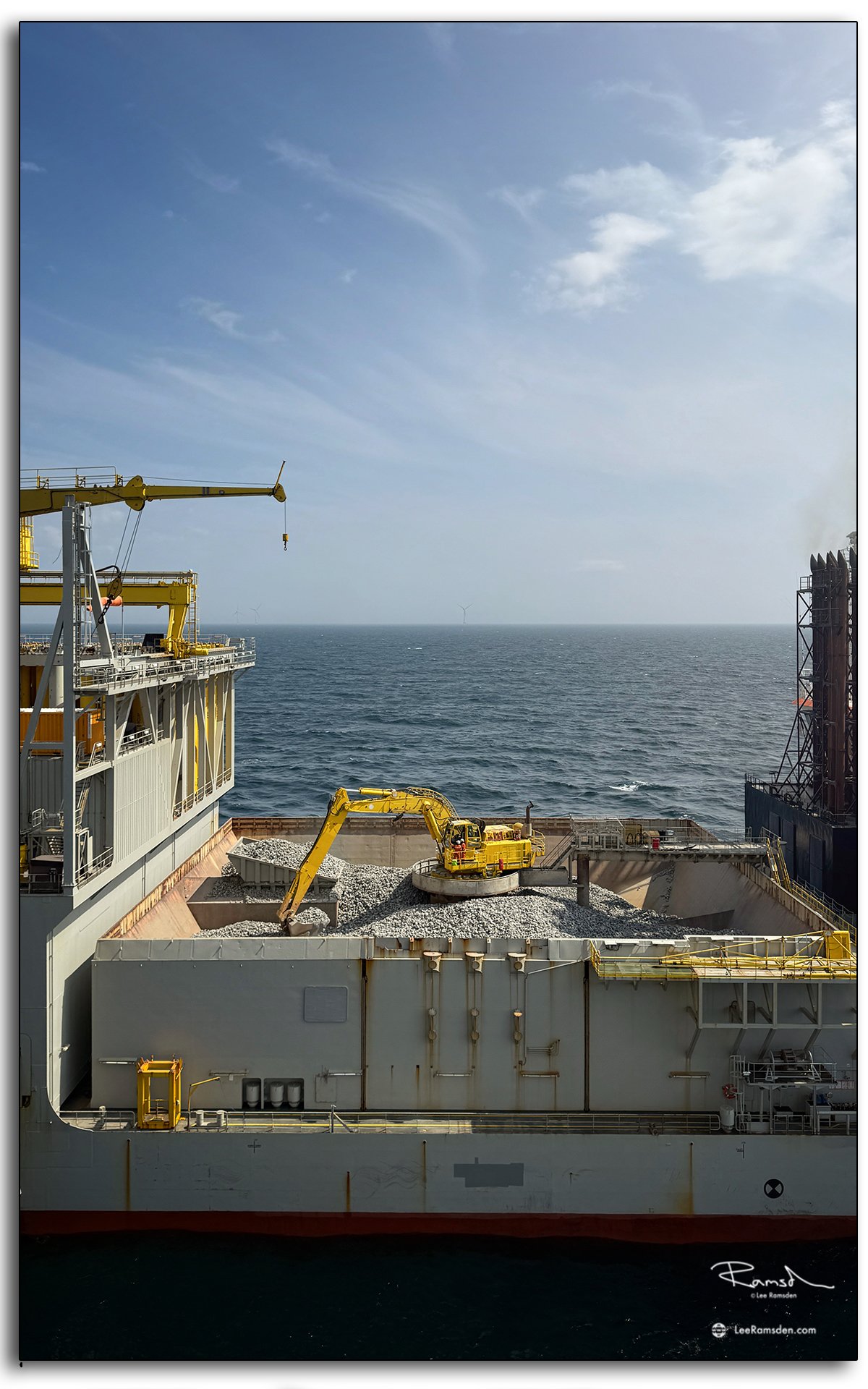
Mechanical digger working on rock load aboard Simon Stevin vessel, offshore wind farm backdrop

Working offshore brings no shortage of unique vessels, and the Simon Stevin is one that immediately stands out. Unlike the typical service or cable-lay vessels often seen on a wind farm project, the Simon Stevin is a fall-pipe vessel designed for precision rock placement on the seabed.

In these iPhone images, the ship was in the field carrying out rock dumping — a process used to stabilise subsea cables, pipelines, and seabed structures by placing graded rock exactly where it’s needed. What makes this vessel particularly striking is its setup: a mechanical digger operating directly onboard, shifting and managing rock in the ship’s holds before it’s funnelled down via fall pipes.

Rock dumping offshore with the Simon Stevin vessel – precision engineering, seabed stability, and a digger at sea in the North Sea wind farm field.
Close-up of excavator on Simon Stevin ship moving graded rock offshore

Seeing a digger at work on deck, framed by the North Sea horizon and turbine towers in the distance, is a reminder of the scale and engineering creativity that support offshore wind. While turbines are the most visible symbols of renewable energy at sea, vessels like the Simon Stevin play a quieter but equally vital role in building and protecting the infrastructure below the waterline.

From a photographer’s perspective, the contrast of industrial yellow steel, mechanical precision, and open sea makes for compelling compositions — an insight into a side of offshore operations that isn’t often documented.

This project continues to show the diversity of offshore life — from the towering turbines to the specialised vessels that make it all possible. For more on the working side of renewables, explore my Wind Industry portfolio.

Offshore Substations in the North Sea

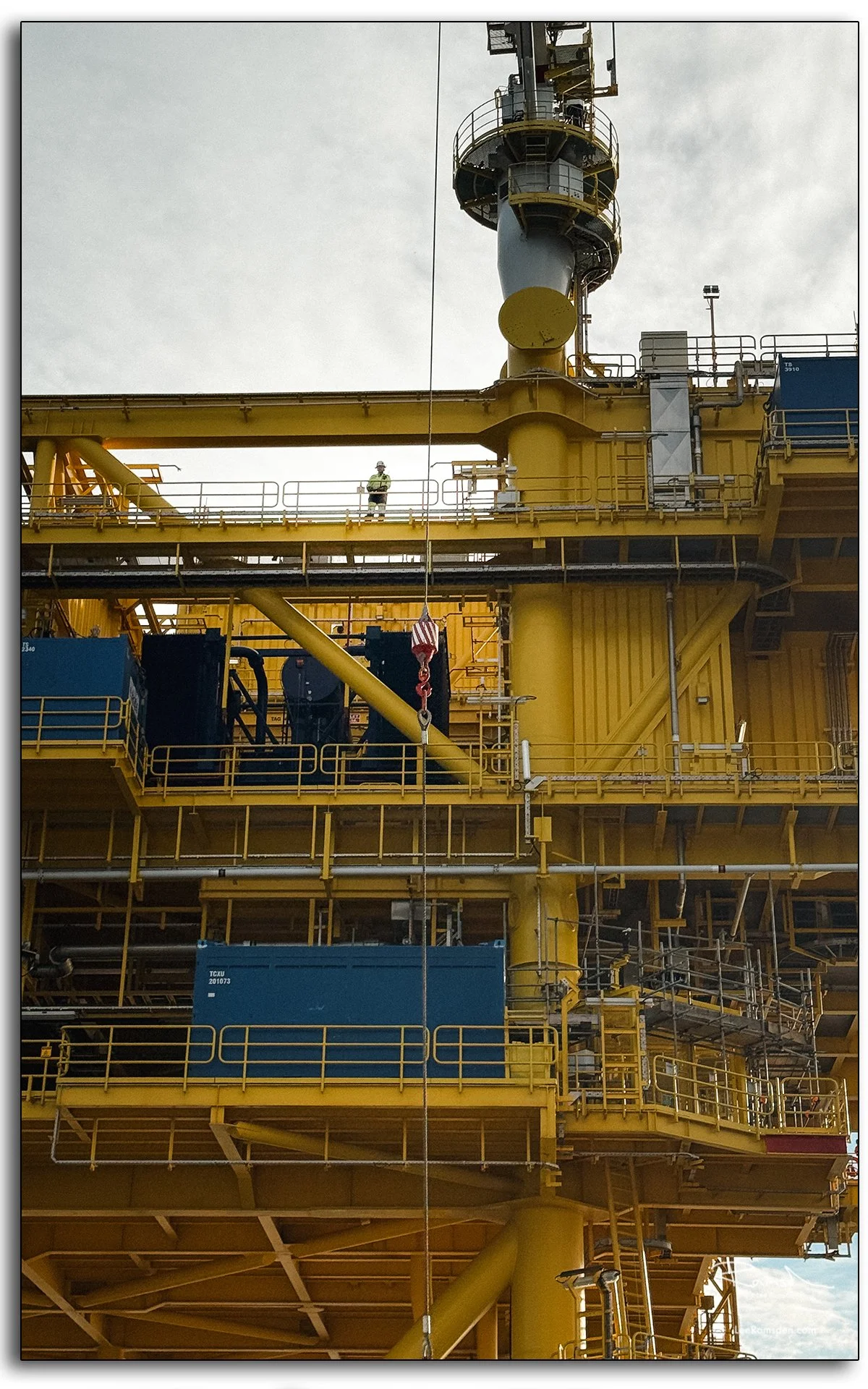
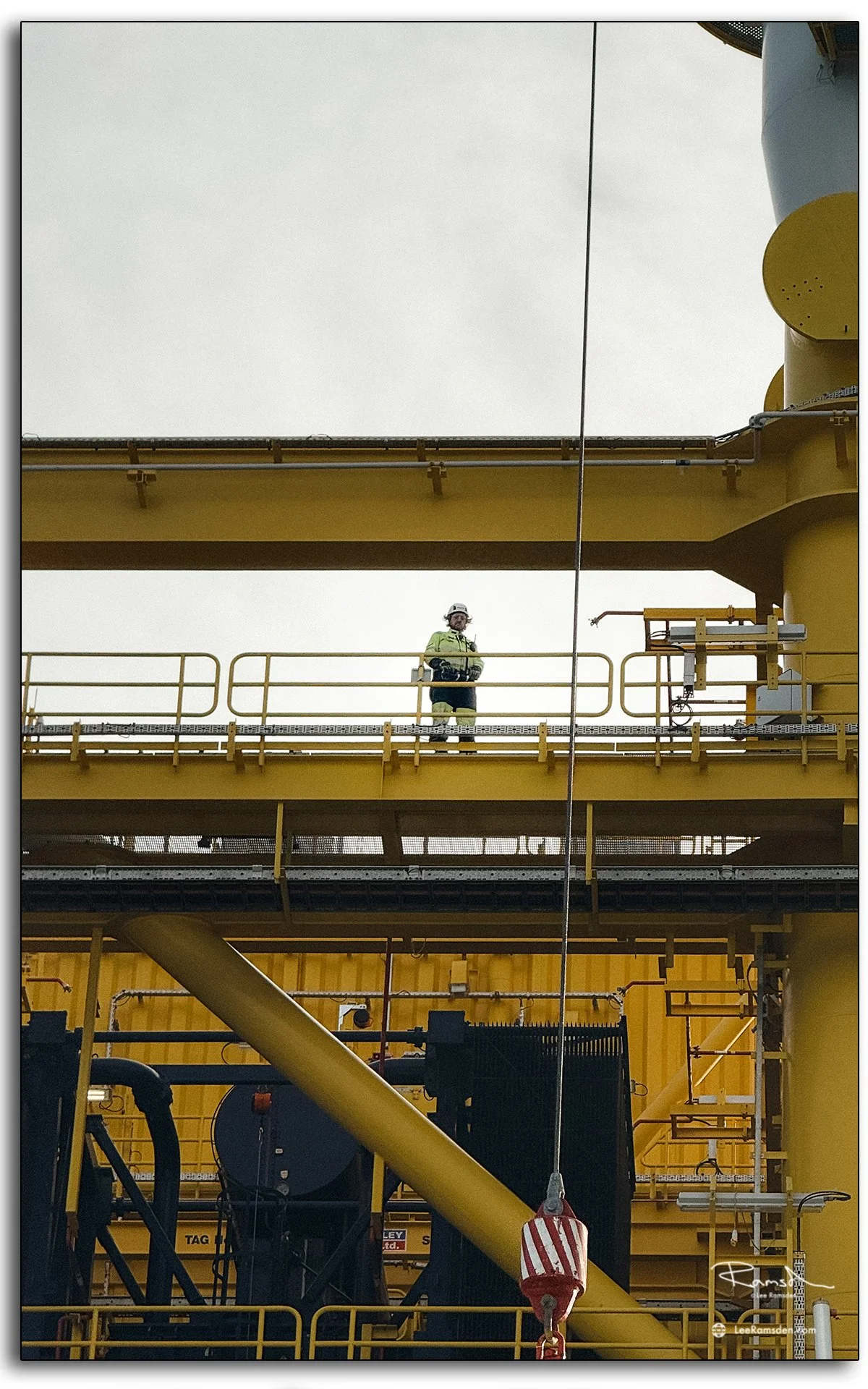
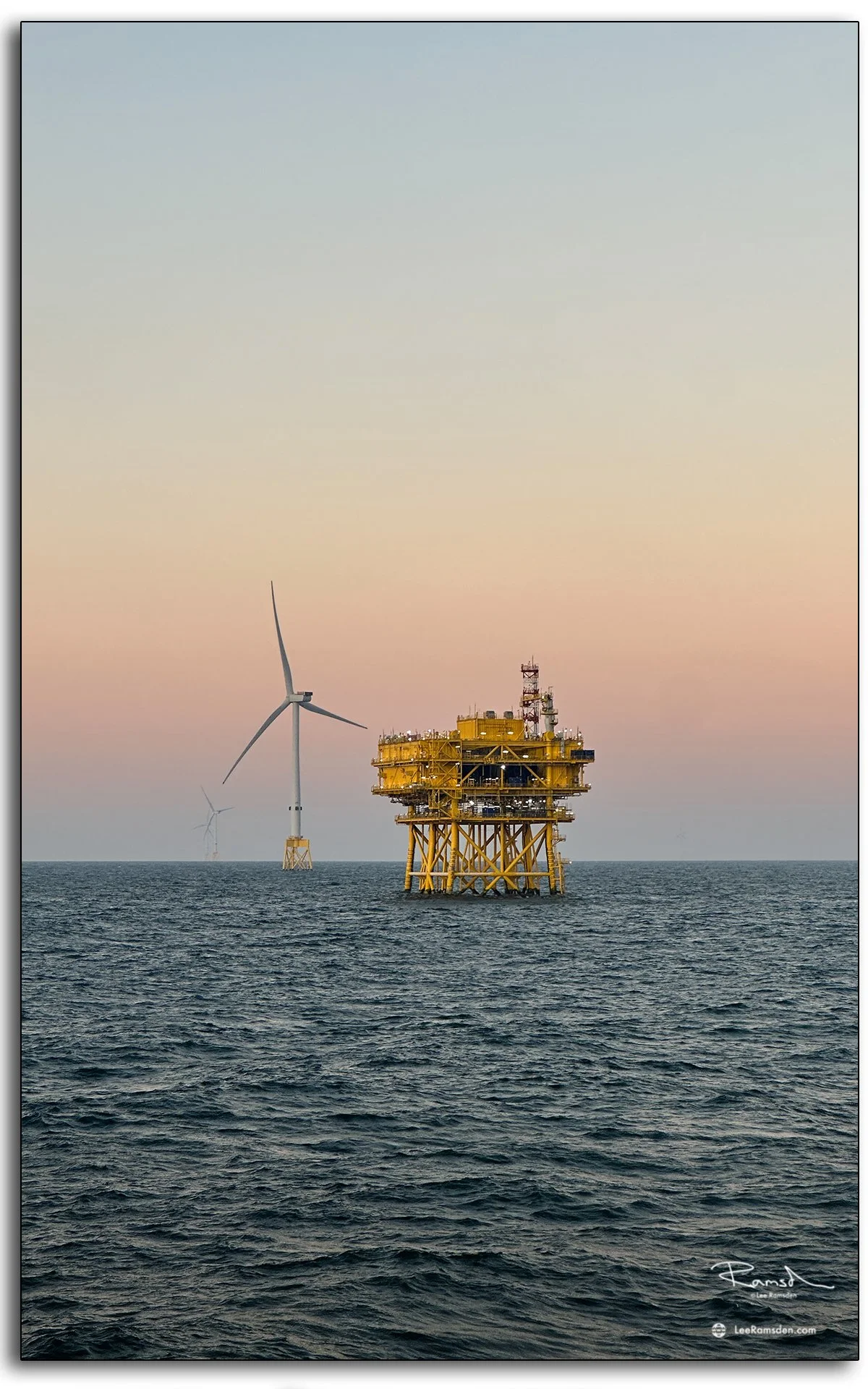
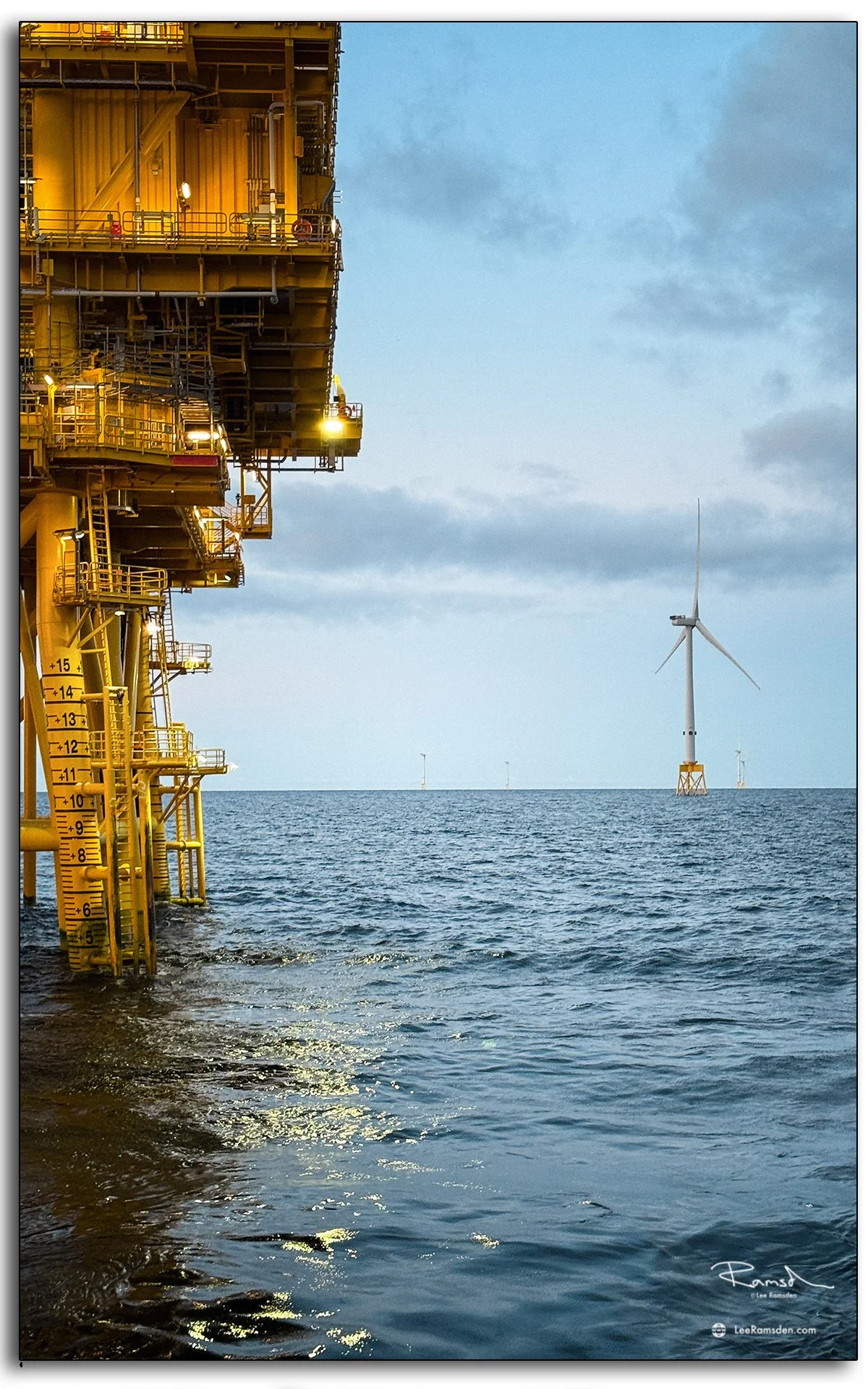
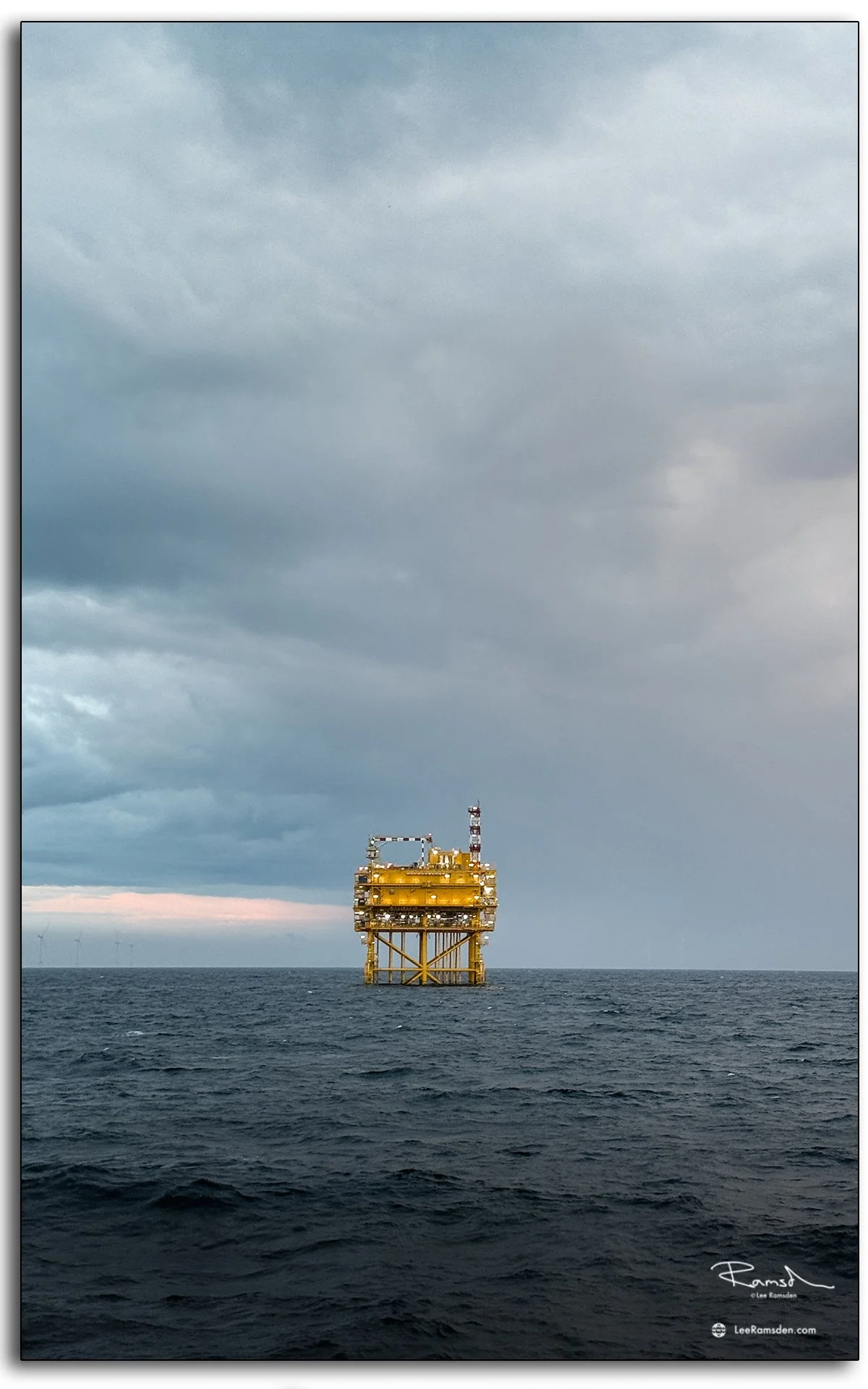
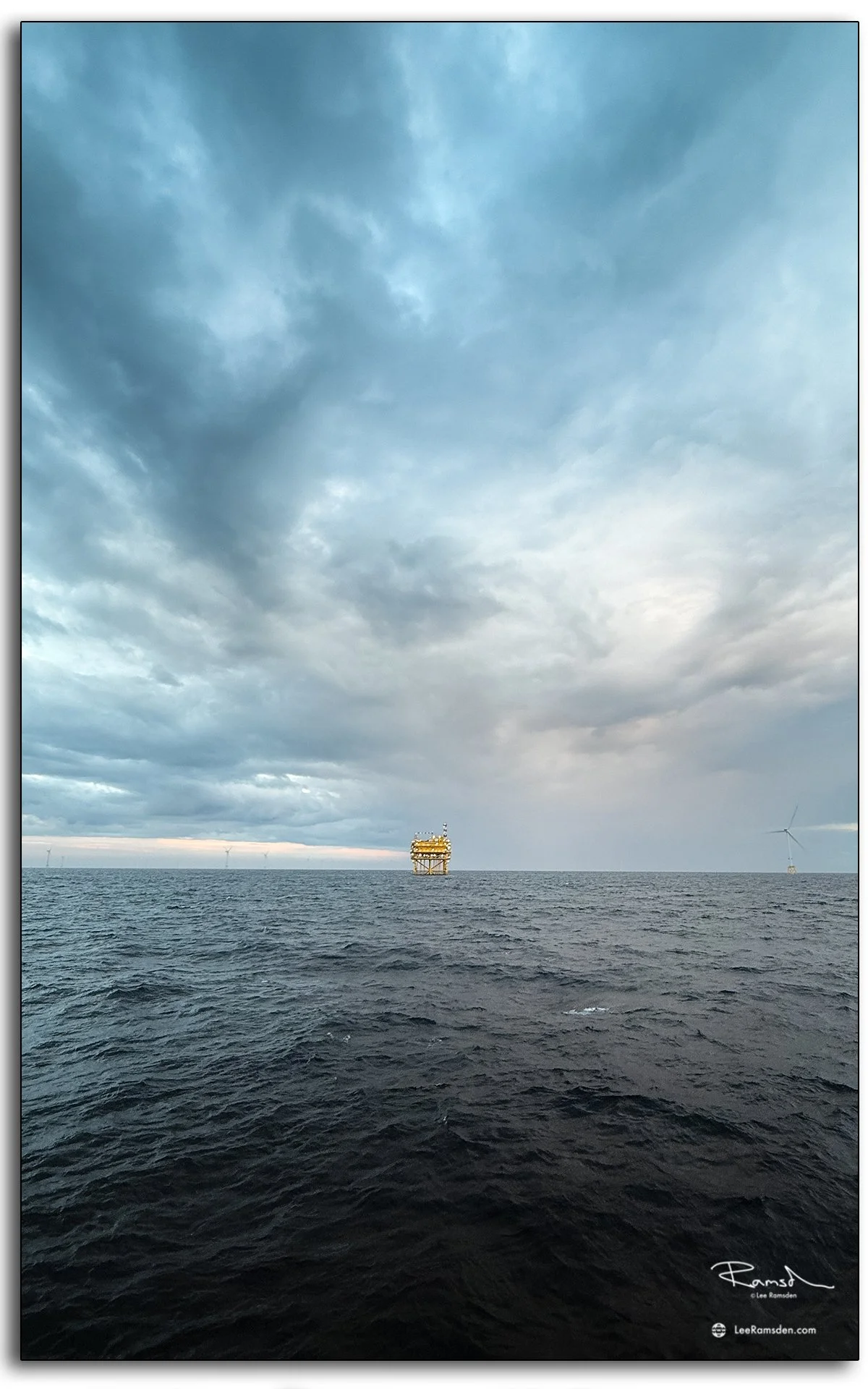
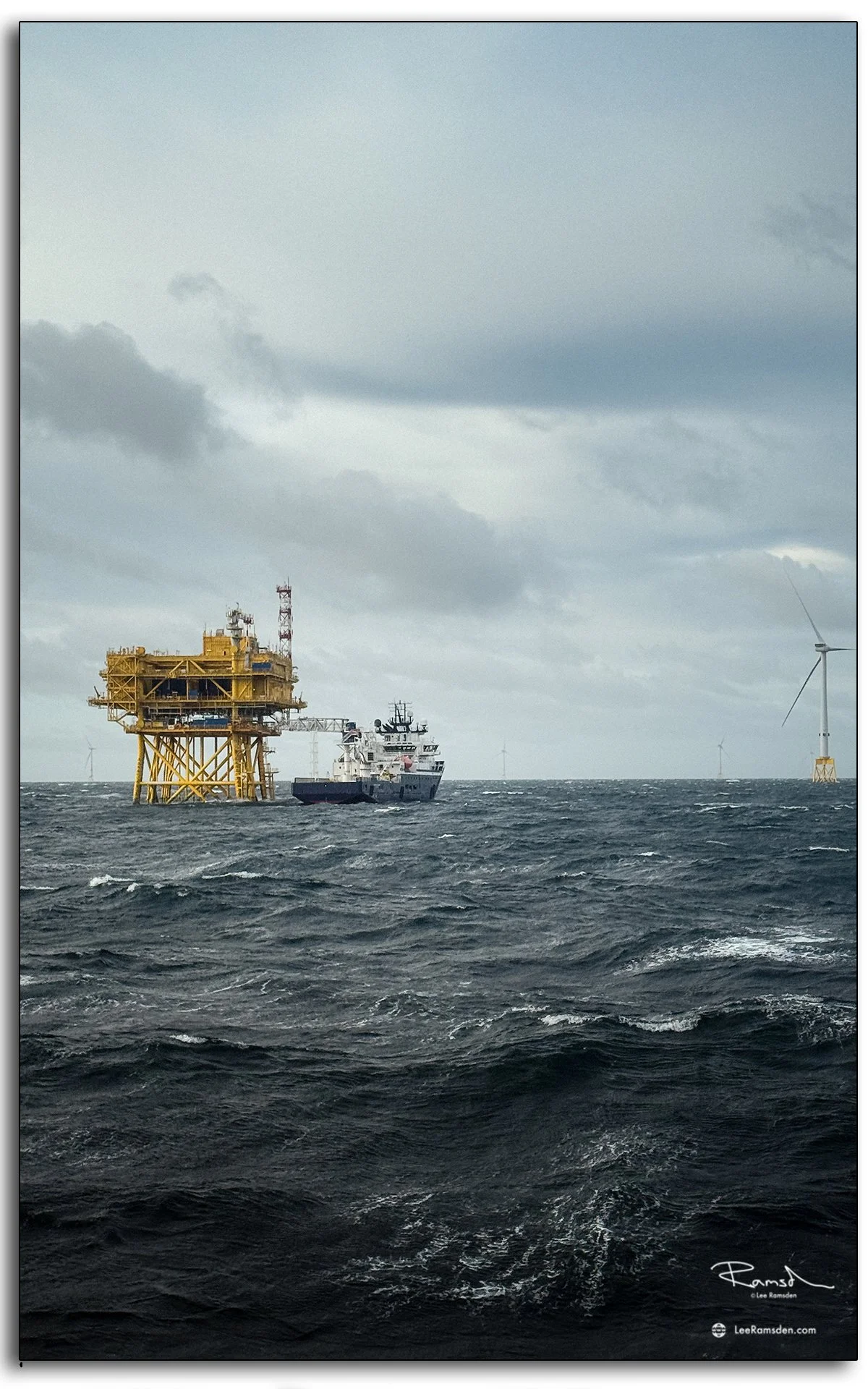
Working offshore often means spending long stretches of time alongside these vast yellow structures – offshore substations. They form the backbone of a wind farm, collecting and exporting the power generated by turbines scattered across the sea.

The scale is difficult to appreciate until you’re up close. From the deck of a vessel, the platforms rise high above the water, a complex of steel, stairs, and cables, lit up against the horizon. Depending on the weather, they can look strikingly different – golden in calm sunsets, isolated and moody under stormy skies, or glowing at night when lit against the dark.

For those who work out here, these structures are both workplace and landmark. For those onshore, they remain largely unseen, but they’re critical to delivering renewable energy back to the grid.

The offshore wind industry is a world of steel, sea, and constant change – both technical and natural. Capturing it in black and white strips everything back to structure and contrast, highlighting the balance between industry and environment. For more of my industrial and wind industry work, visit my Wind Industry portfolio.

SOV Vessel and Offshore Wind Turbines – A Dramatic North Sea Scene

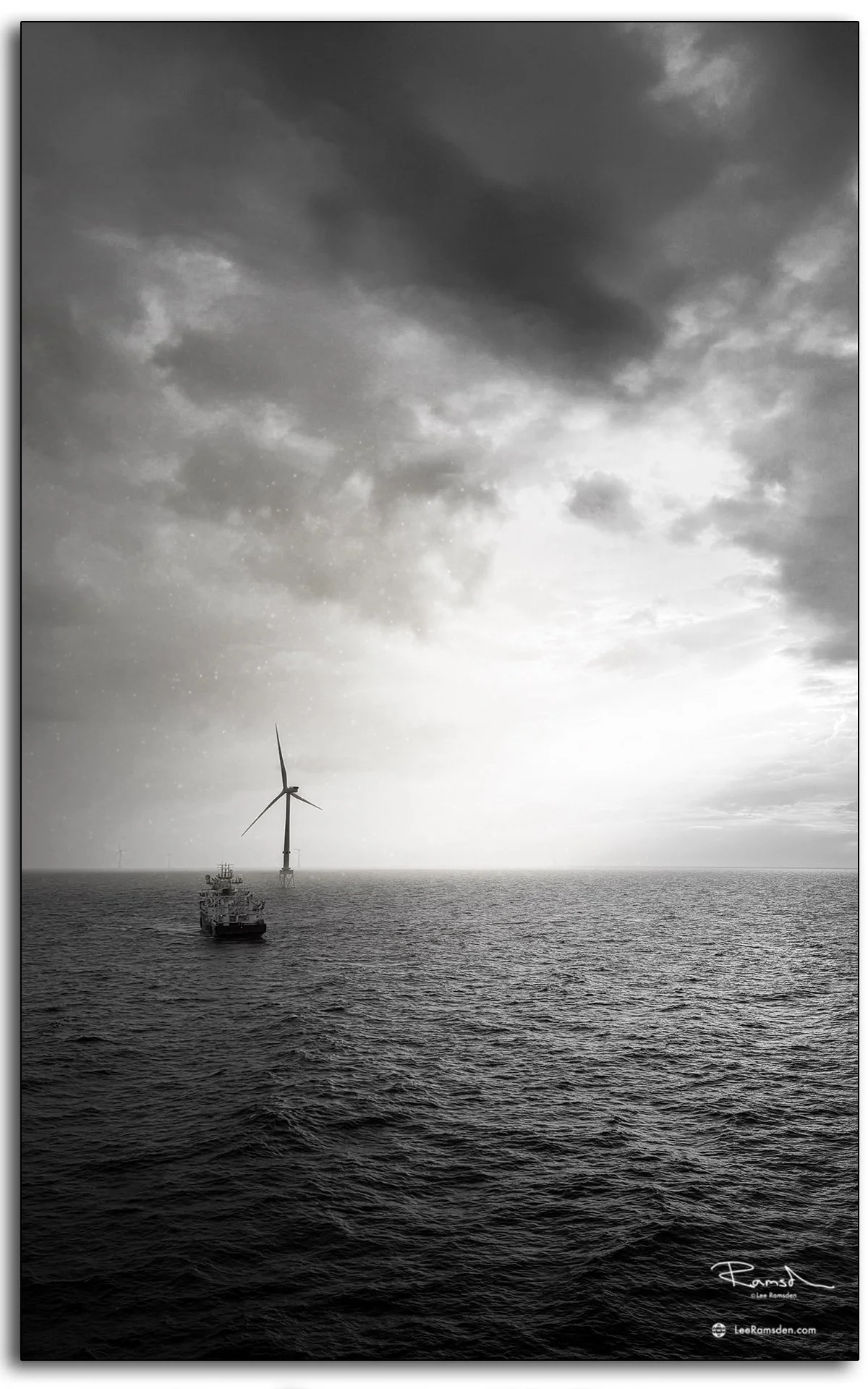
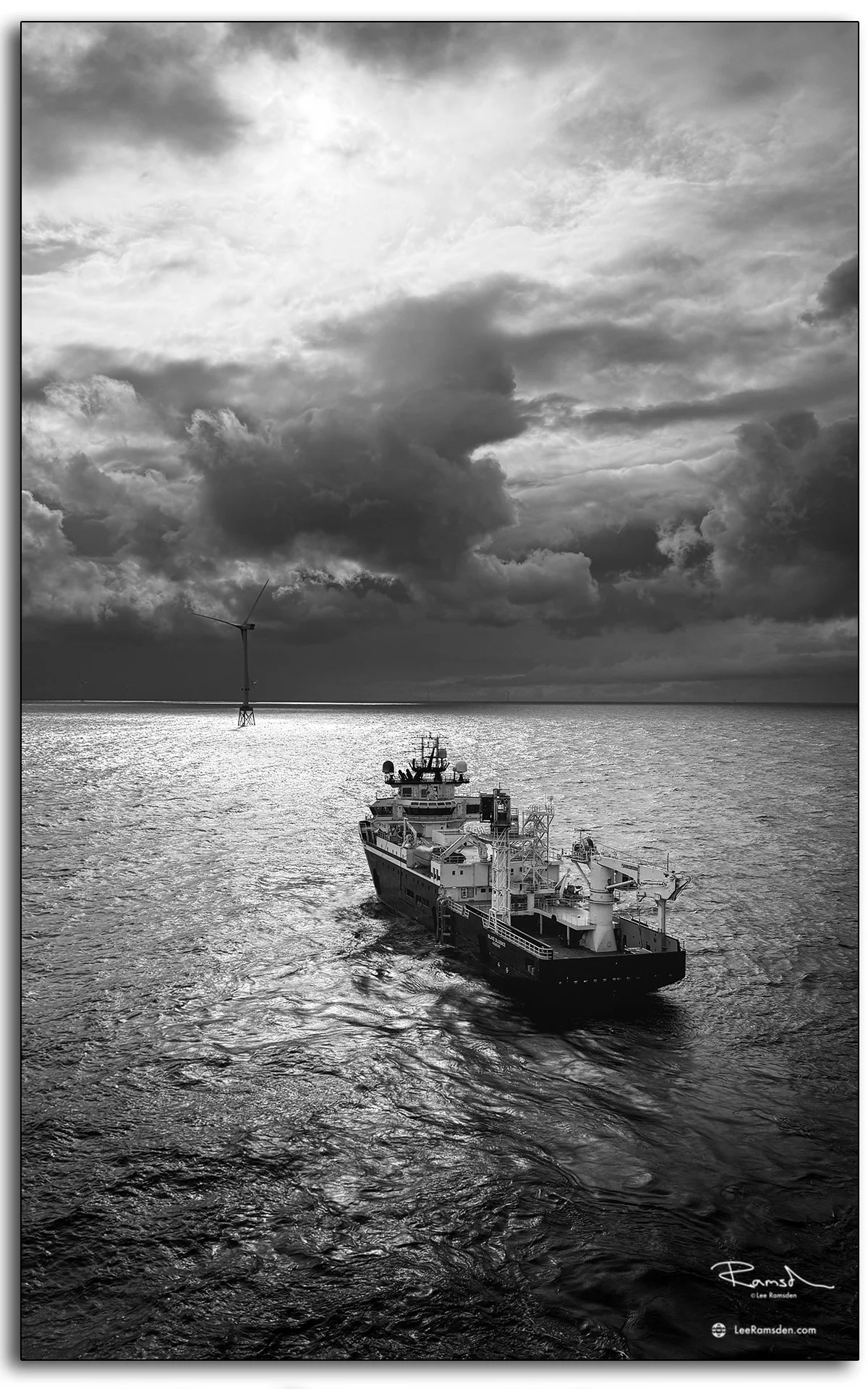
Striking black and white photo of Island Diligence with offshore wind turbine under dramatic skies in the North Sea.
Moody black and white seascape of Island Diligence vessel with offshore wind turbine in the North Sea.

Out in the North Sea, moments like these capture the essence of offshore work – a dynamic mix of weather, engineering, and raw seascape. The Island Diligence, framed against towering wind turbines, feels both small and powerful, holding its own beneath the vast skies.

The heavy clouds and broken sunlight add weight to the images, a reminder of the ever-changing nature of offshore life. From dramatic skies to the still determination of the vessels and turbines, these scenes are never the same twice – which is why I’m always drawn to photograph them.

Photography offshore often blends the unexpected with the industrial – moments that are raw, dramatic, and fleeting. You can see more in my Wind Industry gallery, or explore other Industrial photography across my portfolio.

Norwind Storm at Work

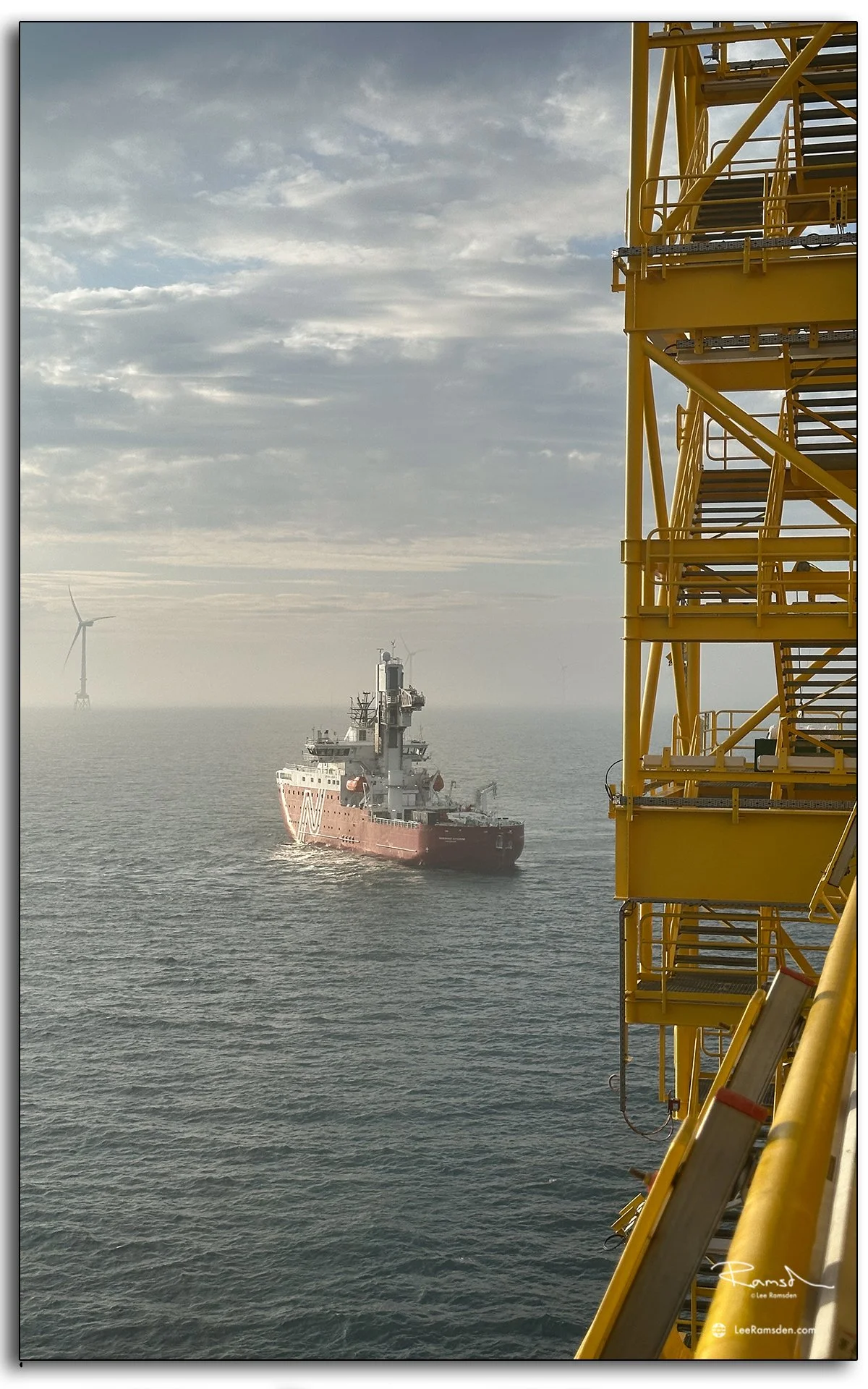
Norwind Storm offshore support vessel approaching a wind farm substation in the North Sea
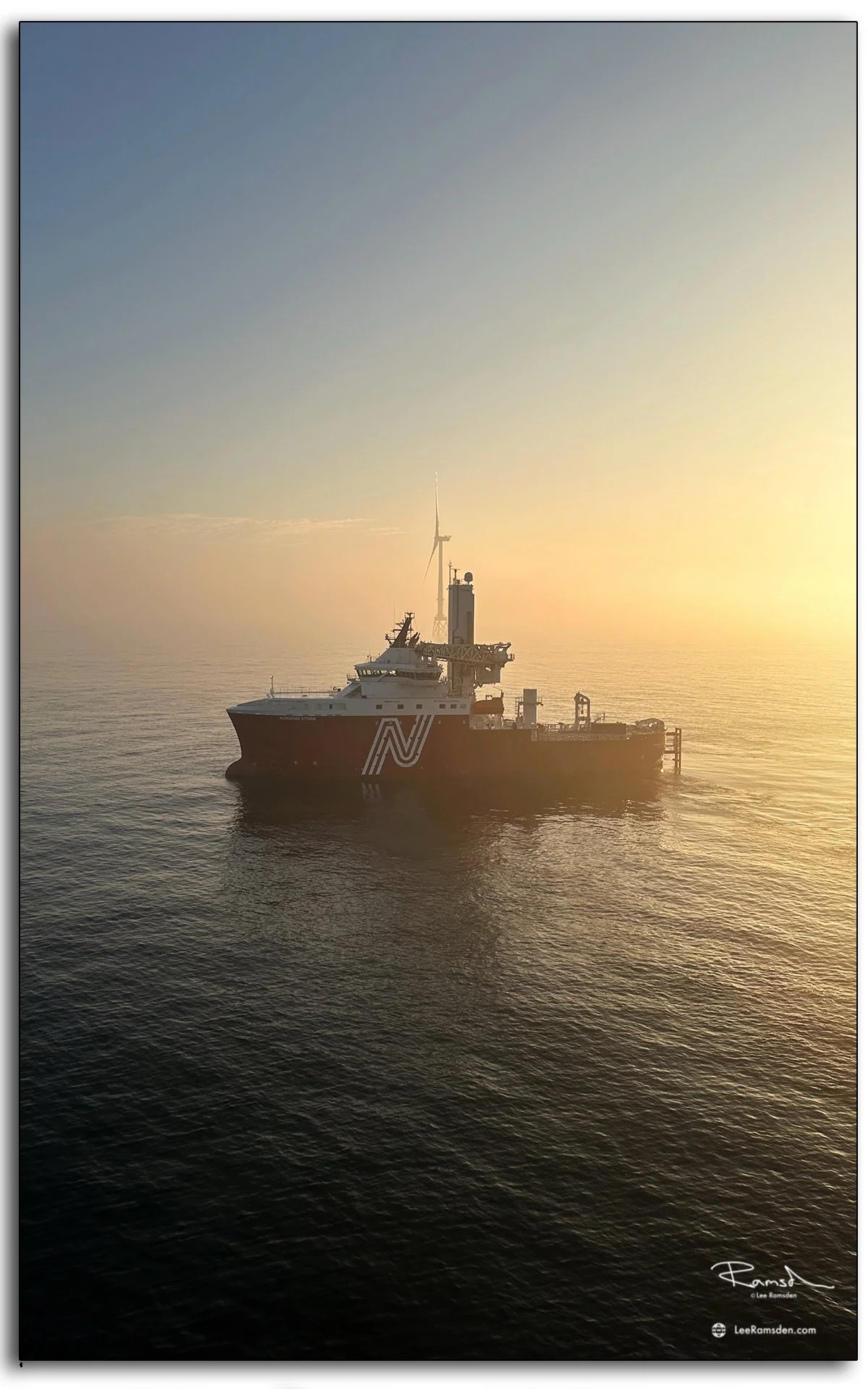
Norwind Storm vessel at sunrise with wind turbines on the horizon, captured in the North Sea

Out in the North Sea, the Norwind Storm is a familiar sight—steady, purposeful, and always where the work is. These iPhone images capture the vessel alongside the offshore substation, with the wind turbines fading into the haze and the low sun throwing golden light across the water.

From the deck or framed against the open horizon, the Storm stands as a reminder of the constant effort behind the offshore wind industry. The scale of the operation is immense, yet moments like these bring out its quiet beauty.

See more of my work in the Wind Industry portfolio.

Black and White Turbines at Sea

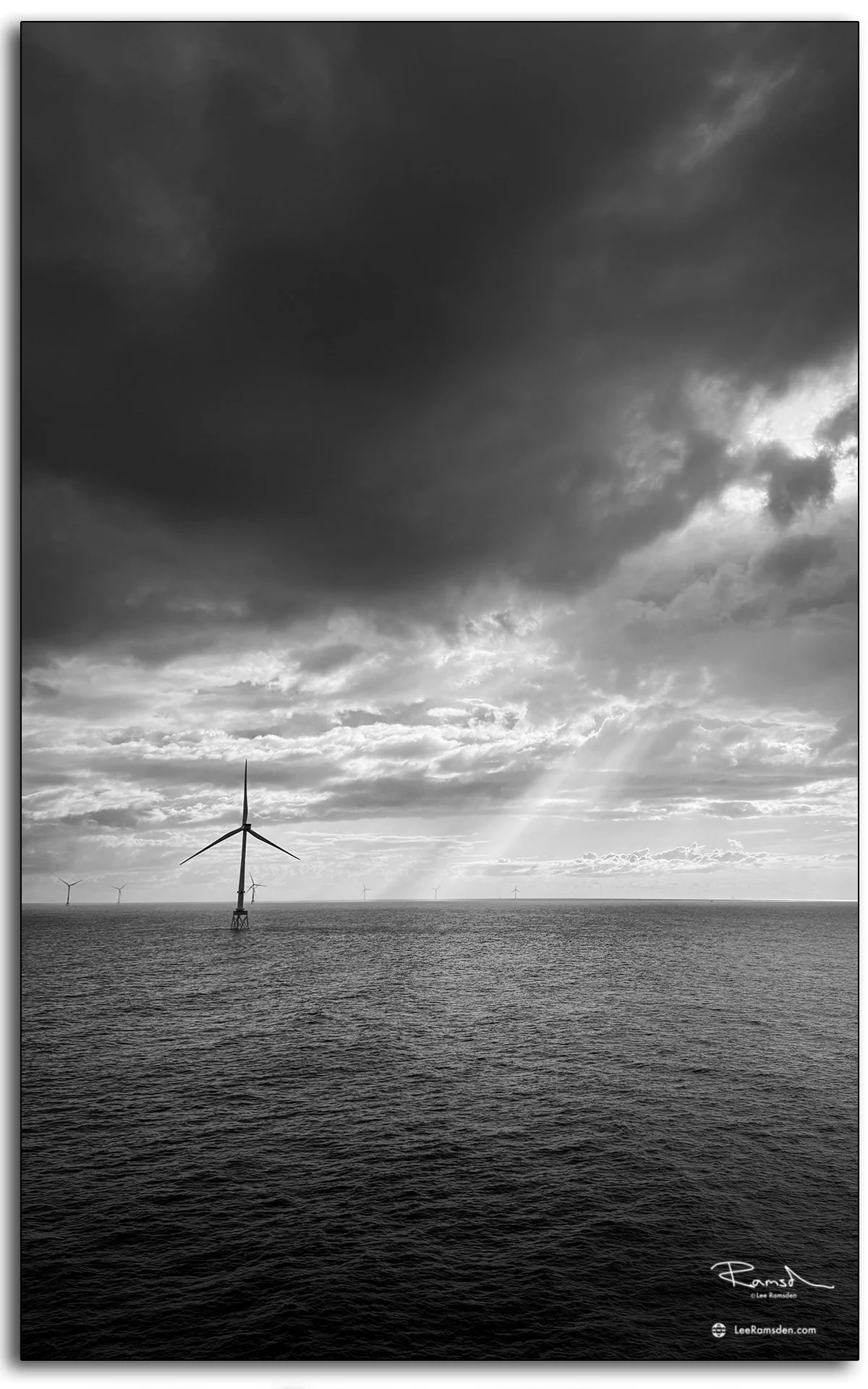
Offshore wind turbine beneath dark skies with light rays breaking through the clouds, captured in monochrome.
Monochrome offshore wind turbine set against moody skies and the North Sea horizon.

The offshore wind farm takes on a different presence in black and white. Without colour, the turbines stand stark against the shifting tones of sea and sky. The heavy clouds and breaking light add a drama that colour often softens, leaving a raw sense of scale and isolation.

These iPhone images strip everything back, reducing the view to light, shadow, and structure — highlighting the resilience of the turbines set against the vastness of the North Sea.

These black and white studies show another side to offshore wind — stripped of colour but rich in atmosphere. See more from my Wind Industry portfolio.

Offshore Walk-to-Work Transfers

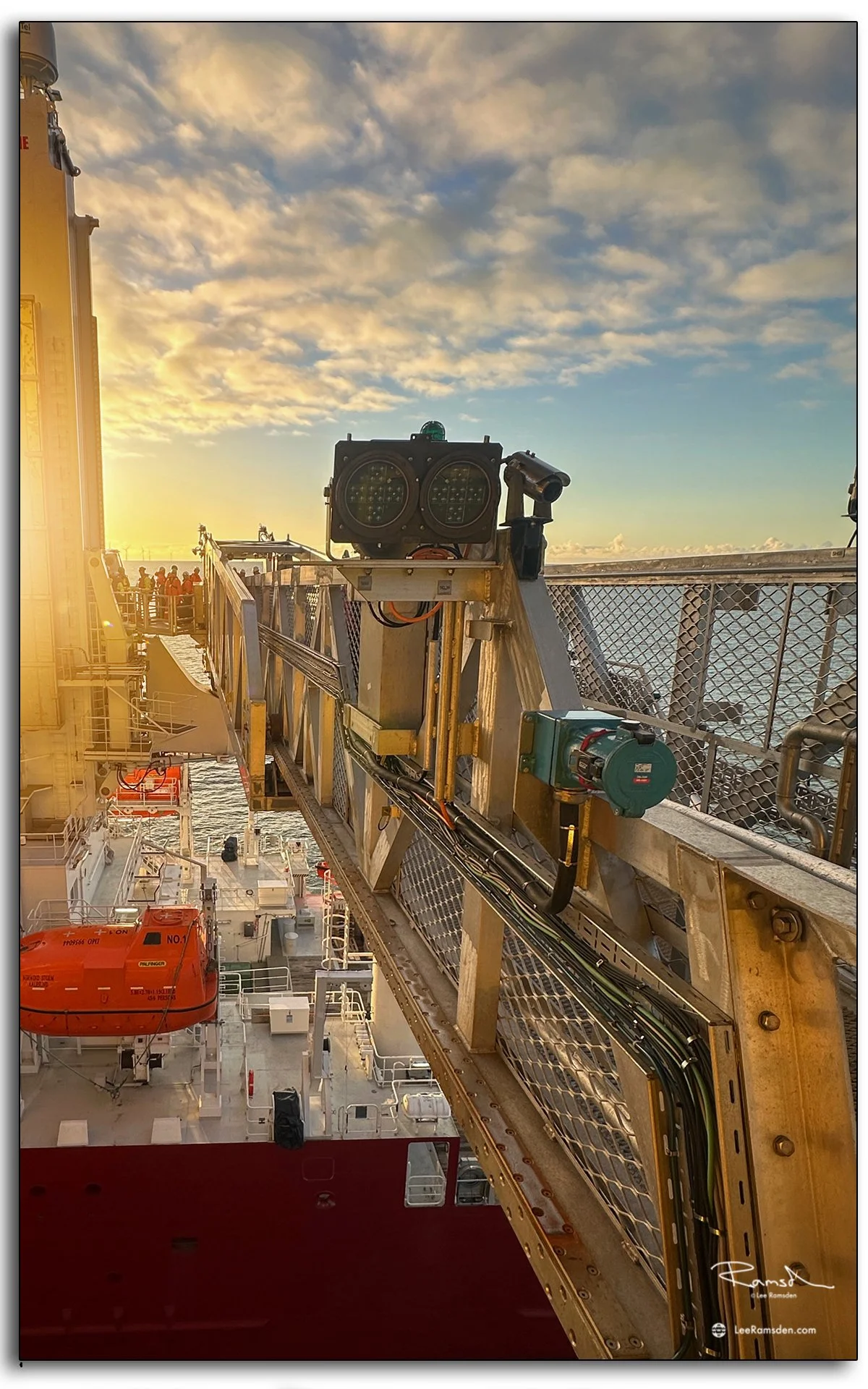
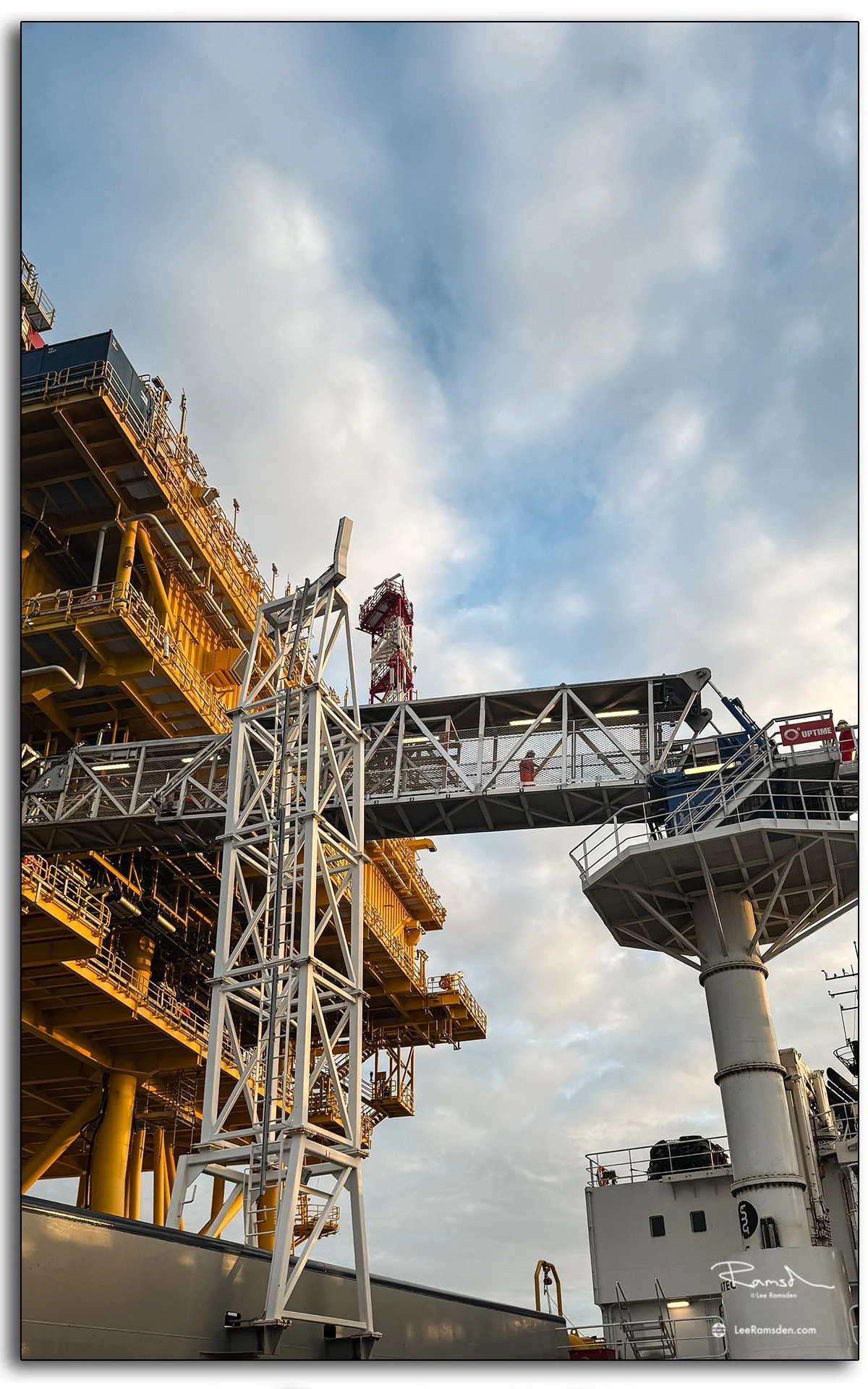
Side view of offshore Walk-to-Work bridge extended to platform, photographed at sunrise.
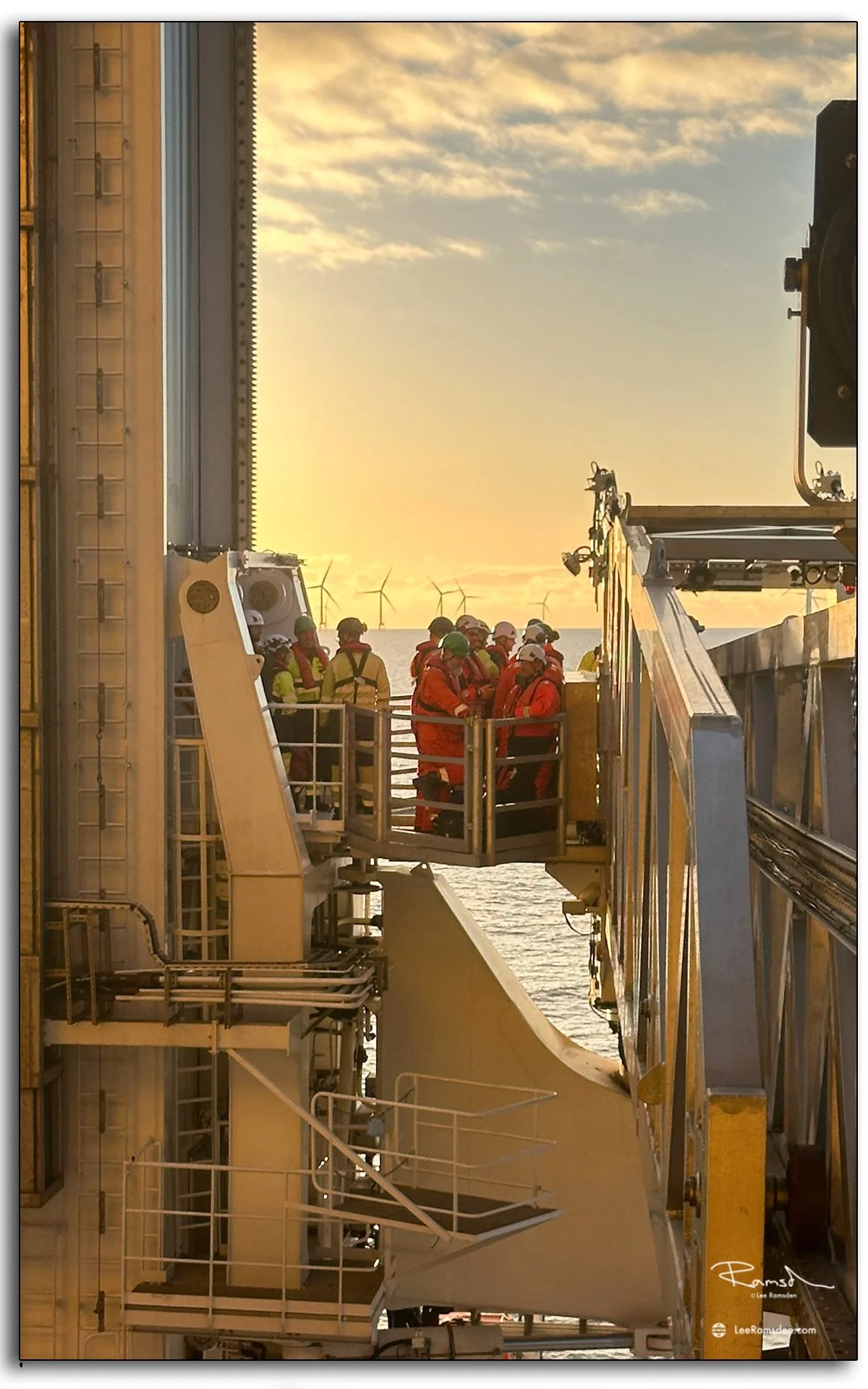
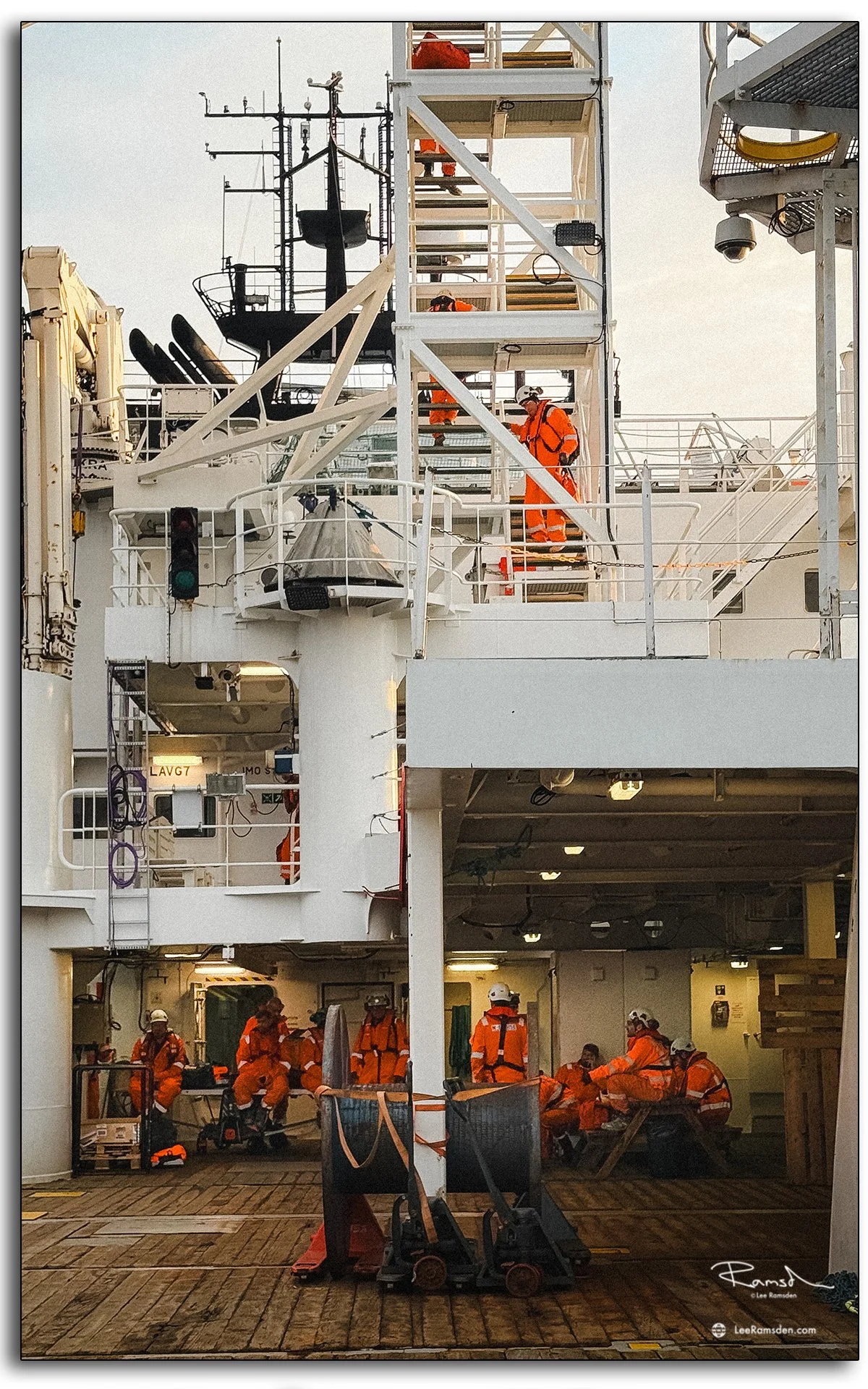
Offshore crew gathered in PPE, preparing to transfer via Walk-to-Work bridge.

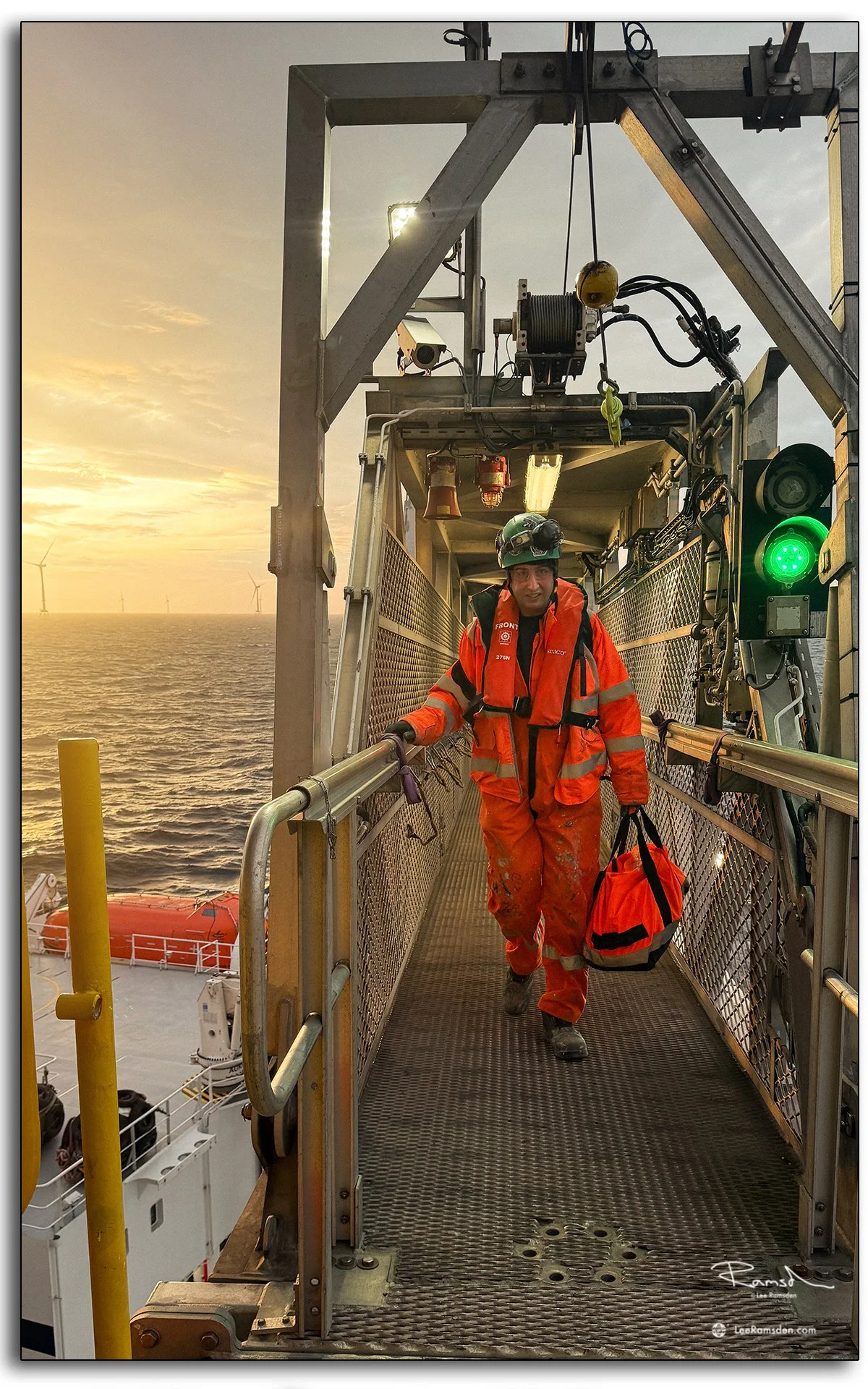
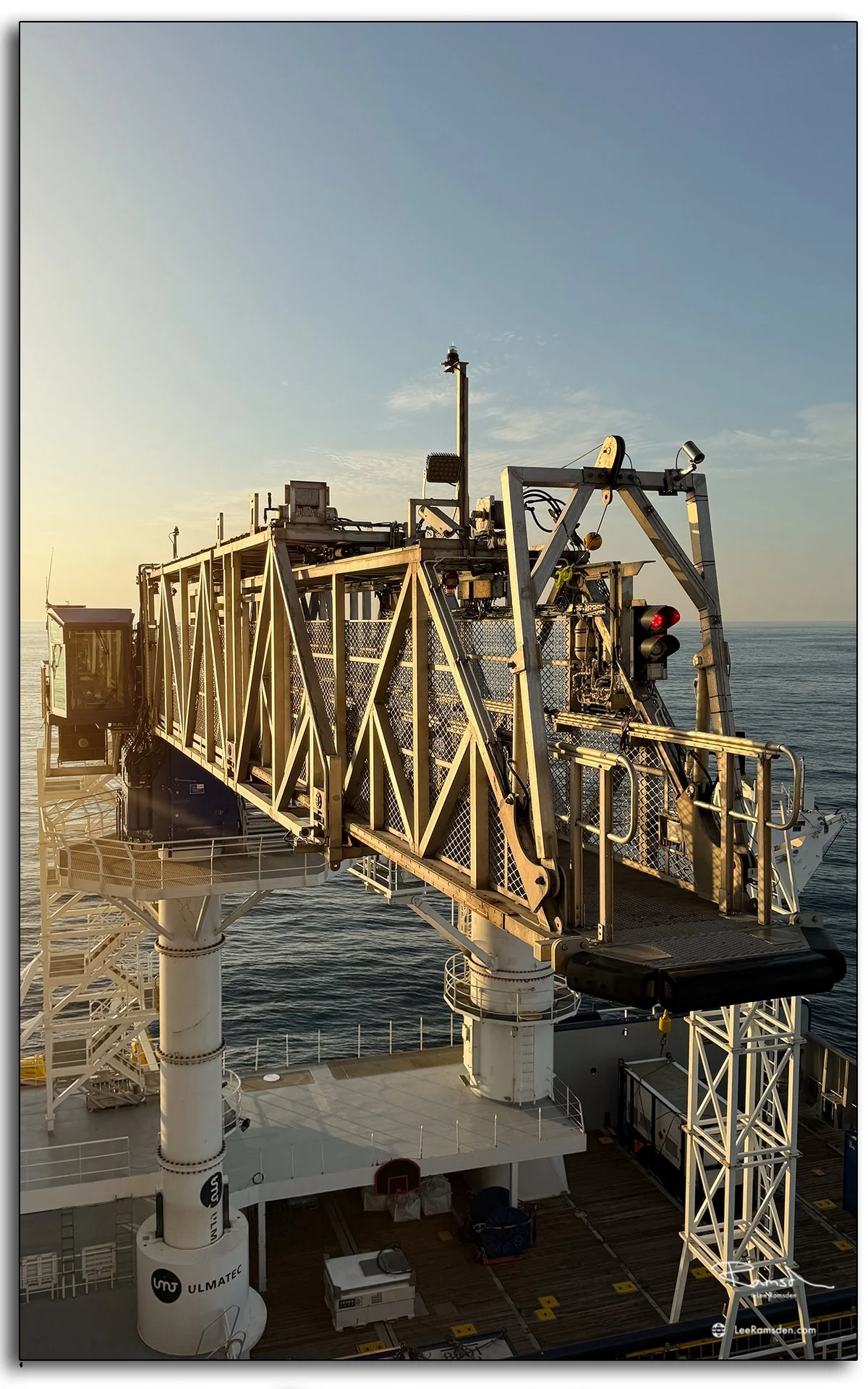
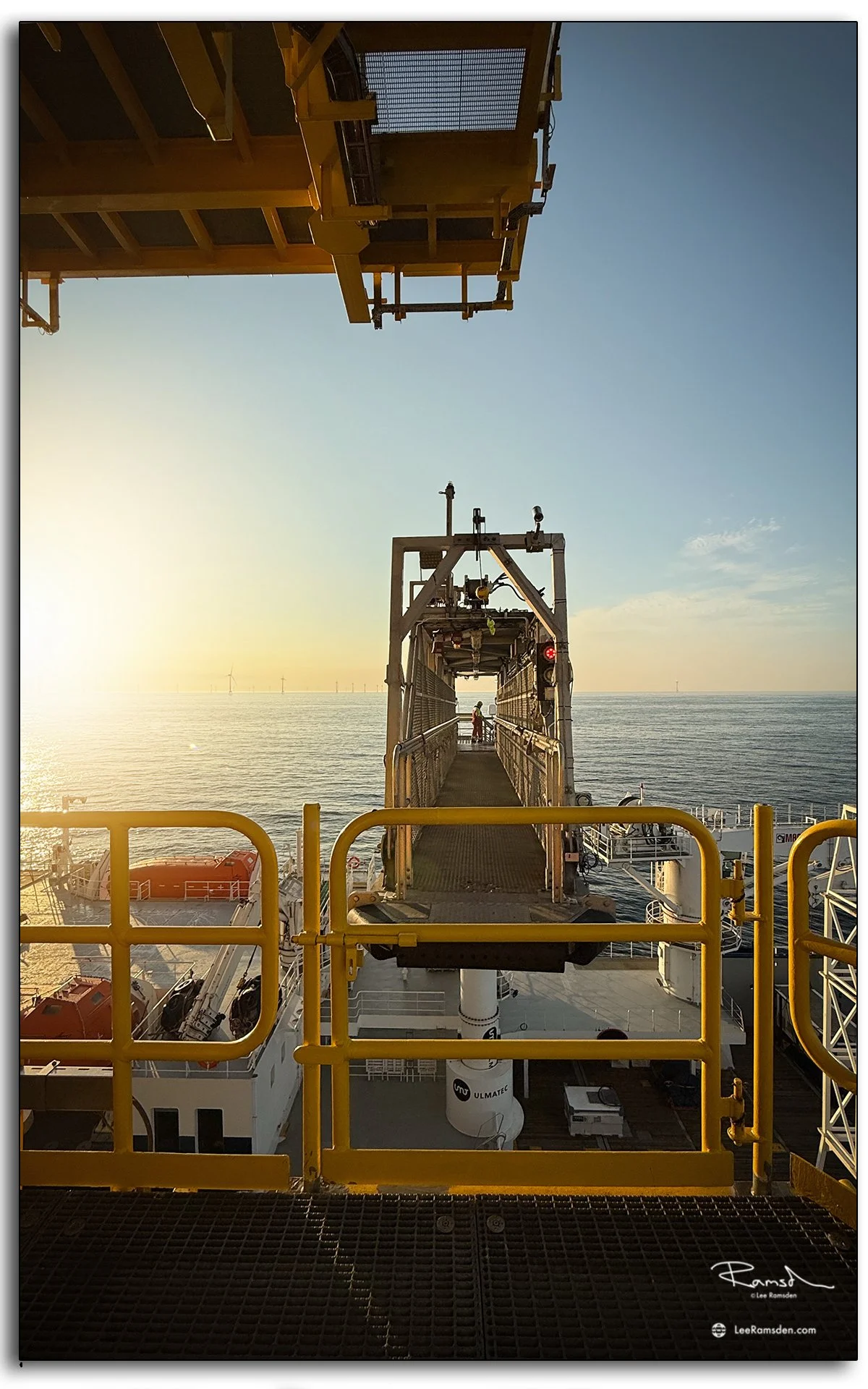
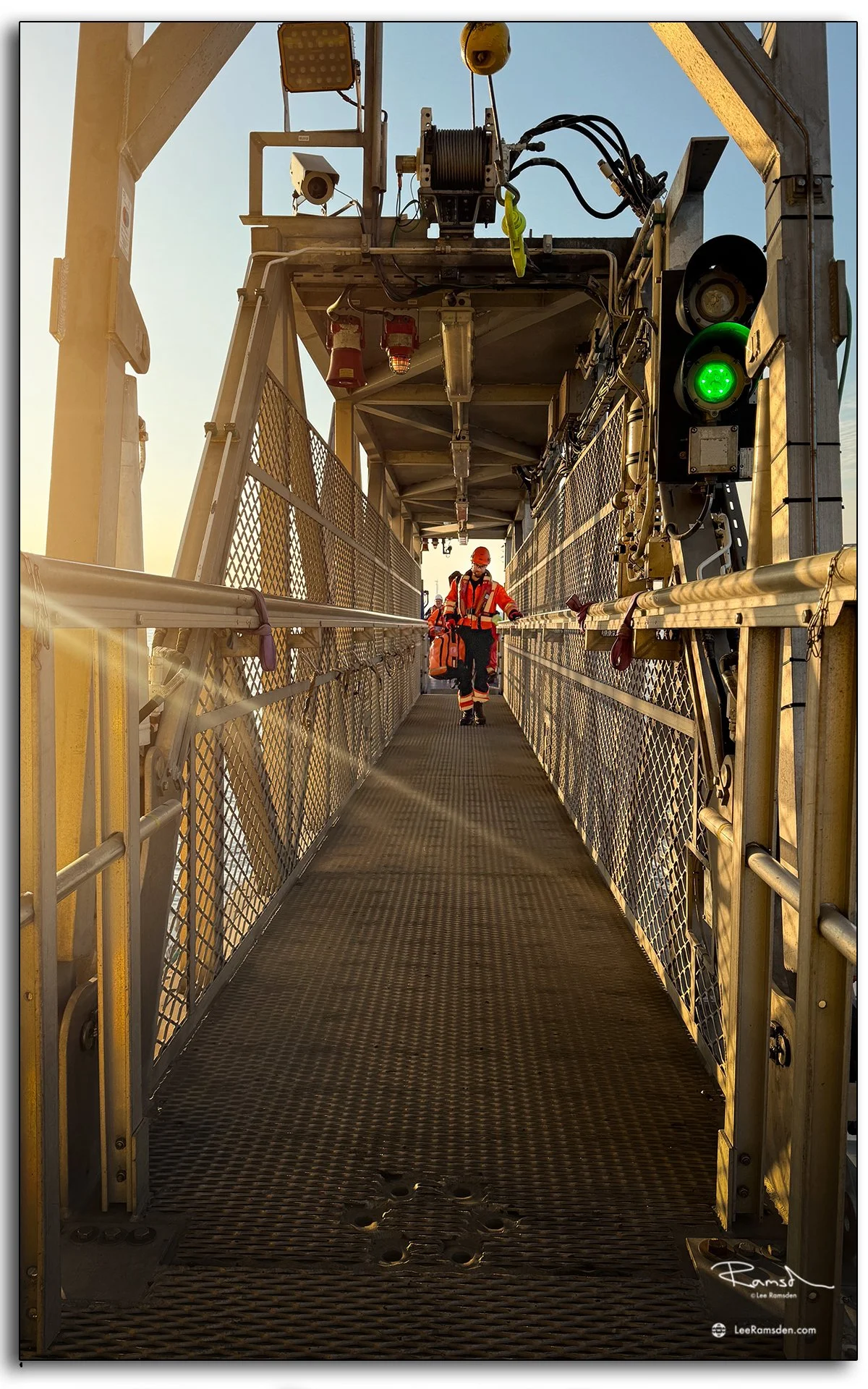
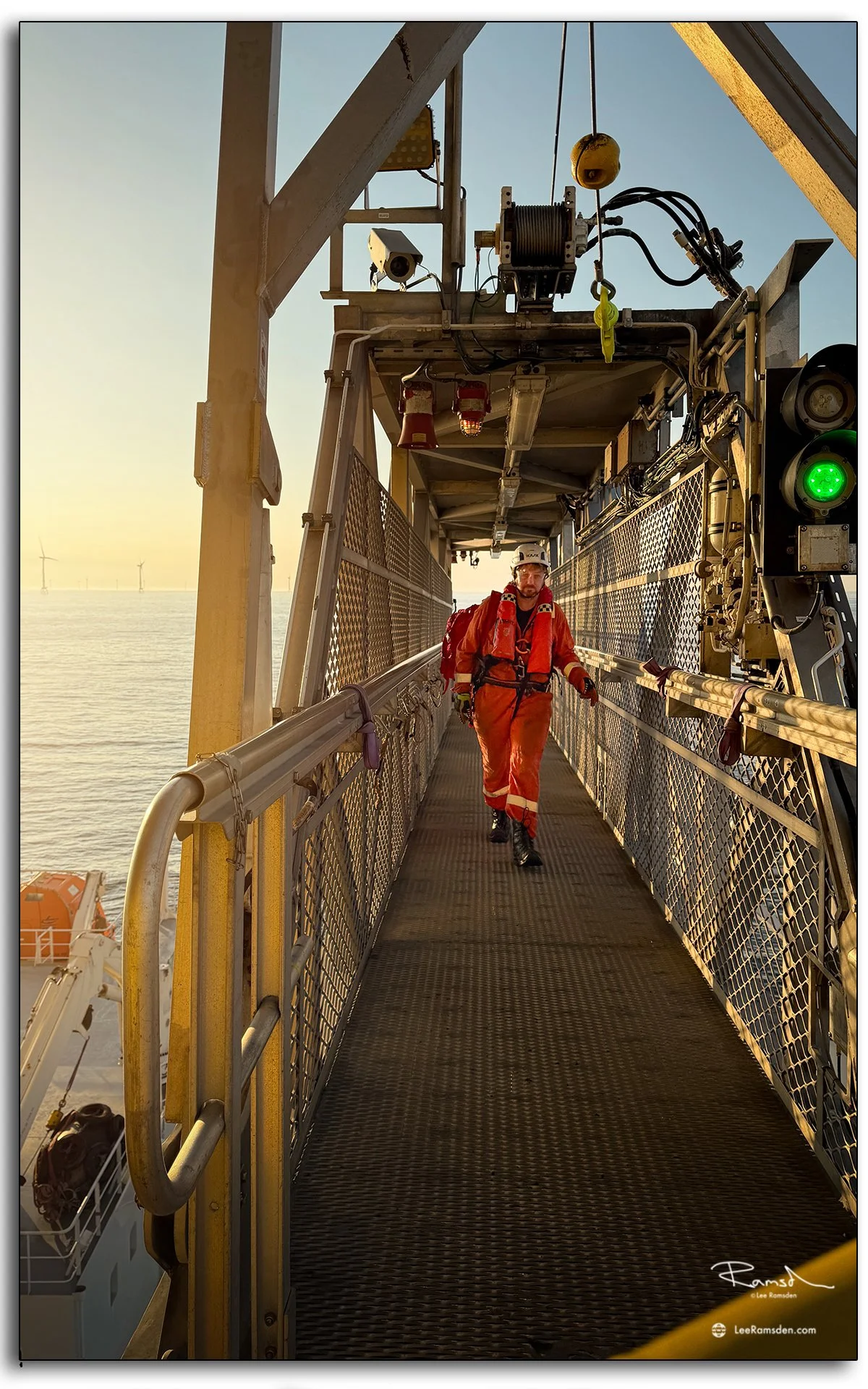
Crew transfers offshore are all about routine, discipline, and trust in the equipment. These images show the daily process of moving between vessel and platform via the Walk-to-Work bridge.

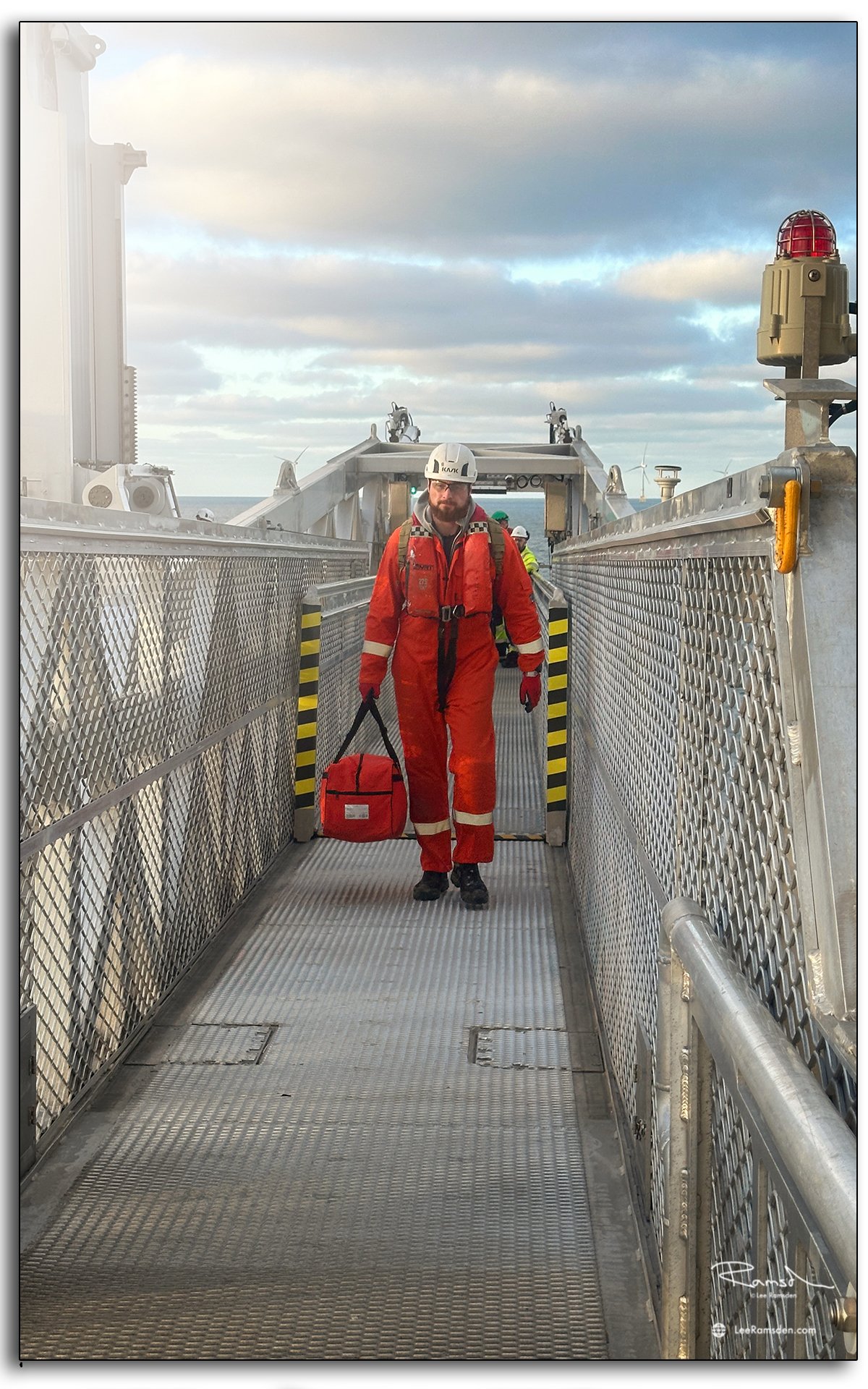
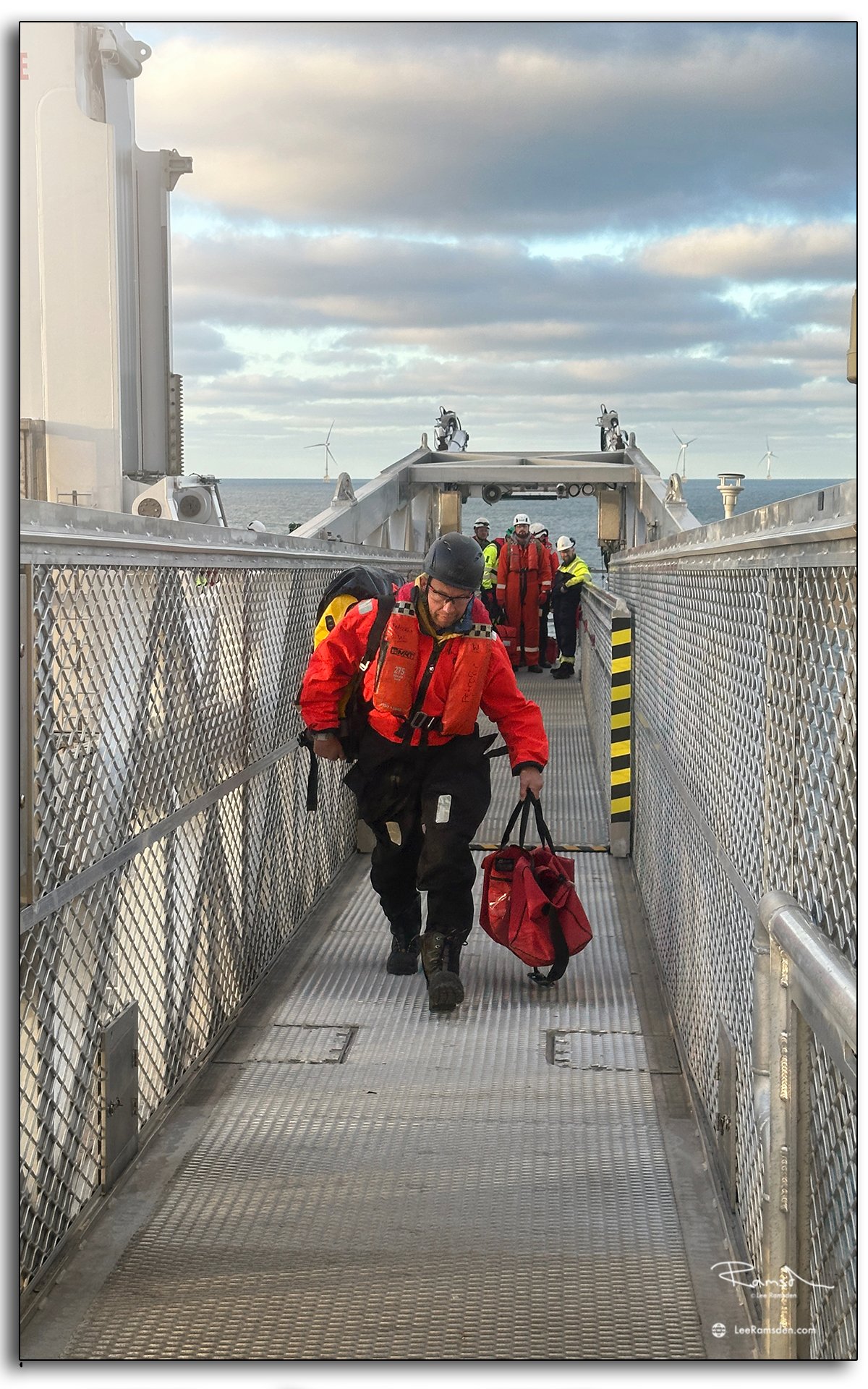
Offshore worker in survival suit crossing Walk-to-Work bridge in calm sea conditions.
Worker crossing Walk-to-Work bridge at sunrise, with offshore crew waiting behind.

The W2W system is straightforward in purpose: to give workers safe access. These photographs focus less on the structure and more on the people — the steady flow of personnel, kit bags in hand, crossing in both directions. It’s a reminder that offshore operations are built on repetition and reliability, not just engineering.

This series continues my documentation of offshore work and life at sea. For more, visit my Wind Industry and Industrial galleries.

Crew Transfer Vessels in Offshore Wind: Farra Grainne at Work

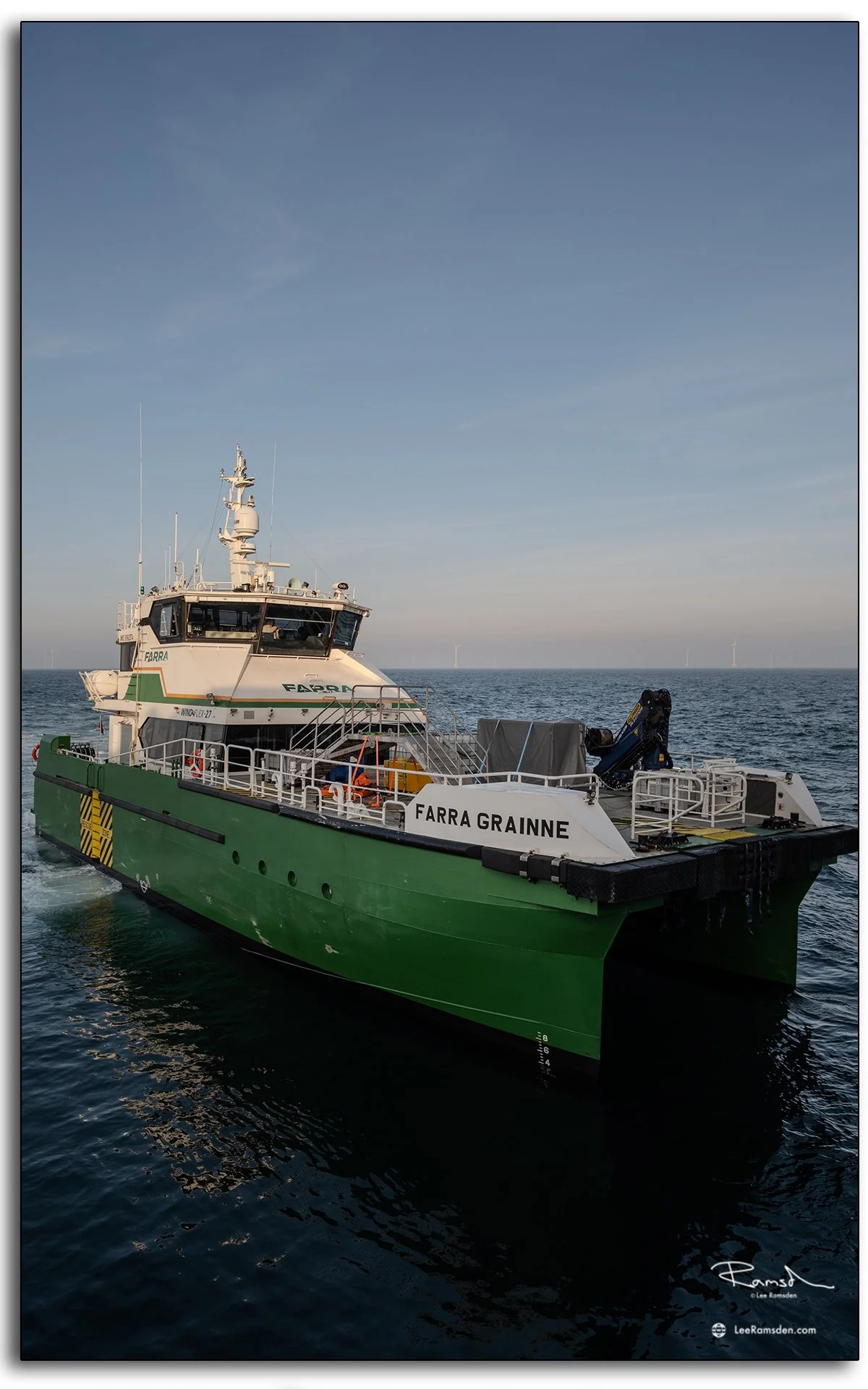
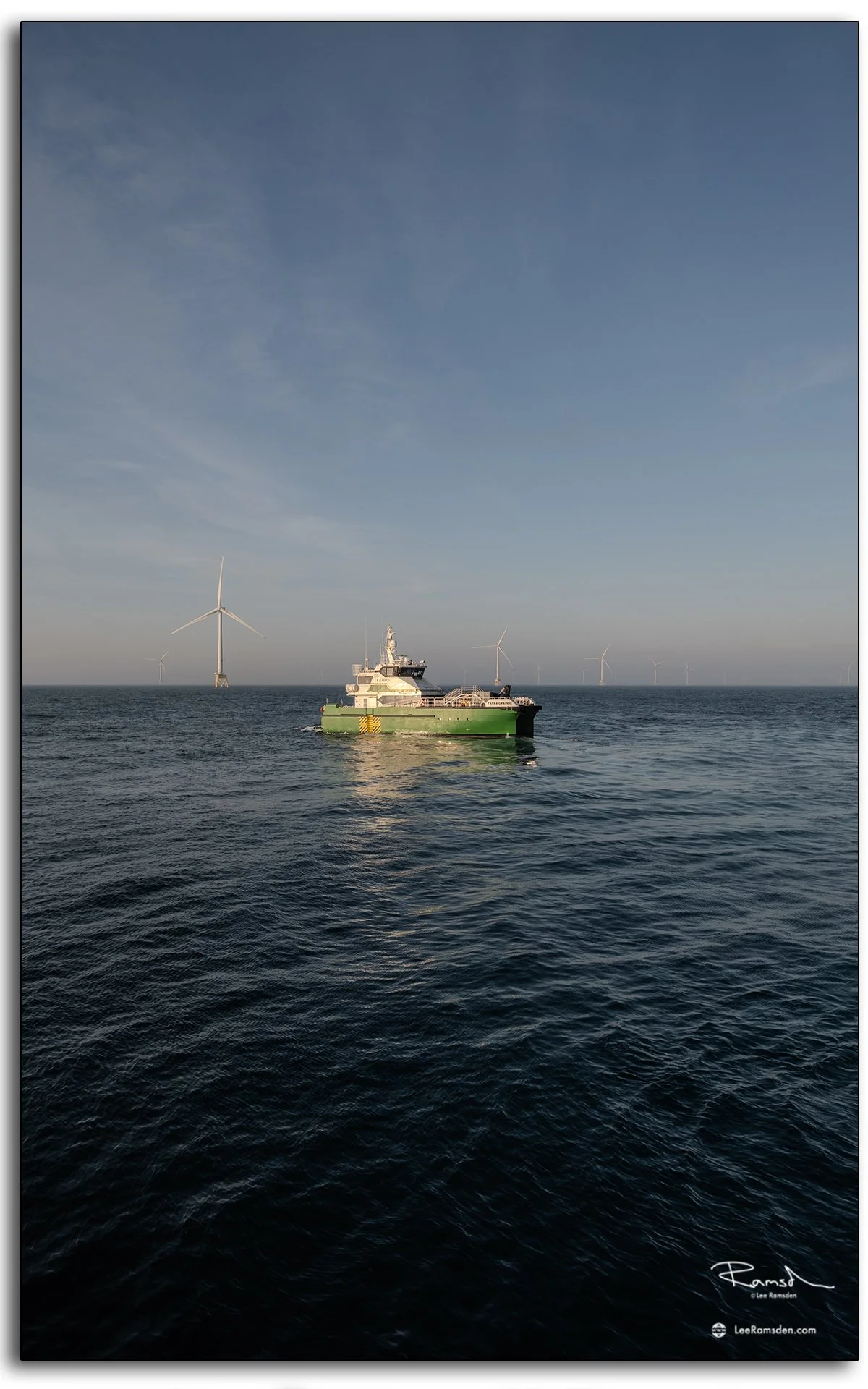
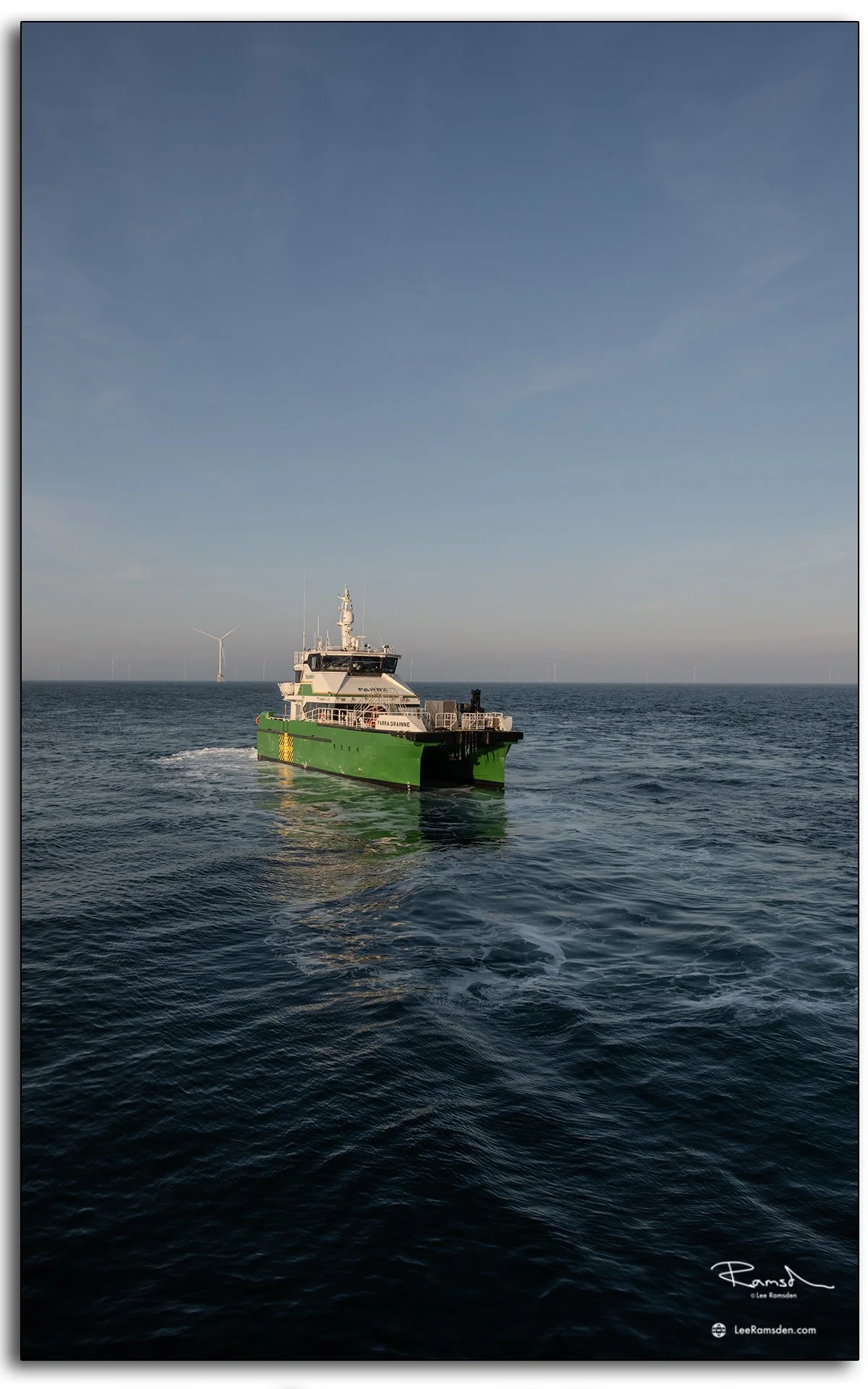
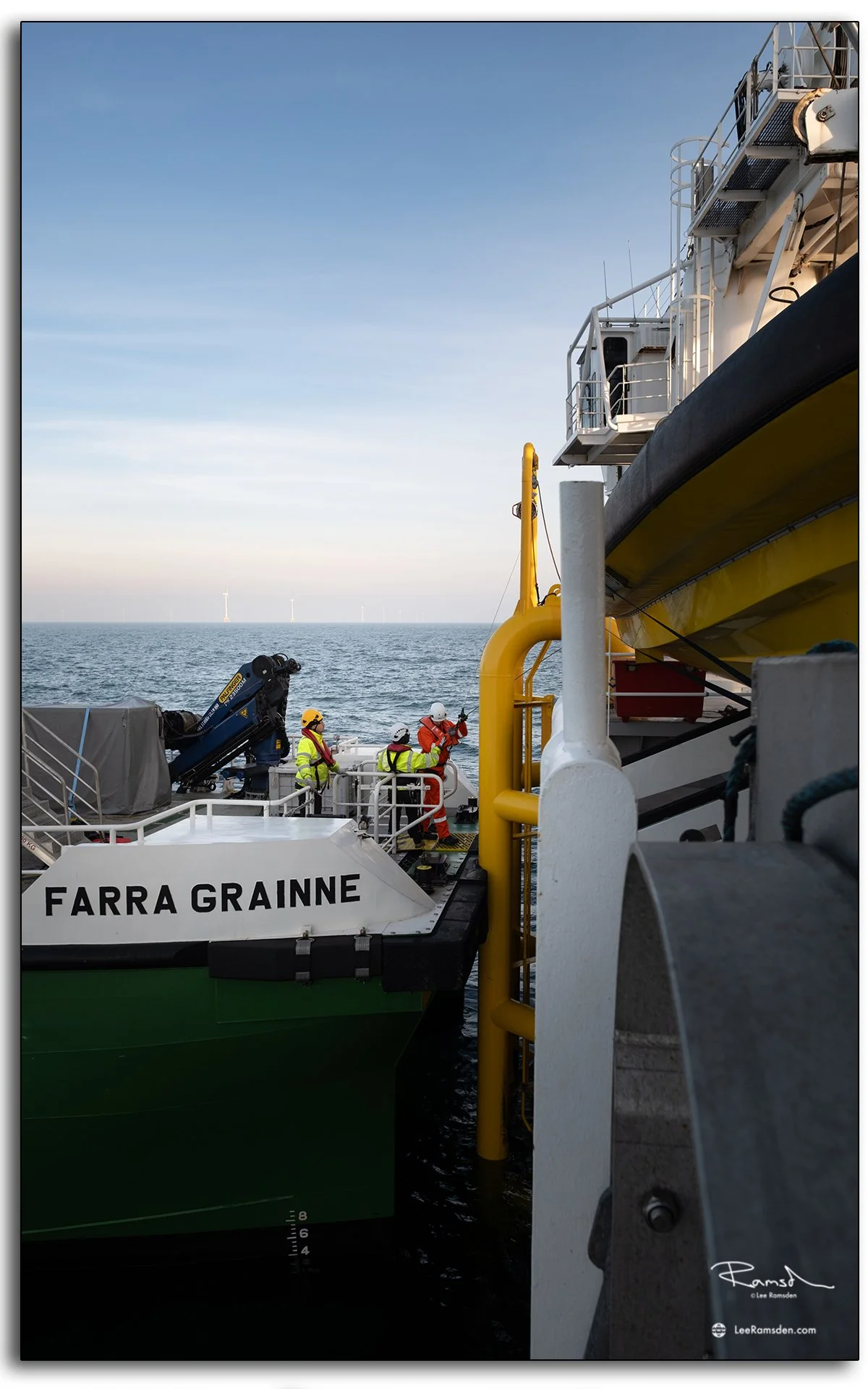
These images focus on the Farra Grainne, a crew transfer vessel working offshore within a wind farm environment. Taken in calm conditions and clear light, they show the vessel in a few different contexts: close alongside, moving away through the field, and positioned next to the structure during transfer operations.

In offshore wind, crew transfer vessels, usually shortened to CTVs, are a core part of daily operations. Their job is to move technicians and small teams between shore or a mothership base and offshore assets such as turbines and substations. They are specifically designed for that role, and in many projects they remain the preferred transfer solution for sites closer to shore. 

The transfer itself is one of the most important parts of the process. Industry guidance from G+ and the Energy Institute is built around the principle that people should not fall into the sea or become trapped between the vessel and the offshore structure during transfer. That is why vessel design, operating procedures, competence and transfer arrangements matter so much. 
It is easy to look at a wind farm and focus only on the turbines, but the day-to-day operation relies on far more than that. CTVs are one of the clearest examples. They are there to move people, equipment and capability around the site, and without them a lot of offshore maintenance simply would not happen in the same way. General guidance on offshore wind service vessels also notes that CTVs are designed specifically to transport service teams and are commonly fitted for transfer work against offshore structures. 
Vessel Operations Offshore

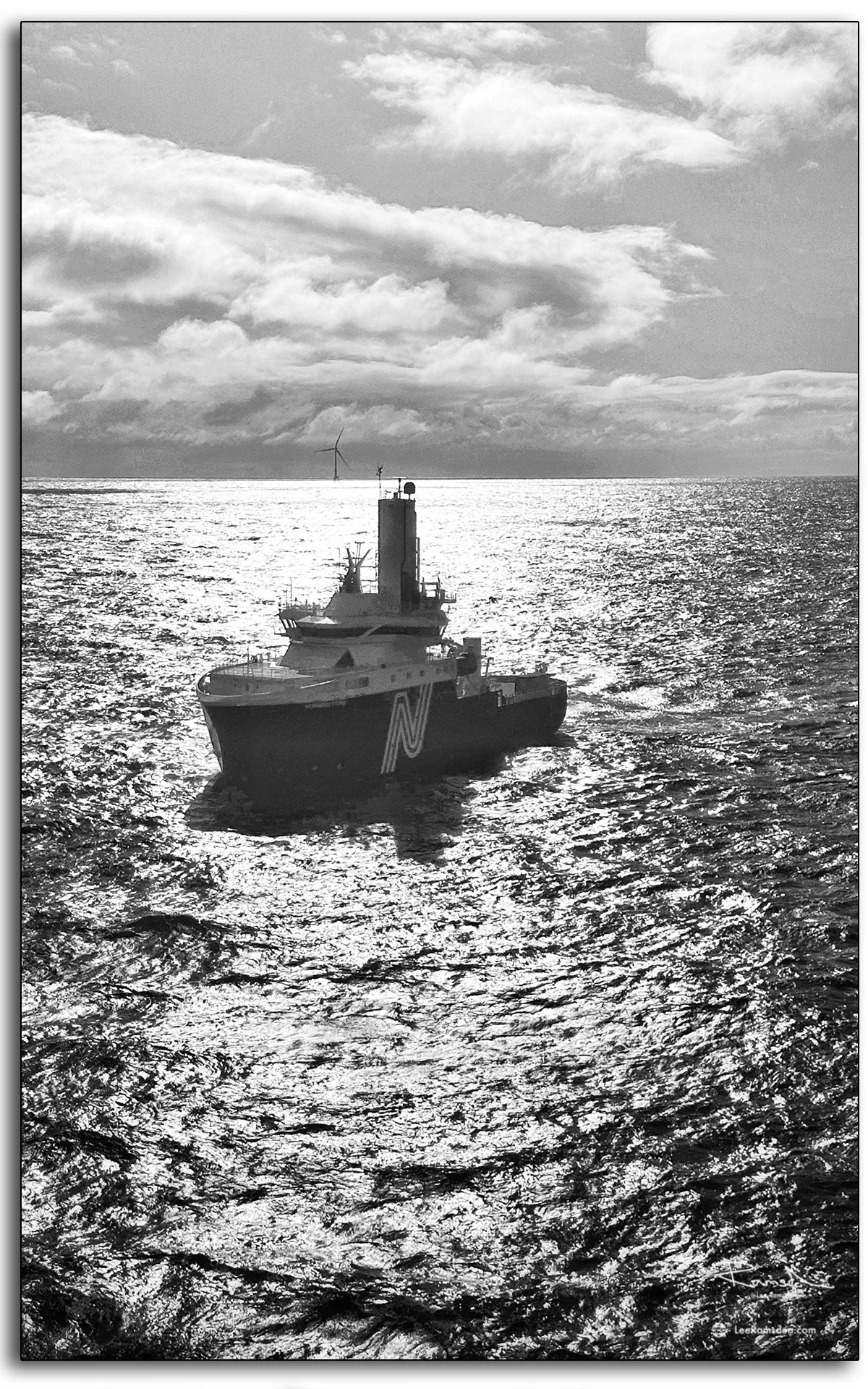
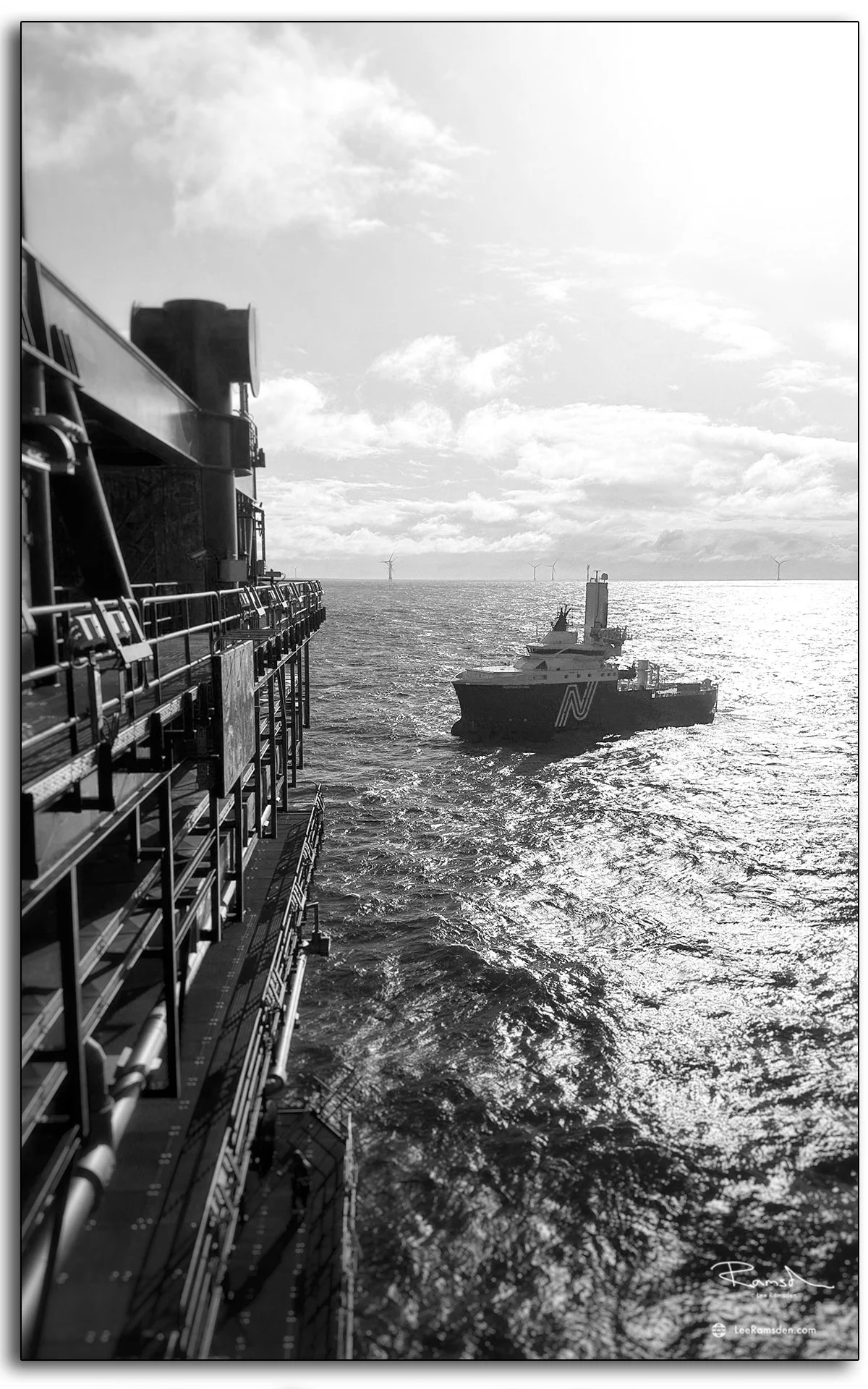
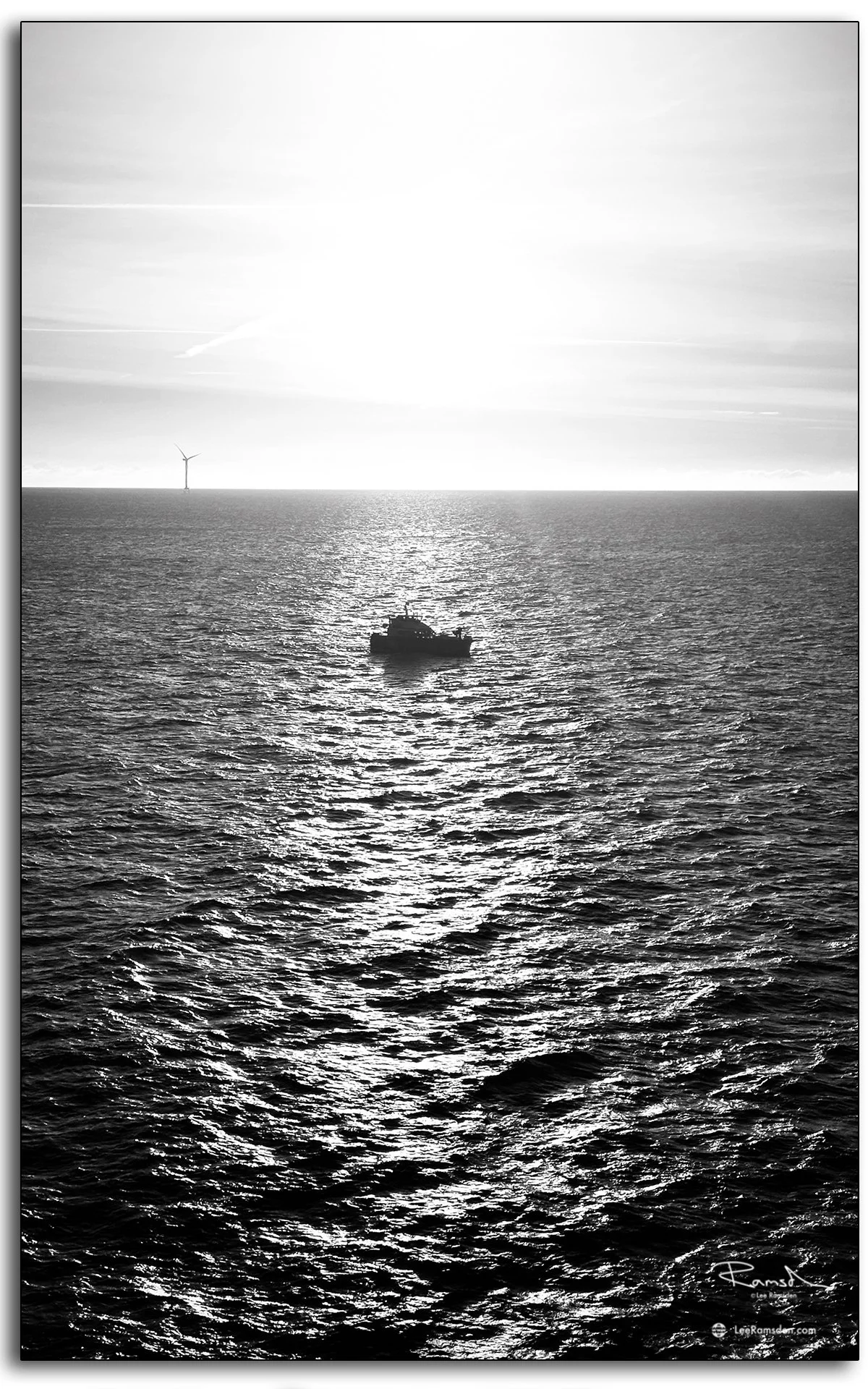
Out in the North Sea, the Norwind Storm support vessel takes up position beneath the setting sun — a steady presence against the rolling water and the turbine structures beyond.

These images show the vessel in its working context, sitting alongside the wind farm and substation, with the horizon fading into haze. The black and white treatment suits the industrial scale of the scene, stripping away colour to leave structure, light and movement.

Service operations vessels are a core part of offshore wind O&M. They provide accommodation and logistical support for technicians working on turbines and substations, often remaining on site for extended periods during maintenance campaigns.

This series adds to my Wind Industry collection, alongside wider work across Industrial and Places photography.

Offshore workers portraits.

Offshore Workers Portraits

These portraits were taken on a North Sea asset during an offshore wind operation. Shot in the working environment, they focus on the people behind the project rather than the infrastructure around them.

Offshore portraiture is a different discipline to studio or event work. The subjects are working professionals in a demanding environment, and the images need to reflect that — direct, unposed where possible, and honest about the conditions. There's little room for elaborate setups on a vessel or platform deck, which tends to produce portraits that feel more genuine for it.

The offshore wind industry employs thousands of people in specialist roles — technicians, rope access workers, supervisors, marine crew, and support staff — many of whom spend weeks at a time on rotation. These images are a small record of that working life, shot as part of a wider documentation of North Sea operations.

For more work from offshore wind projects, visit the Wind Industry gallery.

Offshore workers.

On an offshore wind farm substation, the real story is the people who keep the asset running. This set focuses on routine tasks, safe systems of work, and the teamwork that holds everything together. The aim is simple: clear, direct portraits of workers on the job—no fuss, just the work and the environment.

Two offshore workers on a substation walkway discussing a task beside marked safety barriers.
Offshore wind technician standing by substation equipment on deck, radio clipped to harness.

Part of my ongoing industrial and renewables series. For more, see the renewables and industrial sections of my portfolio.

Arbroath cliffs trail.

Imagine standing atop rugged cliffs, with the North Sea crashing below and the wind whipping through your hair.

Welcome to the Arbroath Cliffs Walk, where nature’s raw beauty meets Scotland’s storied coastline.

The Arbroath Cliffs Walk stretches along Scotland’s east coast, offering a 4-mile trail filled with dramatic cliff faces, natural rock formations, and panoramic sea views.

Have you walked the Arbroath Cliffs? Share your favorite spots or good photography walk in the comments on my instagram @lee_ramsden as I would love to hear your thoughts.

Thanks

Lee

What does your commute to work look like?

Good morning,

Today id like to share a short video of how we access an offshore substation on a windfarm.

After a 1.5hrs CTV (crew transfer vessel) ride, it is a large ladder climb on to the platform.

Where as this may not be for everyone, I will take this, over being stuck in traffic on the M25 every single time!

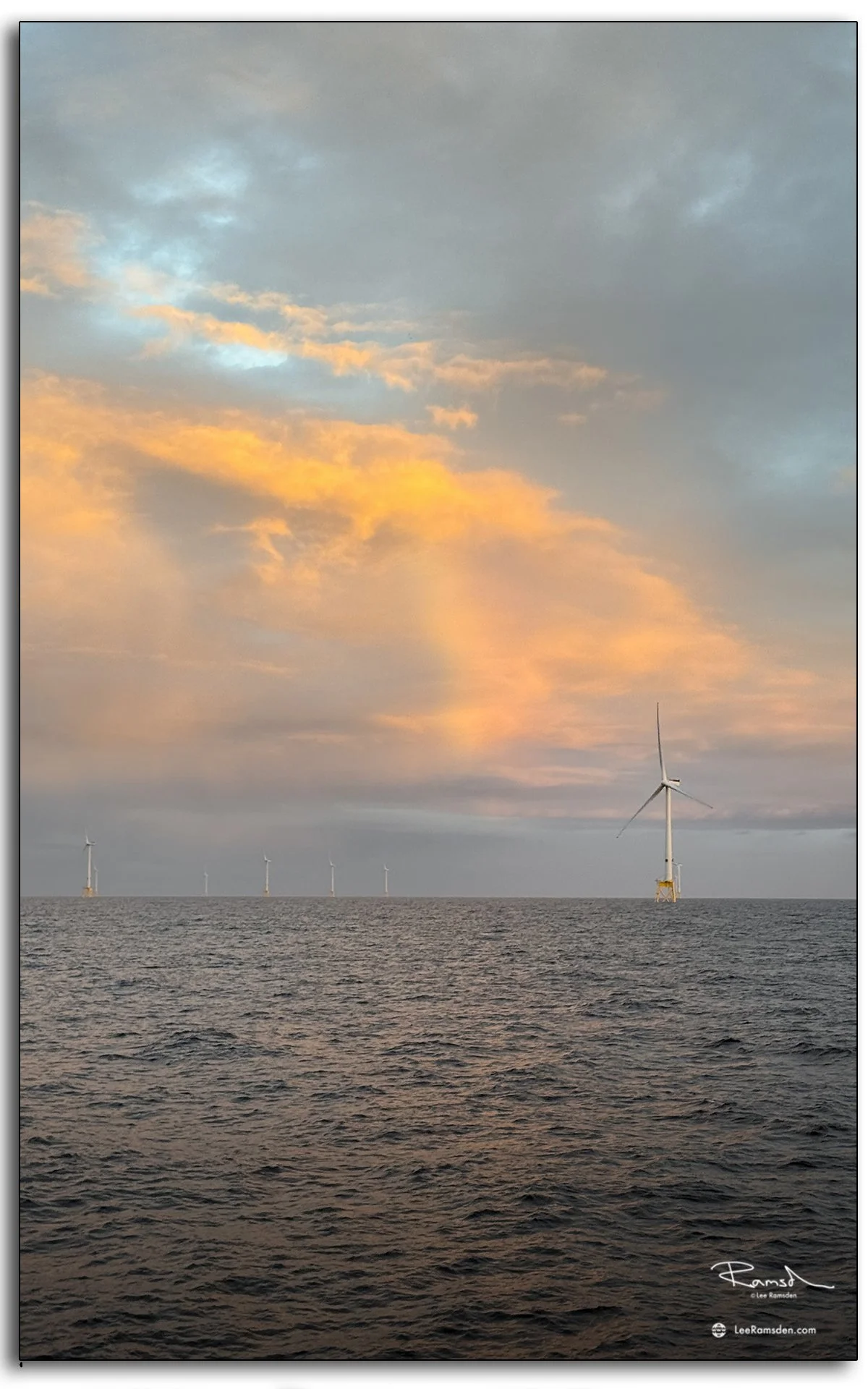
Fog creeping in.

Hello, here are some images of the fog slowly creeping in, over the windfarm.

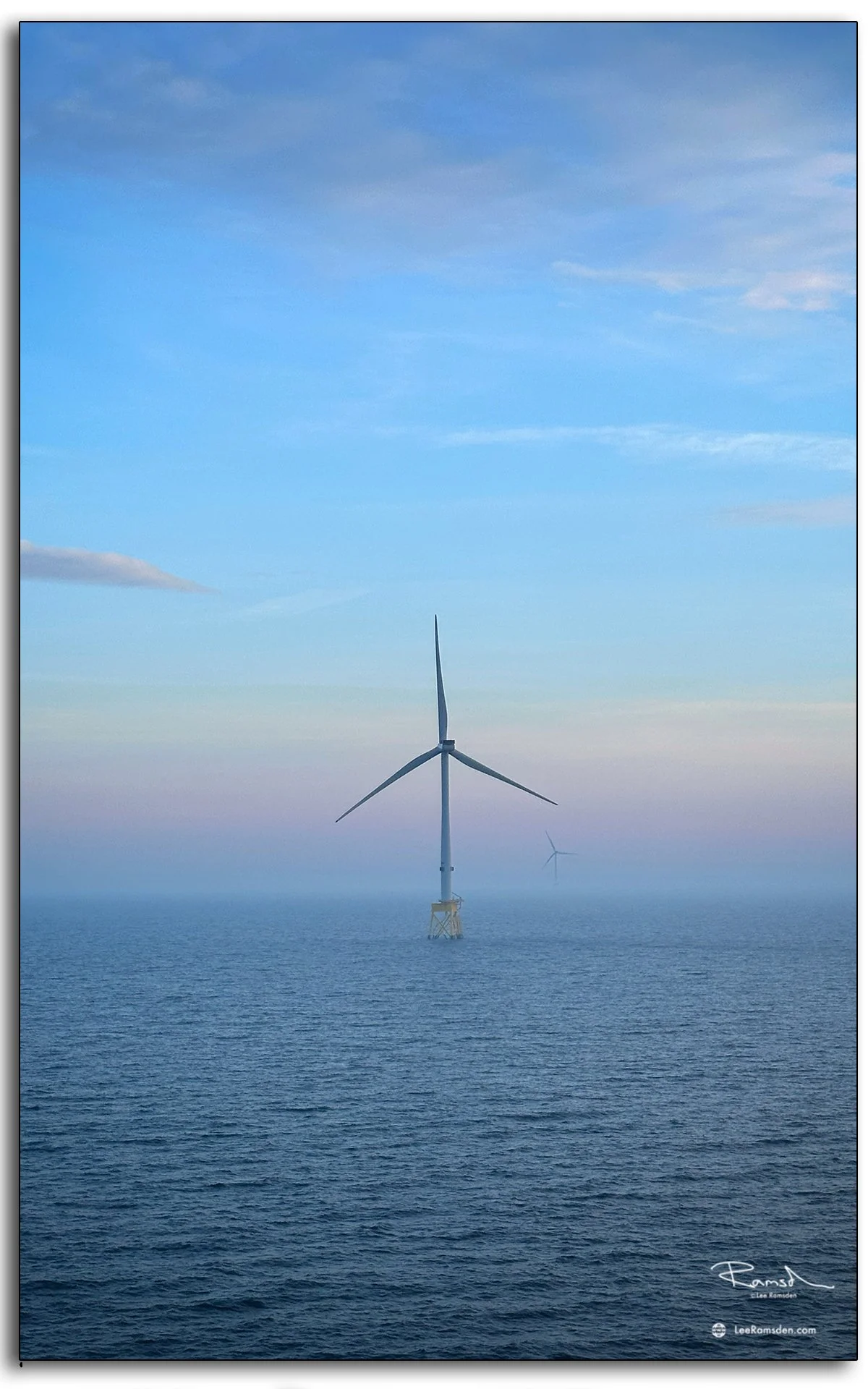
The fog approaches like a soft whisper, gradually swallowing the horizon. The wind turbines, once clear and imposing, begin to fade into the mist, their outlines becoming ghostly silhouettes

The Edda Brint, SOV (service operations vessel) adjacent to our substation.

Housing 60 persons, the 60 PAX will be made up with the ships crew and technicians who are servicing the turbines.

The Wind Cat CTV (crew transfer vessel) This vessel is our daily transport to and from shore.

As the fog thickens, the turbines seem to float in mid-air, their blades slicing through the mist with a gentle, rhythmic motion. This ethereal scene creates a stark contrast between the solid structures and the ephemeral fog.

Have you captured the beauty of fog in your photography? Share your images and comments over on Instagram @lee_ramsden

Thanks

Lee

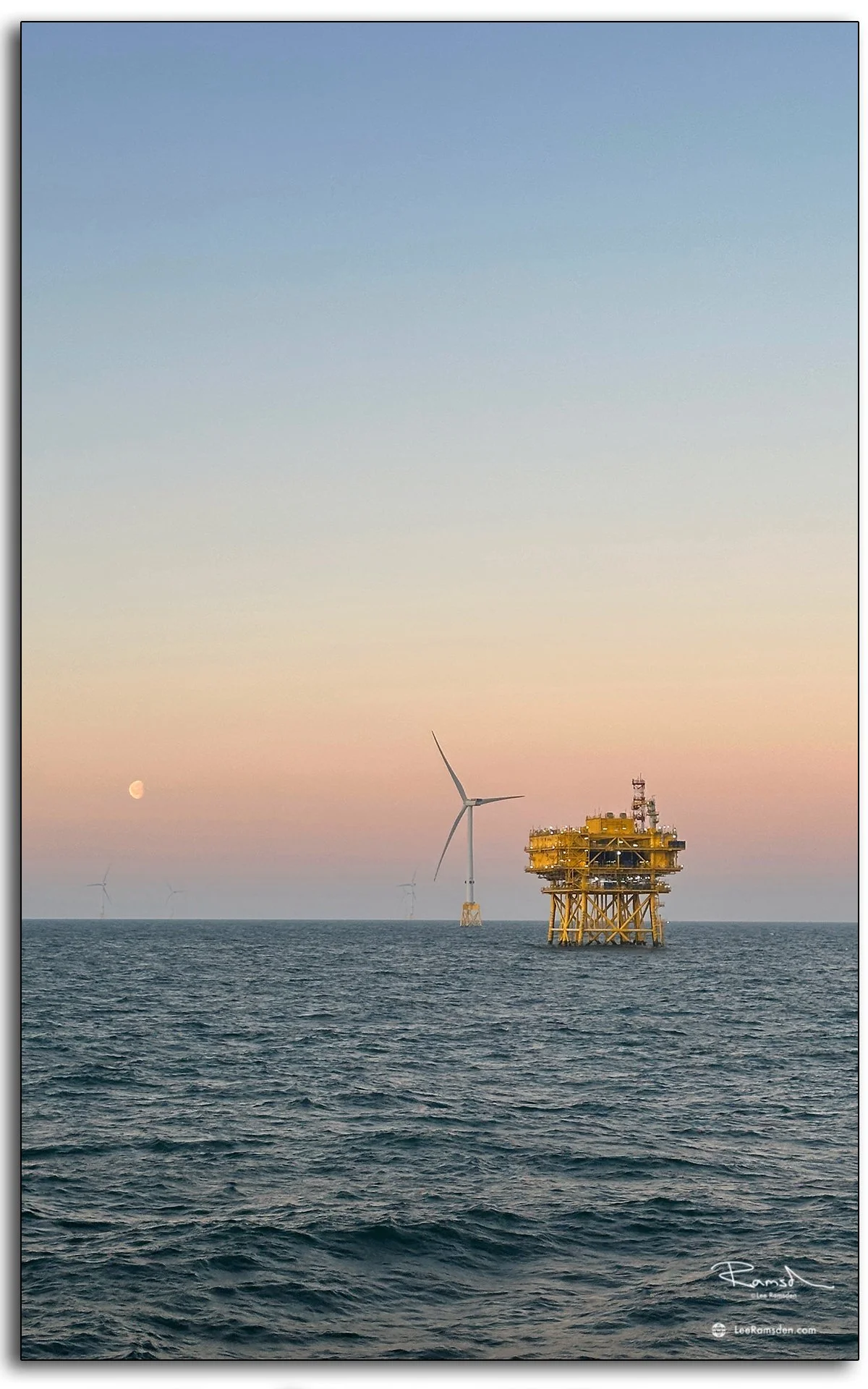
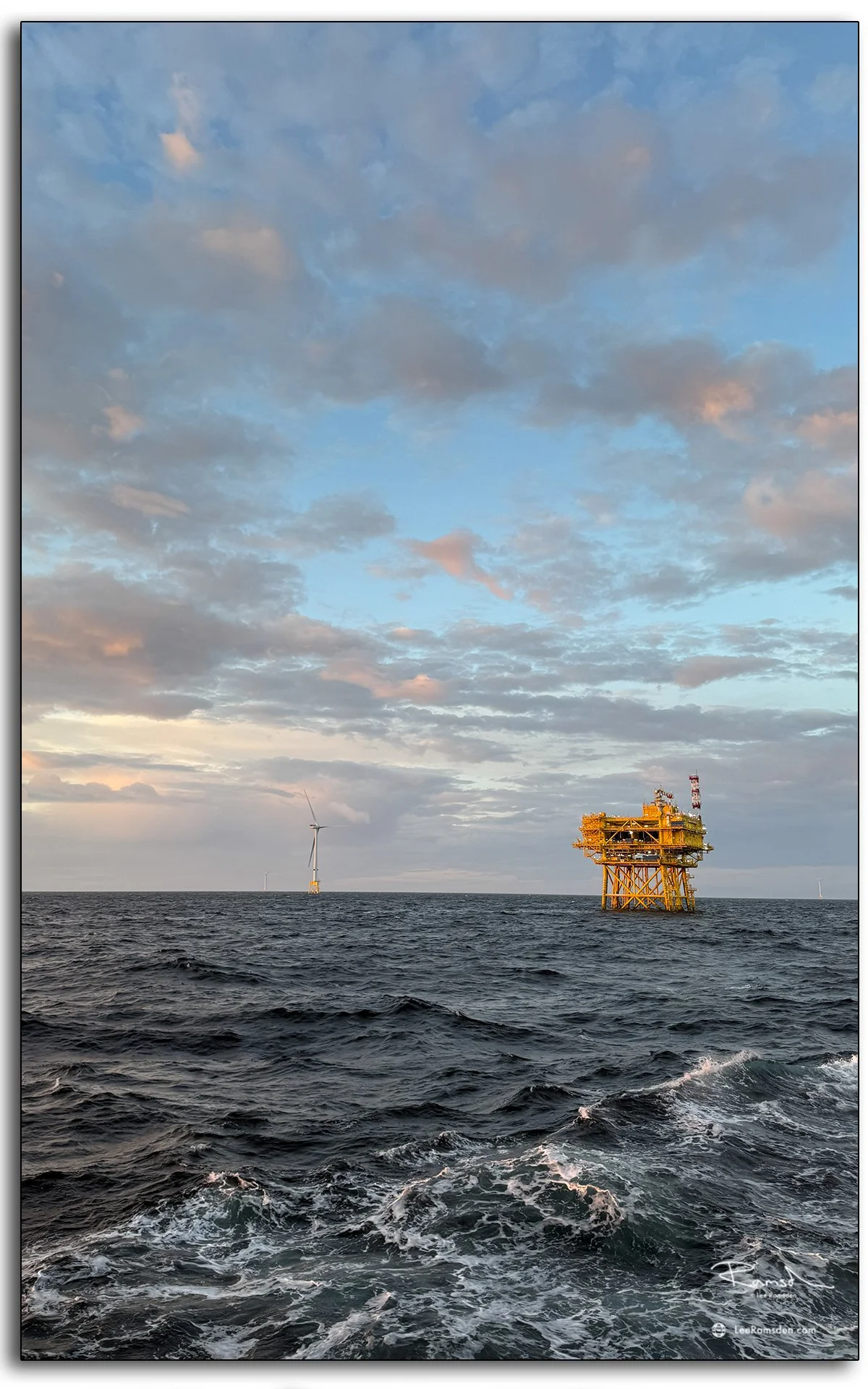
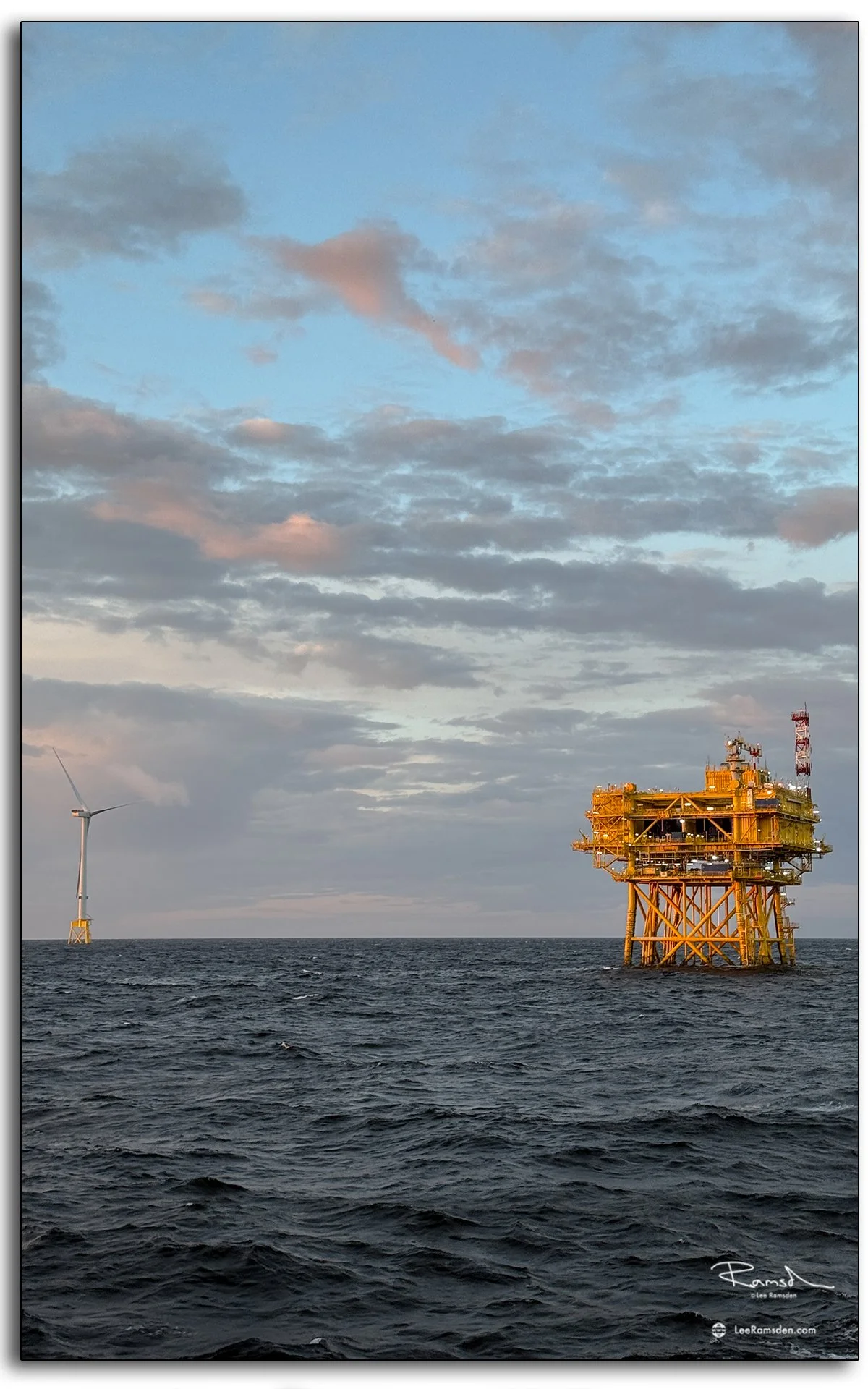
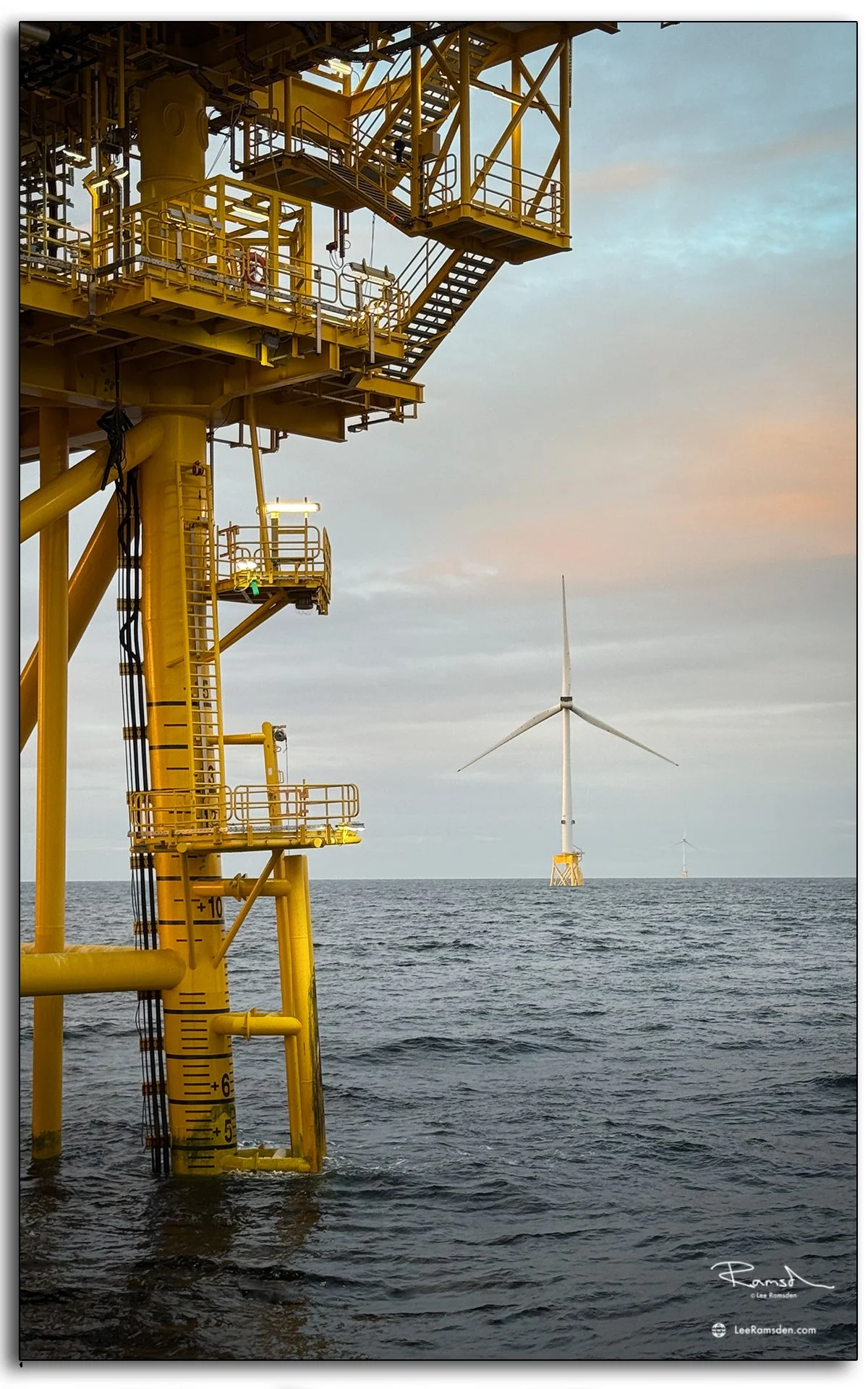
Substation in the sun.

Hello,

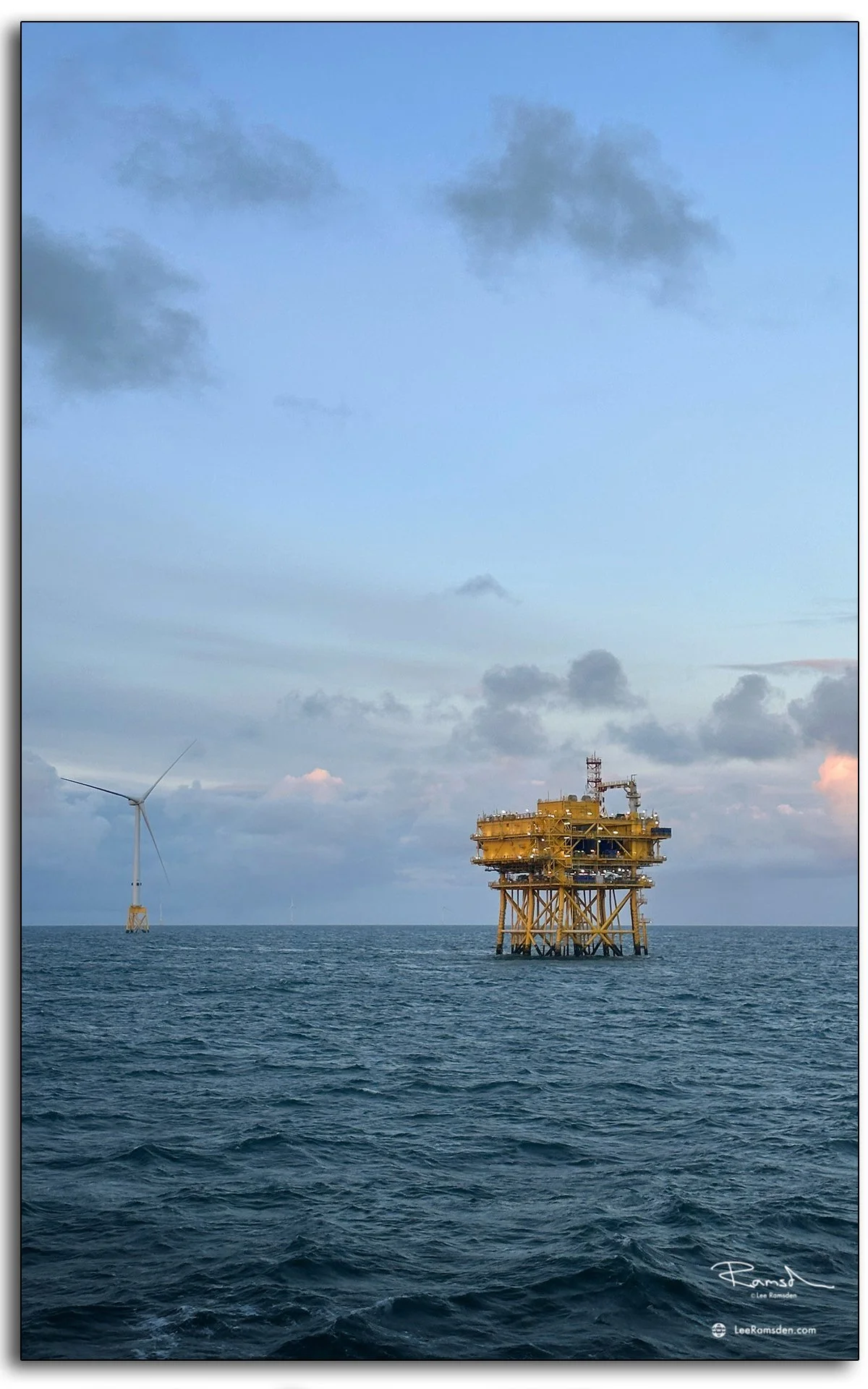
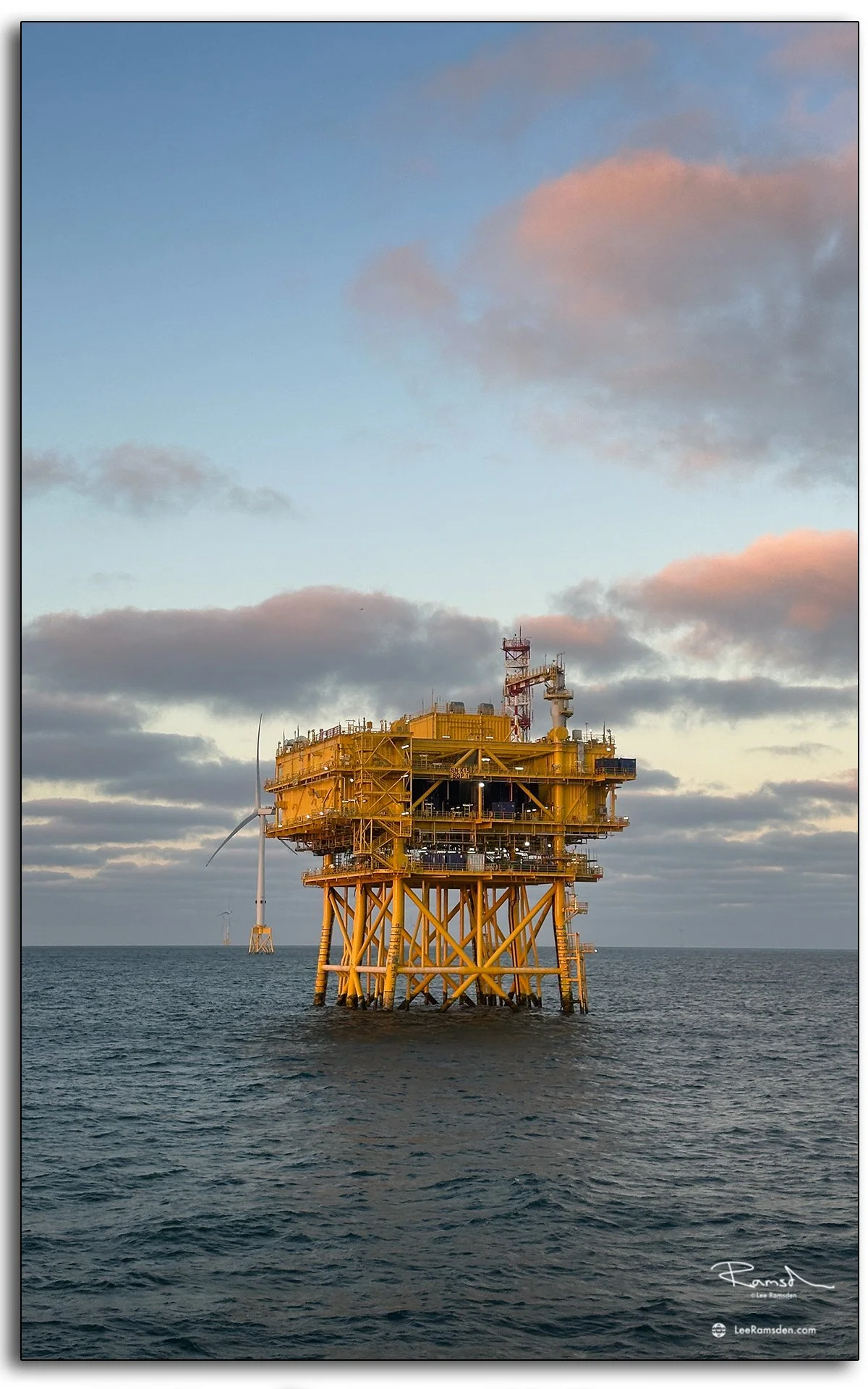
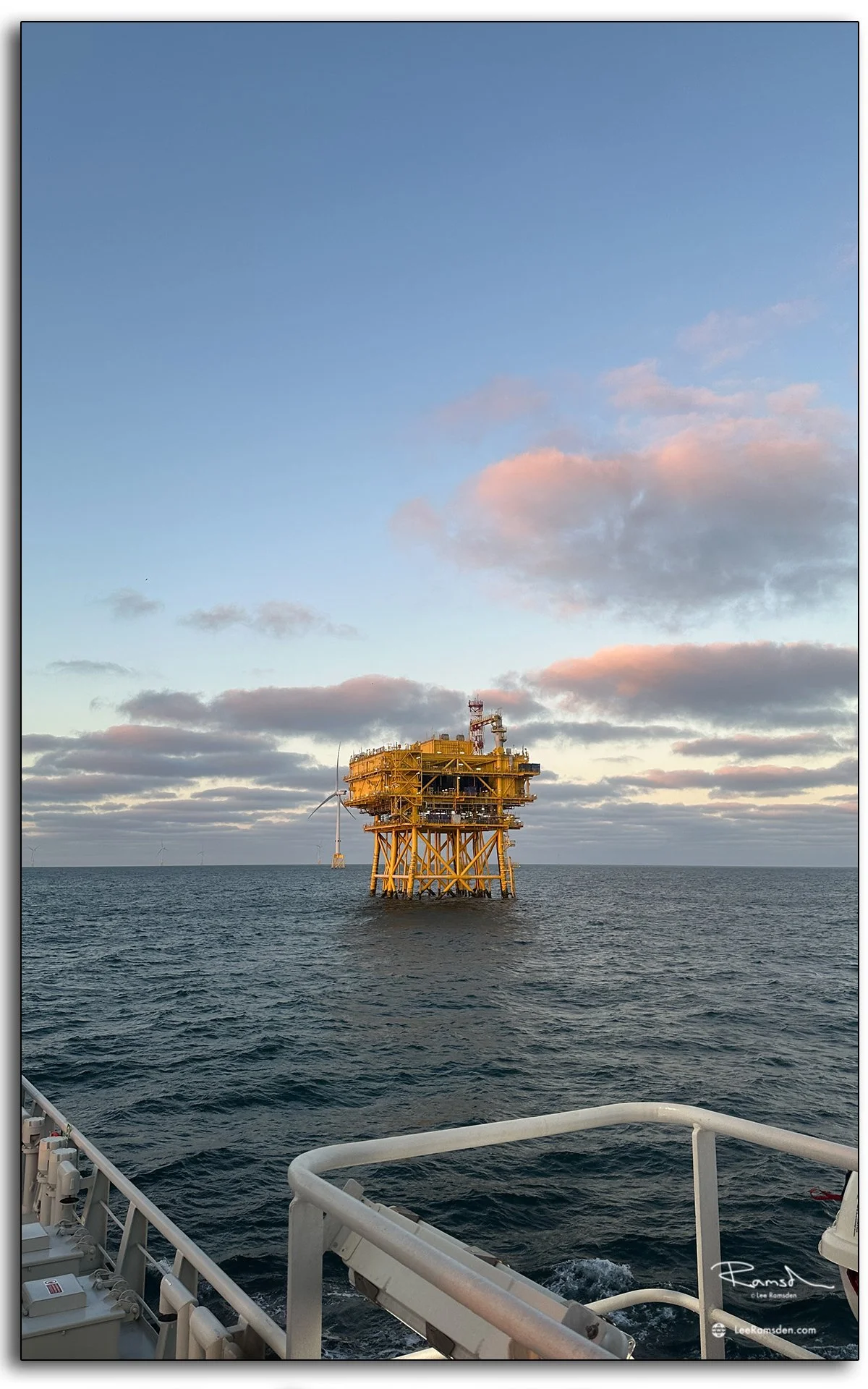
Today I’d like to share a couple of images of an OSP (offshore substation platform)

I always enjoy, how I can take many photos of the same subject, and with the differing skies and ever-changing weather can change the image.

Which one do you prefer?

Leave a comment over on instagram @lee_ramsden

Thanks

Lee

A ship with legs.

Good morning.

Images of the Wind Orca with a walk to work bridge.

The Wind Orca vessel provides a safe, efficient, and reliable solution for the installation, maintenance, and decommissioning of wind farm projects. Their advanced specifications set the industry benchmark for vessel transit speed, lifting capability, DP station keeping and jacking speed, offering a significantly improved operating weather window. They are fitted with high-quality equipment, supported by advanced preventative maintenance systems, and incorporate a significant level of operating redundancy. Safety is enhanced through a 6-leg design that allows them to operate even on sites with the most challenging seabed conditions.

Let me know what you think of these recent posts I love to hear from you on Instagram @lee_ramsden

Thanks

Lee

Derrick

A derrick is a structure over an oil well which supports the drilling equipment and allows it to be lifted into and out of the wellbore.

The term derrick originates from Thomas Derrick, an English executioner c. 1608.

In English history, the executioner was not a commonly chosen career path because of the risk of friends and families of the deceased knowing who the executioner was and where to find him. Executioners were sometimes coerced into the role. Derrick in particular had been convicted of rape but was pardoned by the Earl of Essex (clearing him of the death penalty) on the condition that he became an executioner at Tyburn.

Derrick executed more than 3,000 people in his career, including his pardoner, the Earl of Essex, in 1601. Derrick devised a beam with a topping lift and pulleys for his hangings, instead of the old-fashioned rope over the beam method.

The word derrick became an eponym for the frame from which the hangman's noose was supported and through that usage (by analogy) to modern-day cranes.

Setting sun in the North Sea.

01 Safe Boreas, Prosafe, accommodation vessel, north sea, oil and gas, flotel, flotation, living, hotel, industrial, photographer, Lee Ramsden.jpg

Hello,

Today i would like to share some images of the setting sun in the North sea.

I have been lucky in my time offshore to see some amazing weather.

A spectacular sun rise, or setting sun in the middle of the sea is something really magical.

02 Safe Boreas, Prosafe, accommodation vessel, north sea, oil and gas, flotel, flotation, living, hotel, industrial, photographer, Lee Ramsden.jpg
03 Safe Boreas, Prosafe, accommodation vessel, north sea, oil and gas, flotel, flotation, living, hotel, industrial, photographer, Lee Ramsden.jpg

I hope that you have a good weekend.

Lee