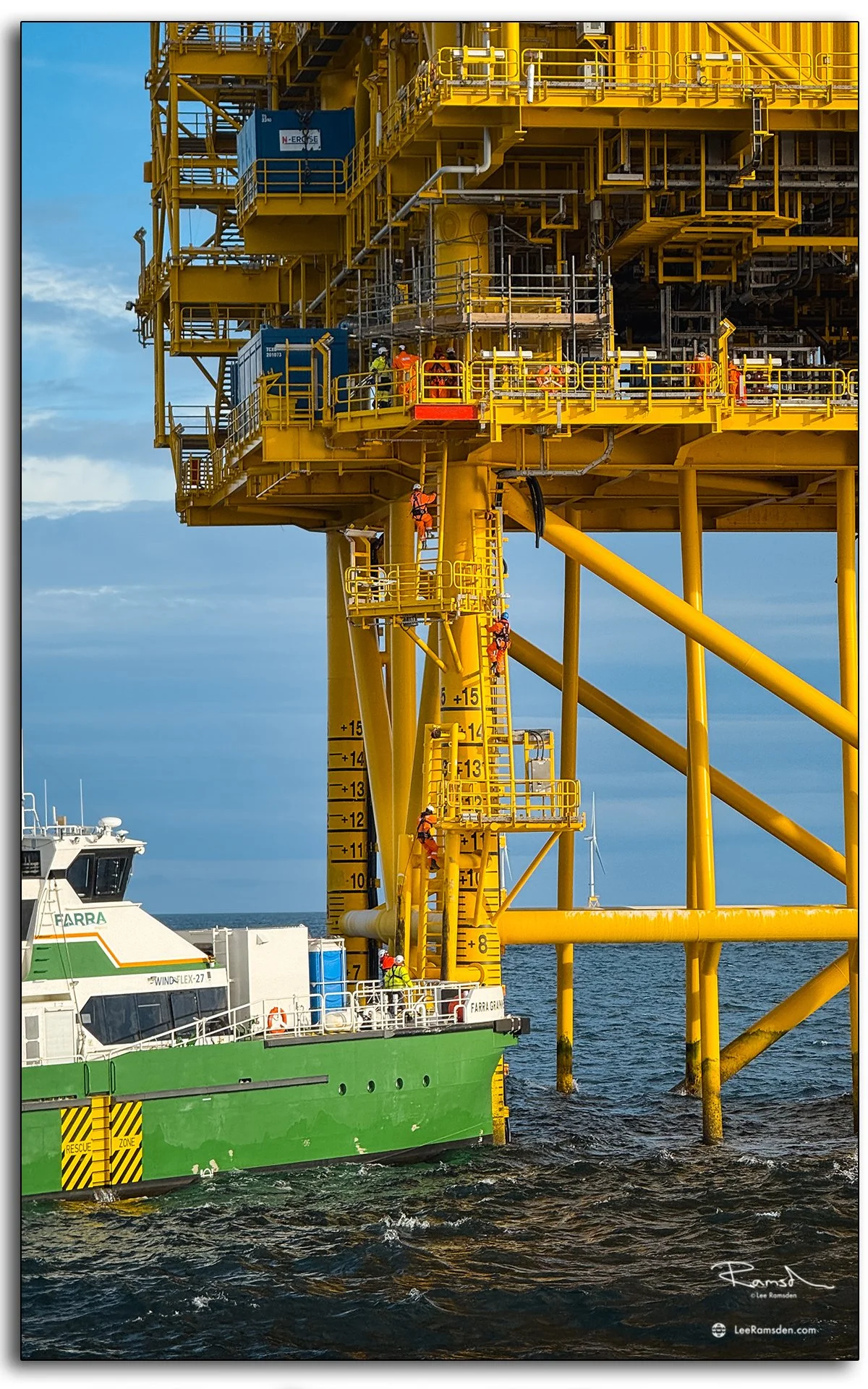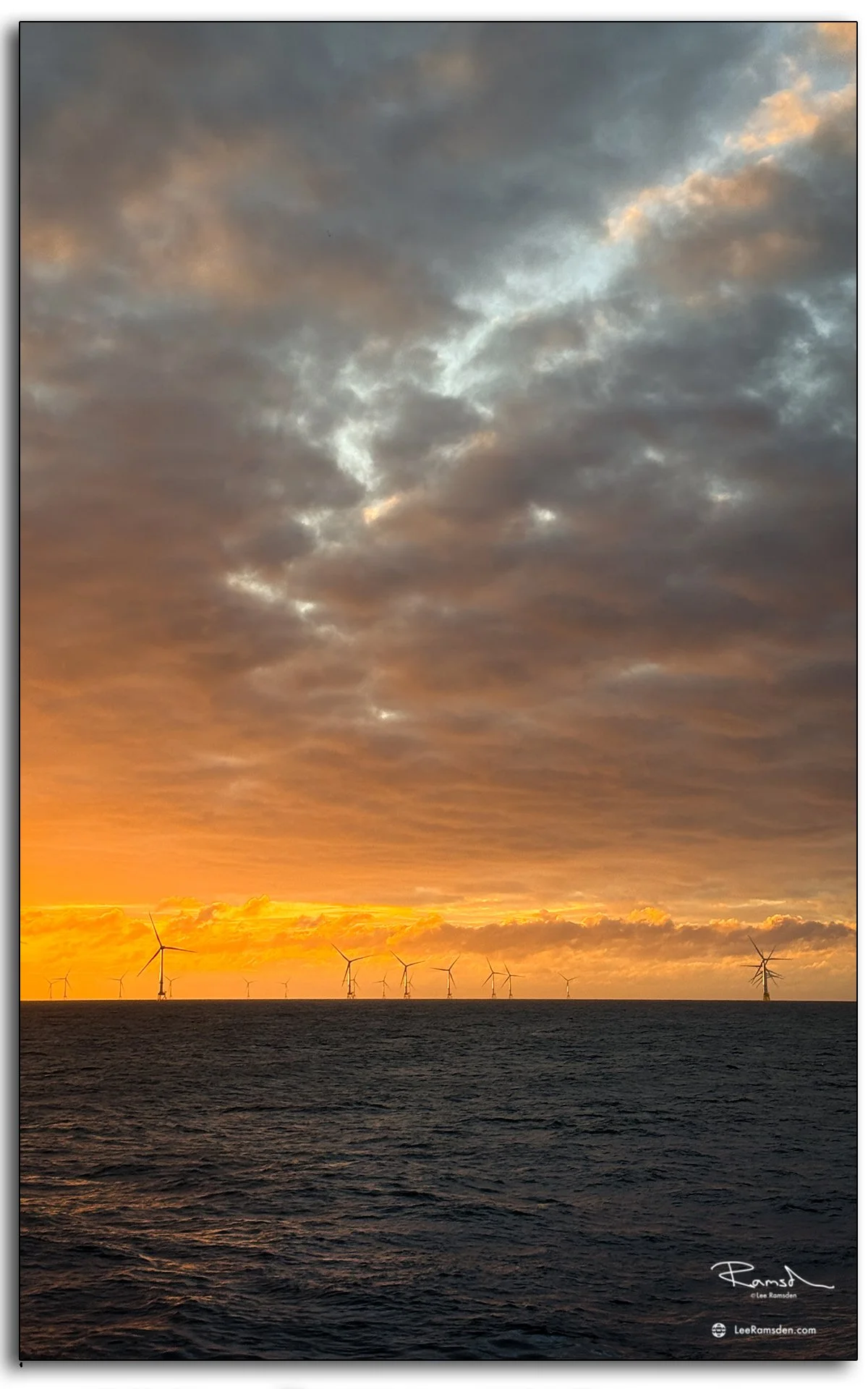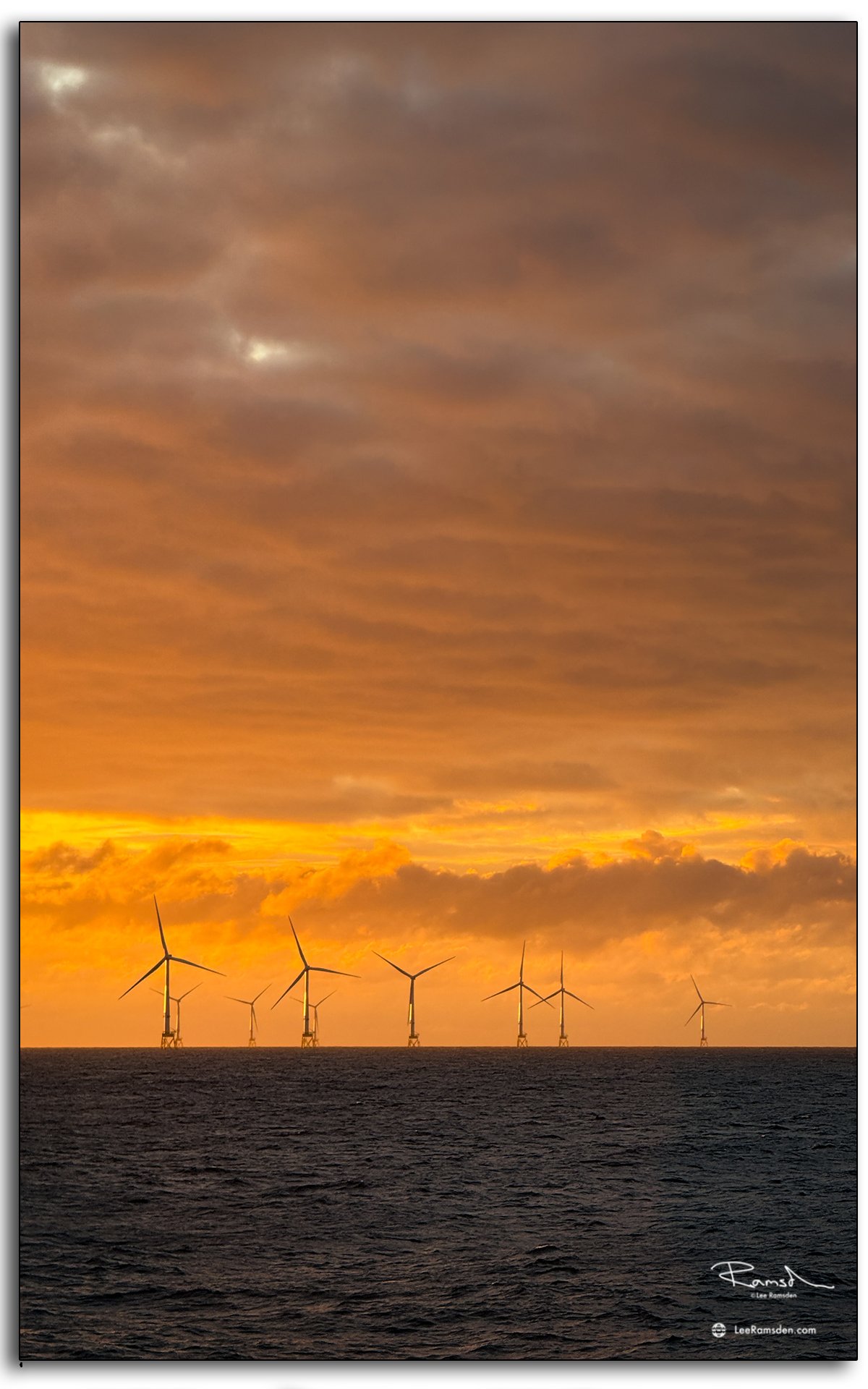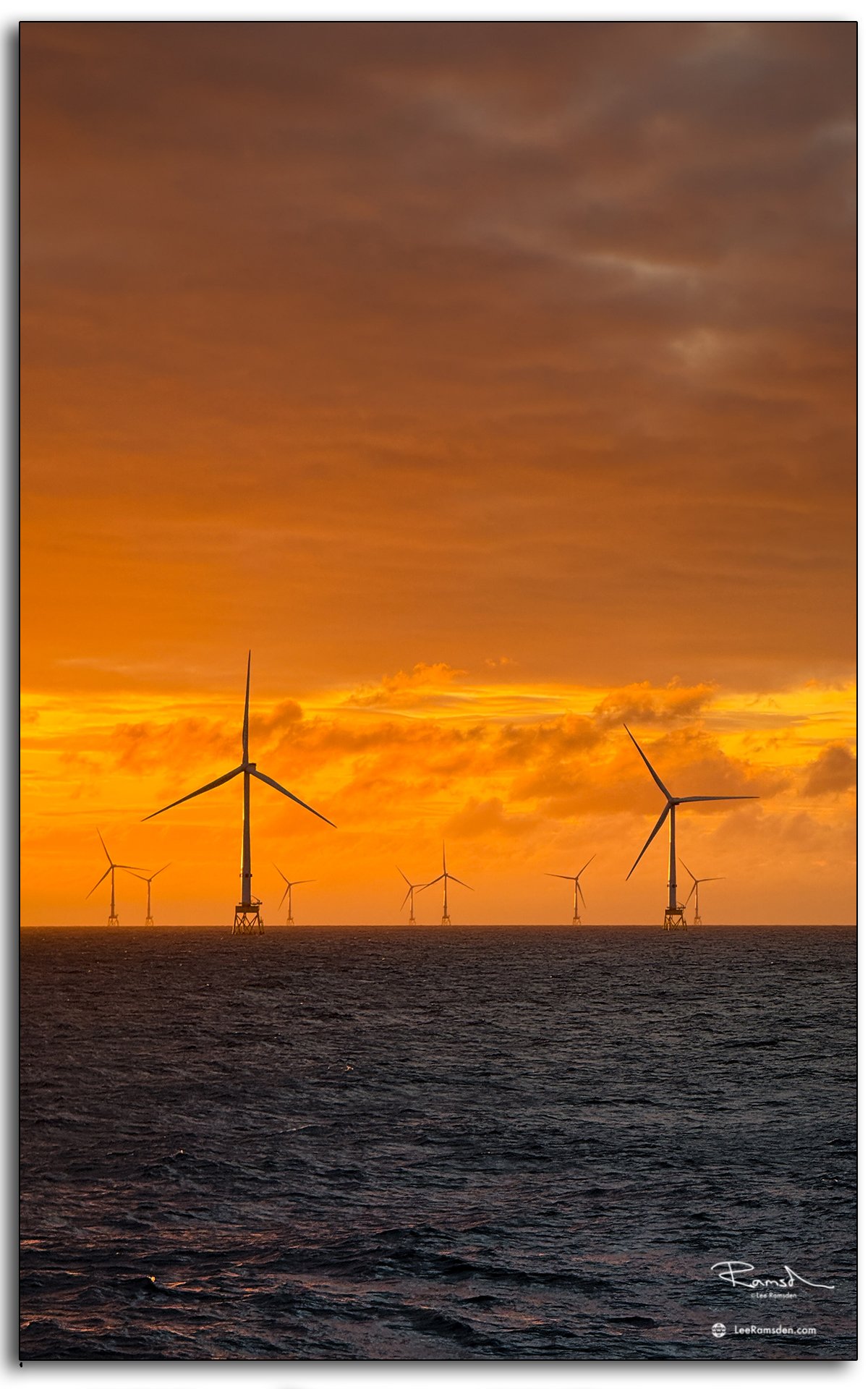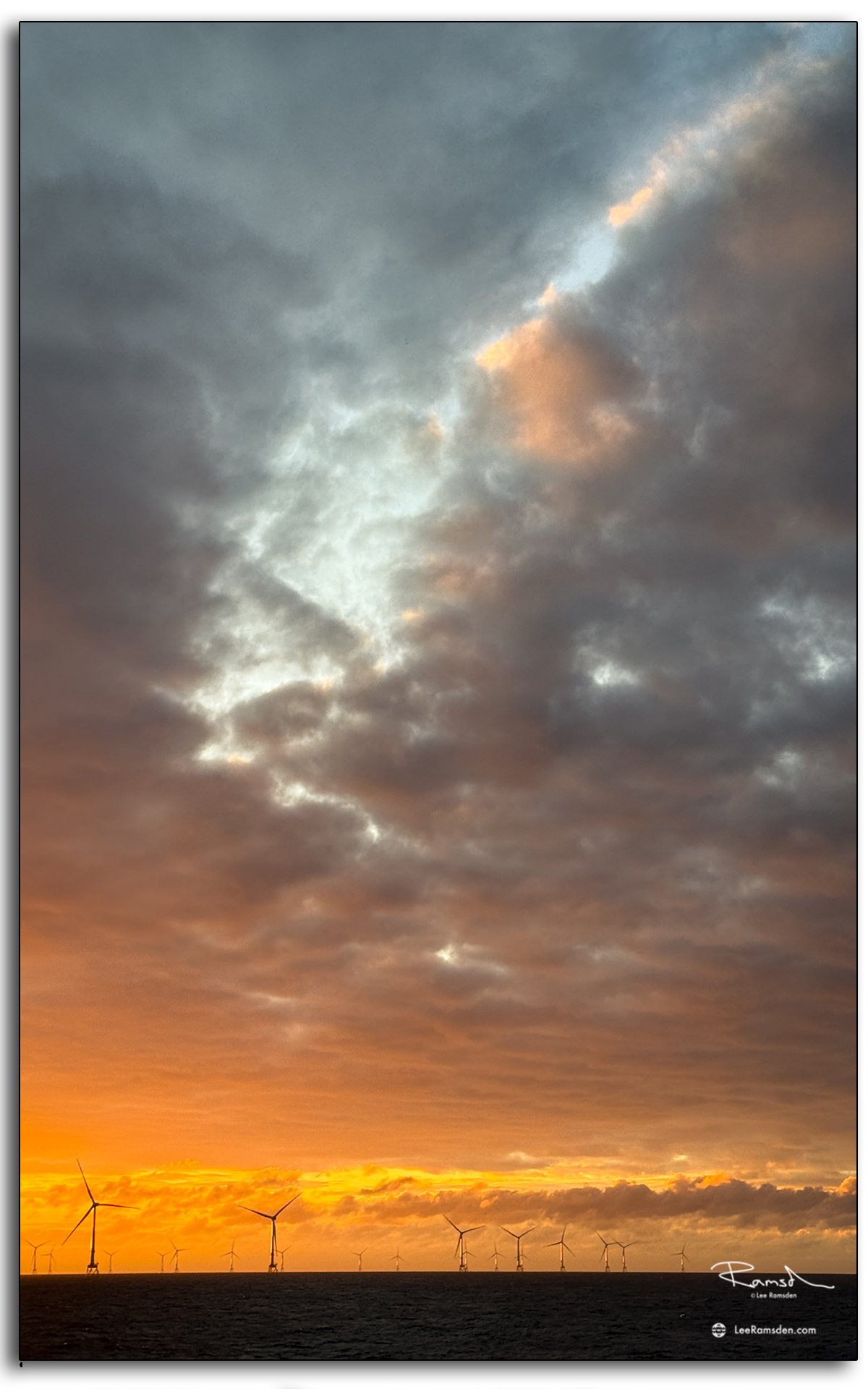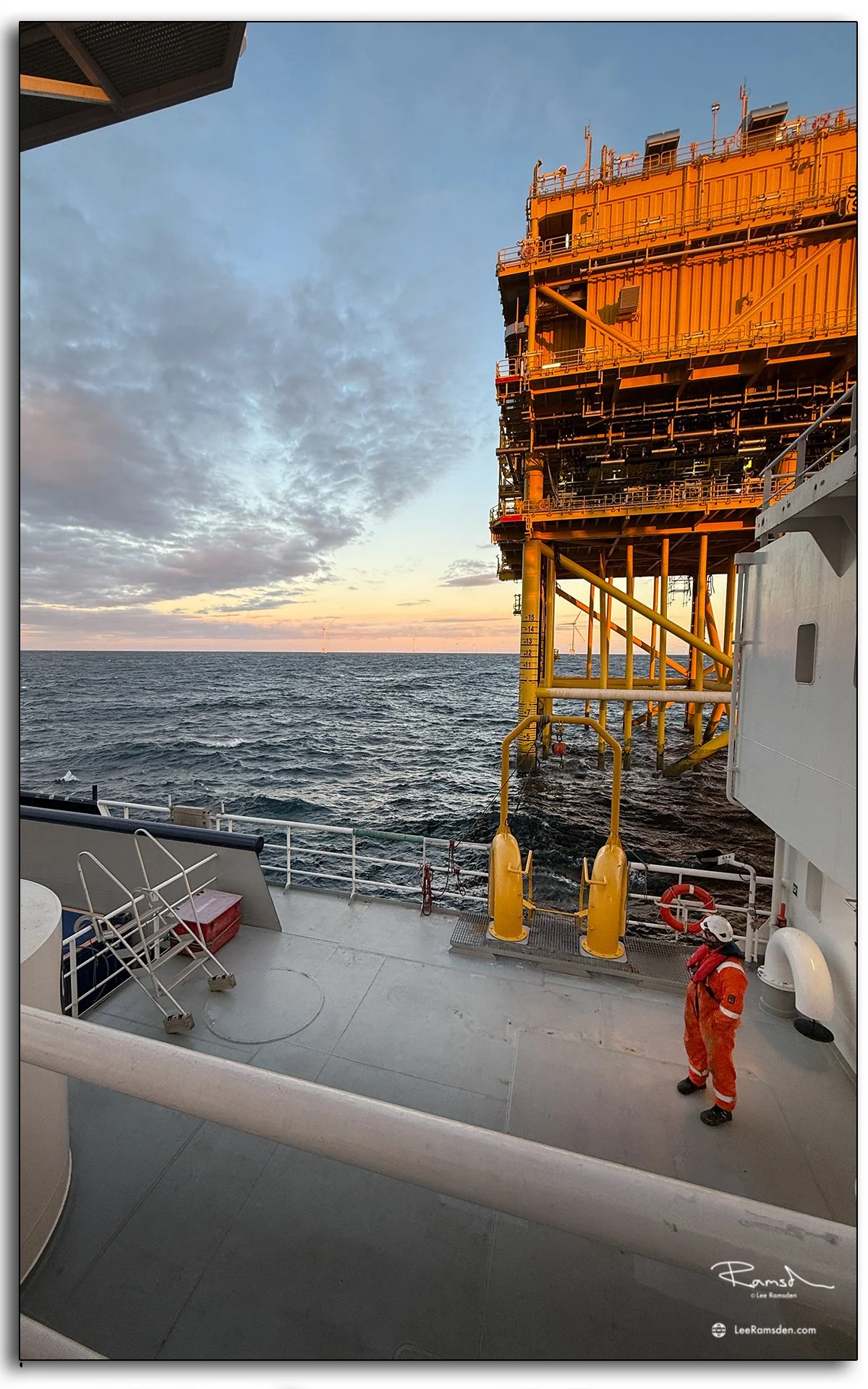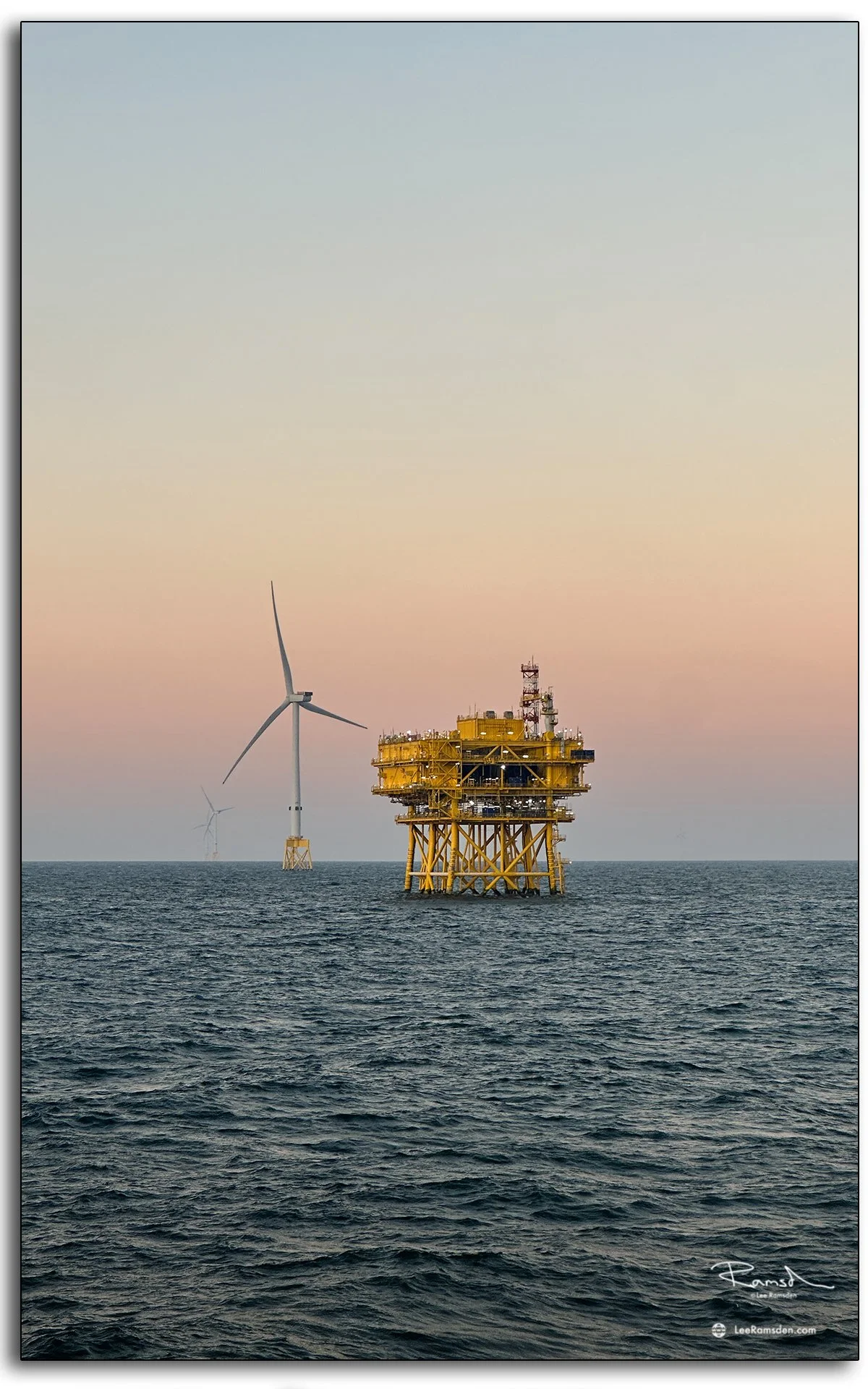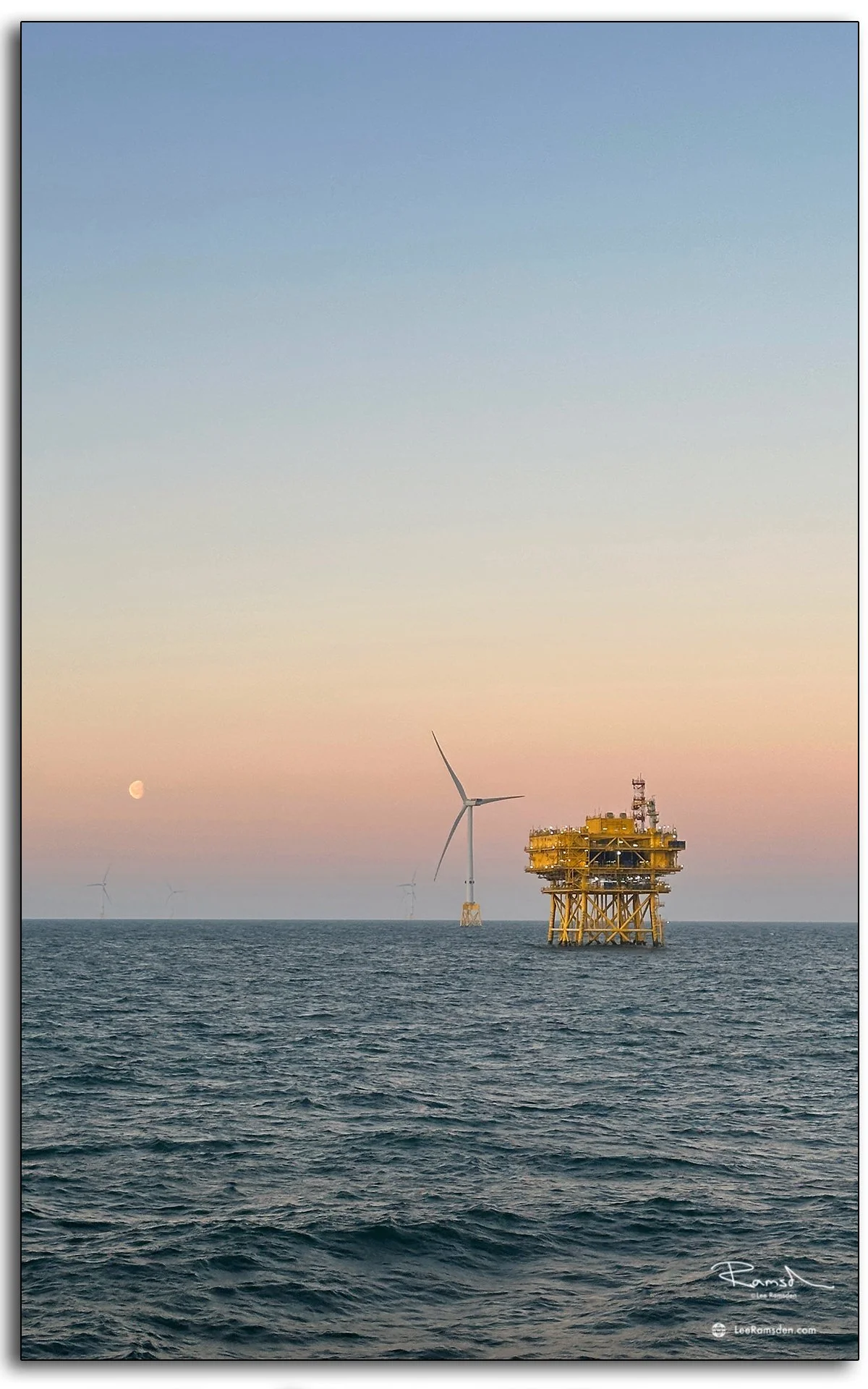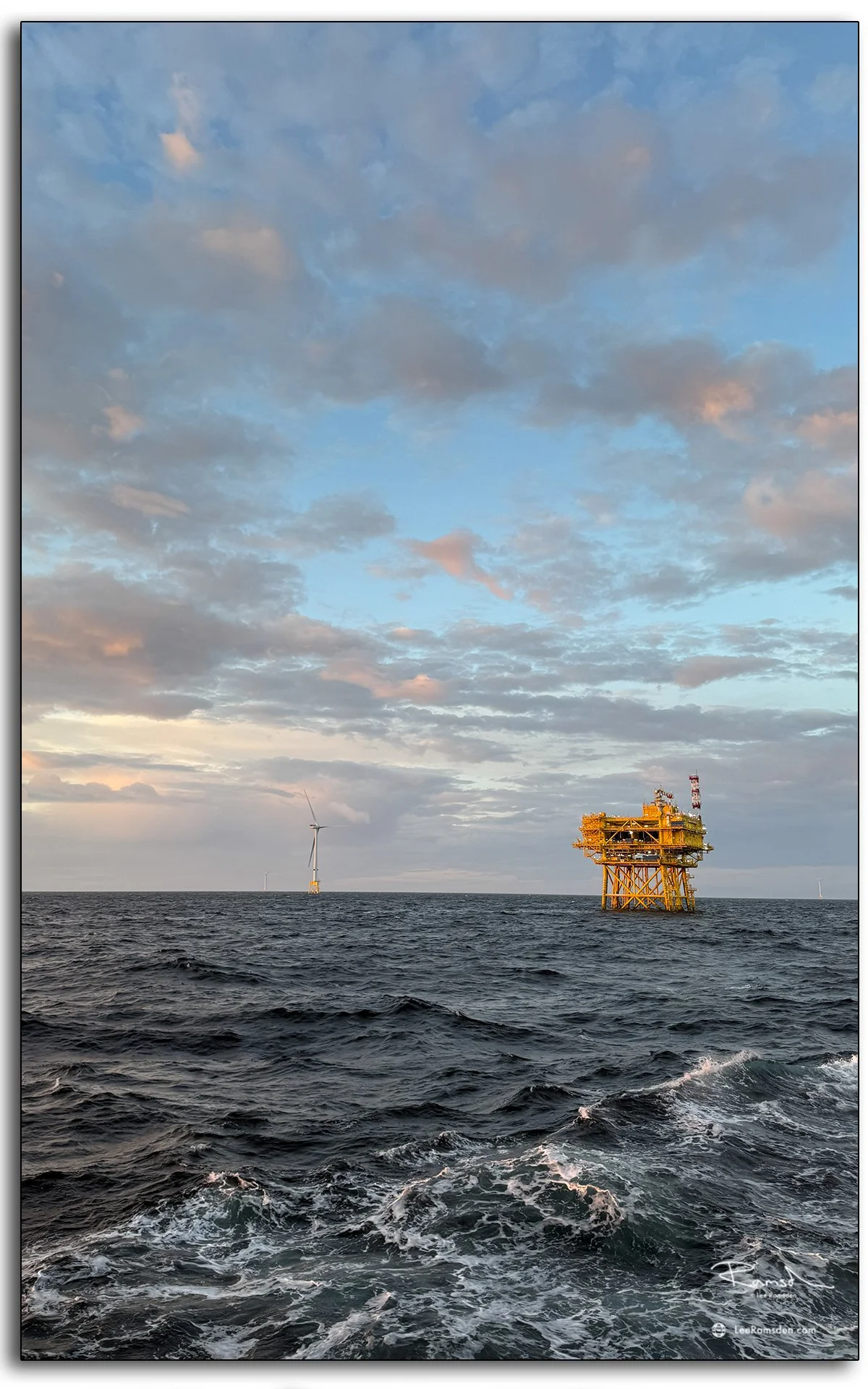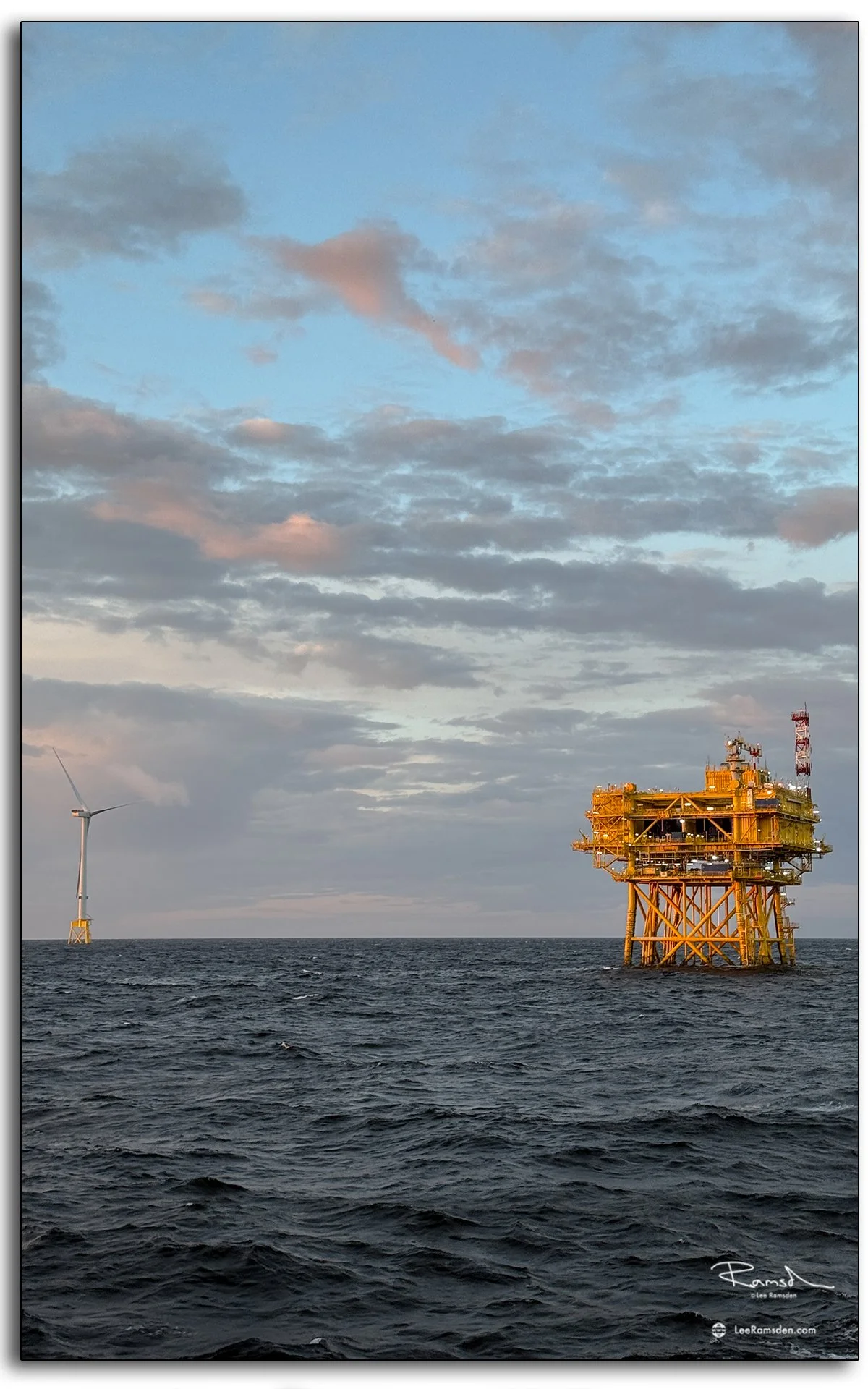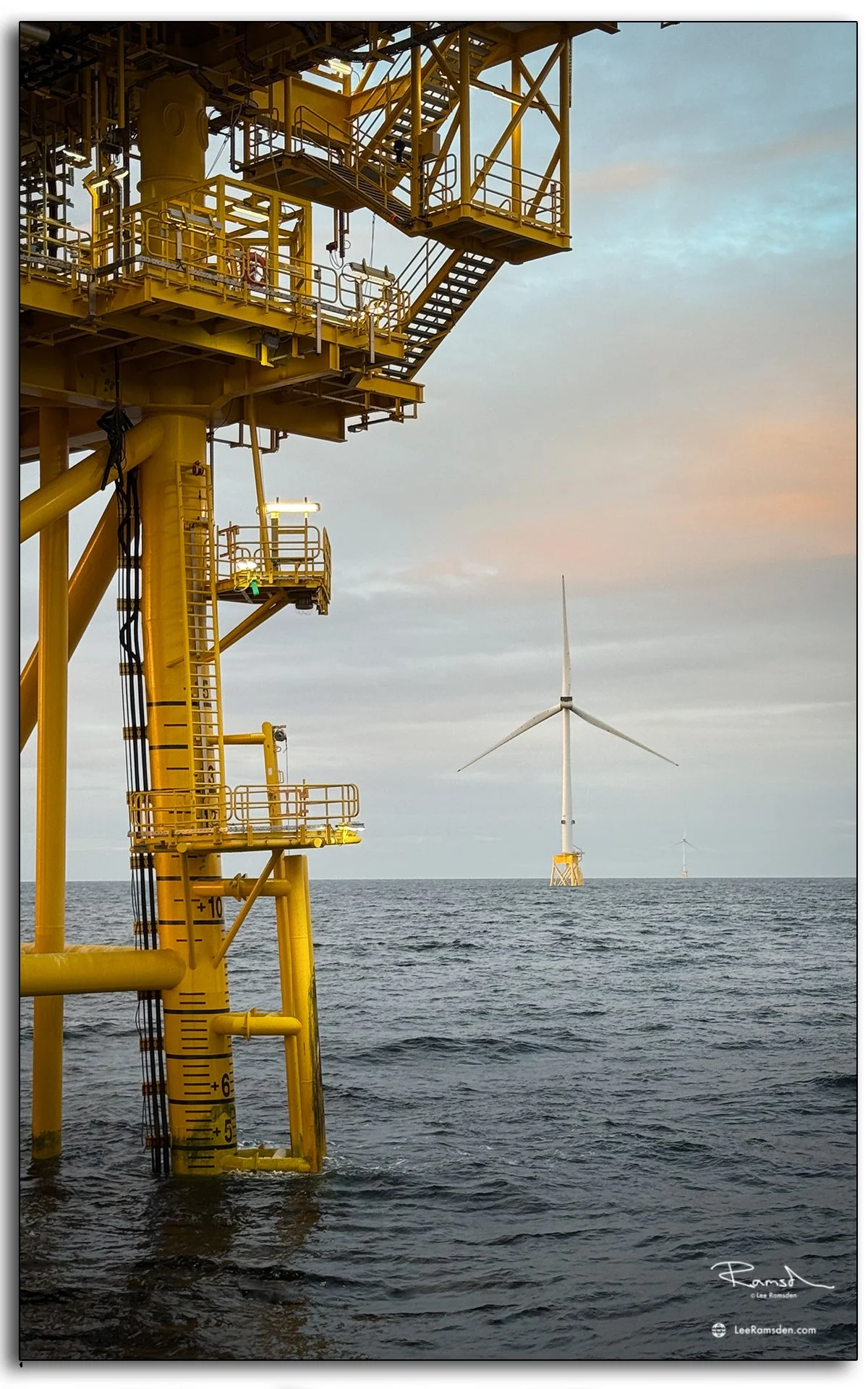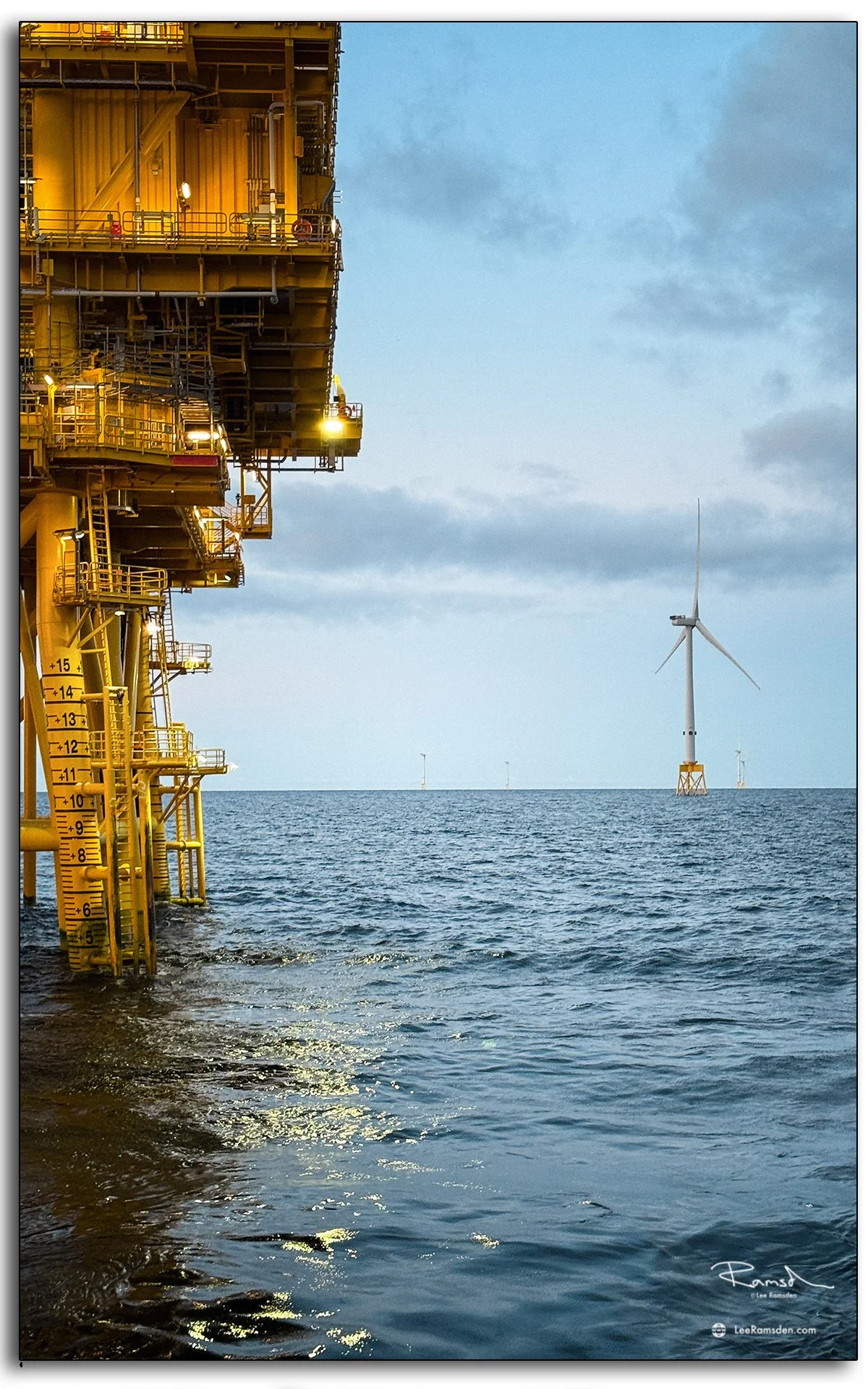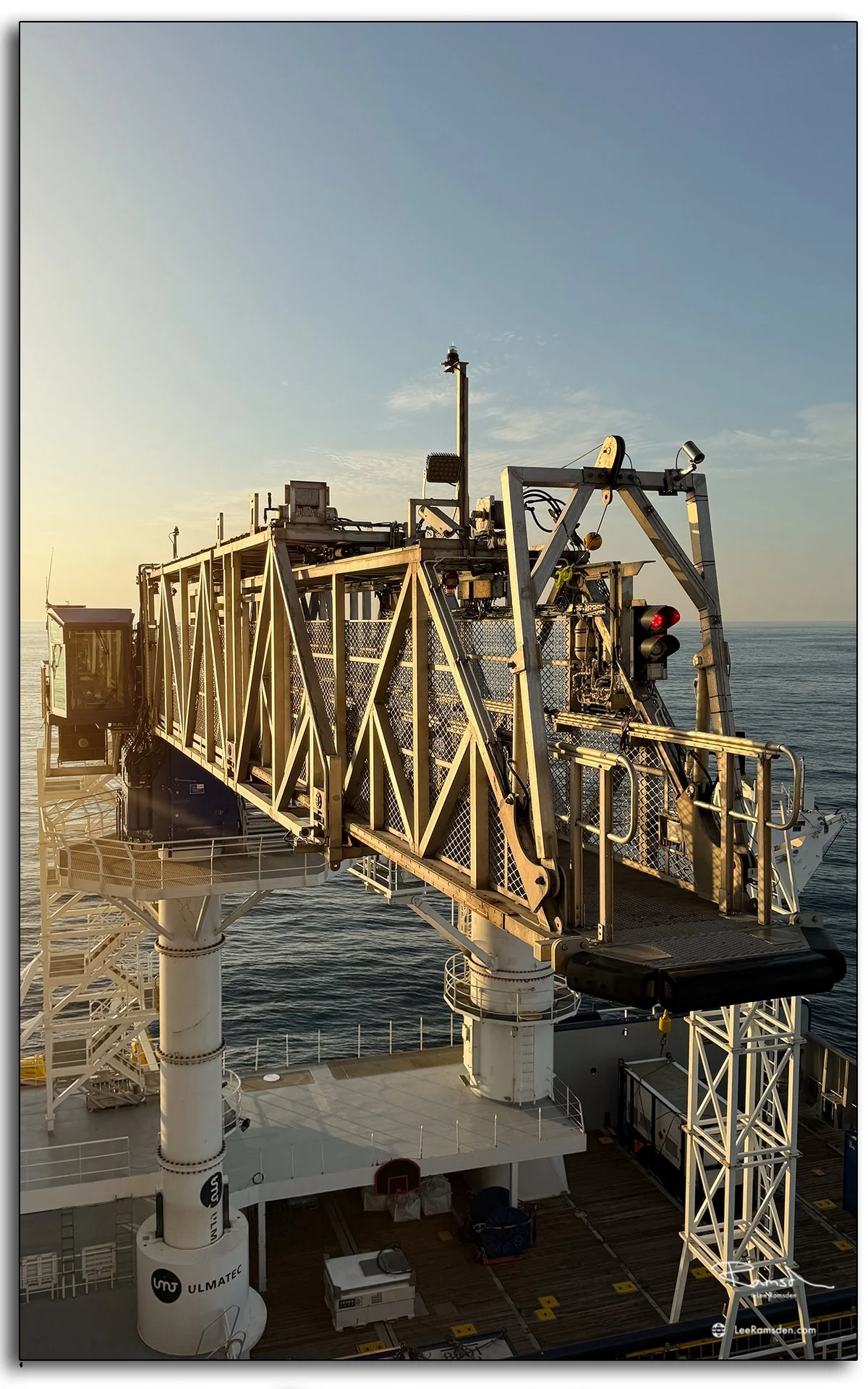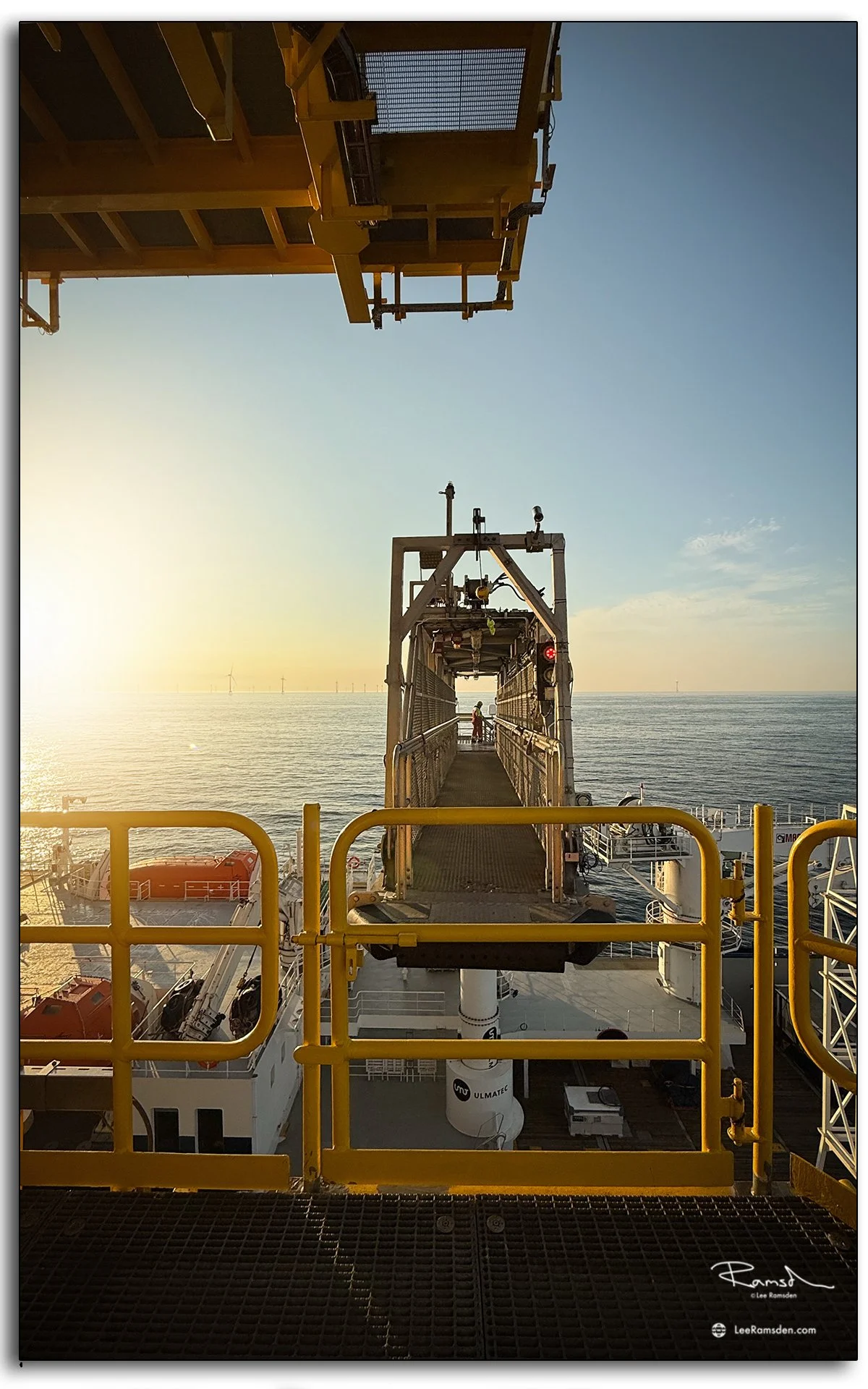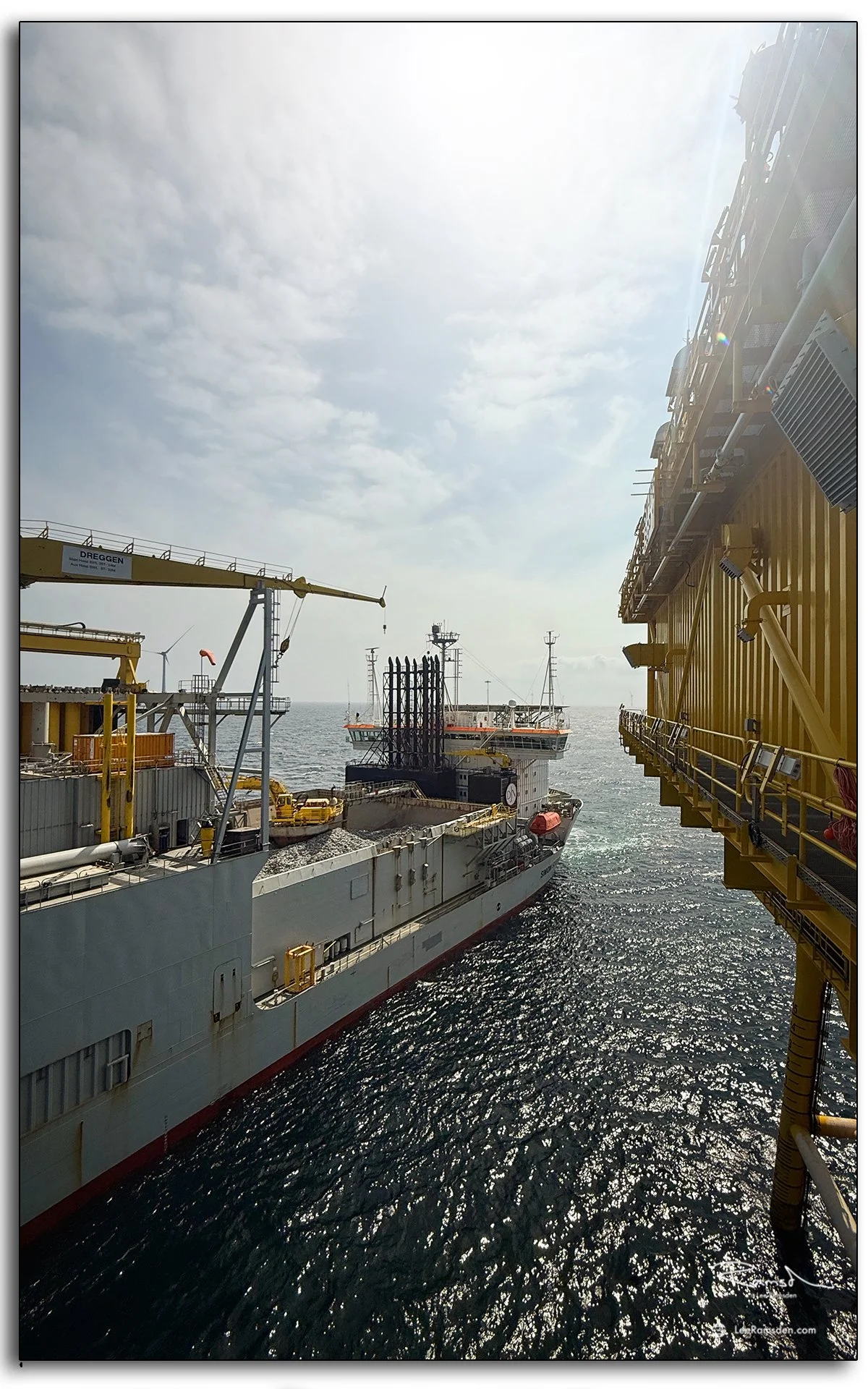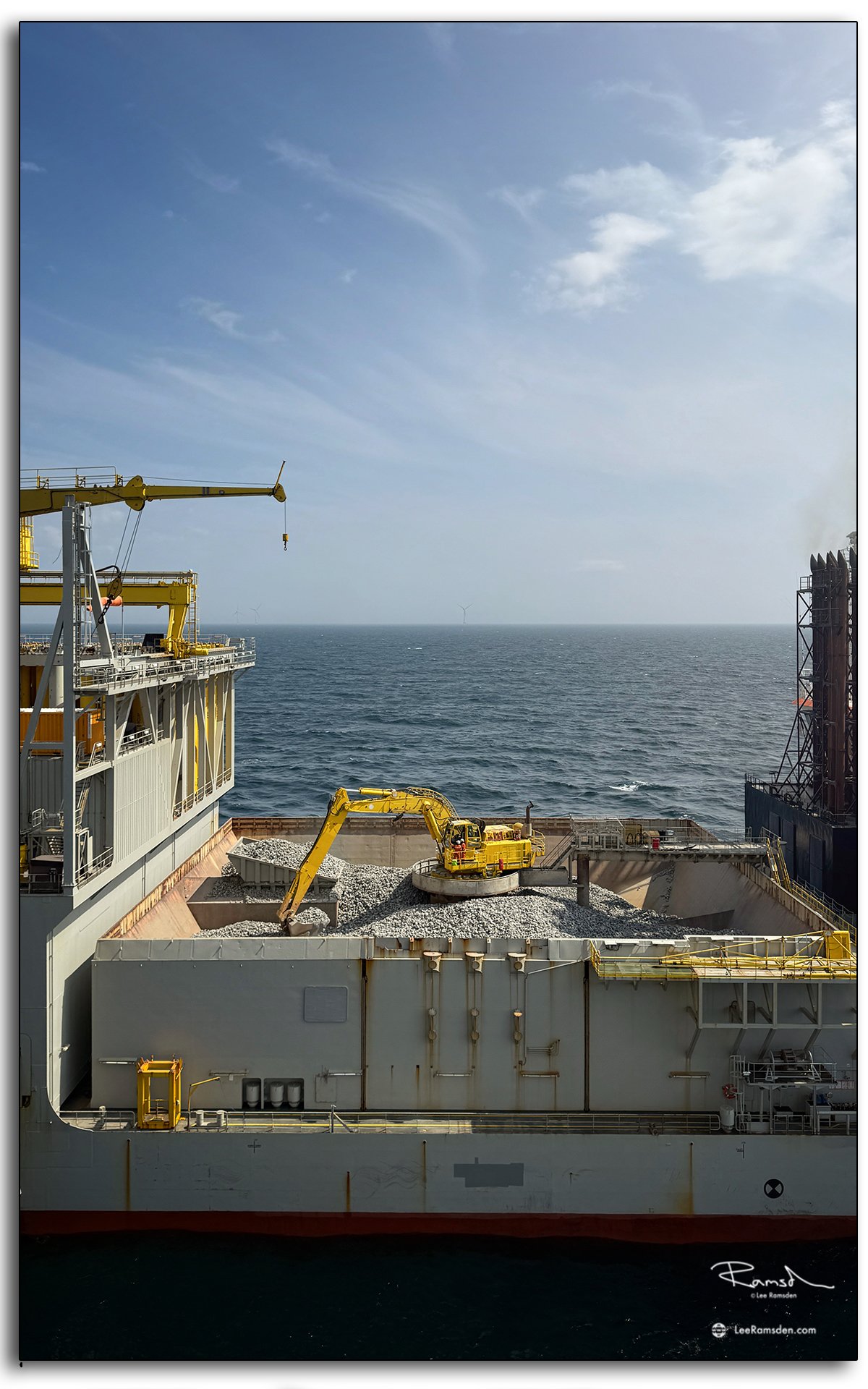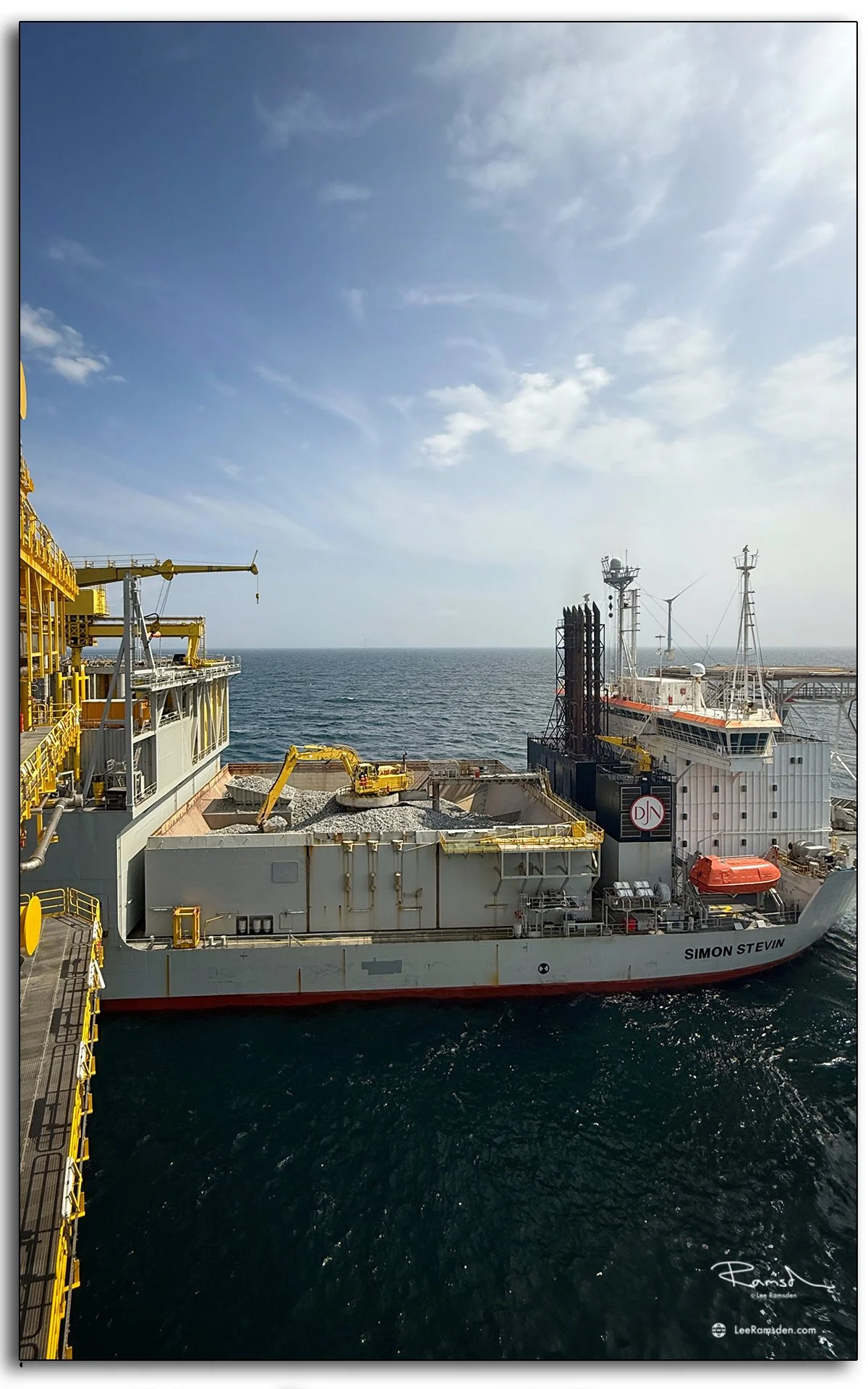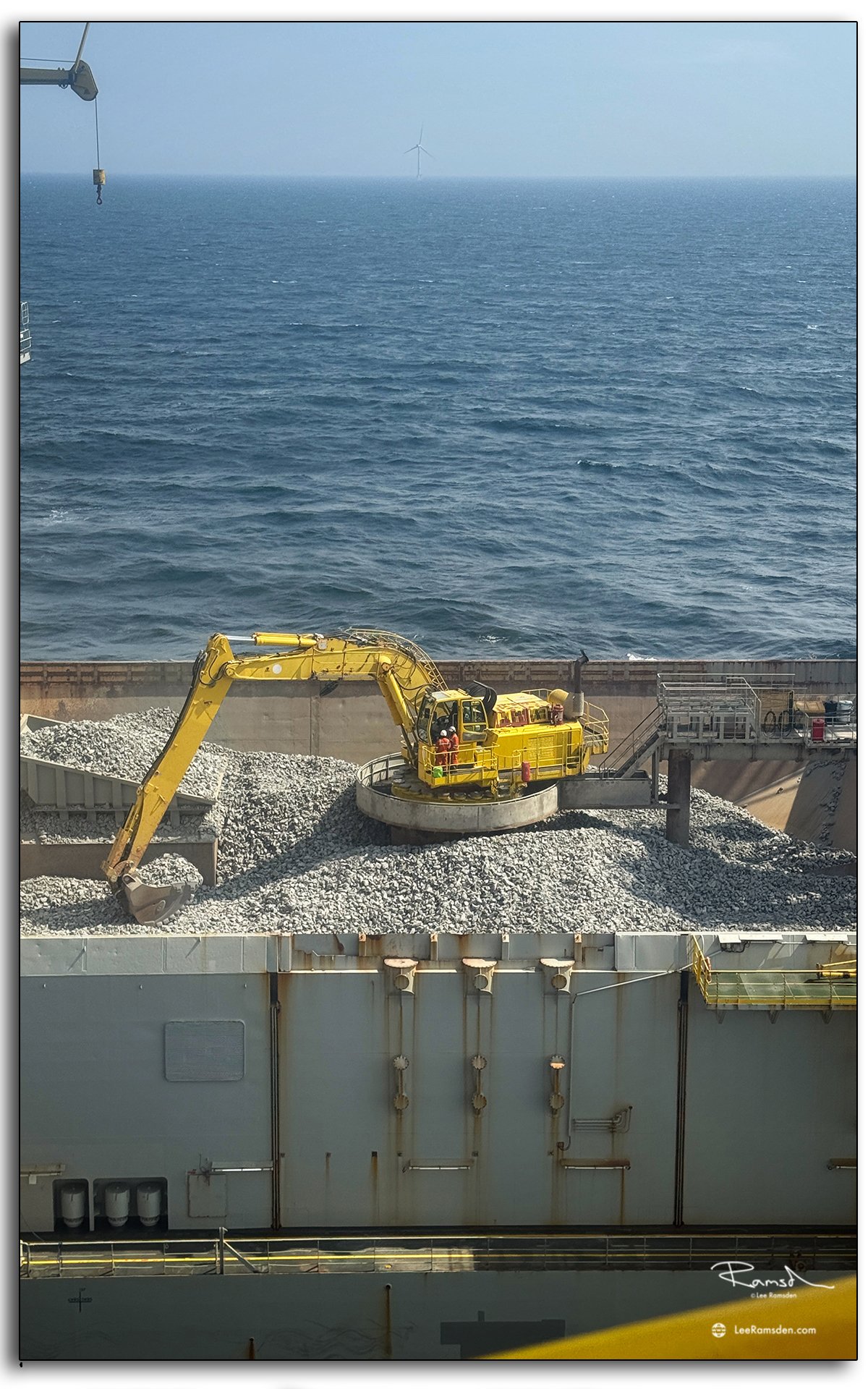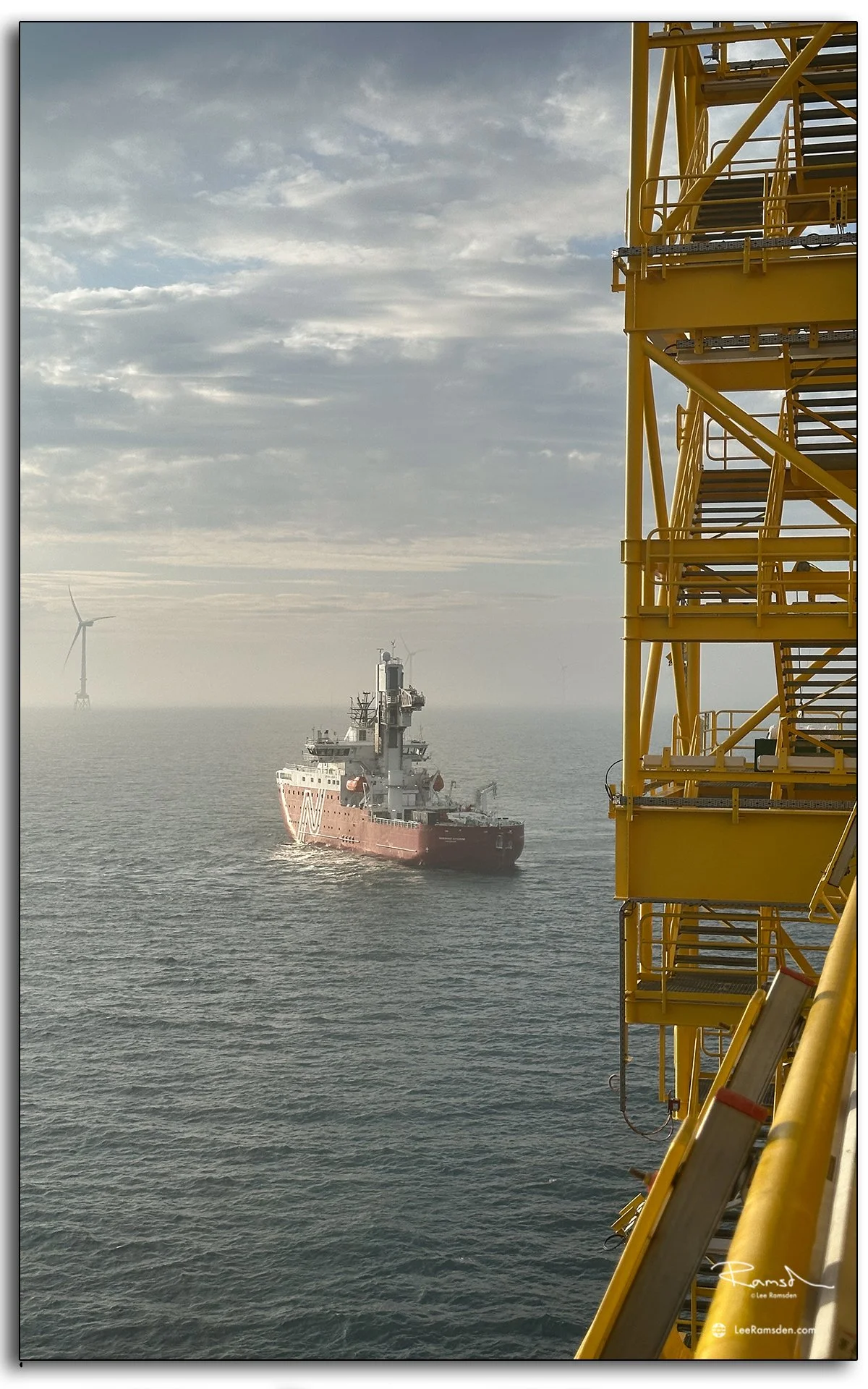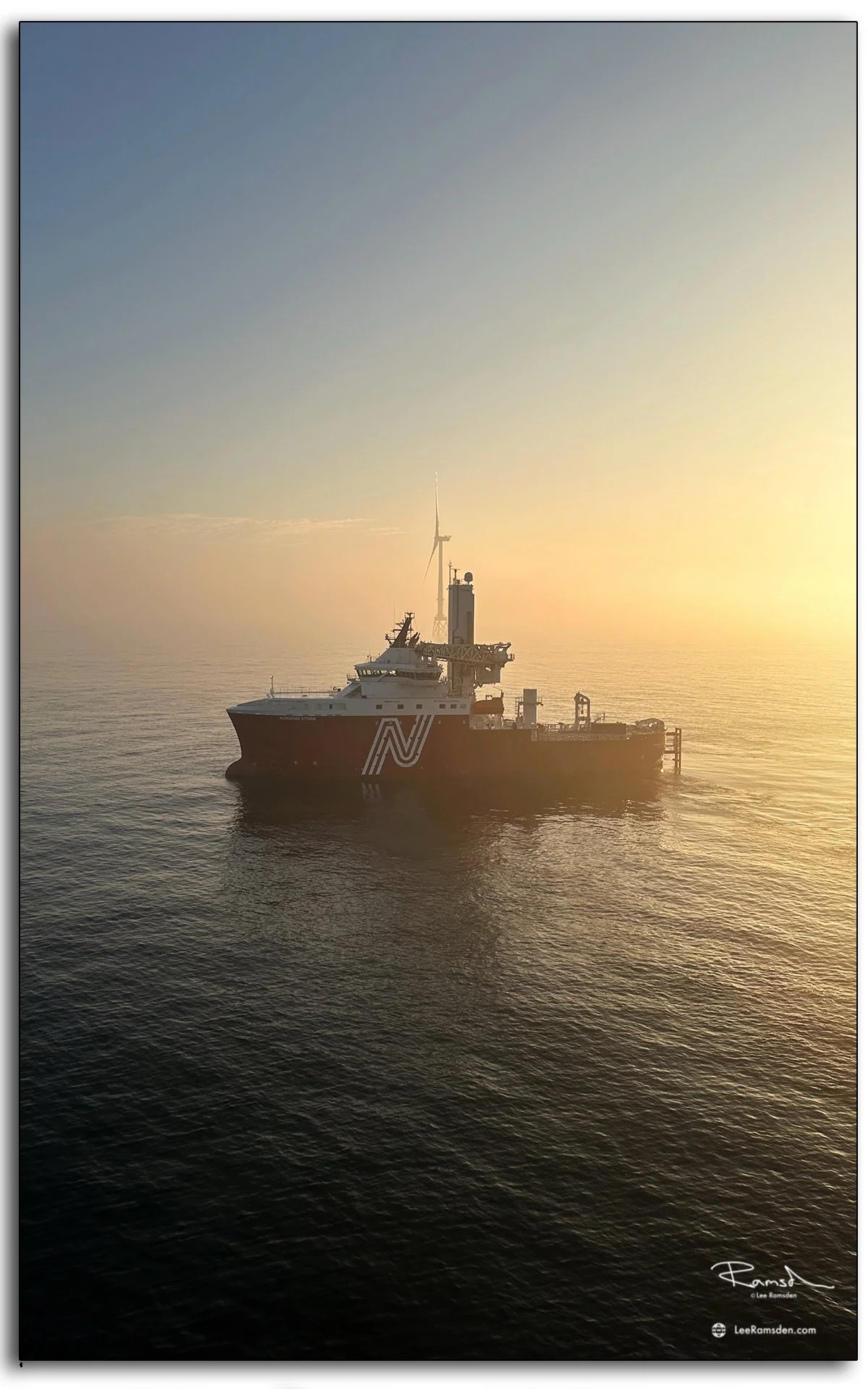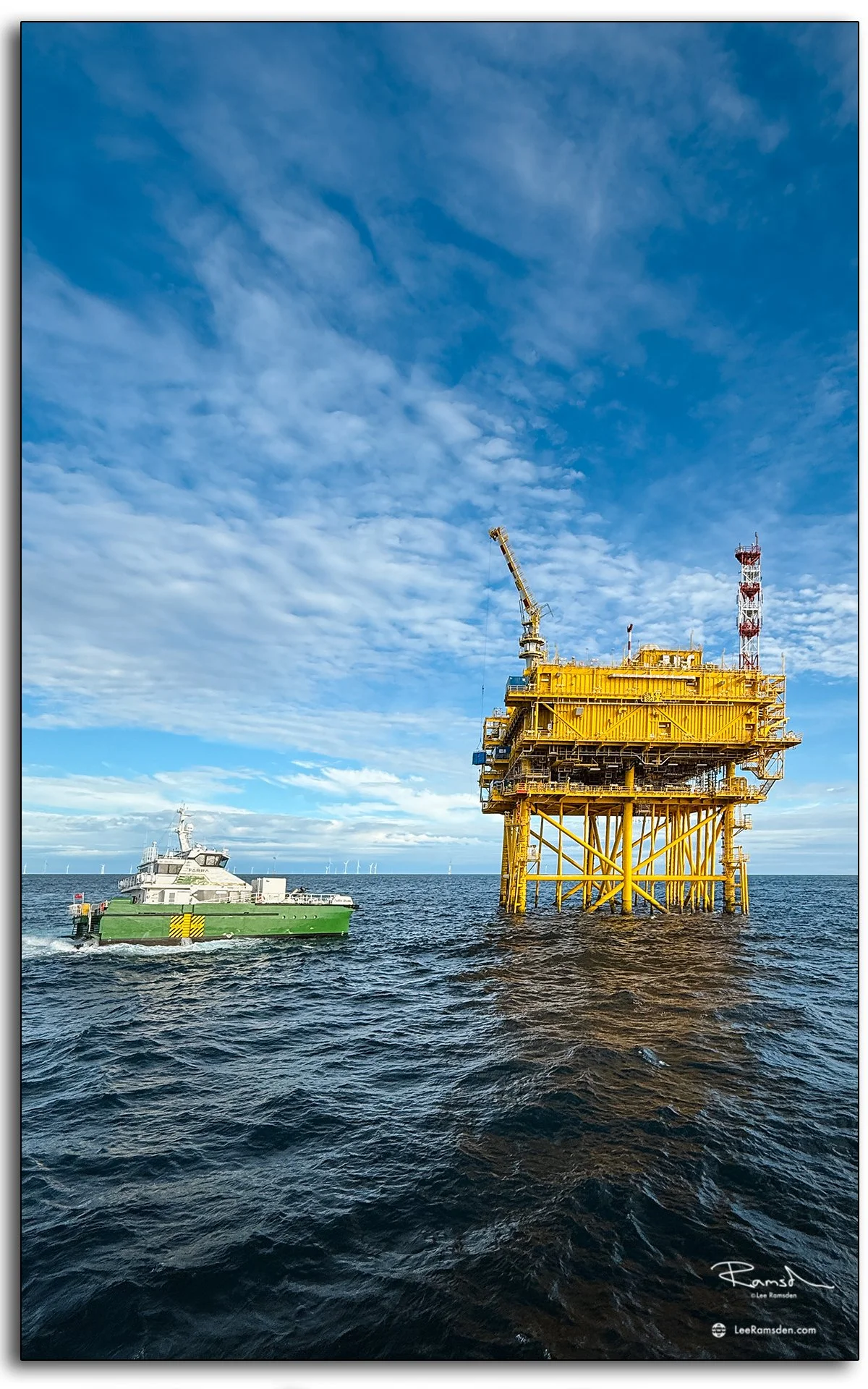
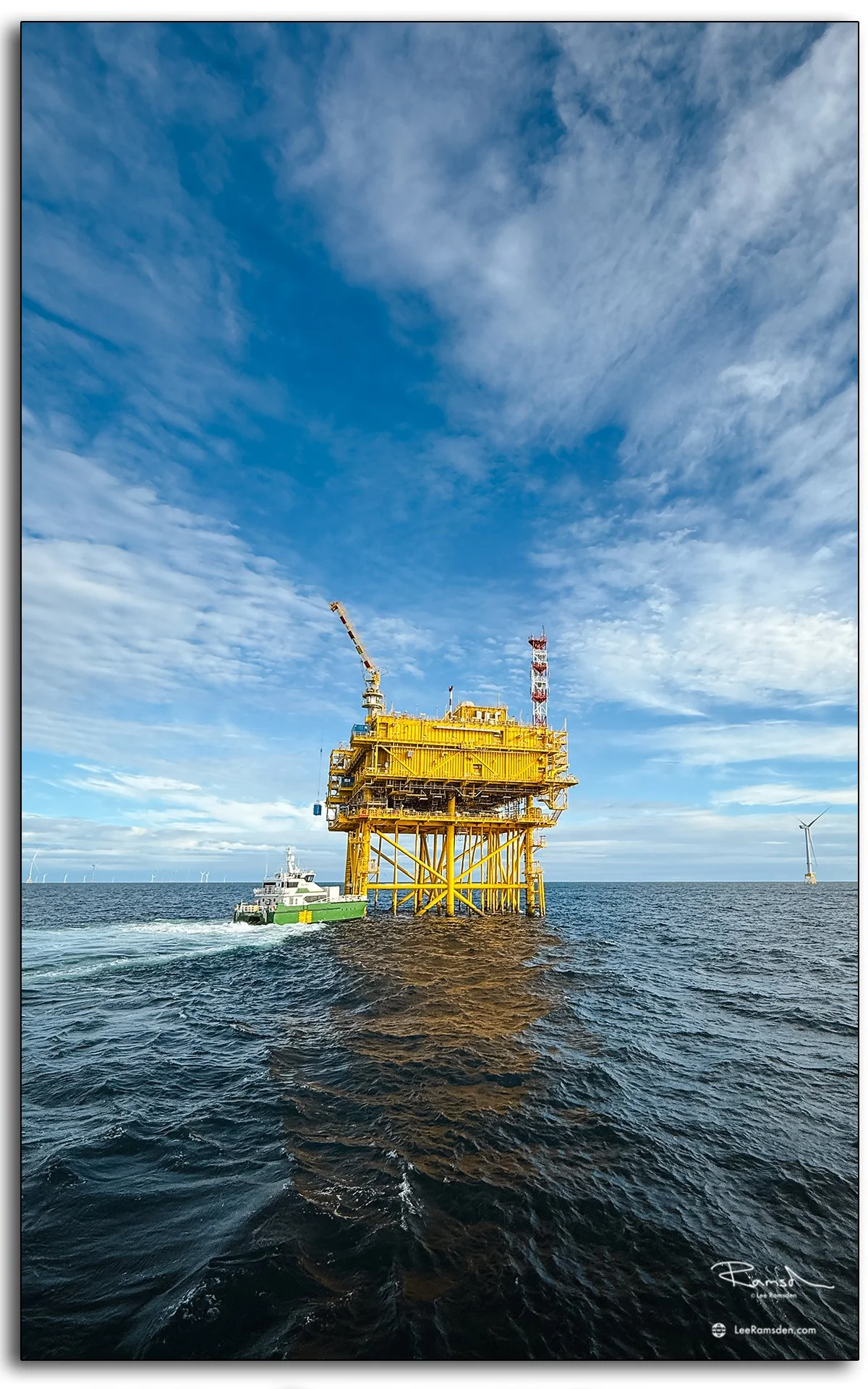
The Farra Grainne CTV sits alongside an offshore substation under clear blue skies in the North Sea. These structures sit at the centre of every offshore wind farm, collecting power from the surrounding turbine array and stepping it up for transmission to shore via export cable.
Offshore substations are finished in safety yellow and visible for miles at sea. The steel jacket structure and equipment decks represent a significant piece of infrastructure, and seeing a CTV working alongside gives a clear sense of the scale involved.
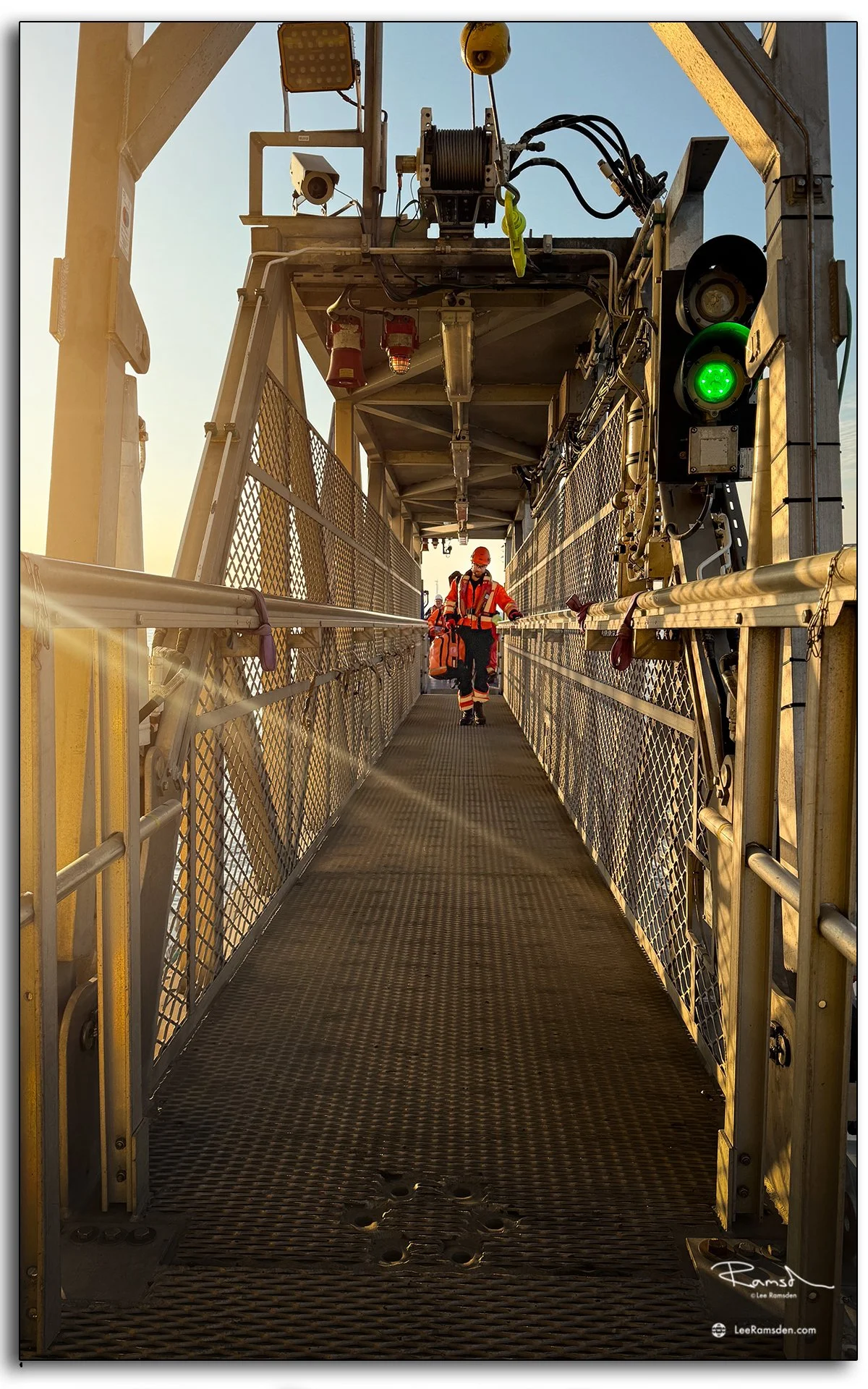
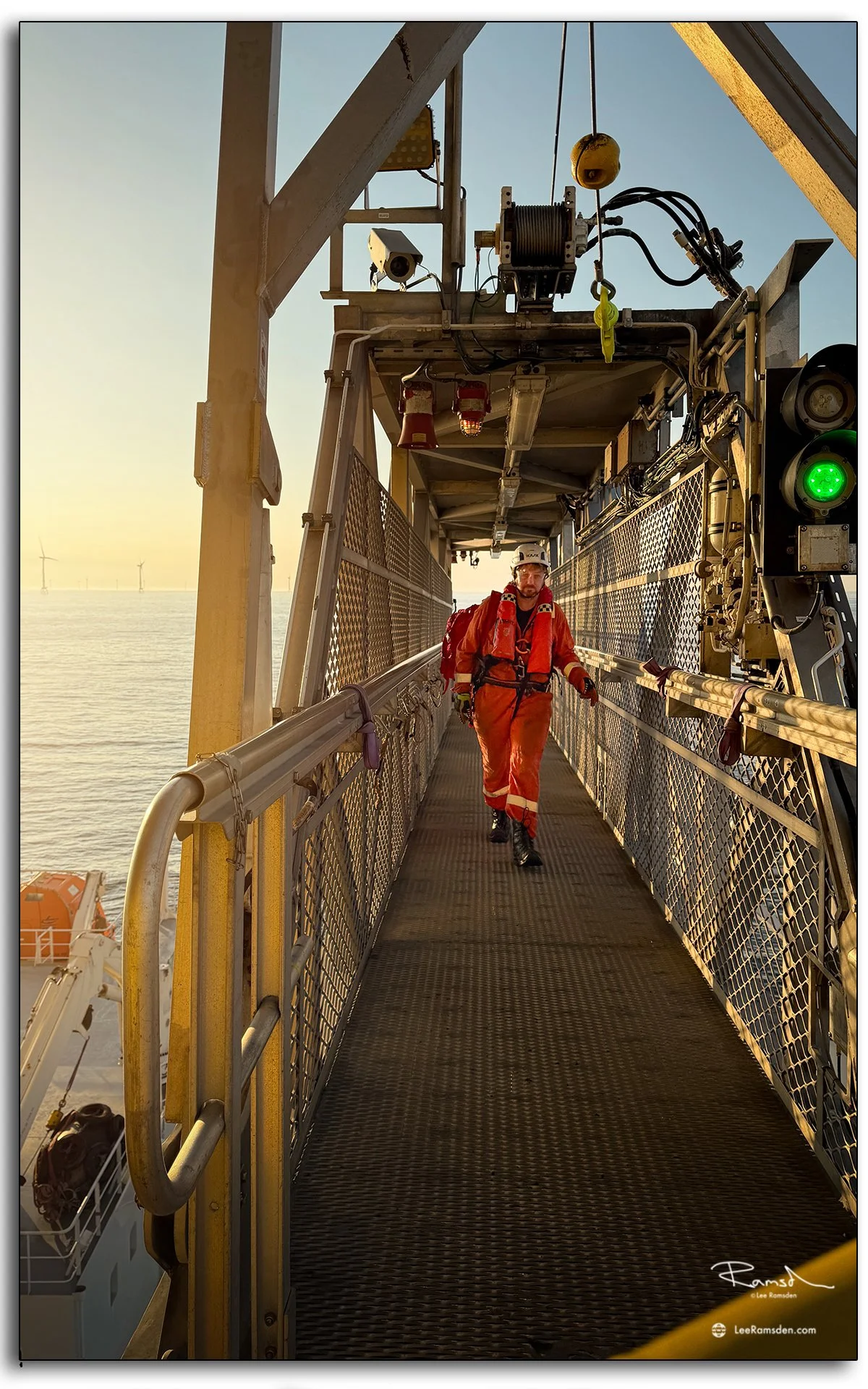
The third image shows the boarding sequence: the vessel holds position on the boat landing while personnel transfer via the ladder system to the platform deck above.
For more from these environments, explore my Wind Industry portfolio or the People gallery, or contact me to discuss offshore photography commissions.