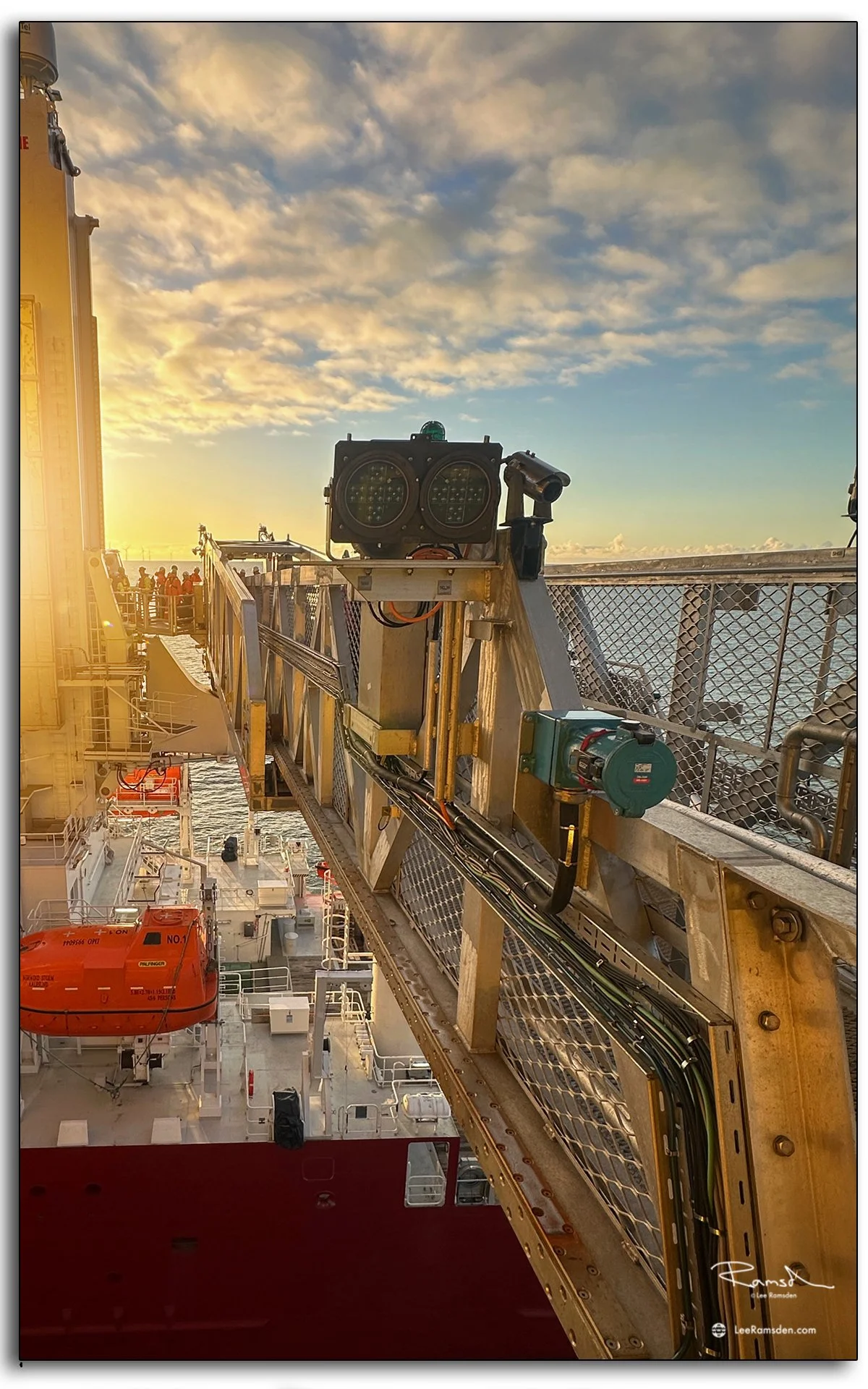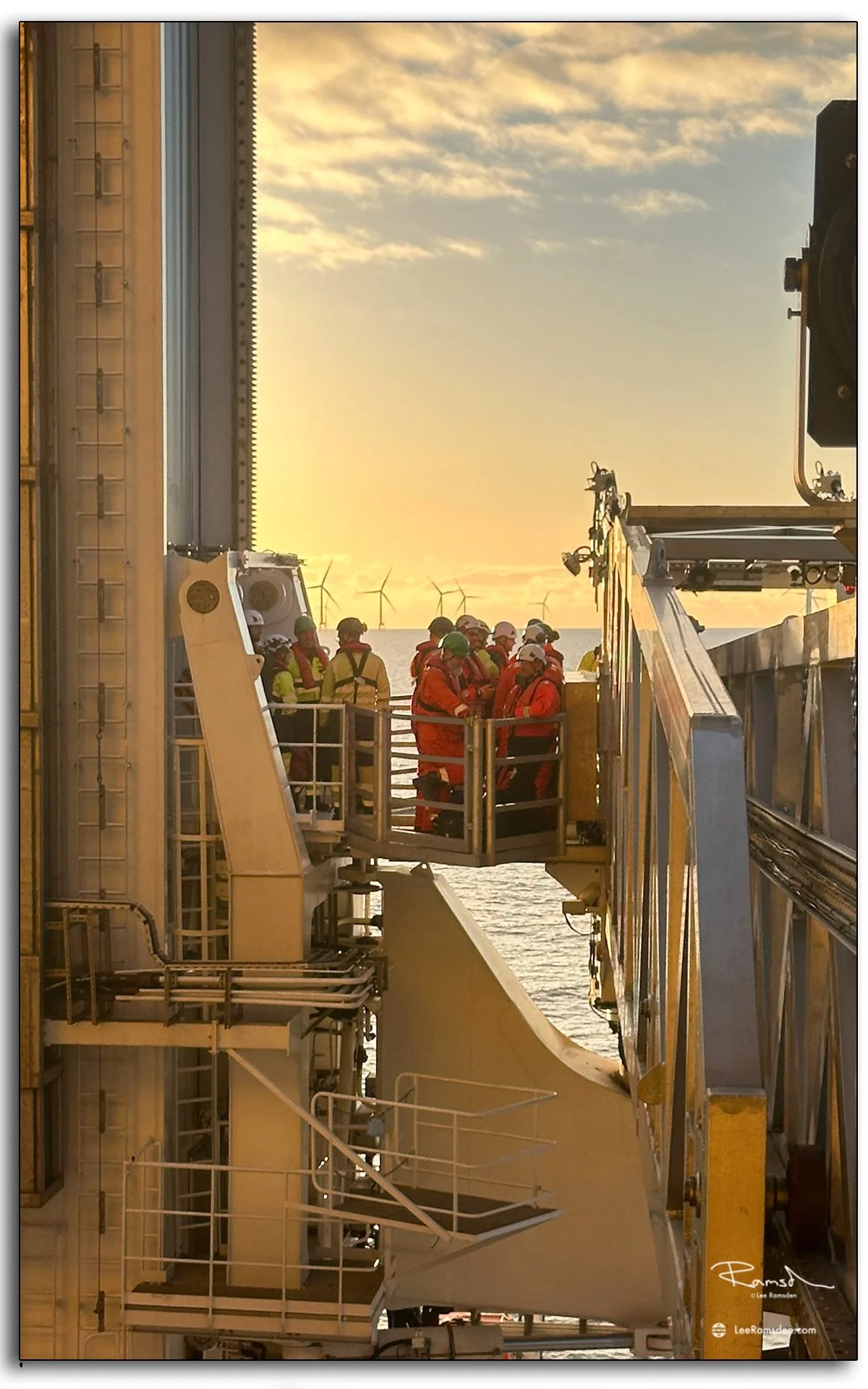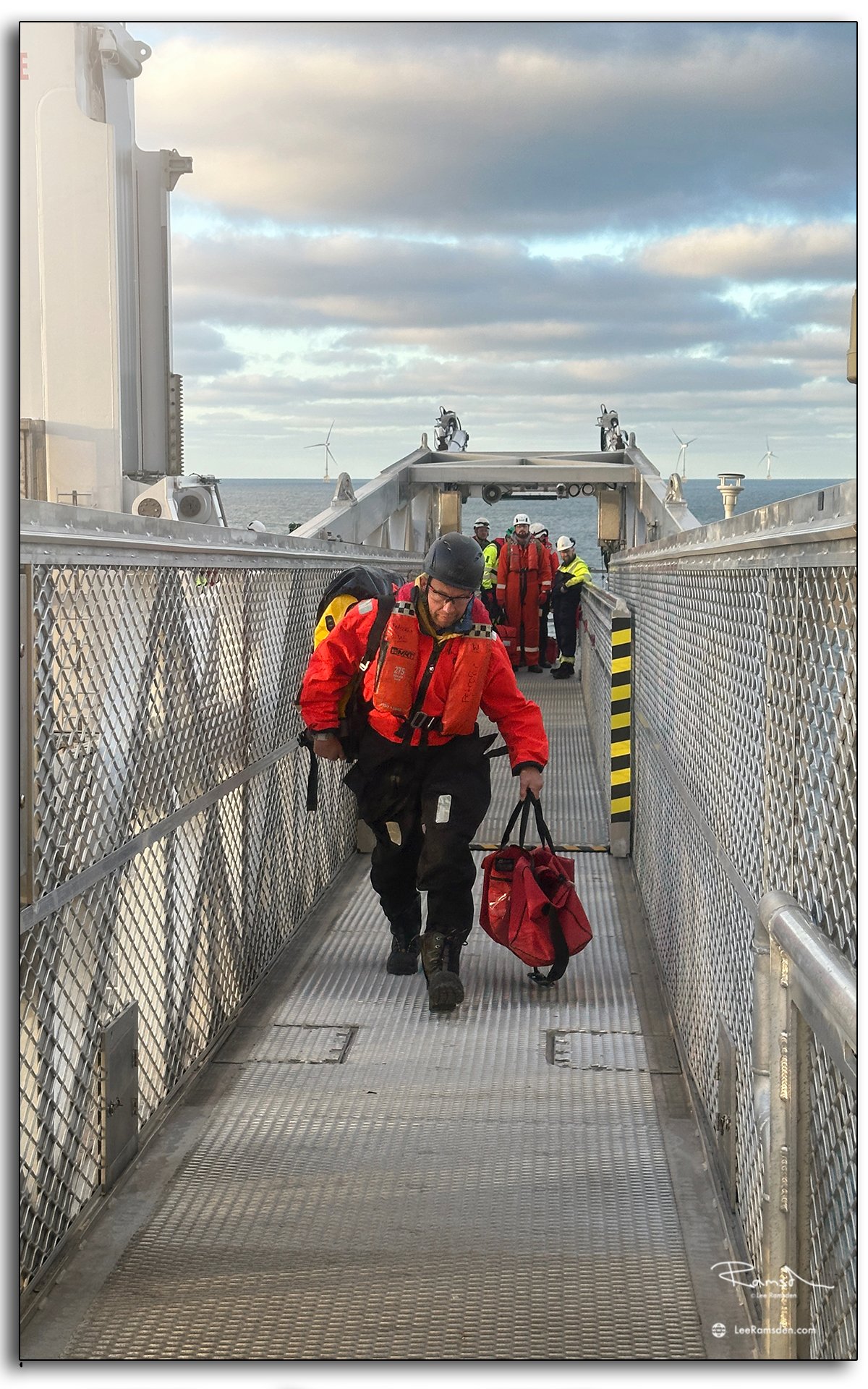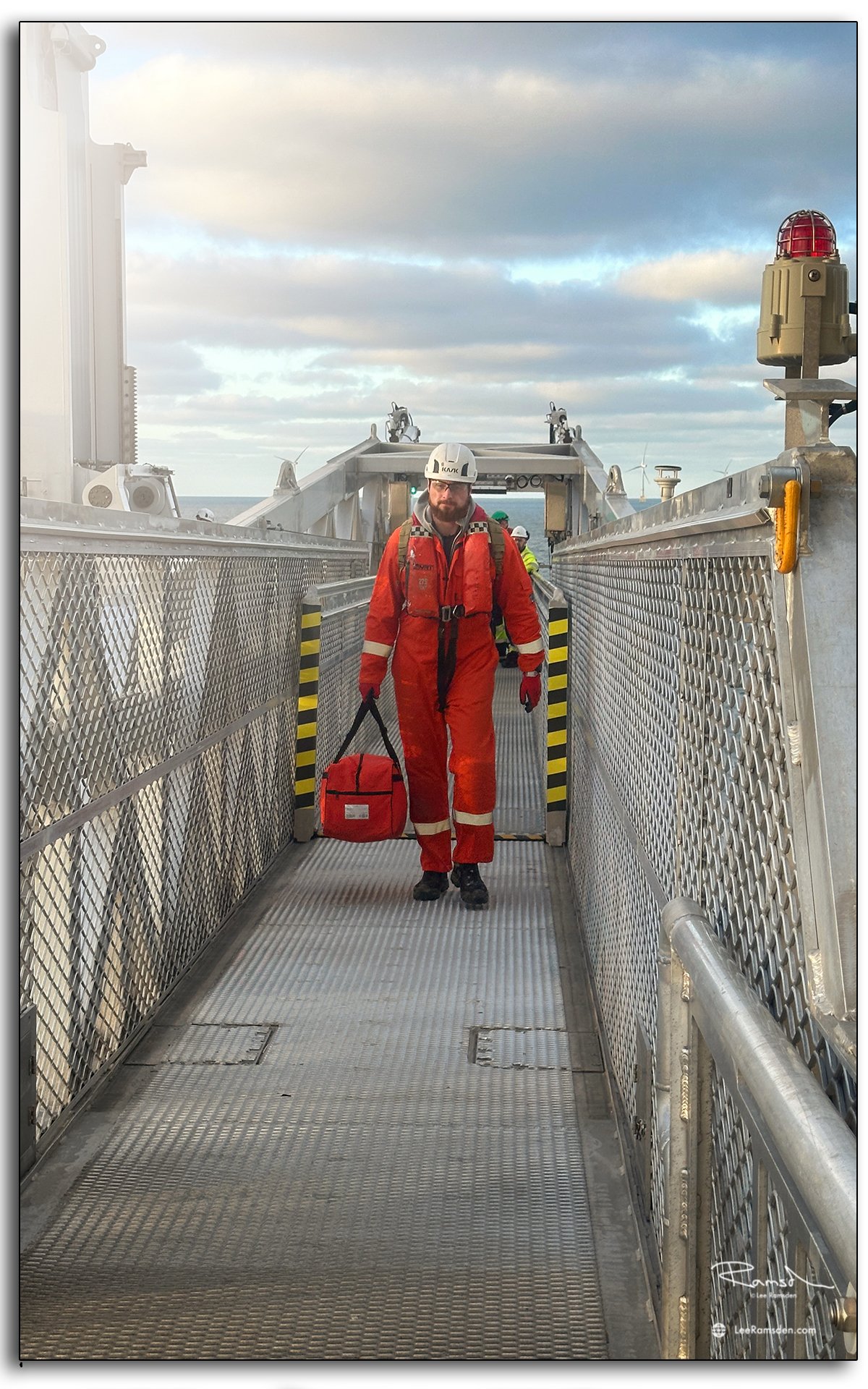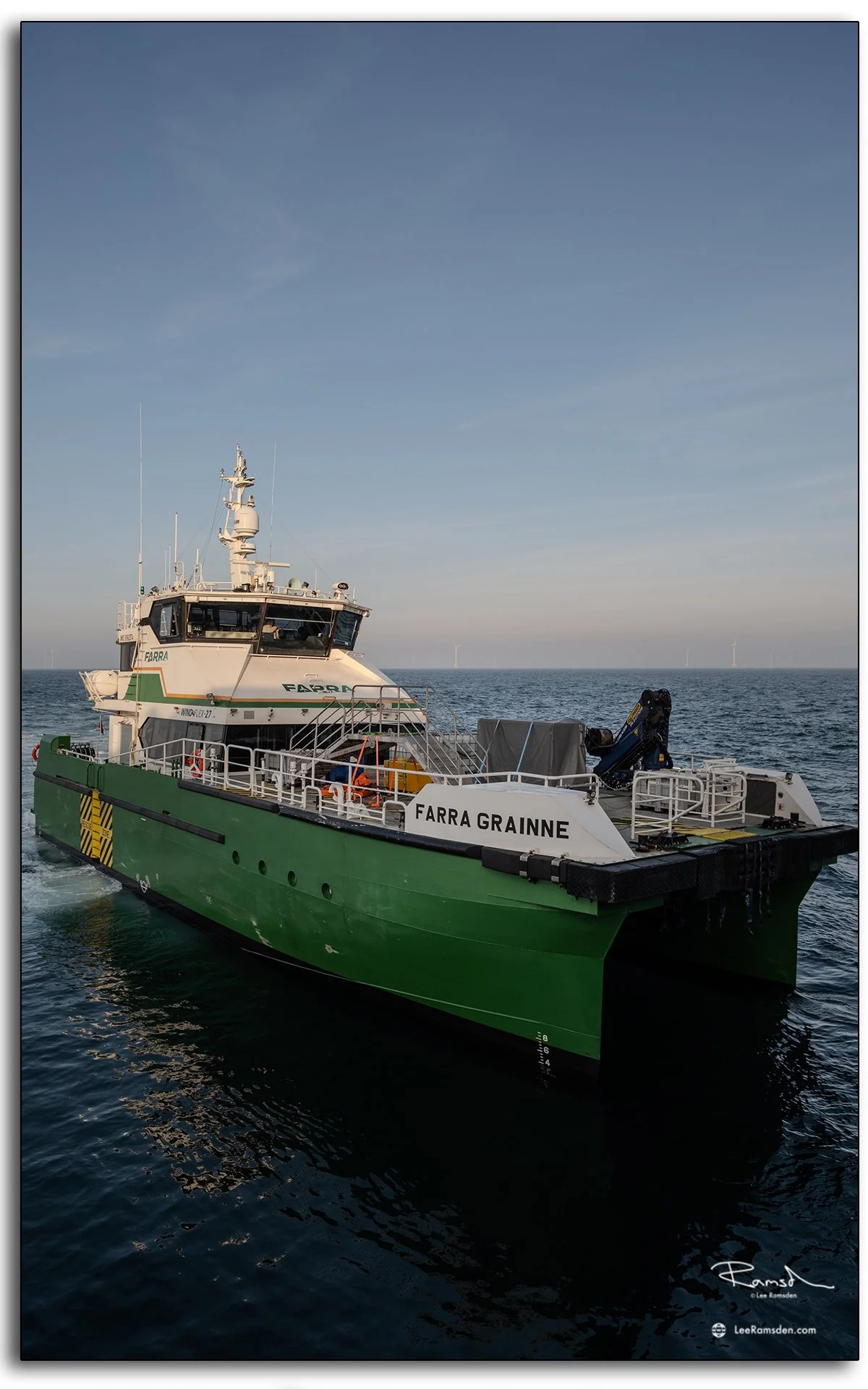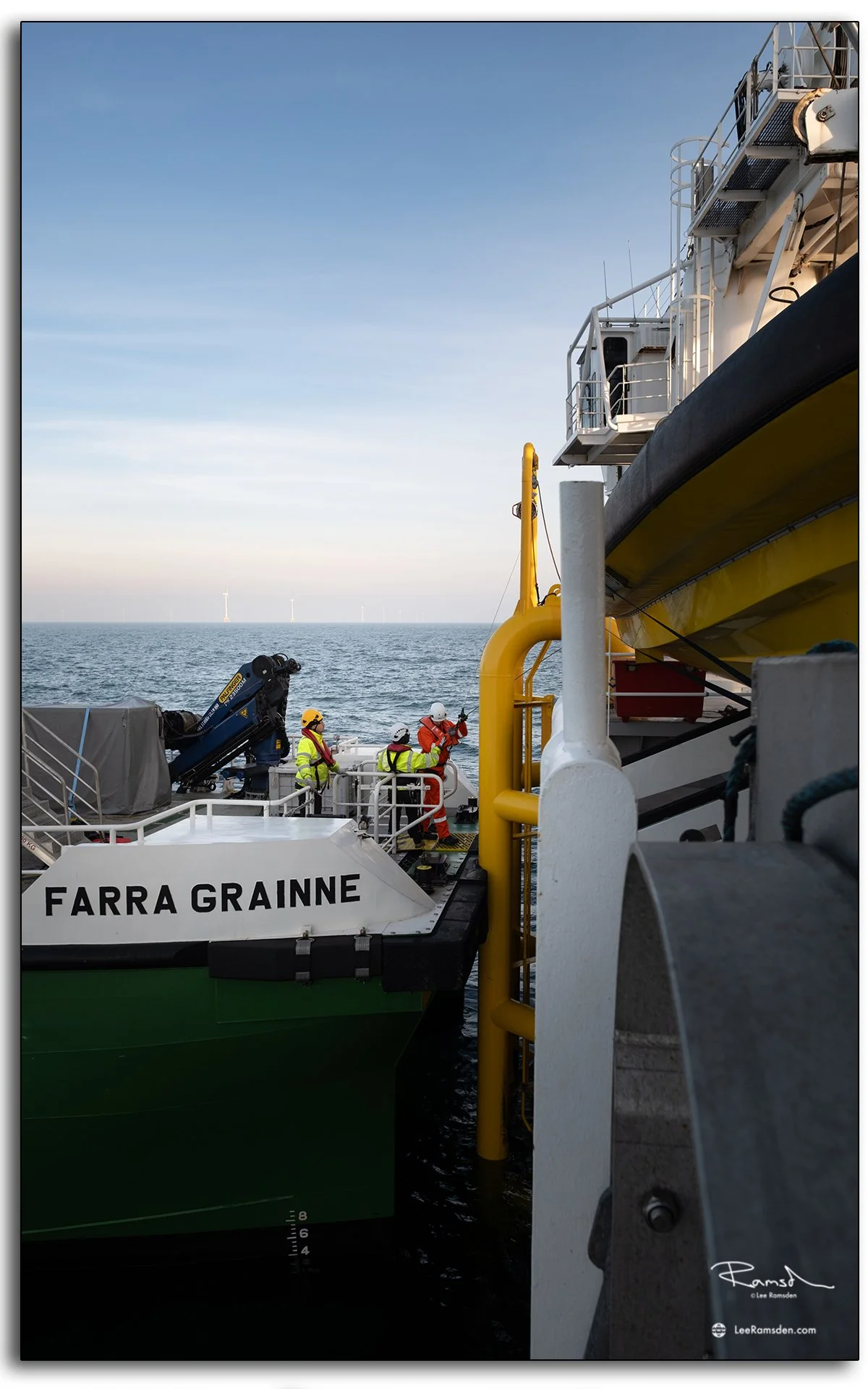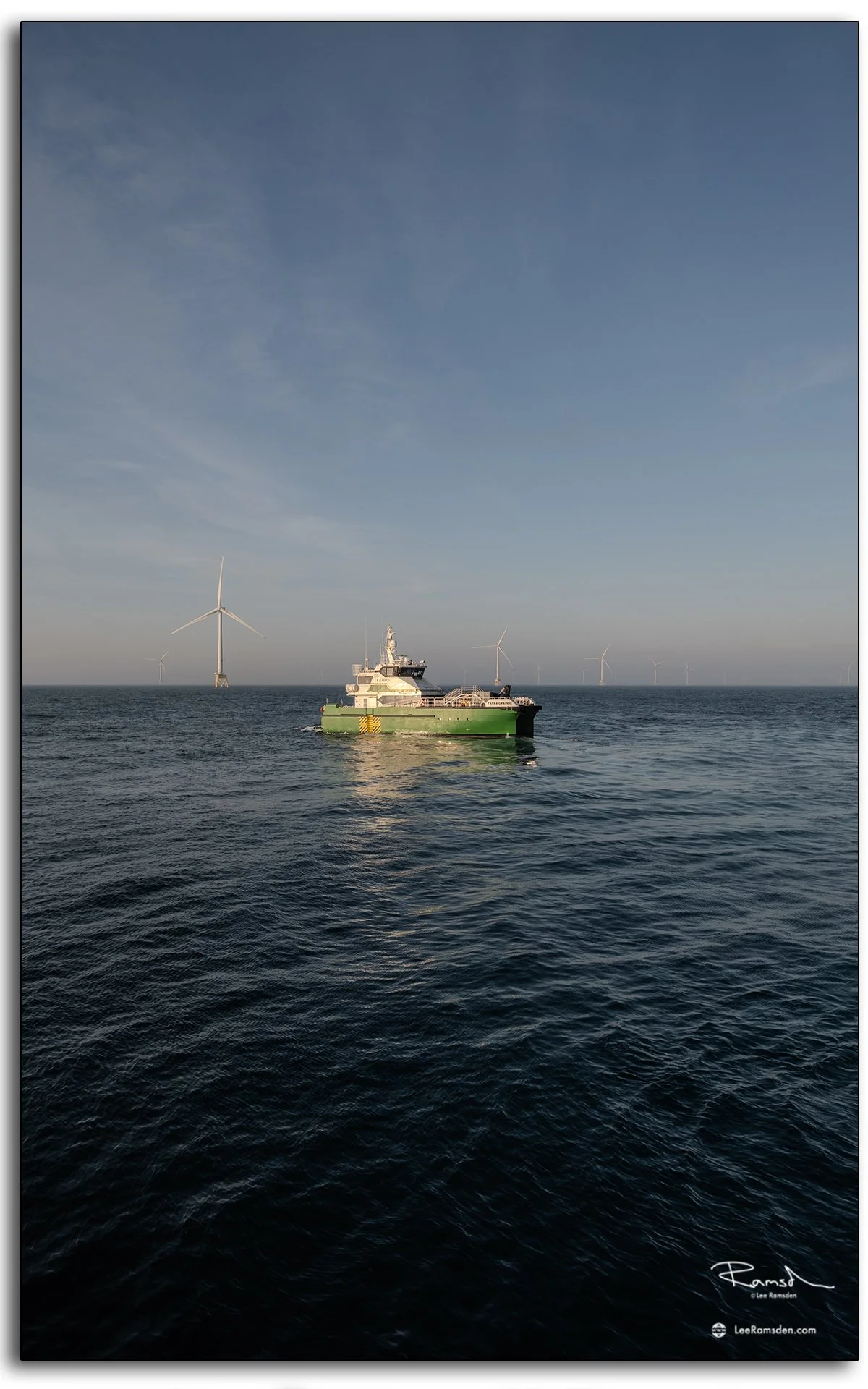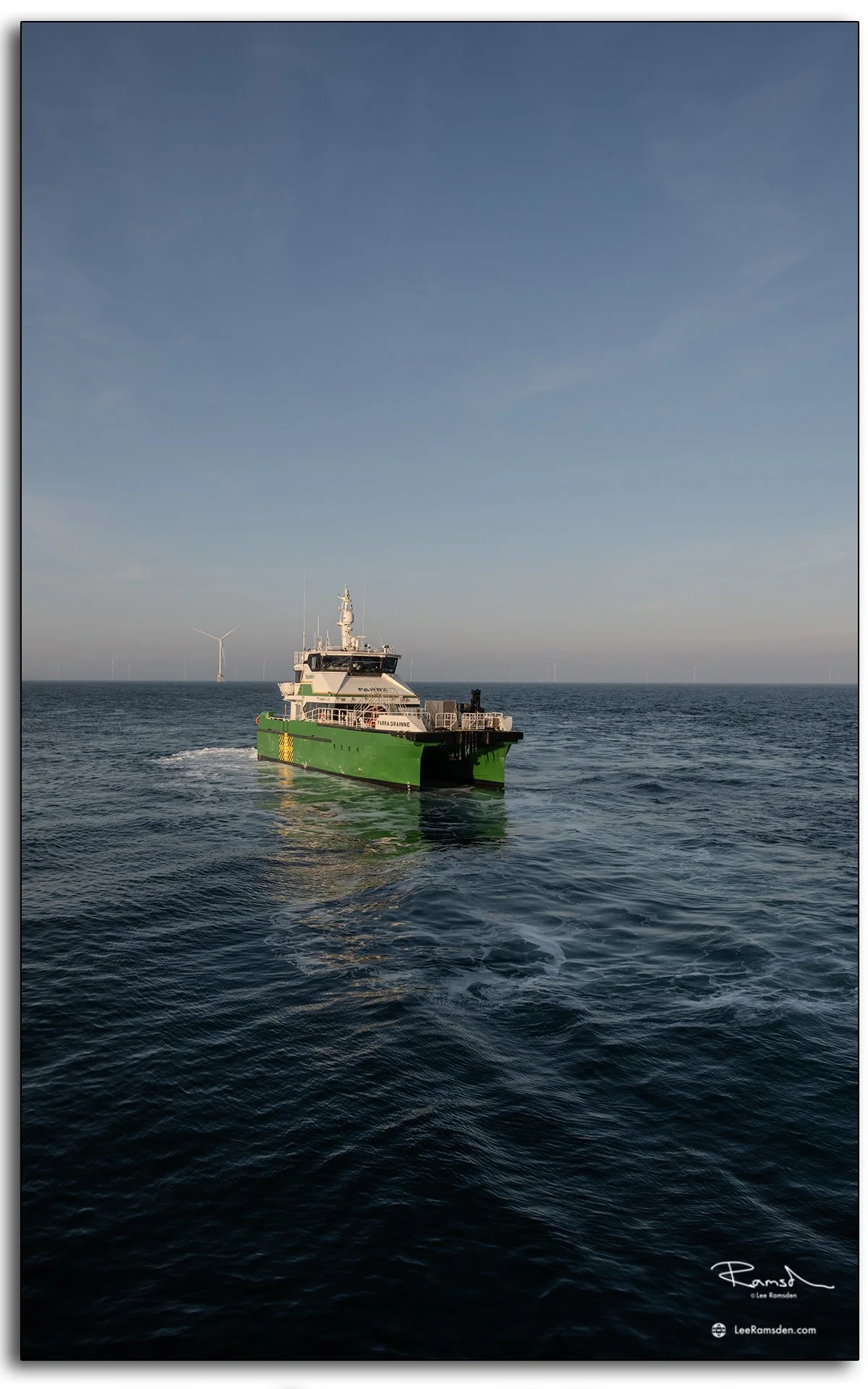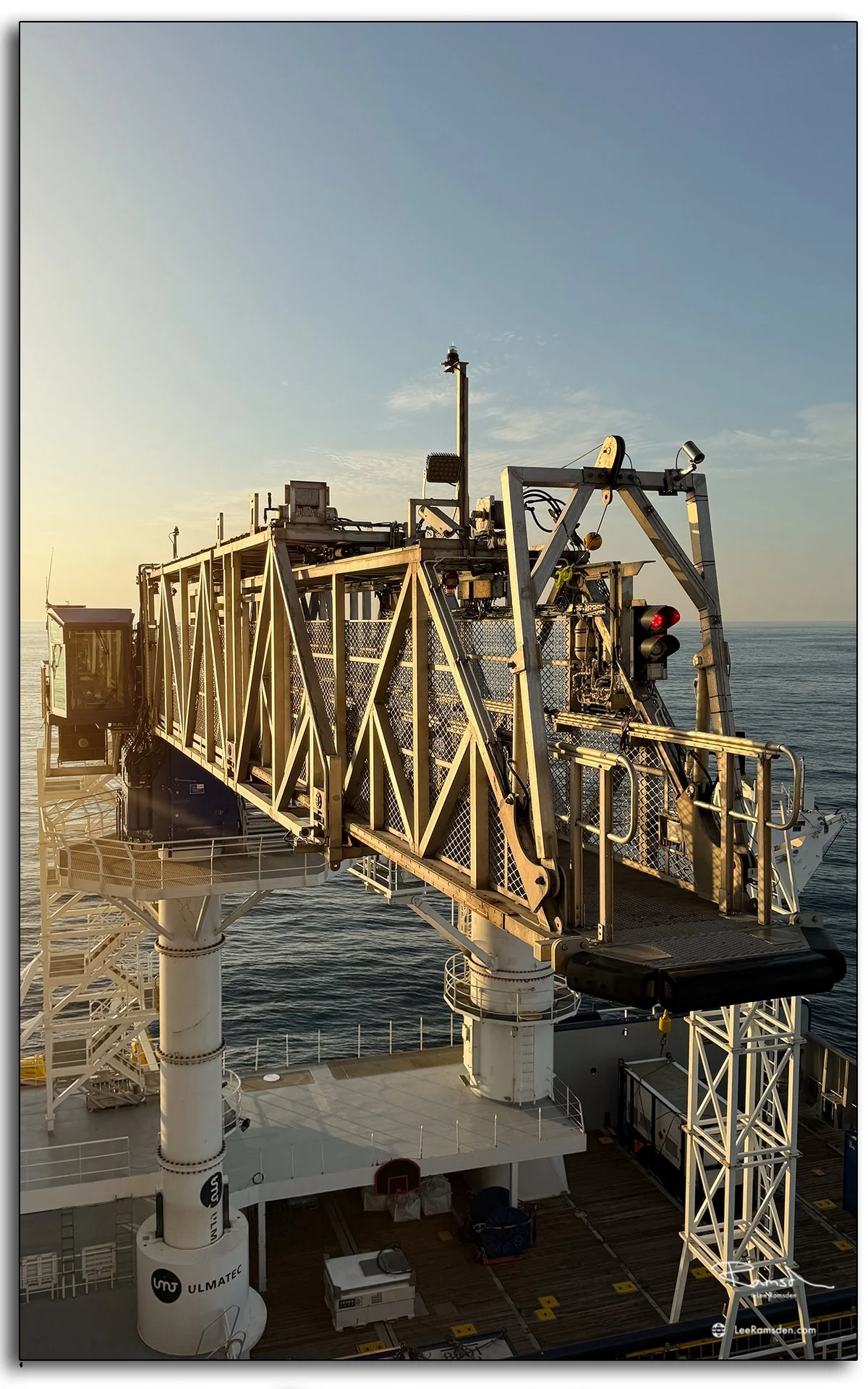
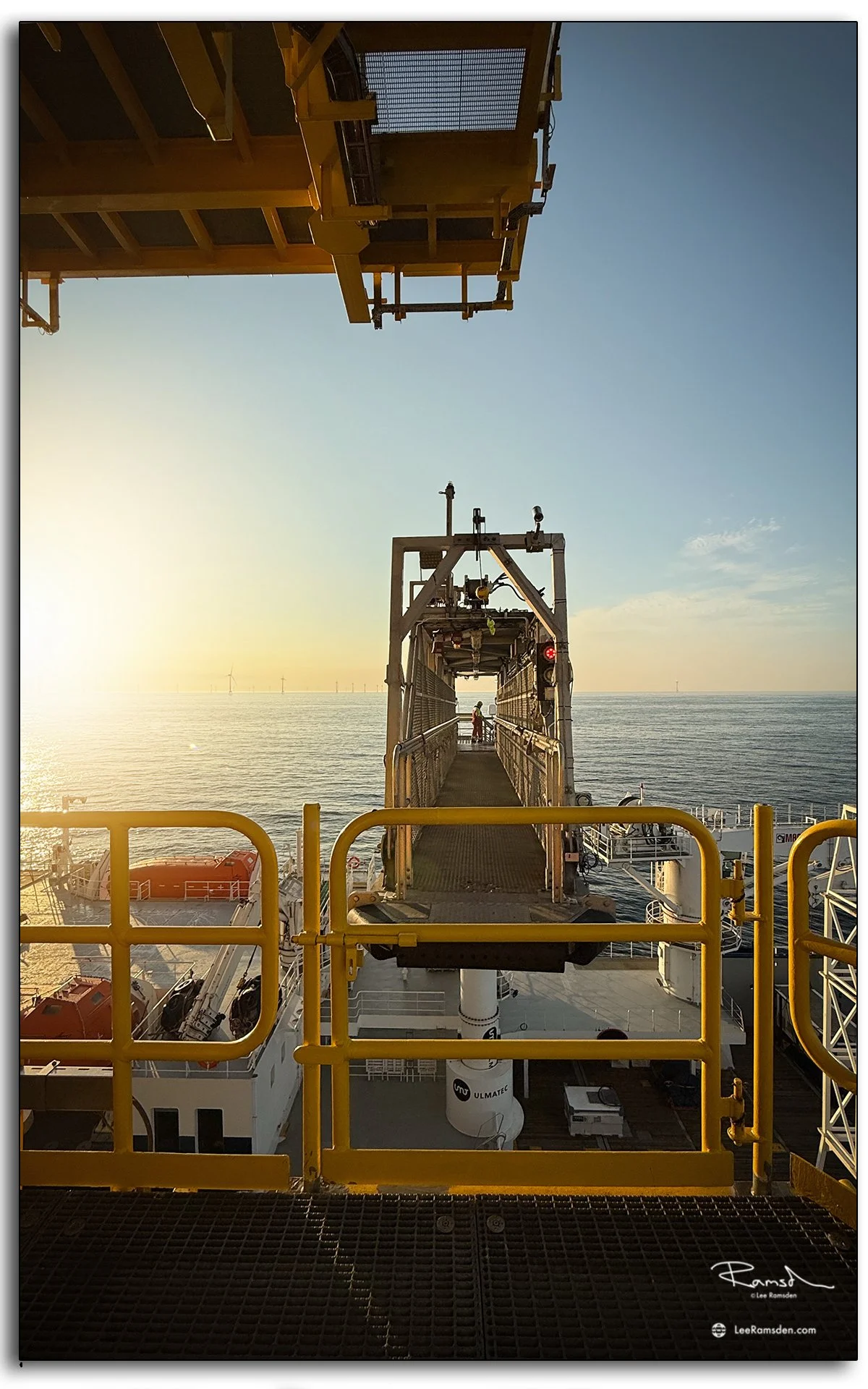
Walk-to-Work bridges are vital offshore, connecting personnel safely between the vessel and platform. These images show the structure in action, early light highlighting both the bridge itself and the people who rely on it daily.
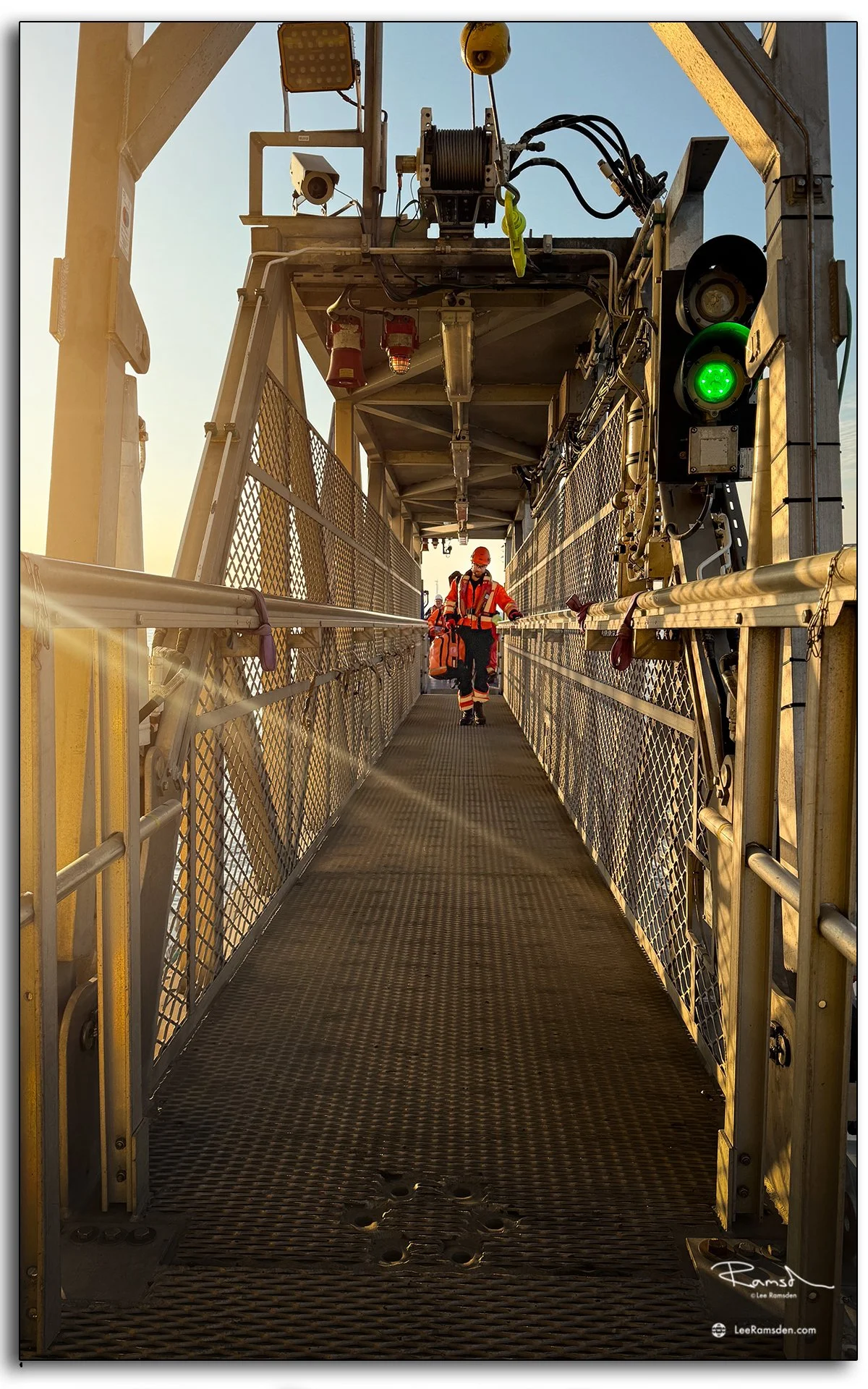
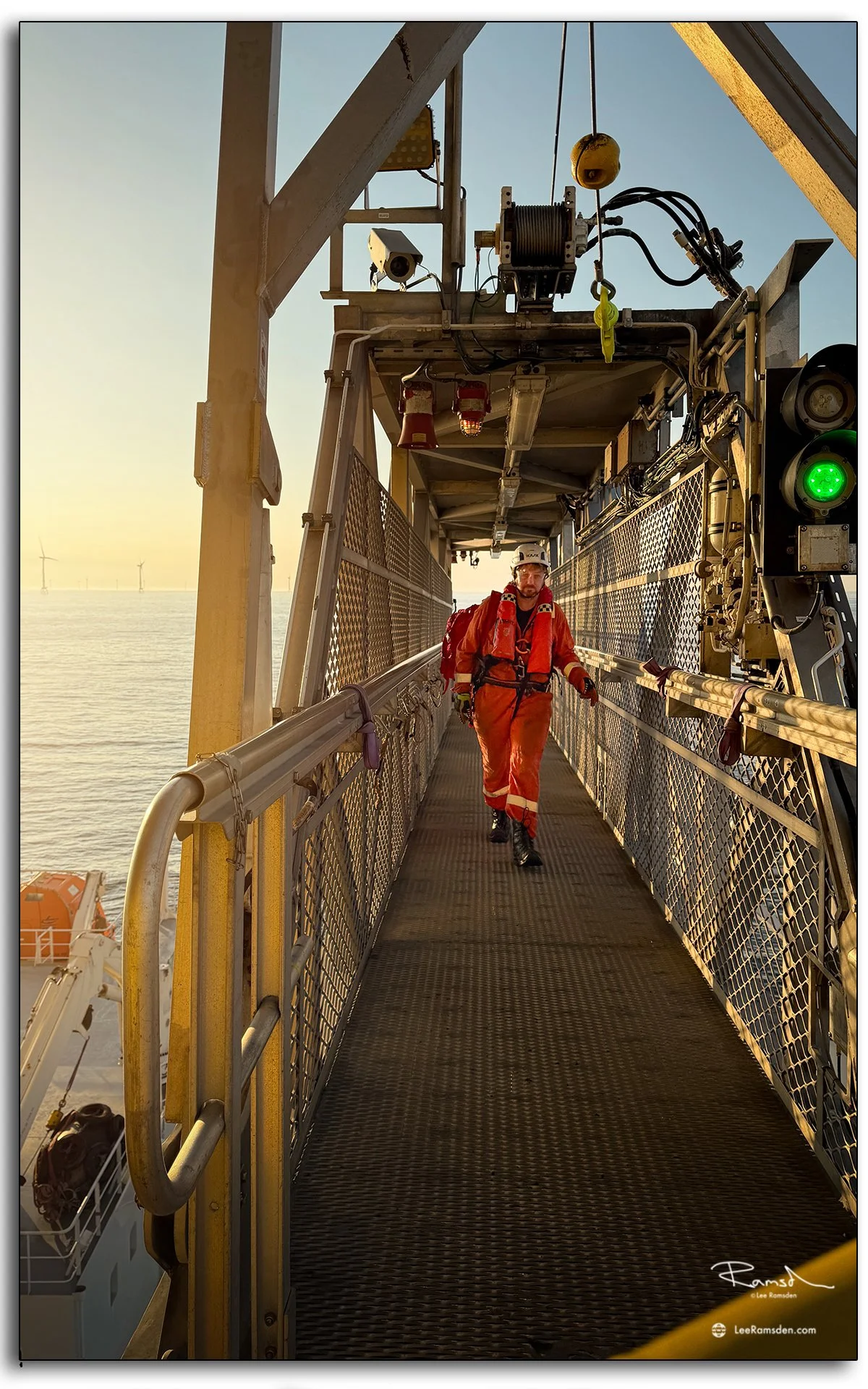
The W2W system is designed to provide safe transfer in variable conditions. The bridge locks onto the platform, allowing workers to step across without risk from waves or vessel movement. The photos here show personnel in transit, the bridge’s engineering detail, and the wider perspective of vessel, sea, and turbines on the horizon. Captured in golden light, the structure is not just functional but visually striking — metal trusses, control cab, and safety signals all part of the picture.
The Walk-to-Work bridge is a reminder that offshore projects rely as much on safe access as on engineering. For more offshore and renewables work, see my Wind Industry and Industrial galleries.