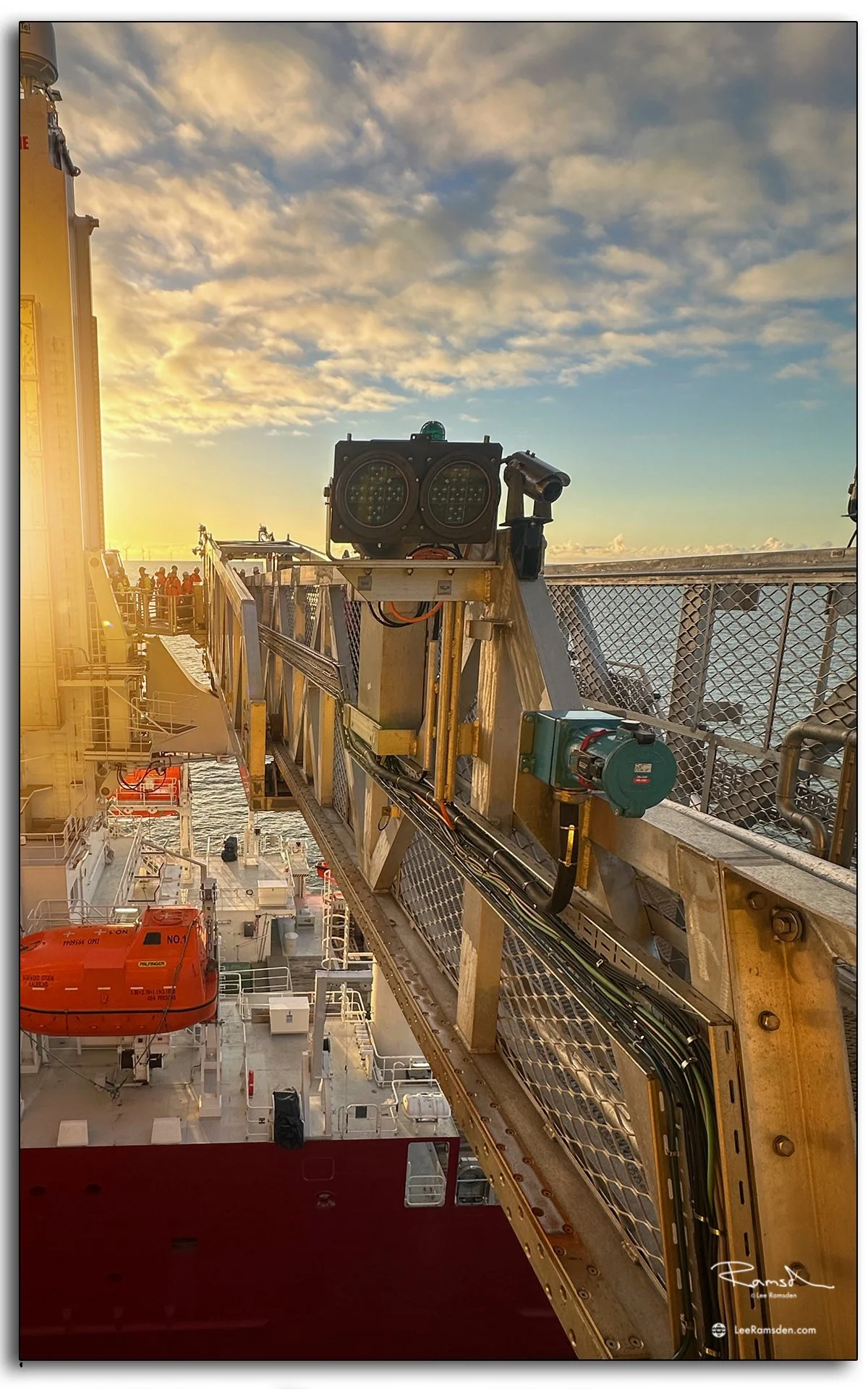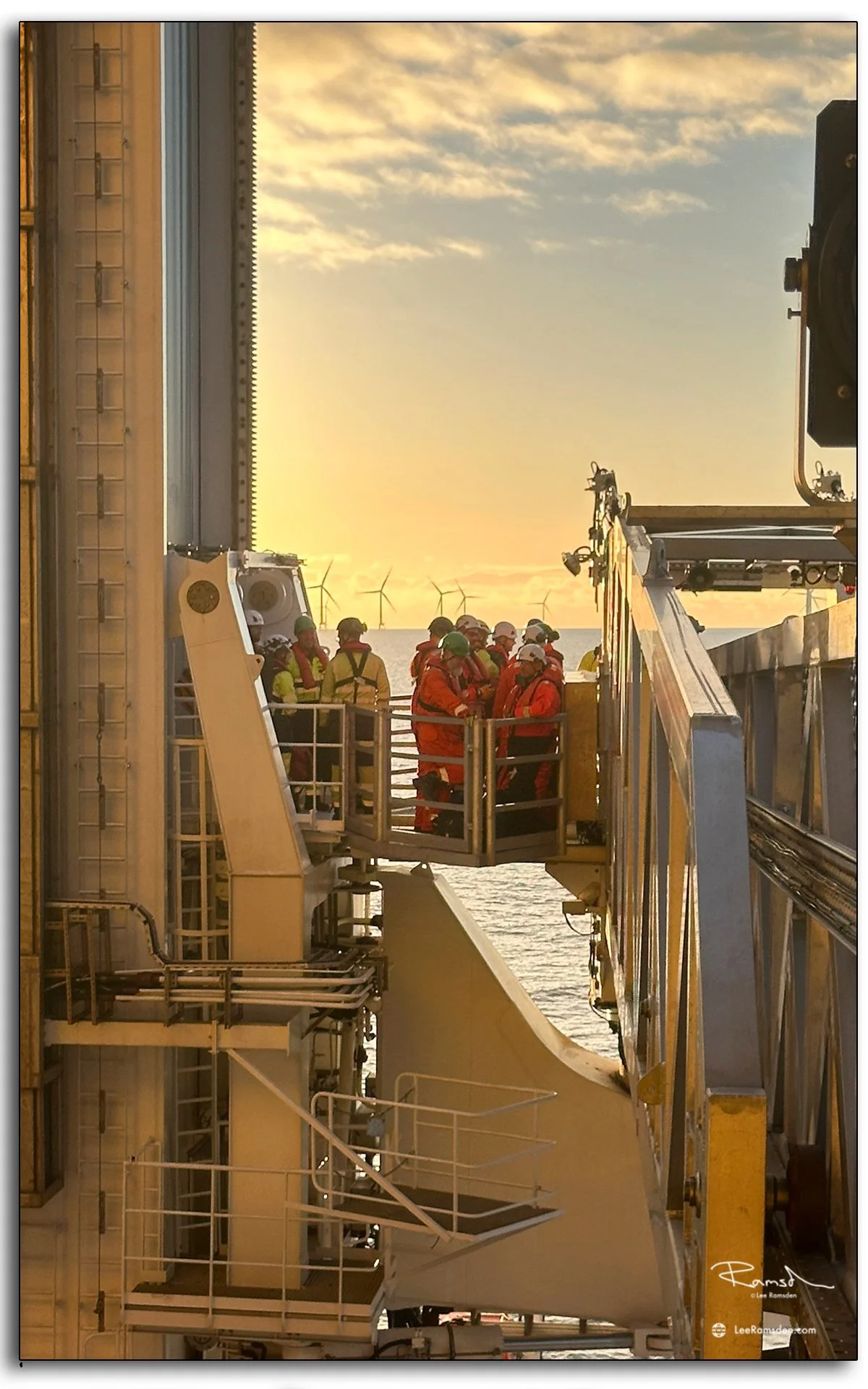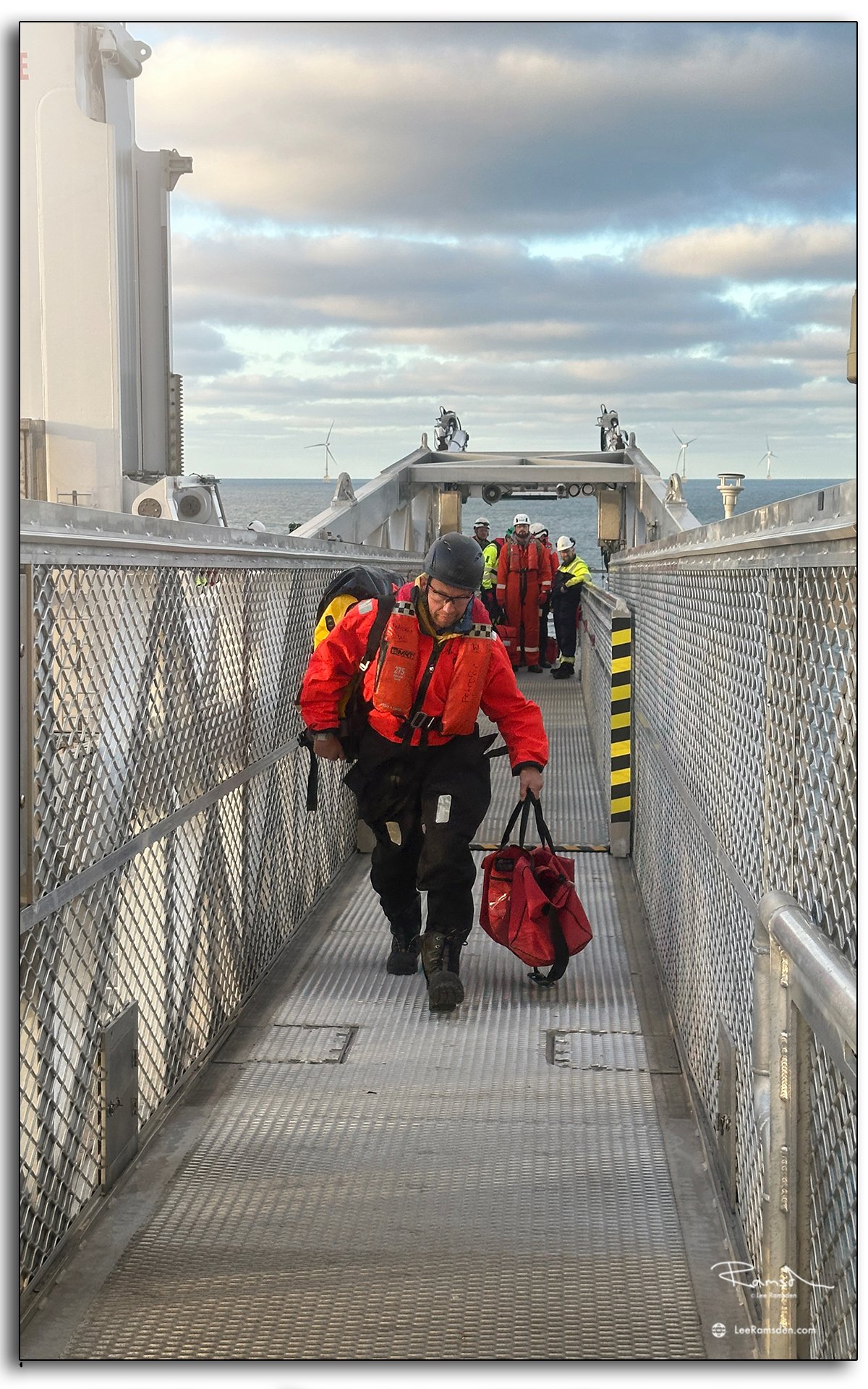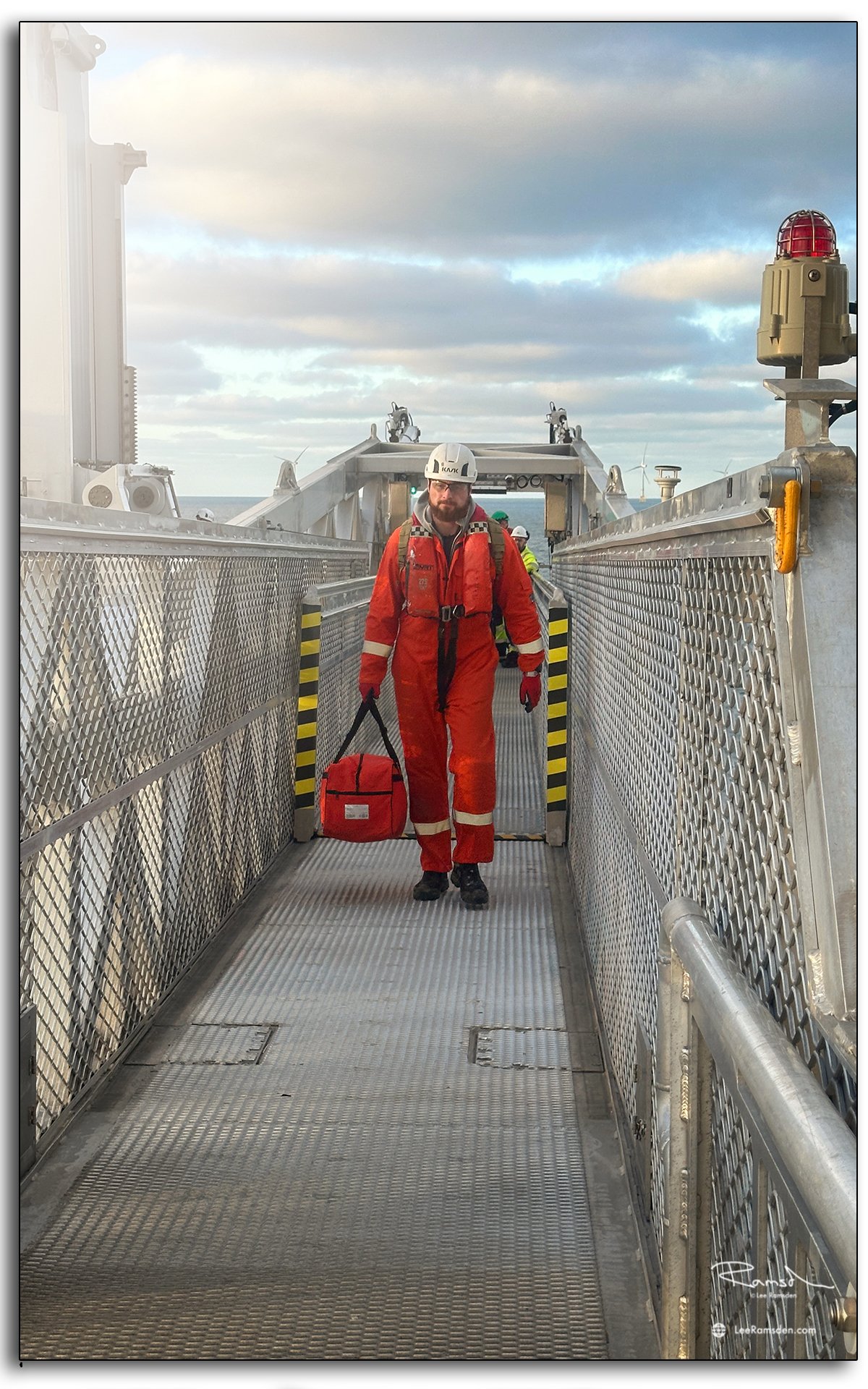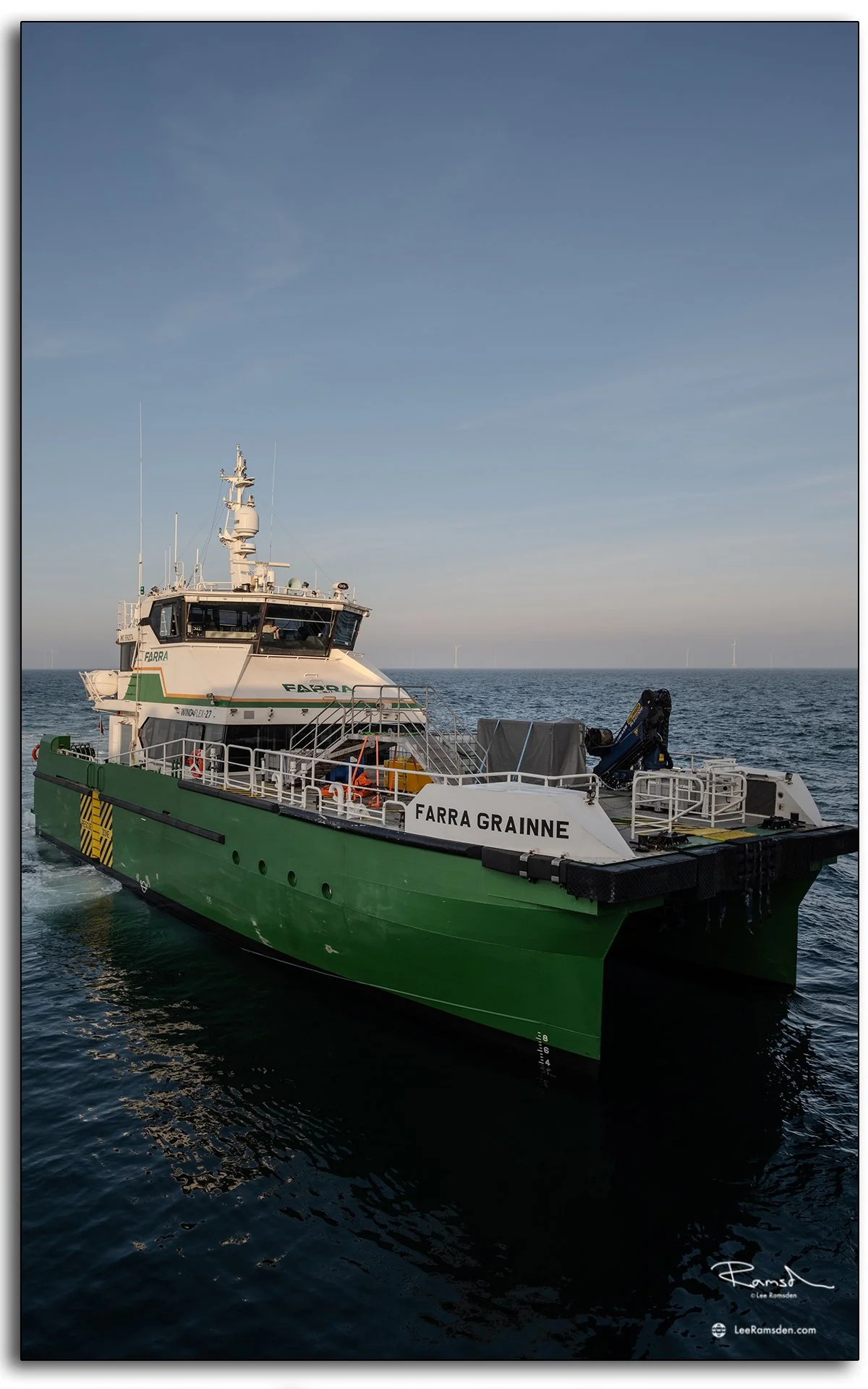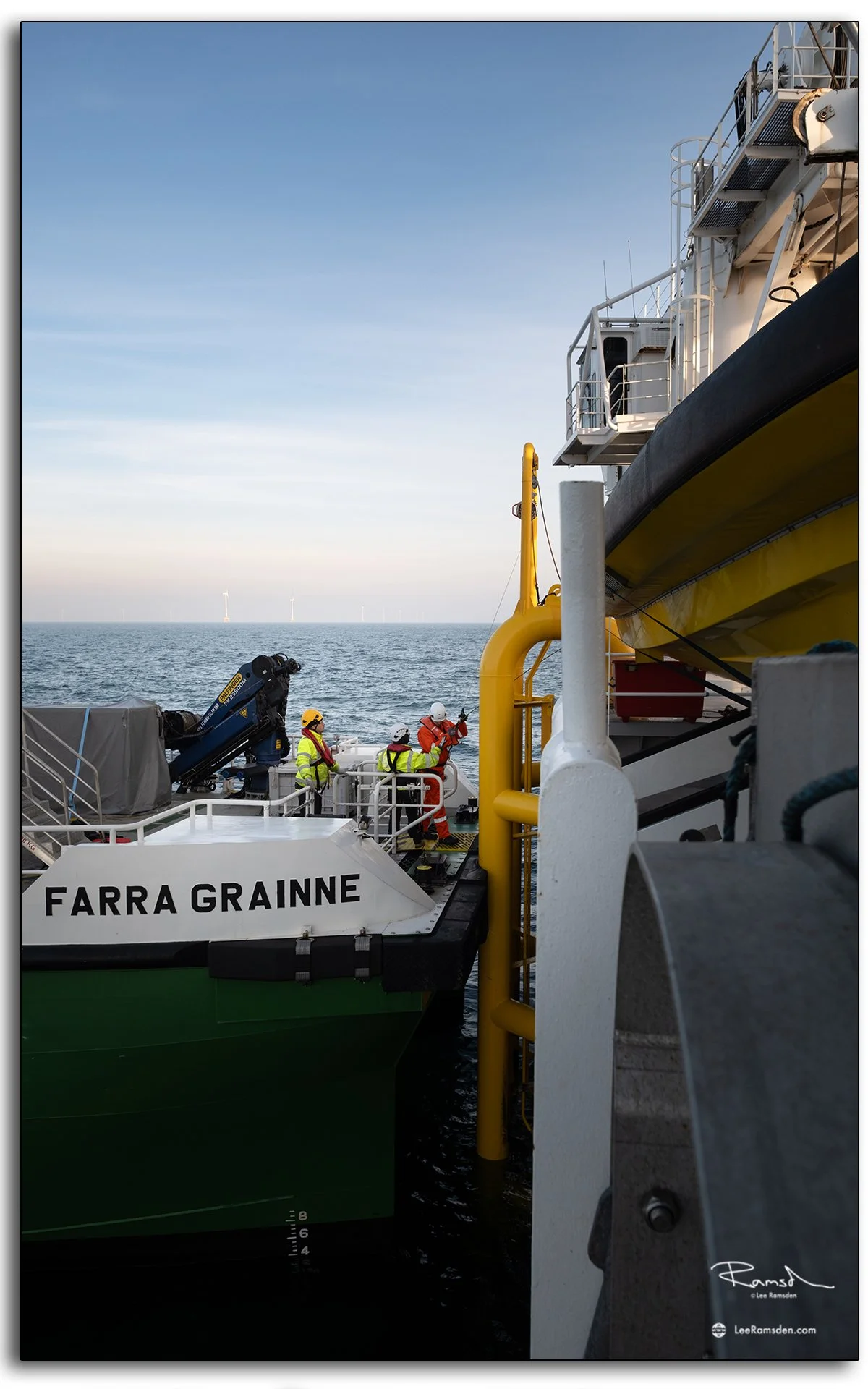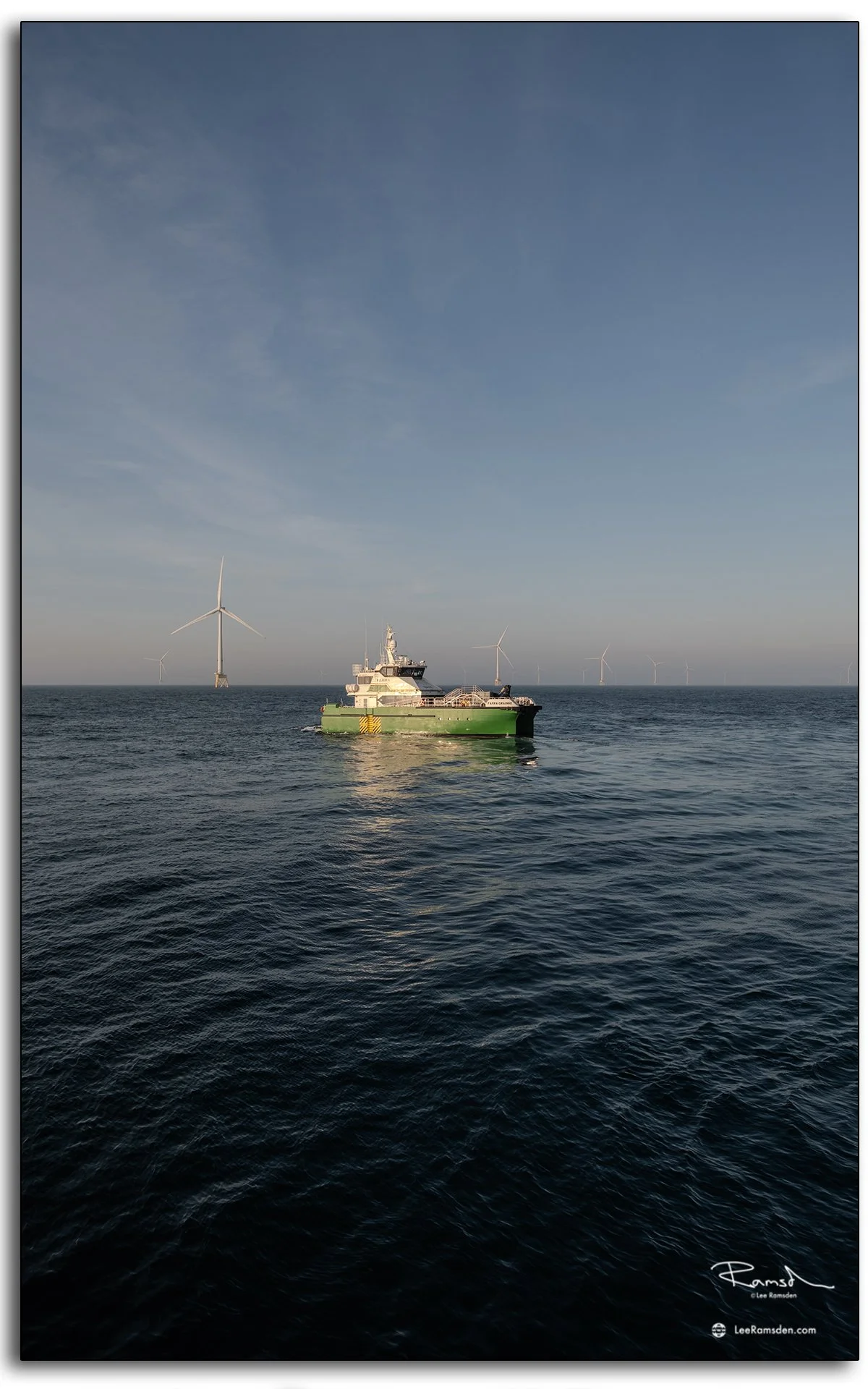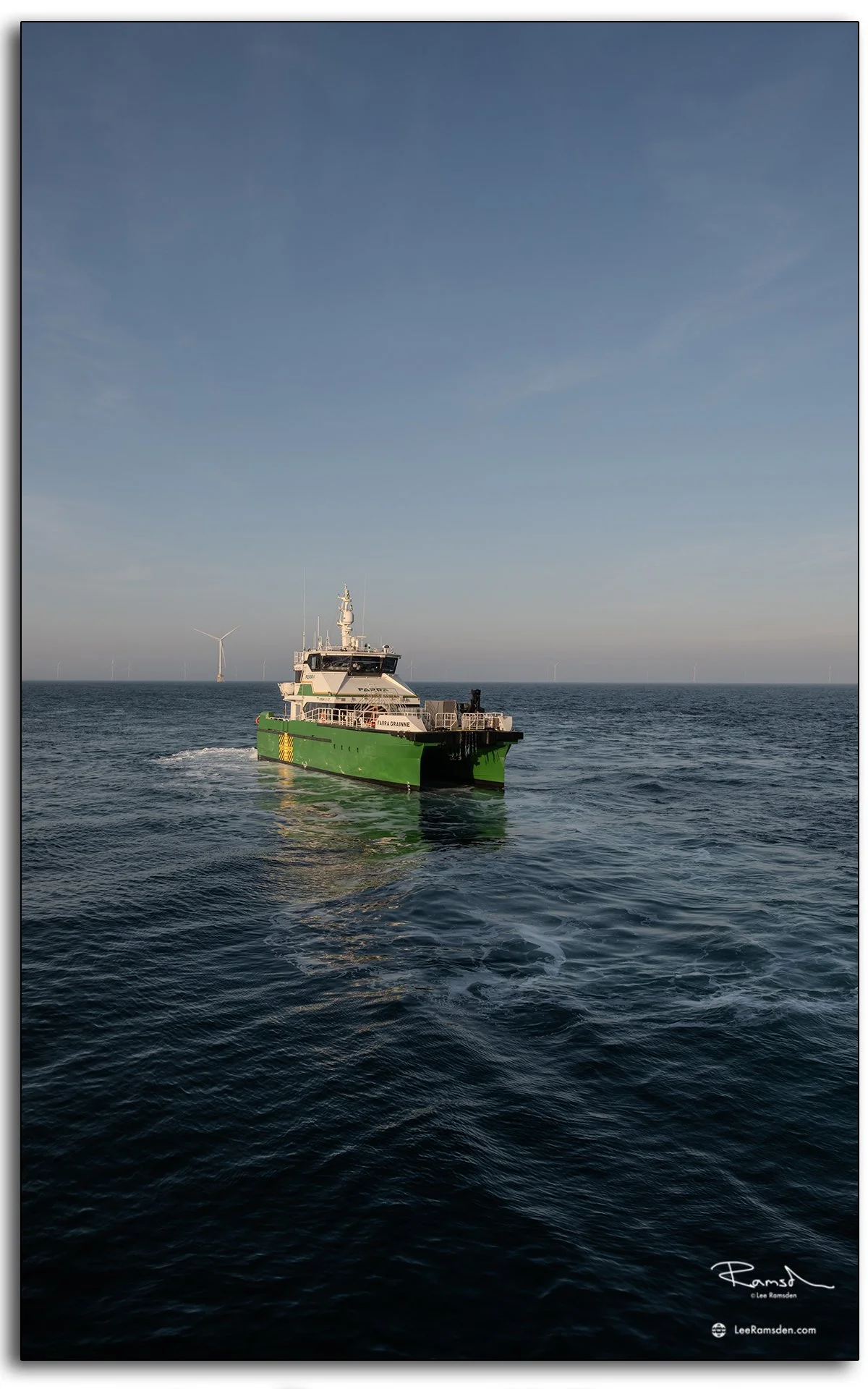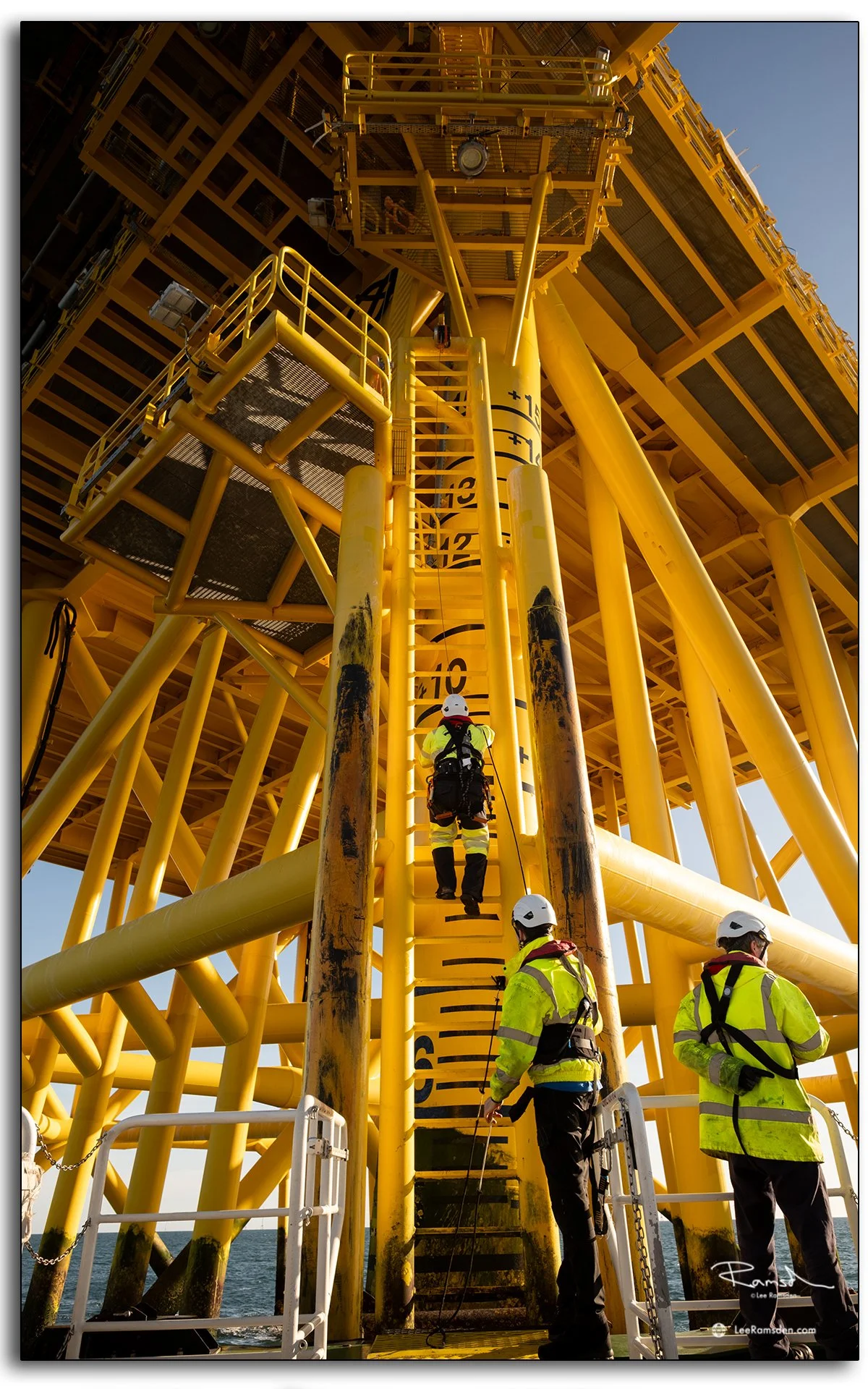
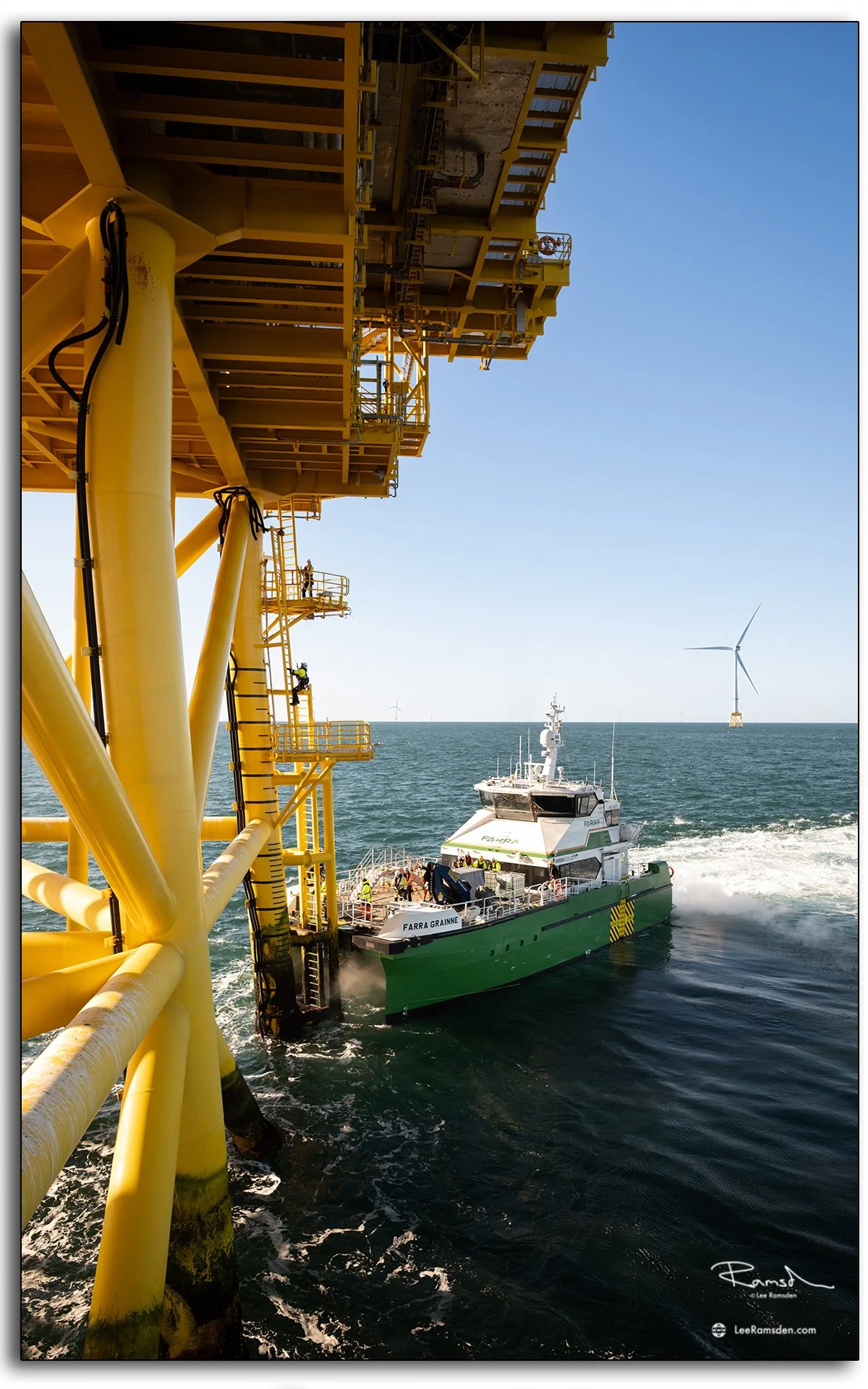
These photographs show a routine but important part of offshore work: personnel transfer from a crew transfer vessel to an offshore structure. In this case, the images capture Farra Grainne alongside the platform and technicians moving onto the access ladder before climbing up to the external level above. It is a common sight in offshore wind, but it is also one of the most controlled parts of the working day.
Industry good-practice guidance for offshore wind describes this type of transfer as stepping from the vessel onto a stationary vertical or near-vertical boat landing ladder while remaining continuously attached to a fall arrest system, before climbing to the external platform on the structure. The same guidance states that the vessel master is expected to ensure stable positioning before transfer is authorised.
That is what gives these images their value. They are not just photographs of a vessel and a ladder. They show the relationship between vessel, structure and people during a live access operation. The first frame gives the wider context, with the CTV pressed onto the boat landing and the offshore wind turbine in the background. The second frame brings the focus onto the actual climb, showing the ladder arrangement, the fender zone and the technicians moving upward onto the structure.
Good-practice guidance from G+ also sets out the main controls around this kind of operation: workers should attach to the SRL before stepping off the vessel, maintain continuous attachment during climbing, and only attempt transfer in suitable conditions. The same guidance highlights the need to avoid crushing between vessel and ladder, and to ensure vessel and boat landing compatibility so that any arrested fall remains within the intended safety zone.
For offshore wind sites more broadly, G+ guidance on small service vessels states that personnel transfers between service vessels and offshore structures should be carried out in accordance with the relevant transfer and working-at-height guidance, with marine coordination, communications and vessel tracking forming part of the wider control framework.
From a photography point of view, the colour and geometry do a lot of the work here. The strong yellow of the platform structure dominates both images, while the green hull of the vessel gives a clear visual contrast against the sea. The lines of the steelwork, ladder and deck edge make the transfer route obvious without needing explanation. It is industrial, functional and direct, which suits the subject.
These are the kinds of scenes that explain offshore work better than a generic wide shot ever can. They show how people actually get to work, how access is managed, and how much coordination sits behind what can look, from a distance, like a simple transfer.