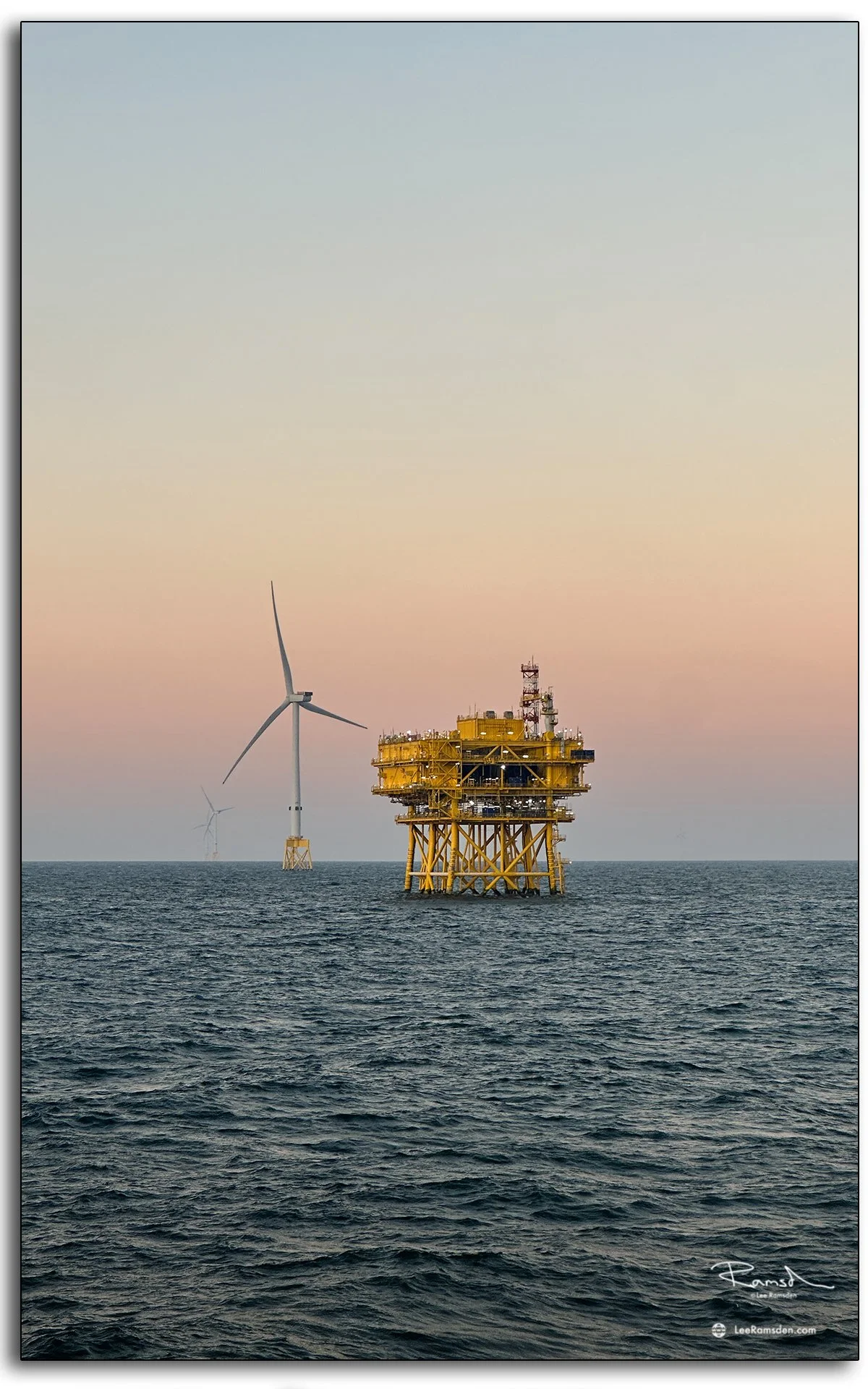
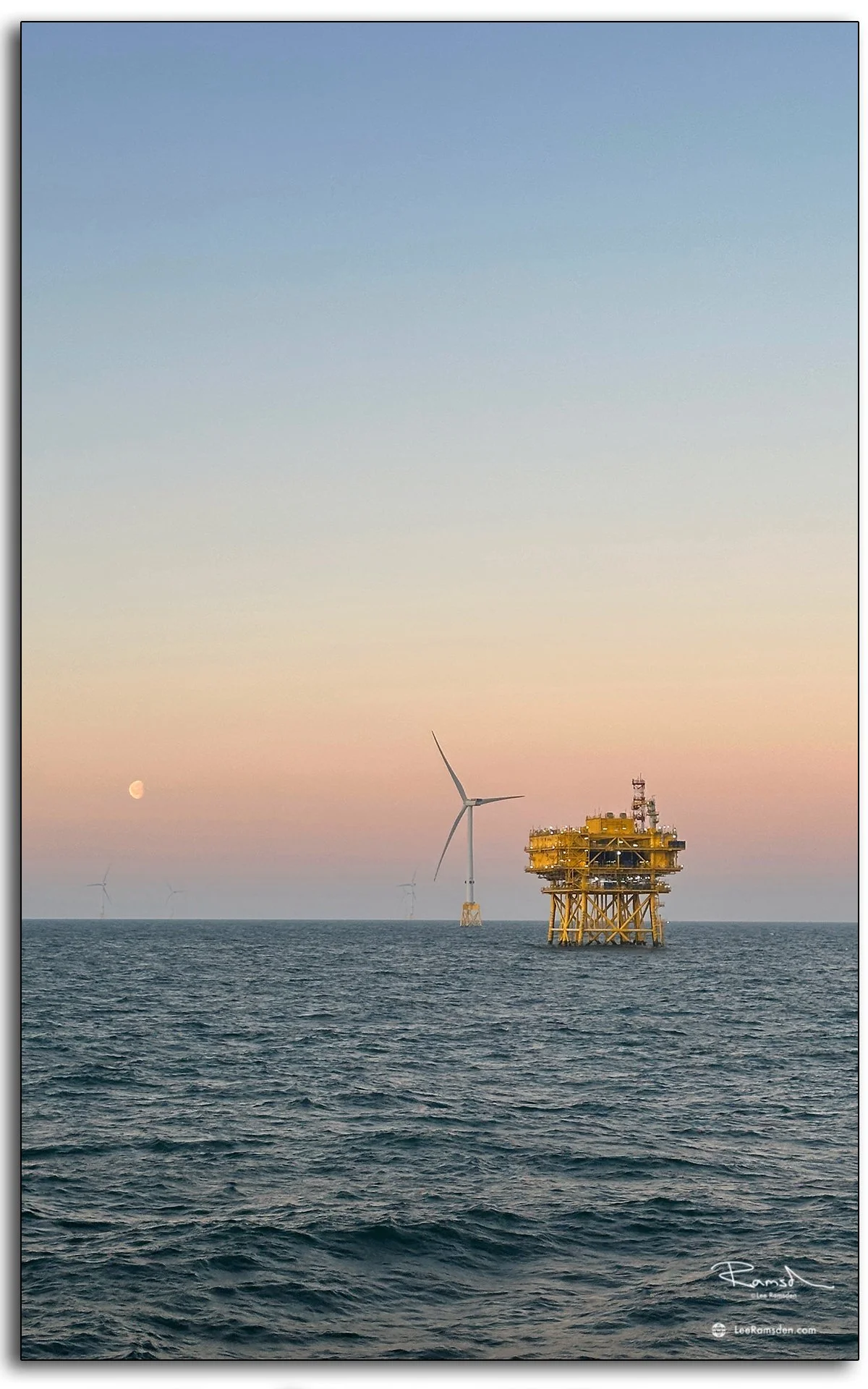
offshore platform

Offshore Sunsets – Wind Turbines at Dusk

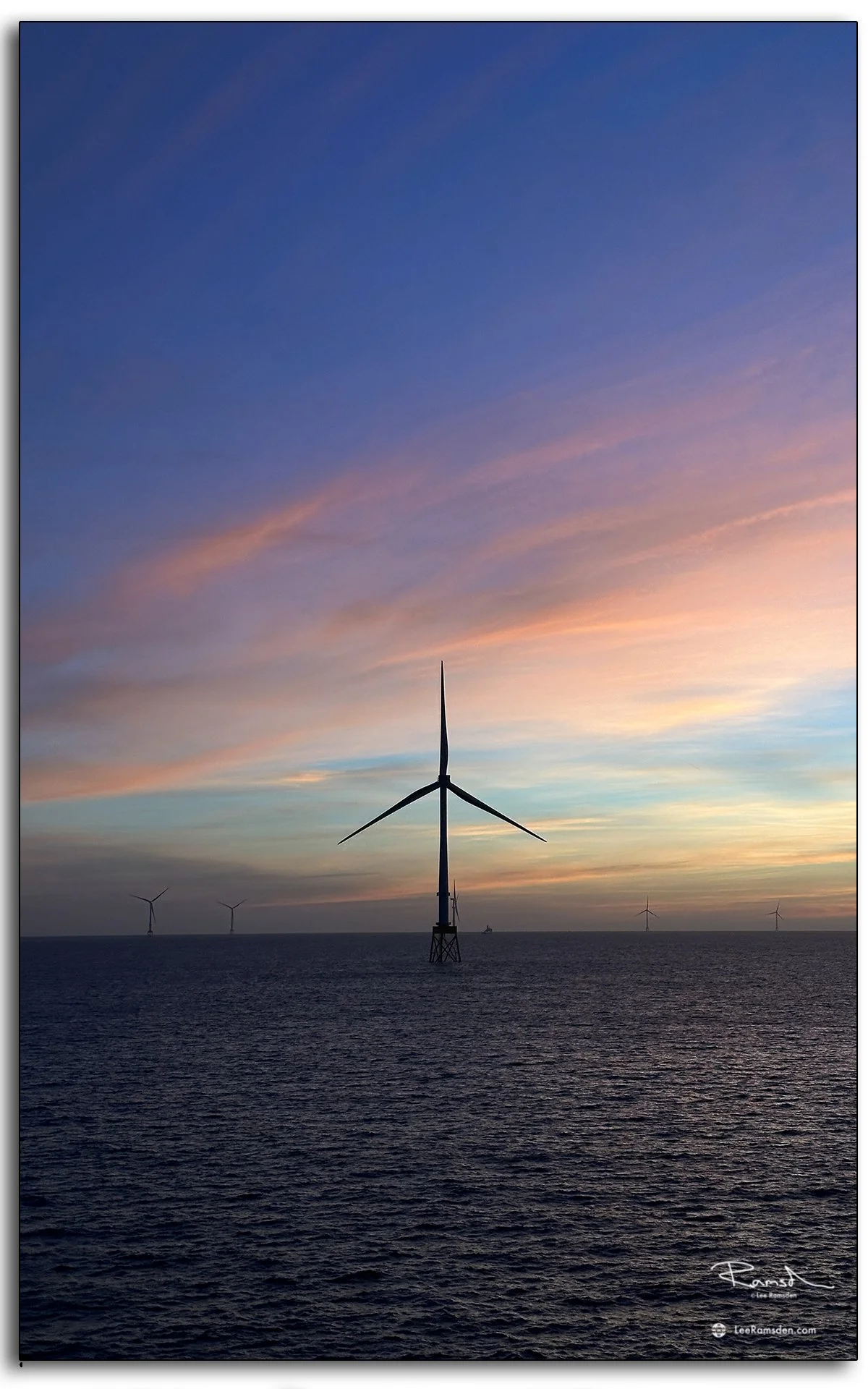
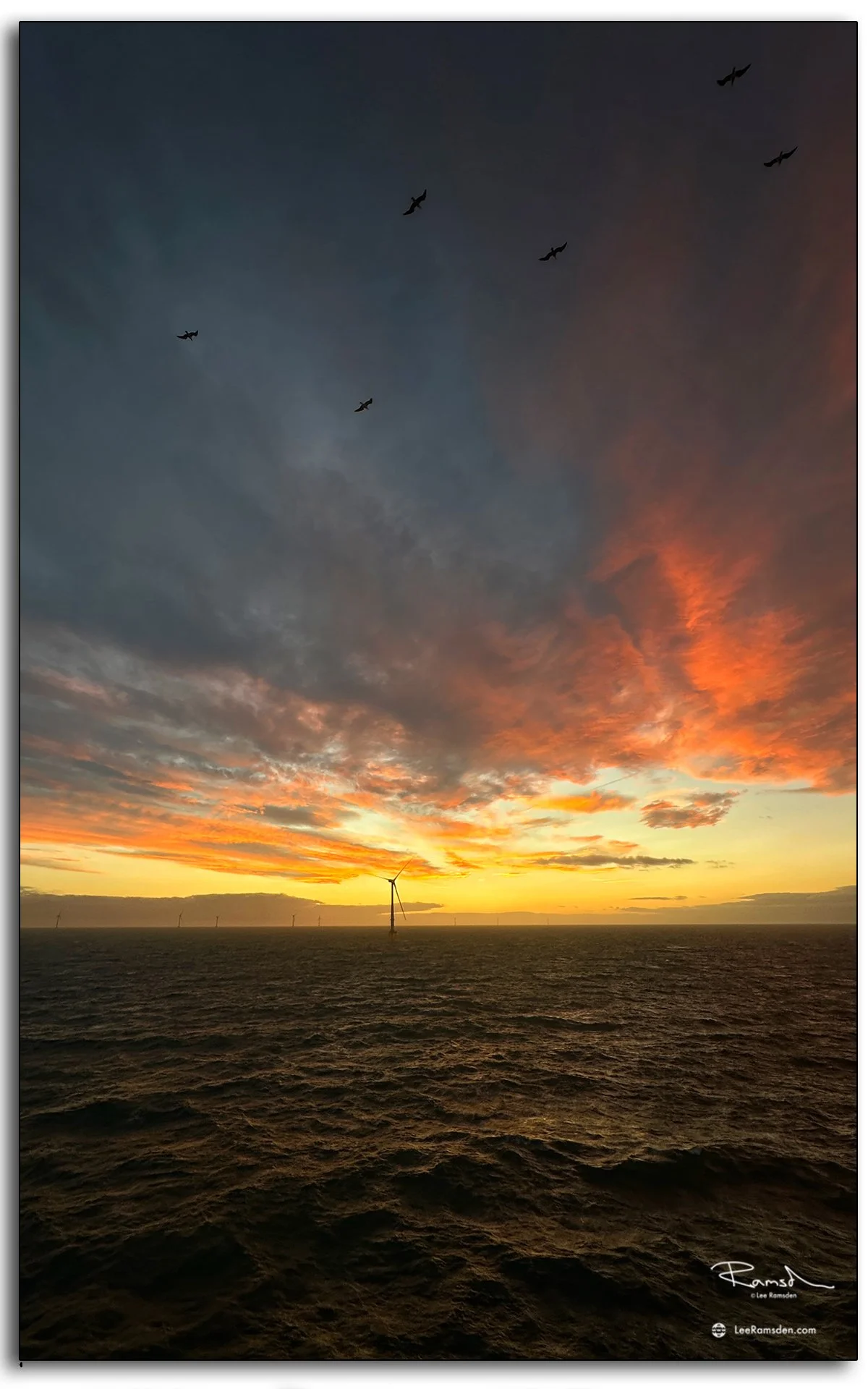
Offshore wind farm at sunset with glowing orange horizon and dramatic clouds overhead.
Close-up of turbines silhouetted against a vivid golden sky at sea.

The North Sea never fails to deliver dramatic light, and these evenings offshore were no exception. The sky burned with shades of orange, red, and violet while the turbines stood calmly against the horizon, a striking reminder of the balance between nature and engineering.

From the deck, I watched the light change quickly, painting the sea and sky with intense colour. It’s these fleeting moments that make offshore life unique—long hours of work rewarded with scenes that most people never get to witness.

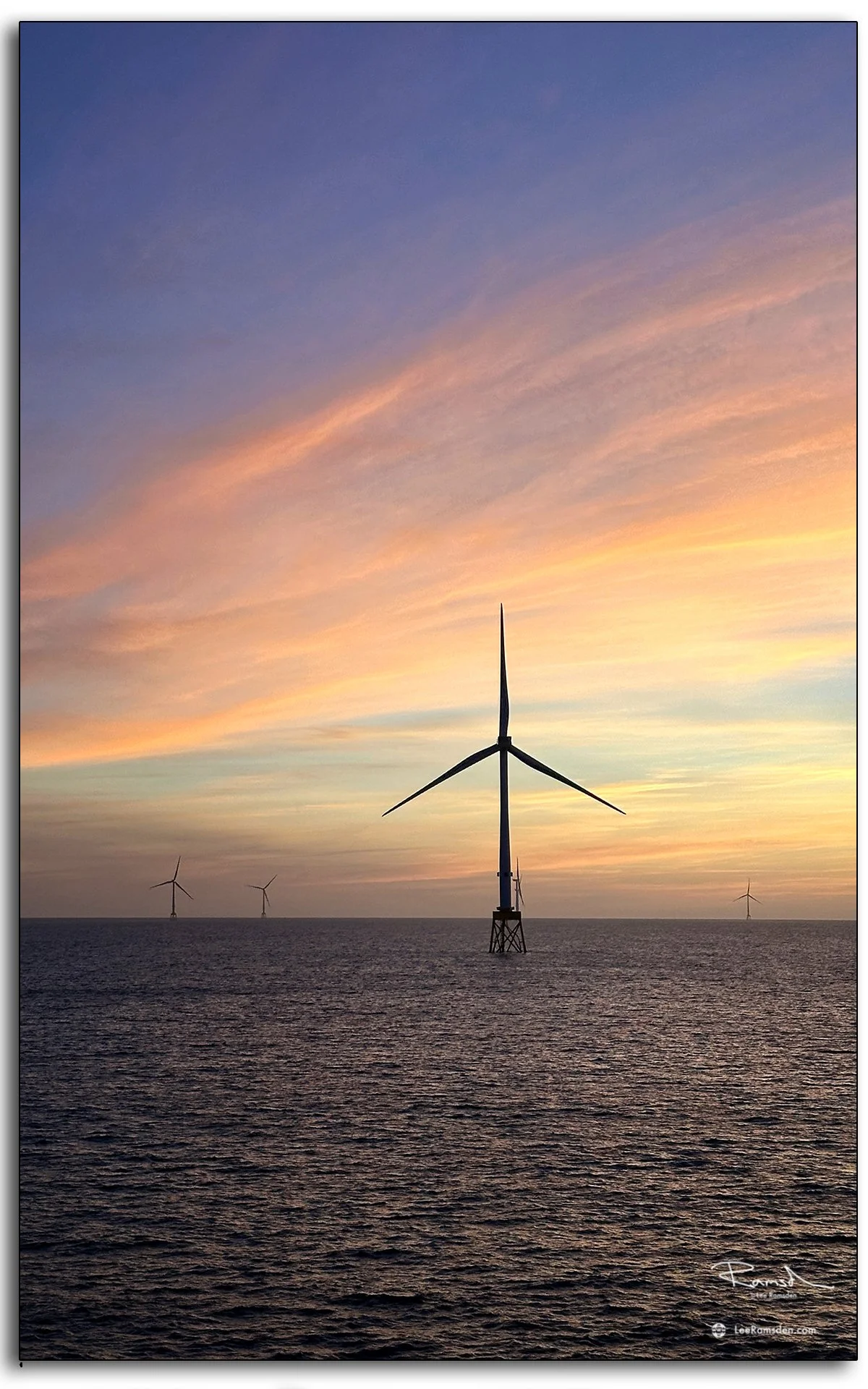
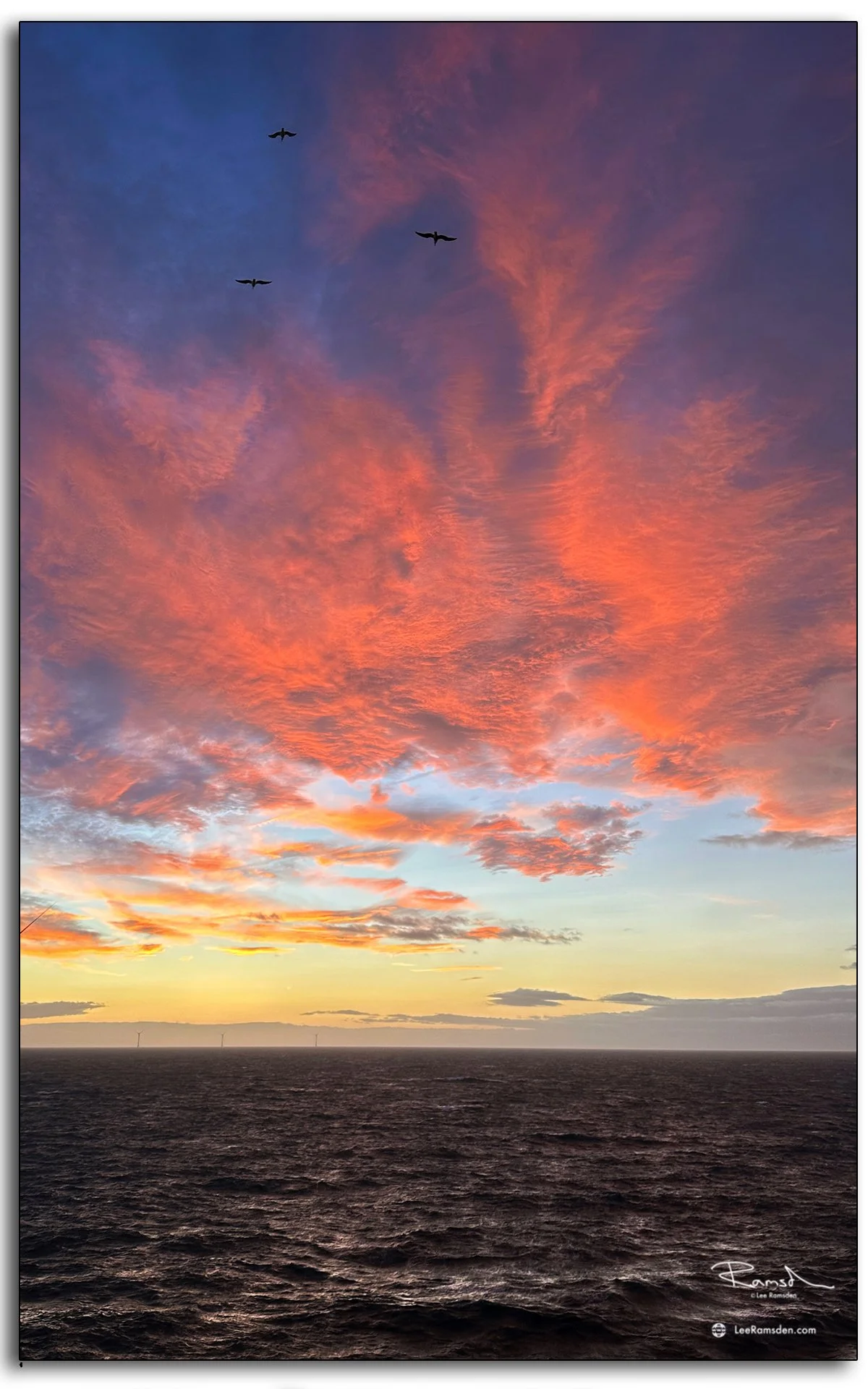
Wide view of offshore wind turbines under glowing sunset skies.
Row of offshore wind turbines lit by fiery orange clouds and evening light.

These iPhone images capture the stillness of the turbines contrasted with the movement of sea, sky, and birds overhead. A reminder that while technology pushes forward, we’re always working within the rhythm of nature.

See more of my Wind Industry work here.

Offshore Substation – The Beating Heart of a Wind Farm

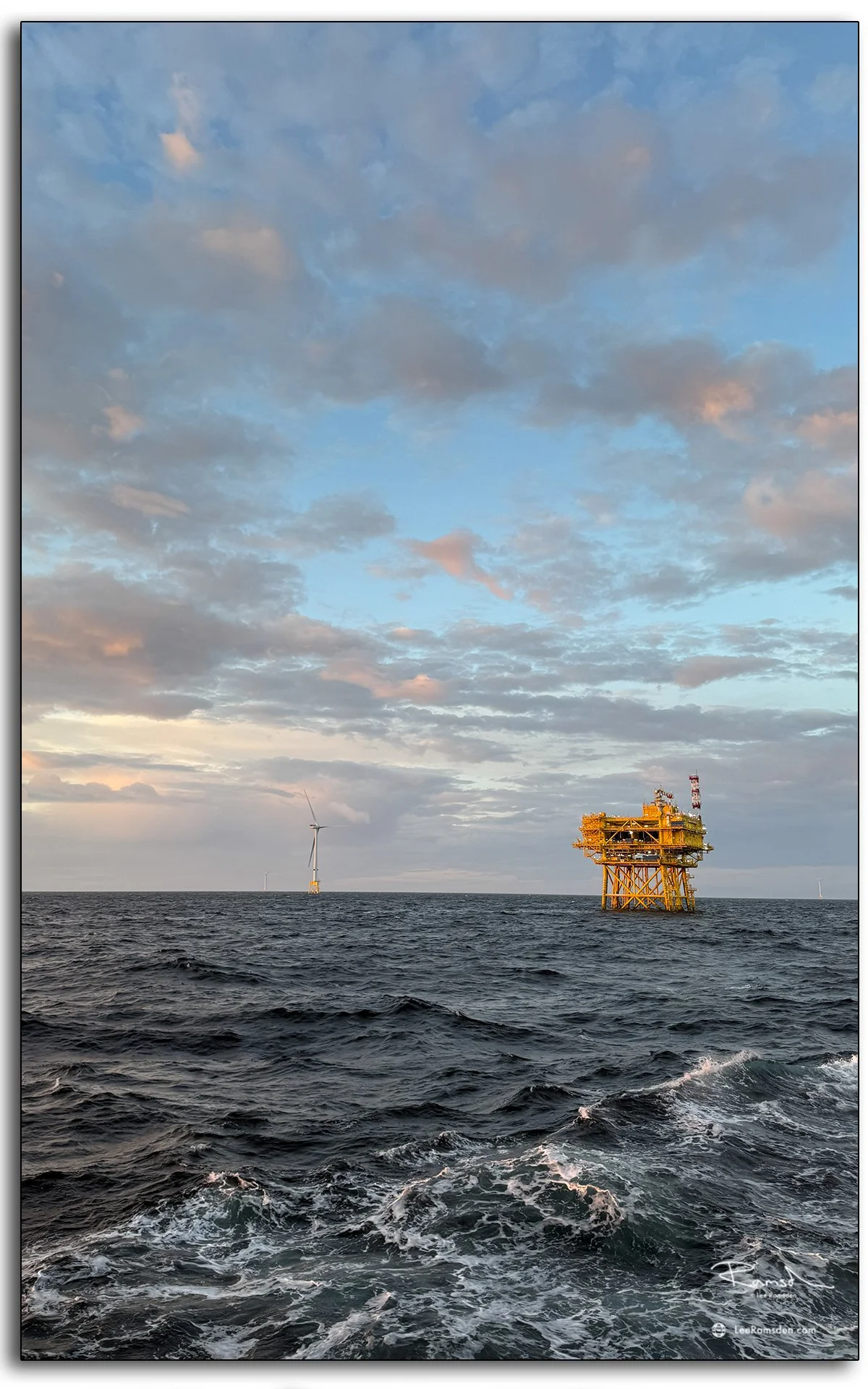
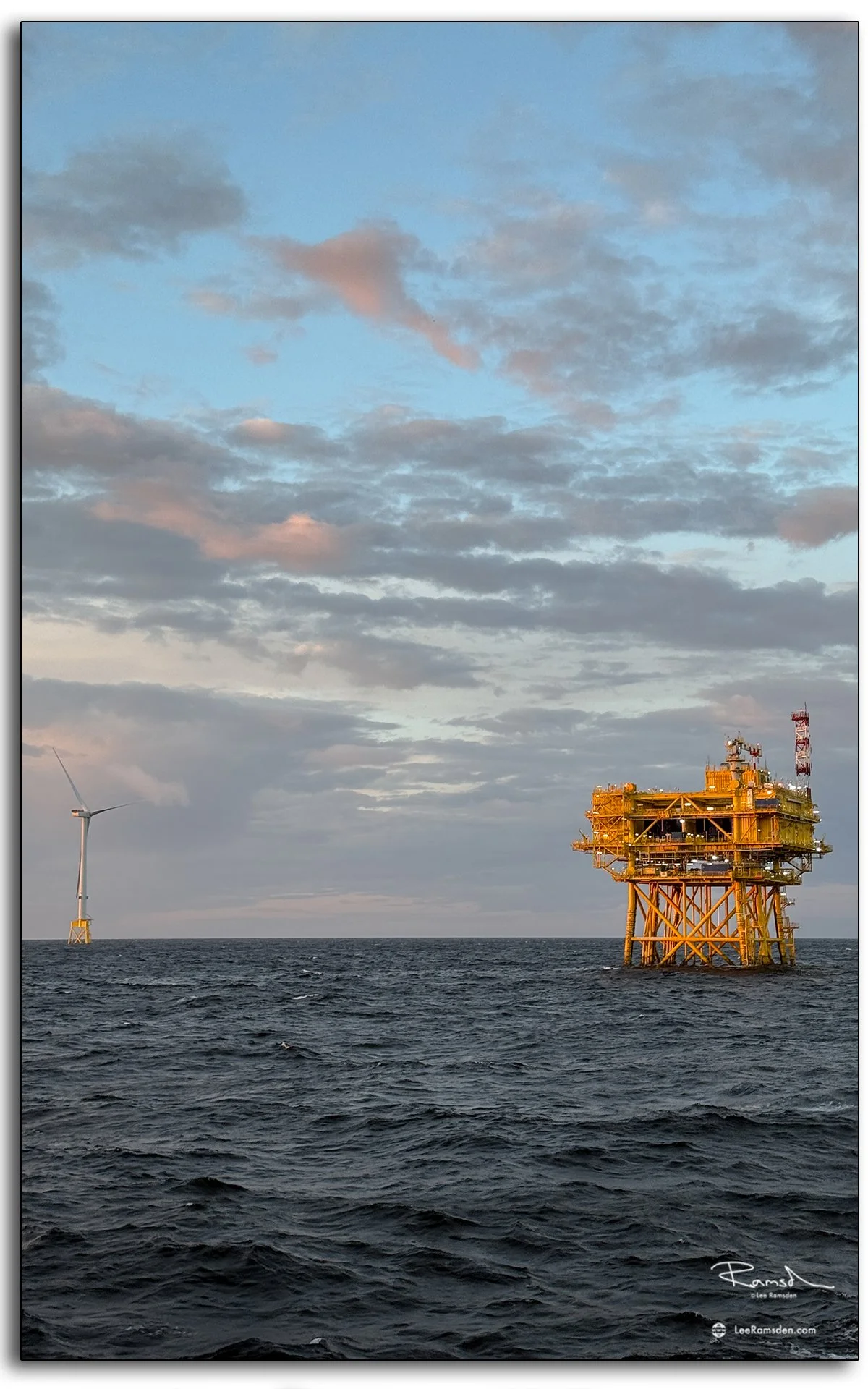
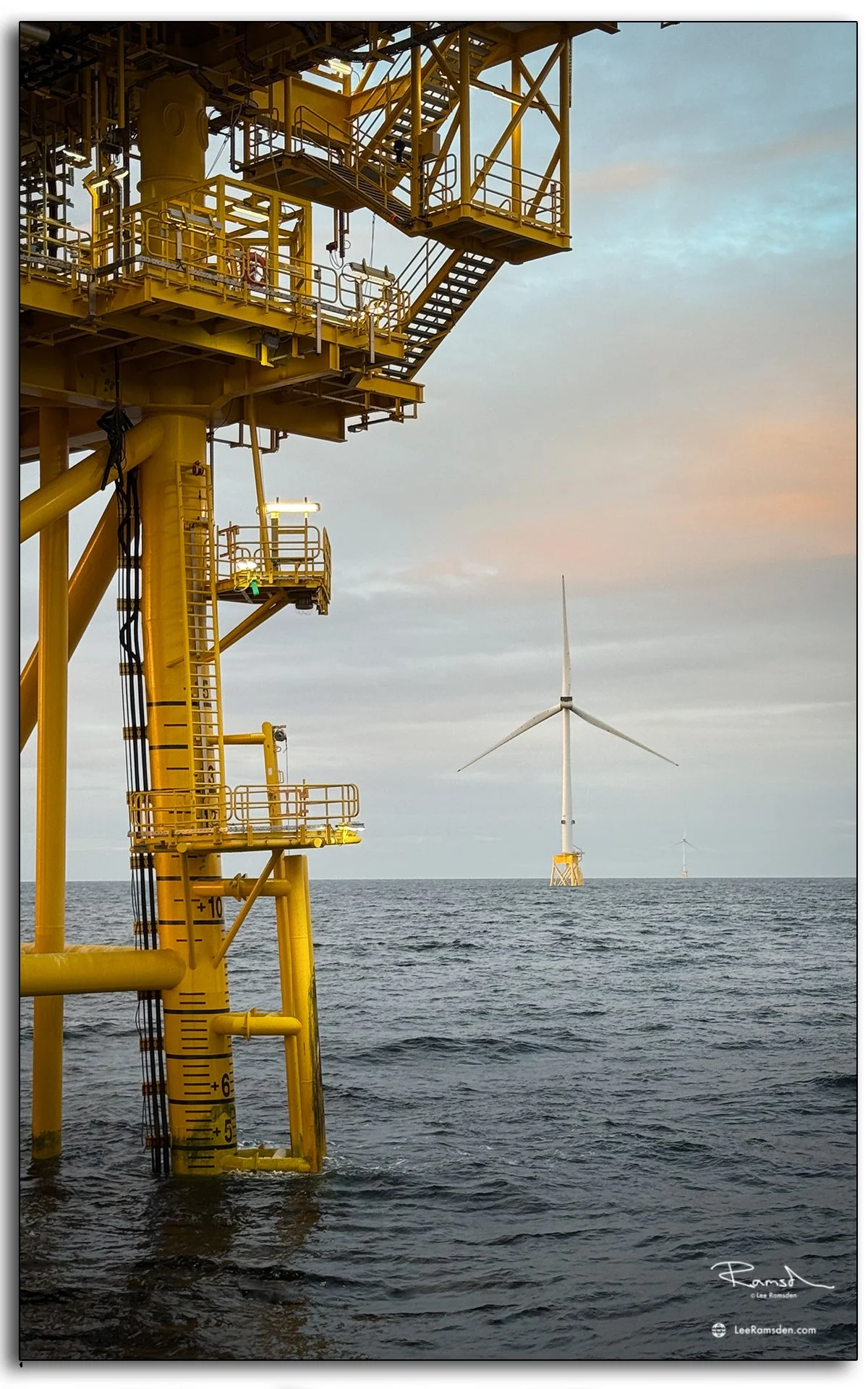
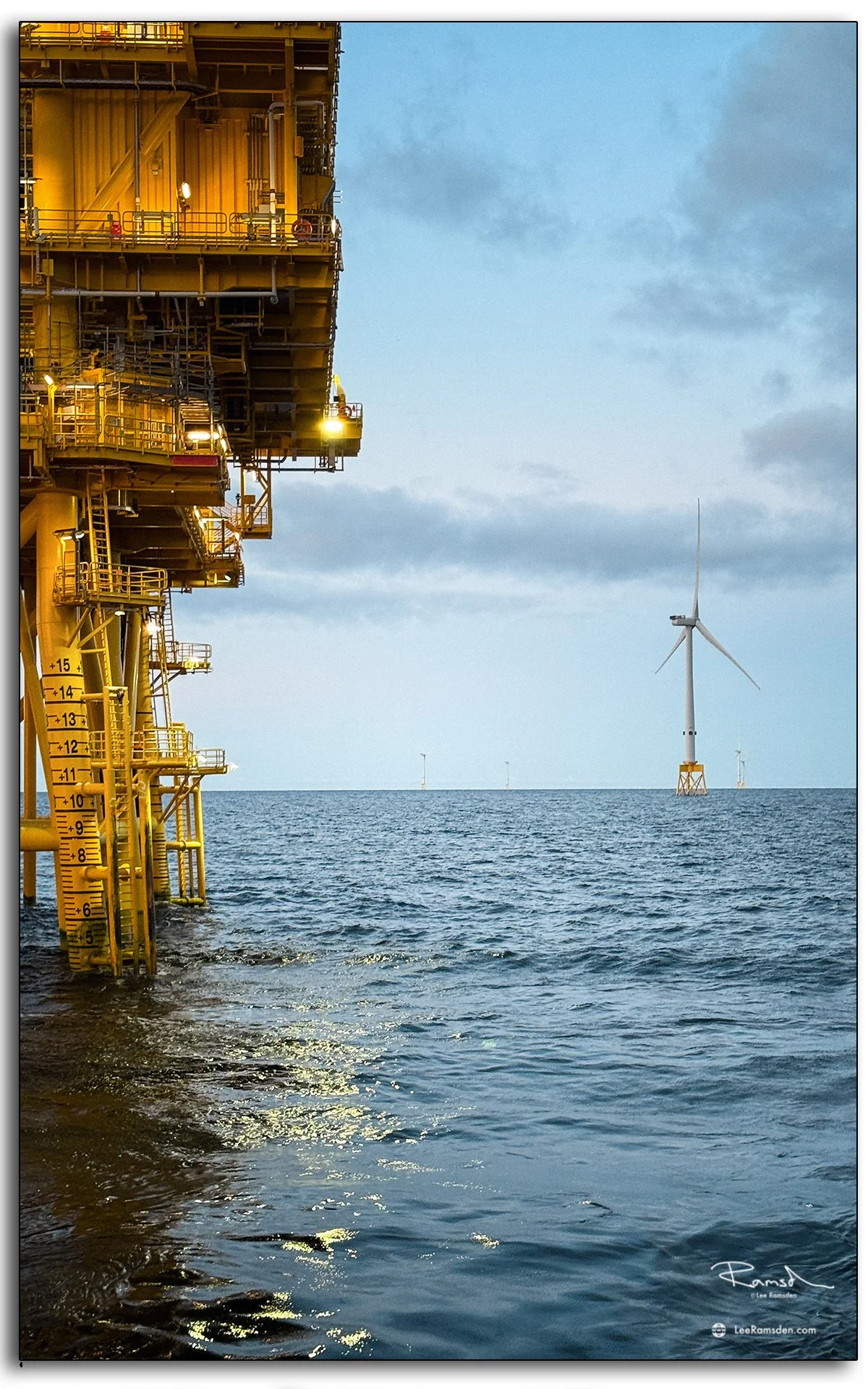
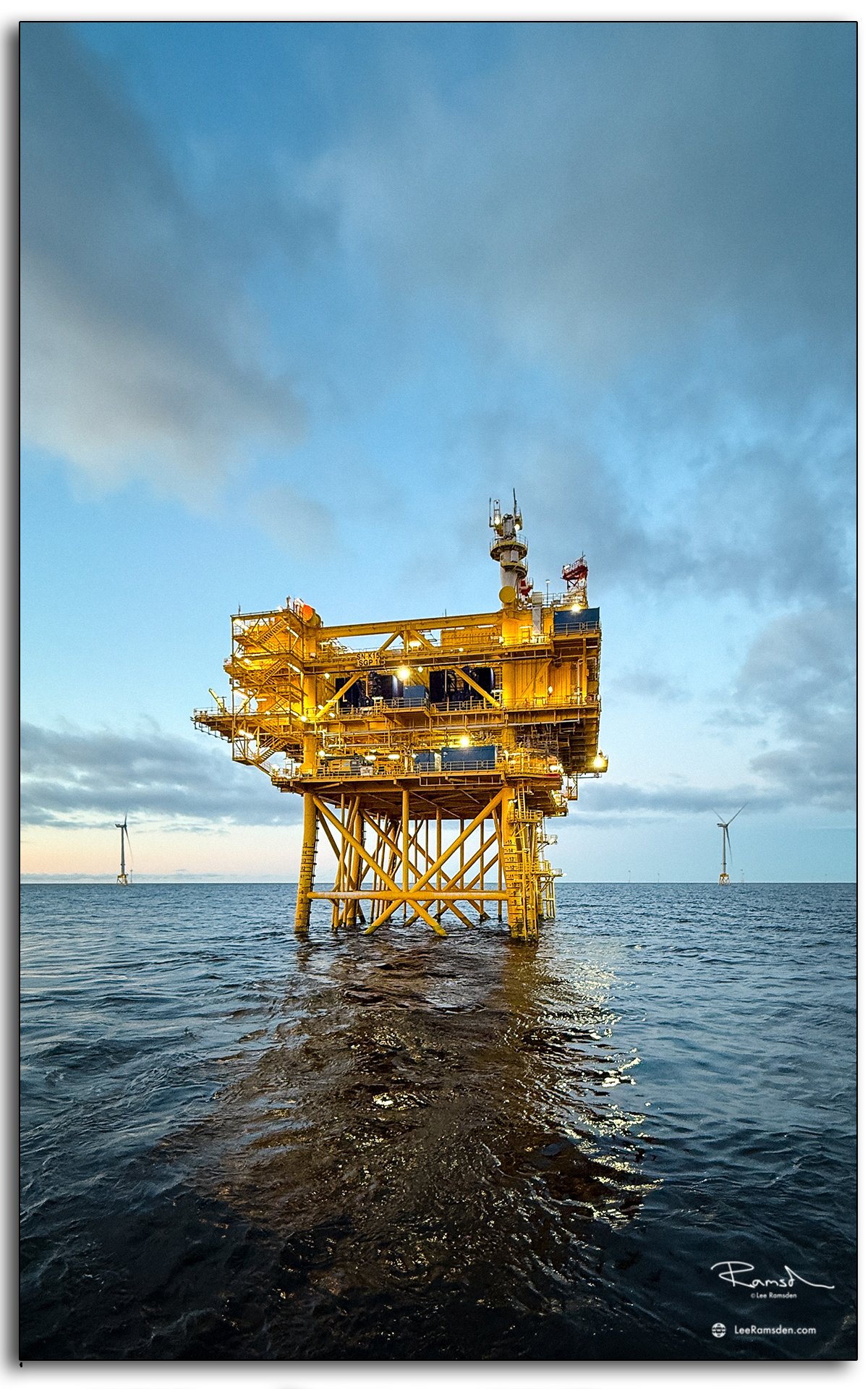
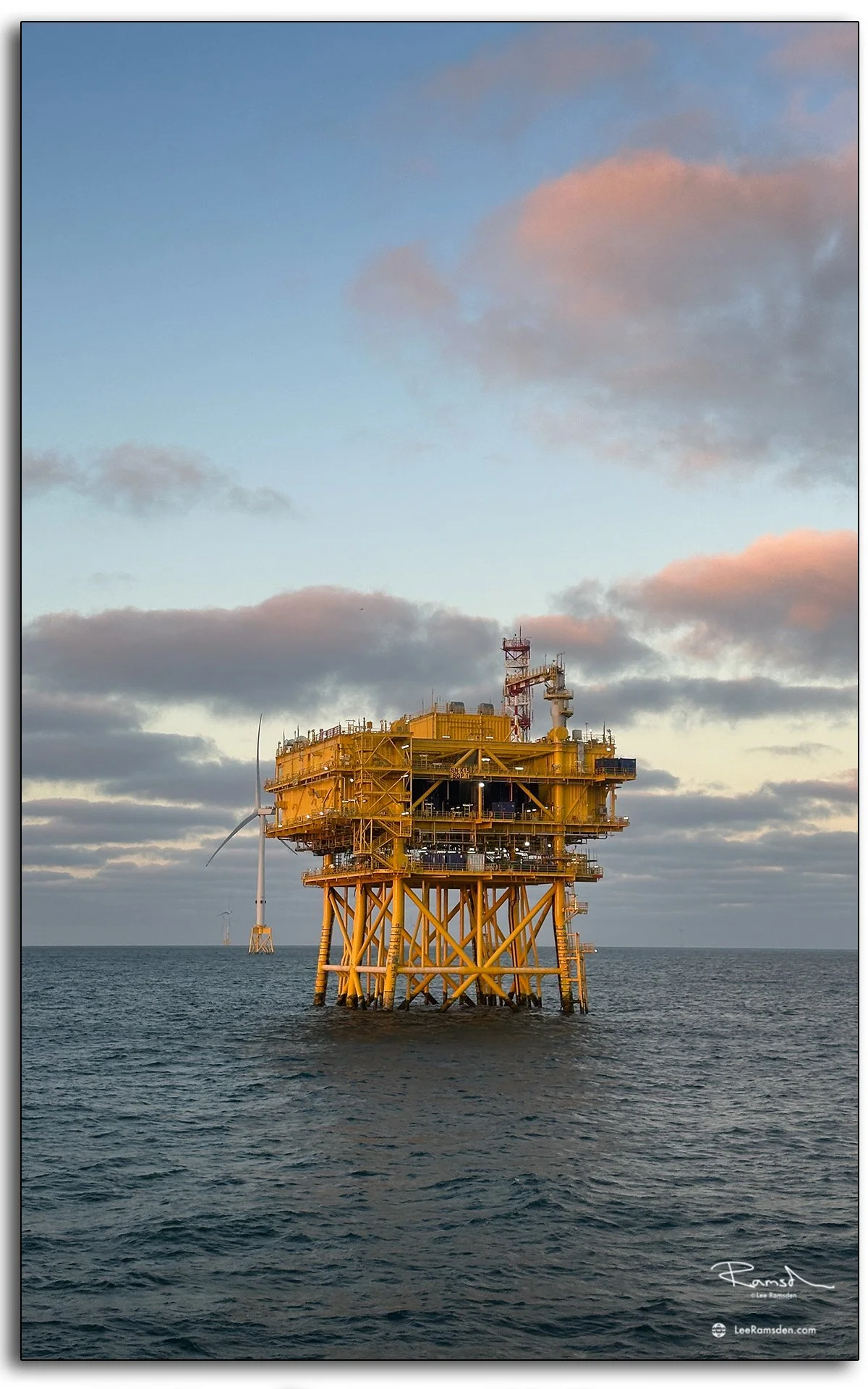
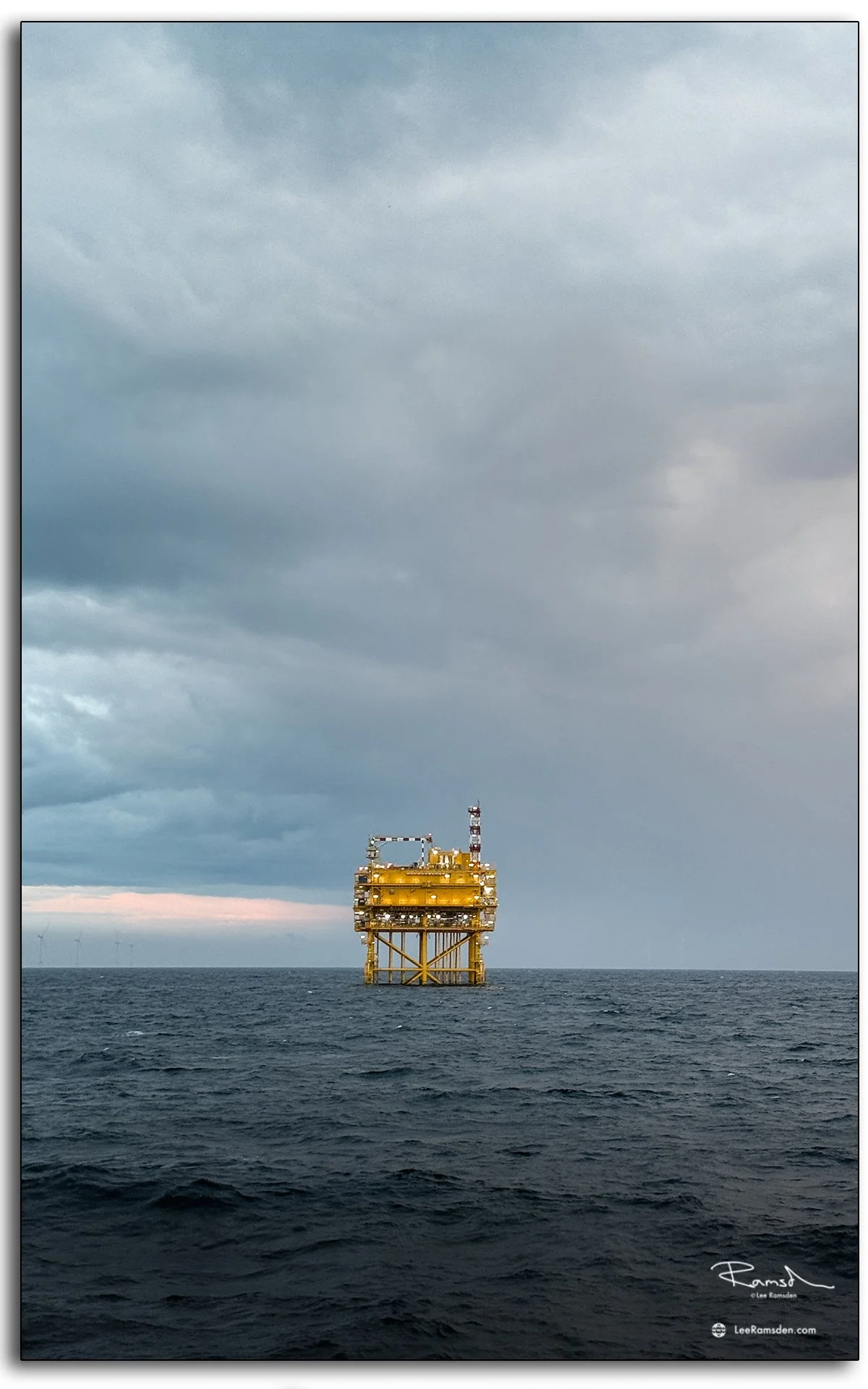
Offshore substation platform illuminated at night, North Sea wind farm.
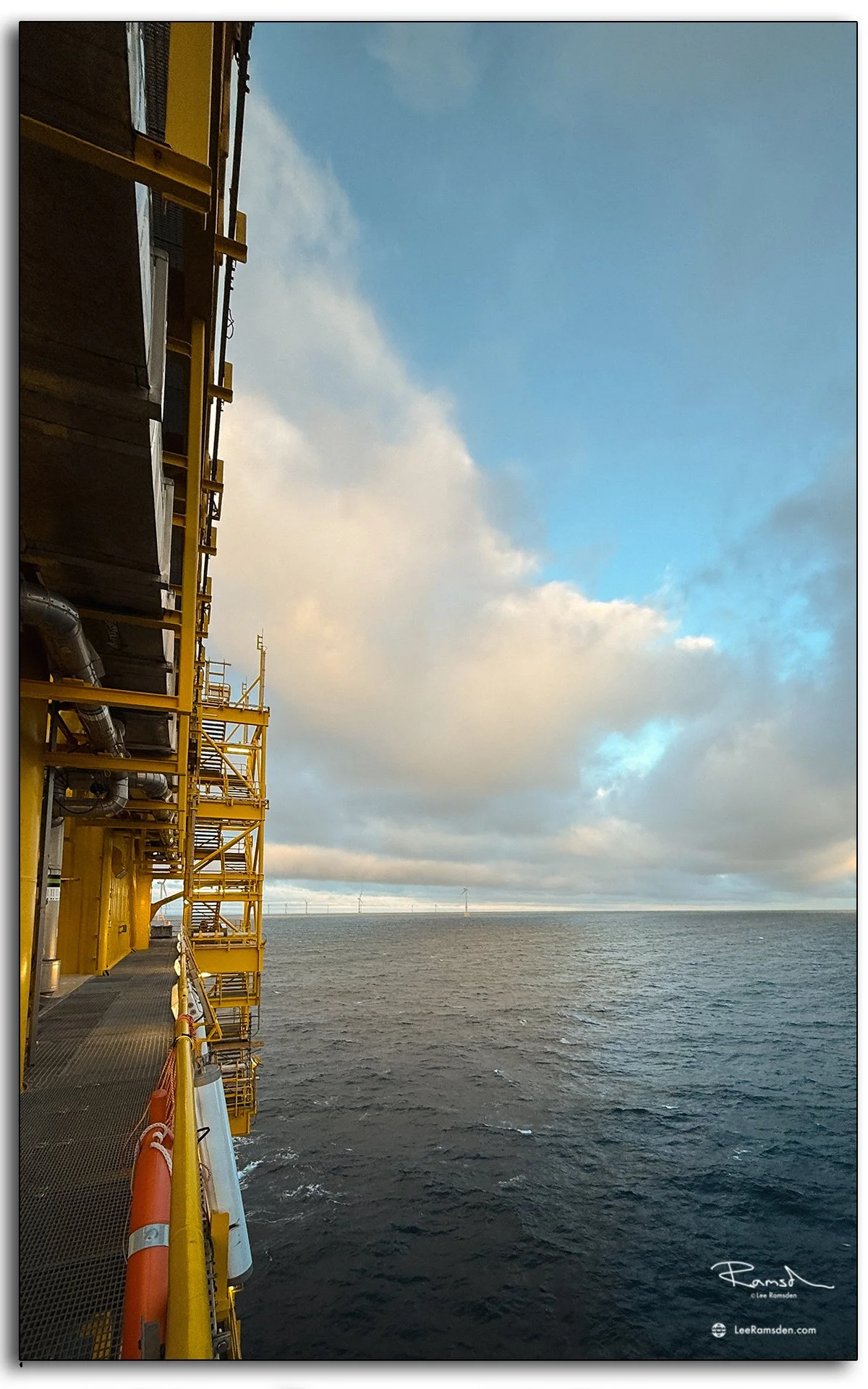
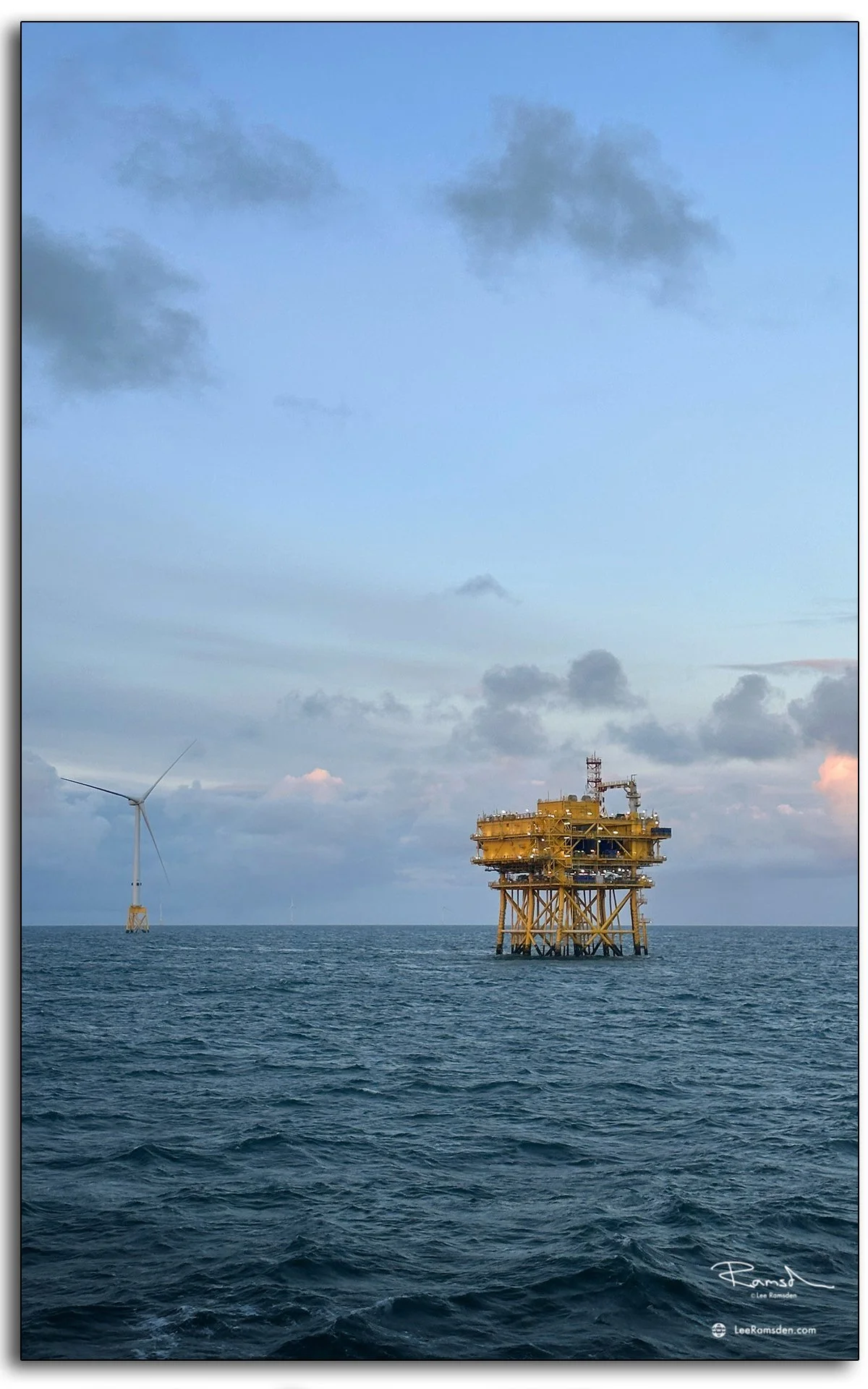
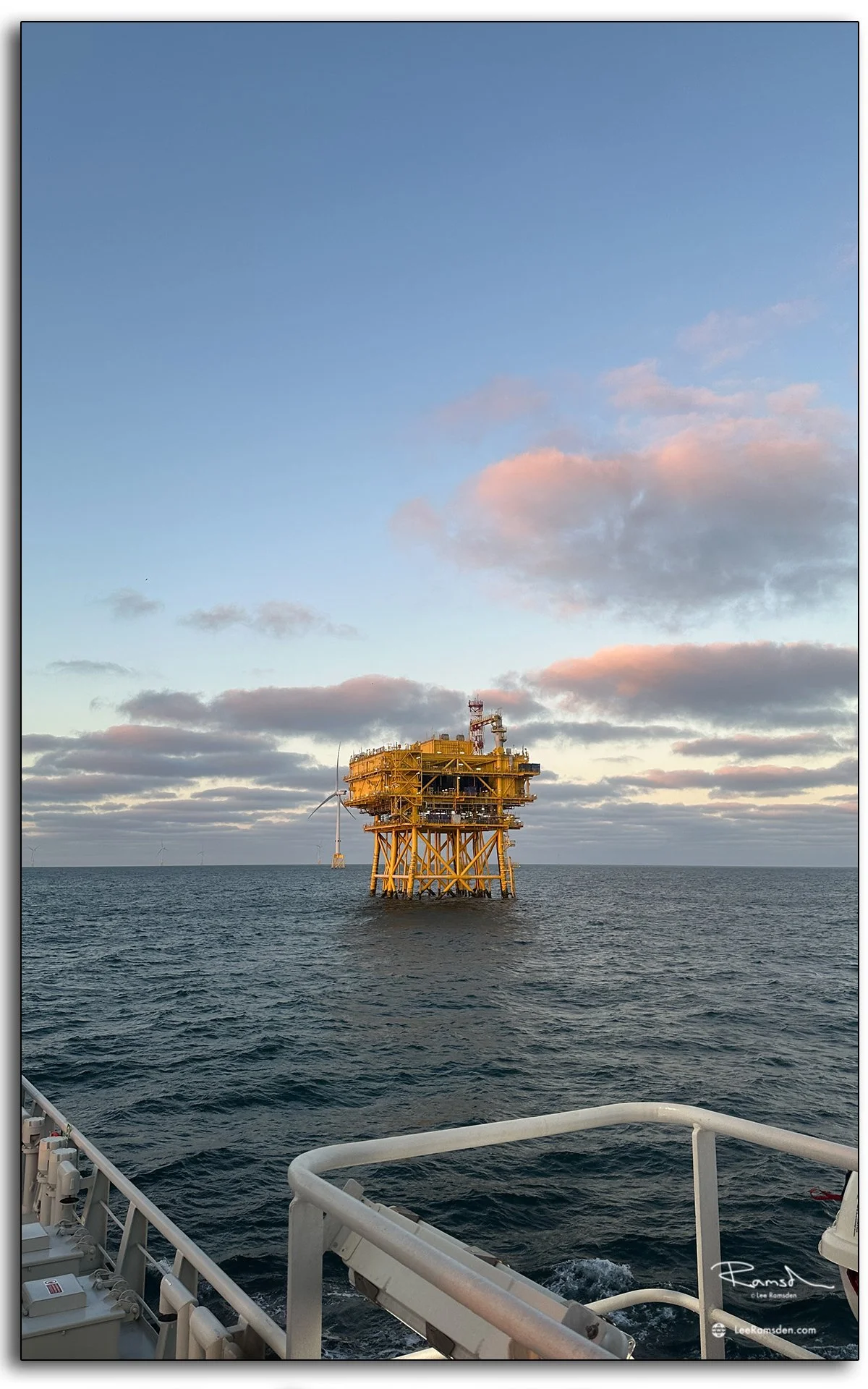
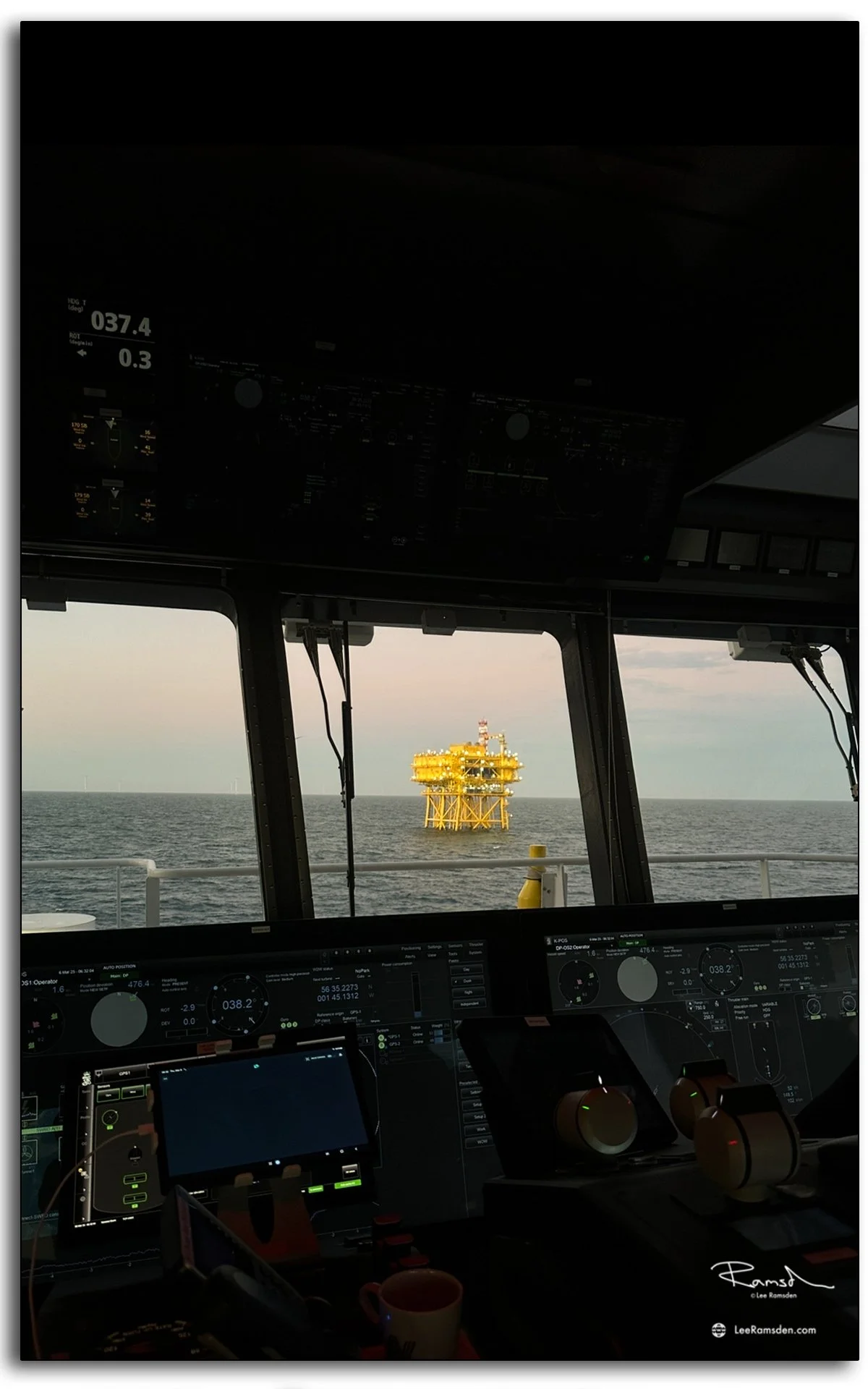
Offshore substation seen from a vessel bridge in the North Sea.

An offshore substation (OSS) is the critical hub of a wind farm, where the power generated offshore is collected and transmitted back to shore. Sitting high above the waves, it is one of the most striking structures in the renewables industry.

From the vessel bridge, the platform is an impressive sight in the distance, glowing gold against the sea at night. These substations not only represent engineering excellence but also play a vital role in the delivery of clean energy across the UK and beyond.

Exploring and photographing offshore substations is always a privilege—capturing them from both the technical working perspective and as powerful silhouettes on the horizon.

The offshore industry is full of dramatic structures and scenes, from turbines to substations. You can explore more of my work in the Wind Industry portfolio, as well as my wider Industrial and Places collections.

The Mariner A oil and gas platform

03 Marienr A; Statoil; Equinor; oil and gas platform; north sea; Lee Ramsden; oil rig; platform; asset; Norwegian; sign; helideck.jpg
01 Marienr A; Statoil; Equinor; oil and gas platform; north sea; Lee Ramsden; oil rig; platform; asset; Norwegian; sign; helideck.jpg

Hello,

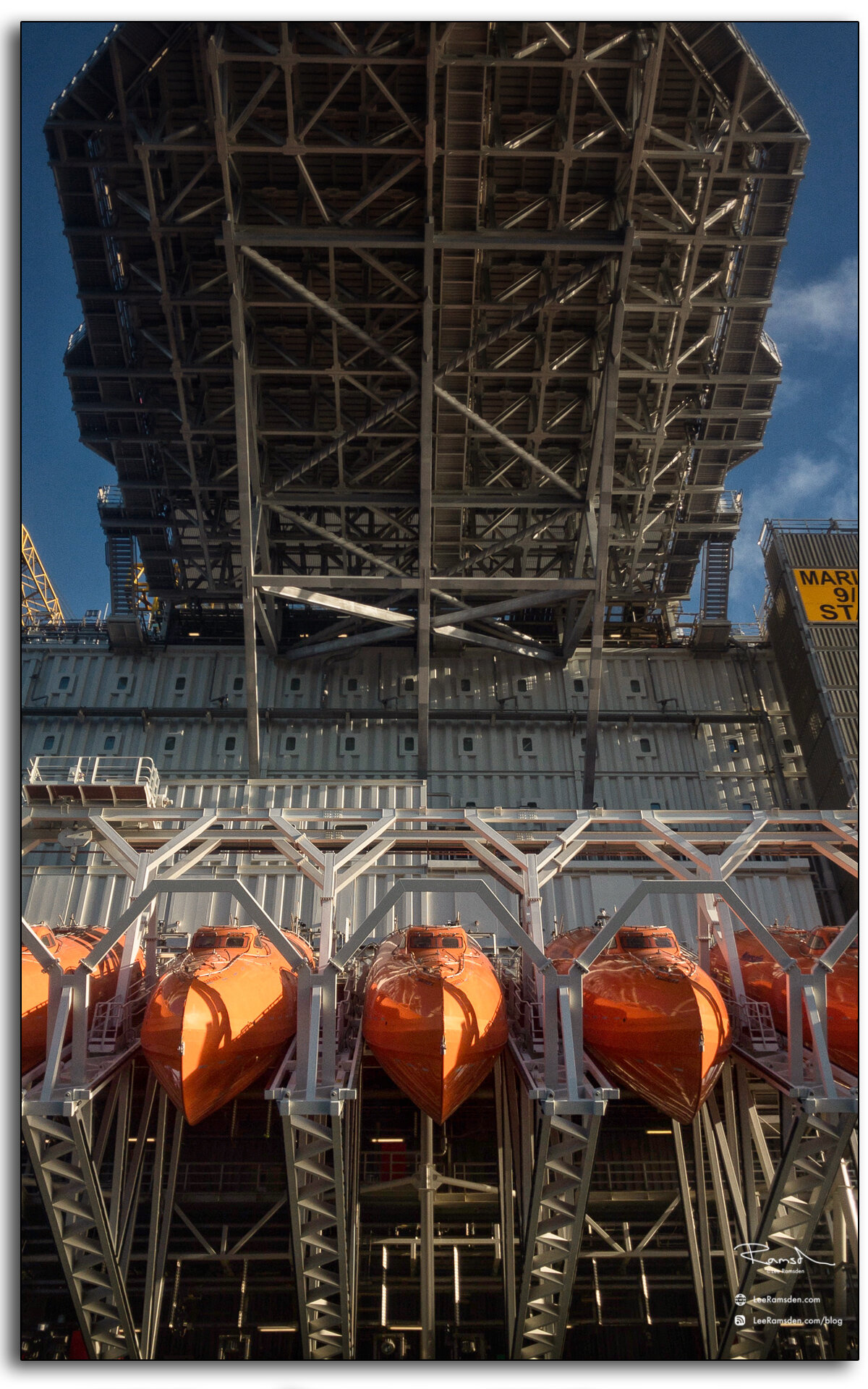
Today i thought that i would talk about the oil / gas rig that you will have seen images of. I was involved with the construction of this beast. At any one time there was 850 people offshore.

As oil rigs go, this is a one of kind.

The Mariner oilfield is located in the United Kingdom sector of the North Sea, about 150 kilometres (93 mi) east of the Shetland Islands, Scotland, in block 9/11a. It was discovered in 1981 at a depth of about 1,200 metres (3,900 ft) below sea level. Water depth in the area is about 100 metres (330 ft). Estimated recovery is at least 250 million barrels (40×106 m3) of oil. 

As of December 2012 the operator, Statoil (now Equinor), made the investment decision and final approval of the field development plan by the UK authorities is in progress. The plan envisages a production, drilling and quarters platform based on a conventional steel jacket, exporting oil via a floating storage unit.

The oil is heavy and viscous, with API gravities of 12.1°–14.6° and viscosities ranging from 67cp in the field's Maureen reservoir to 508cp in the Heimdal reservoir. The small volume of associated gas will be used as fuel for the platform, and more fuel gas will be imported via a connection to the nearby Vesterled pipeline.

02 Marienr A; Statoil; Equinor; oil and gas platform; north sea; Lee Ramsden; oil rig; platform; asset; Norwegian; sign; helideck.jpg
04 Marienr A; Statoil; Equinor; oil and gas platform; north sea; Lee Ramsden; oil rig; platform; asset; Norwegian; sign; helideck.jpg

In summary

It took over 35 years to work out how to extract this super heavy thick oil. The diluting solution that mixes with the oil, thins it out, and we end up with an even better product. As this platform isn’t on a pipe line, she is connected a large vessel, known as an FSU (floating storage unit) This FSU pumps the diluting solution to the platform, and the platform then pumps back the recovered oil. A large tanker comes into the field every few days to collect the produced oil.

Amazing isn’t it.

Have a good week.


Lee