travel scotland

Uig Sands Rooms – A View Worth the Journey

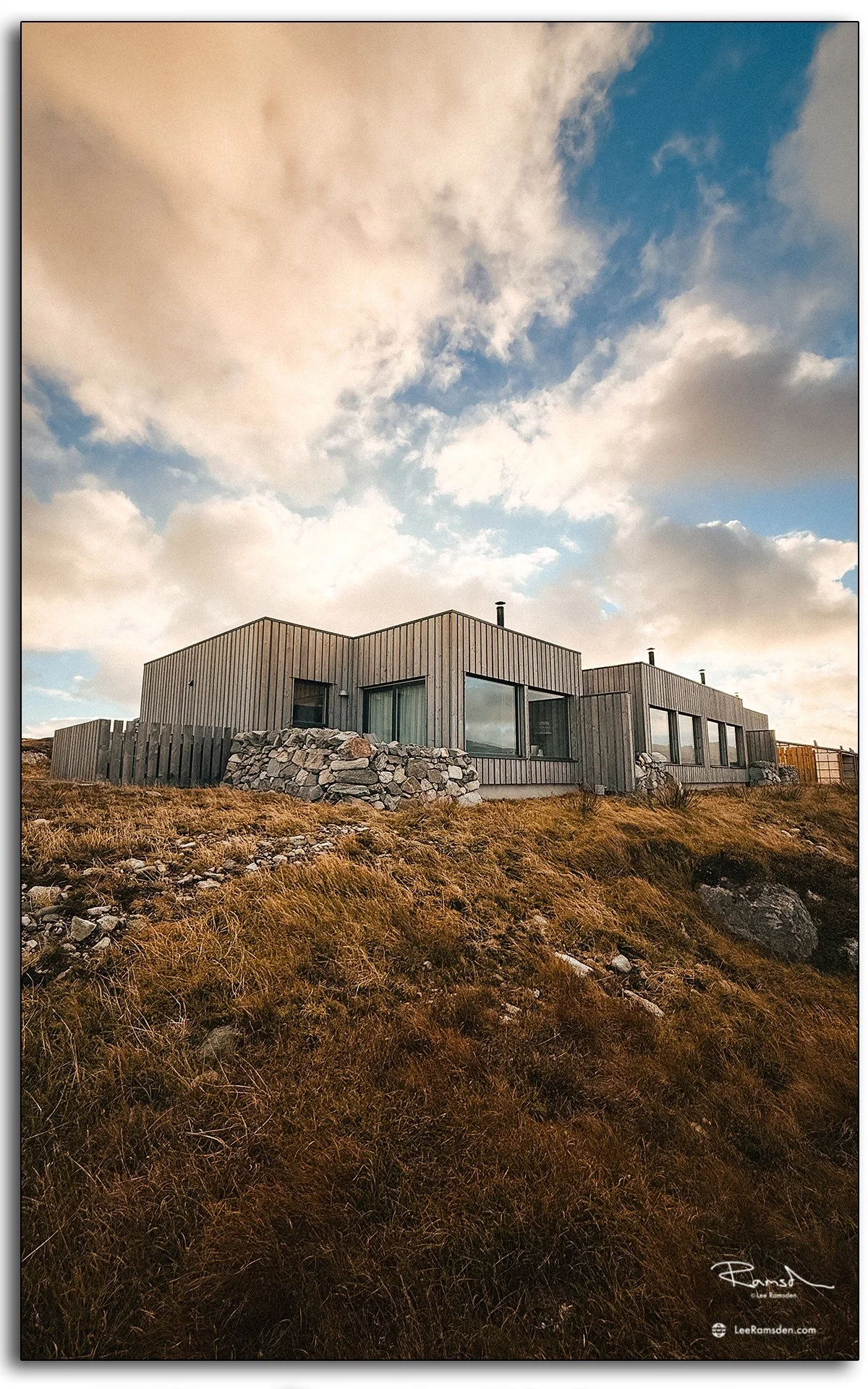
Uig Sands Rooms luxury accommodation on the Isle of Lewis, Outer Hebrides, set against dramatic skies and moorland scenery.
Campervan parked outside Uig Sands Rooms on the Isle of Lewis, Outer Hebrides, during sunset with kayaks on the roof

After days of wild camping and weather that changed by the minute, staying at Uig Sands Rooms felt like another world. The building itself blends perfectly into the landscape — simple, modern, and built to showcase the views rather than distract from them.

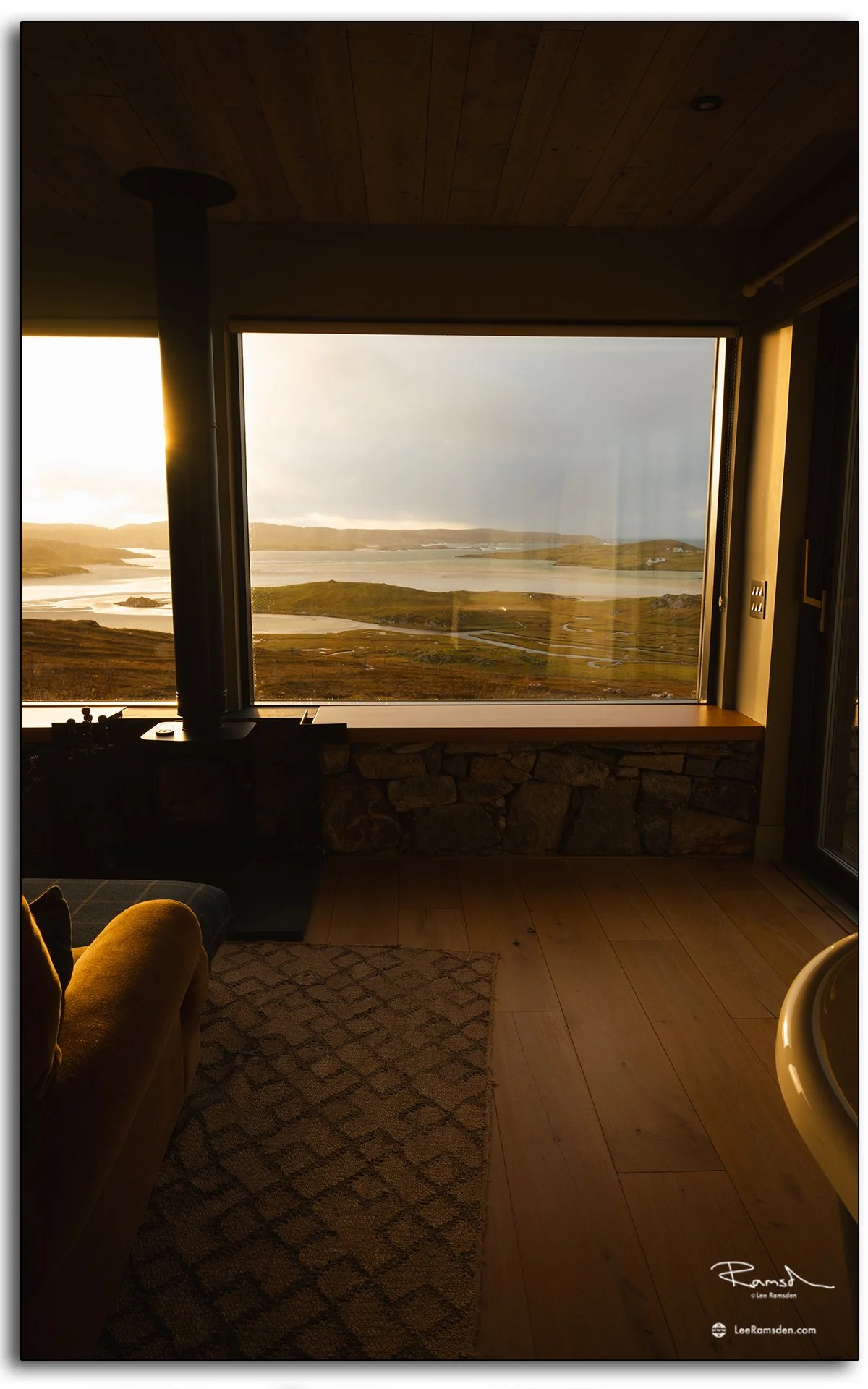
Every window looks out across the sands and tidal waters of Uig Bay. As the light shifts, so does the scene — bright gold one moment, mist and shadow the next. You could sit for hours and never see the same view twice.
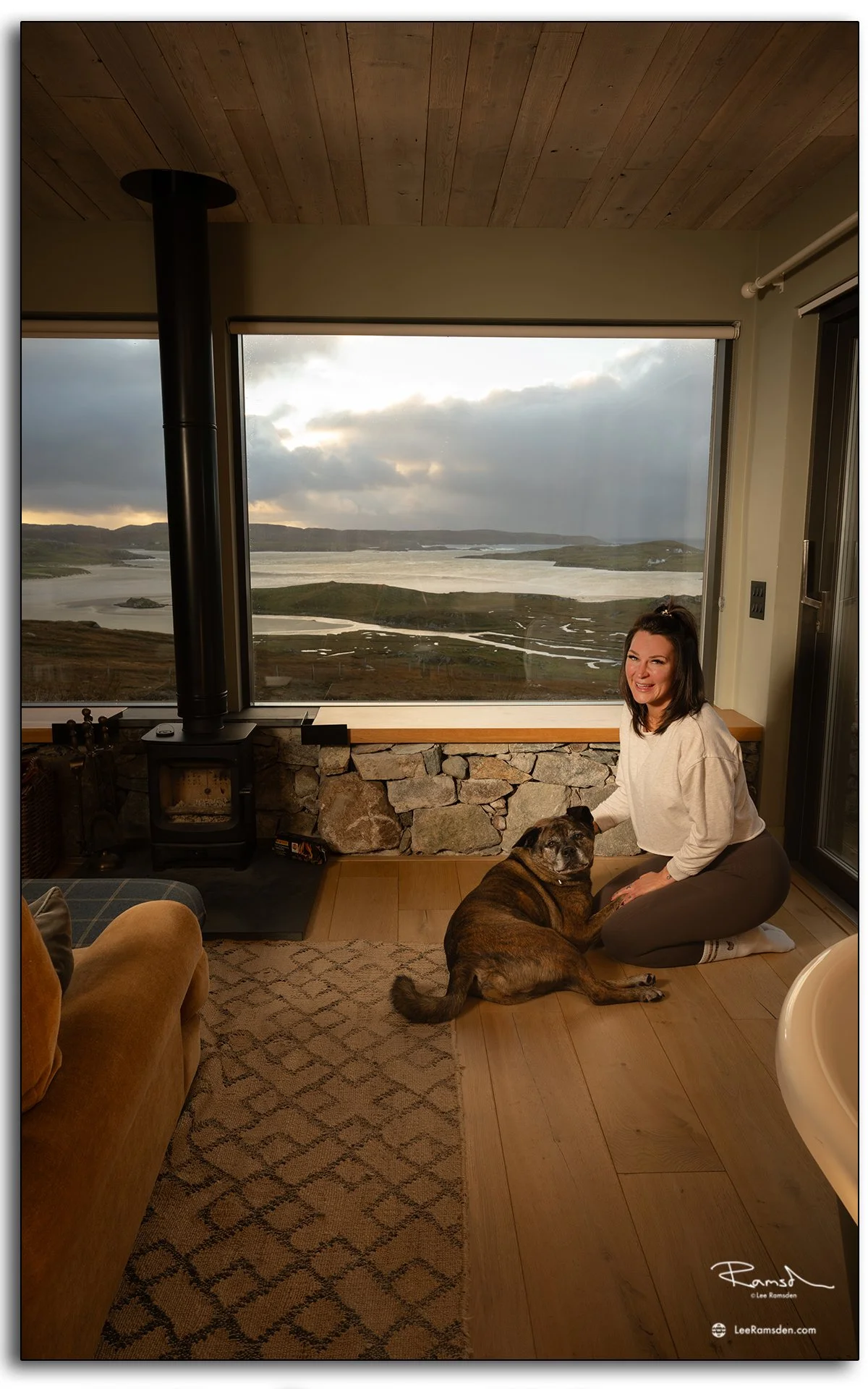
Relaxing inside Uig Sands Rooms on the Isle of Lewis, with coastal views over Uig Bay through large picture windows
Sunset view over Uig Bay from inside Uig Sands Rooms on the Isle of Lewis, showing the warm interior and modern fireplace.

It’s the kind of place that reminds you what quiet luxury really means. No fuss, no noise — just space, warmth, and a front-row seat to the best show nature puts on.

If you ever find yourself exploring the Isle of Lewis, Uig Sands Rooms is a perfect pause point — understated, peaceful, and unforgettable.
Above Uig Sands – Two Views, One Spot

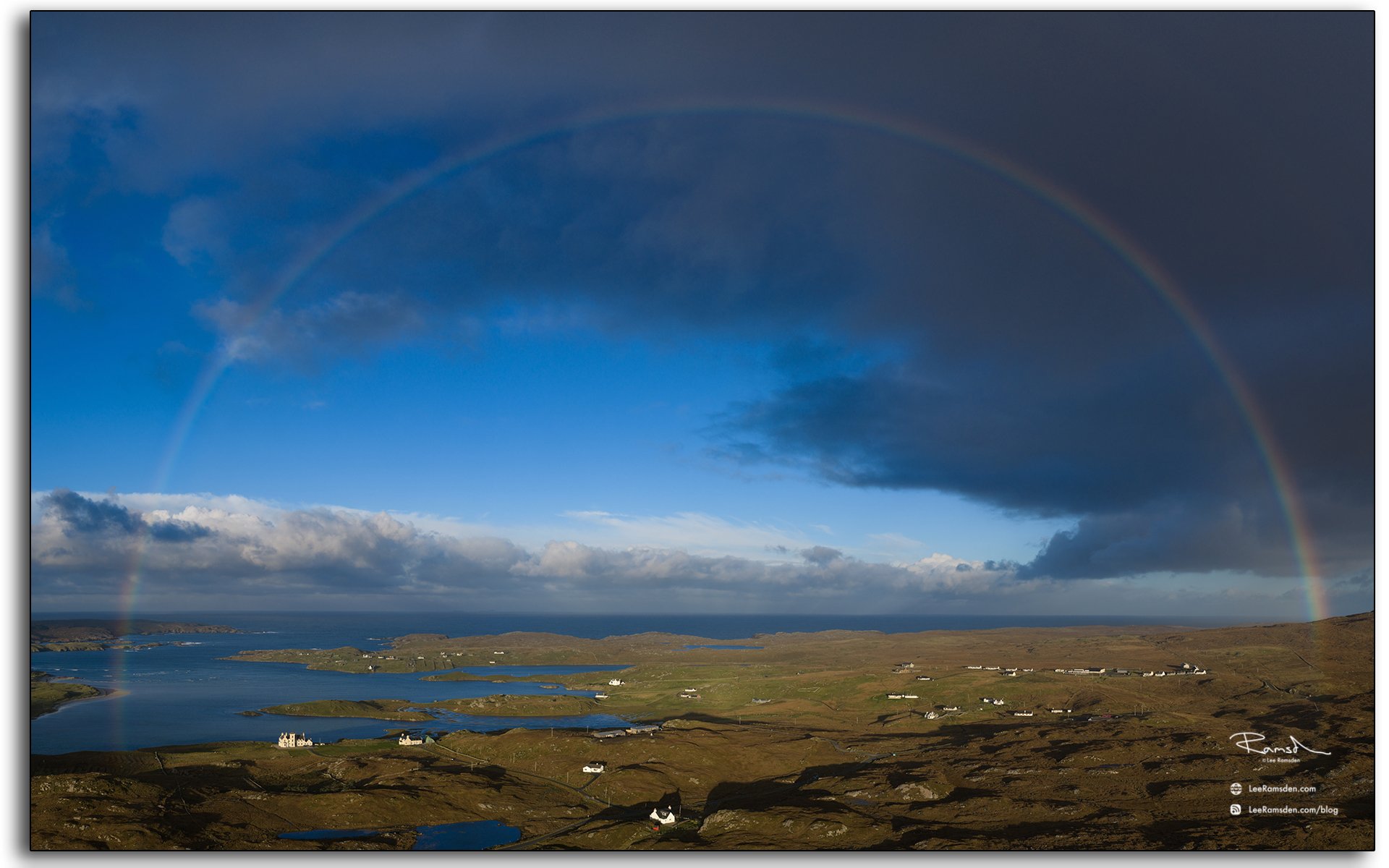
Rainbow over Uig Sands on the Isle of Lewis, Outer Hebrides, showing sweeping coastal views and dramatic changing skies

Both of these shots were taken from the same place — the car park of Uig Sands Rooms. I simply flew the drone straight up, then turned 180 degrees.

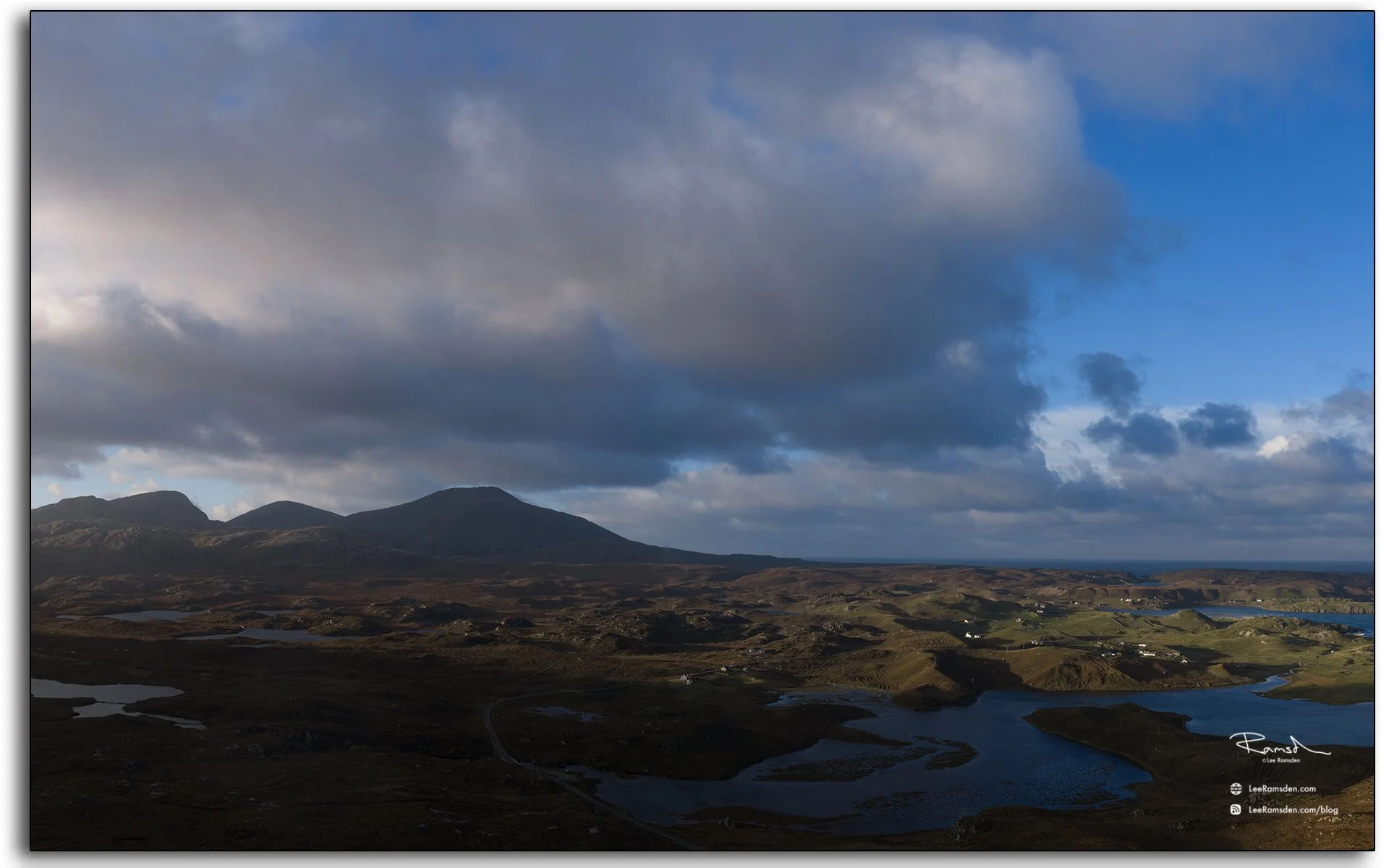
It’s incredible how completely the view changes. One direction shows a full rainbow stretching over the bay; the other looks inland across the rugged peaks and shifting light of Lewis.

Moody landscape view over Uig Sands and the Isle of Lewis, Outer Hebrides, with dark clouds and soft evening light

That’s what I love about flying here — you don’t need to move far to get a completely different story. Same location, same moment, two entirely different moods.

Uig Lodge and the Remote Nights on the Isle of Lewis

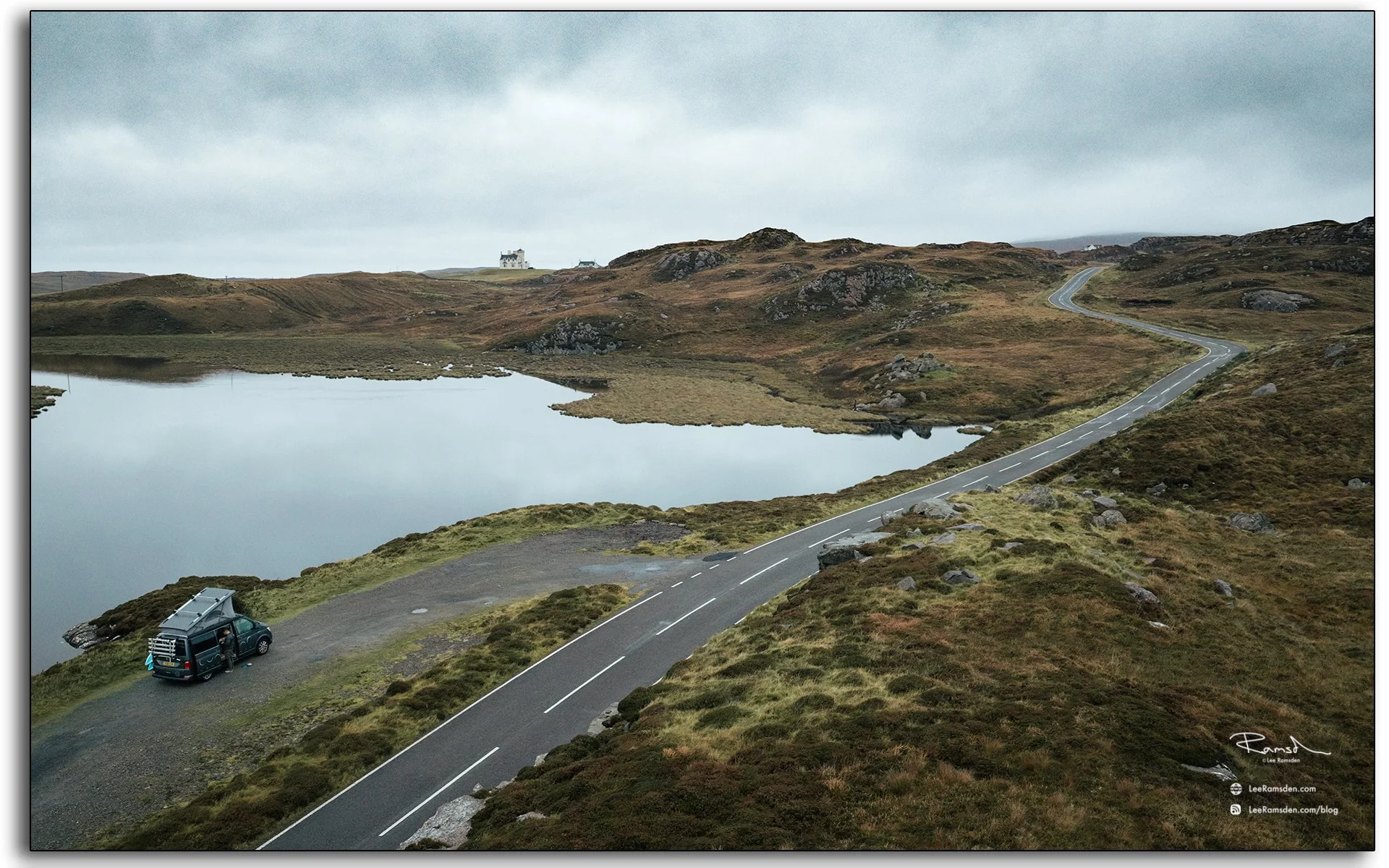
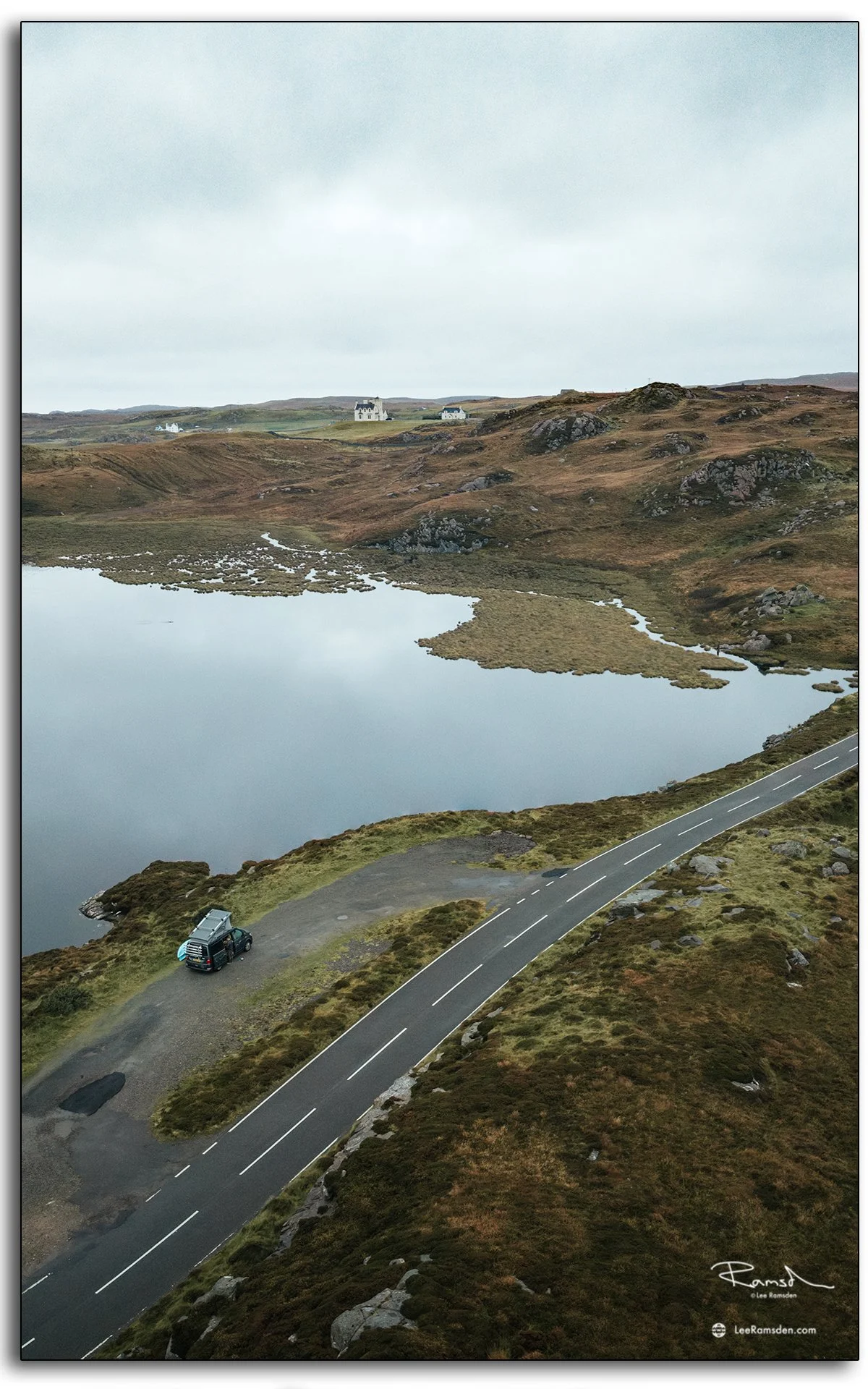
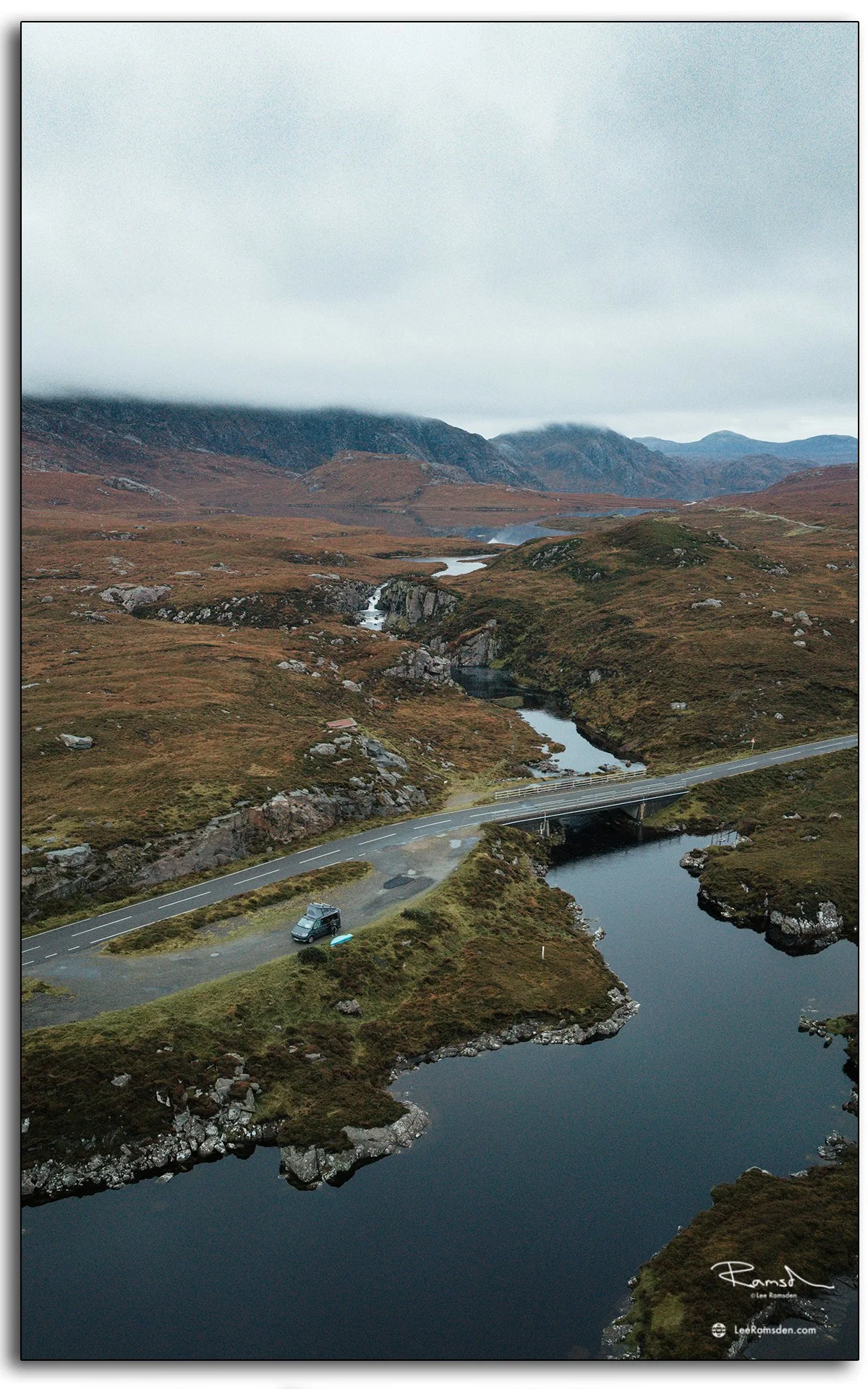
Winding single-track road near Uig Lodge on the Isle of Lewis, Outer Hebrides, with calm loch reflections and a campervan parked at the roadside

We parked up near Uig Lodge, surrounded by miles of open land and water. The remoteness here is staggering.

I’ve wild camped plenty of times over the years — from hills to coastlines — but this was different. Once the light faded, there was nothing. No glow on the horizon, no passing headlights, not even the faint orange flicker of a farmhouse window. Just total, complete darkness.

Winding single-track road near Uig Lodge on the Isle of Lewis, Outer Hebrides, with calm loch reflections

It’s strange at first, realising how rare that is. But once your eyes adjust and the stillness sets in, there’s a sense of peace that’s hard to describe. You’re reminded that this is how night used to be — before we filled it with noise and light.

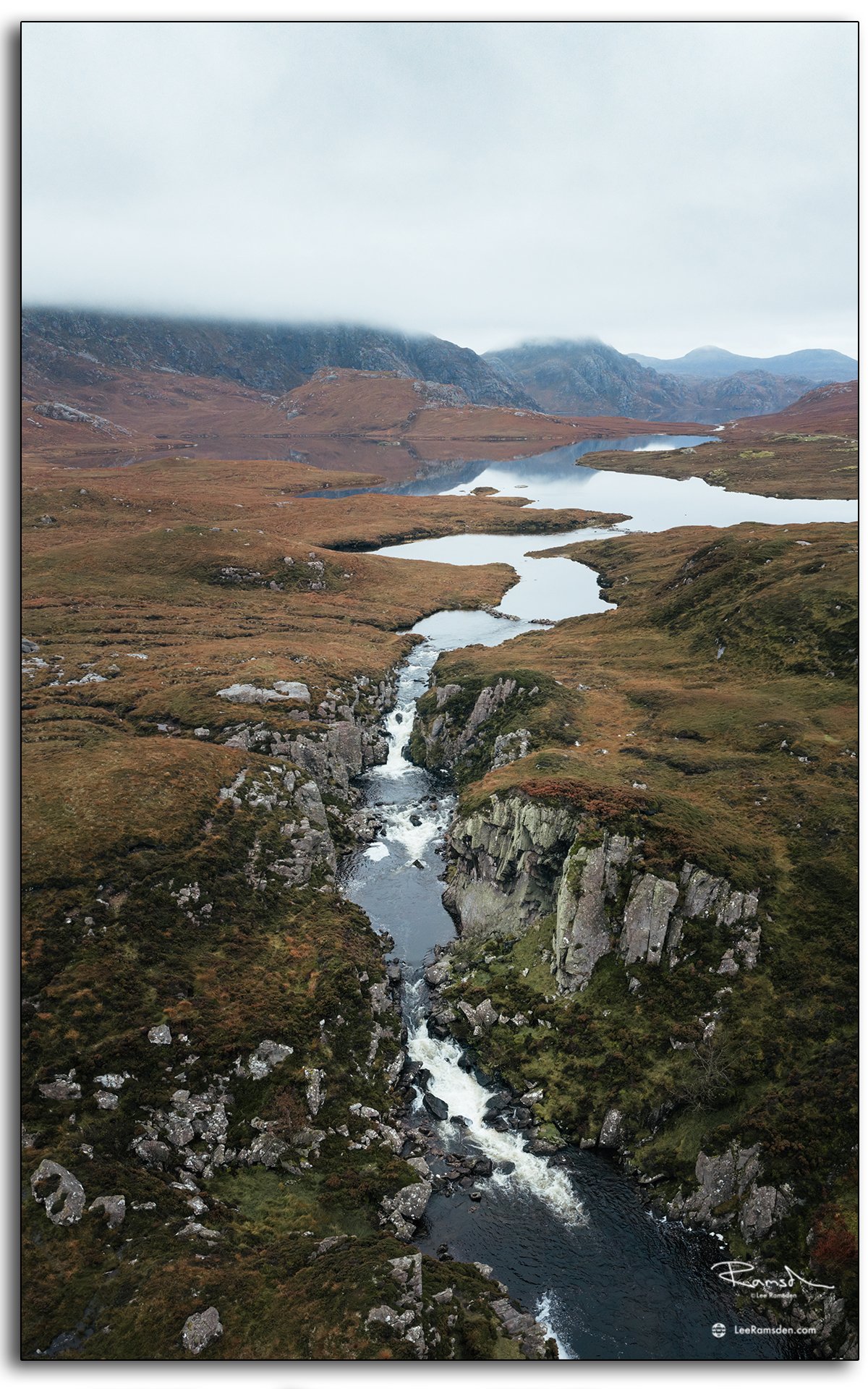
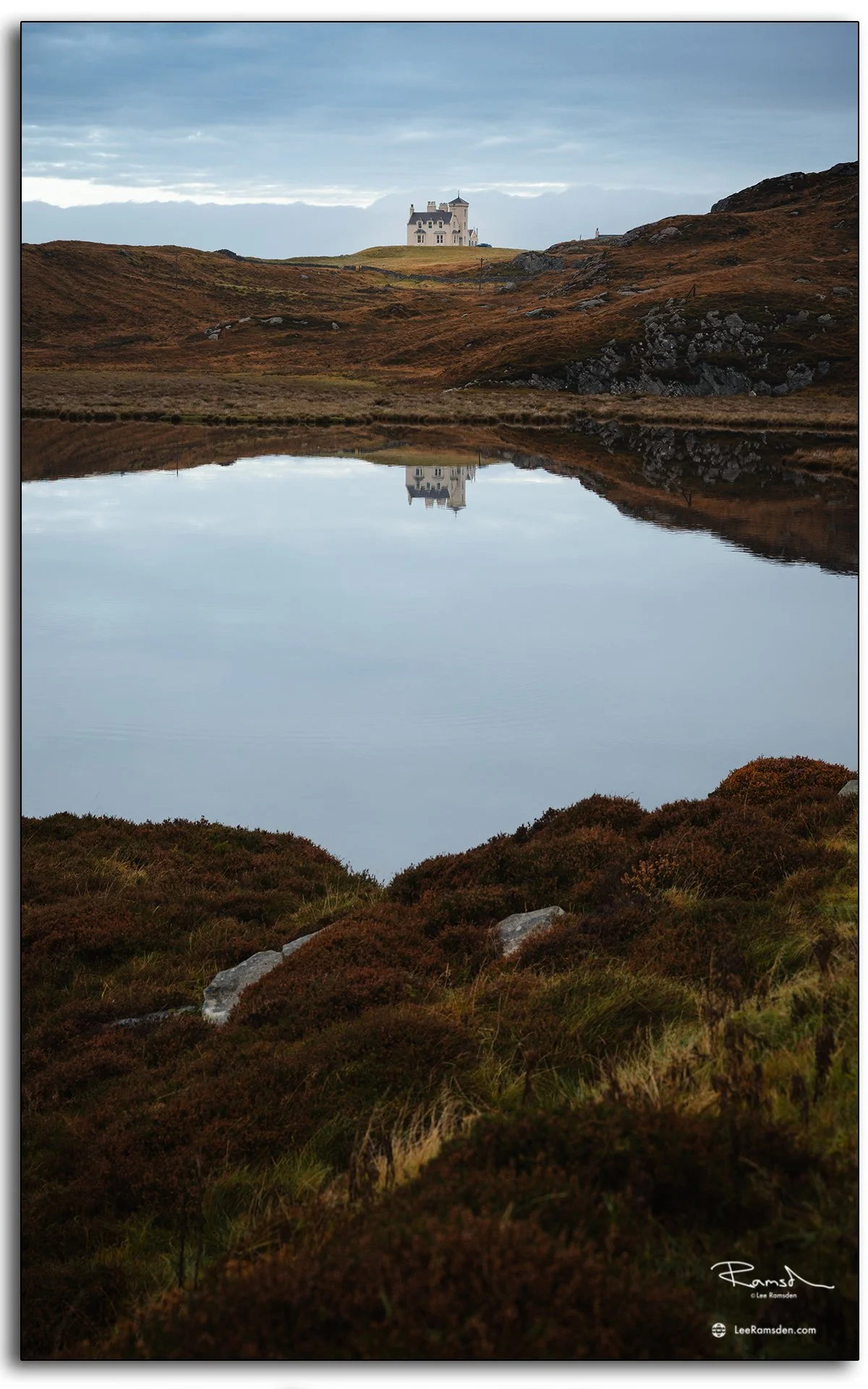
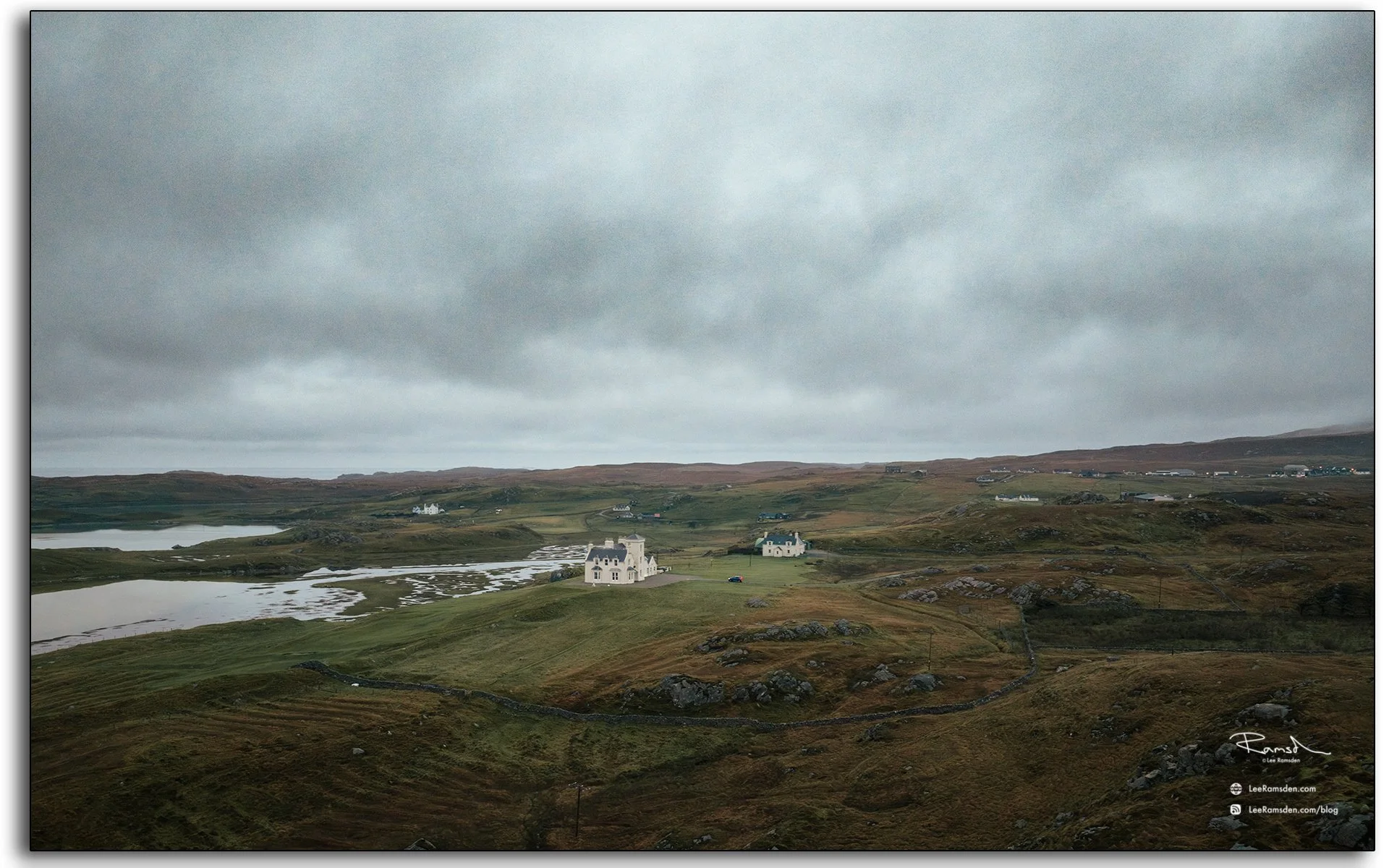
Uig Lodge on the Isle of Lewis, Outer Hebrides, surrounded by rugged moorland and lochs under a moody grey sky

The wind carried across the moors, the water was still, and it felt like the whole place was suspended in time. Remote, yes — but unforgettable.
Nights like this are why I love travelling the Hebrides — raw, honest, and far from everything.

See more of my work from the islands in the Places and Drone collections.

Island Life – Shelter and the Sea

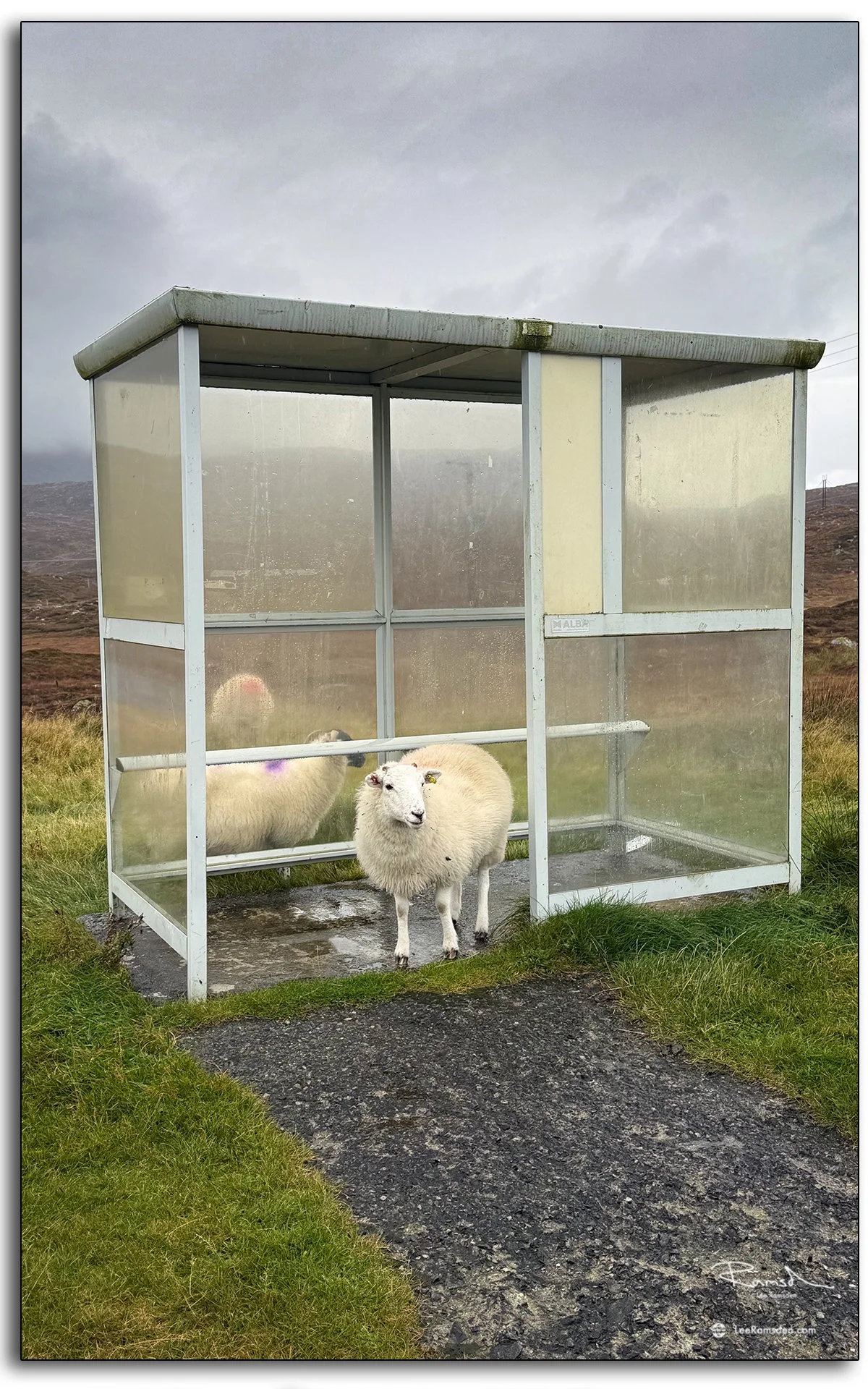
Sheep sheltering inside a glass bus stop on the Isle of Harris, Outer Hebrides, Scotland, during a grey and rainy day
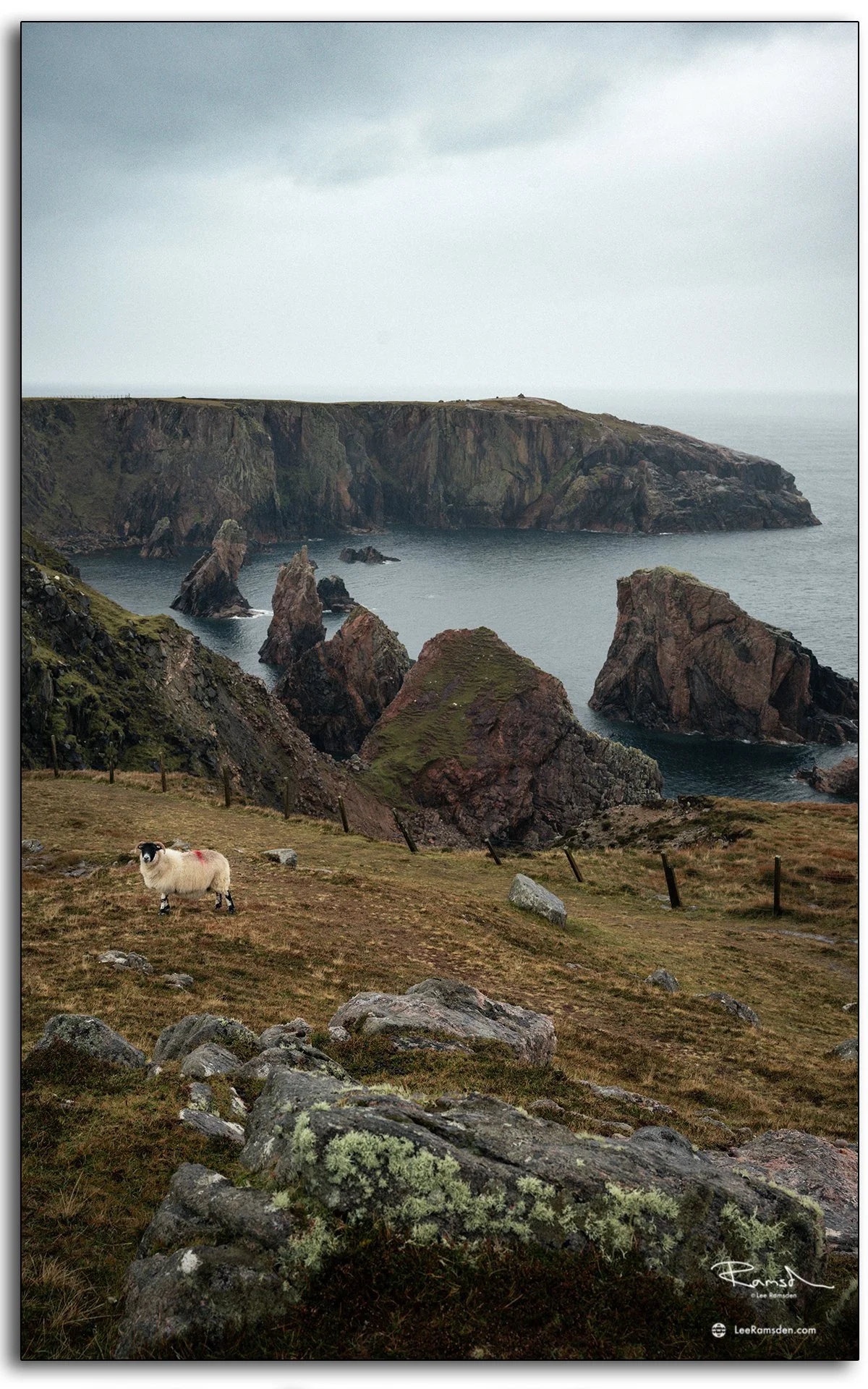
Sheep grazing above the dramatic Mangersta Sea Stacks on the Isle of Lewis, Outer Hebrides, under overcast coastal skies

Two very different views of island life — one sheep tucked up in a bus shelter, the other braving the wind by the cliffs.

Both scenes say a lot about life in the Outer Hebrides. The weather turns quickly, the wind rarely stops, and everything — people and animals alike — learns to adapt. Whether it’s finding shelter where you can or standing firm against the elements, it’s just part of life out here.

These are the small moments I love to capture. Quiet, real, and completely unposed — the kind of scenes that tell the story of these islands better than words ever could.

Highland Cattle – Kings of the Scottish Hills

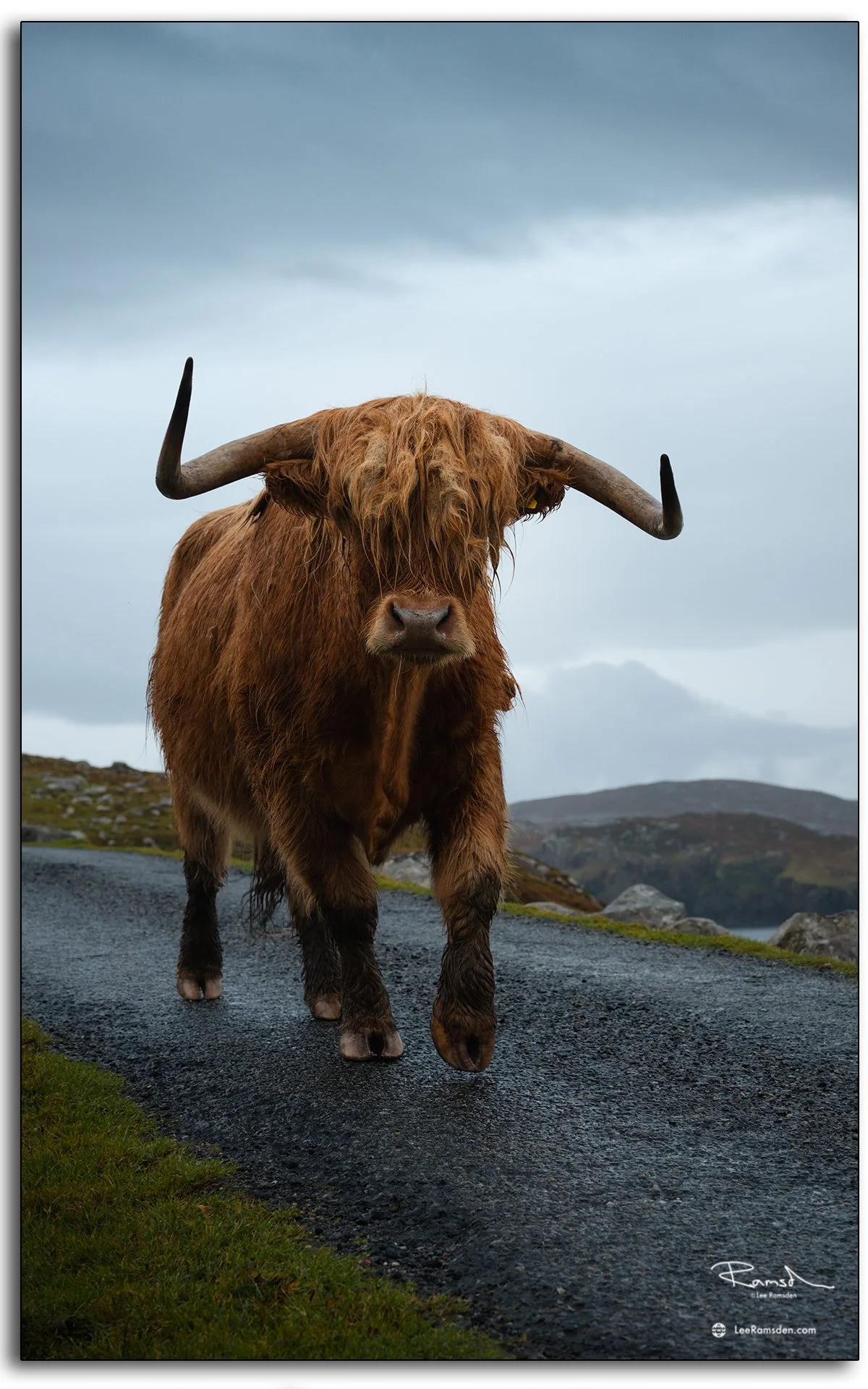
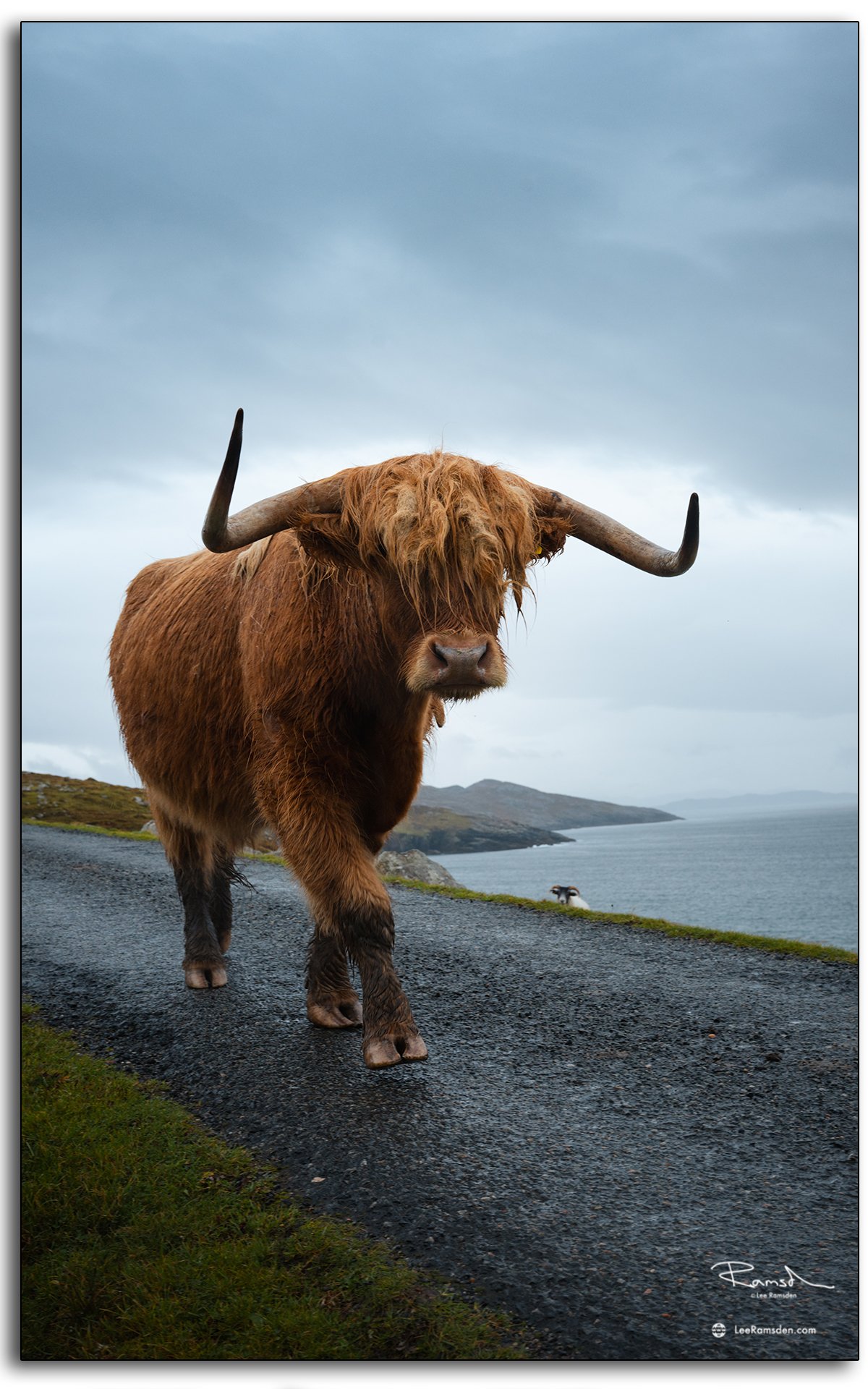
Scottish Highland cow walking along a country road on the Isle of Lewis, with rugged hills and moody Hebridean skies in the background.

If there’s one animal that sums up the Highlands, it’s the Highland cow — or Heilan’ coo

Long horns, shaggy hair, and a calm confidence that makes them look like they own every inch of road they walk on.

These were taken on the Isle of Harris, where the weather changes by the minute and these animals don’t even flinch. They’ve been bred for exactly this — centuries of surviving rough winters, steep ground, and relentless wind. That thick double coat keeps them warm and sheds rain, and it’s also why they can thrive on land where most cattle wouldn’t last a week.

Seeing them up close on a single-track road with the sea behind felt like meeting the true locals of the islands — steady, weathered, and built for this land.

The Blackhouses of the Outer Hebrides

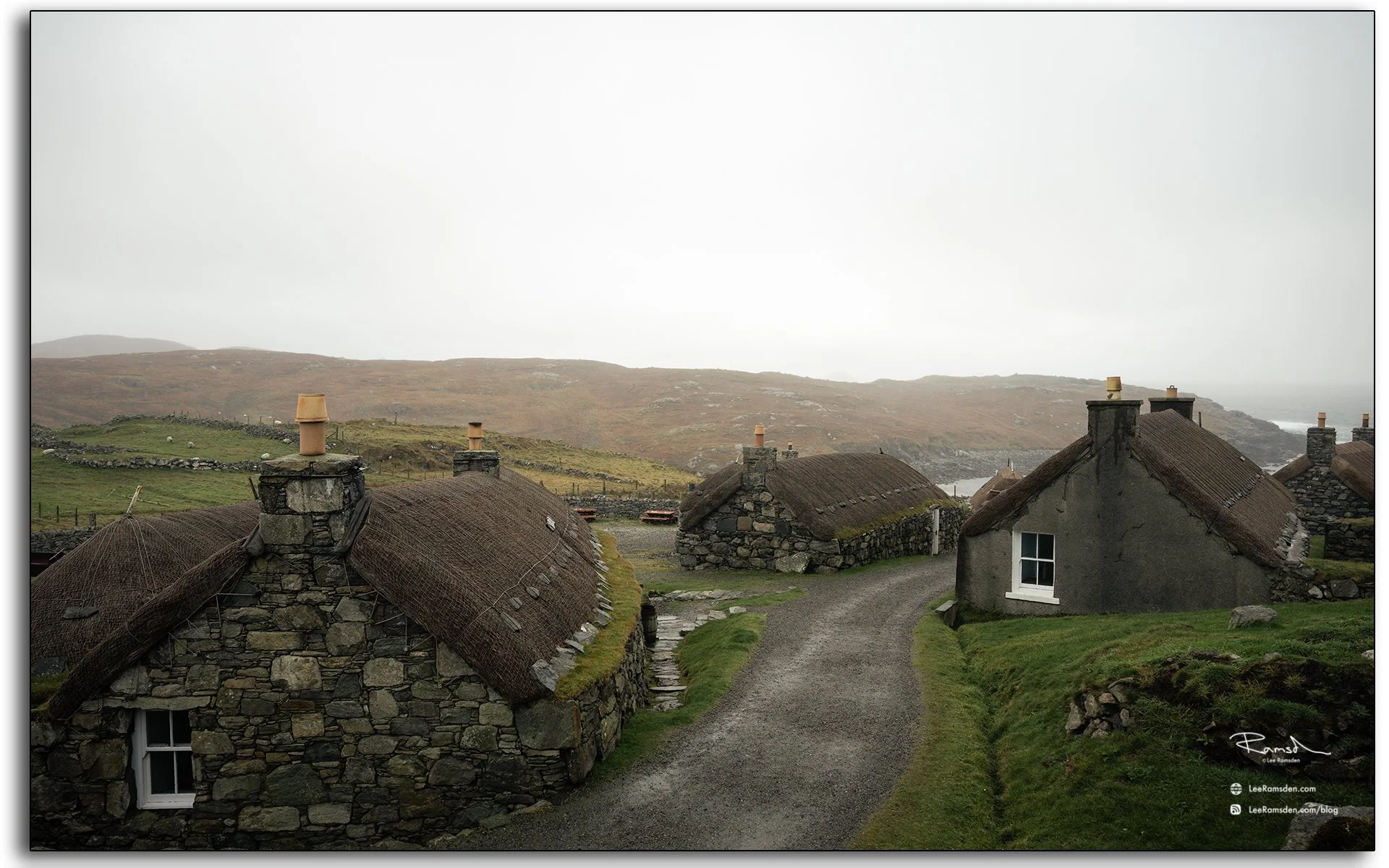
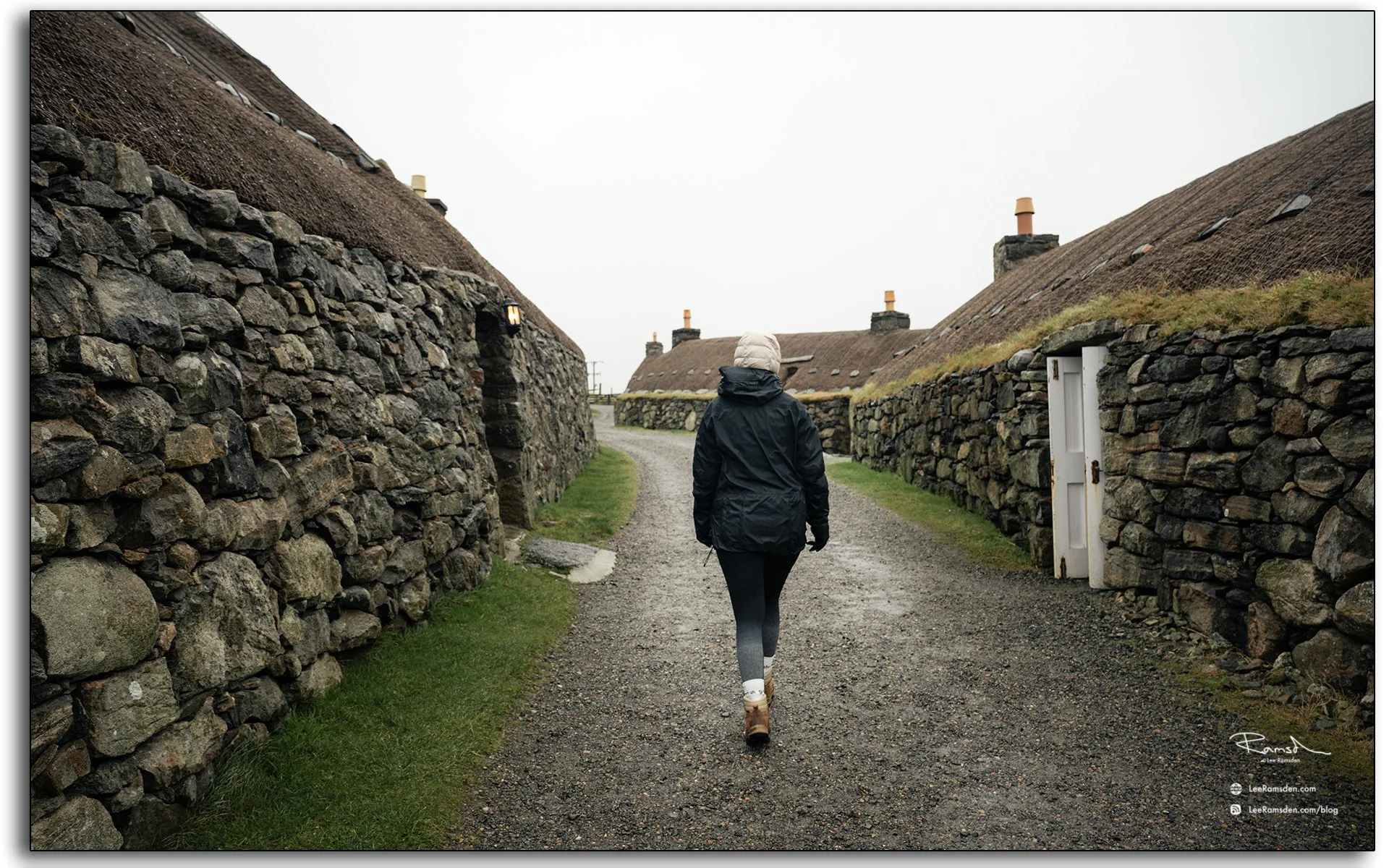
Traditional stone and thatch blackhouses at Gearrannan on the Isle of Lewis, Scotland, showing restored crofting homes surrounded by green grass and moody skies

The blackhouses are among the most striking parts of Hebridean history — not because they’re grand or decorative, but because they’re built from necessity and endurance.

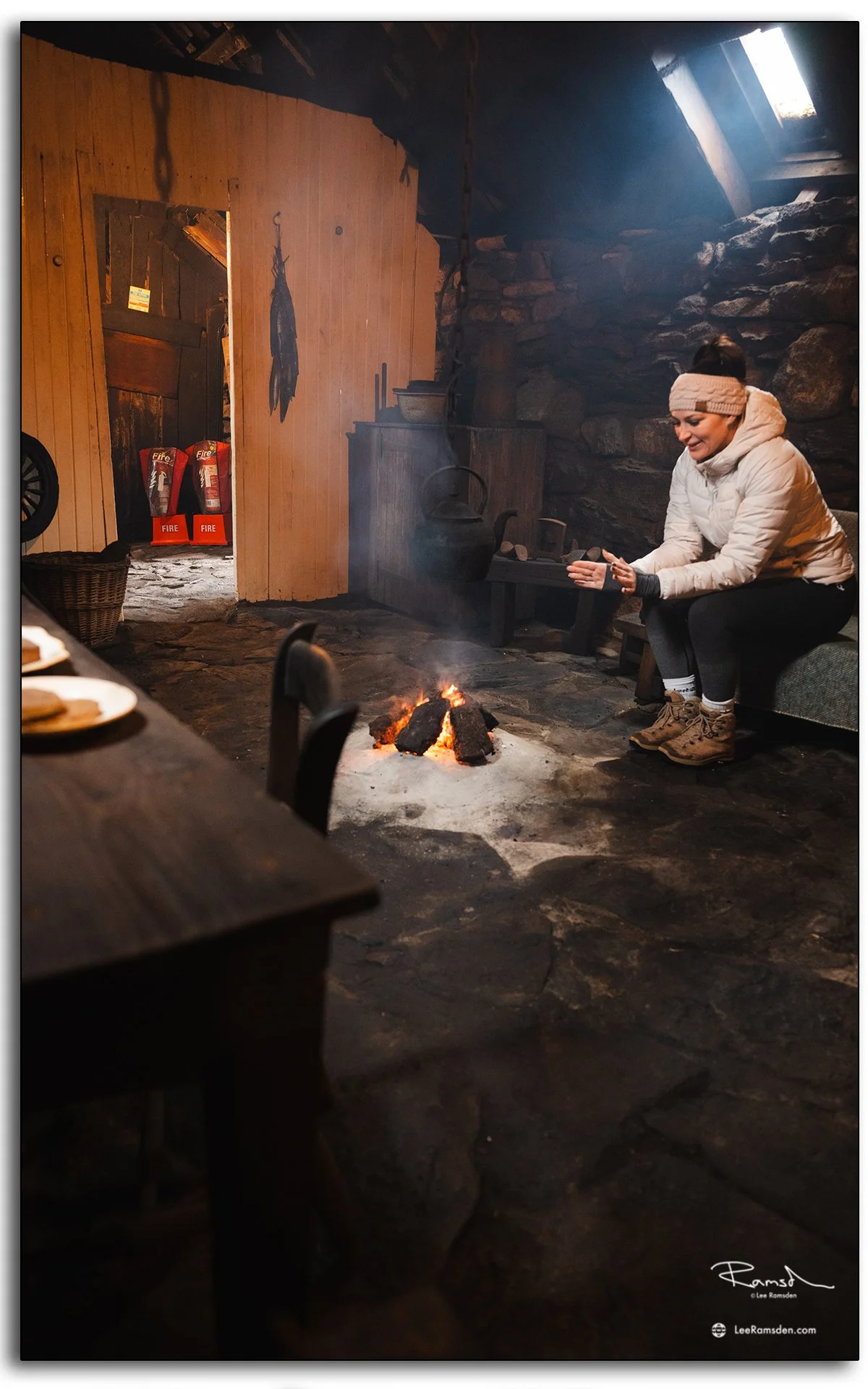
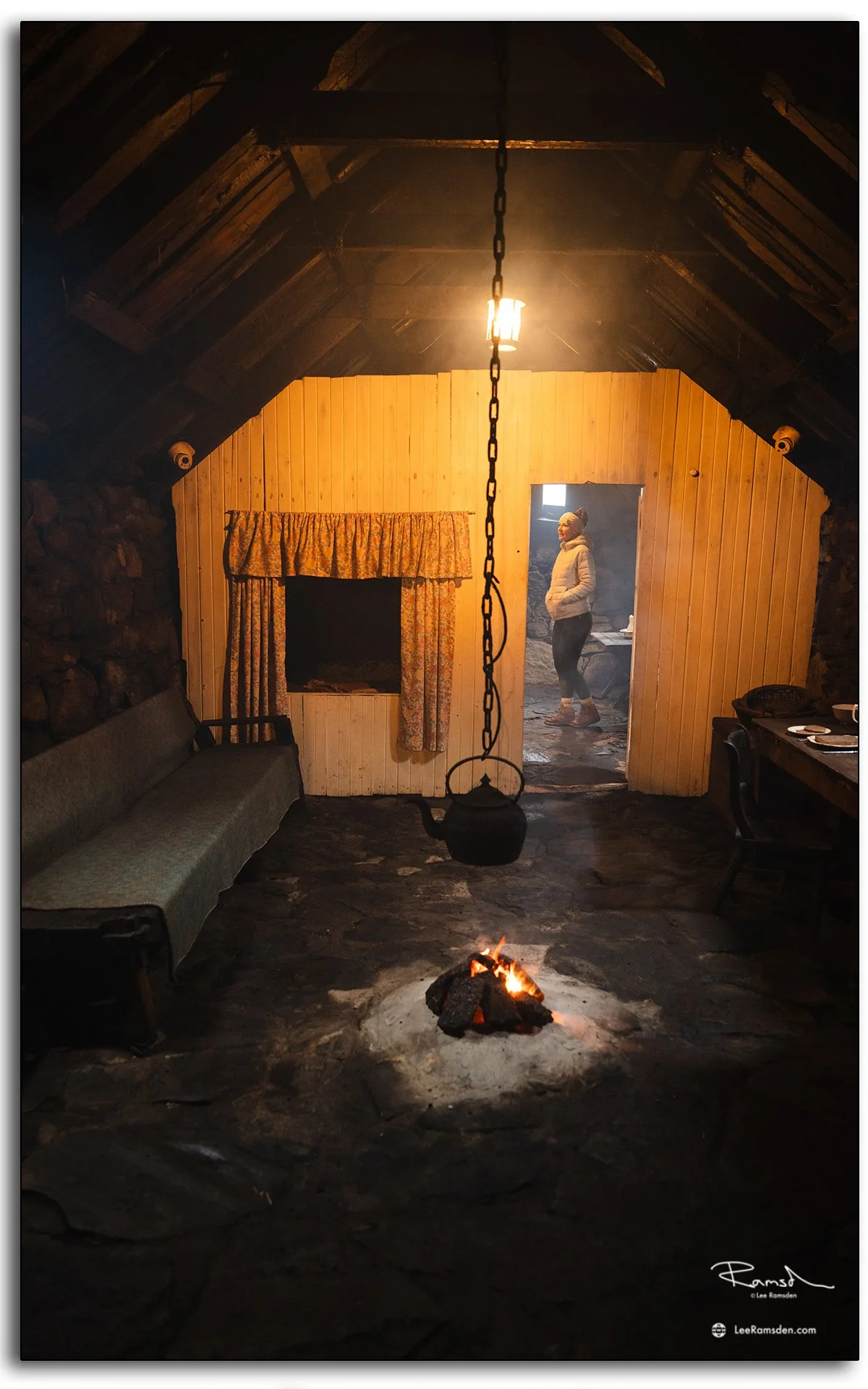
Interior of a traditional blackhouse at Gearrannan on the Isle of Lewis, Scotland, showing an open fire, hanging kettle, and rustic stone-and-wood construction

Constructed from stone, turf, and timber, these dwellings were designed to withstand Atlantic weather and make the most of limited materials. Smoke from the central hearth filled the house before escaping through the thatch, helping to preserve it from the elements. Cattle often shared the space with the family, separated by a low wall — warmth was a shared resource.

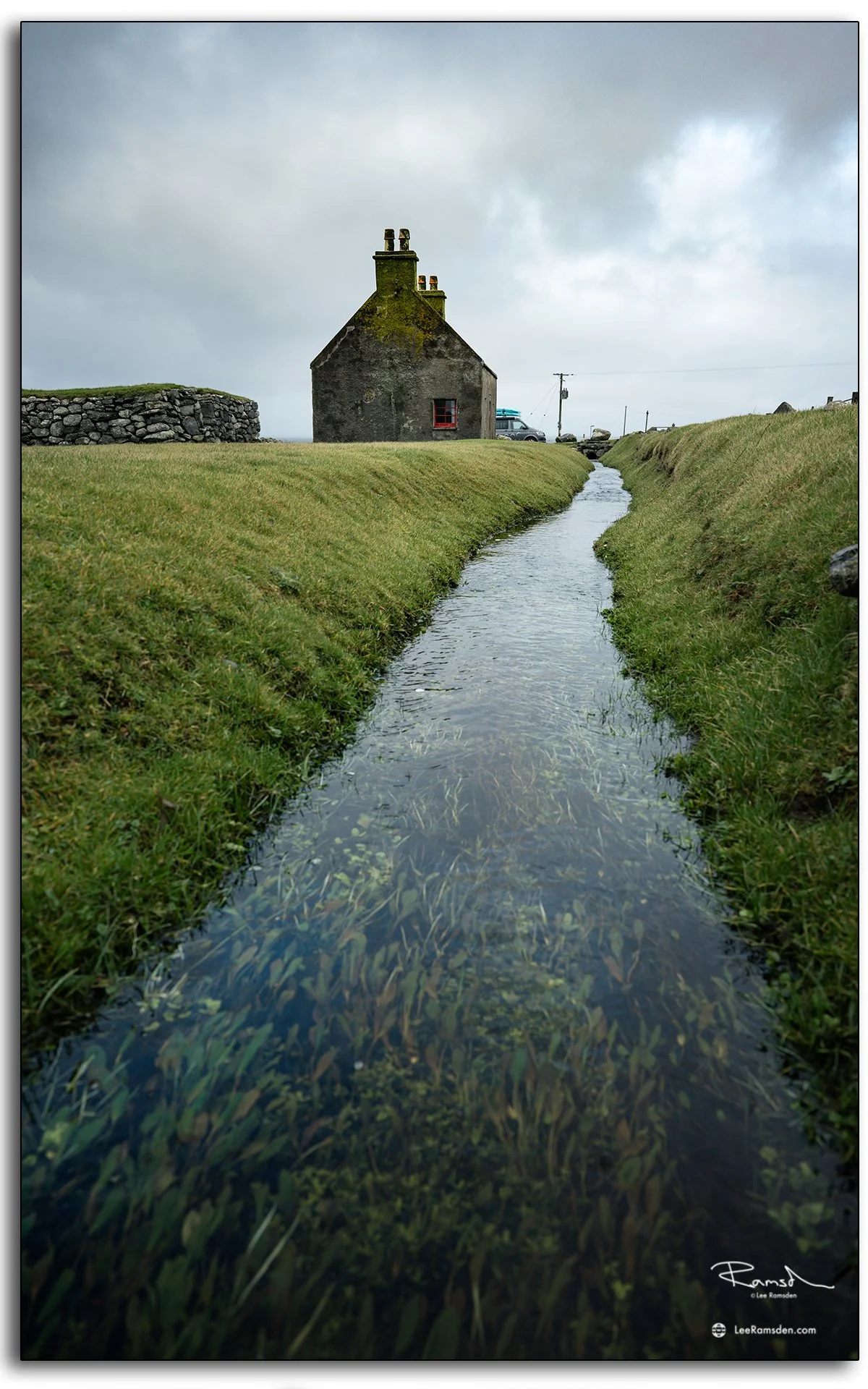
Historic blackhouse with moss-covered chimneys at Gearrannan on the Isle of Lewis, Scotland, viewed along a narrow grassy stream leading toward the sea.
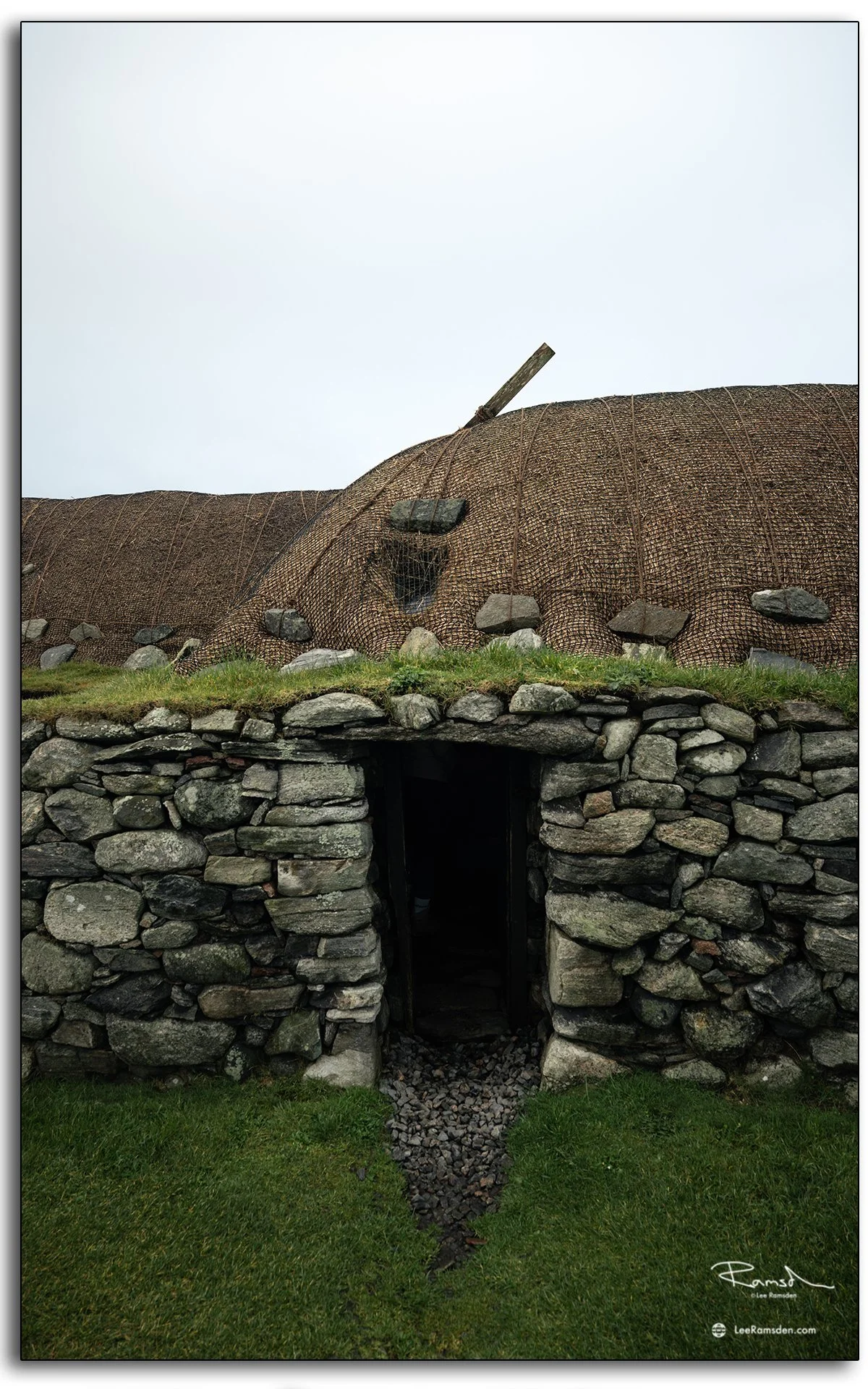
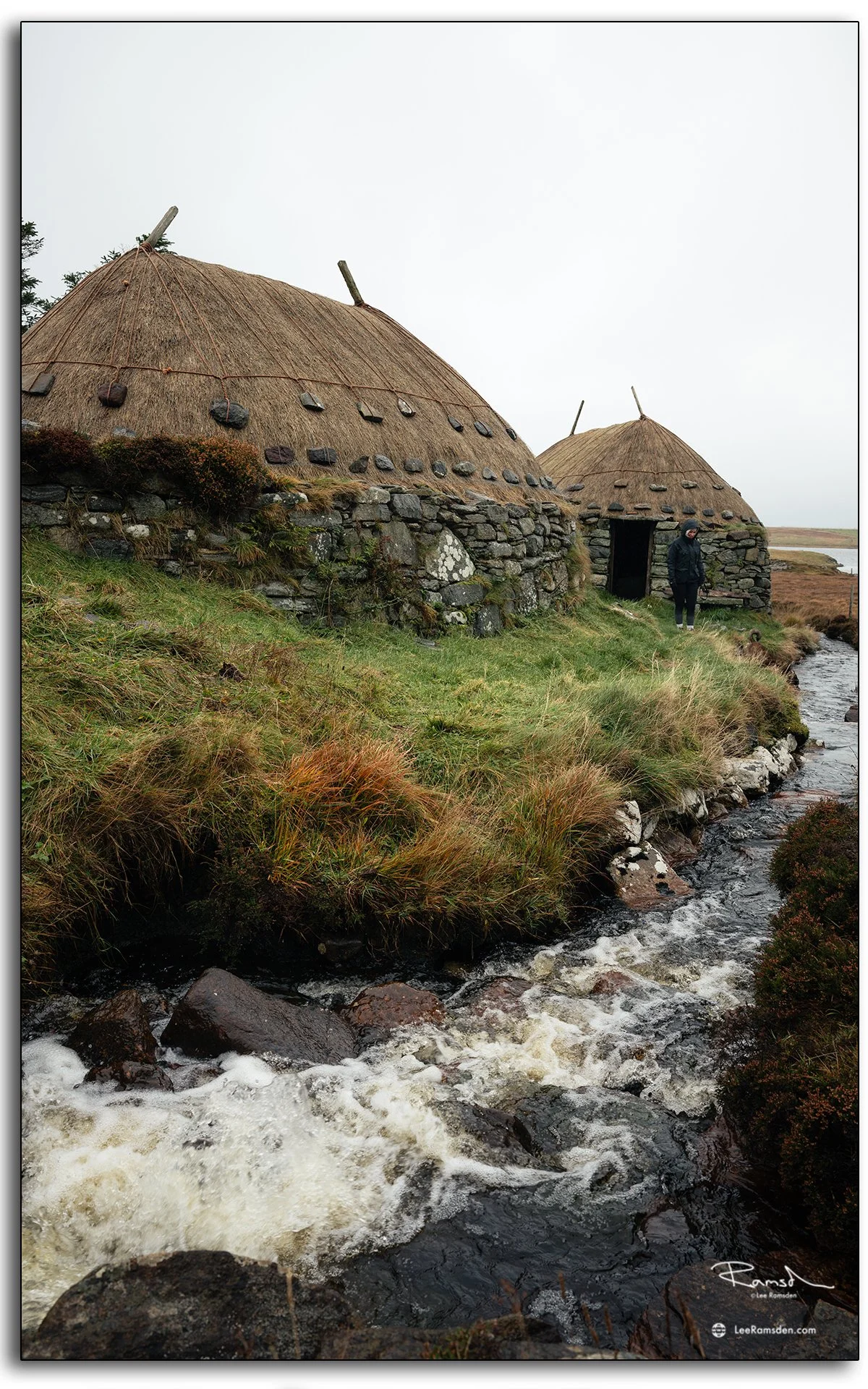
Traditional thatched blackhouses at Arnol on the Isle of Lewis, Scotland, with stone walls beside a flowing stream under grey Hebridean skies

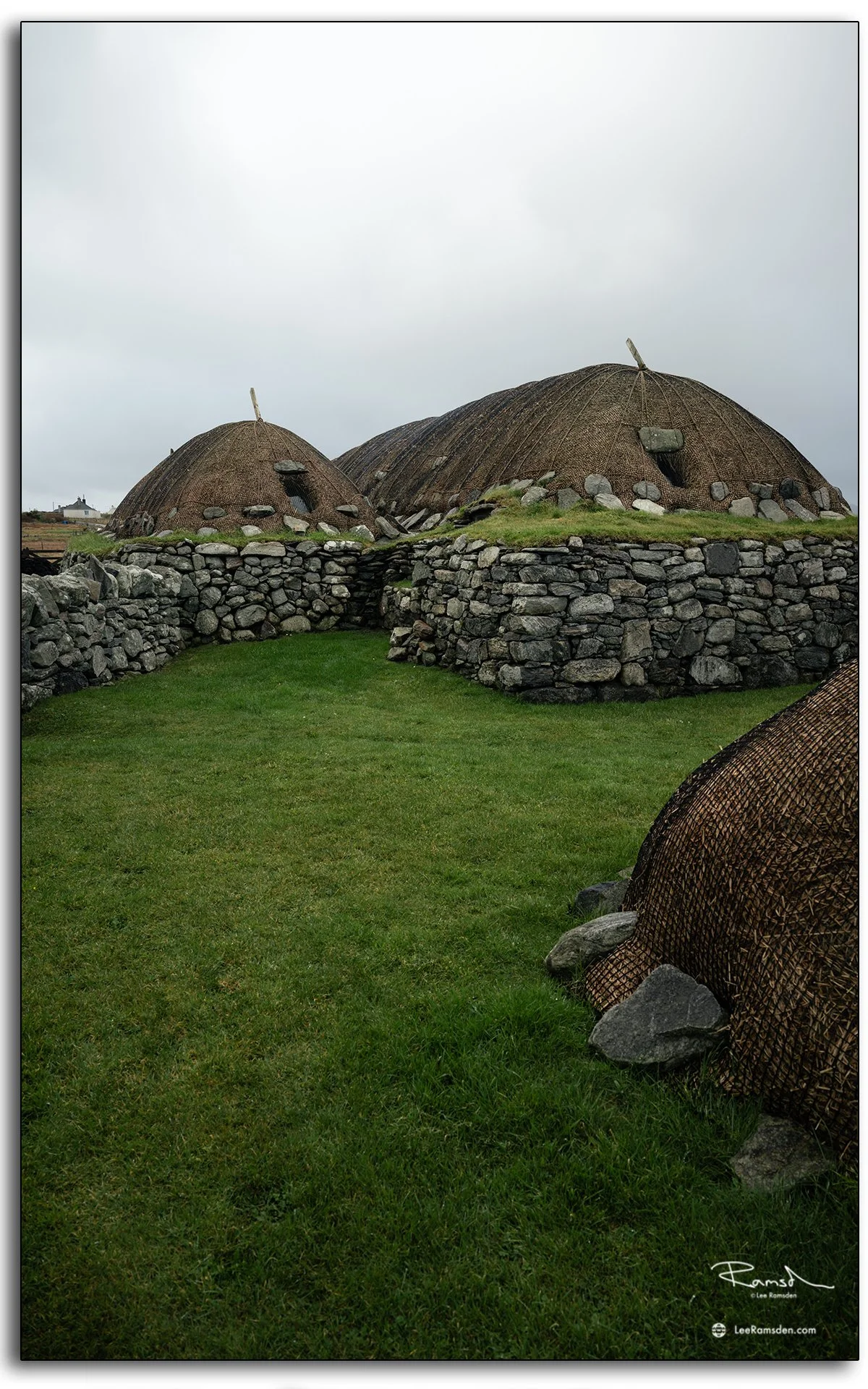
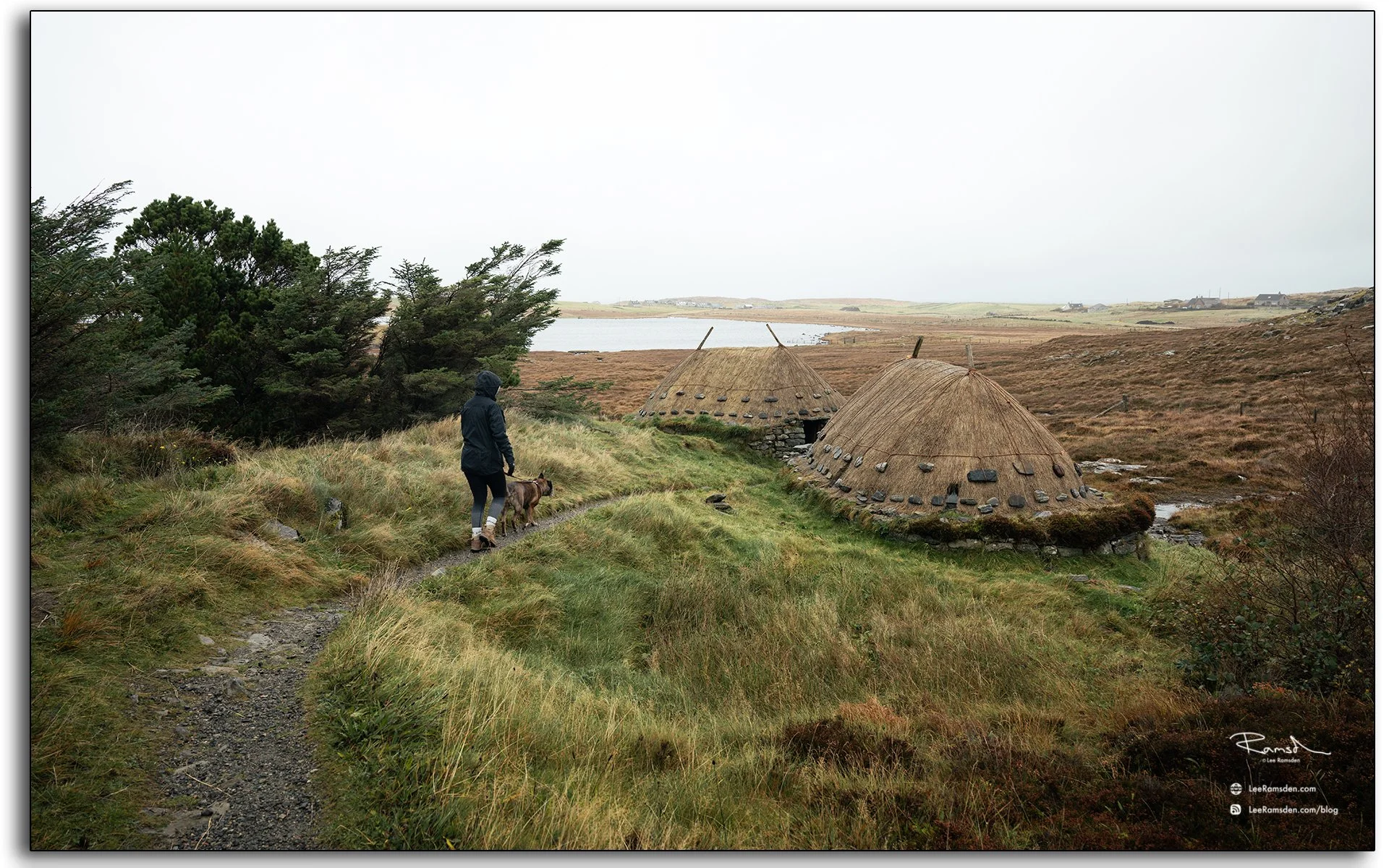
There are a few restored examples scattered across the islands — like those at Arnol on Lewis, Gearrannan, and Norse Mill & Kiln — each one giving a glimpse of how islanders lived just a few generations ago. Standing inside, with the smell of peat smoke hanging in the air and the sound of the wind outside, you get a real sense of what “shelter” meant in its truest form.

Traditional thatched blackhouses at Arnol on the Isle of Lewis, Scotland, with stone walls beside a flowing stream under grey Hebridean skies

For all their simplicity, there’s a quiet sophistication to these buildings — natural insulation, low profiles against the wind, and a design that worked perfectly for their environment. They weren’t built to impress; they were built to survive.

Restored blackhouse village at Gearrannan on the Isle of Lewis, Scotland, featuring traditional stone cottages with thatched roofs overlooking the rugged coastline

Seeing these blackhouses in person connects you to the people who built them — tough, resourceful, and proud of their land.

See more of Scotland’s cultural and coastal heritage in my Places collection.

Uig Harbour, Isle of Skye

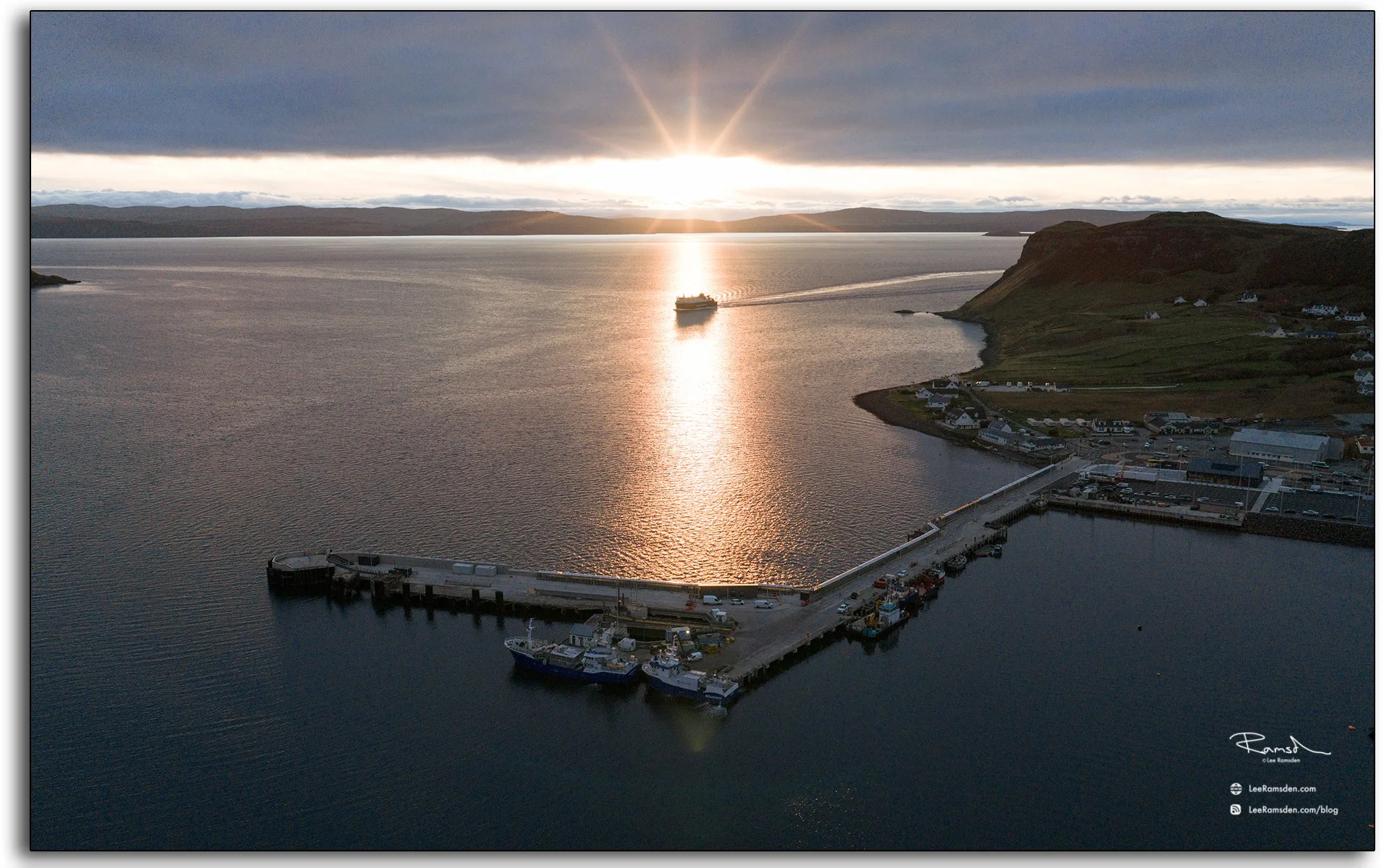
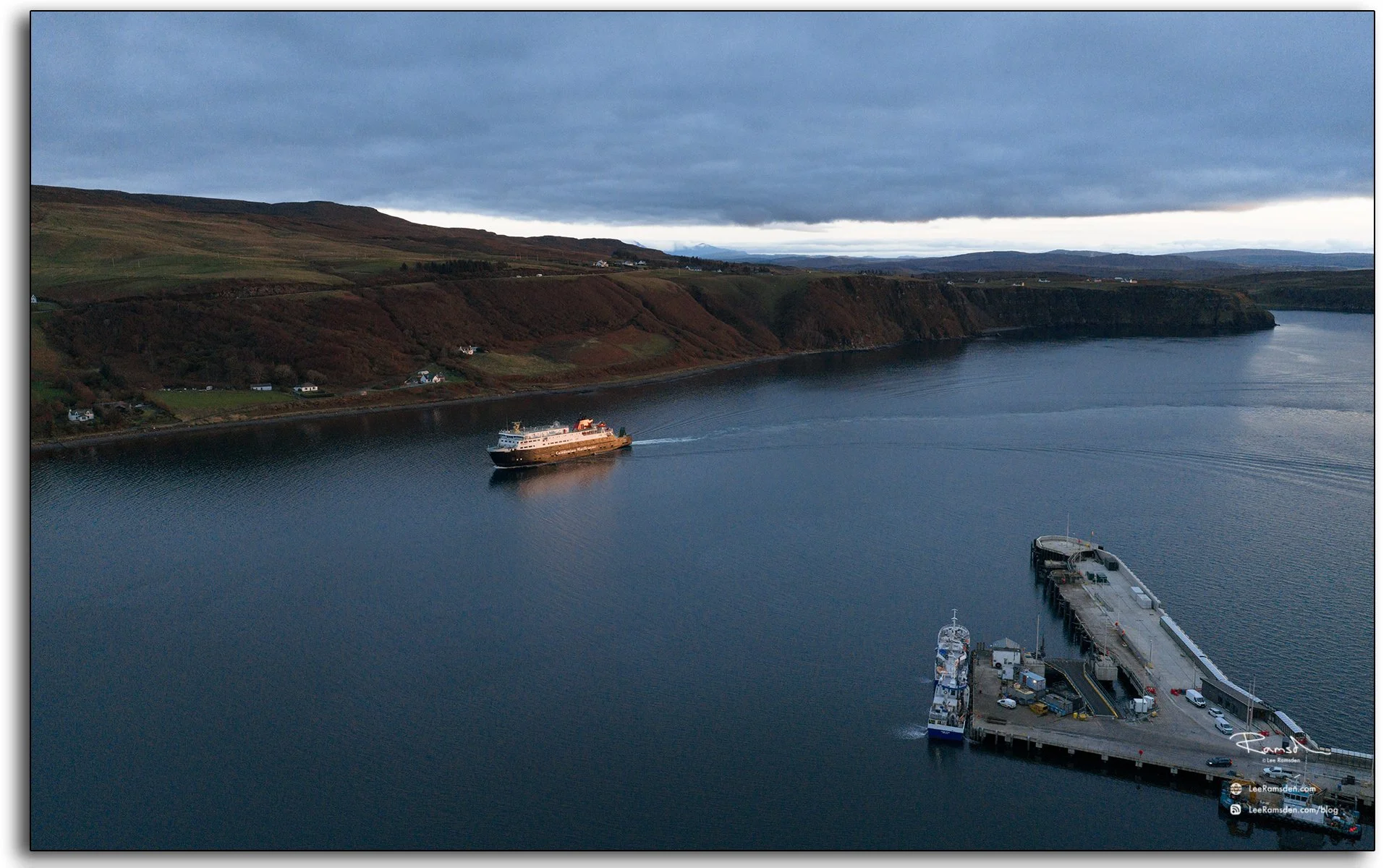
Aerial view of Uig Harbour on the Isle of Skye at sunset, with a ferry sailing across calm waters under a glowing orange sky

Uig sits tucked into the north-west corner of the Isle of Skye, a small harbour village that serves as the main gateway to the Outer Hebrides. Ferries depart from here to Tarbert on Harris and Lochmaddy on North Uist — a vital link between islands, and a rhythm of life that’s played out daily for decades.

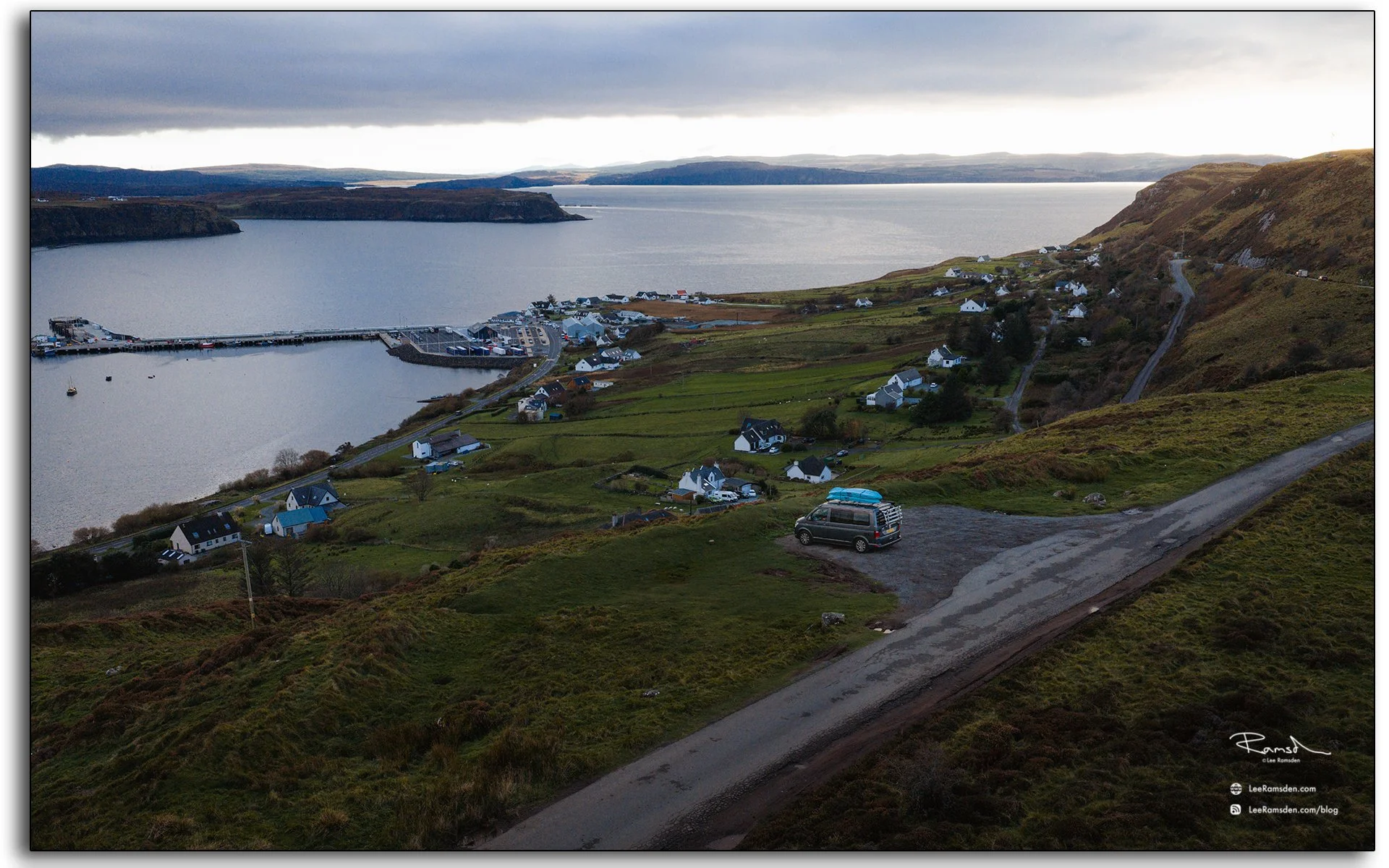
Aerial view overlooking Uig Harbour and village on the Isle of Skye, Scotland, with a camper van parked on the hillside and calm evening light over the bay

Our room for the night. The ferry was booked for 7 am the following morning, and so we had to stay somewhere fairly close to the ferry port.

Aerial view overlooking Uig Harbour and village on the Isle of Skye, Scotland, with a camper van parked on the hillside and calm evening light over the bay
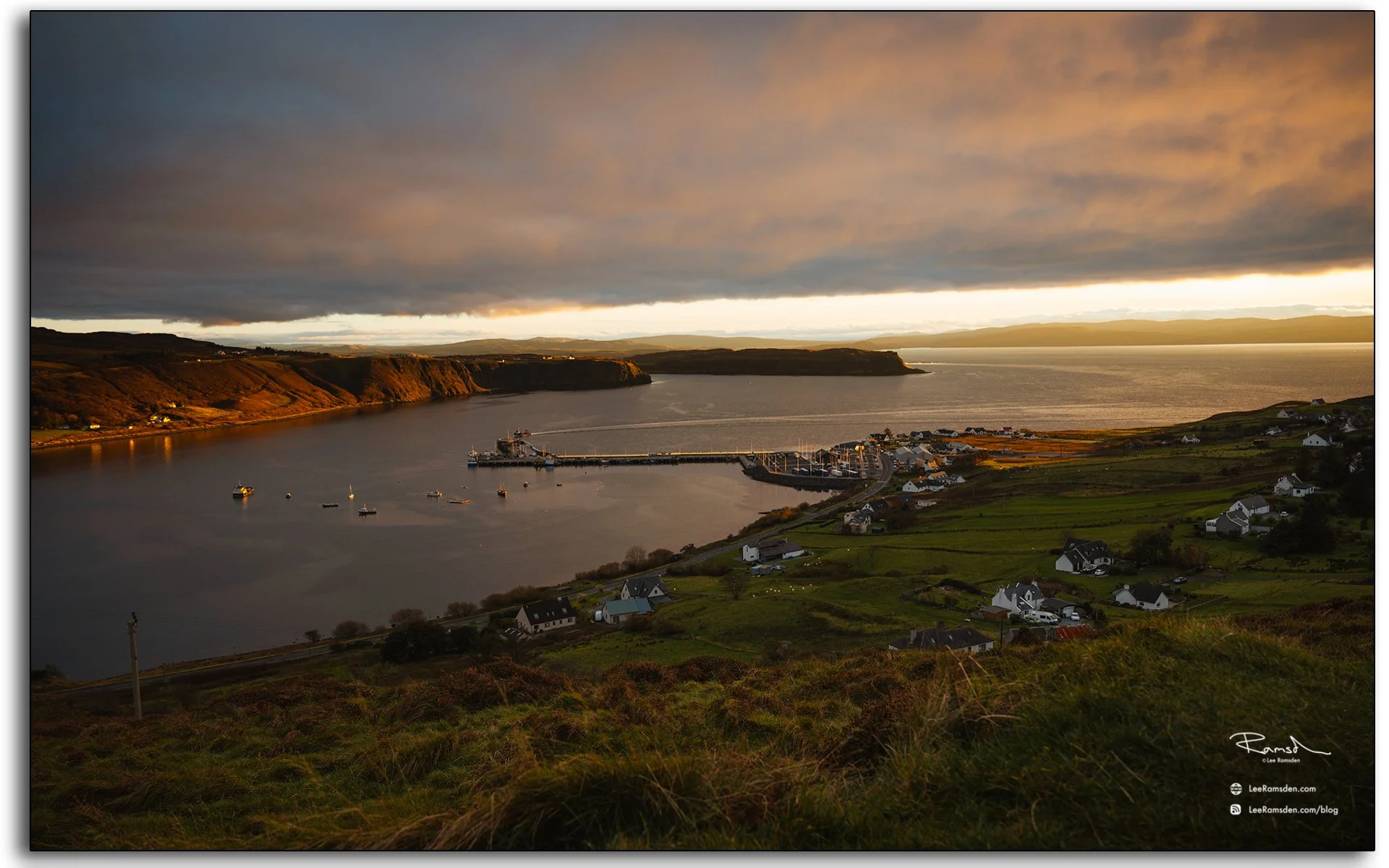
Golden sunset over Uig Harbour on the Isle of Skye, Scotland, with warm light reflecting across the bay and cottages nestled on the hillside

From higher up the hillside, the view stretches across the harbour, cottages, and out toward the Minch. It’s one of those scenes that feels both remote and connected — a place between places.

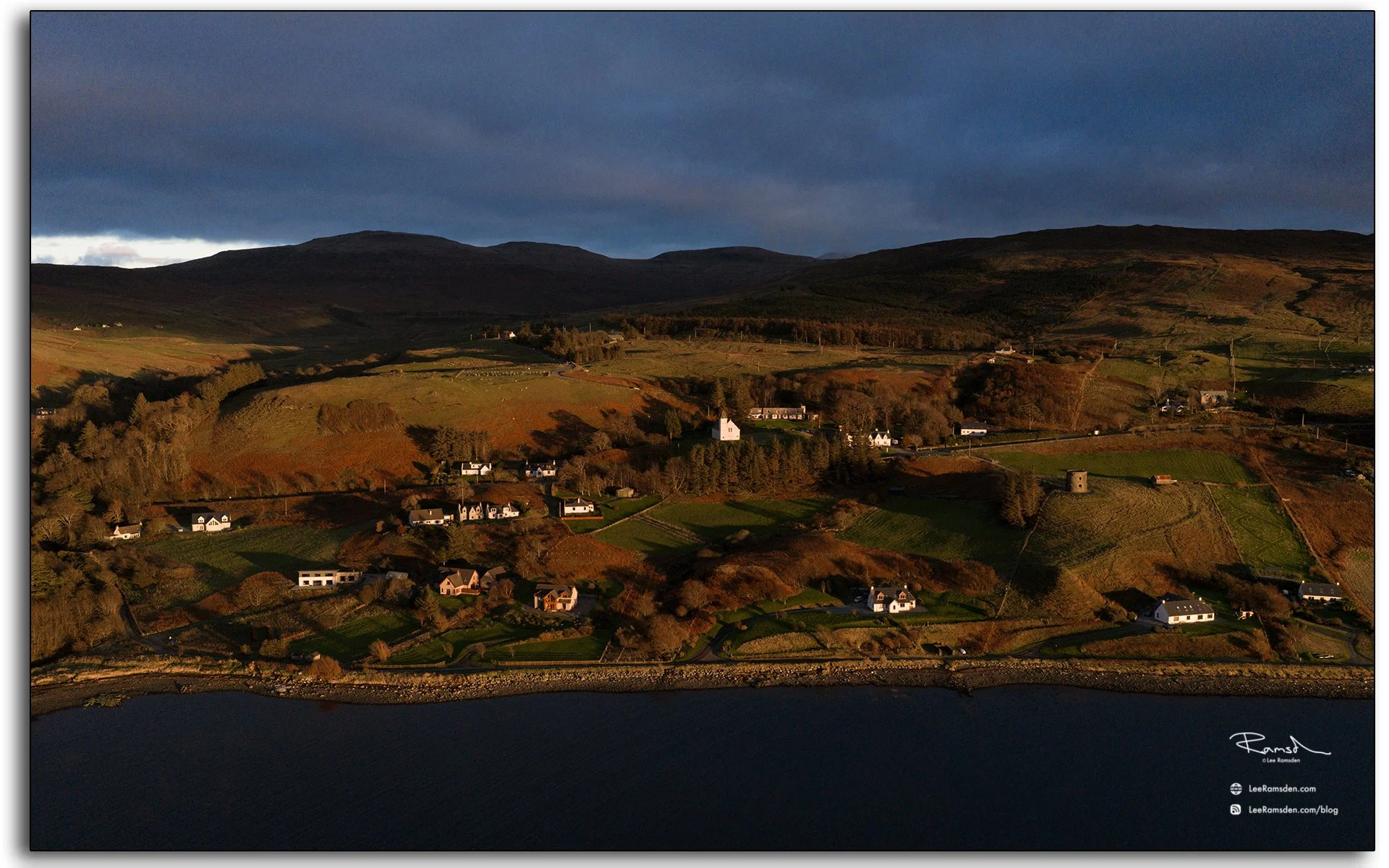
Aerial view of Uig village on the Isle of Skye, Scotland, during sunset, with warm golden light over fields, cottages, and coastal hills

Isle of Skye’s landscapes shift constantly — one moment you’re surrounded by wild cliffs, the next you’re watching ferries vanish into open sea.

See more from across Scotland’s coastlines in my Places collection.