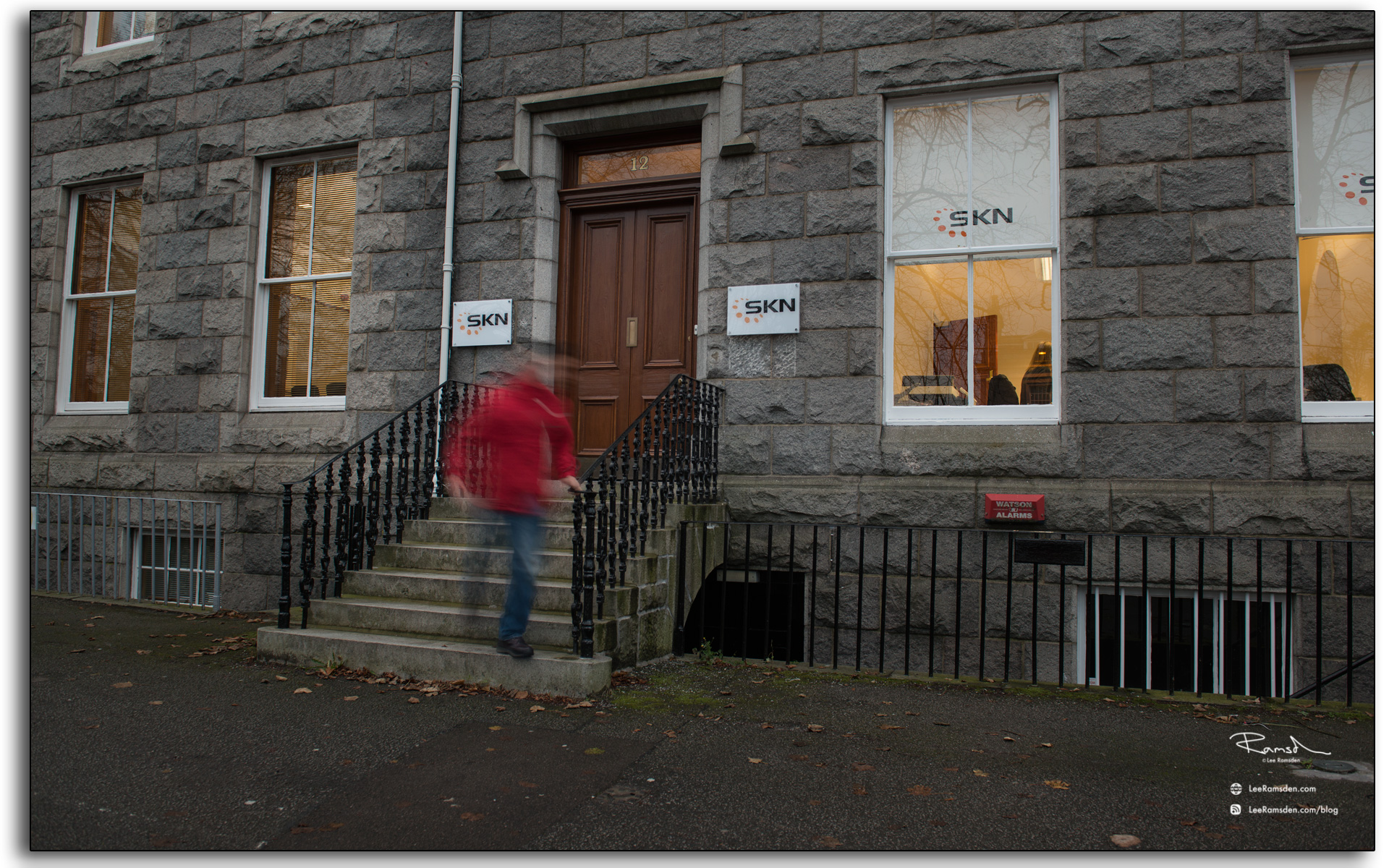
SKN electrical

Scene lighting technique.

Nikon D800 f7.1 1/8th ISO100

Good morning, 

Id like to share with you a lighting technique that you can use to light a scene, even when working on your own. 

The above image consists of 21 images, all shot and lit by myself, and i am even in the image, to add some interest. 

I will show you, how i take multiple images, all lit with off camera flash, and then the process i take in photoshop.


02 Off camera flash wireless trigger pocket wizard boom illuminating the scene

Here you can see me using an off camera flash head on a pole, with the trigger in my right hand firing off the flash and camera shutter remotely. 

Click on image to enlarge.

The final image is composed of 21 frames. 

The camera was mounted on a tripod. White balance taken off auto, manual settings, and with me using back button focusing on the camera, i know when i press the remote, the camera will not try and focus, making all the images consistent. 
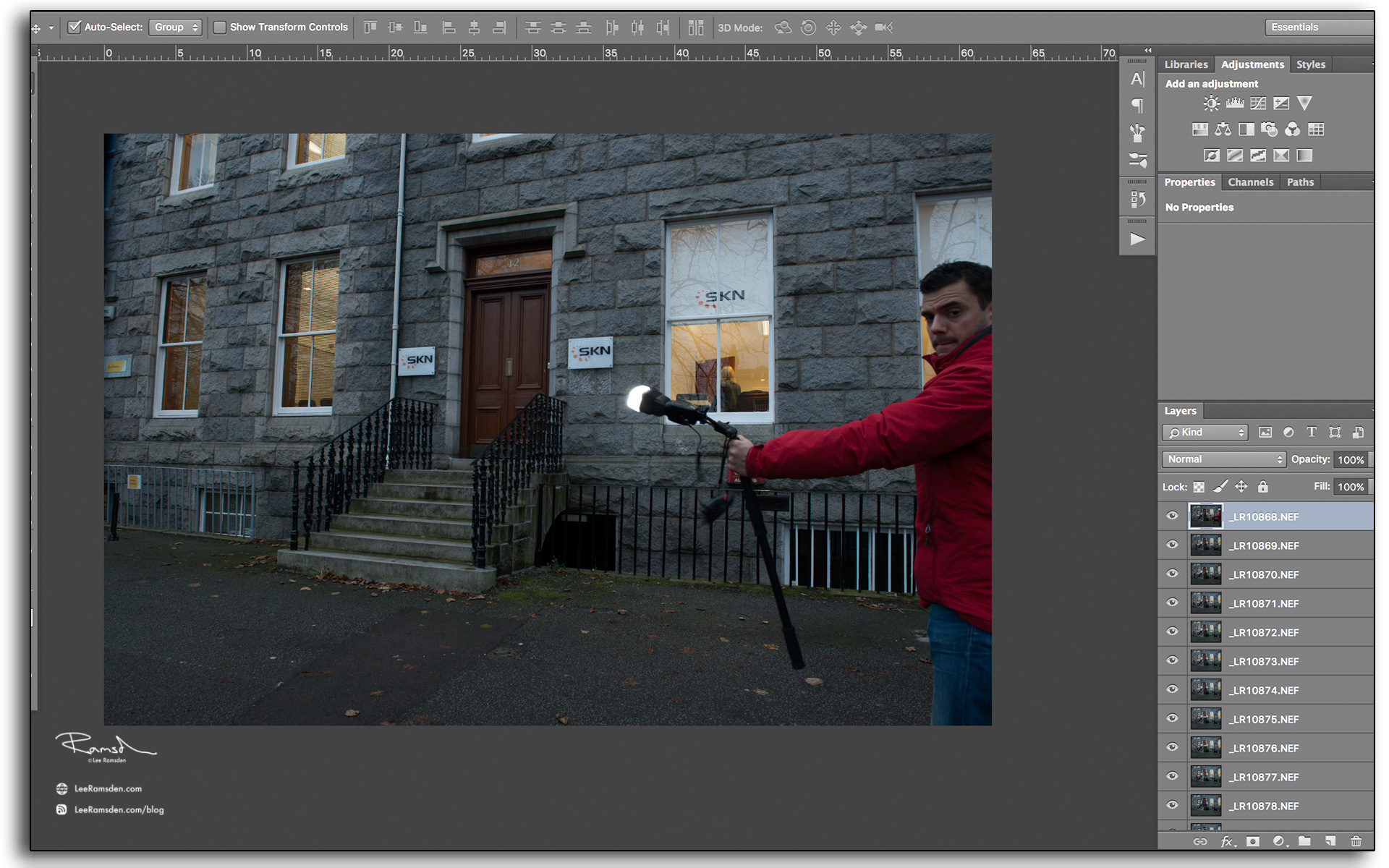
05 Start image quick tip on how to flash light

Quick tip, 

Like when making panos, my first image is a large image of me, so i can find the set easily in bridge. 

Also this is a great way to make sure that the flash and camera shutter both fire correctly. 

As when using pocket wizards as the remote, the flash PW has to be set to a channel higher and some times i forget this, and so it is always a good idea to test everything before getting started and walking far into the scene. 
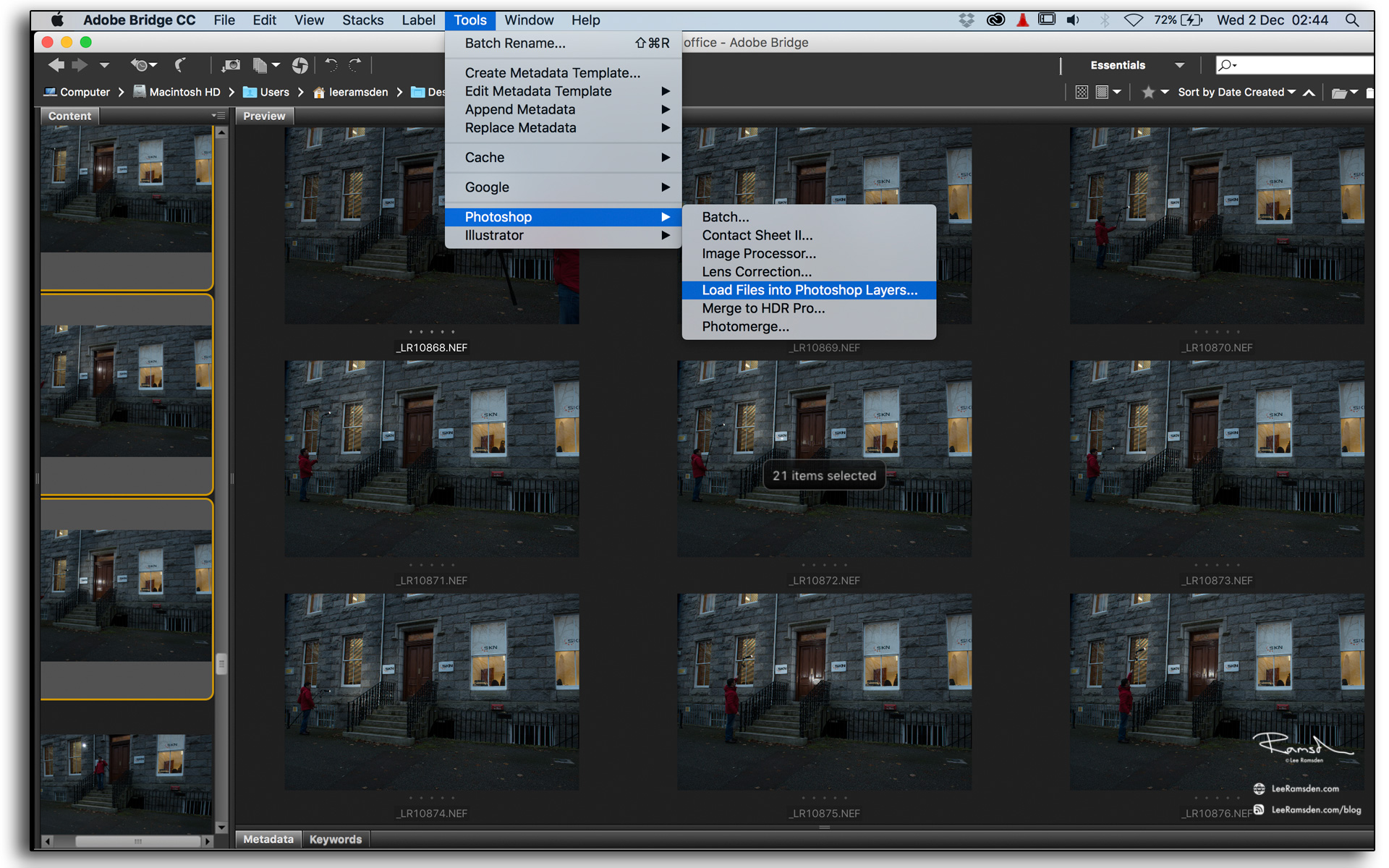
04 adobe bridge using photoshop tools loading layers

Using bridge i select all the images that i want to use, and from here you can easily load them into photoshop as a single document with 21 layers. 

06 using lighten blend mode in photoshop CC

Now turn off all layers, and starting from the bottom layer i work my way up through the stack, turning on, one layer at a time, changing the blend mode to Lighten. 
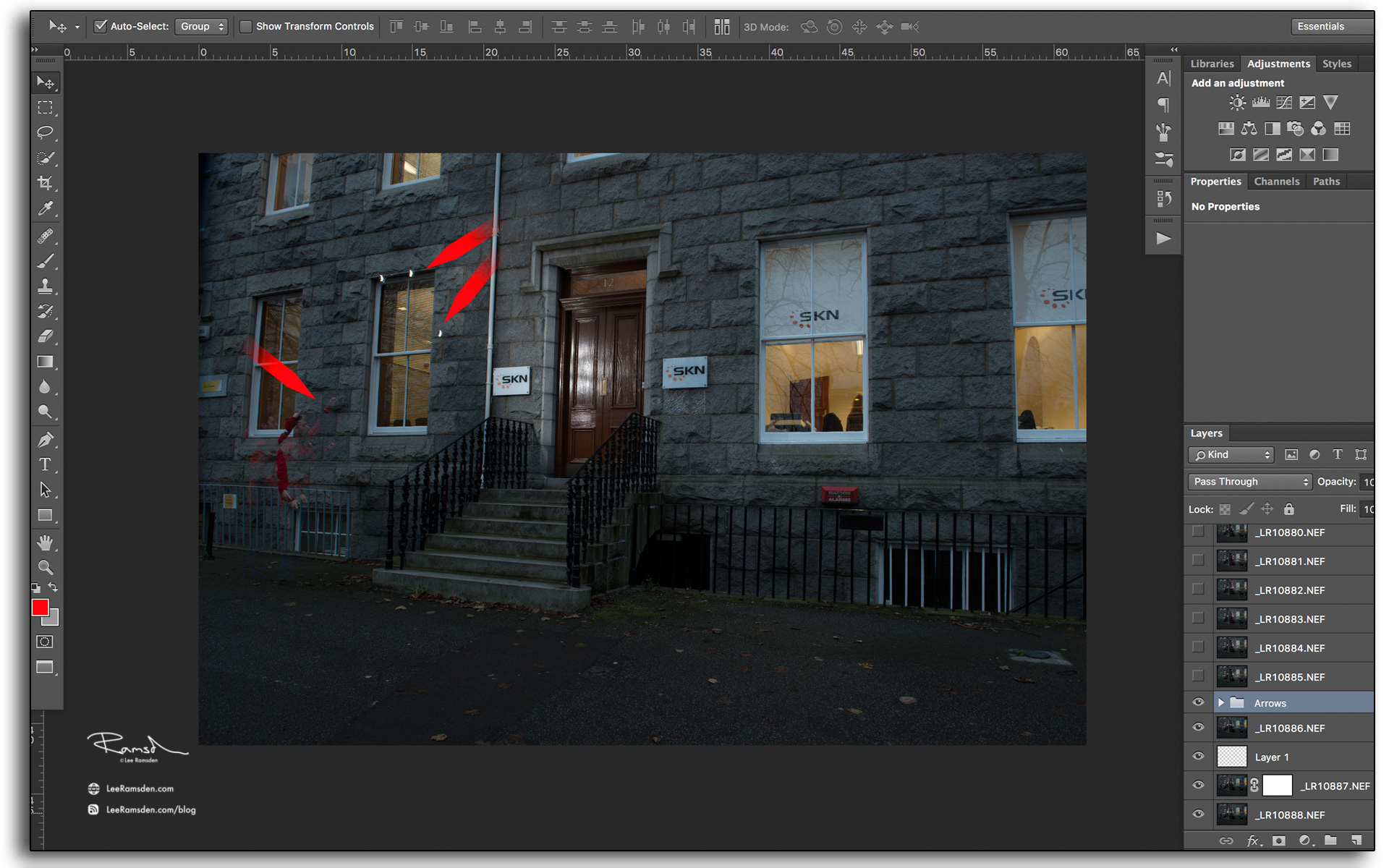
07 using a mask in photoshop CC

With the blend mode on lighten, the flash light will show. 

Also you will see indicated in this image the hot spot of the flash is in the image. This is easy to mask out. Also i remain in the image by some strange artefacts, just simply mask these out. 
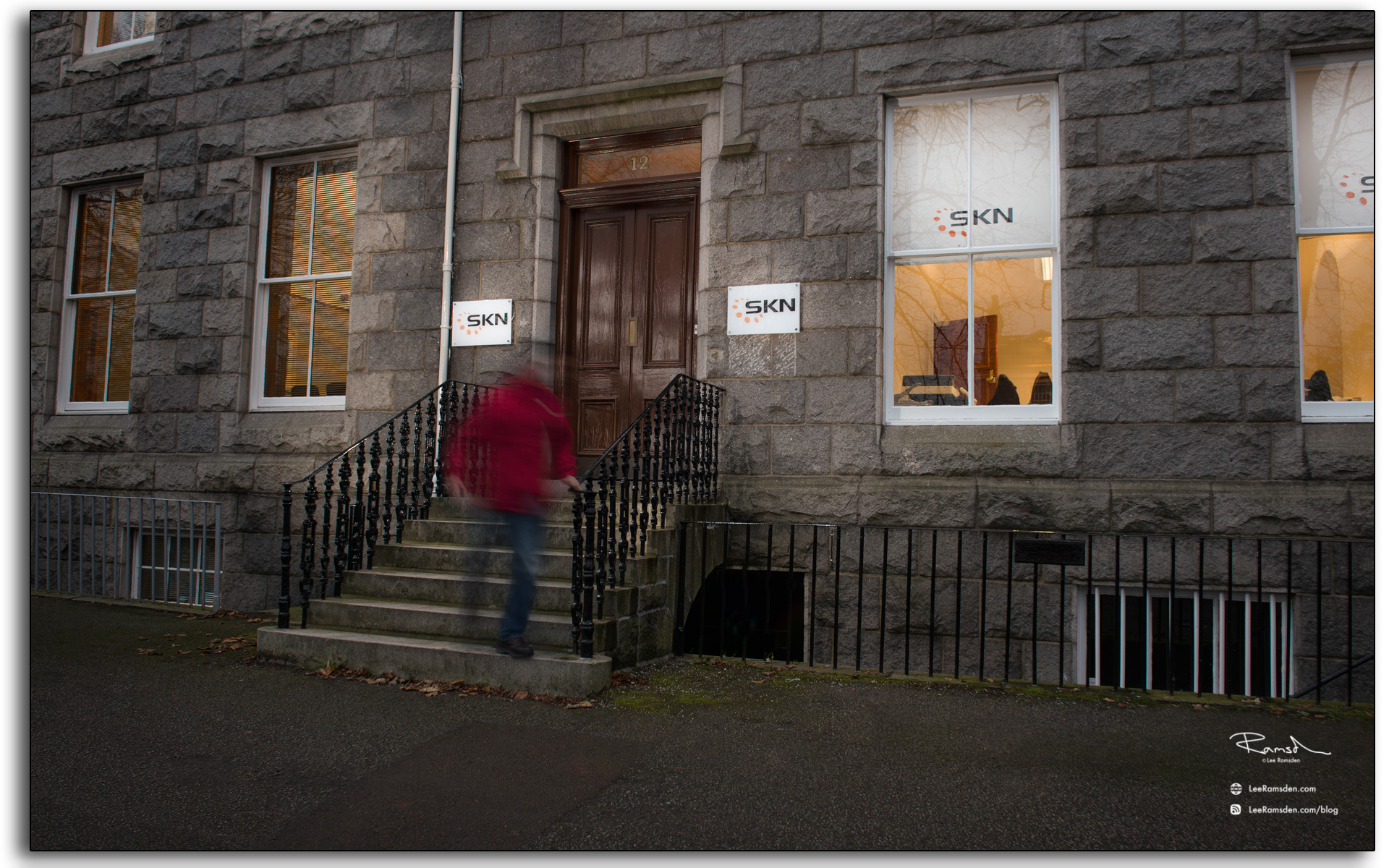
After some cleaning and tweaking here is the before and after image.

The before being unlit. 

It is a subtle difference, but one i find takes your images to that next level. 

If you have any questions, feel free to comment and i hope to help. 


Thanks

Lee

Talisman 40 year old north sea oil rig - Auk

Talisman Auk Platform – Inside a 40-Year-Old North Sea Oil Rig

The Auk Oilfield sits 249 kilometres east-southeast of Aberdeen in the UK sector of the North Sea, in 182 metres of water. Originally operated by Shell UK in partnership with ESSO, the field was acquired by Talisman Energy in 2006. Production first started in December 1975 from the Auk 'A' platform — a steel eight-legged jacket designed by Shell and constructed at Methil in Fife, Scotland. The jacket weighs 3,414 tonnes and supports a topside weight of around 8,000 tonnes.

13 Talisman Auk north sea oil and gas platform plans drawing

Drawing courtesy of google images

By the time these photographs were taken, the platform was approaching its 40th year of operation. That history shows in the structure — worn surfaces, layered pipework, and accommodation that belongs to a different era of North Sea development.

14 Aberdeen airport Bristow Departures

Getting There

Access was by helicopter from Aberdeen, departing from the Bristow terminal. The flight out gives you the first sense of scale — a small steel structure surrounded by open water, then suddenly filling the window as you come in to land.

15 Aberdeen offshore oil and gas Helicopter taxi for the industry

Our transport to the platform, ready for action. 

17 Hot Work Spark potential permit to work ISSOW Draggar gas monitor meter

Working Offshore — Permit to Work

Photography offshore is tightly controlled for good reason. Every task requires a permit to work, and any work near potential ignition sources requires gas testing with a calibrated detector. That process keeps everyone safe and keeps the operation running — it also means any images taken are genuinely earned rather than snapped casually.

18 Talisman Auk platform flare on the pipe deck north sea oil price equal rotation down man redundancies

Rope Access Operations

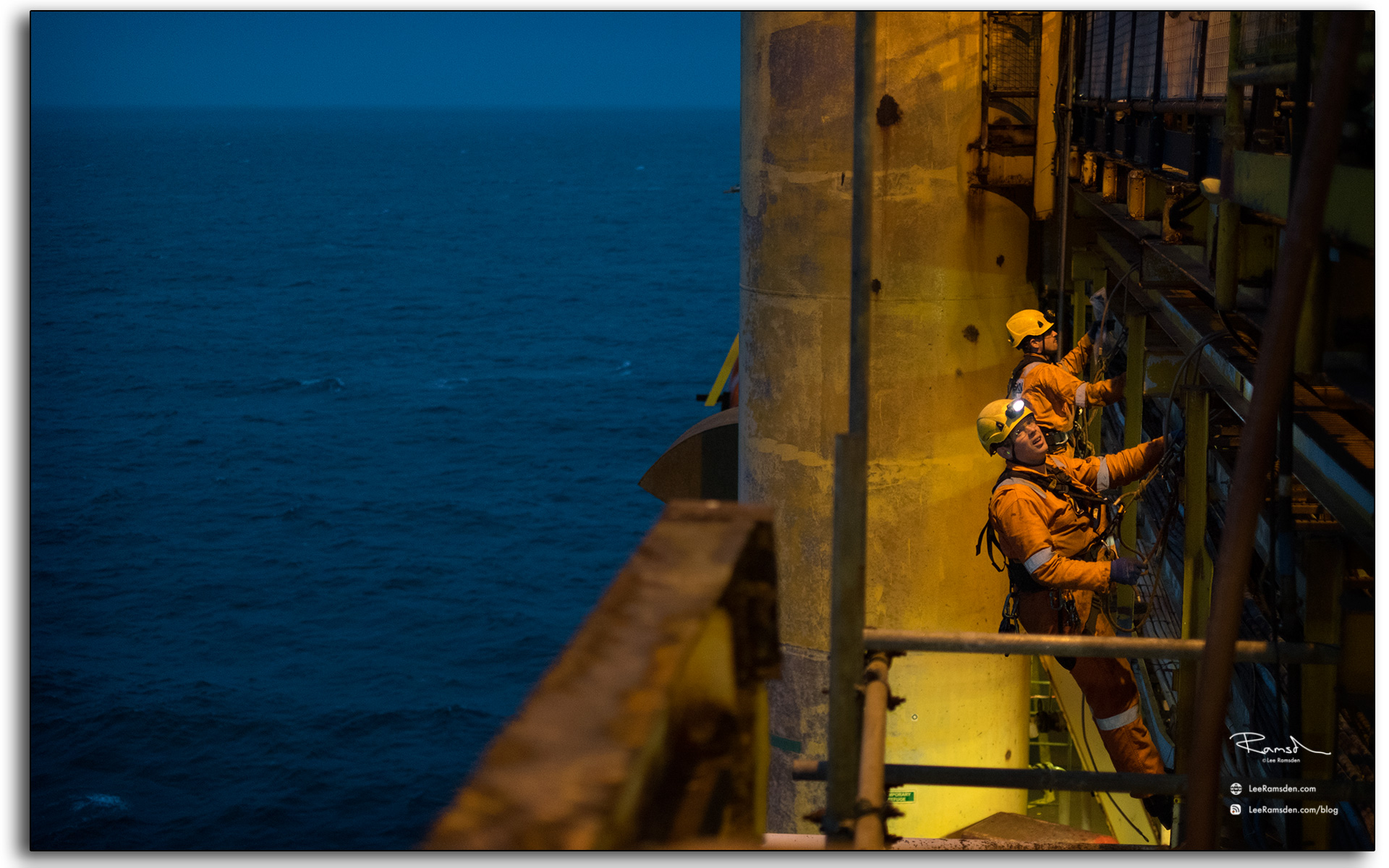
Several of the images show IRATA-trained rope access technicians working at height — climbing to work fronts, carrying out electrical inspections, and accessing areas of the platform that would otherwise require scaffolding. The SKN Electrical team on this rotation were using rope access throughout, keeping the work efficient and the footprint small.

19 offshore north sea oil and gas workers working hard at the computer in the office

Platform Life

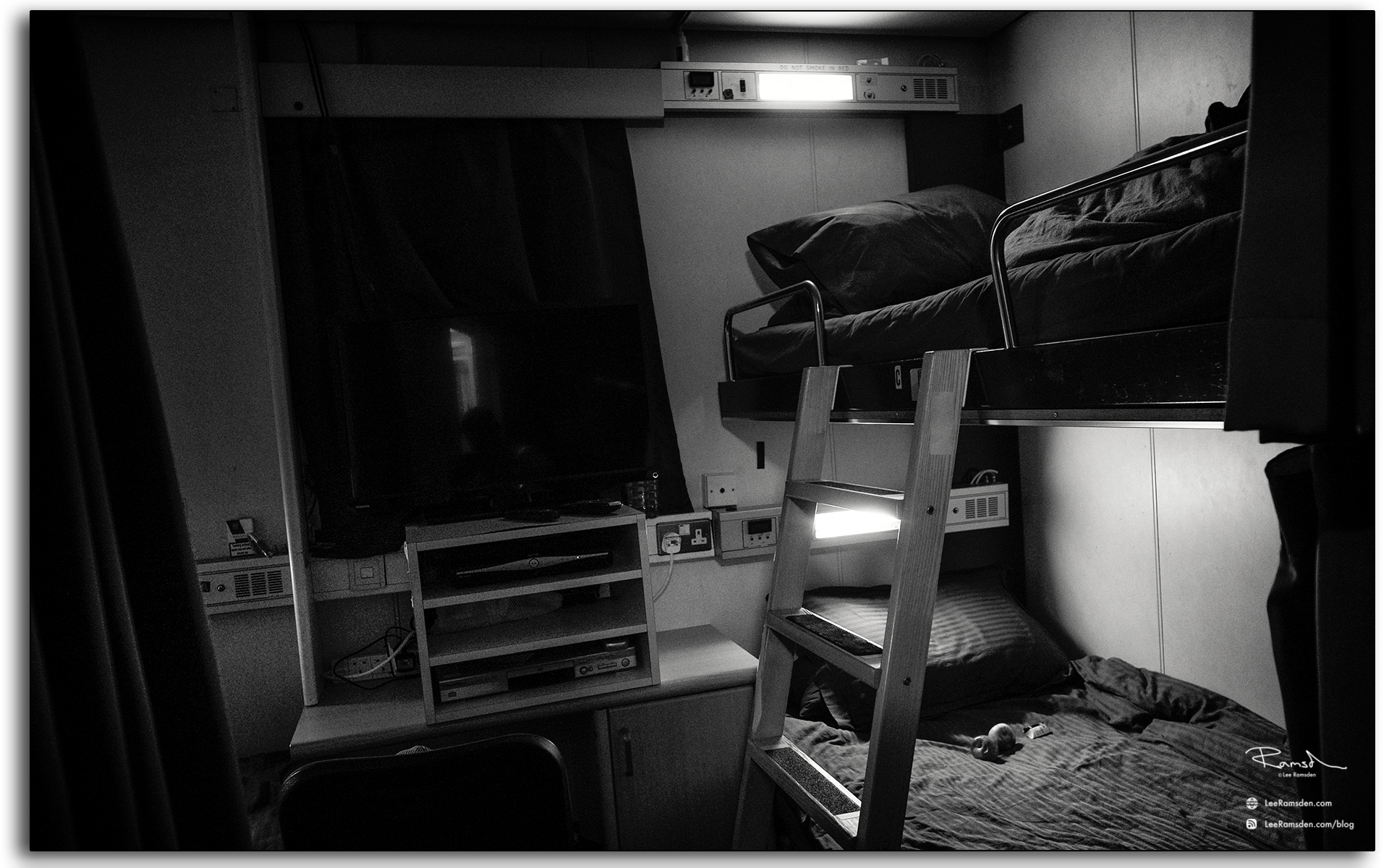
The accommodation on a 40-year-old platform reflects its age — functional, compact, and lived-in. Between shifts, the crew room and bunks are the reset point before another 12-hour day. There's a particular kind of quiet offshore that doesn't exist anywhere else.

20 IRATA industrial rope access techniques being used to work at height safely

One final note on the name: the Auk field is named after the auk family of seabirds. There's a long-standing story that the field was originally going to be called A UK — as the first British oilfield — until someone pointed out that the sixth field in the sequence would be called F UK. Shell rapidly moved to a seabird naming policy. Their sixth UK oilfield is called Fulmar.

For more photography from offshore oil and gas projects, visit the Oil & Gas portfolio.

21 SKN electrical abseiler working at height IRATA
22 Electrical worker repairing a light fitting on an oil rig offshore in the north sea
23 Oil and gas workforce on a tea break smoking drinking coffee
24 Auk Oil rig platform Talisman TV lounge workers watching tv

Off shift movie time. 

25 Auk oil gas rig room and shower

40 year old ensuite rooms. 

26 Talisman Auk gas rig accommodation room bunk bed north sea oil rig price

Bunks fit for a king.


Please feel free to share this post on your social media, giving credit to the photographer Lee Ramsden www.leeramsden.com


Thanks, Lee