Cromarty

Cromarty Lighthouse on the Black Isle

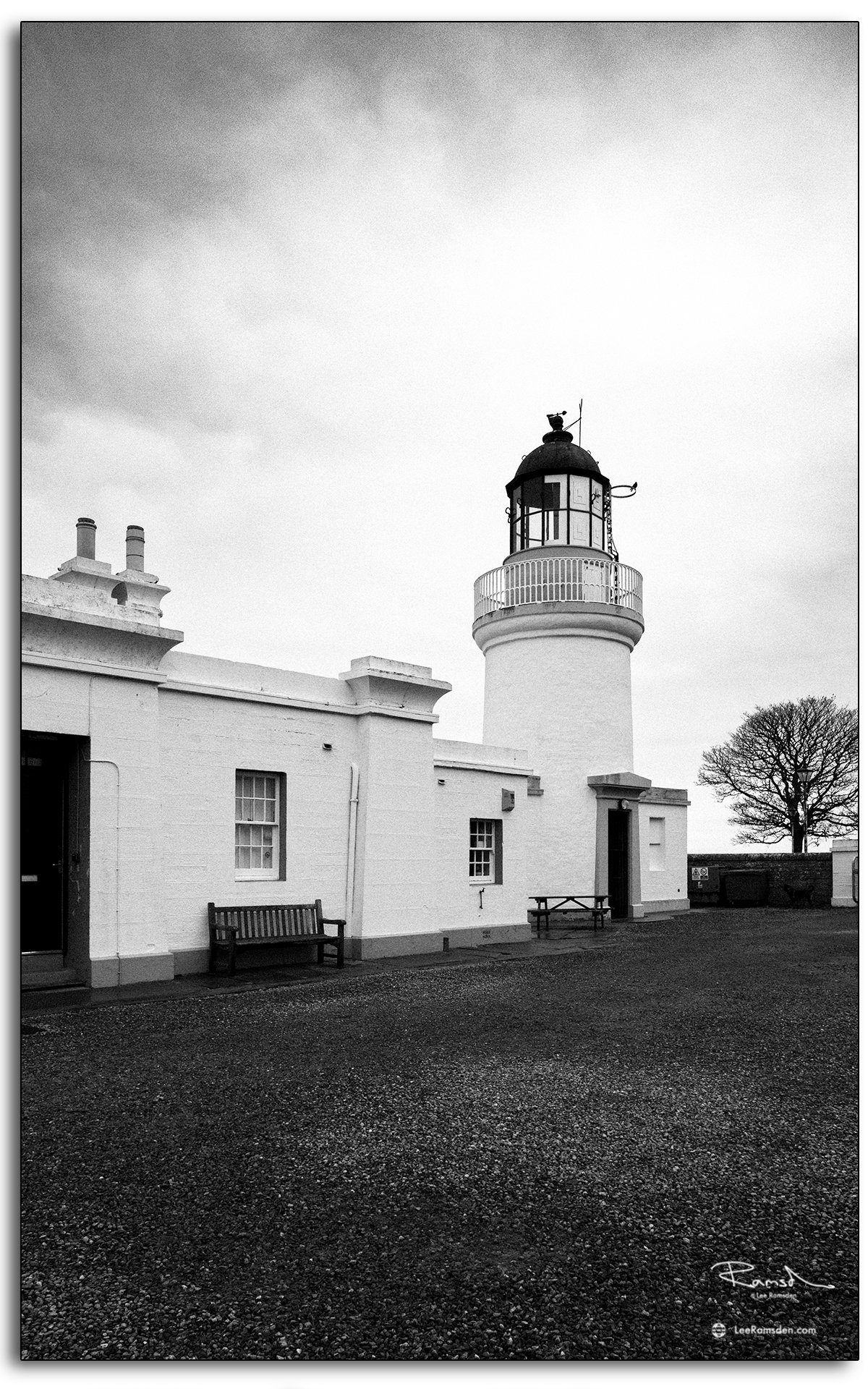
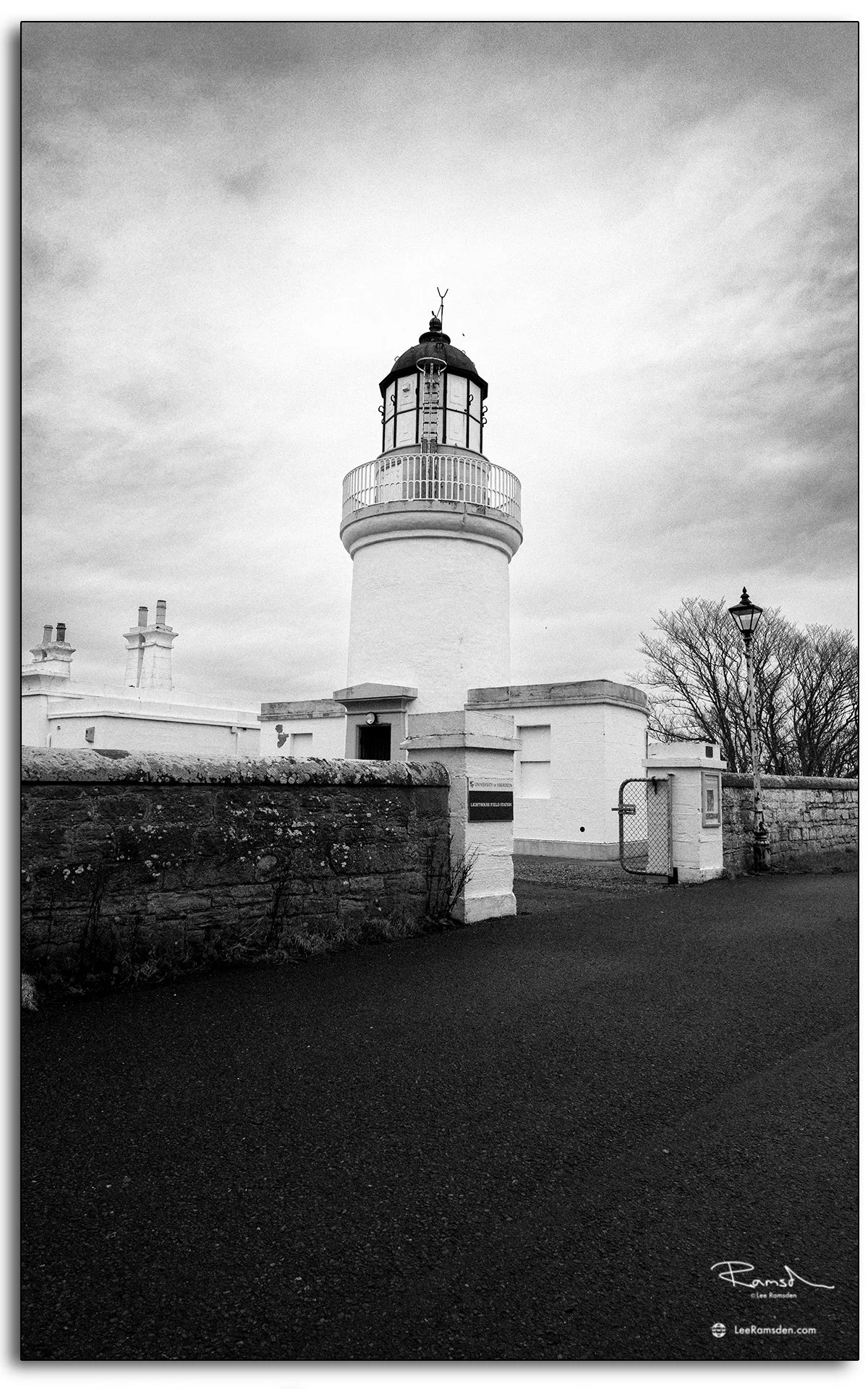
These photographs were taken in Cromarty on the Black Isle, looking at the lighthouse from two slightly different angles. The monochrome treatment felt right for this set. It gives the building a more documentary look and pulls it closer to its working history rather than presenting it as a purely scenic coastal landmark.

Cromarty Lighthouse was first established in 1846 to guide vessels from the Moray Firth into the Cromarty Firth. It was designed by Alan Stevenson, part of the famous Stevenson family of lighthouse engineers. 

The light later became automatic in 1985, and it was withdrawn from service in 2006. After decommissioning, the site passed into academic use, and the buildings are now associated with the University of Aberdeen’s Lighthouse Field Station

That history gives the site more weight than a simple lighthouse stop on the coast. It stood at an important entrance to the Cromarty Firth, an area long valued for its sheltered waters and maritime importance. Even now, the building still carries that sense of purpose. 

Cromarty has no shortage of history, but the lighthouse is one of the clearest reminders that this small town was connected to much larger routes, movements and industries at sea.
Cromarty: The Cleopatra Stone and the Firth Beyond

Cromarty is the sort of place where history and industry can sit in the same frame, even when they belong to very different centuries.

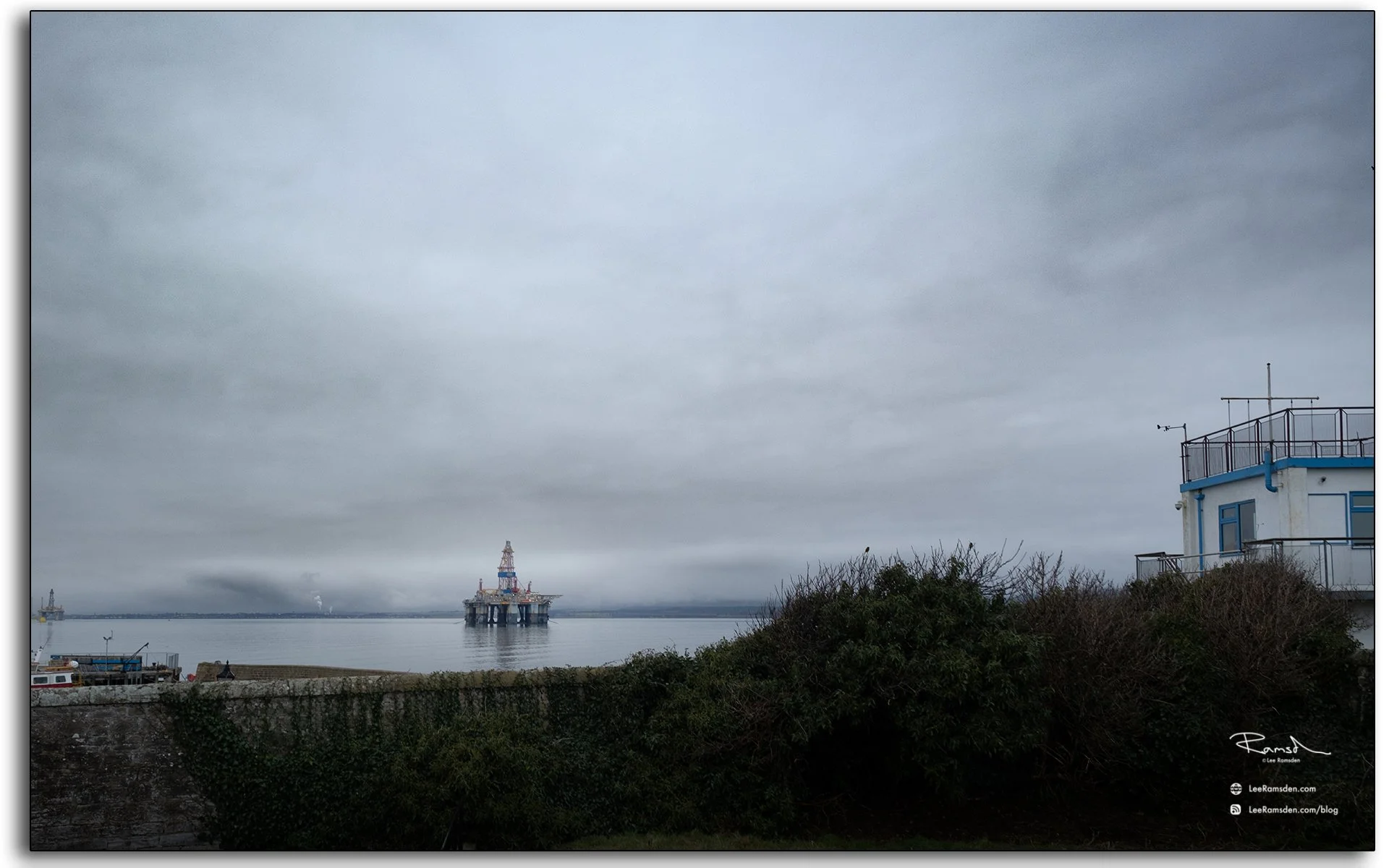
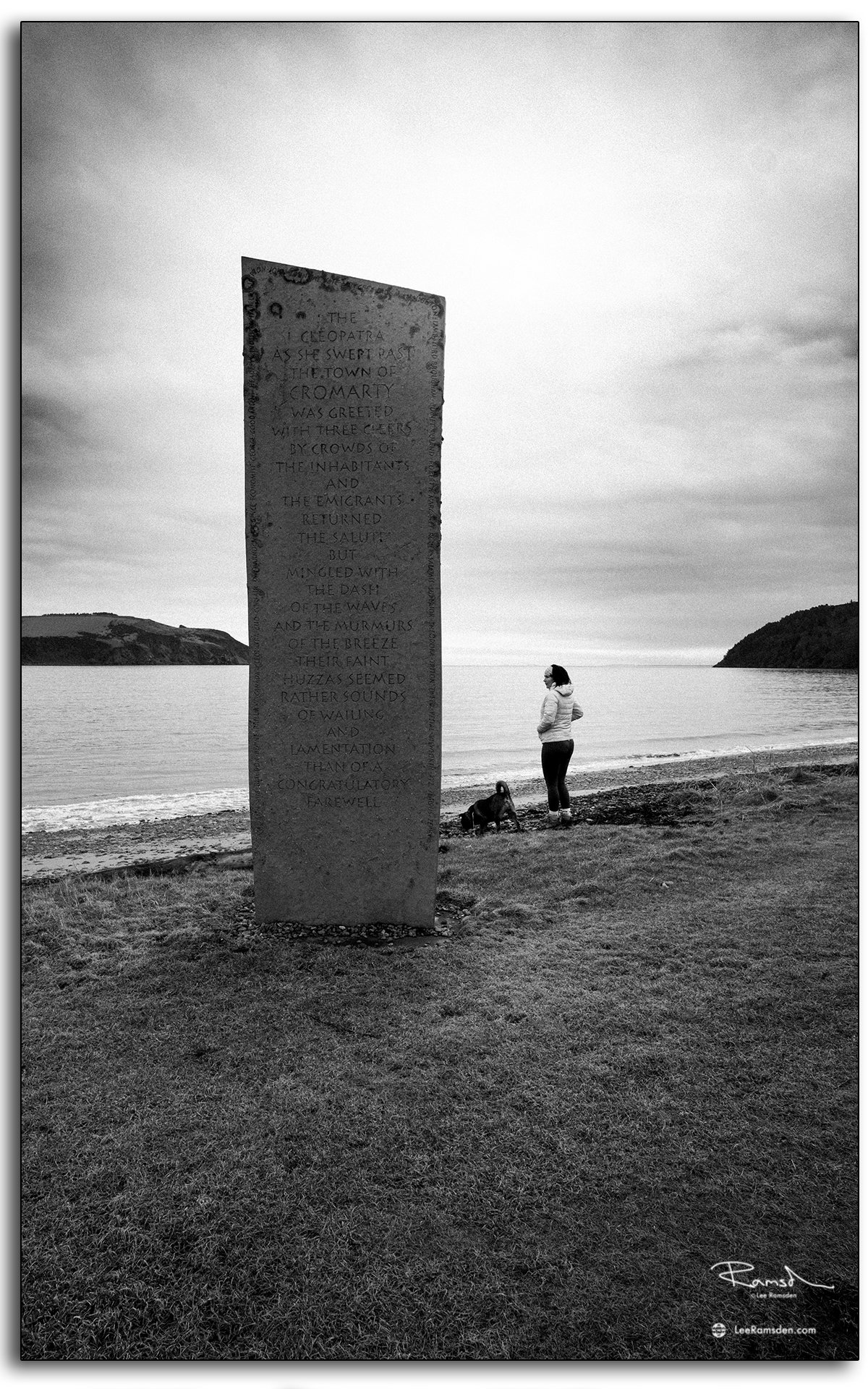
These two photographs were taken from the shoreline at Cromarty. One centres on the Cleopatra Stone, photographed in black and white, with the sea and shoreline beyond. The other looks out across the Cromarty Firth towards an offshore rig, with the edge of the town and harbour in the foreground.

Cromarty itself sits on the southern shore of the mouth of the Cromarty Firth, a place long tied to the sea through fishing, shipping and ferry connections. The town also developed a wider maritime importance because of the Firth’s role as a natural harbour. 

That first image brings in the more modern side of the area. Across the water, the Cromarty Firth and nearby Nigg have long been associated with the offshore industry. The fabrication yard at Nigg was originally developed for North Sea oil and gas work in the early 1970s, and the wider Firth has continued to be linked with rig lay-up, refurbishment and energy-sector activity. 

The Cleopatra Stone is one of Cromarty’s more unusual landmarks. Its inscription refers to the Queen Cleopatra, an emigrant ship associated with people leaving the town, and it captures a more emotional side of coastal history than many formal monuments do.

What I like about these images together is the contrast. One is rooted in memory, migration and local identity. The other is about scale, distance and the working landscape that still defines the Firth today. Cromarty can hold both at once without forcing the point.

Photographically, that makes it an interesting place to return to. You are not just looking at a pretty shoreline. You are looking at a location where personal history, harbour life and the North Sea economy all overlap in a relatively small stretch of coast.

Cromarty War Graves and the Old Churchyard

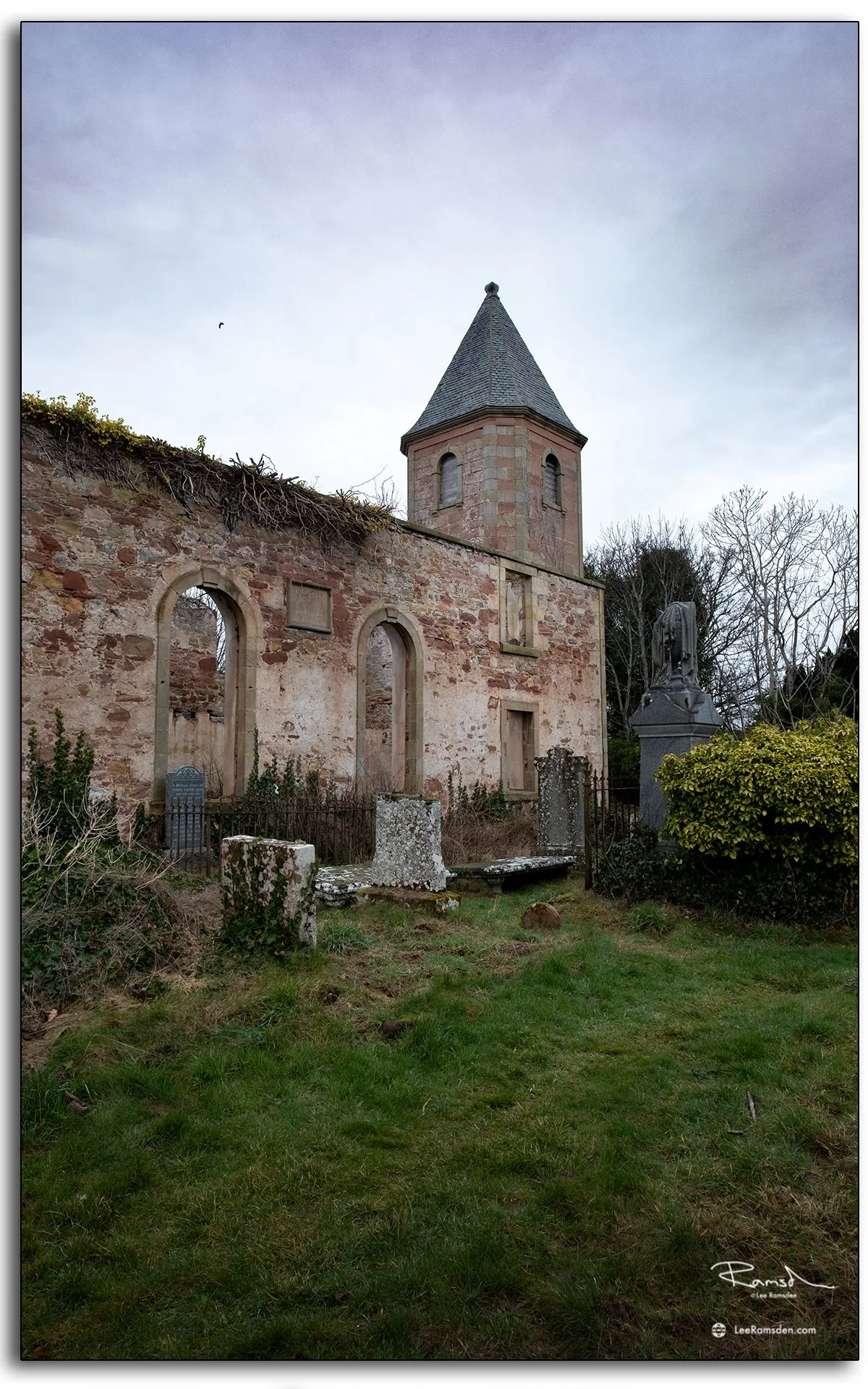
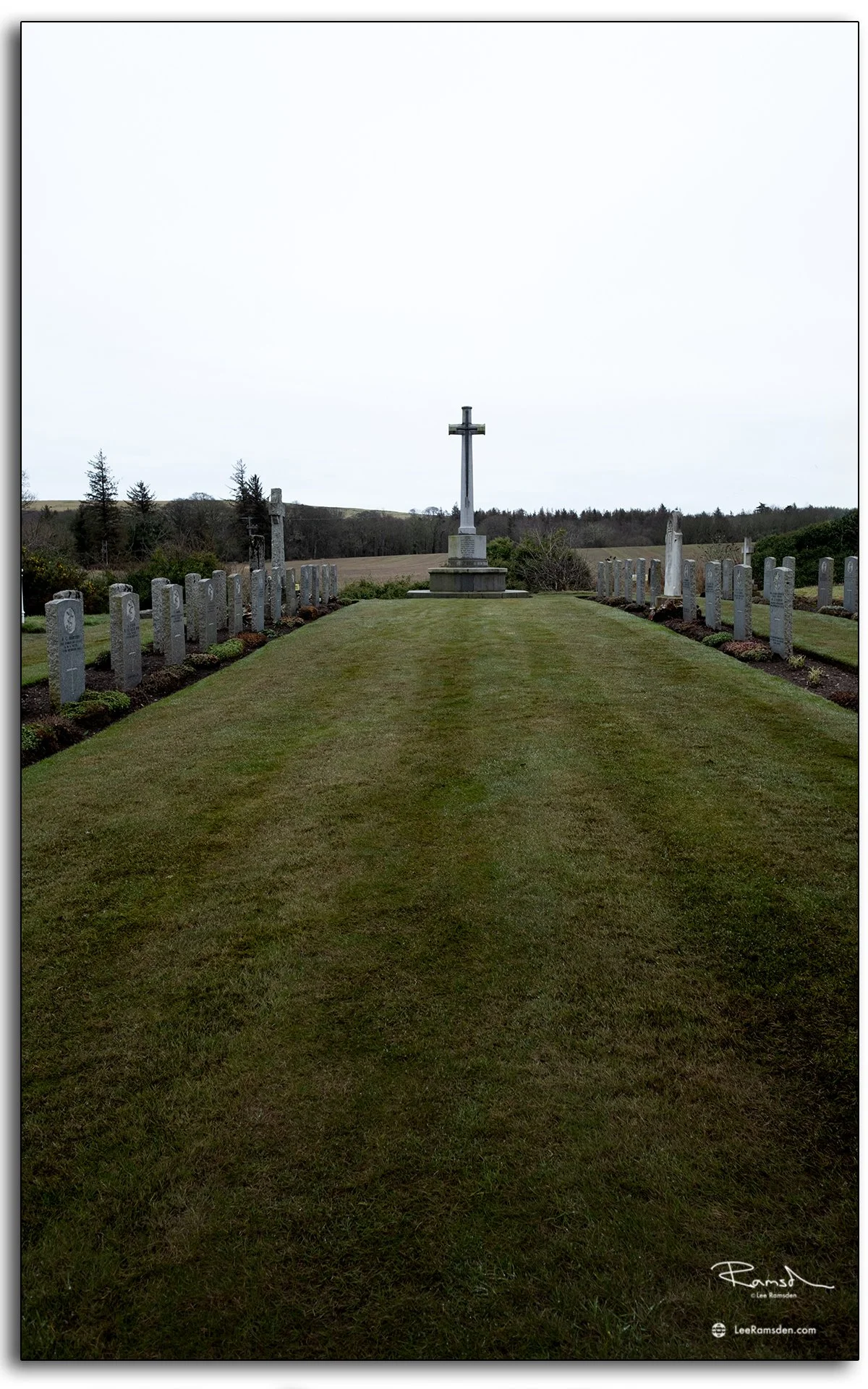
These two photographs were taken in Cromarty and show two closely connected parts of the same place: the older churchyard ruins and the formal war graves section with its cross at the far end of the cemetery. Together, they say quite a lot about how much history can sit in one small Highland town. 

The first image looks into the old churchyard, where the ruined Gaelic Chapel and older burial ground give the place a much longer timeline than the neat lines of the later war graves. The chapel is associated with the Gaelic-speaking community in Cromarty and now survives as a ruin within the burial ground. 

The second image shows the more formal military section of Cromarty Cemetery, where the graves are arranged around a War Cross in the newer extension. According to the Commonwealth War Graves Commission, the cemetery contains 74 Commonwealth burials from the First World War and 4 from the Second World War

That number feels striking for a small place, but Cromarty had a more significant wartime role than many people realise. The CWGC notes that Cromarty was a net-base and that the Cromarty Military Hospital had 226 beds during the First World War. 

The same CWGC record also points to one of the major reasons the cemetery holds so many wartime burials: HMS Natal was wrecked and overturned by an internal explosion in the channel between Cromarty and Invergordon on 30 December 1915. That event left a lasting mark on the area and helps explain why the war graves section is so prominent here. 

What I like about these images together is the contrast in how remembrance is expressed. One side of the cemetery feels irregular, weathered and local, shaped over time by the town itself. The other is formal and deliberate, with the ordered headstones and cross giving the space a very different rhythm. Both belong to the same landscape, and both reflect different layers of Cromarty’s past.