Scottish history

Cromarty: The Cleopatra Stone and the Firth Beyond

Cromarty is the sort of place where history and industry can sit in the same frame, even when they belong to very different centuries.

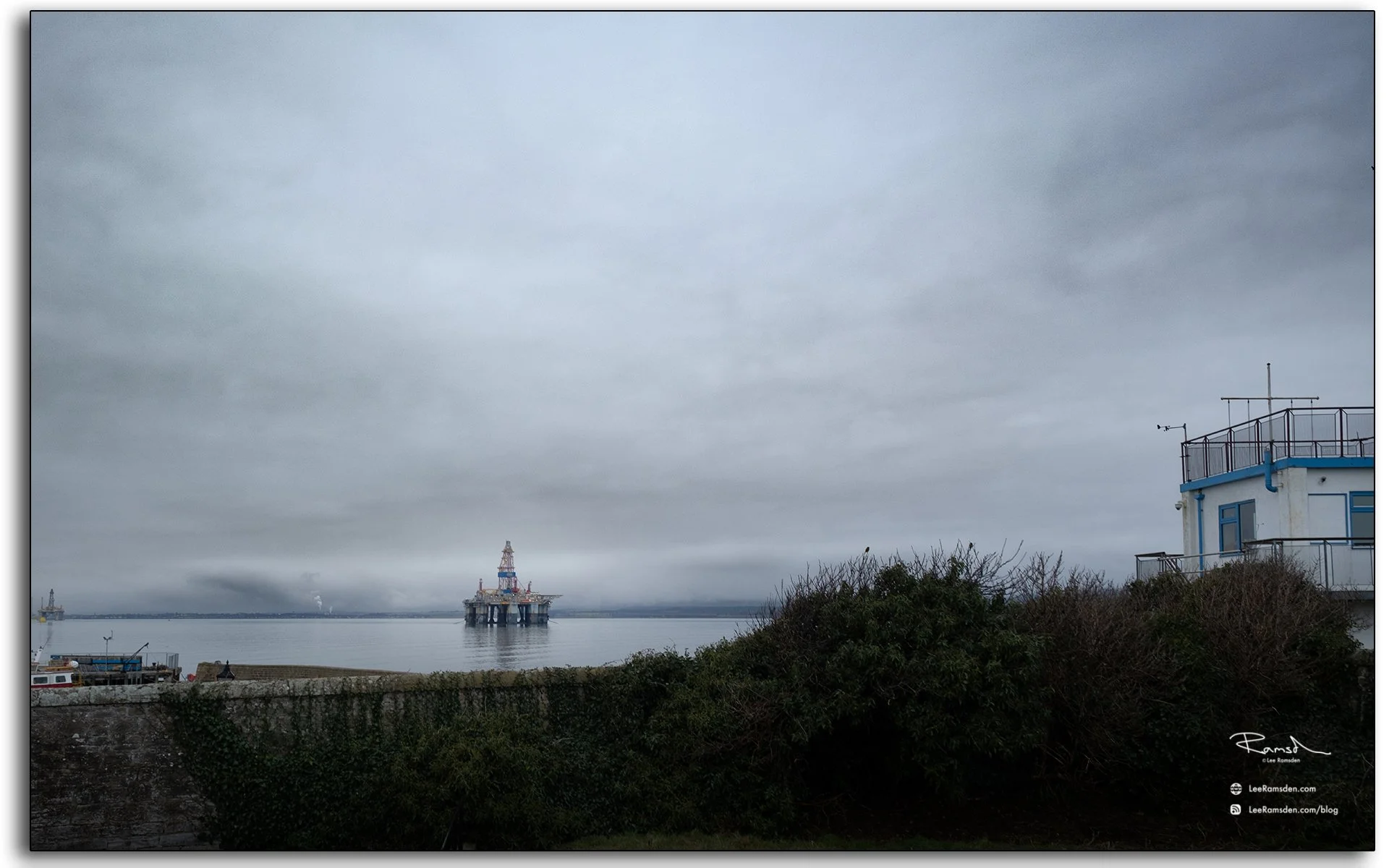
These two photographs were taken from the shoreline at Cromarty. One centres on the Cleopatra Stone, photographed in black and white, with the sea and shoreline beyond. The other looks out across the Cromarty Firth towards an offshore rig, with the edge of the town and harbour in the foreground.

Cromarty itself sits on the southern shore of the mouth of the Cromarty Firth, a place long tied to the sea through fishing, shipping and ferry connections. The town also developed a wider maritime importance because of the Firth’s role as a natural harbour. 

That first image brings in the more modern side of the area. Across the water, the Cromarty Firth and nearby Nigg have long been associated with the offshore industry. The fabrication yard at Nigg was originally developed for North Sea oil and gas work in the early 1970s, and the wider Firth has continued to be linked with rig lay-up, refurbishment and energy-sector activity. 
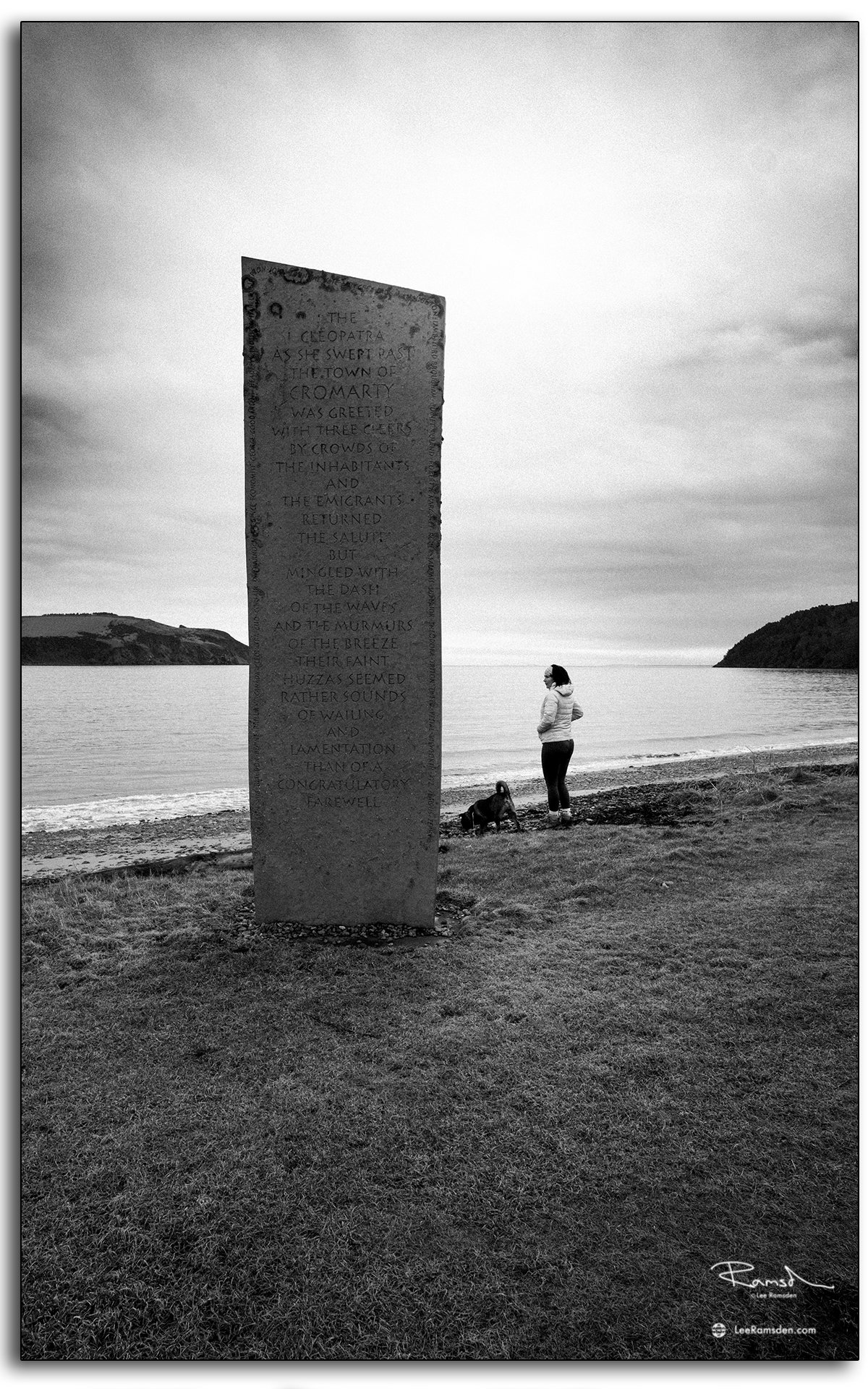
The Cleopatra Stone is one of Cromarty’s more unusual landmarks. Its inscription refers to the Queen Cleopatra, an emigrant ship associated with people leaving the town, and it captures a more emotional side of coastal history than many formal monuments do.

What I like about these images together is the contrast. One is rooted in memory, migration and local identity. The other is about scale, distance and the working landscape that still defines the Firth today. Cromarty can hold both at once without forcing the point.

Photographically, that makes it an interesting place to return to. You are not just looking at a pretty shoreline. You are looking at a location where personal history, harbour life and the North Sea economy all overlap in a relatively small stretch of coast.
Cromarty War Graves and the Old Churchyard

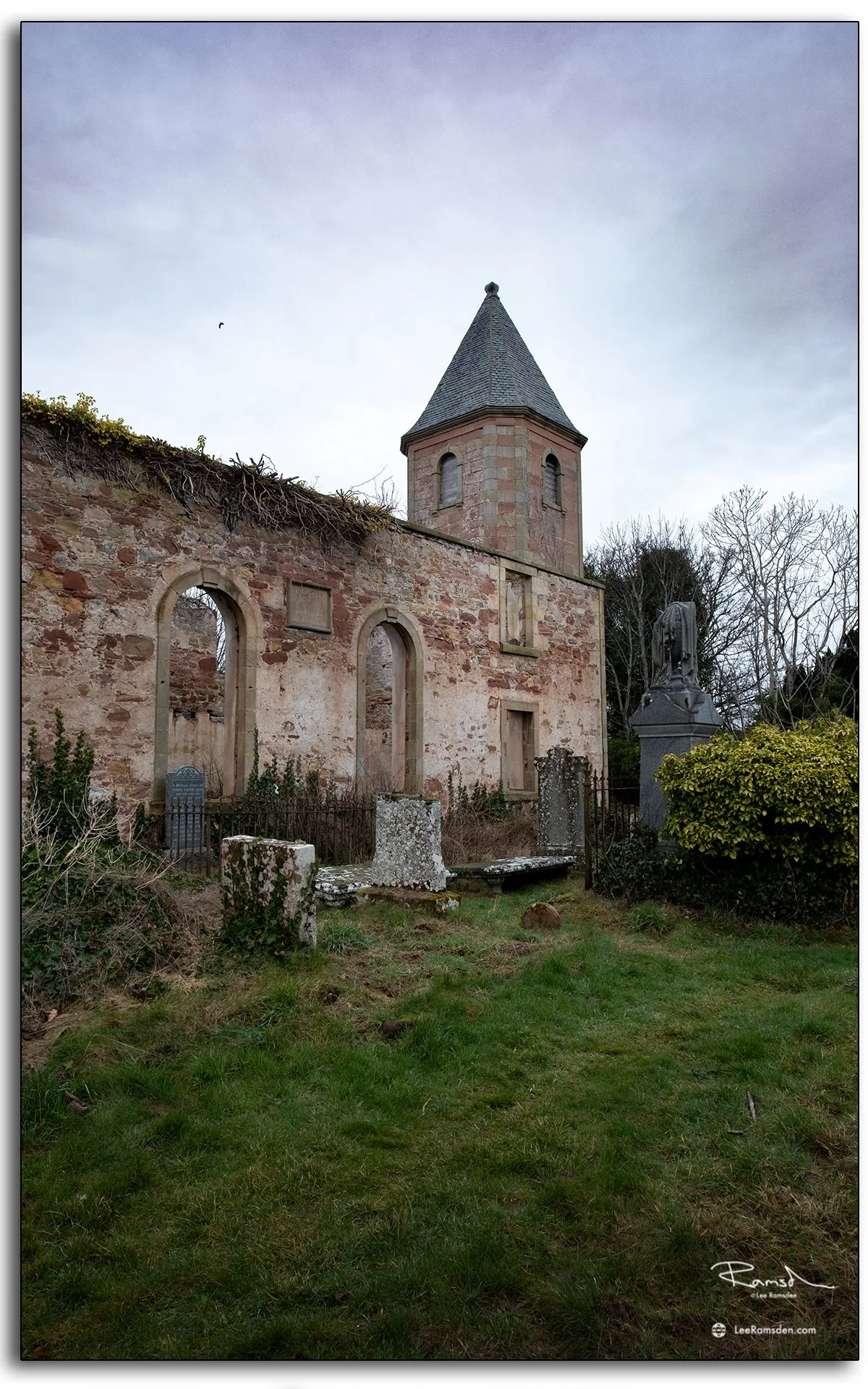
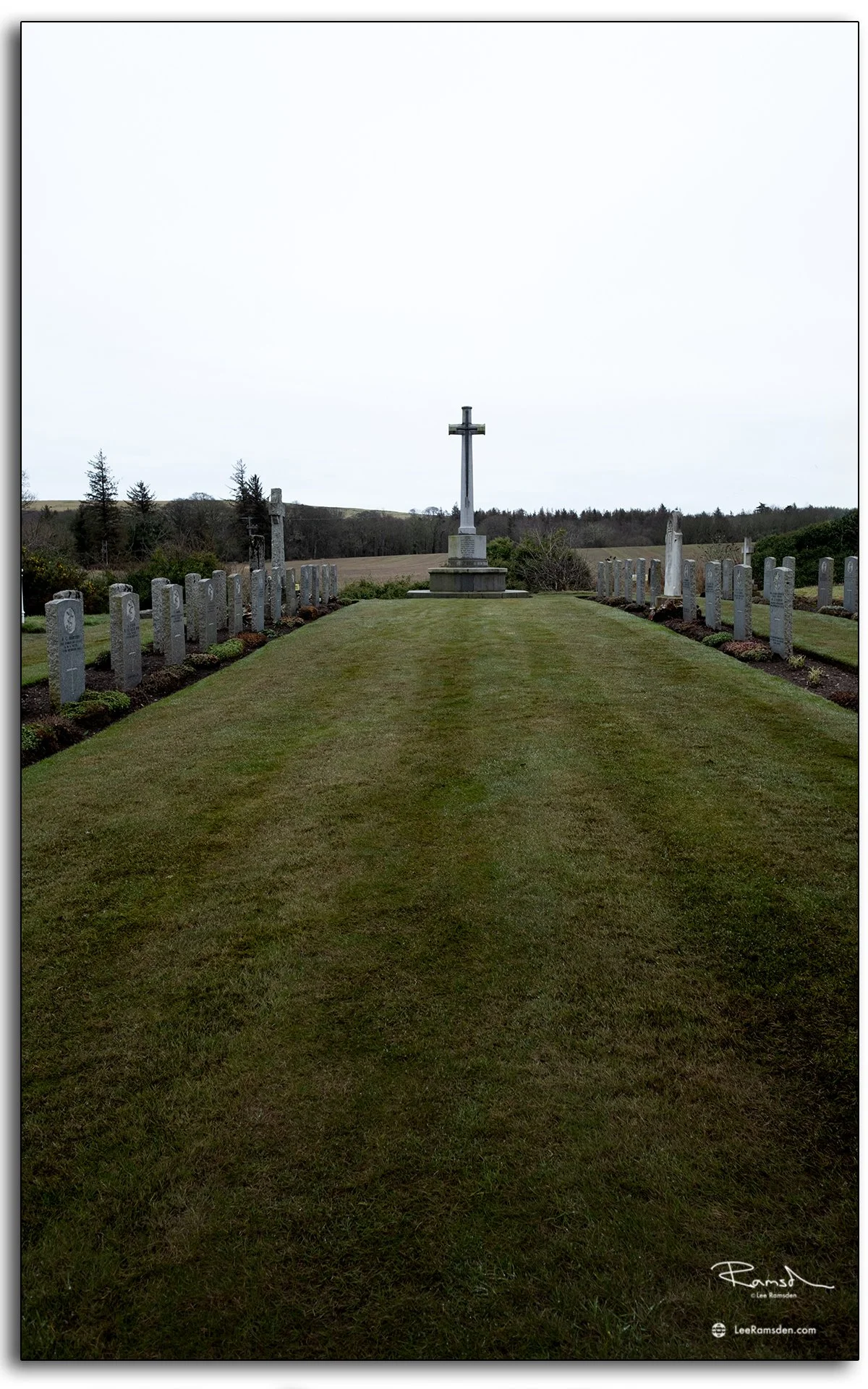
These two photographs were taken in Cromarty and show two closely connected parts of the same place: the older churchyard ruins and the formal war graves section with its cross at the far end of the cemetery. Together, they say quite a lot about how much history can sit in one small Highland town. 

The first image looks into the old churchyard, where the ruined Gaelic Chapel and older burial ground give the place a much longer timeline than the neat lines of the later war graves. The chapel is associated with the Gaelic-speaking community in Cromarty and now survives as a ruin within the burial ground. 

The second image shows the more formal military section of Cromarty Cemetery, where the graves are arranged around a War Cross in the newer extension. According to the Commonwealth War Graves Commission, the cemetery contains 74 Commonwealth burials from the First World War and 4 from the Second World War

That number feels striking for a small place, but Cromarty had a more significant wartime role than many people realise. The CWGC notes that Cromarty was a net-base and that the Cromarty Military Hospital had 226 beds during the First World War. 

The same CWGC record also points to one of the major reasons the cemetery holds so many wartime burials: HMS Natal was wrecked and overturned by an internal explosion in the channel between Cromarty and Invergordon on 30 December 1915. That event left a lasting mark on the area and helps explain why the war graves section is so prominent here. 

What I like about these images together is the contrast in how remembrance is expressed. One side of the cemetery feels irregular, weathered and local, shaped over time by the town itself. The other is formal and deliberate, with the ordered headstones and cross giving the space a very different rhythm. Both belong to the same landscape, and both reflect different layers of Cromarty’s past. 

Dunnottar Castle Sunrise – Drone Photography in Stonehaven, Scotland

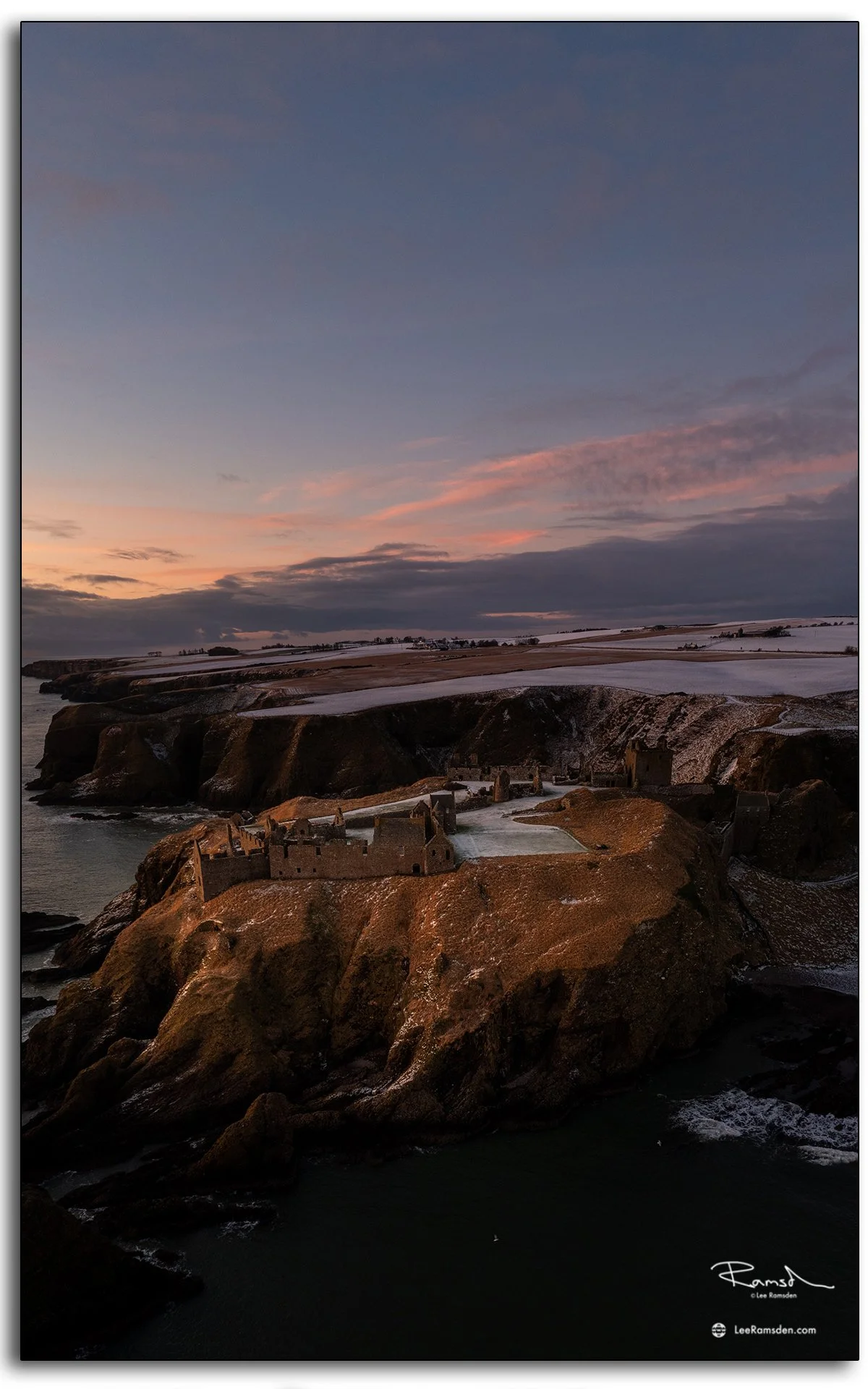
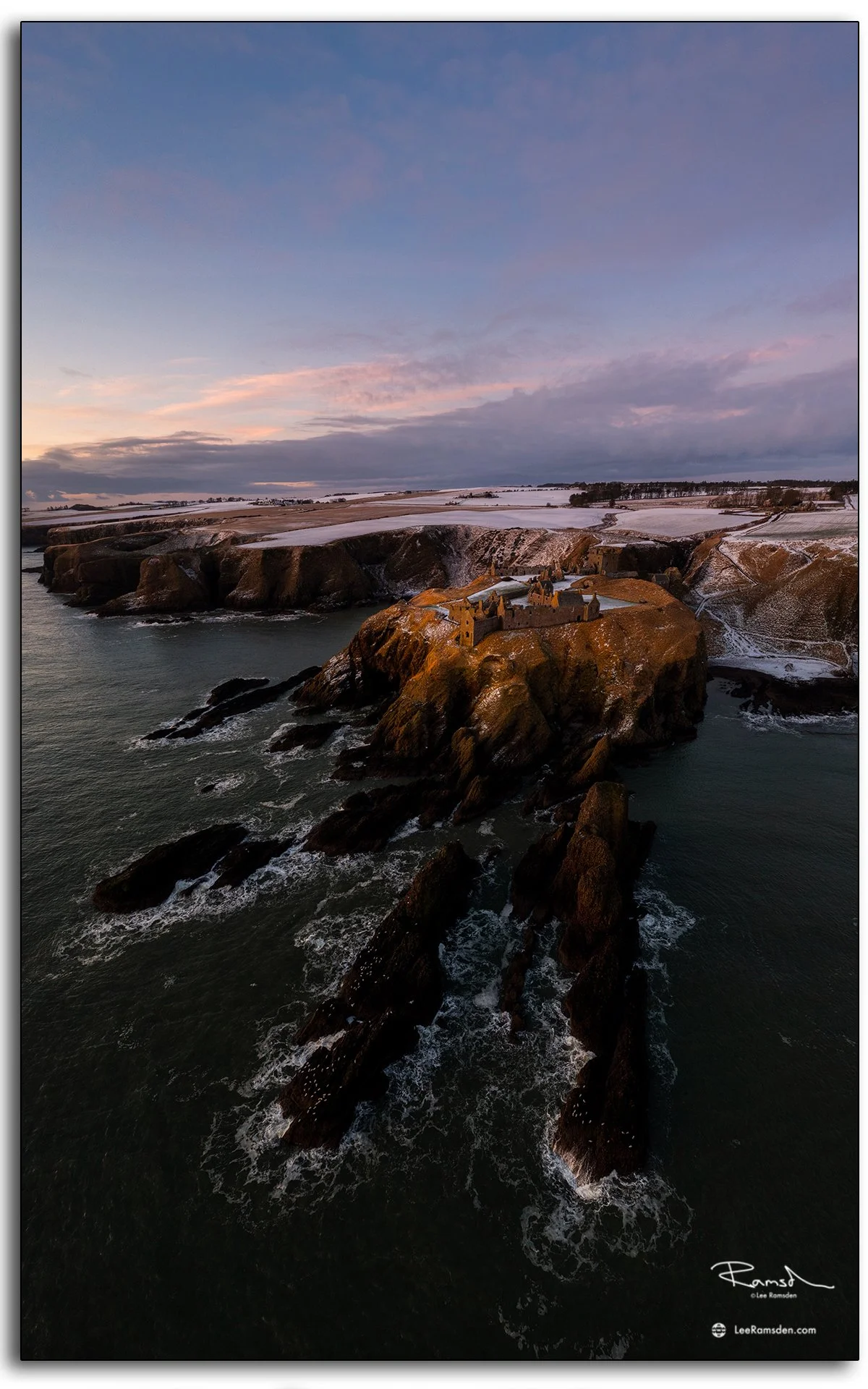
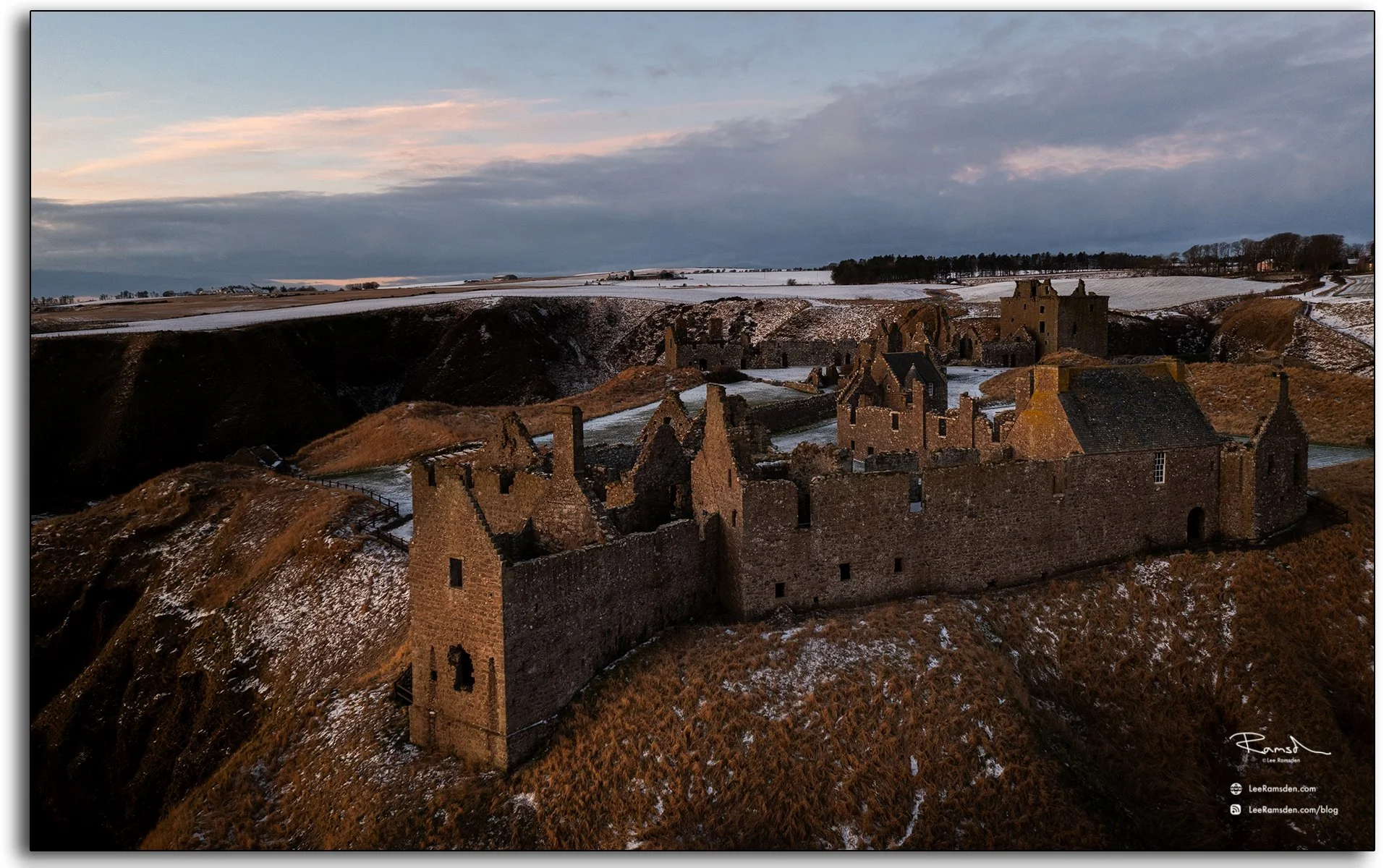
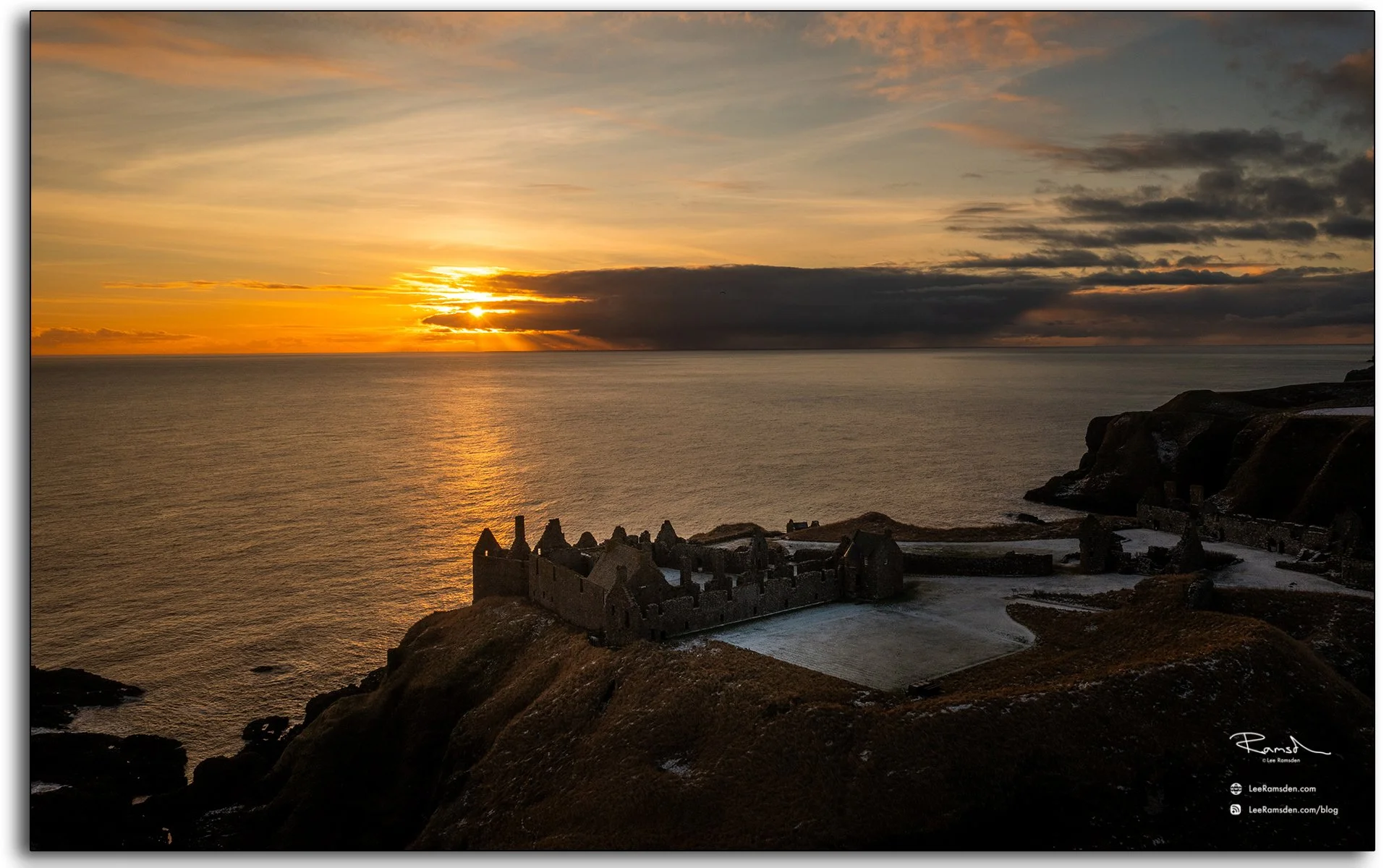
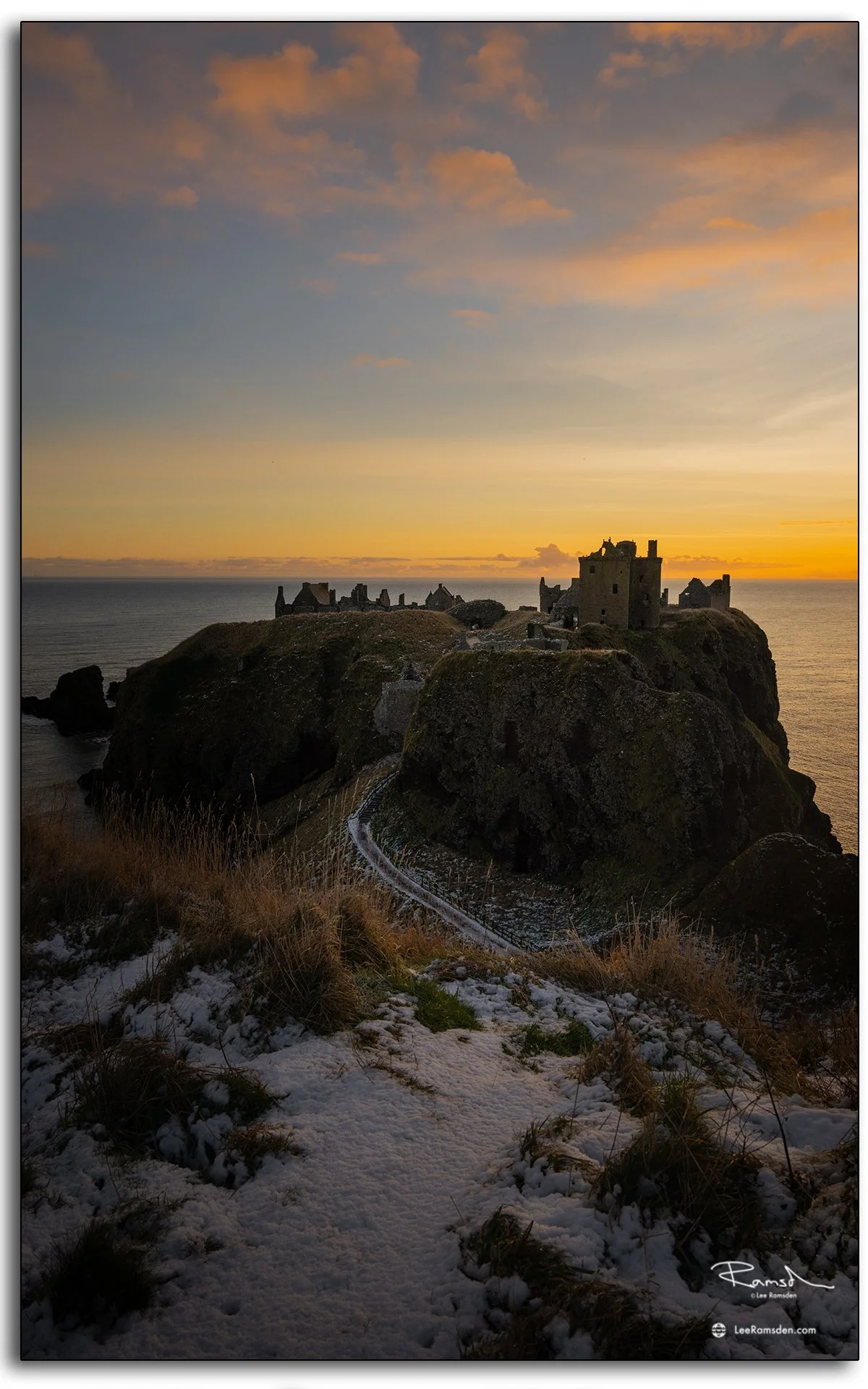
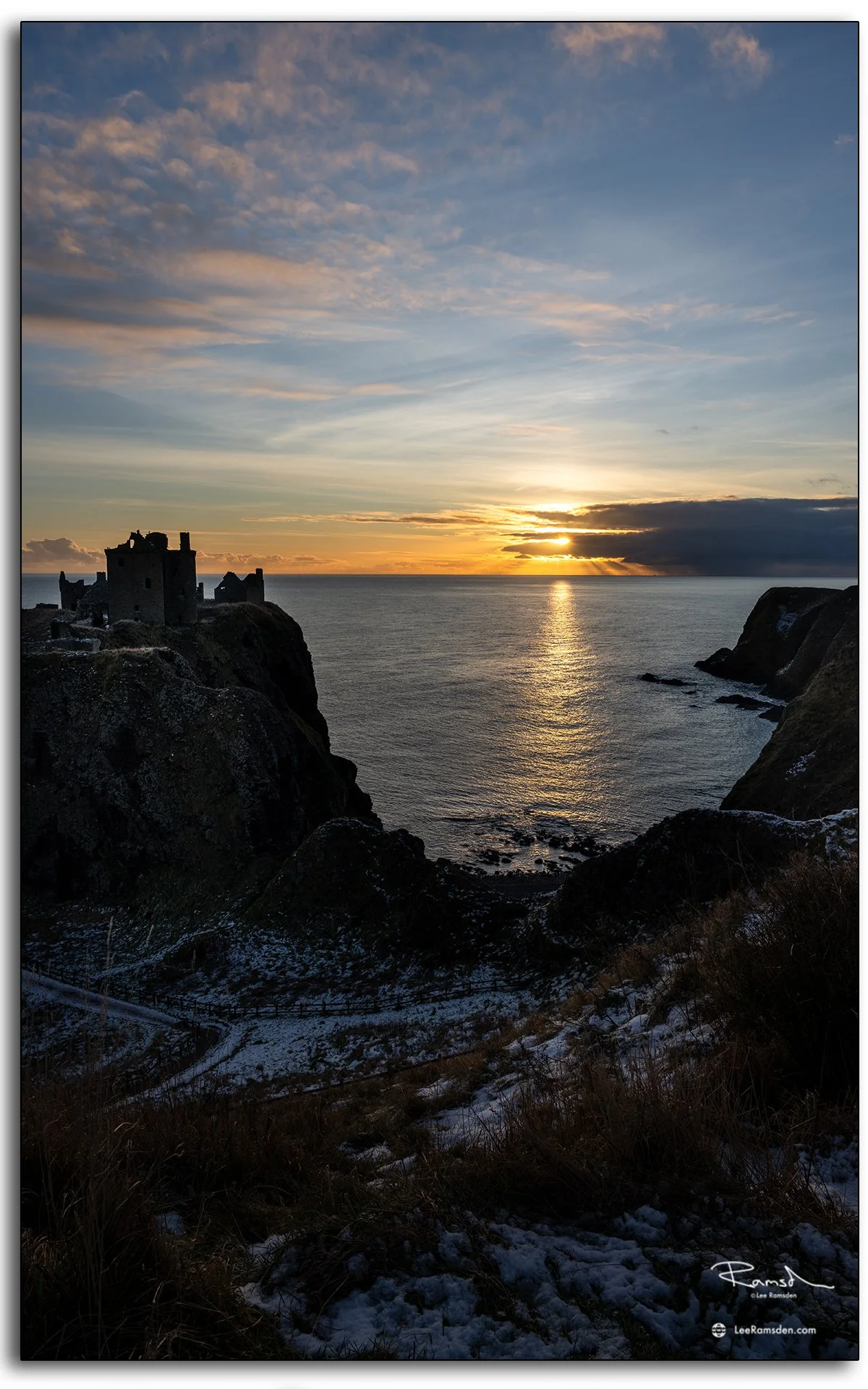
Drone photograph of Dunnottar Castle at sunrise in Stonehaven, Scotland, showing the ruins on cliffs above the North Sea.

Few locations on Scotland’s east coast carry as much atmosphere as Dunnottar Castle. Perched high above the North Sea, the ruins dominate the headland and remain one of the country’s most iconic coastal landmarks.

Captured by drone at sunrise, the first light revealed texture in the stonework and depth across the cliffs. The dramatic shadows emphasise both the scale of the castle and the rugged coastline that surrounds it.

The surviving buildings are largely from the 15th and 16th centuries, but the site is believed to have been fortified in the Early Middle Ages.

Dunnottar is best known as the place where the Honours of Scotland, the Scottish crown jewels, were hidden from Oliver Cromwell's invading army in the 17th century.

This work adds to my wider series on Scotland’s coastal landmarks, using drone photography to document places where history and landscape meet.

St Mary’s Chapel, Rattray – Historic Church Photography in Aberdeenshire

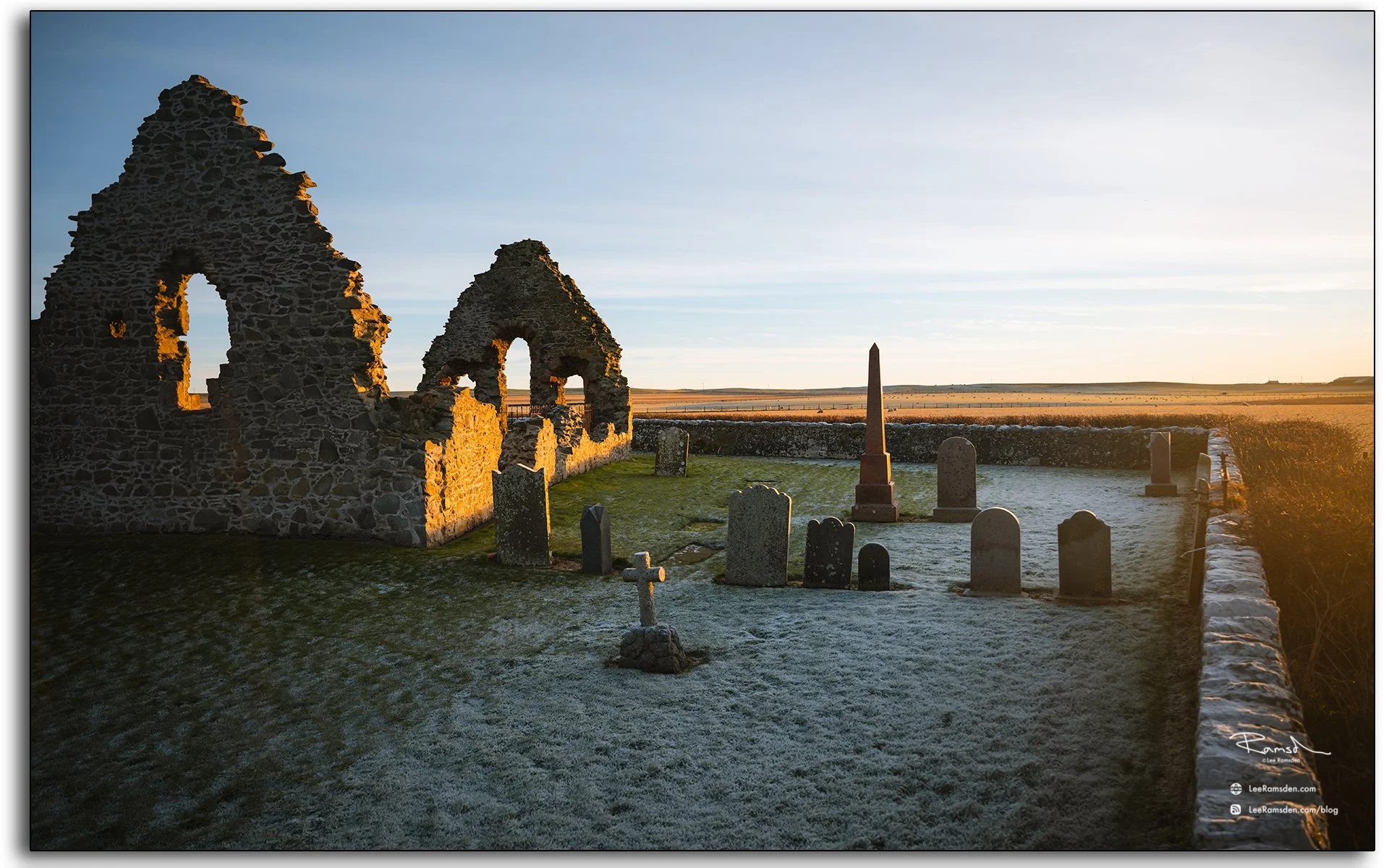
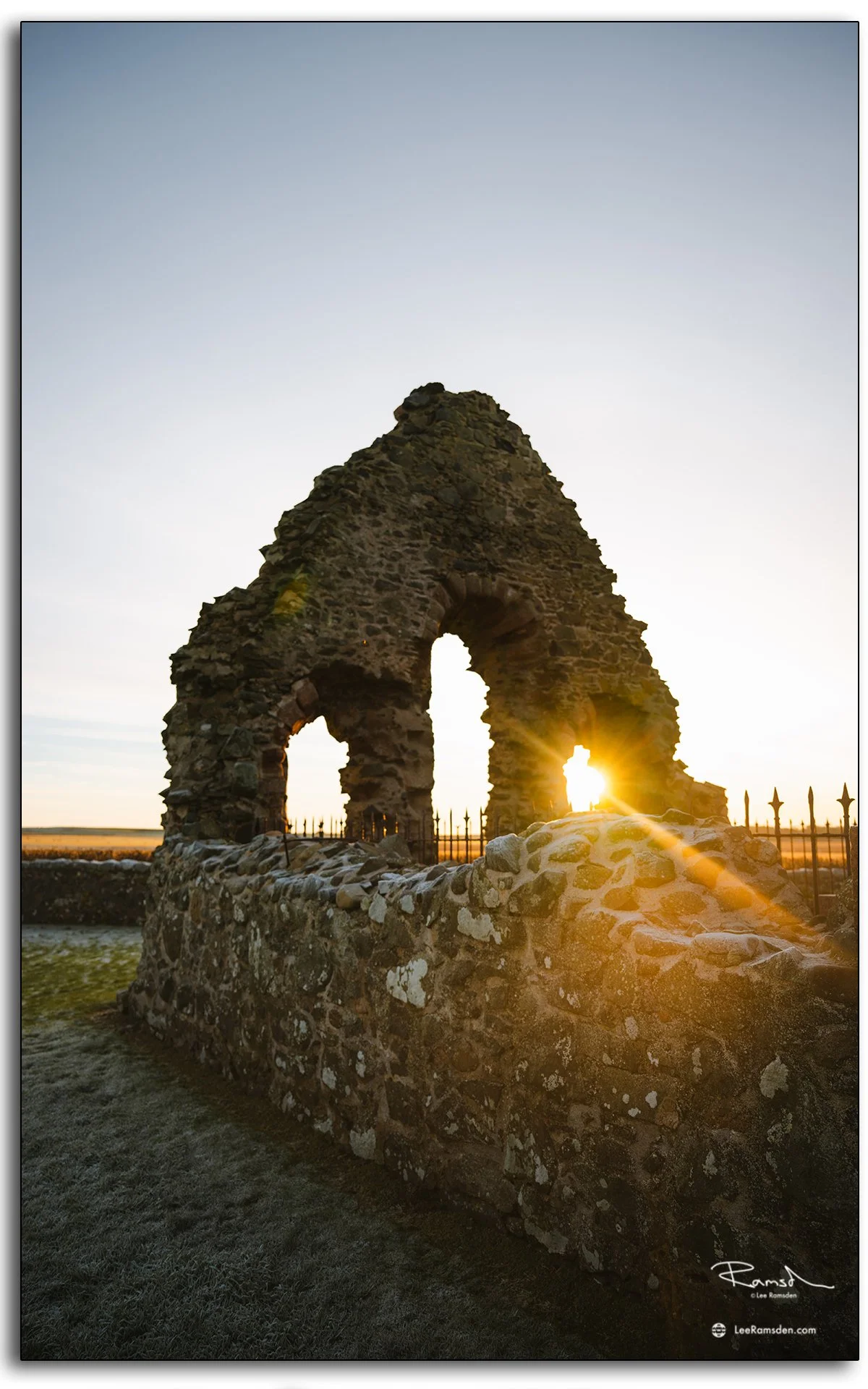
photograph of St Mary’s Chapel in Rattray, Aberdeenshire, Scotland, believed to date back to the early 13th century.

Tucked away in the Buchan countryside near Rattray, St Mary's Chapel is thought to date back to around 1214, making it one of the older surviving ecclesiastical ruins in the north-east of Scotland. Its weathered stone walls are a reminder of a time when this part of Aberdeenshire was a more substantial centre of local life.

These photographs focus on the texture of the stonework and the way the structure sits in the landscape — collapsed in places, but still carrying the proportions and form of a medieval chapel. The site has an unrestored quality to it that sets it apart from more managed heritage locations.

This visit forms part of an ongoing project documenting historic churches and chapels across Scotland, many of which sit quietly in the landscape with little formal recognition. For more church photography, see the Places gallery and the dedicated church posts in the blog.