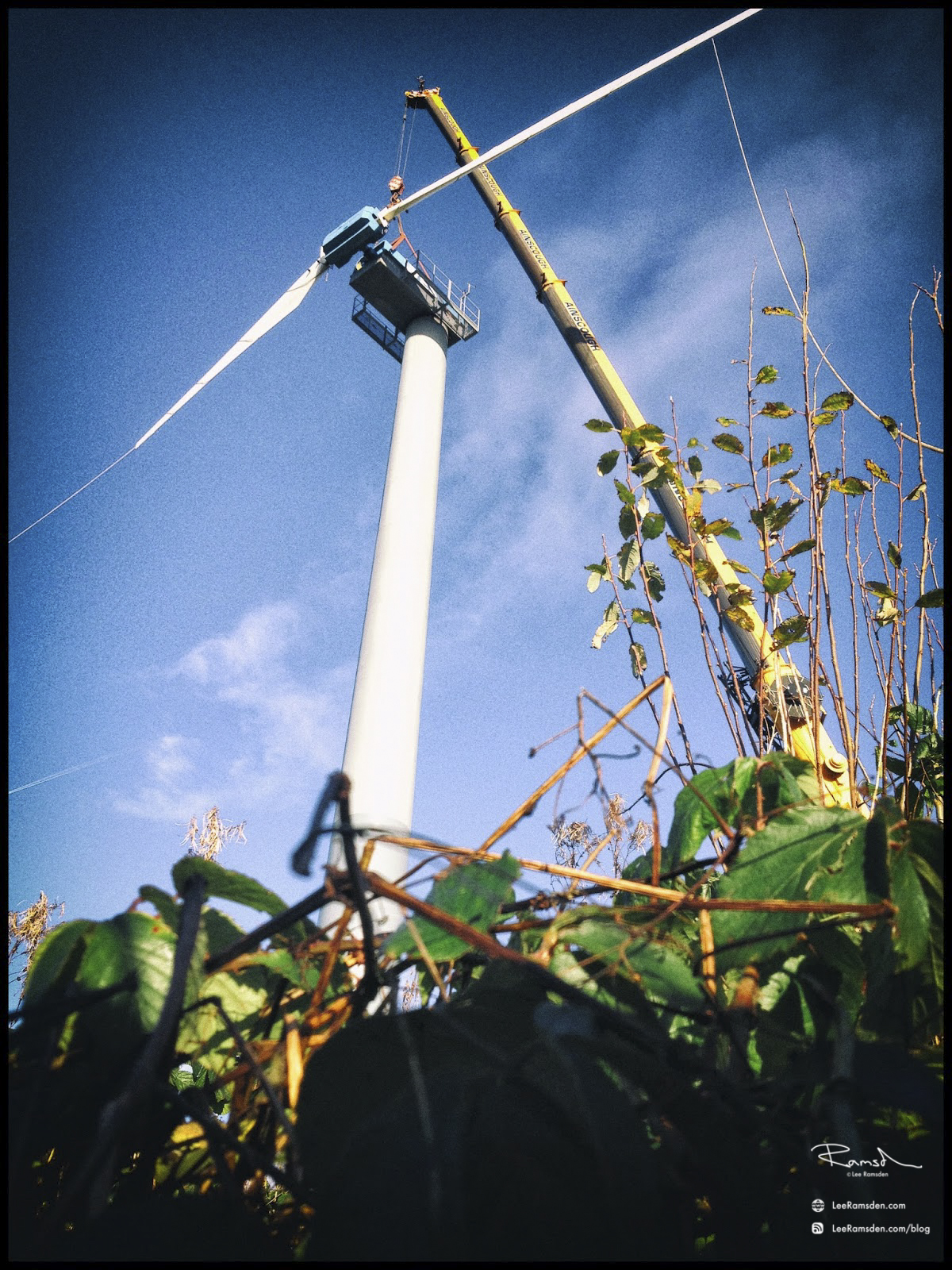
Renewables

Jackup Bridge — Offshore Industrial Photography

JB-115 jack-up barge seen side on with legs out of water, showing platform height and offshore structure.

Side view of the JB-115 jack-up barge with legs deployed, showing the height and structure above water.

Close-up of deck machinery and crane structure of JB-115 jack-up barge, industrial photo.

JB-115 is more than just an accommodation jack-up barge; it’s a functional part of offshore life. On boarding, its size, structure, and role become clear — housing, workspaces, crane capacity, and leg height all matter when you’re working miles from land.

The JB-115, owned by JUB, is an MSC SEA-2000 self-elevating unit built in 2009. It houses 64 people with the capacity to increase to 120. Its legs stand 80 meters tall; with a maximum payload of 1,250 tonnes and a 300-ton crane, it handles more than just housing. I captured shots of deck structure, machinery, the legs reaching upward, and the scale of its operations. Whether close-up of welds or distant views of tower and platform, there’s something in the lines, metal, and industrial detail working together.

Platforms like this are where engineering, endurance, and offshore conditions intersect. For more industrial and renewables work, see my Wind Industry and Industrial galleries.

How Tall Are Offshore Wind Turbines? — Technical Info & UK Offshore Examples

UK offshore wind turbine up close; tower height, blade rotation, scale against sea.

Offshore wind turbines are massive — but how massive? On UK wind farms, turbines can reach up to 204 m to the blade tip, with blade diameters around 164 m. These numbers aren’t just statistics — they shape visual scale, installation requirements, and how turbines integrate into sea and sky.

The turbine in the video above comes from a UK offshore wind farm. At full height of 204 m, the blade tip sweeps an arc almost twice that of many older onshore turbines. For comparison, many onshore turbines are 80-120 m in tip height. That scale affects logistics — transport, foundation design, sea access — and affects what the turbine looks like from shore or sea.

Seeing one in place, through video, gives a real impression of height and movement. The blade diameter of 164 m means each blade is longer than many football fields are wide, and the swept area covers hectares. Height also changes how shadows, wind, and light interact with the structure — tall towers catch more wind, reflect more sky, and tower over waves.

Technical specs like this help understanding what wind turbines are and what they do. For more photographs of UK wind farms, structure and scale, see my Wind Industry and Places galleries.

Wind farm substation

The Hollandse Kust Zuid offshore wind farm is one of the largest in the Netherlands, located in the southern North Sea off the Dutch coast. The offshore substation at its heart collects the electrical output from the surrounding turbine array and transmits it back to shore via subsea cable — a critical piece of infrastructure in any large-scale offshore wind project.

These photographs show the substation from several angles and distances — the platform structure, deck equipment, and its relationship to the turbines and sea around it. Low sun and clear conditions on this rotation made for good contrast across the steelwork and gave the images a cleaner quality than overcast offshore days typically allow.

The project is operated by Vattenfall and connected to the Dutch grid via TenneT, the Dutch and German transmission system operator. It is one of several major offshore wind farms that have shaped the southern North Sea energy landscape in recent years.

For more photography from offshore substations and wind farm operations, visit the Wind Industry gallery.

GWO course renewals.

Good morning, today id like to share some images of recent courses attended.

Those who work in the renewables industry will feel my pain for attending the GWO renewal courses….again

The courses consist of -

  • Sea Survival

  • First Aid

  • Working at height

  • Manual handling

  • Fire fighting

These certificates are only valid for 2 years and have to be kept up to date whilst working offshore in the renewables industry.

What does your commute to work look like?

Good morning,

Today id like to share a short video of how we access an offshore substation on a windfarm.

After a 1.5hrs CTV (crew transfer vessel) ride, it is a large ladder climb on to the platform.

Where as this may not be for everyone, I will take this, over being stuck in traffic on the M25 every single time!

Scaffolder's shadow.

Good morning,

Today I wanted to share a couple of images from where I was working at height on a telecoms tower. I liked the shadows created of a couple of scaffolders walking by, unaware.

I would love to see your shadow photography,

leave a comment on instagram @lee_ramsden

Thanks,

Lee

Fog creeping in.

Hello, here are some images of the fog slowly creeping in, over the windfarm.

The fog approaches like a soft whisper, gradually swallowing the horizon. The wind turbines, once clear and imposing, begin to fade into the mist, their outlines becoming ghostly silhouettes

The Edda Brint, SOV (service operations vessel) adjacent to our substation.

Housing 60 persons, the 60 PAX will be made up with the ships crew and technicians who are servicing the turbines.

The Wind Cat CTV (crew transfer vessel) This vessel is our daily transport to and from shore.

As the fog thickens, the turbines seem to float in mid-air, their blades slicing through the mist with a gentle, rhythmic motion. This ethereal scene creates a stark contrast between the solid structures and the ephemeral fog.

Have you captured the beauty of fog in your photography? Share your images and comments over on Instagram @lee_ramsden

Thanks

Lee

Substation in the sun.

Hello,

Today I’d like to share a couple of images of an OSP (offshore substation platform)

I always enjoy, how I can take many photos of the same subject, and with the differing skies and ever-changing weather can change the image.

Which one do you prefer?

Leave a comment over on instagram @lee_ramsden

Thanks

Lee

Adventure training... or work?

Good morning,

Here are some images of guy conducting specialist rope access, to inspect and repair the coating to an offshore sub station in the North Sea.

Would you enjoy this type of work? Love to hear your thoughts over on Instagram @lee_ramsden

Thanks,

Lee

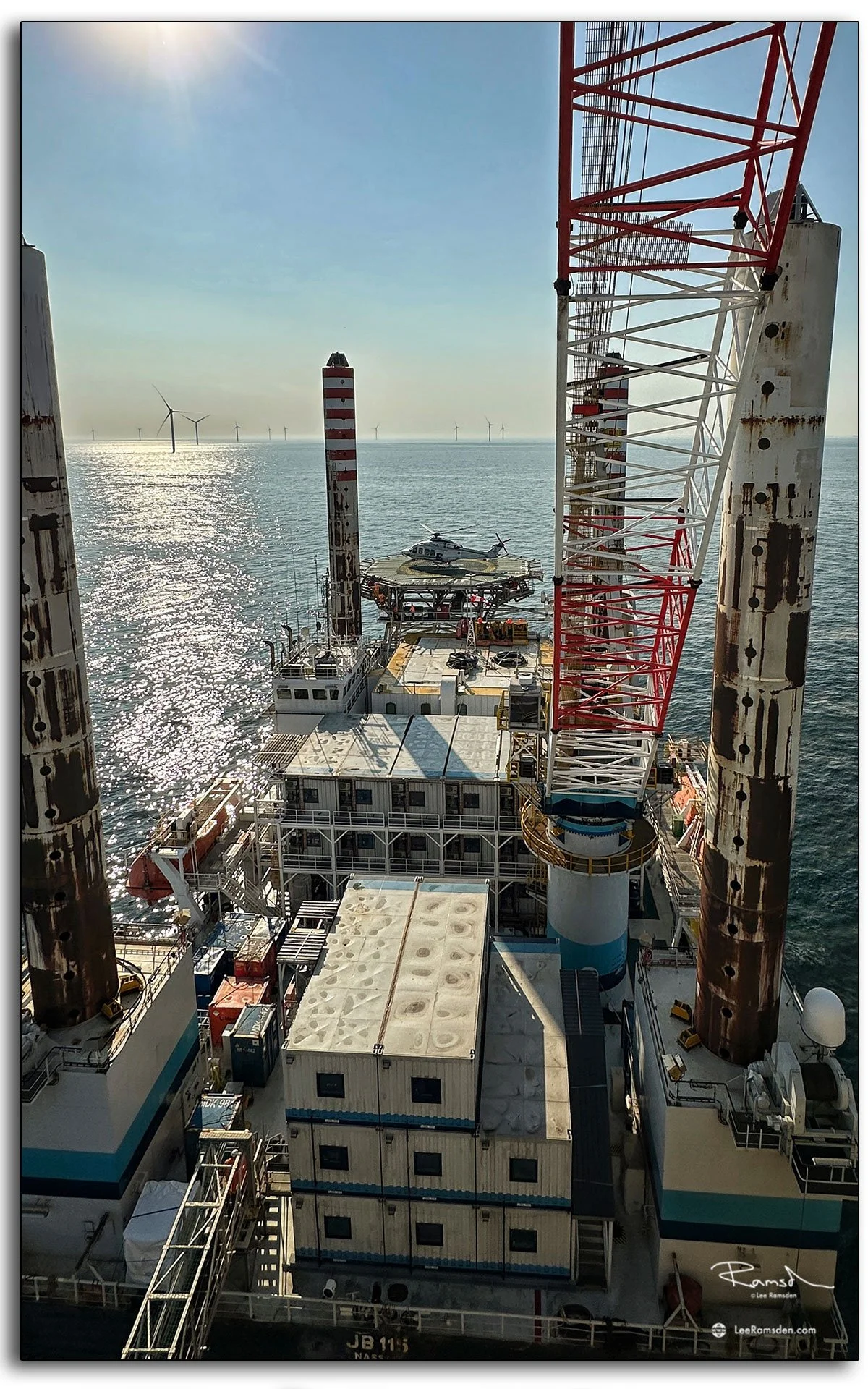
A ship with legs.
Good morning.

Images of the Wind Orca with a walk to work bridge.

The Wind Orca vessel provides a safe, efficient, and reliable solution for the installation, maintenance, and decommissioning of wind farm projects. Their advanced specifications set the industry benchmark for vessel transit speed, lifting capability, DP station keeping and jacking speed, offering a significantly improved operating weather window. They are fitted with high-quality equipment, supported by advanced preventative maintenance systems, and incorporate a significant level of operating redundancy. Safety is enhanced through a 6-leg design that allows them to operate even on sites with the most challenging seabed conditions.

Let me know what you think of these recent posts I love to hear from you on Instagram @lee_ramsden

Thanks

Lee