Renewables

Crew Transfer Vessels in Offshore Wind: Farra Grainne at Work

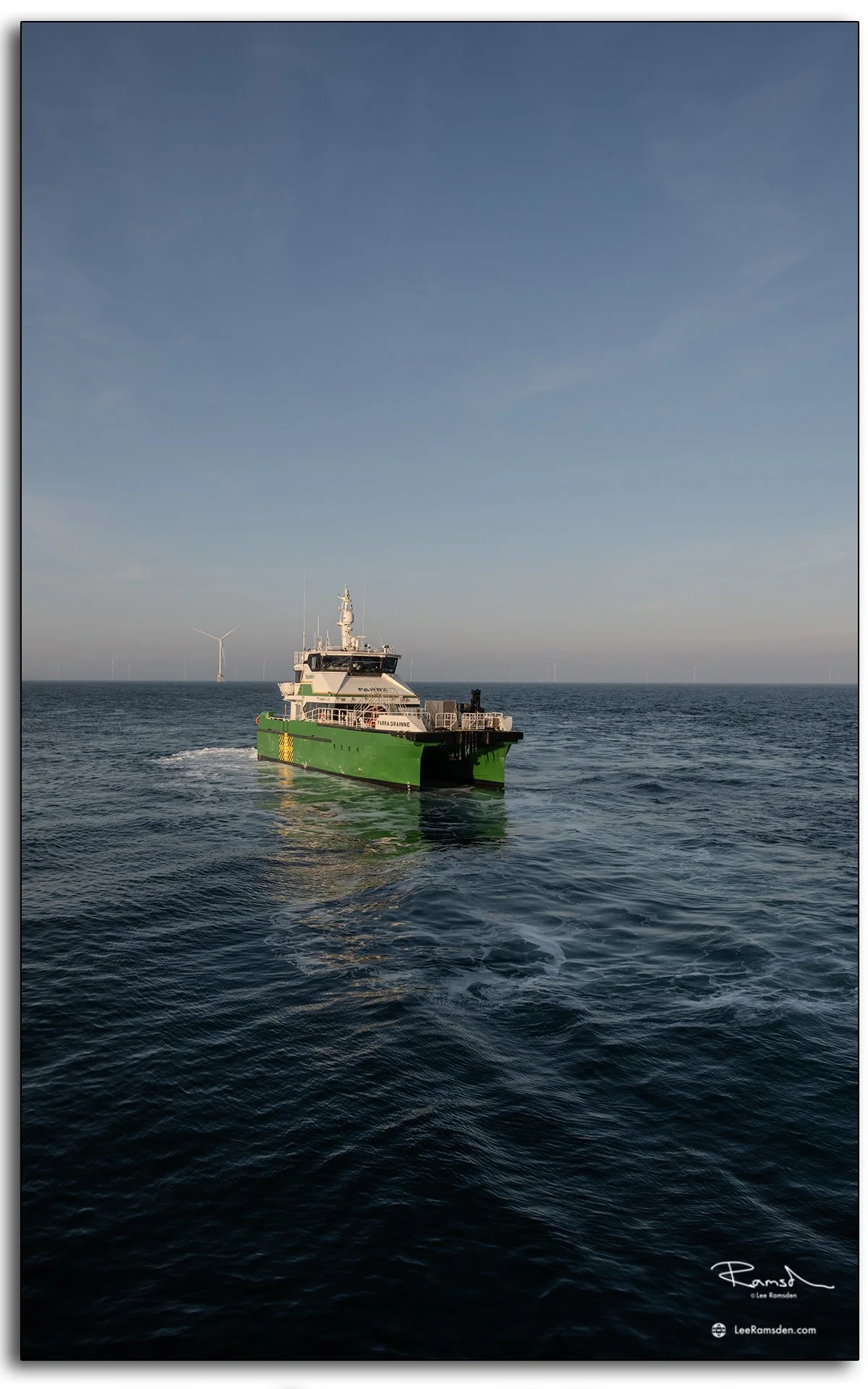
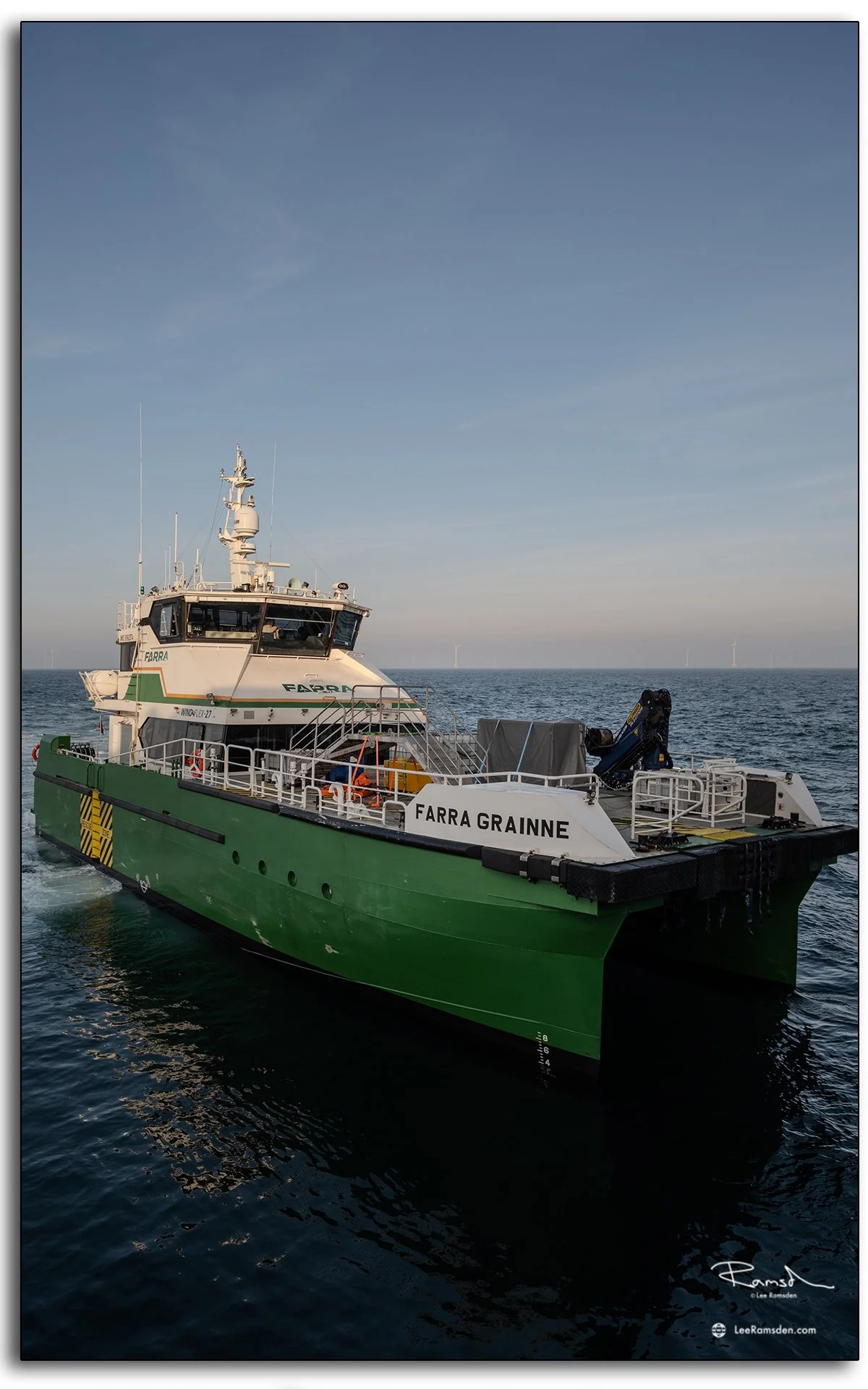
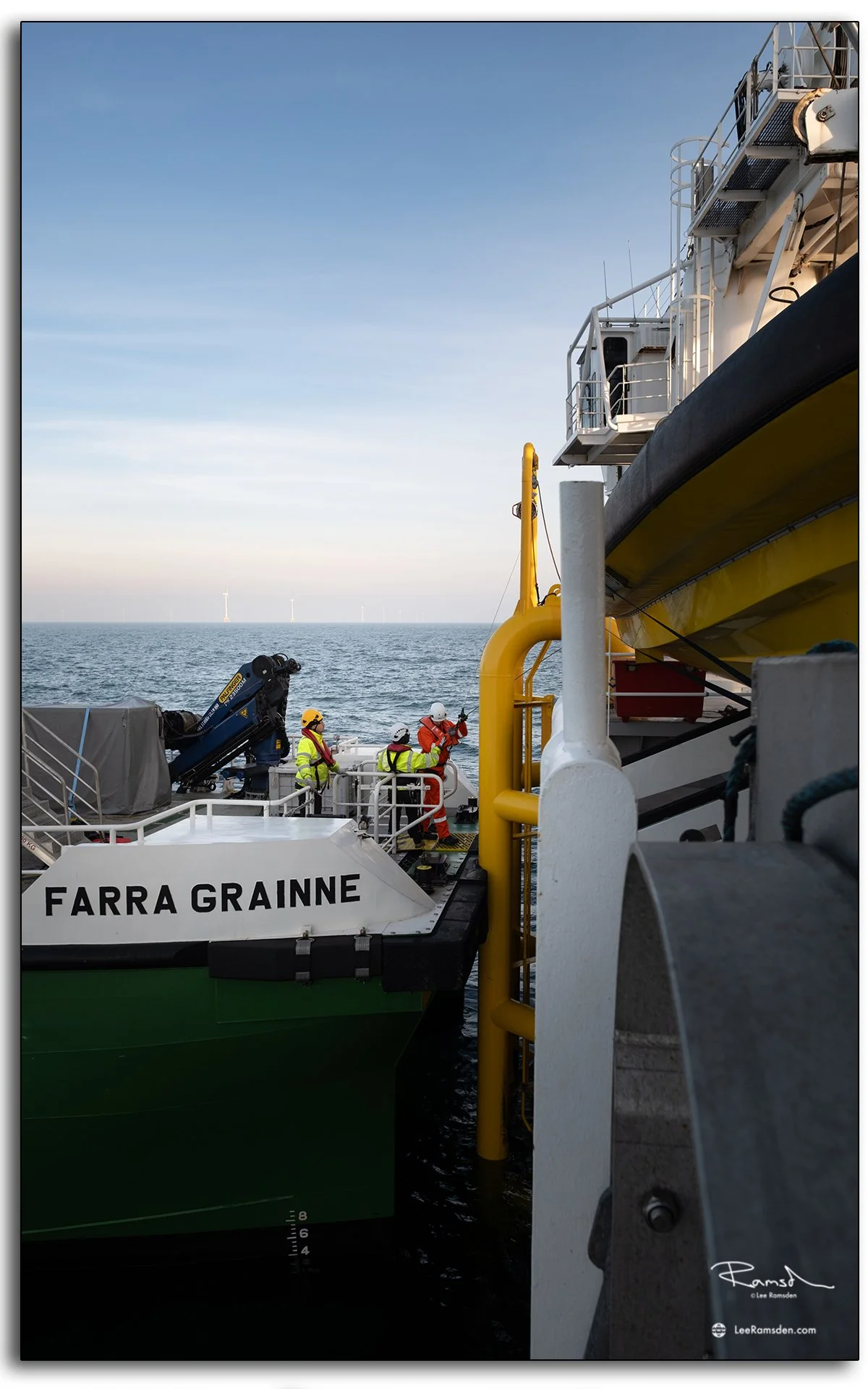
These images focus on the Farra Grainne, a crew transfer vessel working offshore within a wind farm environment. Taken in calm conditions and clear light, they show the vessel in a few different contexts: close alongside, moving away through the field, and positioned next to the structure during transfer operations.

In offshore wind, crew transfer vessels, usually shortened to CTVs, are a core part of daily operations. Their job is to move technicians and small teams between shore or a mothership base and offshore assets such as turbines and substations. They are specifically designed for that role, and in many projects they remain the preferred transfer solution for sites closer to shore. 

The transfer itself is one of the most important parts of the process. Industry guidance from G+ and the Energy Institute is built around the principle that people should not fall into the sea or become trapped between the vessel and the offshore structure during transfer. That is why vessel design, operating procedures, competence and transfer arrangements matter so much. 
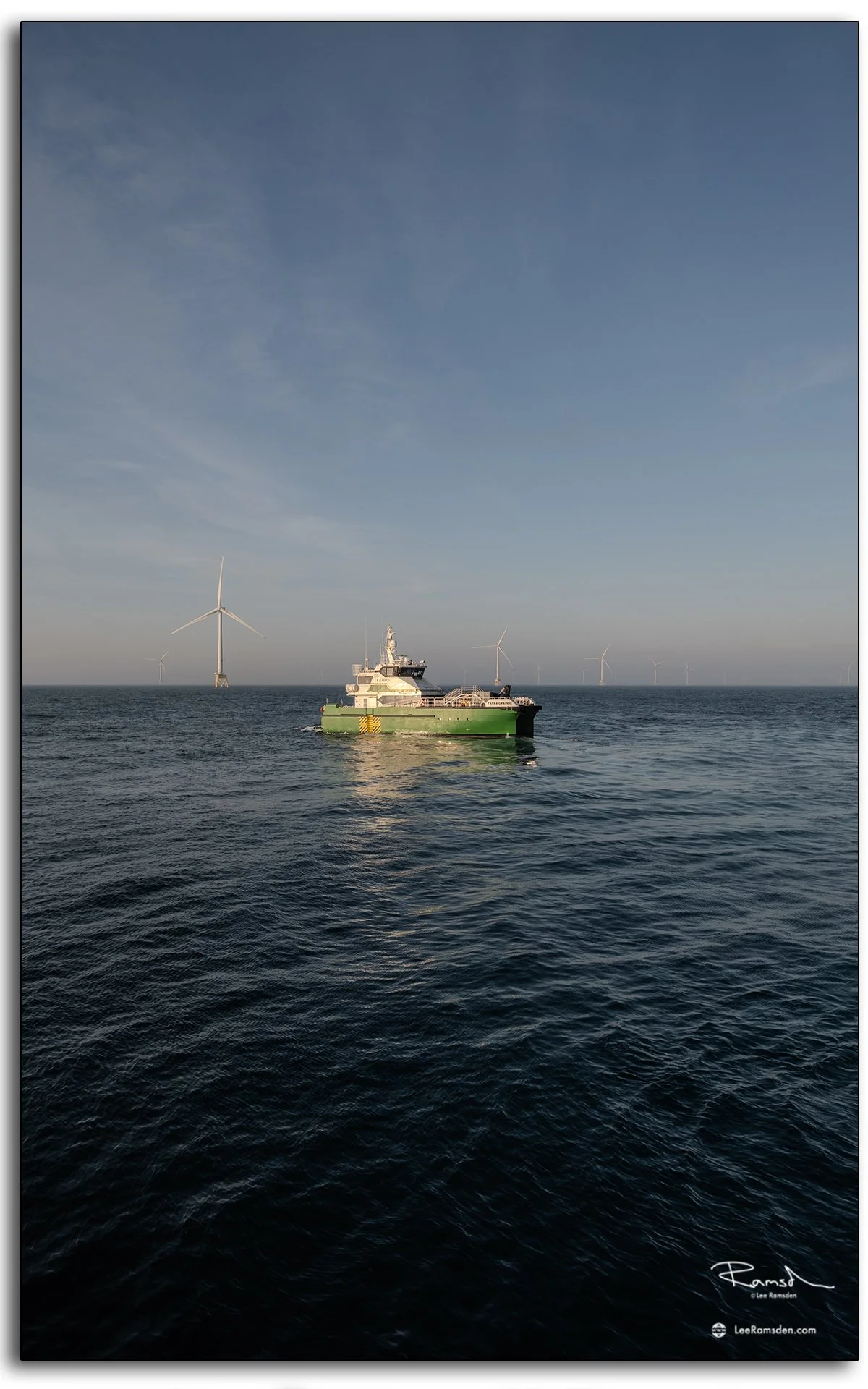
It is easy to look at a wind farm and focus only on the turbines, but the day-to-day operation relies on far more than that. CTVs are one of the clearest examples. They are there to move people, equipment and capability around the site, and without them a lot of offshore maintenance simply would not happen in the same way. General guidance on offshore wind service vessels also notes that CTVs are designed specifically to transport service teams and are commonly fitted for transfer work against offshore structures. 

Offshore Substation – The Beating Heart of a Wind Farm

Offshore substation platform illuminated at night, North Sea wind farm.
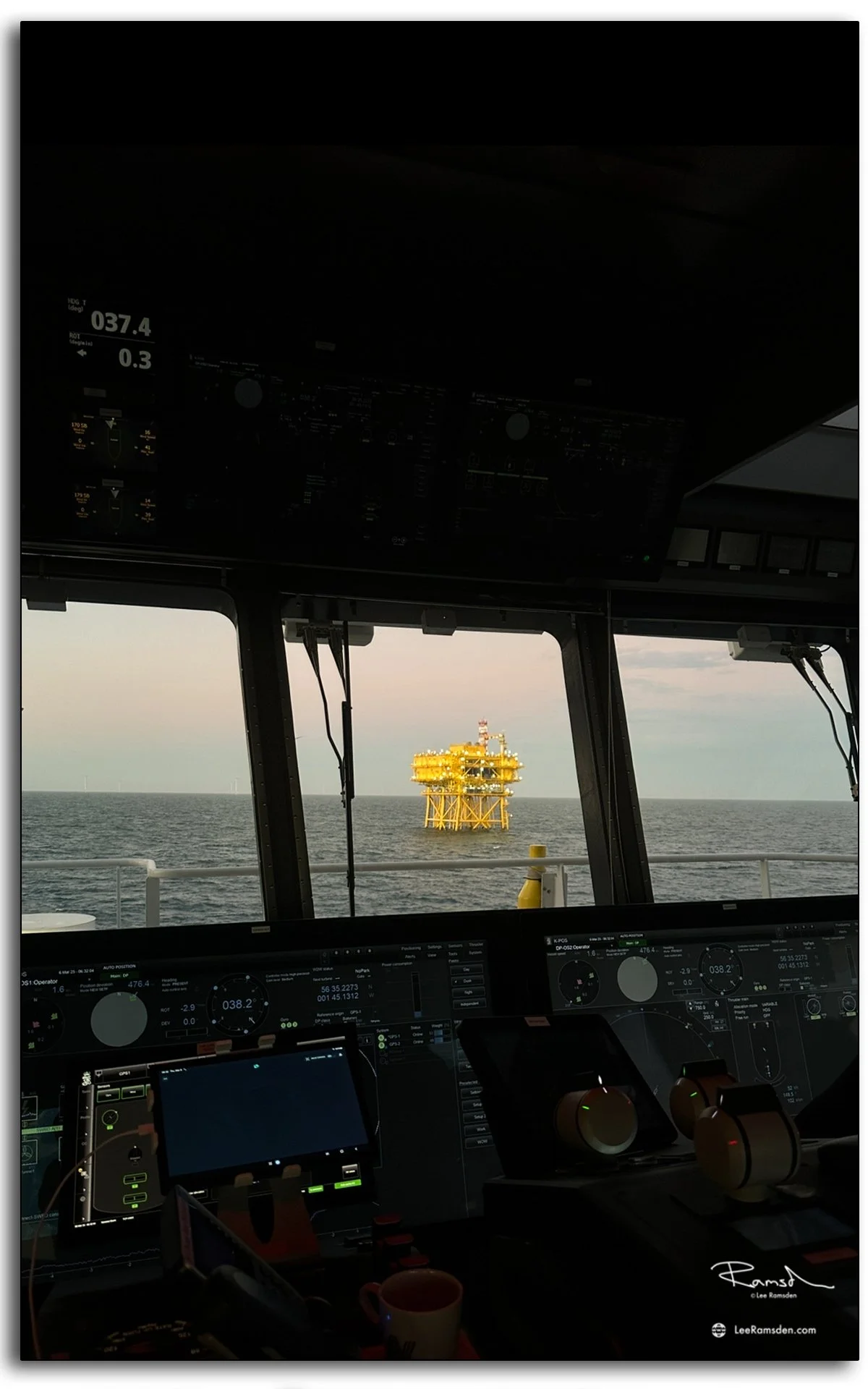
Offshore substation seen from a vessel bridge in the North Sea.

An offshore substation (OSS) is the critical hub of a wind farm, where the power generated offshore is collected and transmitted back to shore. Sitting high above the waves, it is one of the most striking structures in the renewables industry.

From the vessel bridge, the platform is an impressive sight in the distance, glowing gold against the sea at night. These substations not only represent engineering excellence but also play a vital role in the delivery of clean energy across the UK and beyond.

Exploring and photographing offshore substations is always a privilege—capturing them from both the technical working perspective and as powerful silhouettes on the horizon.

The offshore industry is full of dramatic structures and scenes, from turbines to substations. You can explore more of my work in the Wind Industry portfolio, as well as my wider Industrial and Places collections.

Vessel Operations Offshore

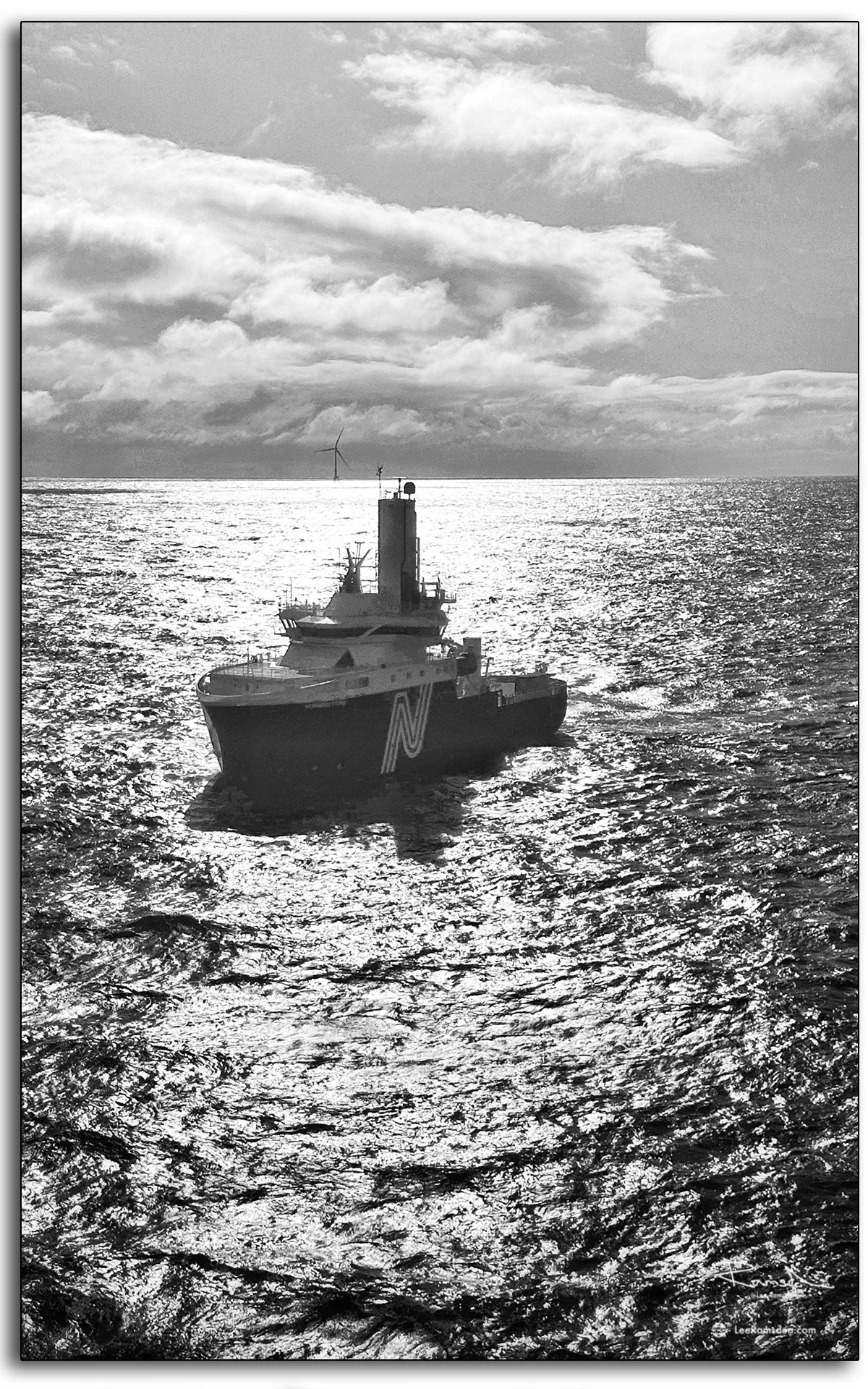
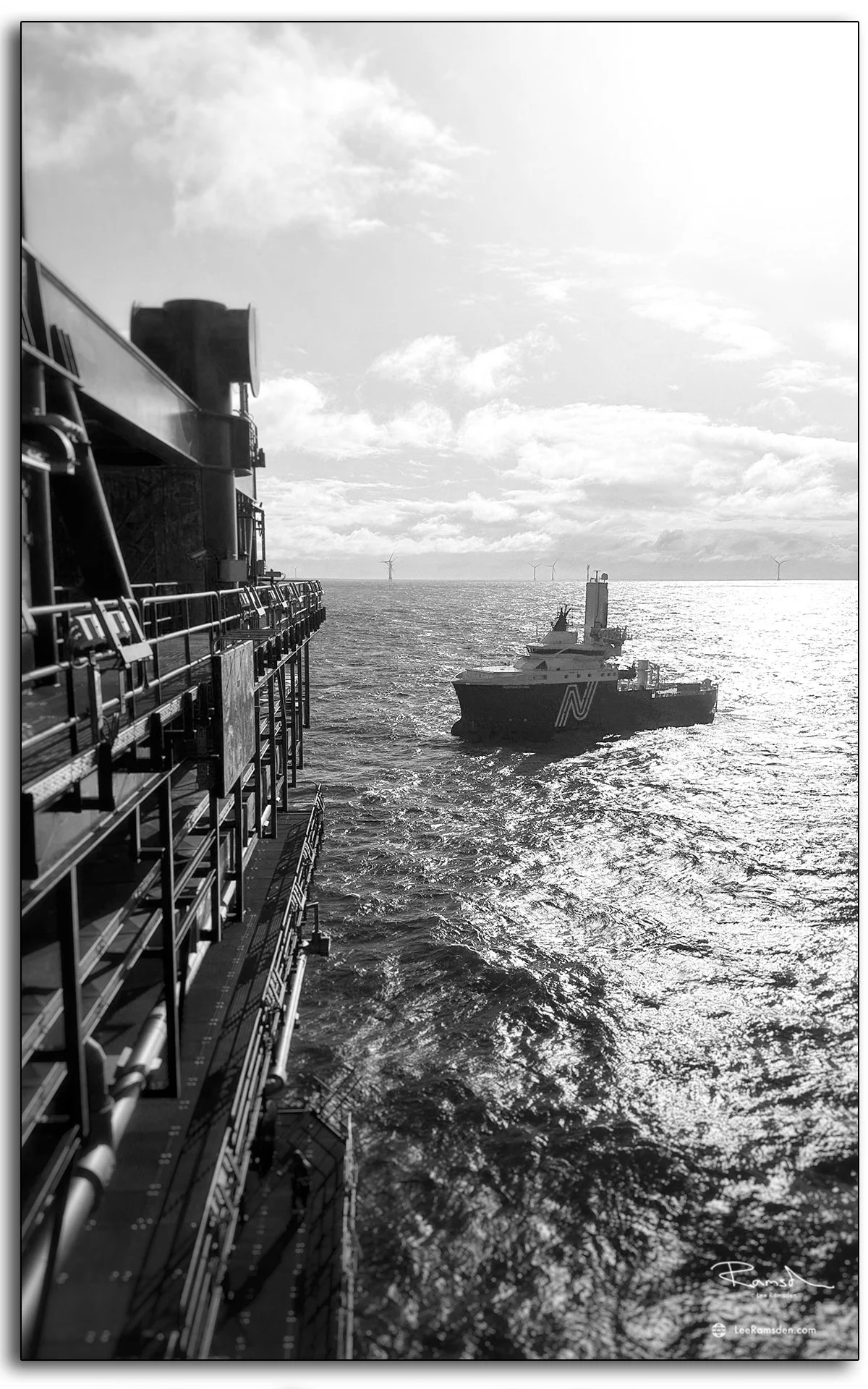
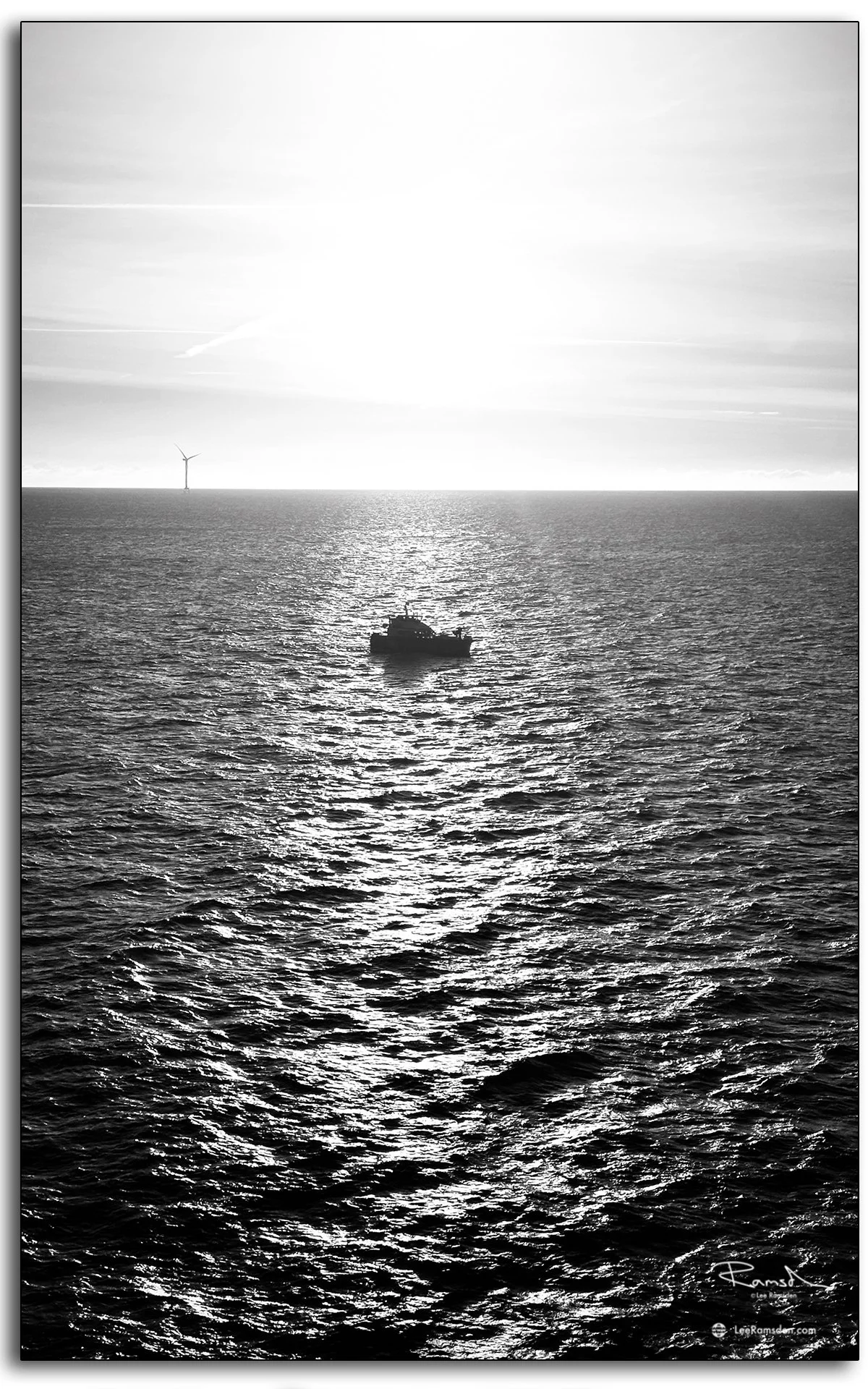
Out in the North Sea, the Norwind Storm support vessel takes up position beneath the setting sun — a steady presence against the rolling water and the turbine structures beyond.

These images show the vessel in its working context, sitting alongside the wind farm and substation, with the horizon fading into haze. The black and white treatment suits the industrial scale of the scene, stripping away colour to leave structure, light and movement.

Service operations vessels are a core part of offshore wind O&M. They provide accommodation and logistical support for technicians working on turbines and substations, often remaining on site for extended periods during maintenance campaigns.

This series adds to my Wind Industry collection, alongside wider work across Industrial and Places photography.

Offshore workers portraits.

Offshore Workers Portraits

These portraits were taken on a North Sea asset during an offshore wind operation. Shot in the working environment, they focus on the people behind the project rather than the infrastructure around them.

Offshore portraiture is a different discipline to studio or event work. The subjects are working professionals in a demanding environment, and the images need to reflect that — direct, unposed where possible, and honest about the conditions. There's little room for elaborate setups on a vessel or platform deck, which tends to produce portraits that feel more genuine for it.

The offshore wind industry employs thousands of people in specialist roles — technicians, rope access workers, supervisors, marine crew, and support staff — many of whom spend weeks at a time on rotation. These images are a small record of that working life, shot as part of a wider documentation of North Sea operations.

For more work from offshore wind projects, visit the Wind Industry gallery.

Offshore workers.

On an offshore wind farm substation, the real story is the people who keep the asset running. This set focuses on routine tasks, safe systems of work, and the teamwork that holds everything together. The aim is simple: clear, direct portraits of workers on the job—no fuss, just the work and the environment.

Two offshore workers on a substation walkway discussing a task beside marked safety barriers.
Offshore wind technician standing by substation equipment on deck, radio clipped to harness.

Part of my ongoing industrial and renewables series. For more, see the renewables and industrial sections of my portfolio.

Offshore Substation

The Hollandse Kust Zuid (HKZ) offshore substation sits in the southern part of the Dutch North Sea — one of the largest offshore wind projects in the Netherlands, operated by Vattenfall and connected to the Dutch grid via TenneT. The substation is the electrical hub of the wind farm, collecting power from the surrounding turbines and transmitting it back to shore via high-voltage cable.

These images show the structure's deck, steel beams, walkways and cable trays framed against open sky and the changing light of an offshore day. There is contrast in the work-worn surfaces, in the reflections where light catches metal, and in the sense of human scale where fittings and handrails appear alongside the larger structural elements.

Also visible in this set are wind turbines within the HKZ array, and the yellow control tower at Ijmuiden on the Dutch coast — a landmark for any vessel transiting in and out of the port.

For more photography from offshore substations and renewables work, visit the Wind Industry gallery & portfolio.

Great Orton Wind Farm — Onshore Drone & Renewables Photography

Great Orton Wind Farm, in Wigton near Carlisle, shows the power of clean energy set against the rural English landscape. These six turbines stand tall at 45 m to the hub (68.5 m to blade tip), and today’s drone shots aim to show not just their scale, but how they sit in place relative to the field, sky, and horizon.

Drone photograph of Great Orton Wind Farm, Wigton — six turbines set above farmlands with clean lines and open sky.

Flying above, I captured compositions where turbine towers puncture the skyline, blades silent but implied in motion. The open land around means little to interfere — just farm tracks, walls, and the occasional tree. Light at this time of day softens the metal surfaces, casts long shadows, and gives contrast between turbine steel and landscape texture.

Aerial close-up of turbine tower and blade at Great Orton, showing detail of structure and contrast with the sky.
Wind turbines at Great Orton with farmland patterns beneath, captured in soft early morning light.

My ongoing renewables and industrial photography seeks moments where engineering and environment combine. For more drone work in landscapes like this, check out my Drone and Wind Industry galleries.

Corporate Portraiture — Location & Professional Style

Professional individual portrait at location setting, IJmuiden — expression, posture, environment as part of the image

Refreshing your corporate image can go beyond a plain headshot. With these portrait shots, I chose a location setting to give energy, depth, and context to the professional look — the kind that helps profiles, business cards, and LinkedIn stand out.

Instead of studio lighting or a blank wall, I used natural surroundings that complement without distracting — lines, textures, and background architecture balancing out the frame. The focus is on posture, expression, attire, and how light falls. A location shot conveys more: connection to place, personality, and professionalism. If you’re considering an updated corporate image, thinking about environment and lighting makes a difference.

Elevate your professional image with portraiture that says more than just your face. For more work in this area, explore my People and Portraiture galleries, or get in touch to arrange your own session.

Offshore Wind Turbines at Sunrise — Coastal Photography

First light offshore brings its own atmosphere. The silhouettes of turbines against the horizon stand clear and sharp, with the sky shifting colour as the sun breaks.

iPhone photo of offshore wind turbines at sunrise, silhouettes against horizon with calm water surface.
Sunrise over offshore turbines, blades visible against soft early sky, photographed on iPhone.

These images were taken on an early morning offshore, using my iPhone to capture the changing light. Even without specialist equipment, the results show scale and mood: turbines rising out of calm water, sky gradients shifting from deep tones to gold, and blades catching the first light of the day. The strength of these photographs is in their immediacy — a record of the moment as it happened.

Sometimes the best photographs come from being present, not over-equipped. For more of my work documenting offshore environments and renewables, see my Wind Industry and Places galleries.

Jackup Bridge — Offshore Industrial Photography

JB-115 jack-up barge seen side on with legs out of water, showing platform height and offshore structure.

Side view of the JB-115 jack-up barge with legs deployed, showing the height and structure above water.

Close-up of deck machinery and crane structure of JB-115 jack-up barge, industrial photo.

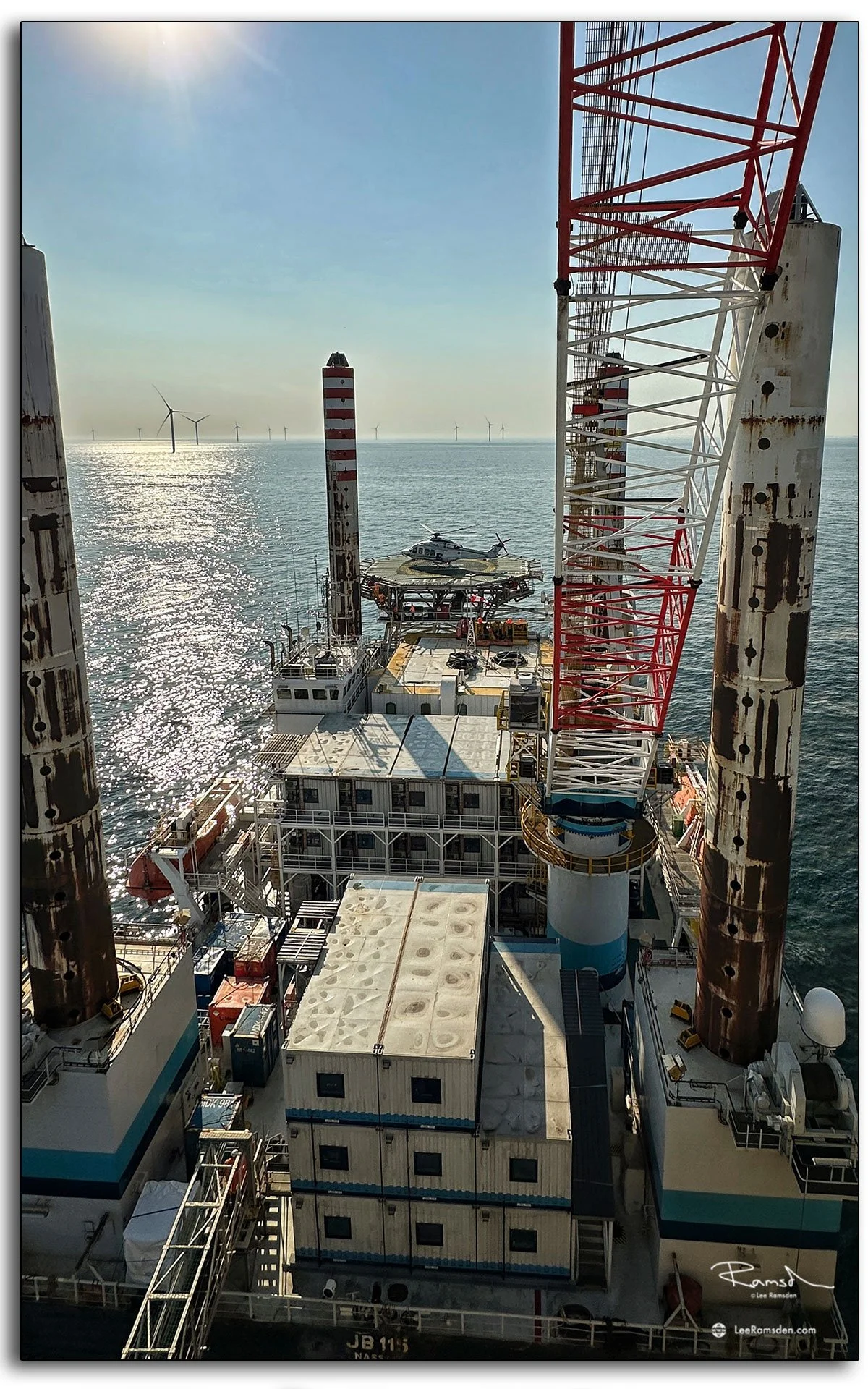
JB-115 is more than just an accommodation jack-up barge; it’s a functional part of offshore life. On boarding, its size, structure, and role become clear — housing, workspaces, crane capacity, and leg height all matter when you’re working miles from land.

The JB-115, owned by JUB, is an MSC SEA-2000 self-elevating unit built in 2009. It houses 64 people with the capacity to increase to 120. Its legs stand 80 meters tall; with a maximum payload of 1,250 tonnes and a 300-ton crane, it handles more than just housing. I captured shots of deck structure, machinery, the legs reaching upward, and the scale of its operations. Whether close-up of welds or distant views of tower and platform, there’s something in the lines, metal, and industrial detail working together.

Platforms like this are where engineering, endurance, and offshore conditions intersect. For more industrial and renewables work, see my Wind Industry and Industrial galleries.

How Tall Are Offshore Wind Turbines? — Technical Info & UK Offshore Examples

UK offshore wind turbine up close; tower height, blade rotation, scale against sea.

Offshore wind turbines are massive — but how massive? On UK wind farms, turbines can reach up to 204 m to the blade tip, with blade diameters around 164 m. These numbers aren’t just statistics — they shape visual scale, installation requirements, and how turbines integrate into sea and sky.

The turbine in the video above comes from a UK offshore wind farm. At full height of 204 m, the blade tip sweeps an arc almost twice that of many older onshore turbines. For comparison, many onshore turbines are 80-120 m in tip height. That scale affects logistics — transport, foundation design, sea access — and affects what the turbine looks like from shore or sea.

Seeing one in place, through video, gives a real impression of height and movement. The blade diameter of 164 m means each blade is longer than many football fields are wide, and the swept area covers hectares. Height also changes how shadows, wind, and light interact with the structure — tall towers catch more wind, reflect more sky, and tower over waves.

Technical specs like this help understanding what wind turbines are and what they do. For more photographs of UK wind farms, structure and scale, see my Wind Industry and Places galleries.

Wind farm substation

The Hollandse Kust Zuid offshore wind farm is one of the largest in the Netherlands, located in the southern North Sea off the Dutch coast. The offshore substation at its heart collects the electrical output from the surrounding turbine array and transmits it back to shore via subsea cable — a critical piece of infrastructure in any large-scale offshore wind project.

These photographs show the substation from several angles and distances — the platform structure, deck equipment, and its relationship to the turbines and sea around it. Low sun and clear conditions on this rotation made for good contrast across the steelwork and gave the images a cleaner quality than overcast offshore days typically allow.

The project is operated by Vattenfall and connected to the Dutch grid via TenneT, the Dutch and German transmission system operator. It is one of several major offshore wind farms that have shaped the southern North Sea energy landscape in recent years.

For more photography from offshore substations and wind farm operations, visit the Wind Industry gallery.

GWO course renewals.

Good morning, today id like to share some images of recent courses attended.

Those who work in the renewables industry will feel my pain for attending the GWO renewal courses….again

The courses consist of -

  • Sea Survival

  • First Aid

  • Working at height

  • Manual handling

  • Fire fighting

These certificates are only valid for 2 years and have to be kept up to date whilst working offshore in the renewables industry.

What does your commute to work look like?

Good morning,

Today id like to share a short video of how we access an offshore substation on a windfarm.

After a 1.5hrs CTV (crew transfer vessel) ride, it is a large ladder climb on to the platform.

Where as this may not be for everyone, I will take this, over being stuck in traffic on the M25 every single time!

Scaffolder's shadow.

Good morning,

Today I wanted to share a couple of images from where I was working at height on a telecoms tower. I liked the shadows created of a couple of scaffolders walking by, unaware.

I would love to see your shadow photography,

leave a comment on instagram @lee_ramsden

Thanks,

Lee