Hello,
Today I’d like to share a couple of images of an OSP (offshore substation platform)
I always enjoy, how I can take many photos of the same subject, and with the differing skies and ever-changing weather can change the image.

Hello,
Today I’d like to share a couple of images of an OSP (offshore substation platform)
I always enjoy, how I can take many photos of the same subject, and with the differing skies and ever-changing weather can change the image.


Good Morning,
Today id like to share some photos documenting a Thai Muay Thai fighter.
This gentleman is a trainer, spending 6 to 7 days a week teaching Muay Thai primarily to foreigners and travelers who want to experience authentic Muay Thai practices.

The majority of trainers come from a fighting background, where they will have from a very early age fought every 3-4 weeks. As a comparison in the rest of the world a fight would usually be 3-4 times a year.

They clock up literally hundreds and hundreds of professional fights. Once they are no longer on the professional circuit they take up coaching.

But due to the low wages they subsidise this with additional fights.

A lot of these fights are not as typically matched as what we would expect in a Western world, where we are in strict weight classes.

The elder Thai fighters, fight much heavier challengers who are young enough to be their grandchildren. But with the experience of professional fights clocking in their hundreds, this is merely another day in the office.

Prior to the fight, we all arrived at the stadium and the fighter took up a seat in the audience. Even with all the hustle bustle and loud Thai fight music, he managed to sleep. All the Western fighters were getting pumped up, headphones on, shadow boxing and trying to get into the zone.

When it was time, he emerged for a slumber, calm, and collected, changed into his shorts, donned a pair of gloves and set to work……


Good morning,
Here is a photo following on from my personal project of photographing Church’s.
Although officially Fairhaven United Reformed Church, this church is known locally as The White Church.
The story of the White Church begins at a meeting of the congregation of Lytham Congregational Church in 1899 with the suggestion that there should be a new church in Fairhaven on the estuary of the Ribble on land leased by the Clifton family of Lytham Hall. A month after the proposal was made they received great encouragement for their vision. The Congregational Union of England and Wales had commenced a fund to raise half a million guineas for church extension… ‘in view of the rapid increase in population’.
Now there was no stopping them and with scarcely a setback they began raising the money that would be required to build the new church, a church which they all agreed should be a distinctive architectural feature in the district (and it is!).
Four firms were chosen to submit designs. The successful architects were Briggs, Wolstenholme and Thornley of Blackburn who won with a design that imitated some of the features of Byzantine architecture (on the outside that is). When the church was opened on October 17, 1912, eight years after the opening of the new church hall on May 4 1904, their vision was realised.
Thanks
Lee


Hello, I hope that you are well.
Today I wanted to share some images from a recent Ski trip to Morzine France.
Incredible way to destress and switch off from the stresses of life.
Although the town was losing snow, up in the mountains it remained perfect conditions.


Good morning,
Here are some images of guy conducting specialist rope access, to inspect and repair the coating to an offshore sub station in the North Sea.
Would you enjoy this type of work? Love to hear your thoughts over on Instagram @lee_ramsden

Thanks,
Lee


Hello,
I hope that you are well and have had a lovely weekend.
Today I thought Id share a couple of simple shots from a recent hike up Loch Brandy.
Loch Brandy is a superb example of a mountain corrie, backed by craggy slopes and cradling a perfect loch. The walk has the benefit of a very well-constructed path making this a good short and relatively easy hillwalk.
Thanks
Lee

Hello, I hope that you are well.
Today I would like to share some images taken of the Parish Church of St Annes.
The Above image was lit by attaching LumeCube lights to a drone and flown close by to illuminate different areas. Multiple exposures were taken and then blended in photoshop.

The church is from which the town took its name. It is part of the Church of England and in the Diocese of Blackburn.
History
The building of St Annes Church was commissioned by Lady Clifton in the early 1870s and named in memory of her aunt who was called Anne. It was built as a chapel of ease to the then parish church of St Cuthbert in Lytham to benefit the farm labourers and fishermen of the hamlet of Heyhouses, who had difficulty in getting to church on a Sunday morning. It was several miles walk


Hello, I hope that you have had a lovely weekend.
Today I wanted to share a couple of images taken from a GoPro Hero10.
Whilst out running the sky was looking incredible. I placed the GoPro onto a nearby fence and recorded a short video.
These were merely screen shots from the footage.
Sometimes it isn’t about the fanciest of cameras and pixel count.
Nice lighting trumps all those things.


Good morning.
I like to share some images of Blackpool front.
Blackpool’s sea front, with its dazzling lights and timeless charm, has been a beloved destination for generations. Stretching along the Fylde Coast, Blackpool’s sea front is famous for its piers, the iconic Blackpool Tower, and a lively promenade filled with attractions.

Standing tall since 1894, Blackpool Tower is an enduring symbol of the city’s heritage. As the sun sets, the tower lights up, creating a spectacular sight against the evening sky.
Have you explored Blackpool Sea Front? Share your favorite photos and experiences in the comments on Instagram @lee_ramsden.

Thanks,
Lee


Good morning.
Images of the Wind Orca with a walk to work bridge.
The Wind Orca vessel provides a safe, efficient, and reliable solution for the installation, maintenance, and decommissioning of wind farm projects. Their advanced specifications set the industry benchmark for vessel transit speed, lifting capability, DP station keeping and jacking speed, offering a significantly improved operating weather window. They are fitted with high-quality equipment, supported by advanced preventative maintenance systems, and incorporate a significant level of operating redundancy. Safety is enhanced through a 6-leg design that allows them to operate even on sites with the most challenging seabed conditions.
Let me know what you think of these recent posts I love to hear from you on Instagram @lee_ramsden
Thanks
Lee

A derrick is a structure over an oil well which supports the drilling equipment and allows it to be lifted into and out of the wellbore.
The term derrick originates from Thomas Derrick, an English executioner c. 1608.
In English history, the executioner was not a commonly chosen career path because of the risk of friends and families of the deceased knowing who the executioner was and where to find him. Executioners were sometimes coerced into the role. Derrick in particular had been convicted of rape but was pardoned by the Earl of Essex (clearing him of the death penalty) on the condition that he became an executioner at Tyburn.
Derrick executed more than 3,000 people in his career, including his pardoner, the Earl of Essex, in 1601. Derrick devised a beam with a topping lift and pulleys for his hangings, instead of the old-fashioned rope over the beam method.
The word derrick became an eponym for the frame from which the hangman's noose was supported and through that usage (by analogy) to modern-day cranes.
Happy Monday.
A couple of images from an offshore work site.


Hello,
today I’d like to share some images of Blackpool.

The above was taken handheld and panning to match the speed of the bus.

A couple of joggers enjoying there daily excersise
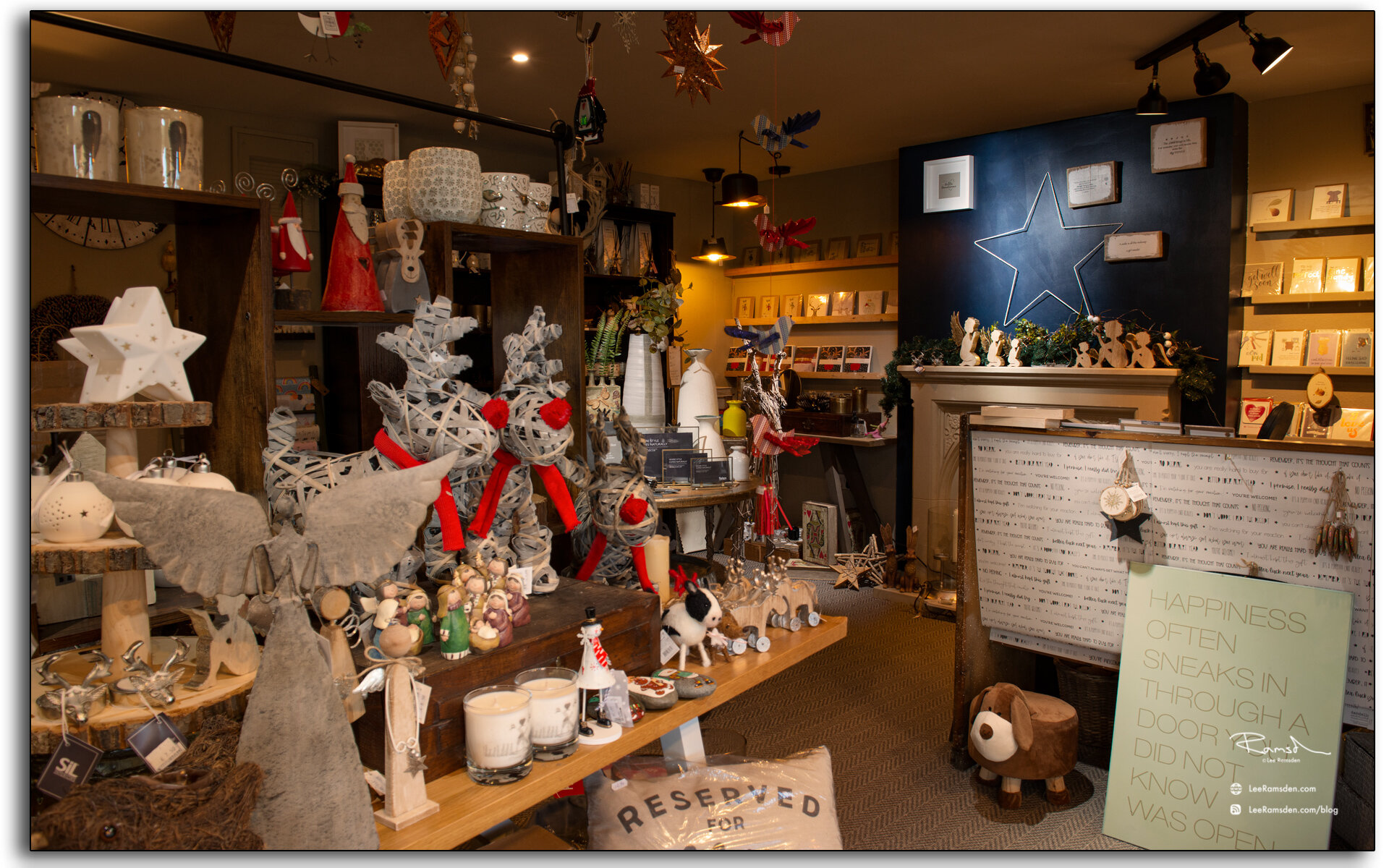
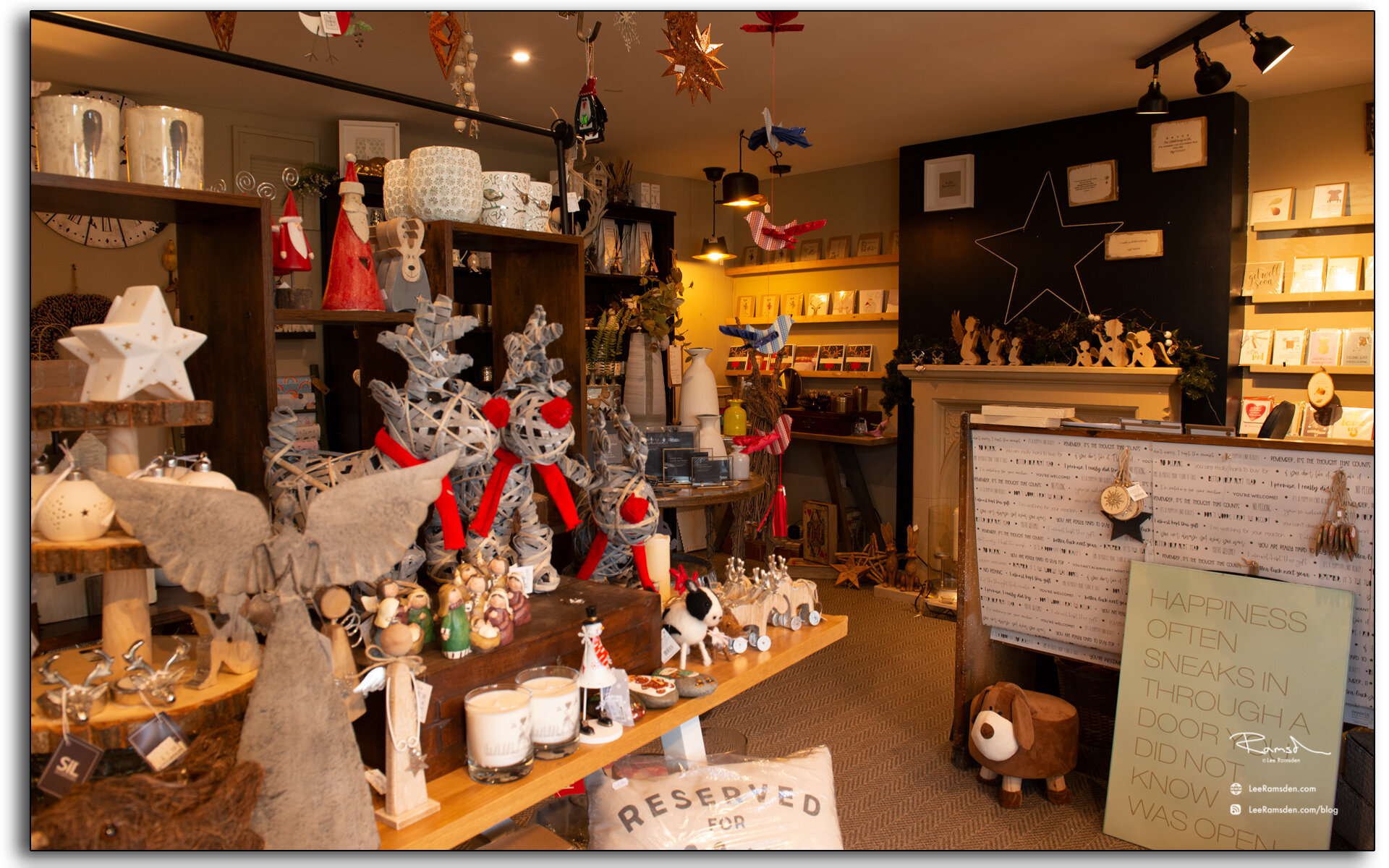
Hello,
Today is like to share a process with you on how I like to light my interior images.
If you’ve ever tried to photograph a building interior, you know how tough it can be to properly expose all parts of the scene. You know how many areas tend to fall into darkness.
When this happens, many photographers will just try to recover the shadows with a brighter exposure or some dodging and burning. Unfortunately, that can lead to muddy results which often display a lack of texture and colour.
One technique that I like to use with modern photographic tools is light painting.
One method would be to literally stop down the aperture, wear an all-black outfit, and wave a light around for a 30-60 second exposure to fill in shadows.
Luckily, things are a bit easier these days. You can use a single Speedlight and see the results instantly.
I personally like to use a speed light and a remote to pull it off, (depending on how much power I’ll need.)
The aim here is to add light in spots that appear to have natural light falling on them – either from landscape lighting or interior lighting. Adding flash or hot light will dramatically clean up the quality of the light, by giving it direction and fall off. Whereas the ambient light may create a muddier appearance due to having no directionality, incoherent colour casts or being mixed with the window or interior lighting.
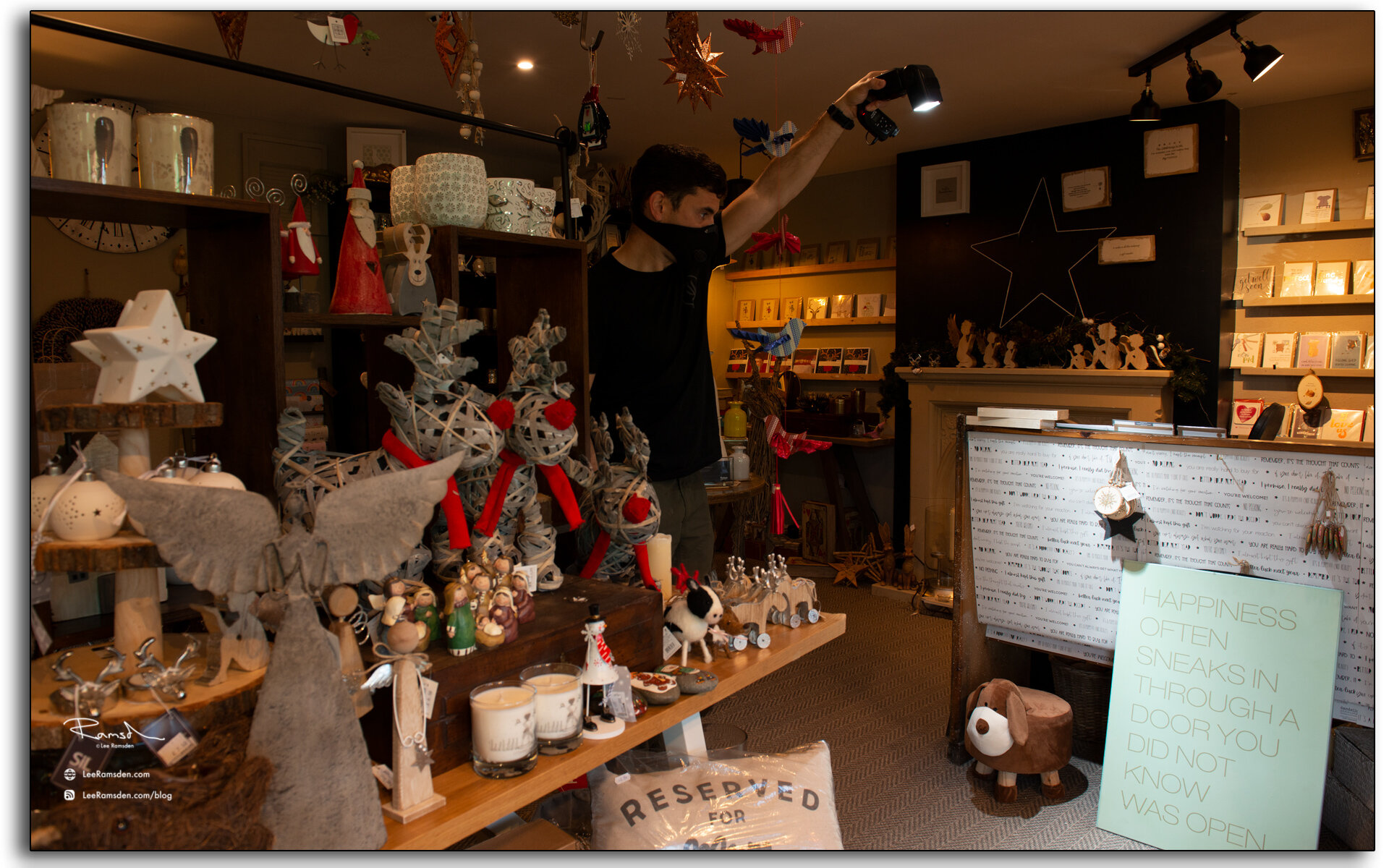
Above is an image of myself adding a pool of light onto a foreground part of the scene.
A couple of points to remember -
The camera has to be on a tripod or secure point and does not move throughout the process.
The camera has to be in manual mode to ensure that each frame remains consistent. Focus, exposure, ISO, colour temperature etc.
While using a Speedlight I use pocket wizard triggers, one on the flash, one in the hot shoe on the camera, and another as a trigger in my hand which is able to fire the camera and flash remotely.
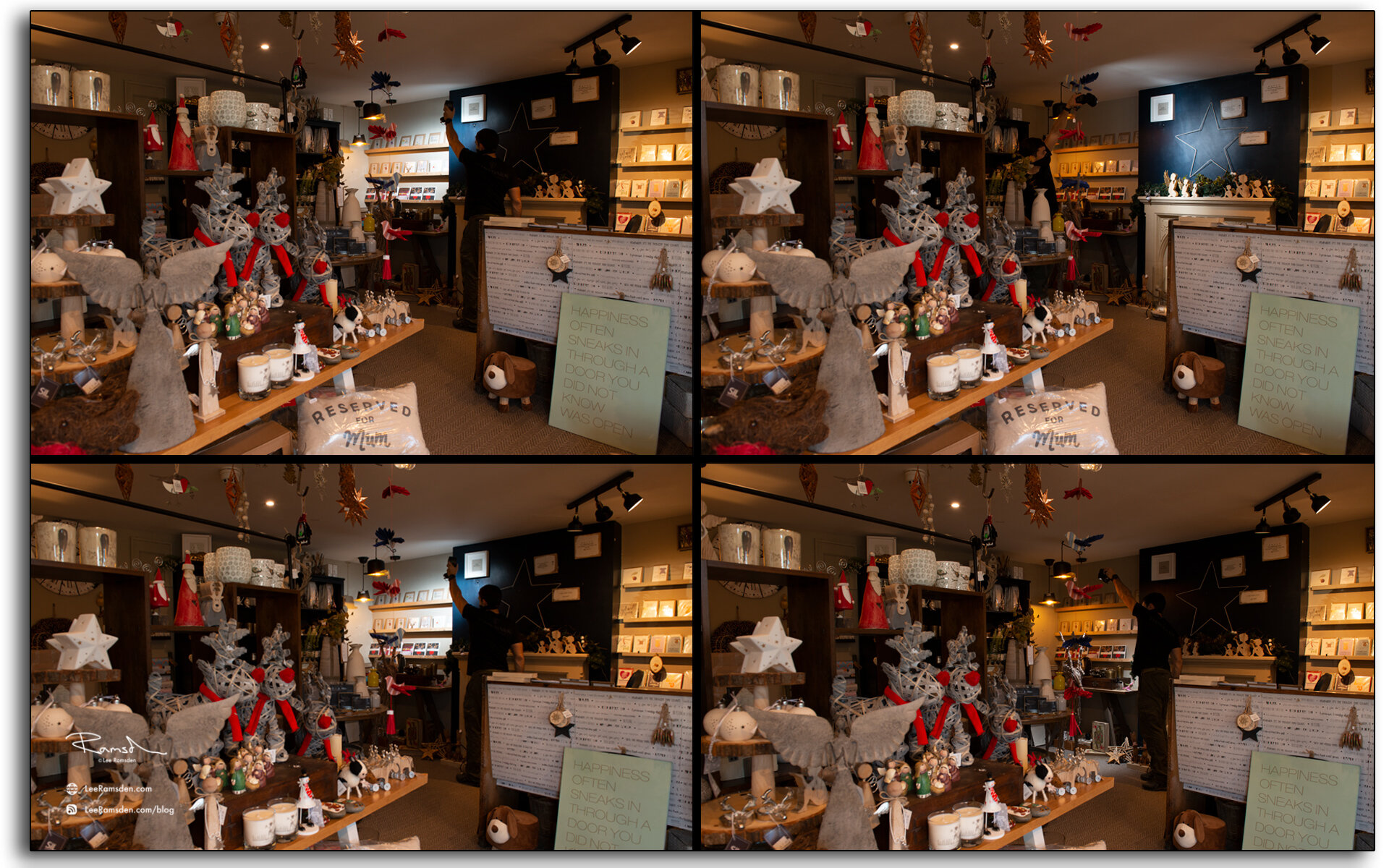
Again here are a few more images of me moving around the scene adding more illumination.
(Schoolboy error though, this time I forgot to pack my coloured gels and so had a bit more photoshop work to do after the fact.)

Once all the images are captured, they are imported into photoshop and aligned.
Using a base layer, (without any flash) I add each illuminated frame on top.
Changing the blend mode to “lighten” and adjusting the opacity, I am able to change the intensity and have greater control of what is lit.
Finally using a layer mask, I paint out everything that is not required to help to keep the image clean.
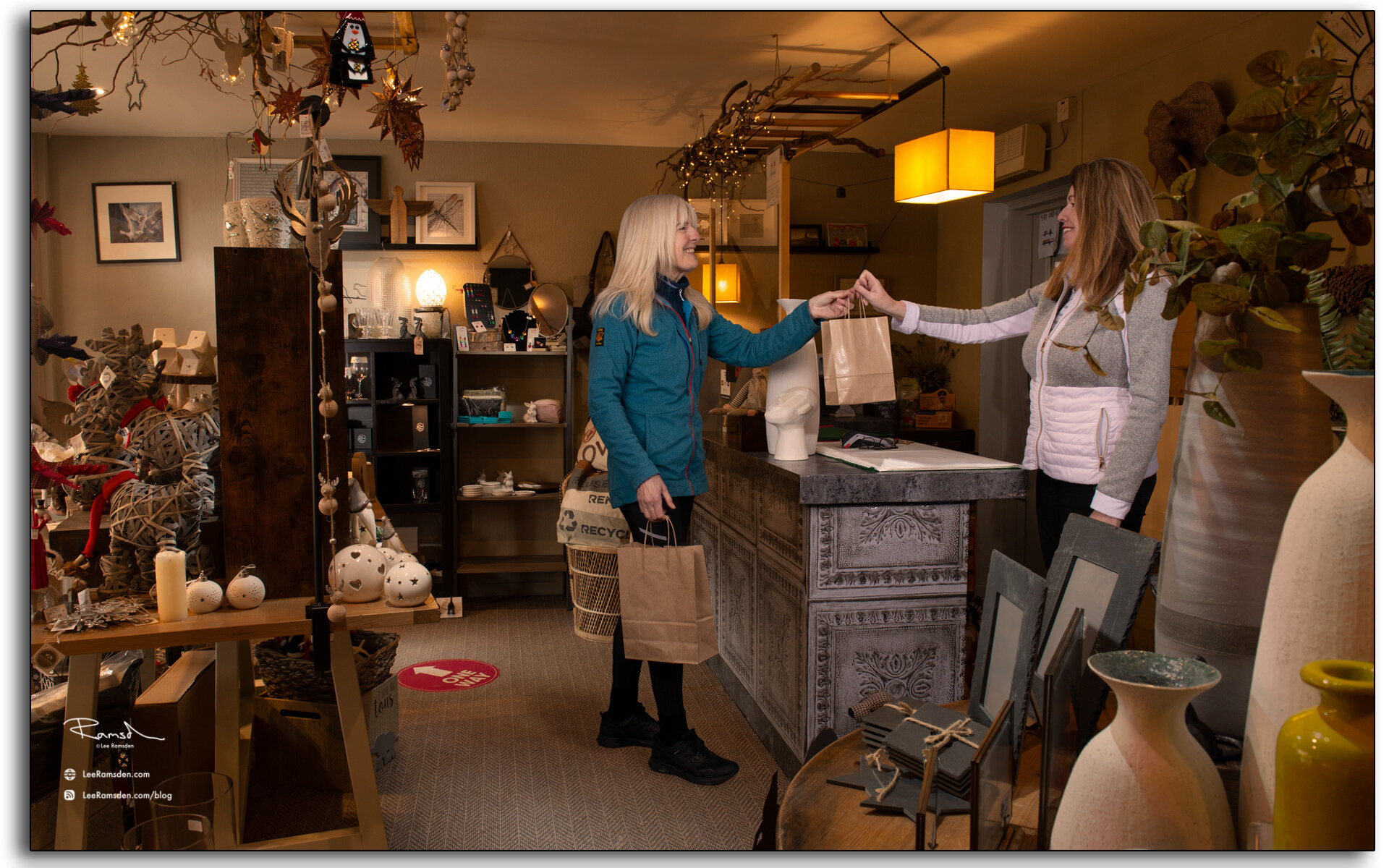
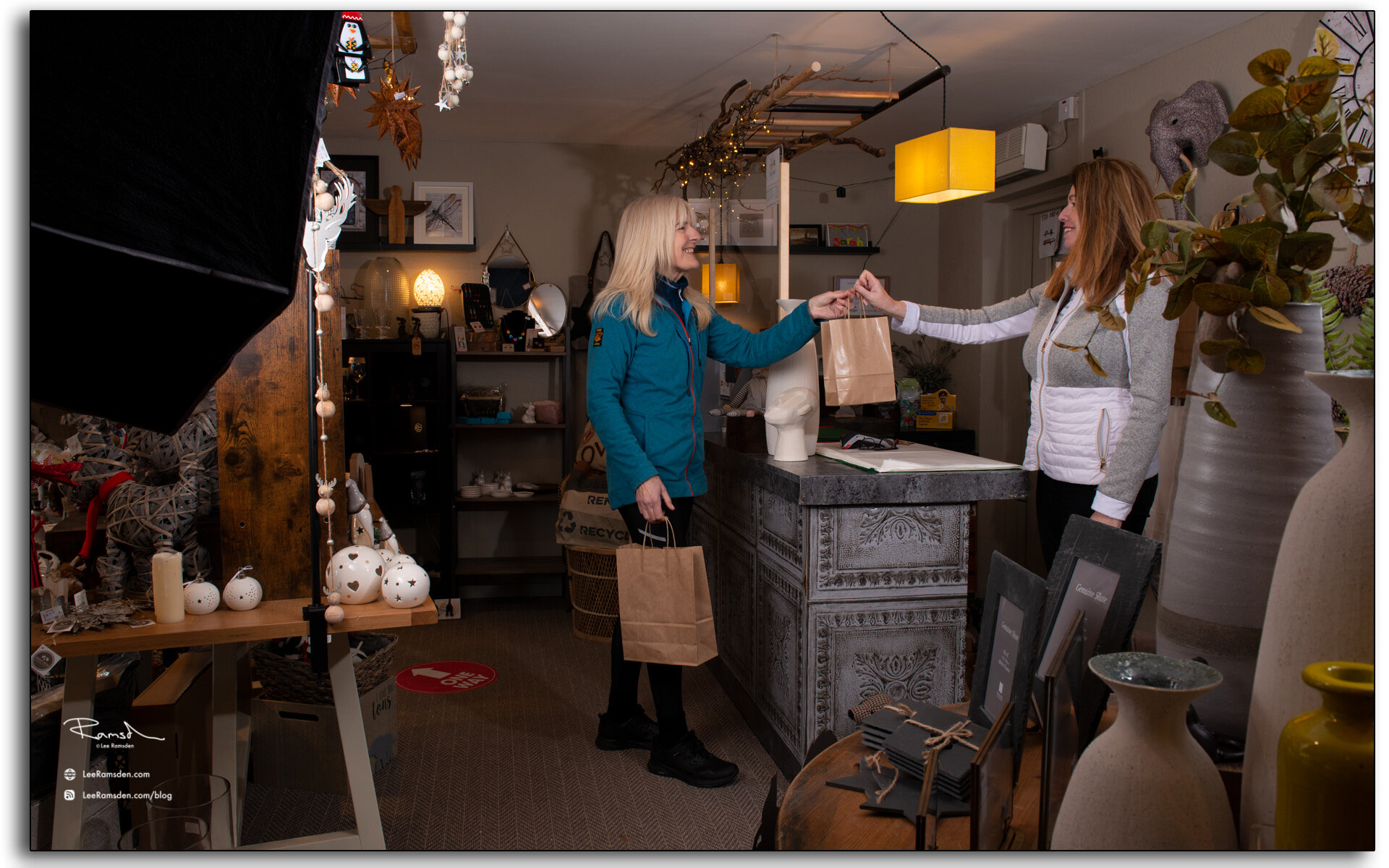
The final example of this technique in use.
Personally, I think the before image would have been a flat, uninteresting image. By adding light to different parts of the scene I feel brings in greater interest and a more polished professional product for my clients.
If you have any questions or would like to know more about this technique,
please drop me a note.
Kind regards,
Lee

1/20 F2.8 ISO800 NIKON D800 50mm

1/30 f5.6 ISO400 NIKON D800 50mm

1/30 f 5.6 ISO400 NIKON D800 50mm
Hello,
A few images of different transport along Blackpool Promenade.
In this post I have included the camera settings, as I wanted to illustrate the different shutter speeds used whilst panning to capture the moving vehicles. All images taken were handheld.
But I am sure you will agree when it works, the images look great and really isolate the moving vehicle in the blurred moving scene.

1/60 f1.4 ISO200 Fuji XT3 35mm

Hello,
Today id like to share a few images taken at Flotta oil and gas processing terminal.

The Flotta Terminal is located on the island of Flotta in the Orkney Islands just north of mainland Scotland. It was commissioned in 1977, with Repsol Sinopec Resources UK Limited becoming the major shareholder and operator in May 2000. The terminal covers a 395-acre site, approximately one-sixth of the area of Flotta Island. Crude oil is imported to the Flotta Oil Terminal from several offshore installations through a 30” subsea pipeline. The pipeline is fed from the following Repsol Sinopec Operated fields; Claymore, Scapa, Piper ‘B’, Tweedsmuir, Tartan, Highlander, Duart, Petronella, Galley and Nexen’s operated Golden Eagle field.

The crude oil processing facilities consist of three separate crude stabilisation trains operating in parallel. This allows a design maximum plant flowrate of 375,000 bbl/d to be processed between the three trains.
The stabilised crude is then transferred to the Crude Oil Storage area with the Desalter wash water transferred to the Desalter Water Treatment plant.

There are currently insufficient volumes of gas supply to sustain the operation of the gas processing plant; as such the gas plant facility was decommissioned in 2017/2018. Gas from the overhead stabilisation process is utilised as fuel gas at the hot oil heaters and powerhouse which generate site electricity using duel fuel turbines. Any excess gas is used at the powerhouse, where there is spare generating capacity to allow additional power export to the national grid.


Hello,
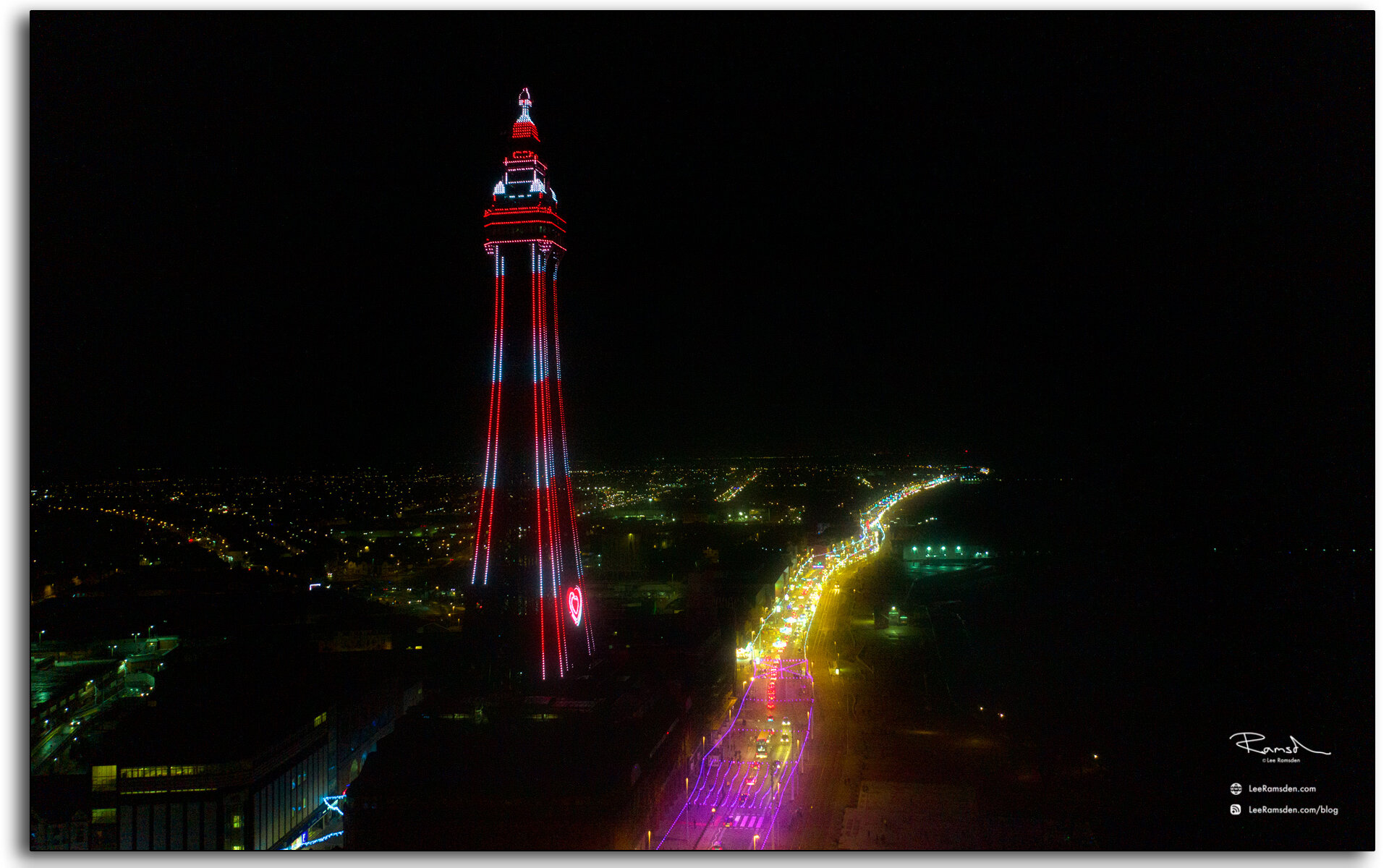
Today id like to show a couple of recent drone images taken at night.

I hope that you are well.
Lee

Hello,
Today is a quick one of an image of Blackpool Tower at sunrise.
I hope that you enjoy.
Lee

Hello,
Today I’d like to share a few images recently taken for a local business “The Wild Ginger”.

A lovely Gift & Homewares shop in the coastal town of Ansdell, Lytham. Supporting talented Artisan makers, Cards, Gifts, Homewares, Handmade items such as jewellery, Pictures and ethically conscious products. Dogs are also welcome.

