Offshore Wind Turbines at Sunrise — Coastal Photography

First light offshore brings its own atmosphere. The silhouettes of turbines against the horizon stand clear and sharp, with the sky shifting colour as the sun breaks.

iPhone photo of offshore wind turbines at sunrise, silhouettes against horizon with calm water surface.
Sunrise over offshore turbines, blades visible against soft early sky, photographed on iPhone.

These images were taken on an early morning offshore, using my iPhone to capture the changing light. Even without specialist equipment, the results show scale and mood: turbines rising out of calm water, sky gradients shifting from deep tones to gold, and blades catching the first light of the day. The strength of these photographs is in their immediacy — a record of the moment as it happened.

Sometimes the best photographs come from being present, not over-equipped. For more of my work documenting offshore environments and renewables, see my Wind Industry and Places galleries.

Elephant Rock, Lunan Bay, Montrose — Coastal Travel & Landscape Photography

Silhouette of Elephant Rock volcanic arch at Lunan Bay, sea and sky framing the elephant-like shape.

Walks out to coastal arches like Elephant Rock are reminders that nature’s shapes matter — rock, sea, sky combining into unexpected forms. A recent visit to Lunan Bay brought just that: the arch of Elephant Rock with cliffs and the chapel above, tides low, skies open.

Chapel of St Skae burial ground.

Elephant Rock (also called the Rock of St Skae) is a volcanic coastal arch, shaped over time by wind and wave. These photos capture its elephant-like silhouette — trunk and head — framed against cliffs, water, and sky. Nearby is the 12th-century Chapel of St Skae, perched above the cliffs; I included shots that show its position in the landscape and even the odd gravestone (like George James Ramsay’s) that gives the place character. Walking back via Lunan Bay, you get wide views: dunes, receding tide, sand ripples, the light changing across beach and cliff.

Lunan Bay beach low tide, dunes and sand ripples, cliffs in distance under open sky.

Upon leaving Elephant rock, we called into Lunan Bay.

Information if you are visiting.

Lunan Bay has attracted many visitors throughout the ages, from Viking armies in the 10th century to generations of holidaymakers. Today it offers a secluded haven on the dramatic Angus coastline.

Sites like this remind me why landscape travel photography is about more than the view — it’s about place, memory, and context. For more work in coastal landscapes and travel-informed photography, see my Places and Travel galleries.

Arbroath Coastal Walk — Weather, Harbor & Cliffs by the Sea

Arbroath harbour wall under stormy skies, rough sea, waves breaking against stone.
RNLI station and lifeboat at Arbroath harbour, shot from coastal walk, rough weather.

Walking the coast around Arbroath often means facing the sea, sky, and whatever weather brings — and that’s exactly what this set of images shows. Storm-light, crashing surf, softened cliffs — all blending into the rugged edges of the harbour and coastline.

The image on the right makes me smile, as you can guess, I got absolutely soaked!

These photos were taken during rough weather; salt spray, wind, and sudden cloud cover influenced how each frame looked. The harbour walls stood weathered; waves broke against jetties; the cliffs loomed overhead, cliffs and textures highlighted where light managed through the cloud. Some shots show the RNLI, lifeboat station, or pilot office—places shaped by sea. Others are just of the way waves hit rock, or how boats hover between calm and chaos. It was more about mood than precision.

The coast around Arbroath always shows something new — in structure, texture, or weather. If you like rugged coastal scenes and harbour life, take a look at my Places and Travel galleries.

Jackup Bridge — Offshore Industrial Photography

JB-115 jack-up barge seen side on with legs out of water, showing platform height and offshore structure.

Side view of the JB-115 jack-up barge with legs deployed, showing the height and structure above water.

Close-up of deck machinery and crane structure of JB-115 jack-up barge, industrial photo.

JB-115 is more than just an accommodation jack-up barge; it’s a functional part of offshore life. On boarding, its size, structure, and role become clear — housing, workspaces, crane capacity, and leg height all matter when you’re working miles from land.

The JB-115, owned by JUB, is an MSC SEA-2000 self-elevating unit built in 2009. It houses 64 people with the capacity to increase to 120. Its legs stand 80 meters tall; with a maximum payload of 1,250 tonnes and a 300-ton crane, it handles more than just housing. I captured shots of deck structure, machinery, the legs reaching upward, and the scale of its operations. Whether close-up of welds or distant views of tower and platform, there’s something in the lines, metal, and industrial detail working together.

Platforms like this are where engineering, endurance, and offshore conditions intersect. For more industrial and renewables work, see my Wind Industry and Industrial galleries.

Montrose Quay — Early Morning Port & Industrial Photography

Wide view of Montrose Quay at sunrise, supply vessels and pier reflected in calm water.

Montrose Quay comes alive quietly in the early hours. The vessels are already moving, equipment sits ready on the dockside, and the waterfront infrastructure — cranes, bollards, quay walls — shows itself clearly in the low, raking light before the working day fully begins.

These drone images were taken in the early morning to capture the quay before it fills with activity. The River South Esk runs alongside, the railway bridge is visible in the distance, and the town sits back from the water just far enough to let the industrial character of the port read clearly.

Montrose is one of the smaller working ports on the east coast of Scotland, but it has a long maritime history connected to fishing, trade and, more recently, the offshore oil and gas and renewables sectors.

For more harbour or industrial photography, see my Places and Wind Industry galleries.

How Tall Are Offshore Wind Turbines? — Technical Info & UK Offshore Examples

UK offshore wind turbine up close; tower height, blade rotation, scale against sea.

Offshore wind turbines are massive — but how massive? On UK wind farms, turbines can reach up to 204 m to the blade tip, with blade diameters around 164 m. These numbers aren’t just statistics — they shape visual scale, installation requirements, and how turbines integrate into sea and sky.

The turbine in the video above comes from a UK offshore wind farm. At full height of 204 m, the blade tip sweeps an arc almost twice that of many older onshore turbines. For comparison, many onshore turbines are 80-120 m in tip height. That scale affects logistics — transport, foundation design, sea access — and affects what the turbine looks like from shore or sea.

Seeing one in place, through video, gives a real impression of height and movement. The blade diameter of 164 m means each blade is longer than many football fields are wide, and the swept area covers hectares. Height also changes how shadows, wind, and light interact with the structure — tall towers catch more wind, reflect more sky, and tower over waves.

Technical specs like this help understanding what wind turbines are and what they do. For more photographs of UK wind farms, structure and scale, see my Wind Industry and Places galleries.

Exploring the Timeless Beauty of Arbroath Abbey — Medieval Architecture, Scotland

Arbroath Abbey, founded in 1178, remains one of Scotland’s finest medieval ruins. Even in partial ruin, its arches, rose windows, and carved stone tell stories of history, craftsmanship, faith, and identity.

Built by King William the Lion, the Abbey is best known as the place where the Declaration of Arbroath was drafted in 1320 — a document that asserted Scotland’s independence. In person, the Abbey’s architecture speaks in stone: towered sections, pointed arches, weathered rose windows, and worn masonry. The play of light through open arches and across aged surfaces accentuates how architecture survives time. During my visit, I walked among the ruins, noting where shadows lengthen and details emerge in light — stone carvings, tracery, and subtle wear showing centuries of exposure.

Ruins like this connect us to centuries past, where architecture, faith, and identity meet in stone. For more church architecture and heritage photography, see my Places and Drone galleries.

Wind farm substation

The Hollandse Kust Zuid offshore wind farm is one of the largest in the Netherlands, located in the southern North Sea off the Dutch coast. The offshore substation at its heart collects the electrical output from the surrounding turbine array and transmits it back to shore via subsea cable — a critical piece of infrastructure in any large-scale offshore wind project.

These photographs show the substation from several angles and distances — the platform structure, deck equipment, and its relationship to the turbines and sea around it. Low sun and clear conditions on this rotation made for good contrast across the steelwork and gave the images a cleaner quality than overcast offshore days typically allow.

The project is operated by Vattenfall and connected to the Dutch grid via TenneT, the Dutch and German transmission system operator. It is one of several major offshore wind farms that have shaped the southern North Sea energy landscape in recent years.

For more photography from offshore substations and wind farm operations, visit the Wind Industry gallery.

St Vigeans Church

St Vigeans Church sits on a low hill in the ancient village of St Vigeans, on the northern outskirts of Arbroath in Angus. The church is one of the older surviving ecclesiastical sites in the area — the building dates from the 12th century, though the site itself is thought to be older. It was consecrated in 1242 by David de Bernham, Bishop of St Andrews.

The village of St Vigeans takes its name from Saint Fechin of Fore, an Irish monk whose name was anglicised over centuries to Vigean. The church stands on a raised mound that may indicate even earlier pre-Christian use of the site.

These photographs are part of an ongoing project documenting churches and historic buildings across Angus and Scotland. The Church of Scotland parish still serves the local community, and the adjacent Abbots House museum holds an important collection of carved Pictish stones found in the area.

For more church photography, see the Church category in the blog and the Places portfolio.

Arbroath Pilot Office And Signal Lighthouse.

The Arbroath Pilot Office and Signal Lighthouse stand at the entrance to Arbroath Harbour — two of the most recognisable structures on the town's waterfront. The Signal Lighthouse, with its distinctive white tower, has marked the harbour entrance for vessels approaching along the Angus coast for well over a century.

Arbroath Harbour itself has medieval origins, developed as a working port serving the town and the broader coastal trade of the east coast. The harbour was substantially improved in the 18th and 19th centuries, with the stone quays and piers that define it today largely the product of Victorian-era construction.

These photographs focus on the character of the harbour buildings rather than the wider harbour activity — the texture of the stonework, the lighthouse structure, and the way the buildings sit in relation to the water and the sky. The conditions at the time of shooting gave strong contrast and clean light across the stone.

For more photography from Arbroath and the Angus coast, explore the Places gallery and the Arbroath tag in the blog.

Black and White, Dog walking

Good morning,

Today I’d like to share some simple black and white images where we walk the dog locally on the beach. I am enjoying the contrast and textures at the moment shooting in monochrome.

I would love to see your black-and-white images.

Feel free to comment over on Instagram @lee_ramsden

Thanks

Lee

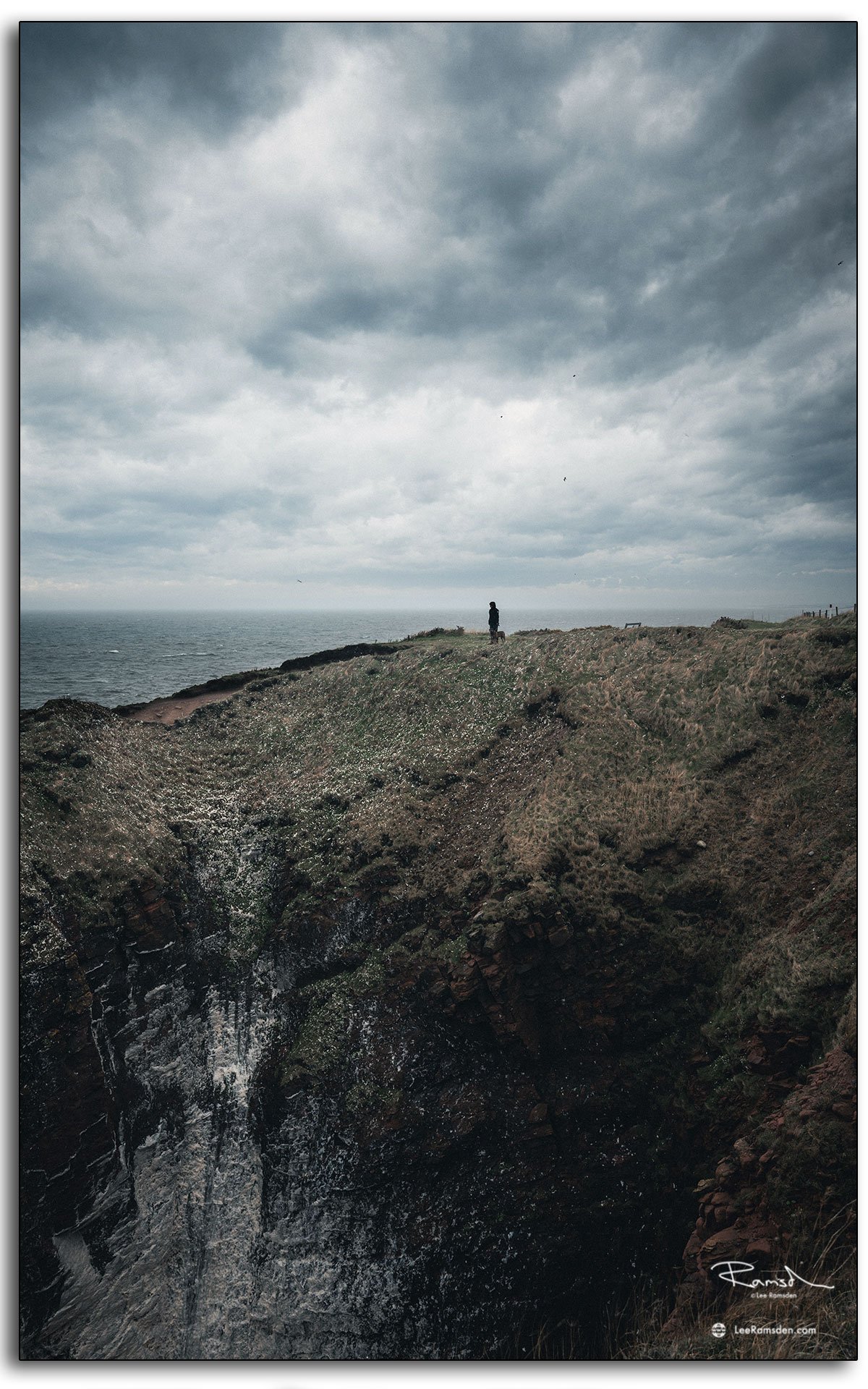
Arbroath cliffs trail.

Imagine standing atop rugged cliffs, with the North Sea crashing below and the wind whipping through your hair.

Welcome to the Arbroath Cliffs Walk, where nature’s raw beauty meets Scotland’s storied coastline.

The Arbroath Cliffs Walk stretches along Scotland’s east coast, offering a 4-mile trail filled with dramatic cliff faces, natural rock formations, and panoramic sea views.

Have you walked the Arbroath Cliffs? Share your favorite spots or good photography walk in the comments on my instagram @lee_ramsden as I would love to hear your thoughts.

Thanks

Lee

GWO course renewals.

Good morning, today id like to share some images of recent courses attended.

Those who work in the renewables industry will feel my pain for attending the GWO renewal courses….again

The courses consist of -

  • Sea Survival

  • First Aid

  • Working at height

  • Manual handling

  • Fire fighting

These certificates are only valid for 2 years and have to be kept up to date whilst working offshore in the renewables industry.

Honda Motorcycle.

Good morning,

today i’d like to share some images of a recent motorcycle shoot.

Here is a short video of how I lit the above image.

The images were lit and shot by myself and I had to keep the equipment very light and compact to a single rucksack, so that I could ride the motorcycle to the different locations.

I really enjoy vehicle photography.

I would love to see your images, comment over on Instagram @lee_ramsden.

Thanks,

Lee

What does your commute to work look like?

Good morning,

Today id like to share a short video of how we access an offshore substation on a windfarm.

After a 1.5hrs CTV (crew transfer vessel) ride, it is a large ladder climb on to the platform.

Where as this may not be for everyone, I will take this, over being stuck in traffic on the M25 every single time!

Lytham Remembers.

On this wet Sunday, Lytham remembers.

Help for Heroes.

Remembrance Sunday is held in the United Kingdom as a day to commemorate the contribution of British and Commonwealth military and civilian servicemen and women in the two World Wars and later conflicts. It is held on the second Sunday in November.

Thanks

Lee