Offshore Substation – The Beating Heart of a Wind Farm

Offshore substation platform illuminated at night, North Sea wind farm.
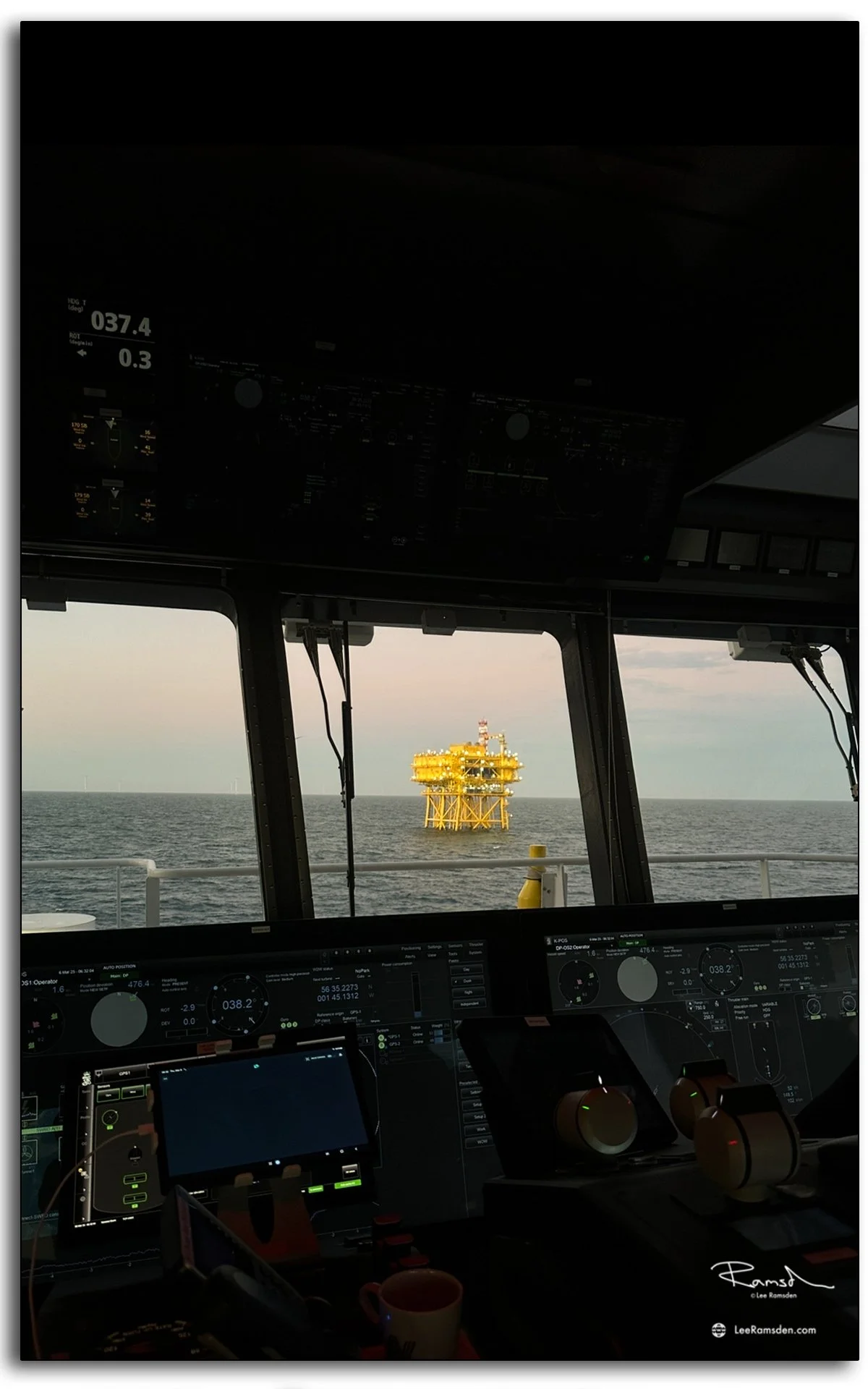
Offshore substation seen from a vessel bridge in the North Sea.

An offshore substation (OSS) is the critical hub of a wind farm, where the power generated offshore is collected and transmitted back to shore. Sitting high above the waves, it is one of the most striking structures in the renewables industry.

From the vessel bridge, the platform is an impressive sight in the distance, glowing gold against the sea at night. These substations not only represent engineering excellence but also play a vital role in the delivery of clean energy across the UK and beyond.

Exploring and photographing offshore substations is always a privilege—capturing them from both the technical working perspective and as powerful silhouettes on the horizon.

The offshore industry is full of dramatic structures and scenes, from turbines to substations. You can explore more of my work in the Wind Industry portfolio, as well as my wider Industrial and Places collections.

Everyday Scenes in Black and White

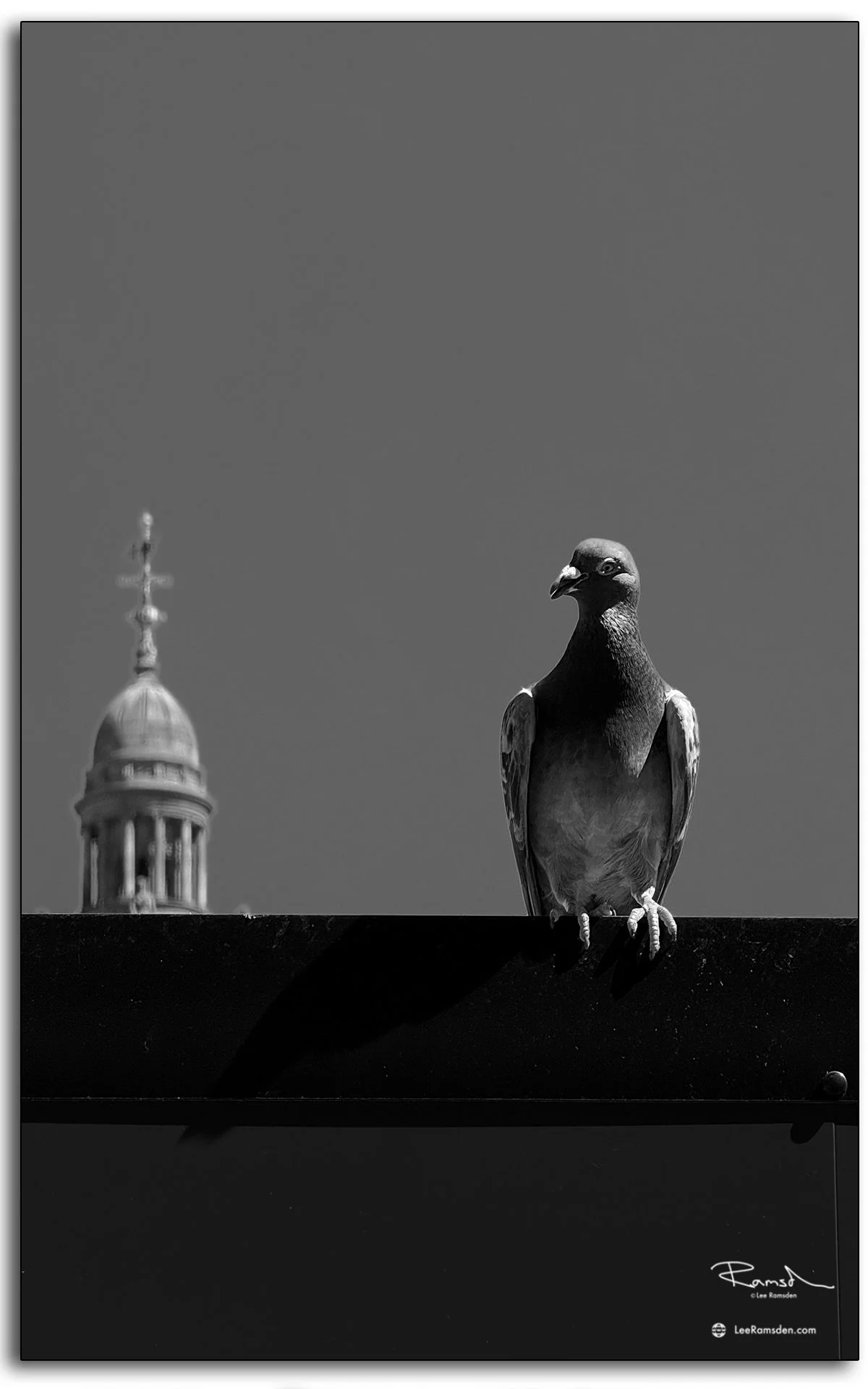
Striking black and white photograph of a pigeon perched on a ledge with a city dome in the background, highlighting contrast and simple composition.
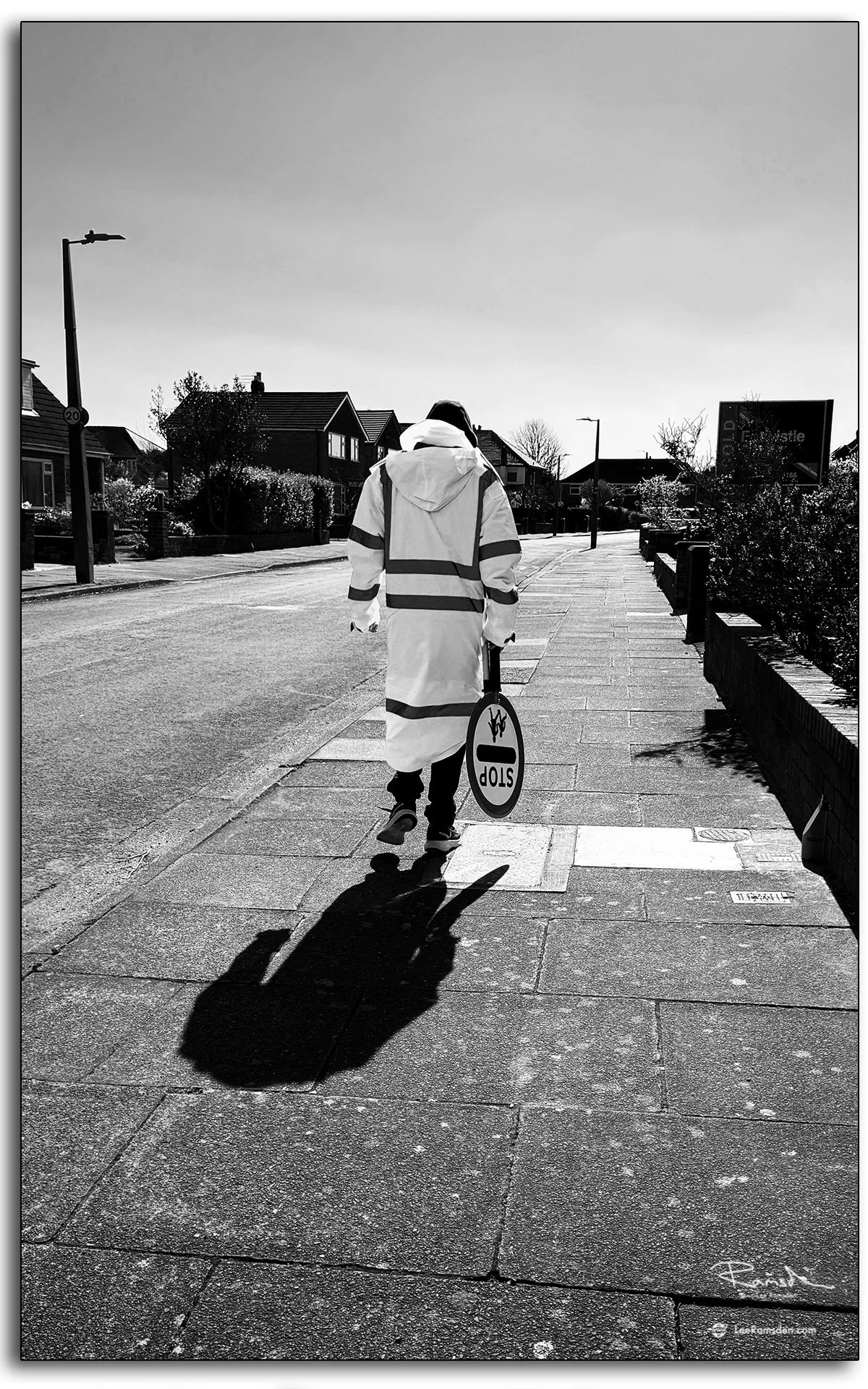
Black and white street photo of a lollipop man walking away with a stop sign, his hi-vis jacket and long shadow creating strong visual contrast.

Everyday Scenes in Black and White

Not every photograph needs a dramatic location or a significant subject. These two images are about ordinary moments made graphic by the removal of colour.

The first isolates a pigeon in flight against a clear sky, with architectural detail in the background providing scale and context. It's the kind of shot that comes from slowing down and watching a familiar scene rather than looking for something new.

The second captures a lollipop man walking away from the camera, his shadow stretching long across the pavement. The high contrast and strong directional light reduce the scene to shape and tone — the figure becomes almost abstract, the shadow more present than the man himself.

Black and white street photography works best when it finds structure in the unremarkable. Both of these images are from everyday locations in Scotland, and neither required anything beyond patience and timing.

For more black and white work, visit the main portfolio or explore the Places gallery.

Cromarty War Graves and the Old Churchyard

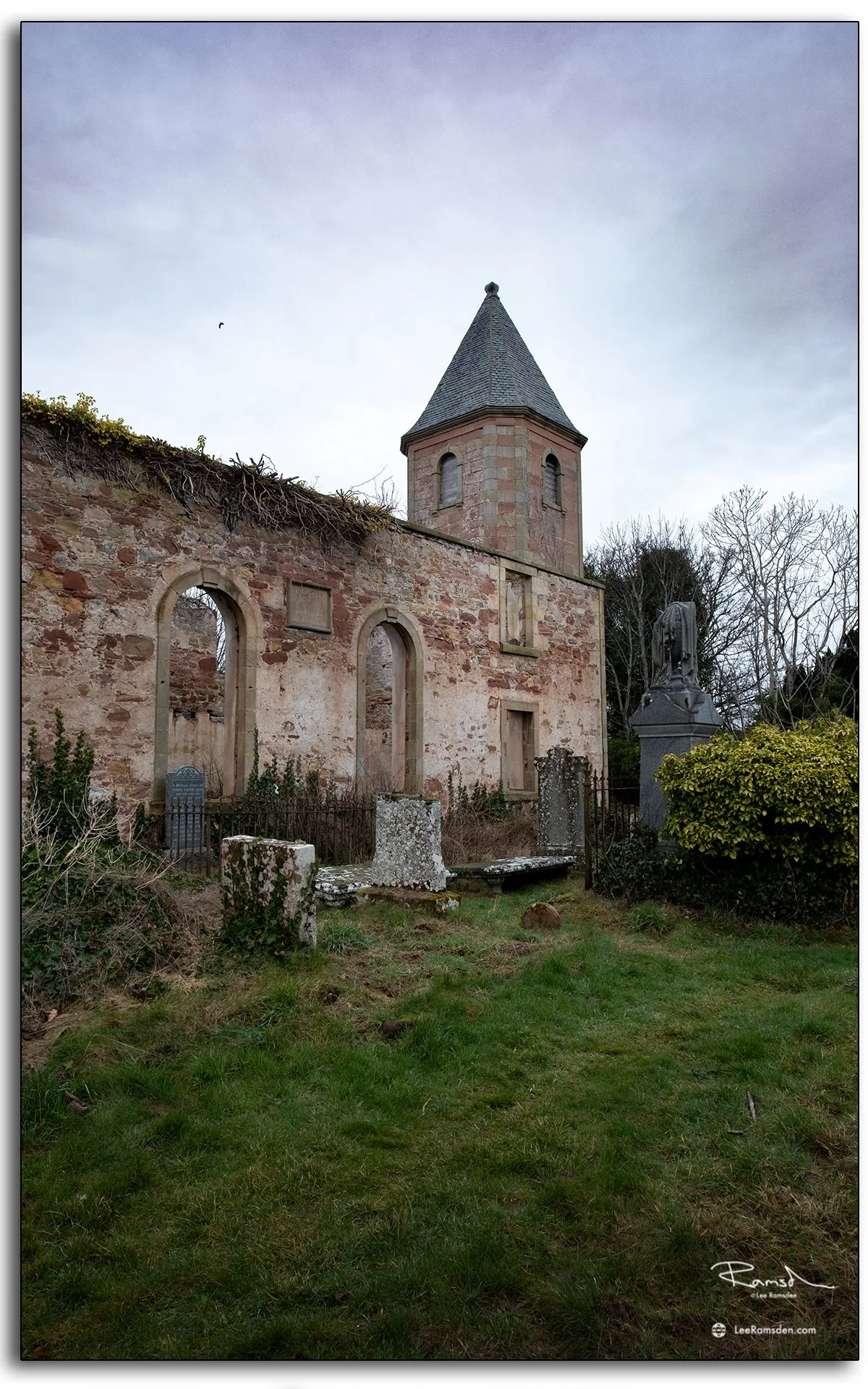
These two photographs were taken in Cromarty and show two closely connected parts of the same place: the older churchyard ruins and the formal war graves section with its cross at the far end of the cemetery. Together, they say quite a lot about how much history can sit in one small Highland town. 

The first image looks into the old churchyard, where the ruined Gaelic Chapel and older burial ground give the place a much longer timeline than the neat lines of the later war graves. The chapel is associated with the Gaelic-speaking community in Cromarty and now survives as a ruin within the burial ground. 

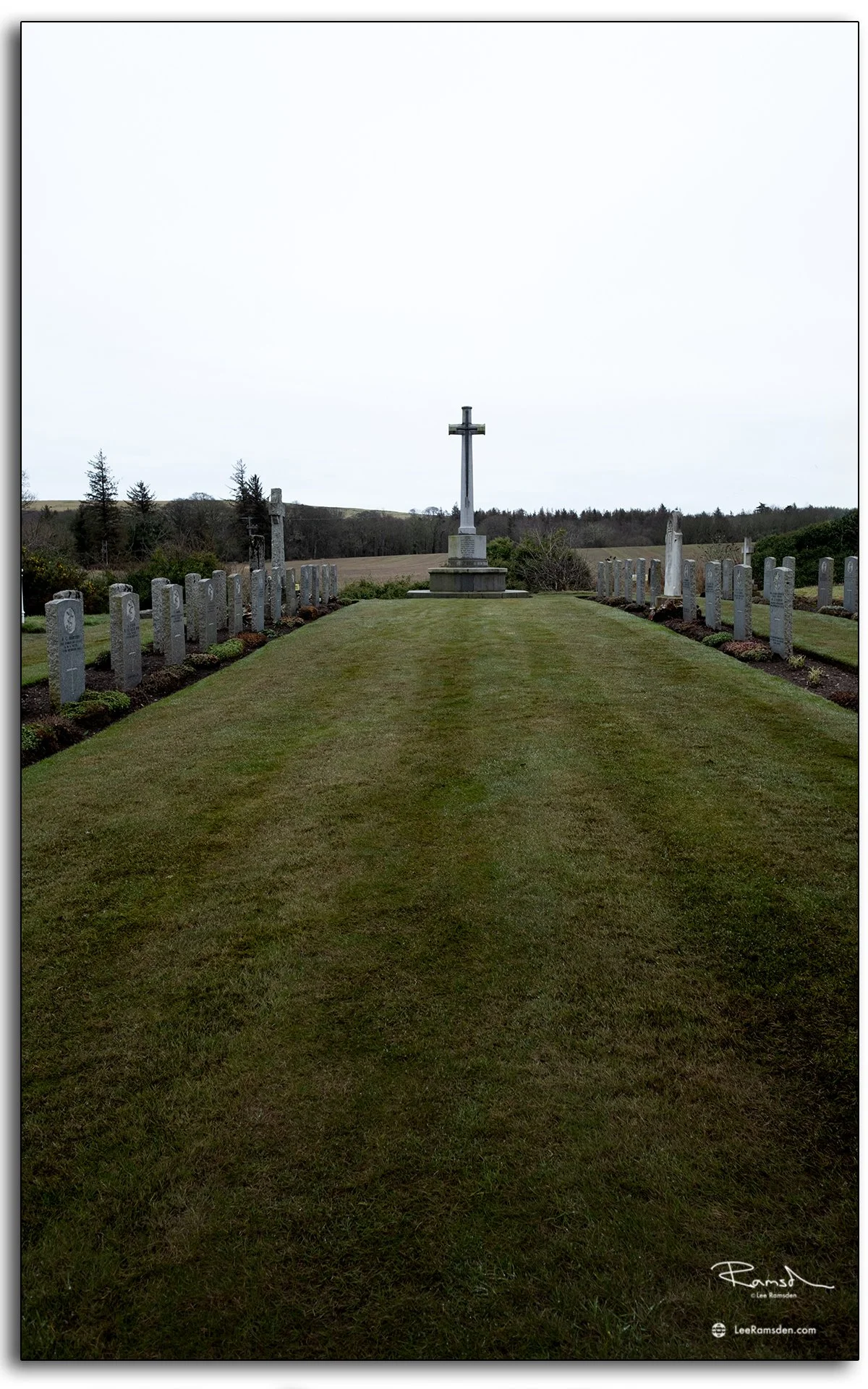
The second image shows the more formal military section of Cromarty Cemetery, where the graves are arranged around a War Cross in the newer extension. According to the Commonwealth War Graves Commission, the cemetery contains 74 Commonwealth burials from the First World War and 4 from the Second World War

That number feels striking for a small place, but Cromarty had a more significant wartime role than many people realise. The CWGC notes that Cromarty was a net-base and that the Cromarty Military Hospital had 226 beds during the First World War. 

The same CWGC record also points to one of the major reasons the cemetery holds so many wartime burials: HMS Natal was wrecked and overturned by an internal explosion in the channel between Cromarty and Invergordon on 30 December 1915. That event left a lasting mark on the area and helps explain why the war graves section is so prominent here. 

What I like about these images together is the contrast in how remembrance is expressed. One side of the cemetery feels irregular, weathered and local, shaped over time by the town itself. The other is formal and deliberate, with the ordered headstones and cross giving the space a very different rhythm. Both belong to the same landscape, and both reflect different layers of Cromarty’s past. 

Vessel Operations Offshore

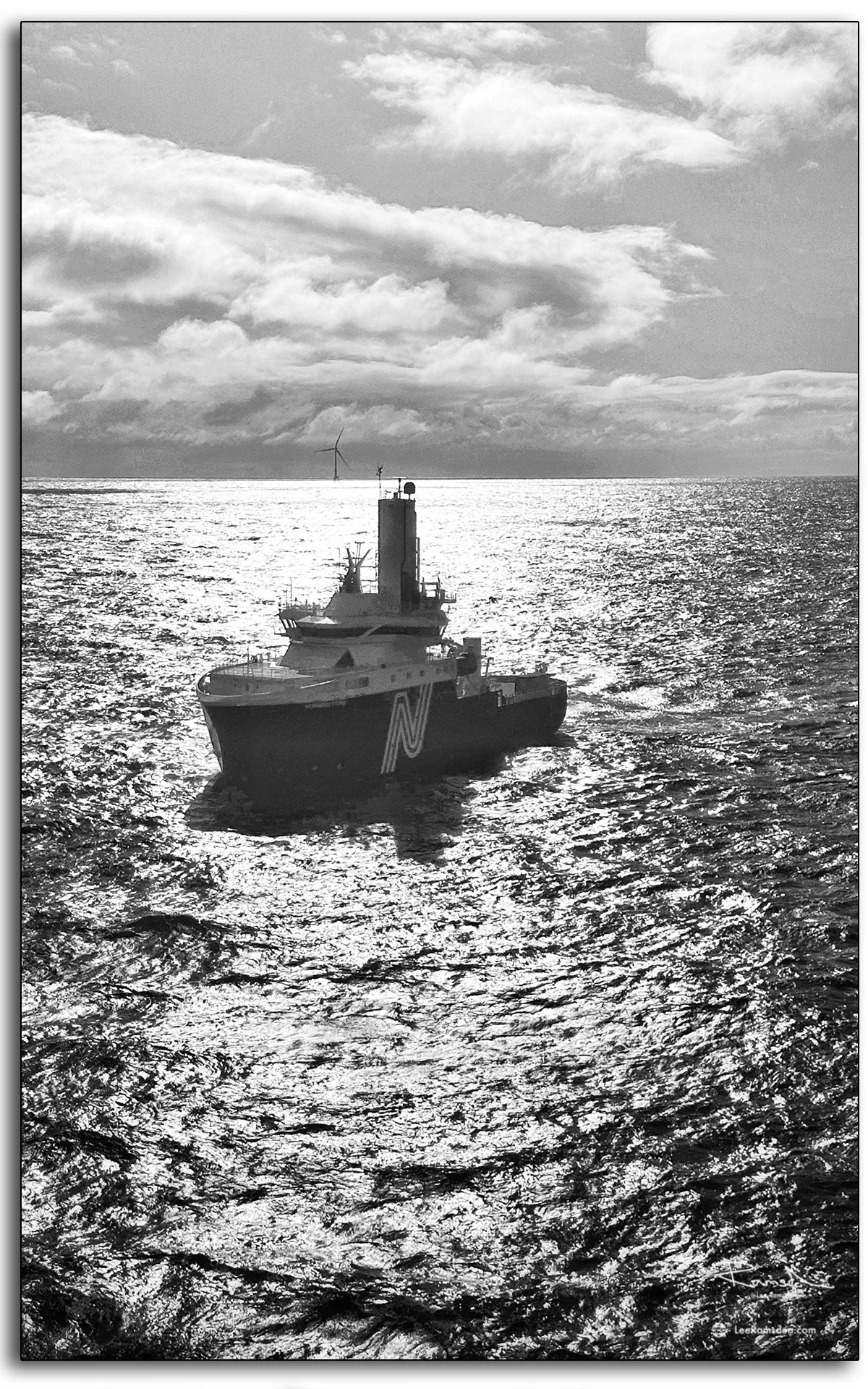
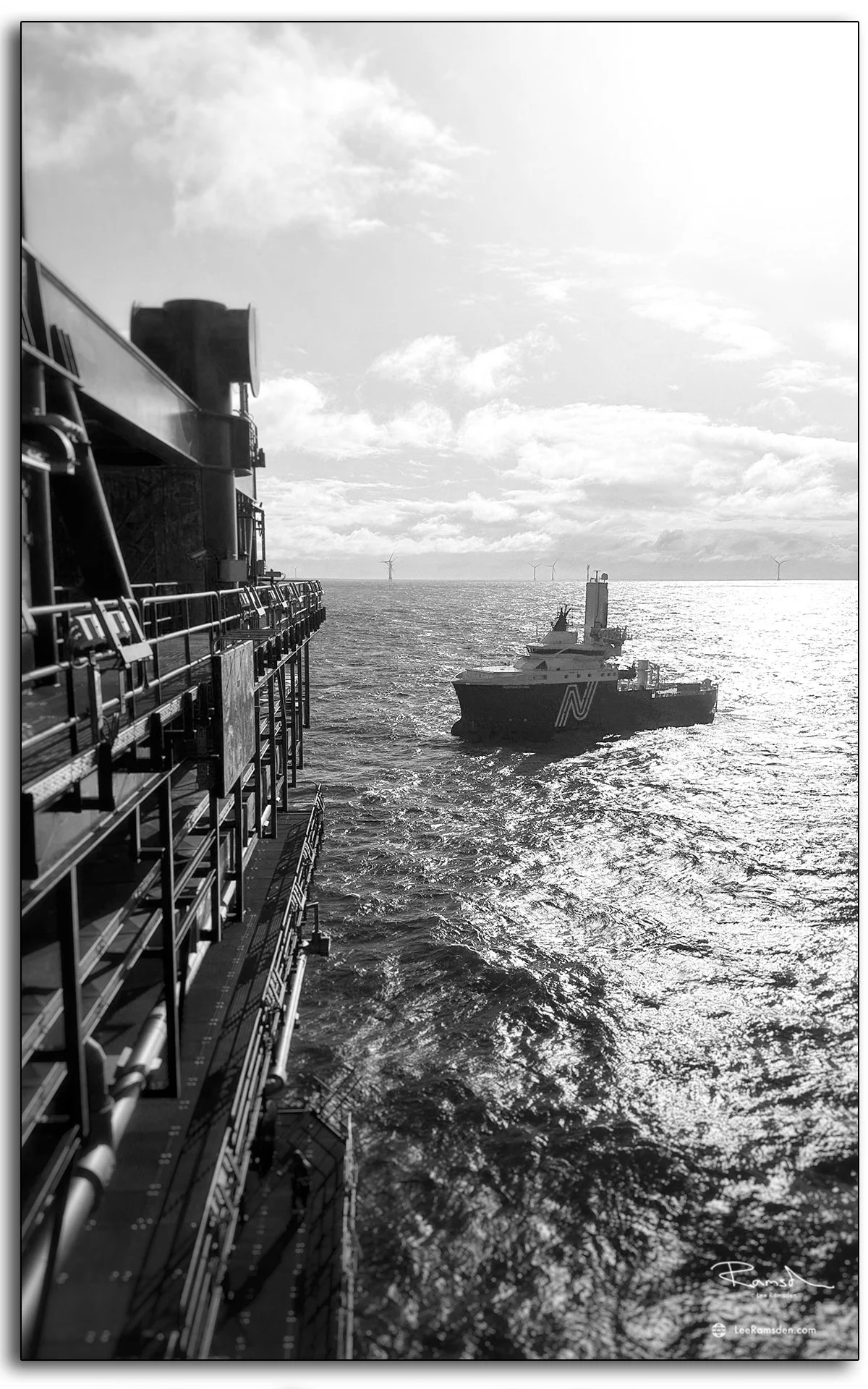
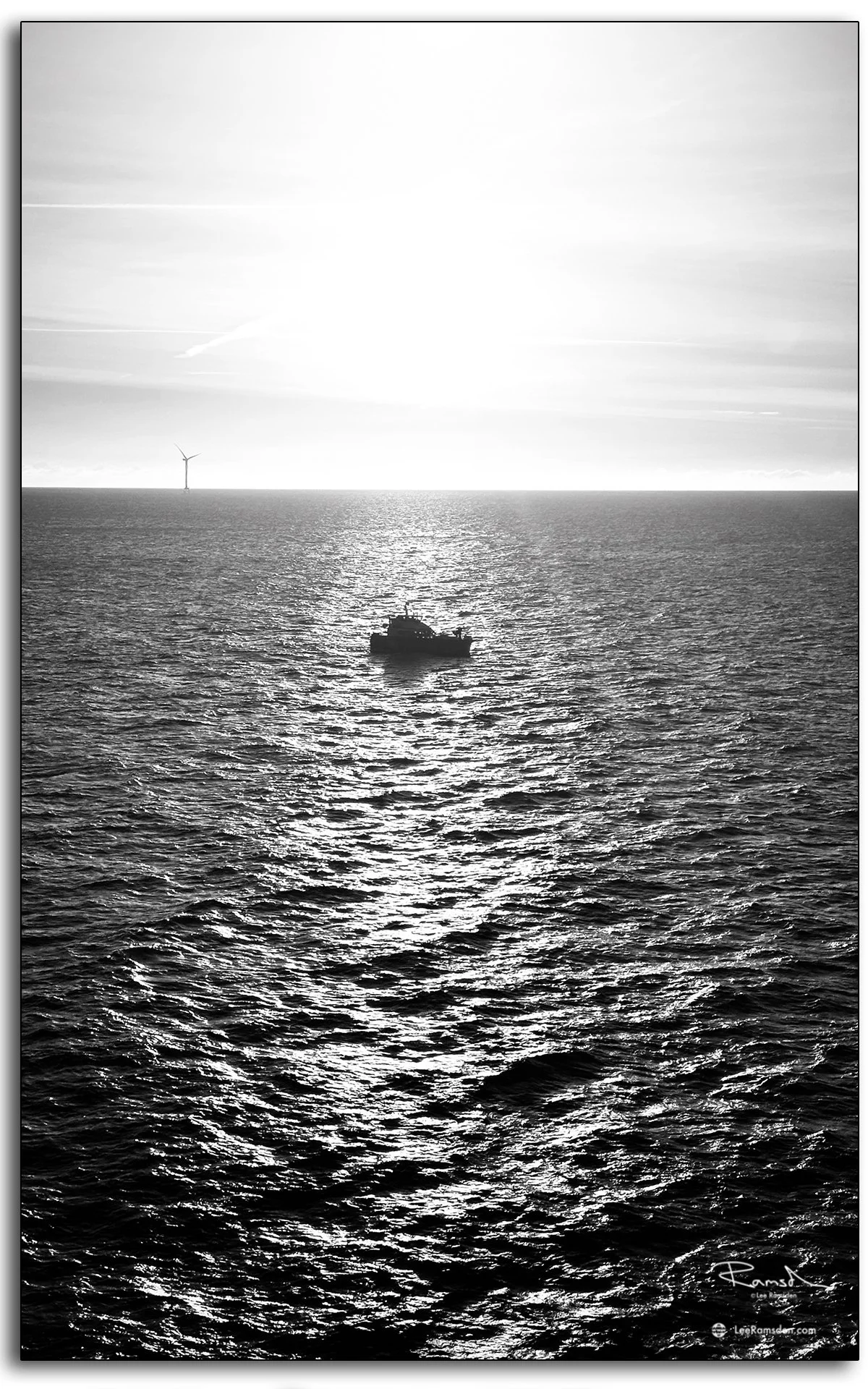
Out in the North Sea, the Norwind Storm support vessel takes up position beneath the setting sun — a steady presence against the rolling water and the turbine structures beyond.

These images show the vessel in its working context, sitting alongside the wind farm and substation, with the horizon fading into haze. The black and white treatment suits the industrial scale of the scene, stripping away colour to leave structure, light and movement.

Service operations vessels are a core part of offshore wind O&M. They provide accommodation and logistical support for technicians working on turbines and substations, often remaining on site for extended periods during maintenance campaigns.

This series adds to my Wind Industry collection, alongside wider work across Industrial and Places photography.

Remembrance Poppy Display – St Annes Parish Church

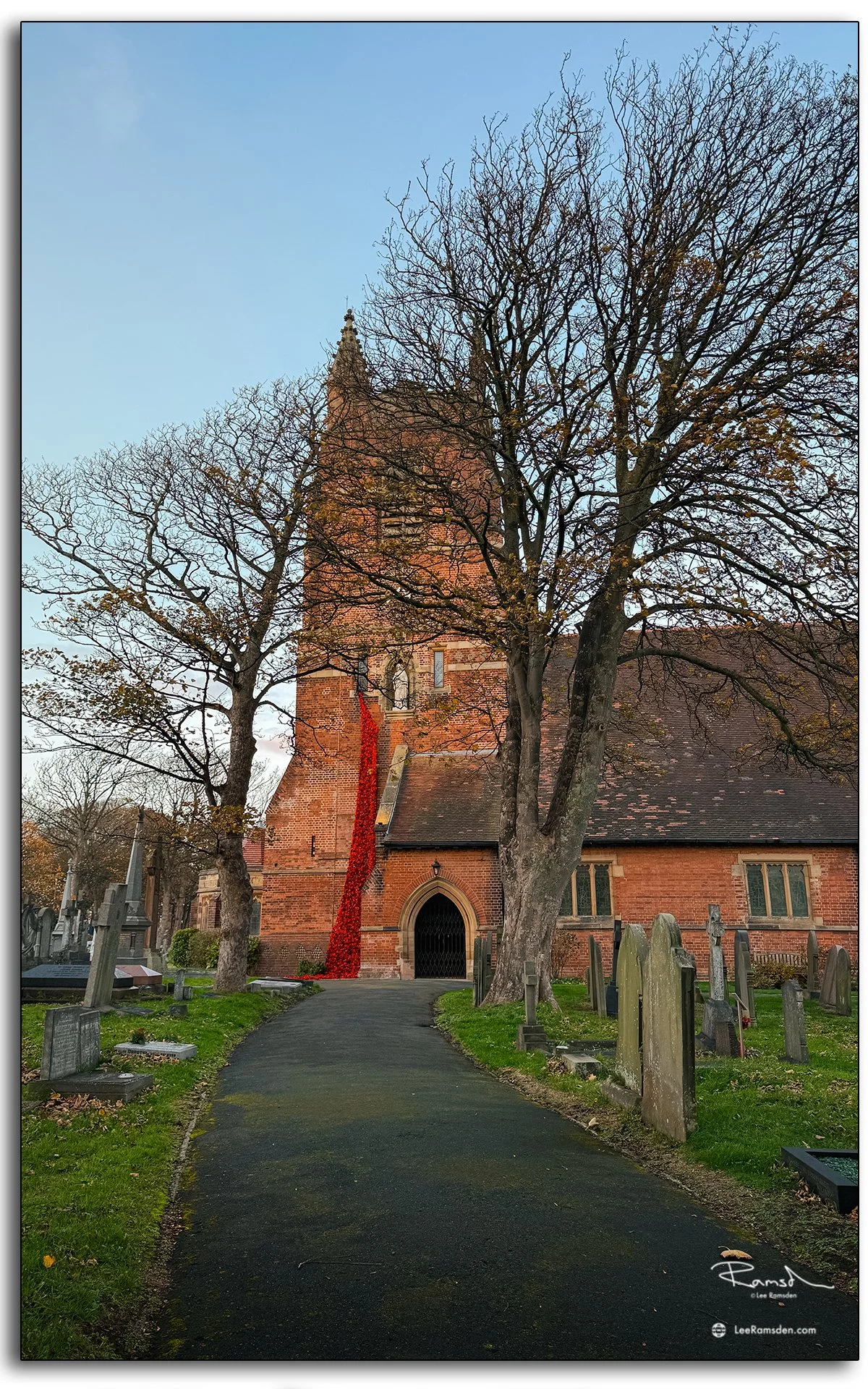
Photo of St Annes Church in Lytham St Annes with a cascade of red poppies flowing from the tower for Remembrance Day
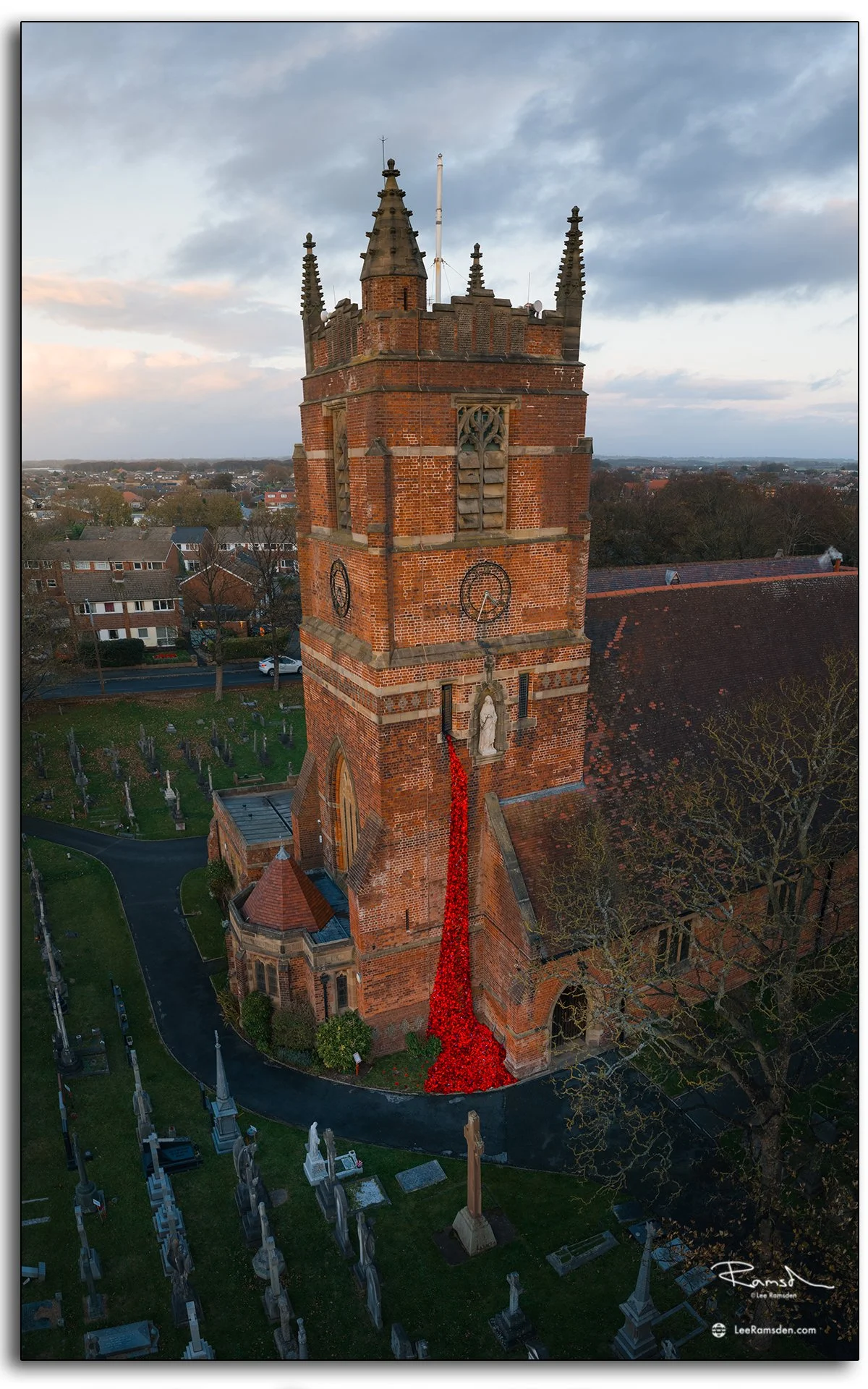
Drone photo of St Annes Church in Lytham St Annes with a cascade of red poppies flowing from the tower for Remembrance Day

Today we remember - those who paid the ultimate price 🎖️,

and the many, many more who’ve quietly checked themselves out since.

You are not forgotten.

Those still fighting their battles.

You are not on your own.

Please talk.

Each year, the Remembrance period brings a powerful stillness to communities across the UK — a pause to reflect on the lives lost in conflict. This striking poppy display at St Annes Parish Church does exactly that.

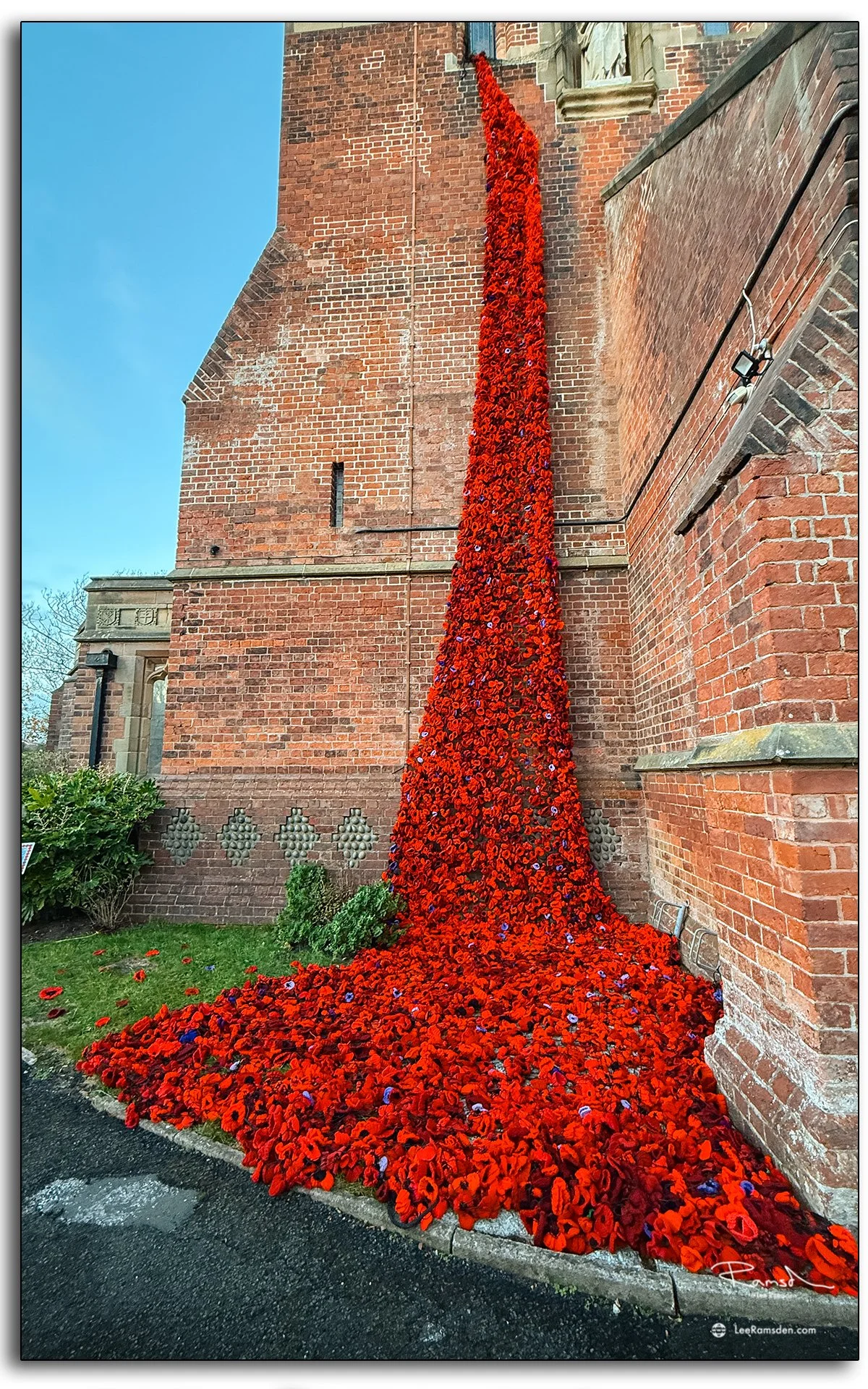
Thousands of handmade poppies cascade from the church tower to the ground, symbolising the ongoing flow of remembrance from generation to generation. Seen from above, the red trail cuts through the old brickwork and gravestones — a vivid reminder of sacrifice and resilience.

The installation was created by local volunteers, each poppy representing care, memory, and community effort.

Offshore workers portraits.

Offshore Workers Portraits

These portraits were taken on a North Sea asset during an offshore wind operation. Shot in the working environment, they focus on the people behind the project rather than the infrastructure around them.

Offshore portraiture is a different discipline to studio or event work. The subjects are working professionals in a demanding environment, and the images need to reflect that — direct, unposed where possible, and honest about the conditions. There's little room for elaborate setups on a vessel or platform deck, which tends to produce portraits that feel more genuine for it.

The offshore wind industry employs thousands of people in specialist roles — technicians, rope access workers, supervisors, marine crew, and support staff — many of whom spend weeks at a time on rotation. These images are a small record of that working life, shot as part of a wider documentation of North Sea operations.

For more work from offshore wind projects, visit the Wind Industry gallery.

Arbirlot Walks – Fields, Waterfalls and Woodland

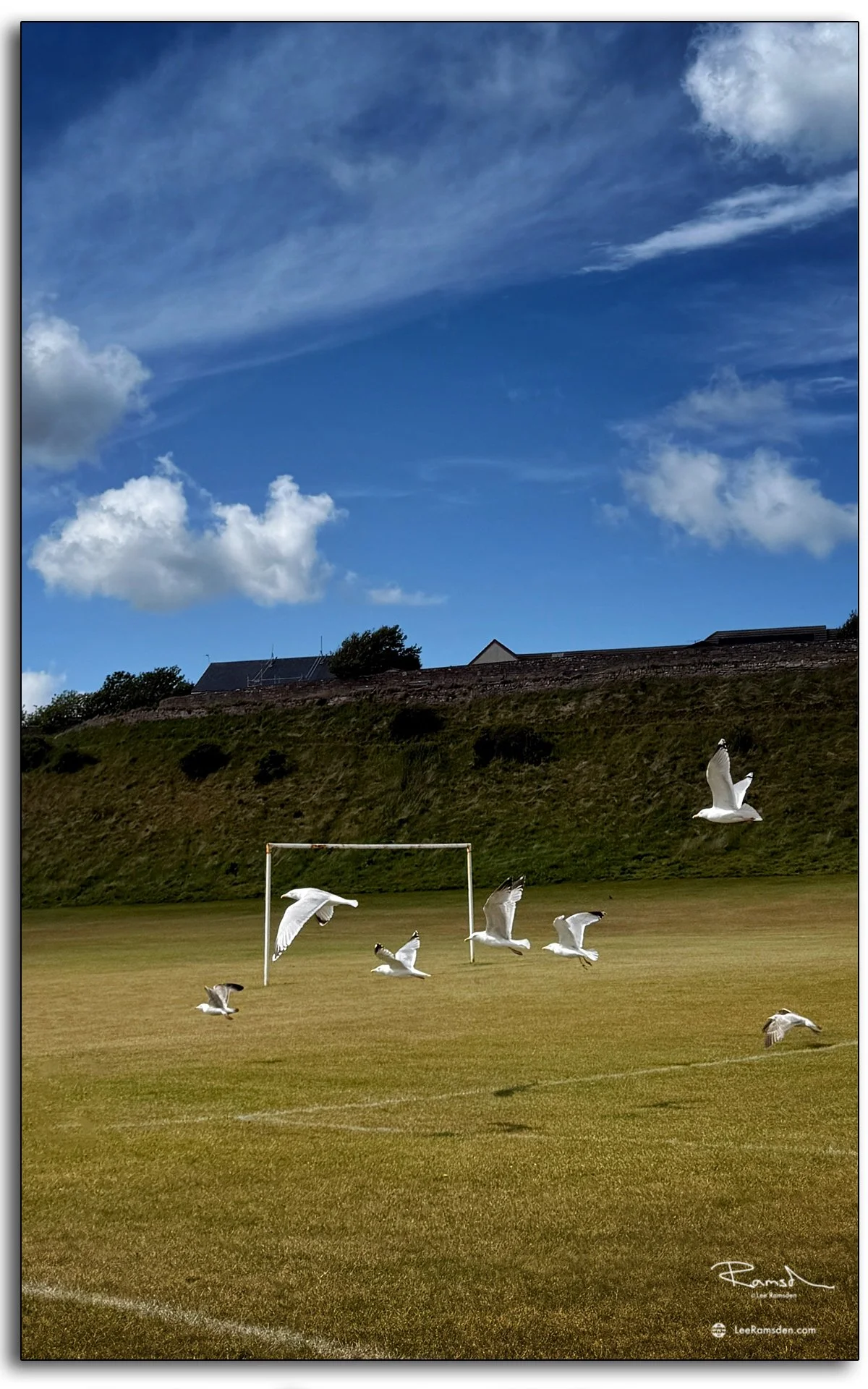
Seagulls take flight across a football pitch in Arbroath.
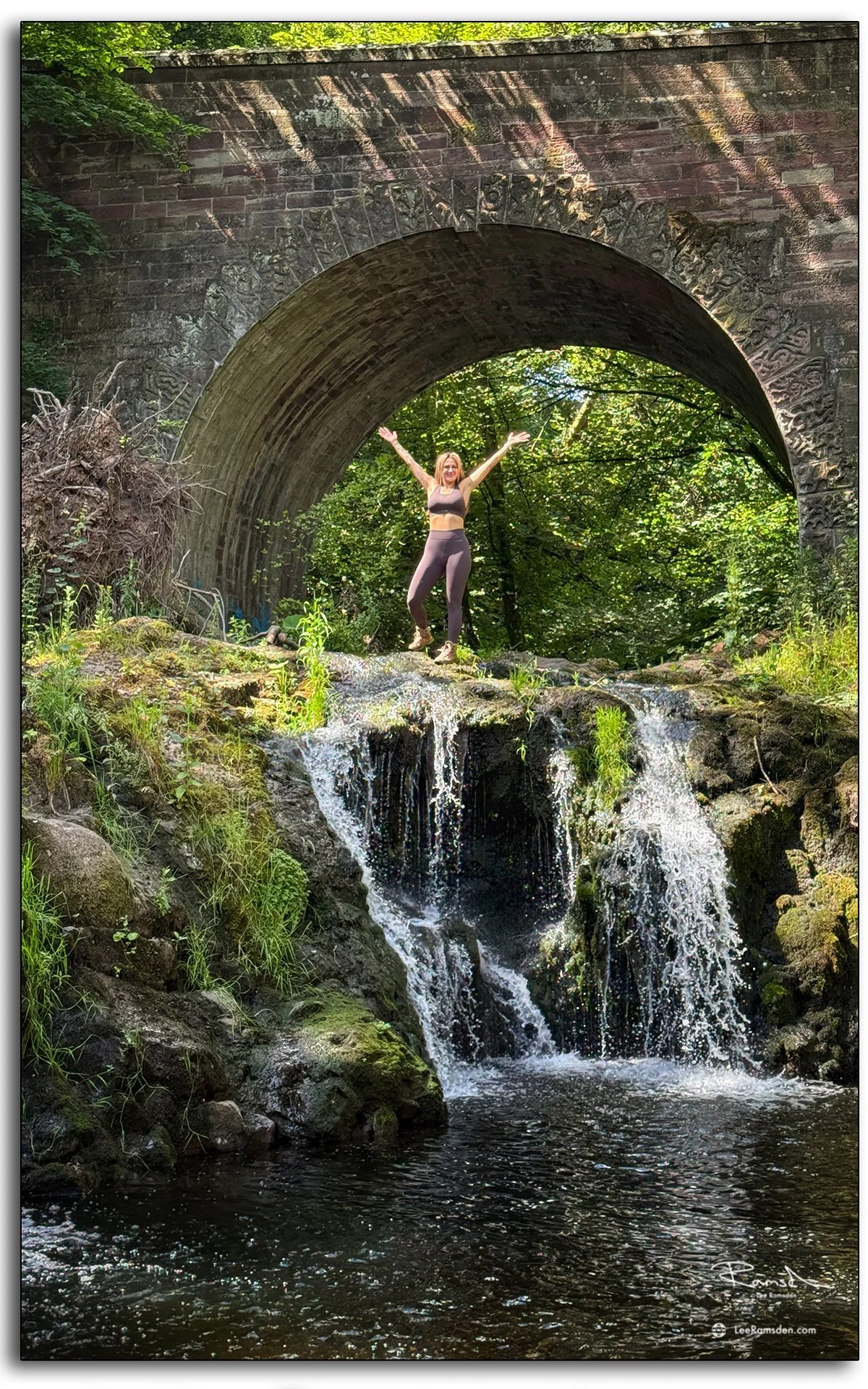
Woman exploring Arbirlot waterfall near Arbroath.
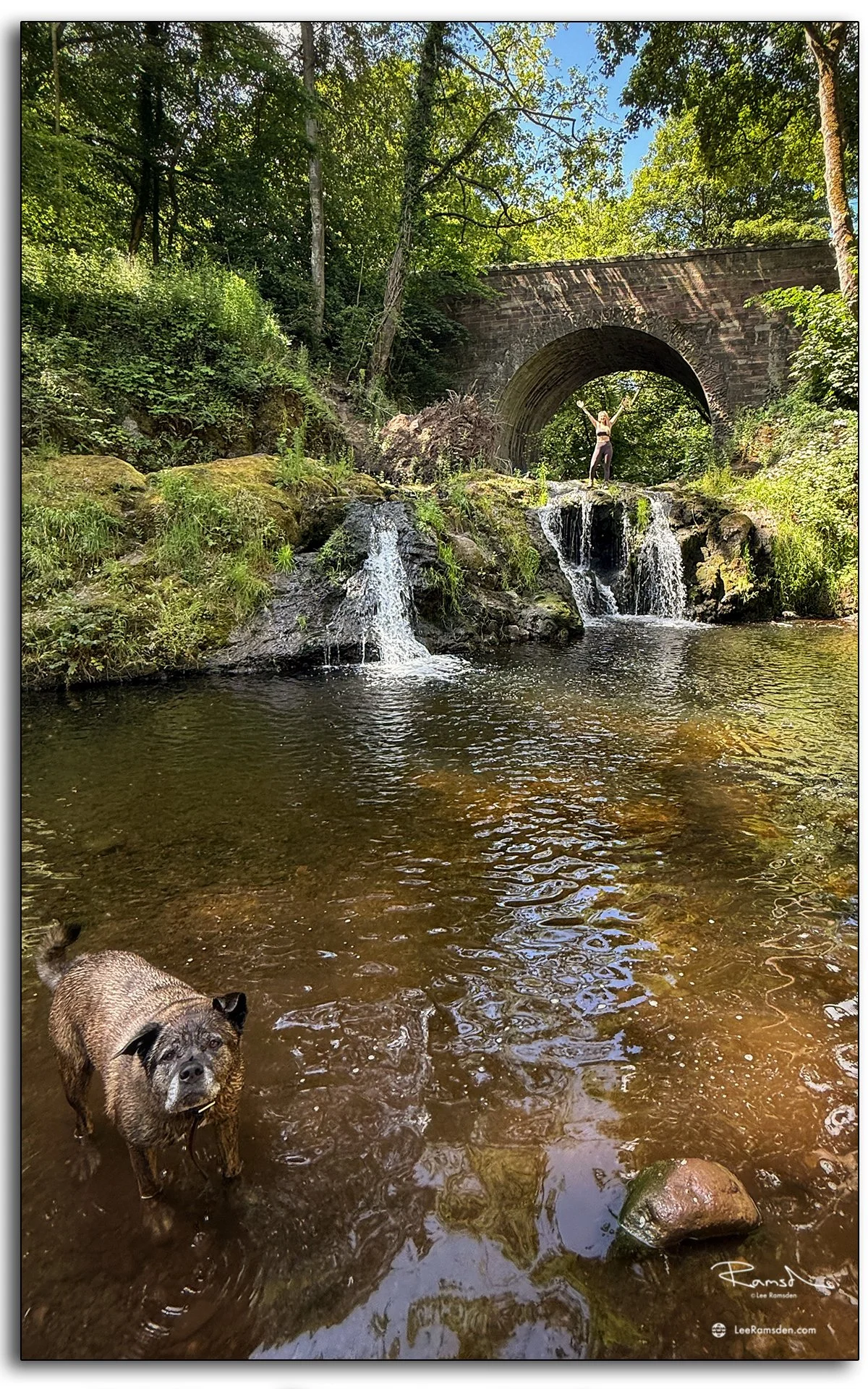
Dog standing in the river below Arbirlot waterfall.
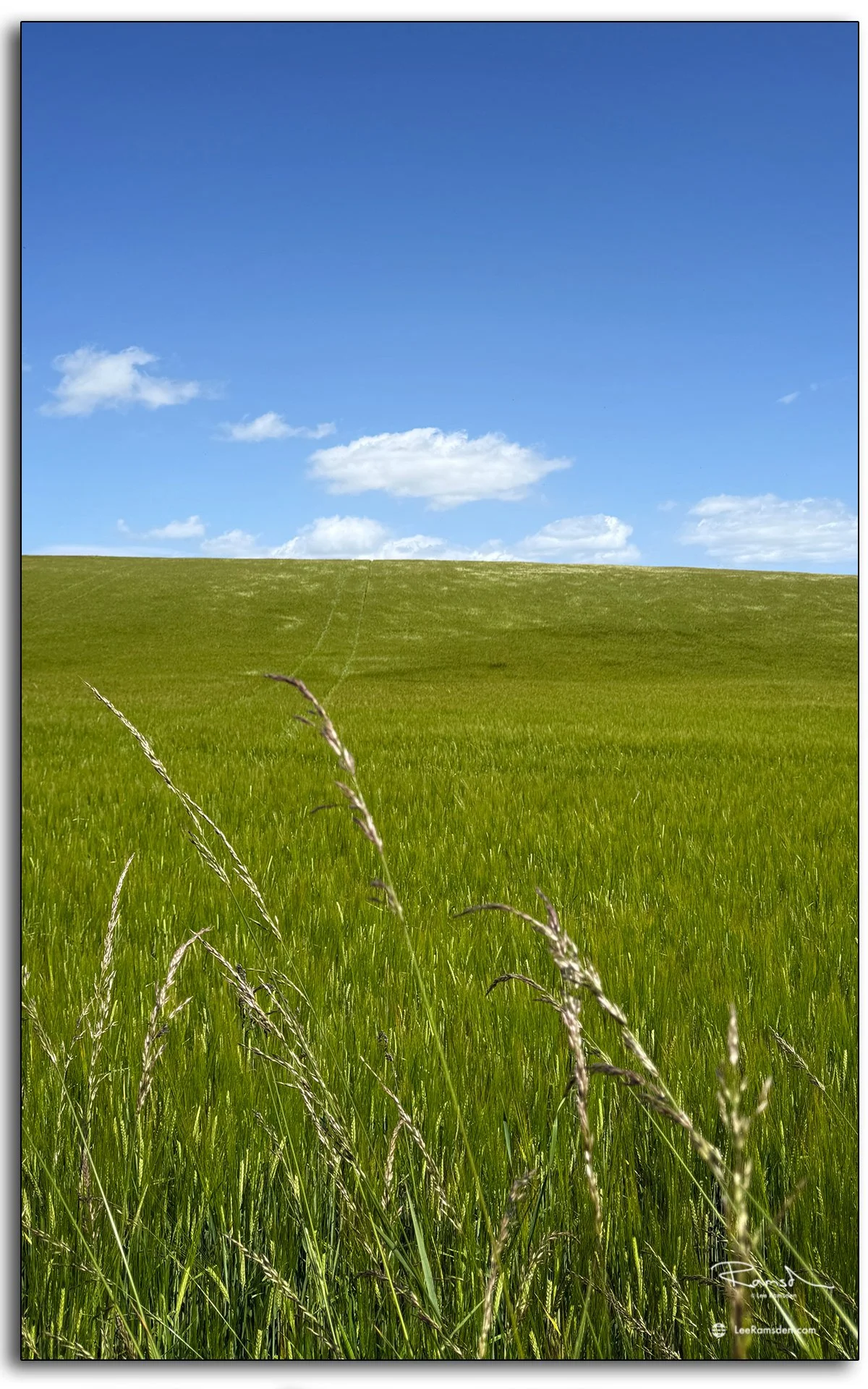
Green barley field beneath a clear blue summer sky.
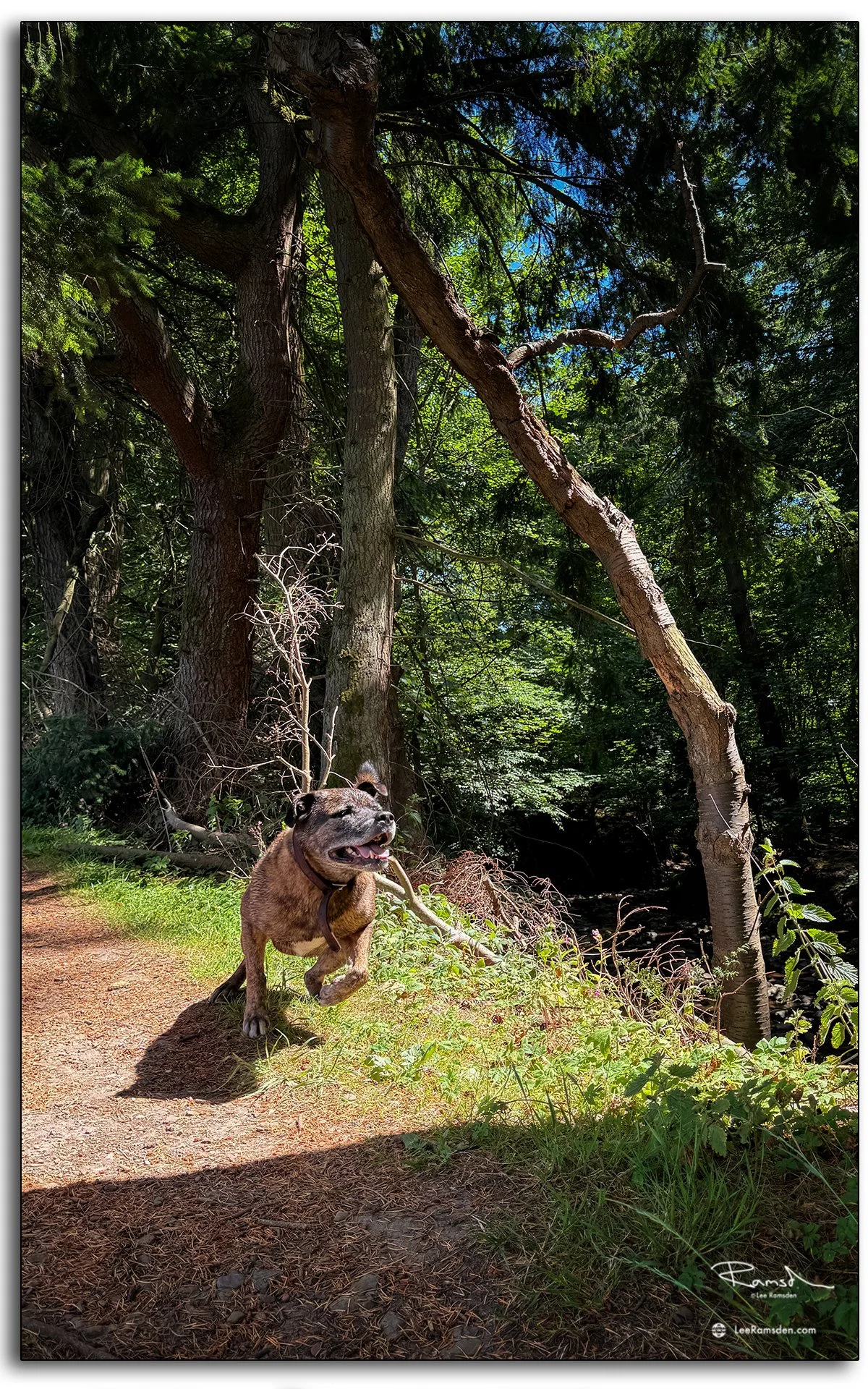
Dog running on a woodland path near Arbirlot, Scotland.

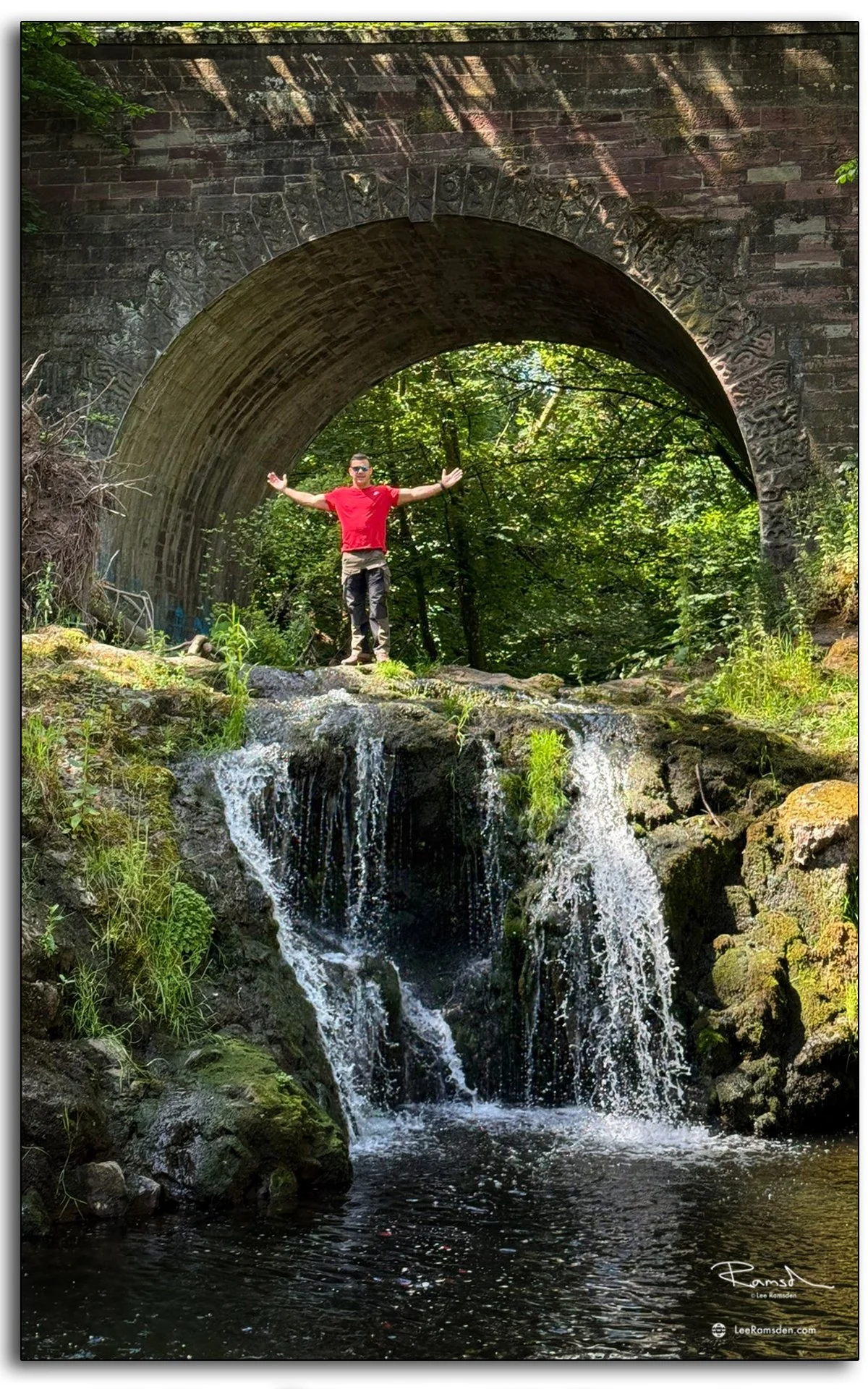
A short walk through Arbirlot, just outside Arbroath, takes you from open fields into shaded woodland and down to the small waterfall under the old stone bridge. It’s a quiet spot, ideal for a wander with the dog or simply enjoying the scenery. The mix of farmland, riverside paths and that hidden cascade makes it a favourite place for locals to explore.

The waterfall itself, tucked beneath the bridge, is the highlight. Whether standing above it or cooling off below, it’s a reminder of how much variety you can find within a short distance of town.

Exploring places like Arbirlot shows just how much variety is on offer in this part of Scotland. From open coastlines to tucked-away woodland, I’m always drawn to the mix of landscapes nearby. You can see more of my work across Places and People.

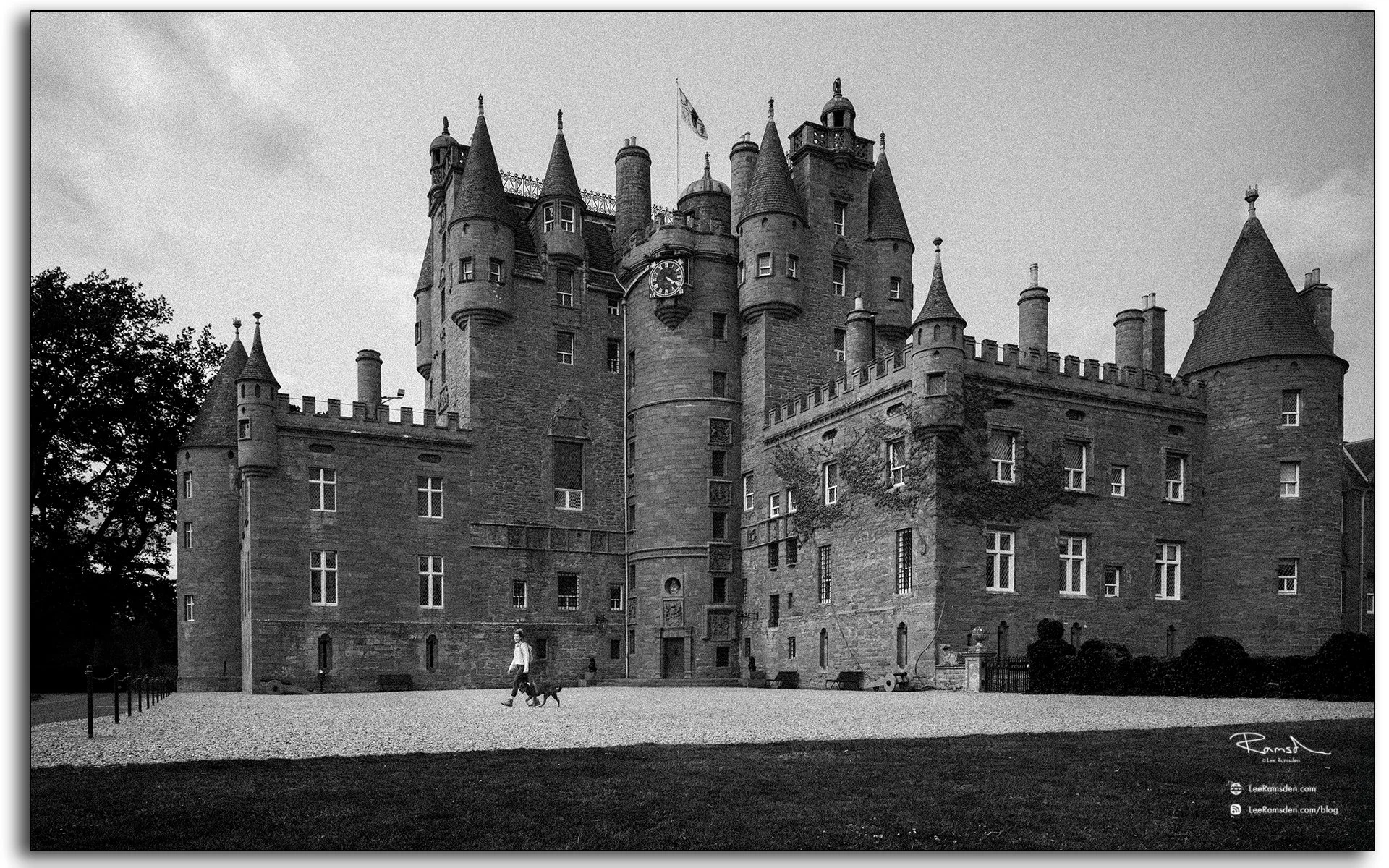
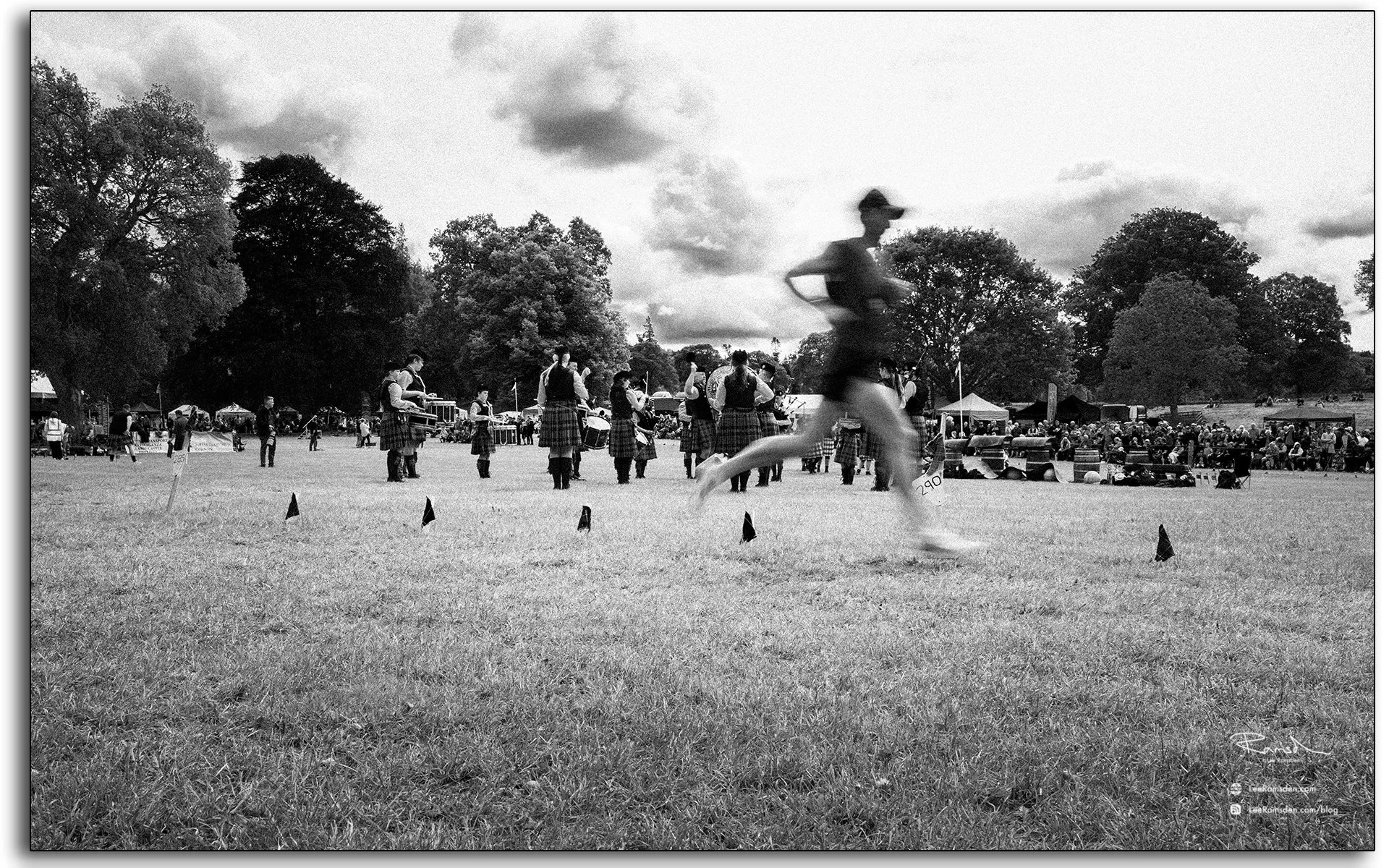
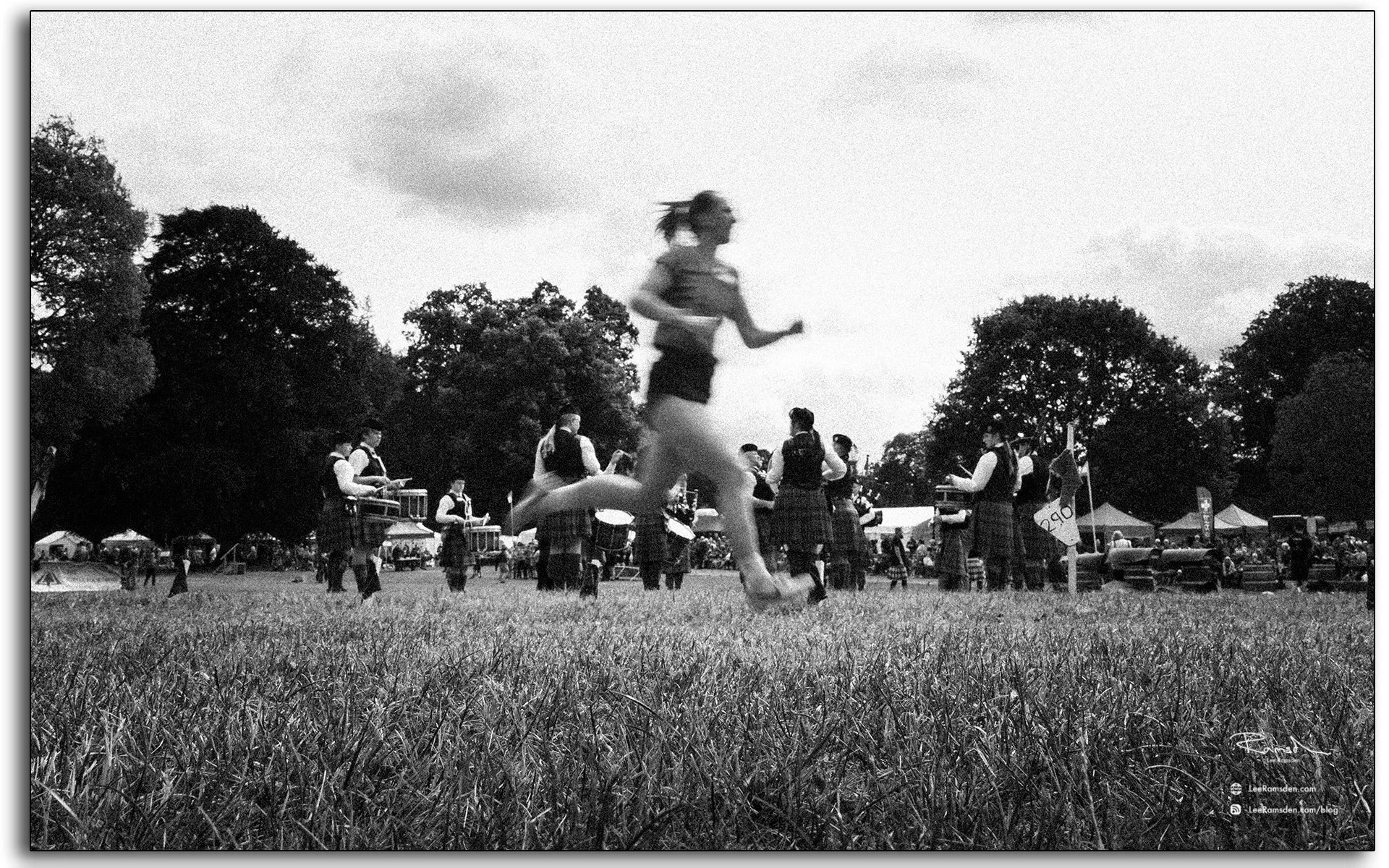
Glamis Castle. Highland games.

Glamis Castle. Highland Games.

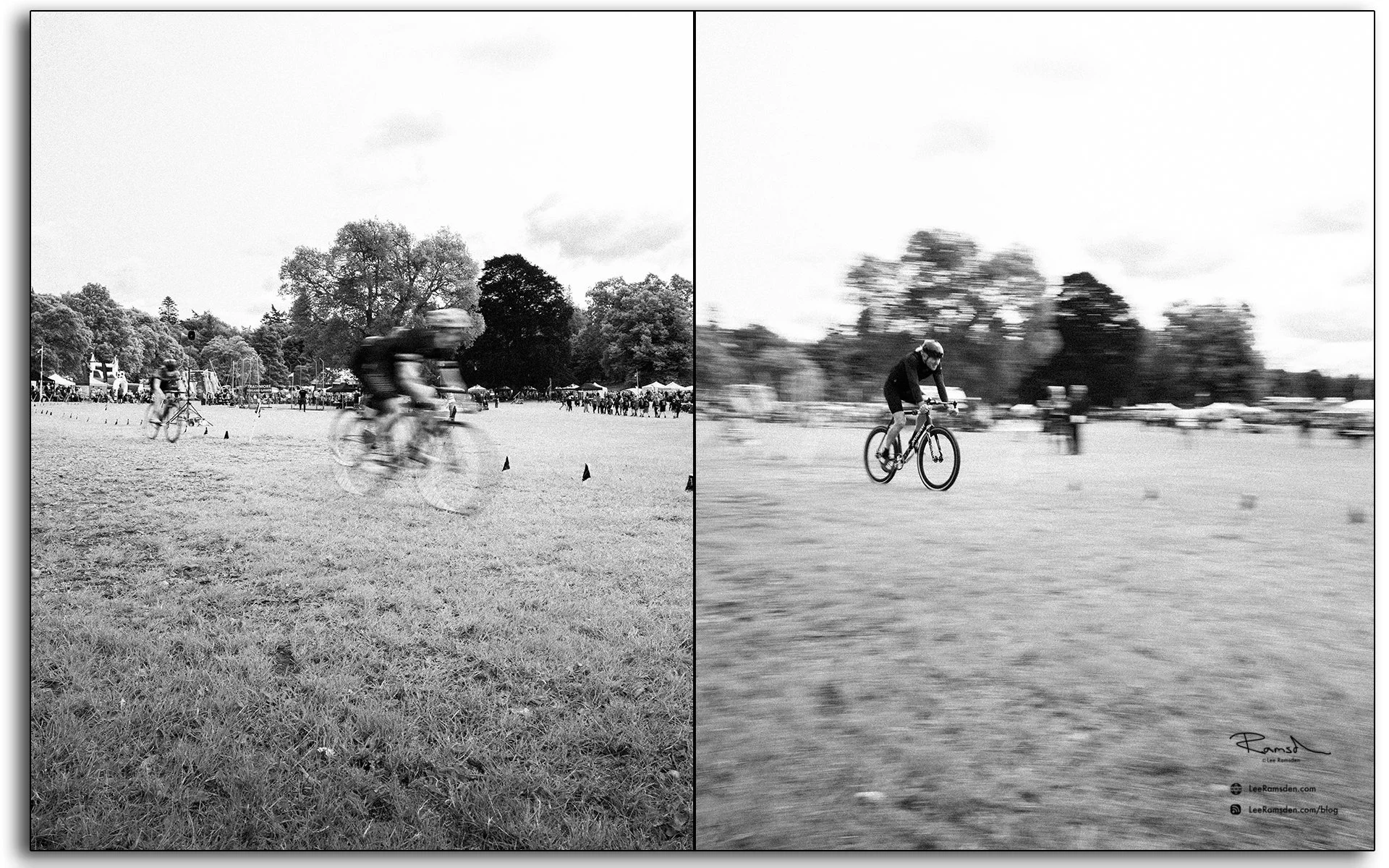
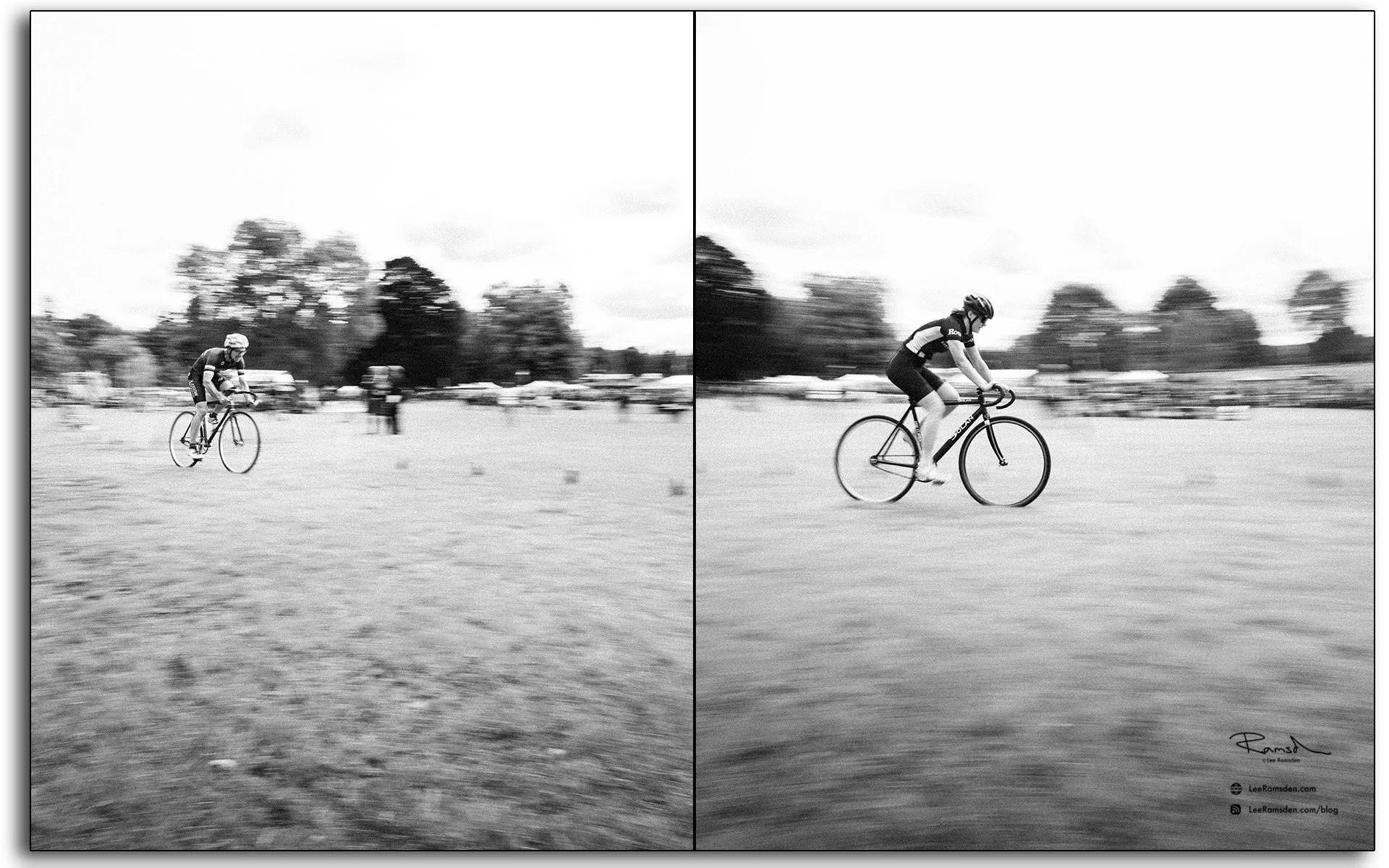
The Strathmore Highland Games are held annually in the grounds of Glamis Castle in Angus, and they're one of the more distinctive events in the Scottish calendar. The castle itself provides an extraordinary backdrop — a working historic estate with a history stretching back to the fourteenth century, most closely associated with the Lyon family and later the Bowes-Lyon family, including Queen Elizabeth The Queen Mother, who grew up there.

The games follow a traditional format — heavy athletics including the caber toss and hammer throw, pipe bands, dancing, and the kind of food and atmosphere that makes it worth the journey. These images, shot in black and white, focus on the people, the movement, and the setting rather than the spectacle.

Angus is well placed for this kind of event — Glamis sits just a few miles from Forfar, and the wider Strathmore valley has a long connection to Highland culture and rural Scots tradition. If you're in the area in summer, the games are worth adding to the itinerary.

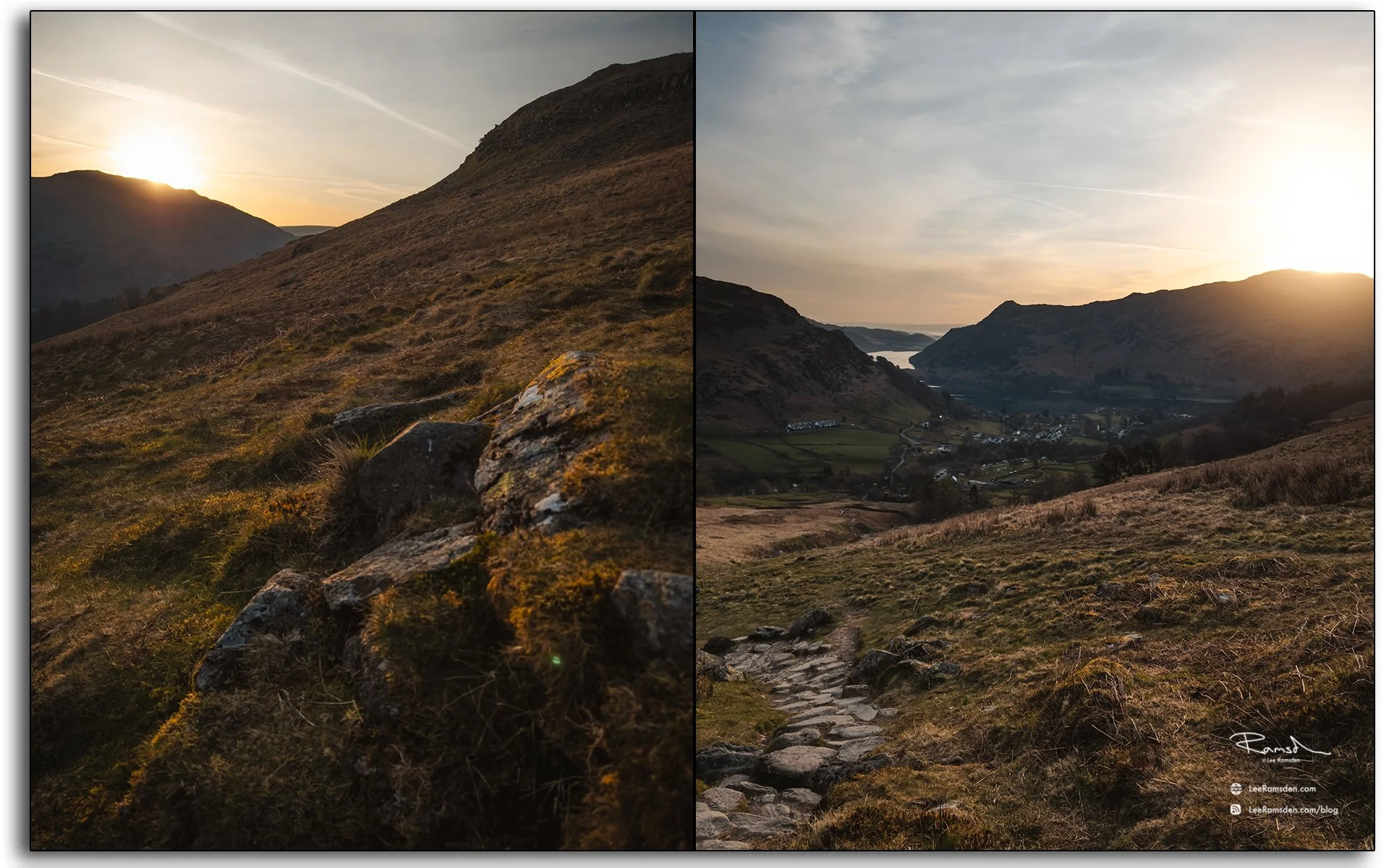
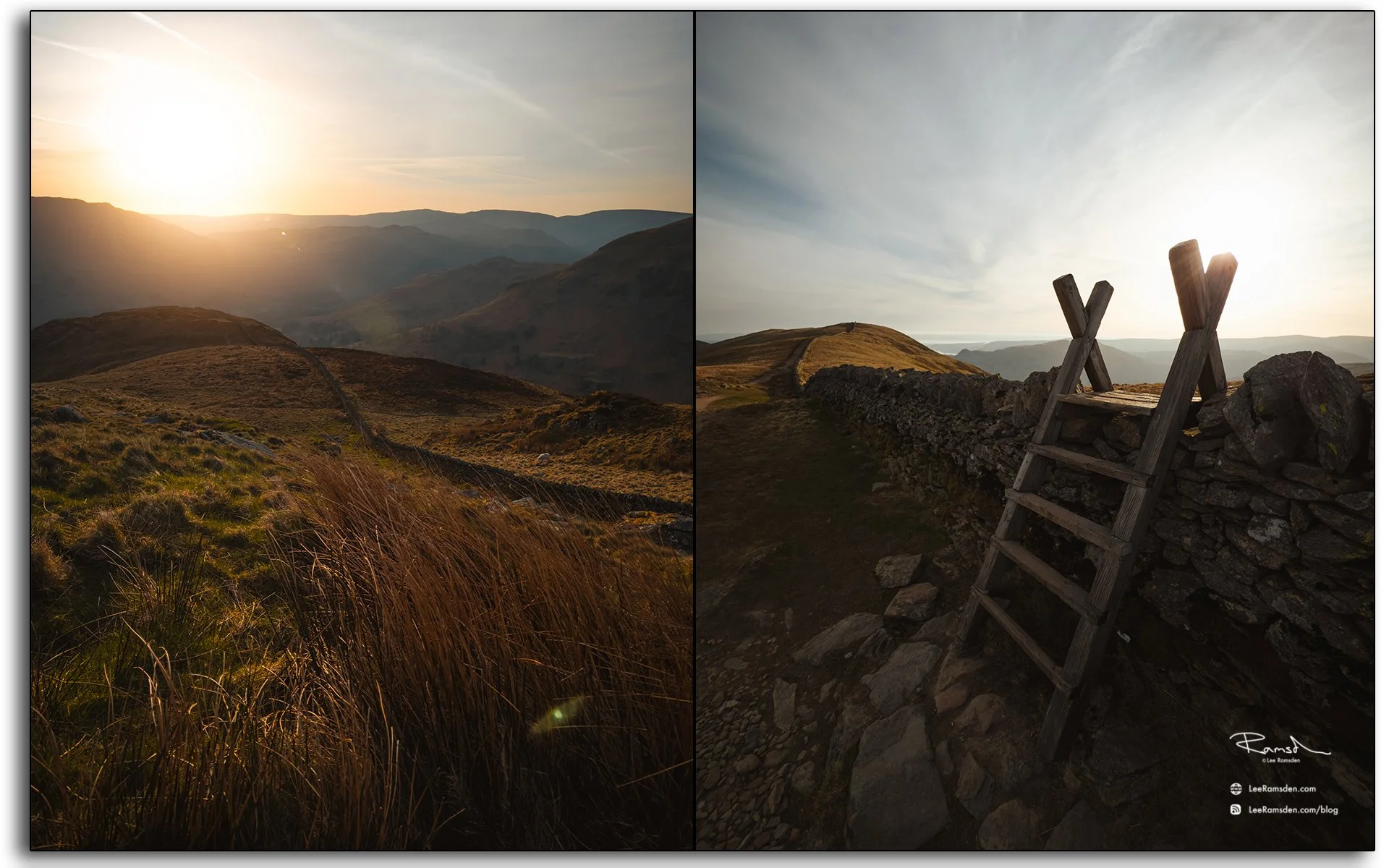
Helvellyn, Lake District – Solo Hike Photography

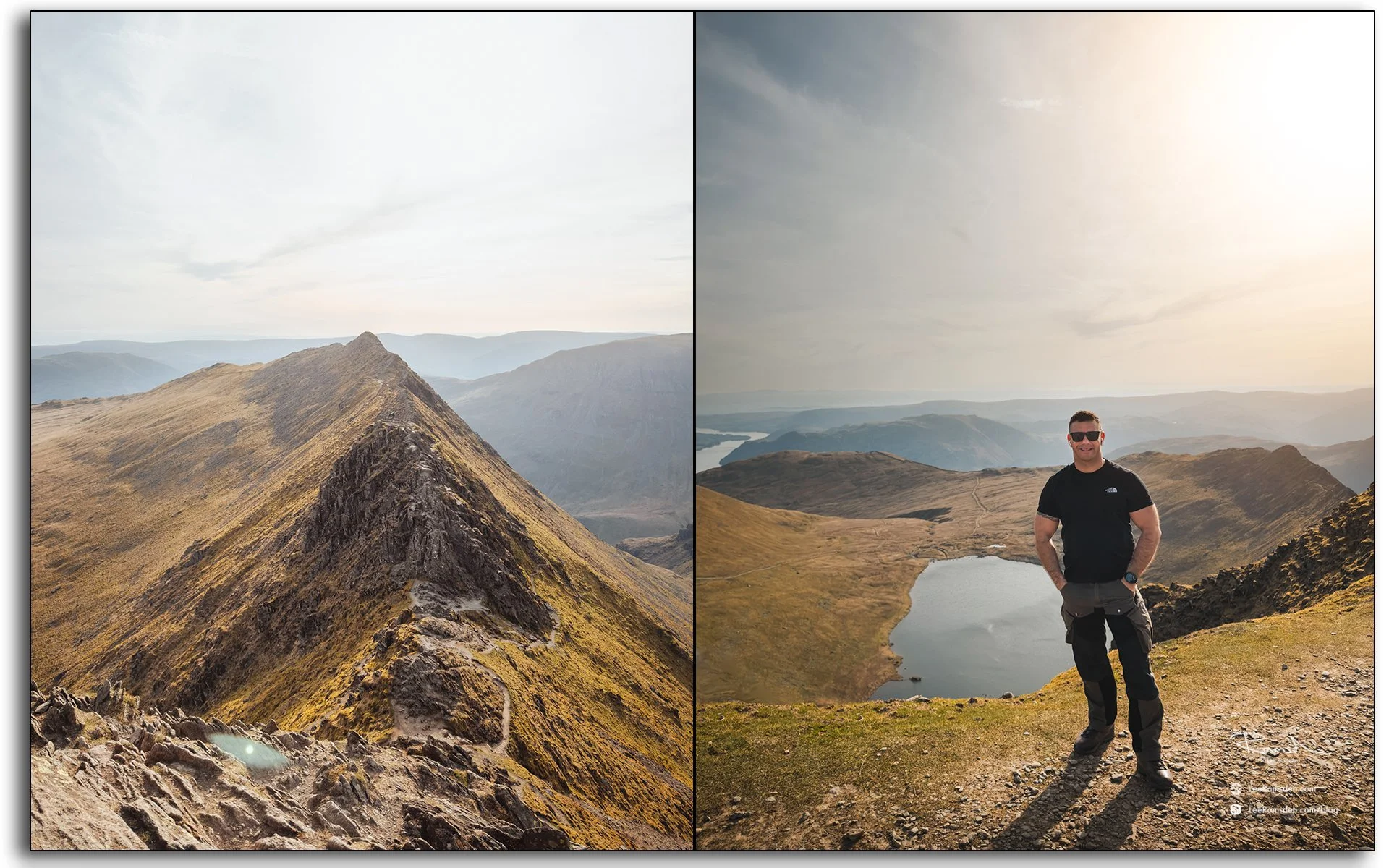
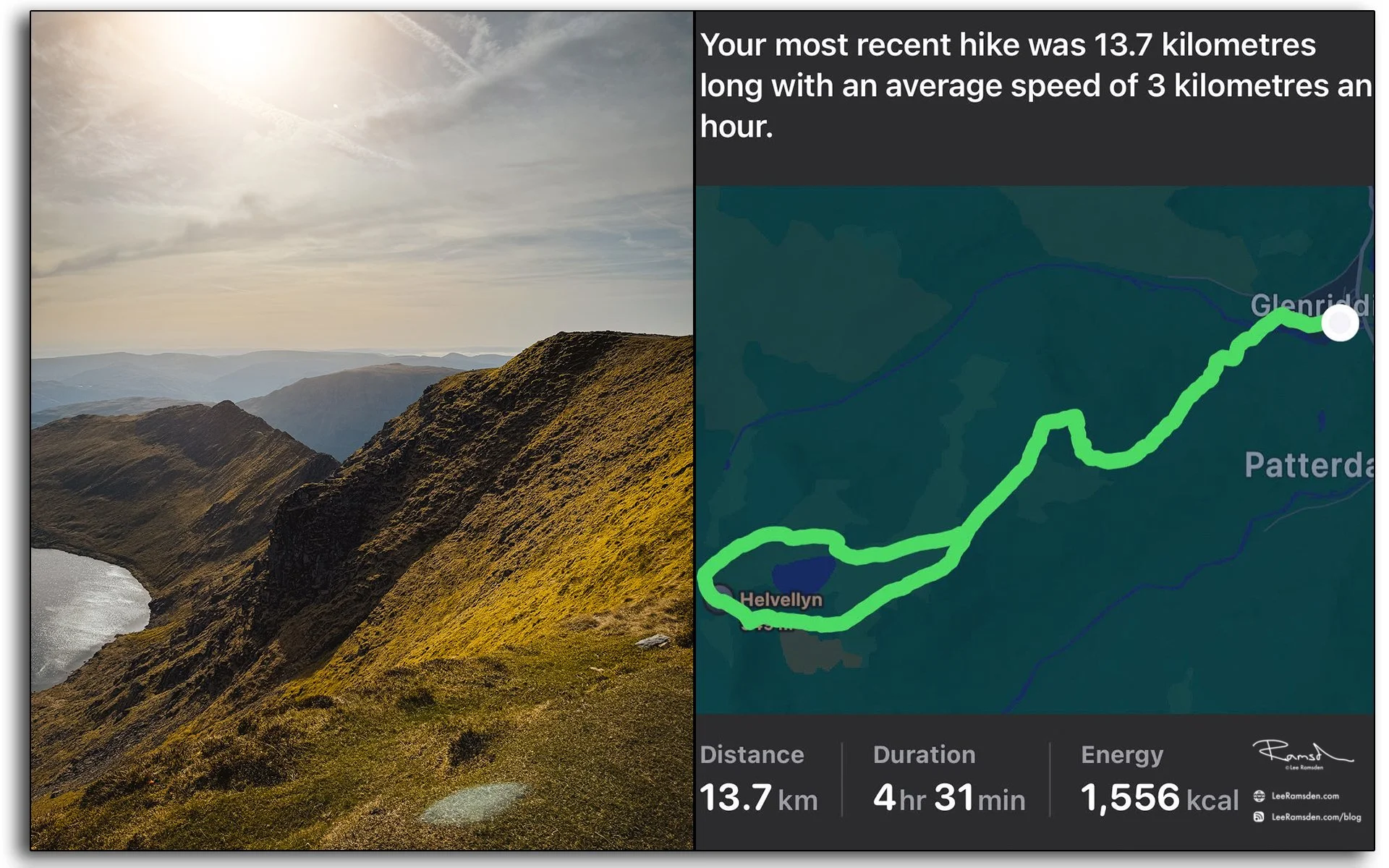
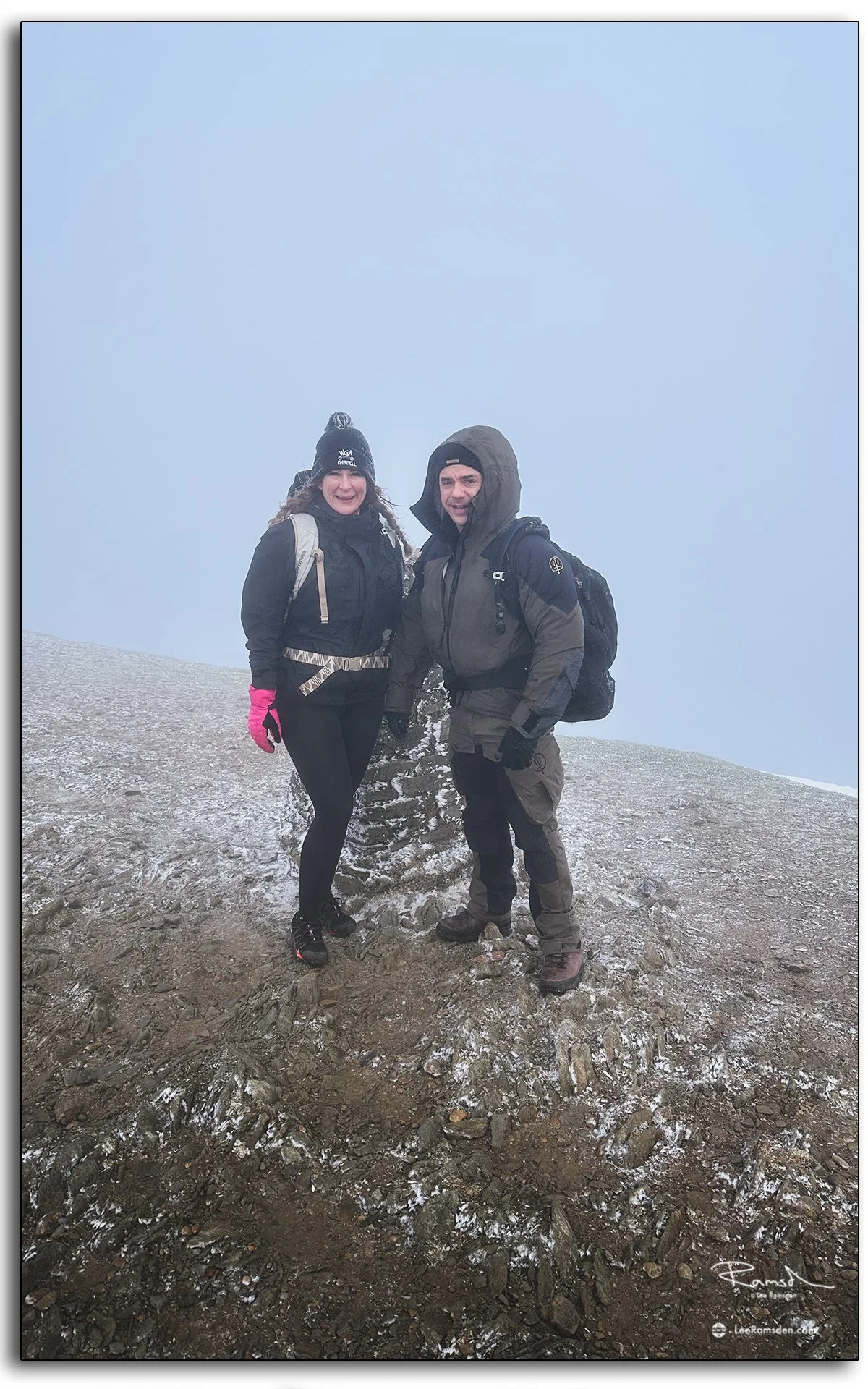
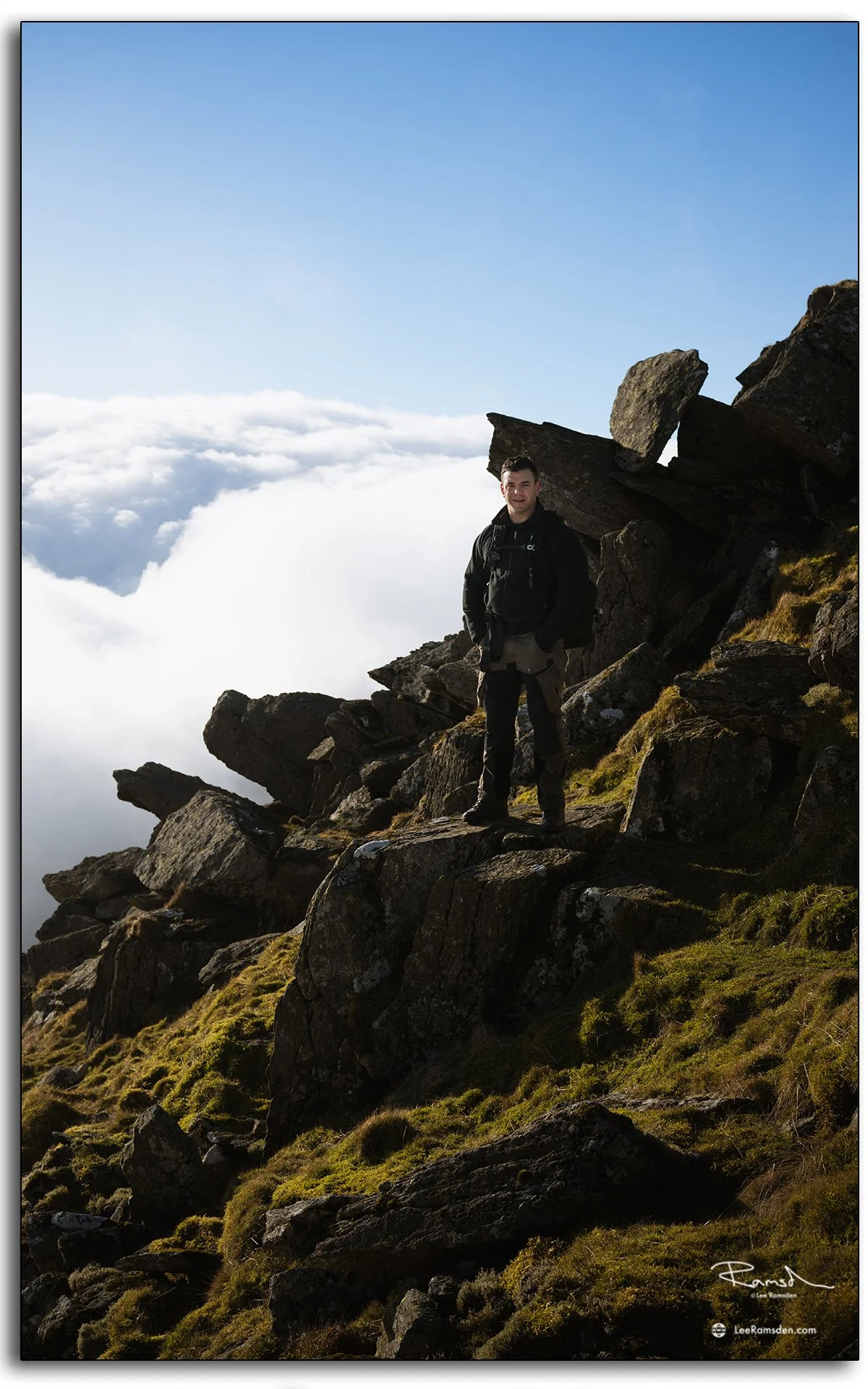
The Lake District is full of routes that test both stamina and focus, and Helvellyn is one of the best known. This solo hike followed Striding Edge, up to the trig point, across Swirral Edge, and back via Red Tarn.

iPhone photography from a solo hike on Helvellyn, Lake District. Images capture Striding Edge, Swirral Edge, and the surrounding fells in Cumbria.

Taken on iPhone, these images record the sharp ridges, steady climb, and open views across the fells. More than a walk, the route doubles as a physical test and training exercise.

I was happy with 4.5hrs.

Hill walking remains a steady part of my work and training. These photographs add to a wider collection capturing the landscapes of the Lake District.

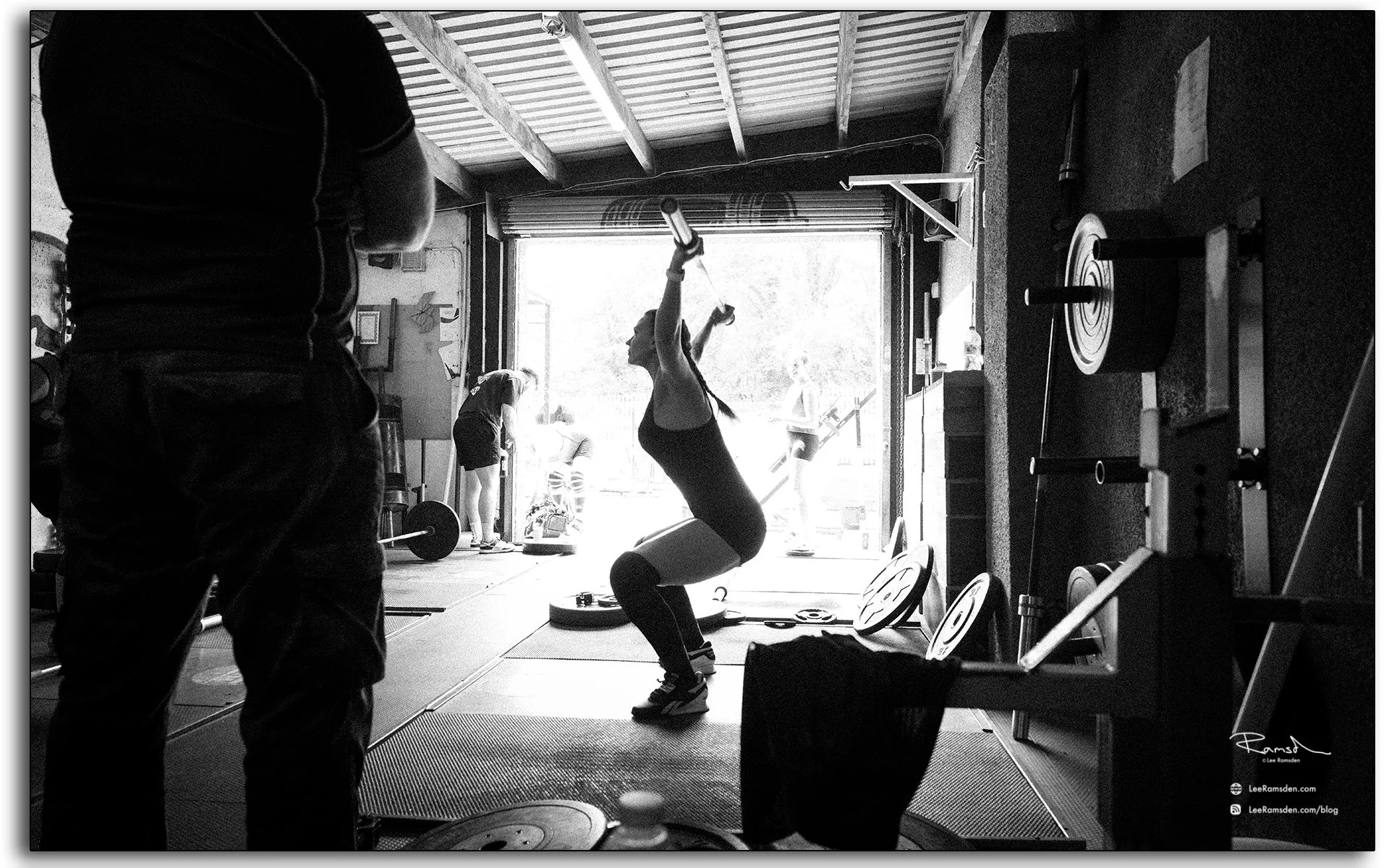
Black and White Gym Photography – Weightlifting Event in Arbroath

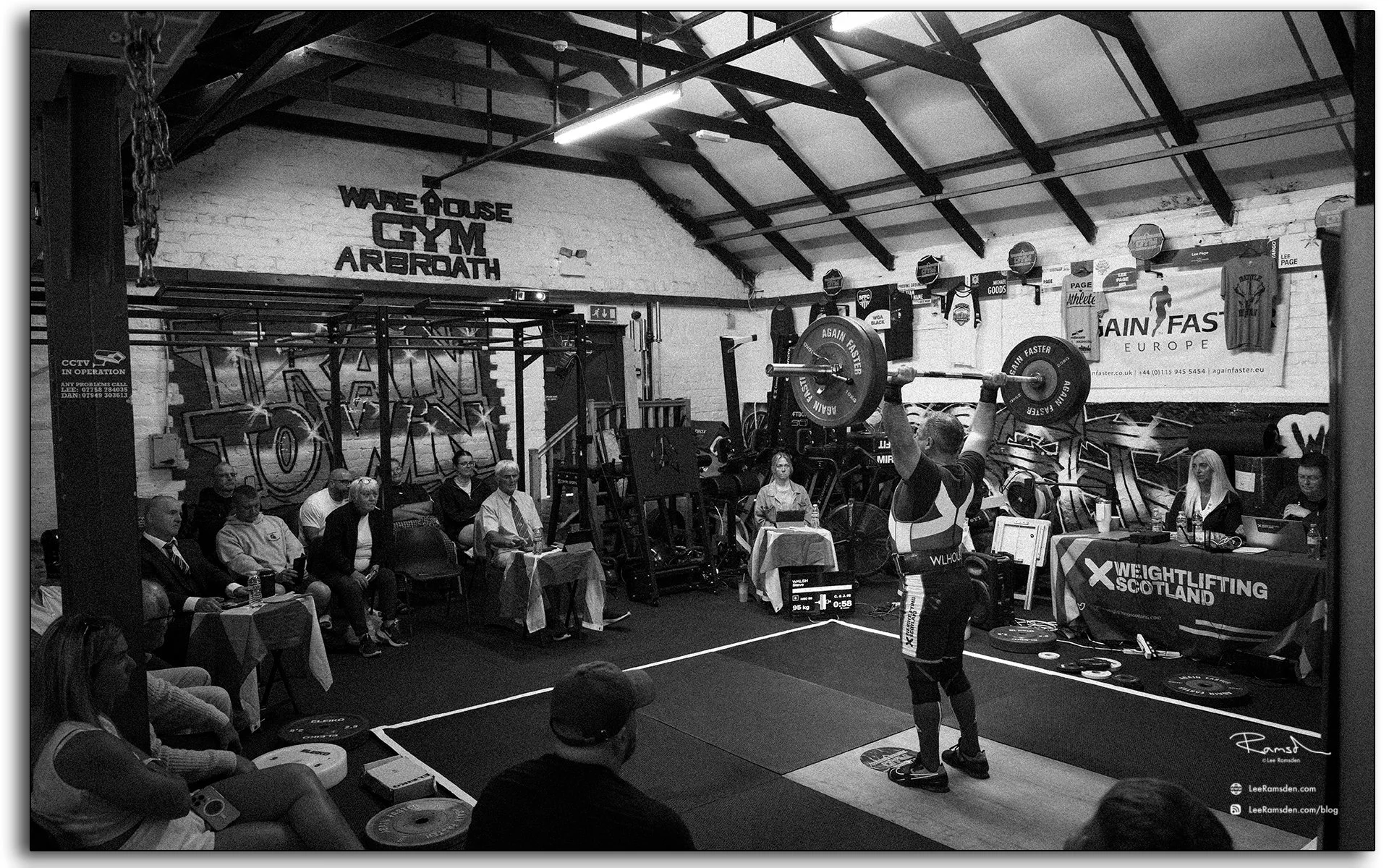
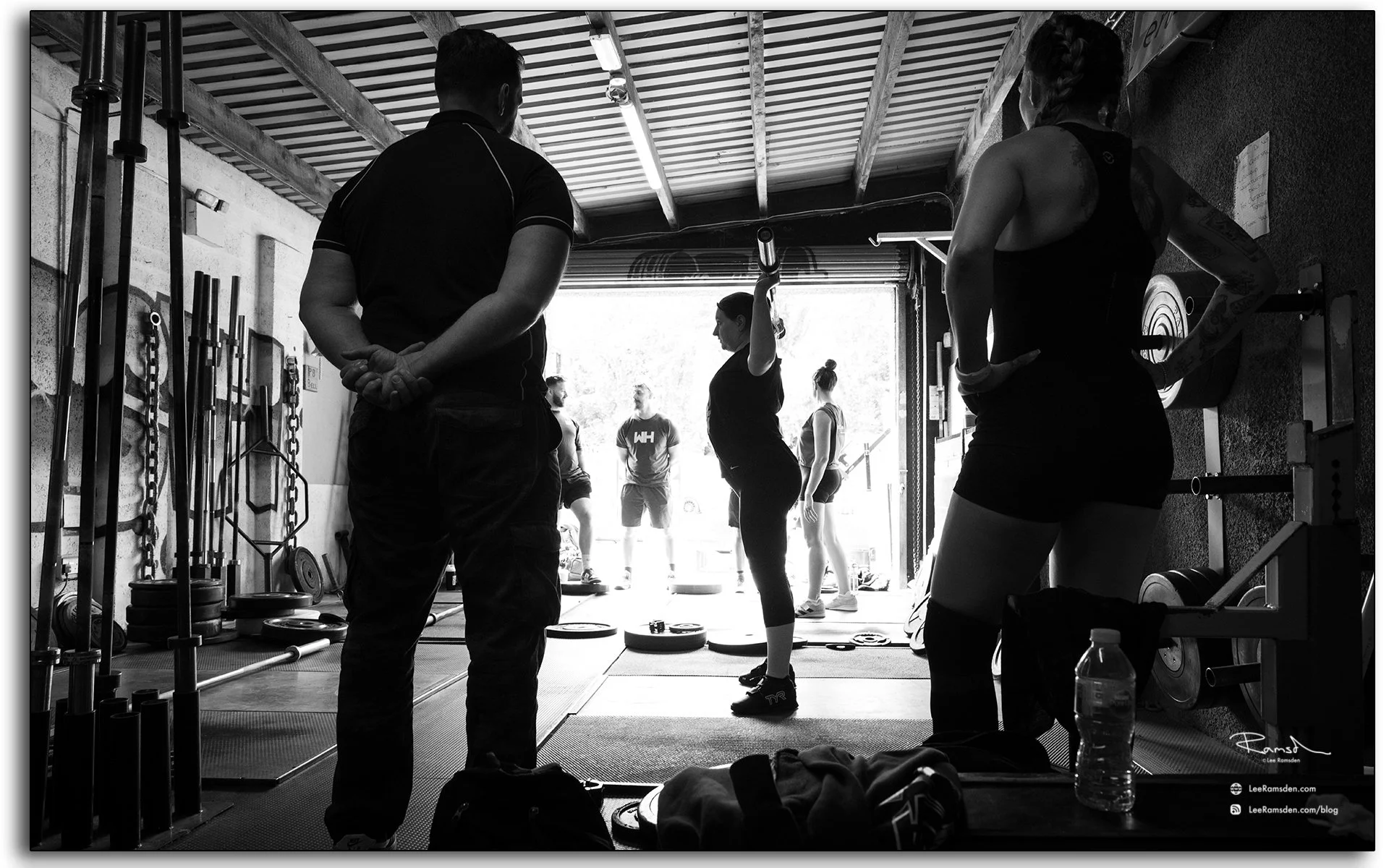
Black and white photograph of a weightlifting competition in Arbroath, Scotland, showing athletes training and competing.

At Warehouse Gym in Arbroath, a weightlifting event provided a chance to capture strength and focus in a stripped-back style. Without colour, the story shifts to contrast, shape, and movement.

The black and white approach highlights athletes in training and competition. Sharp contrasts draw out detail in posture and expression, showing the raw intensity of the sport.

This shoot extends my portfolio of event photography in Scotland, using a simple approach that keeps attention on people and performance.

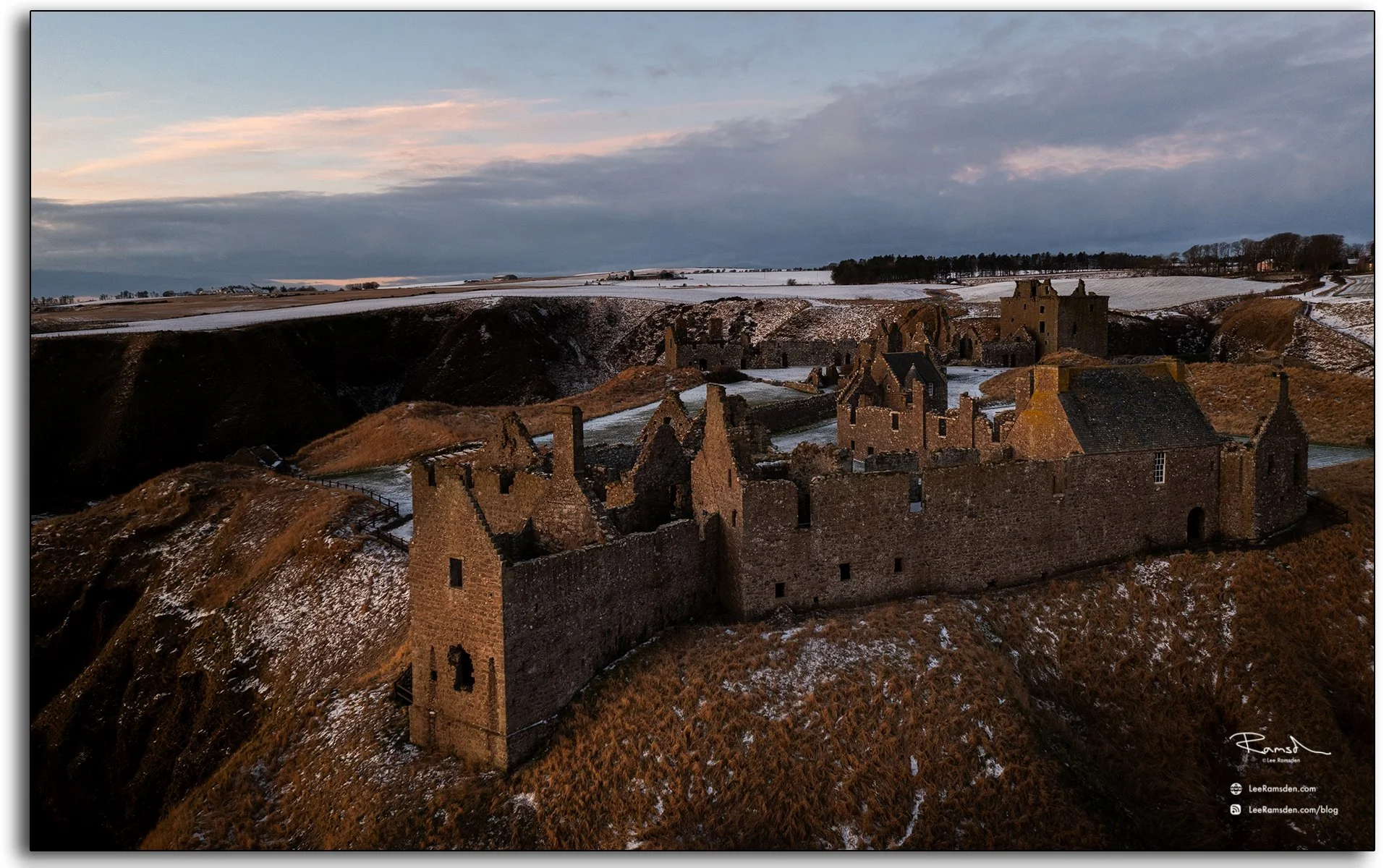
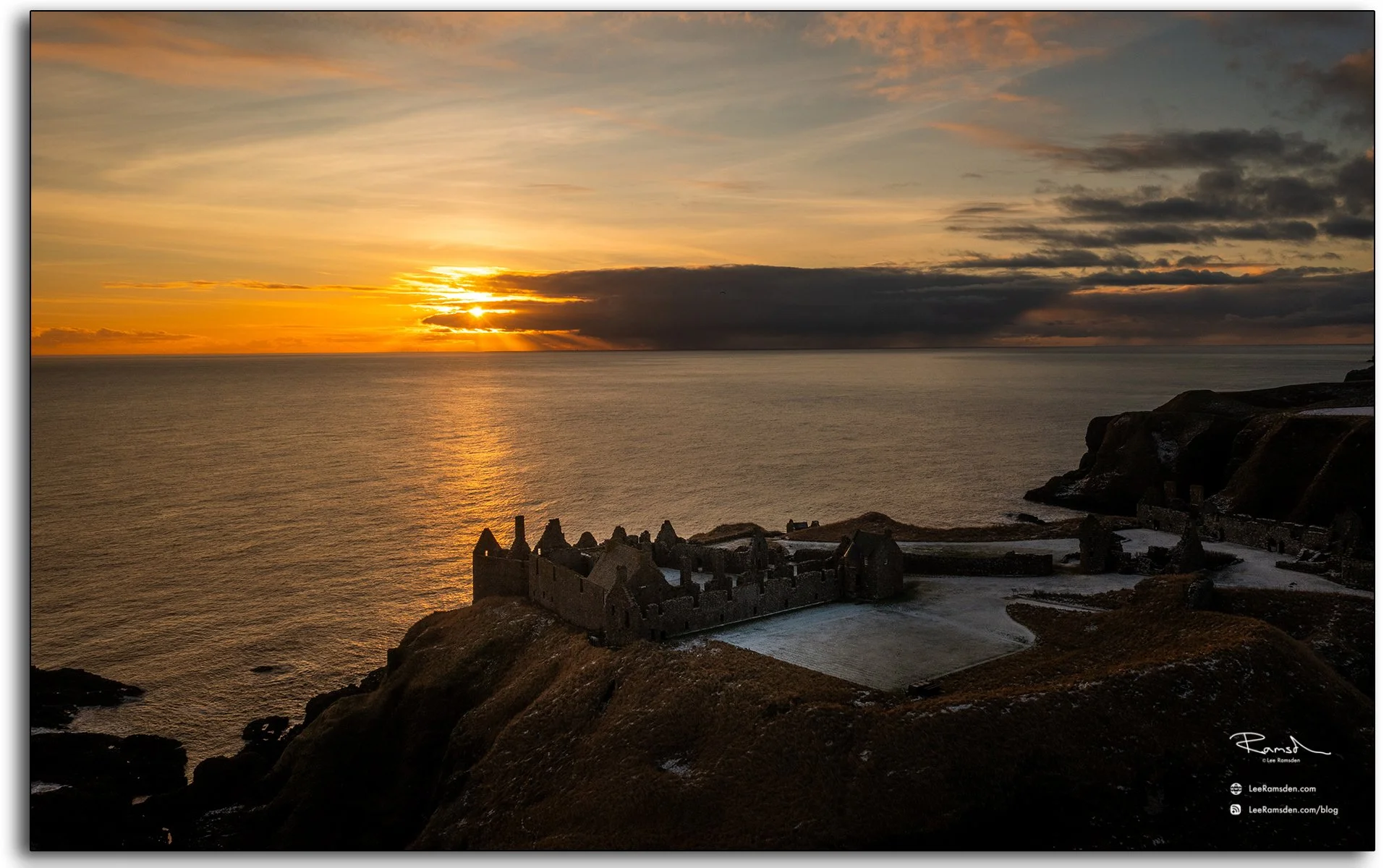
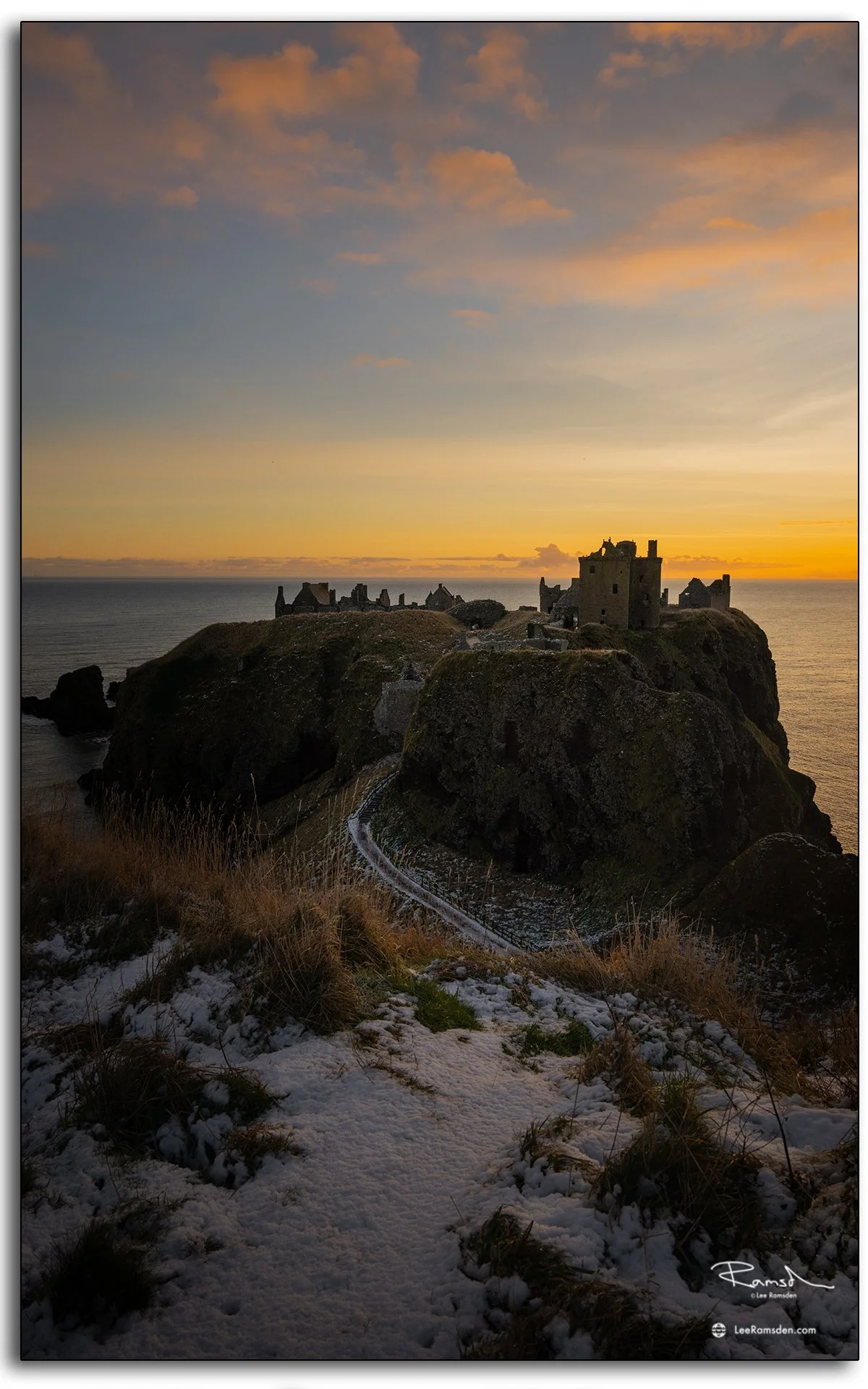
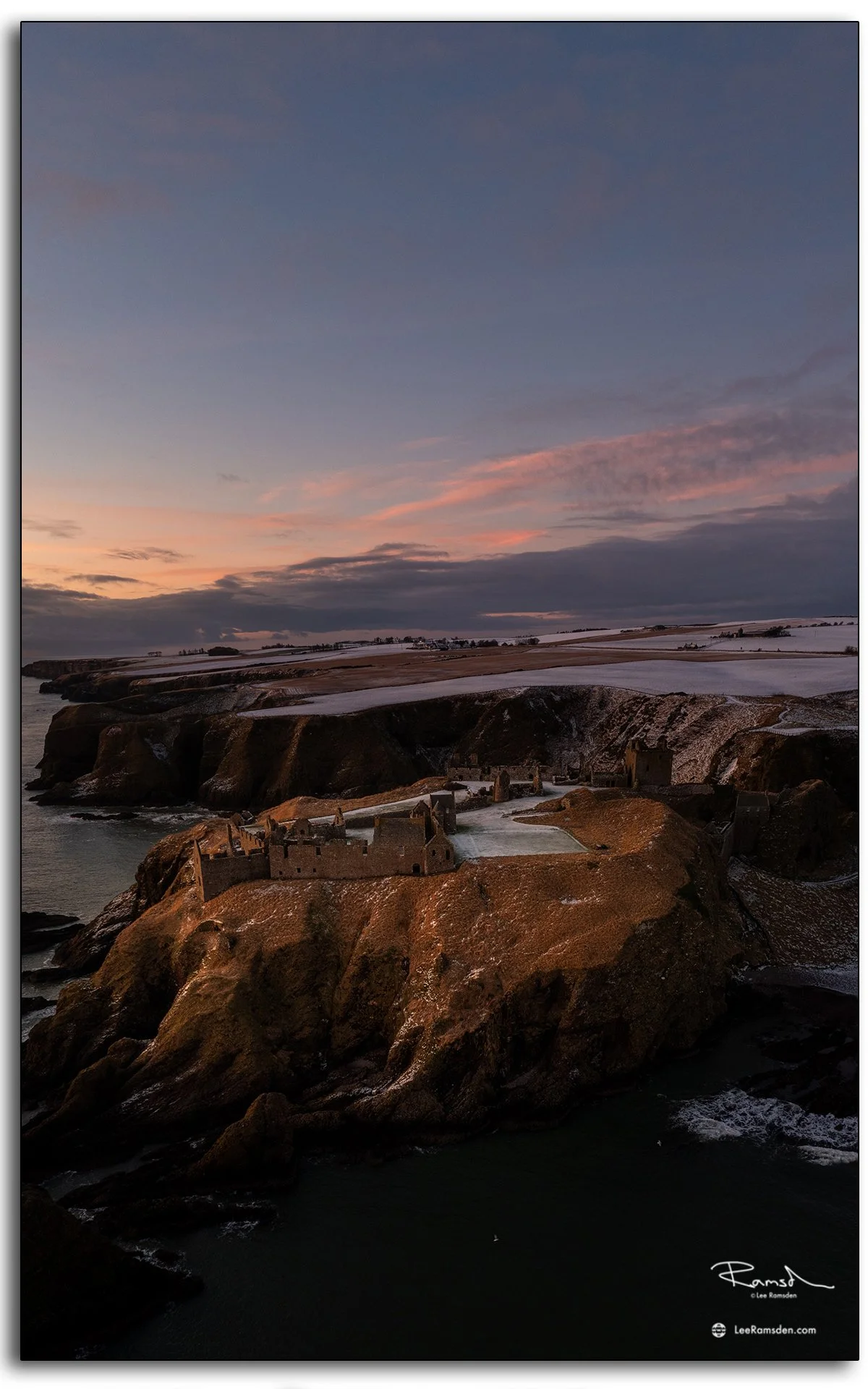
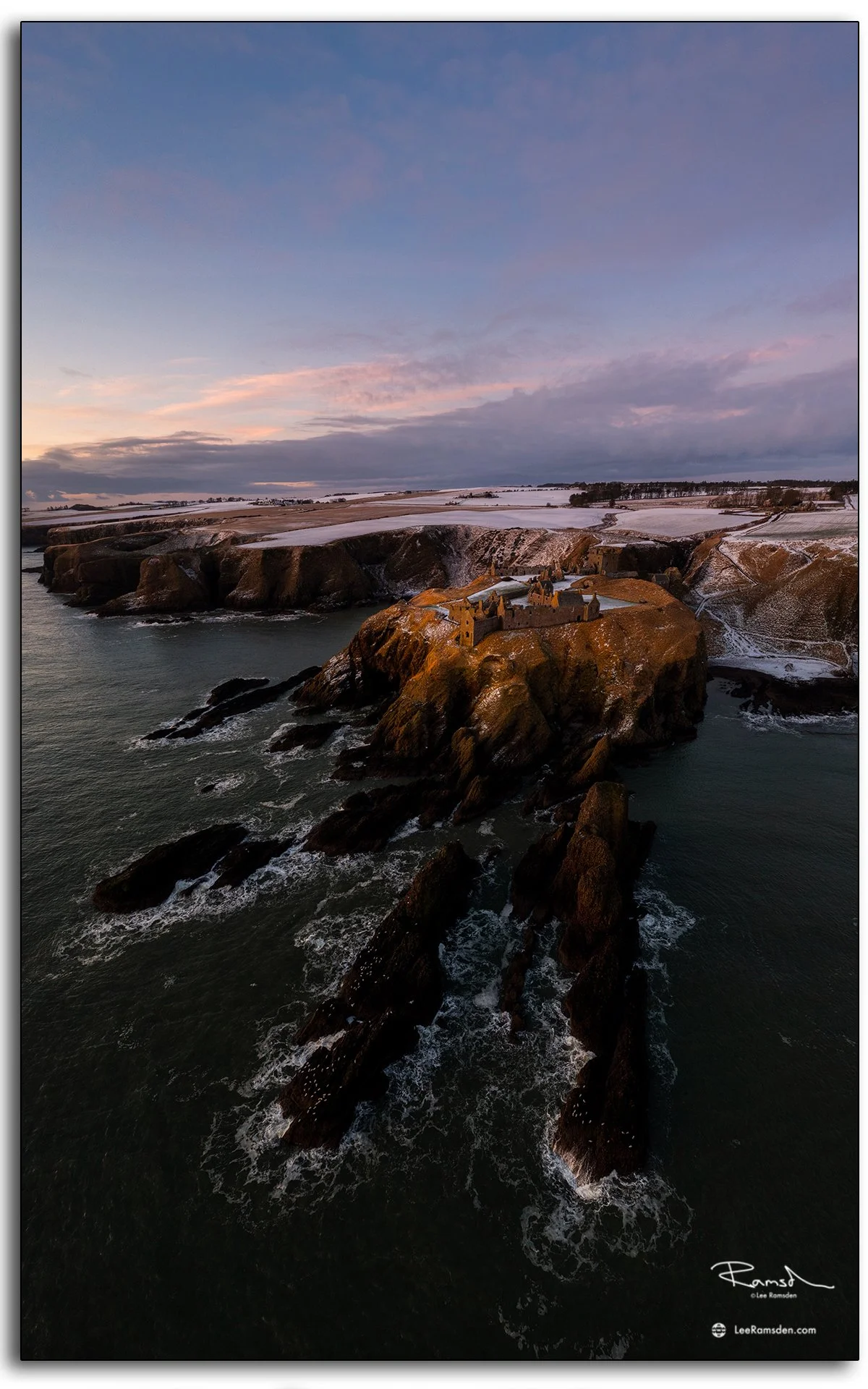
Dunnottar Castle Sunrise – Drone Photography in Stonehaven, Scotland

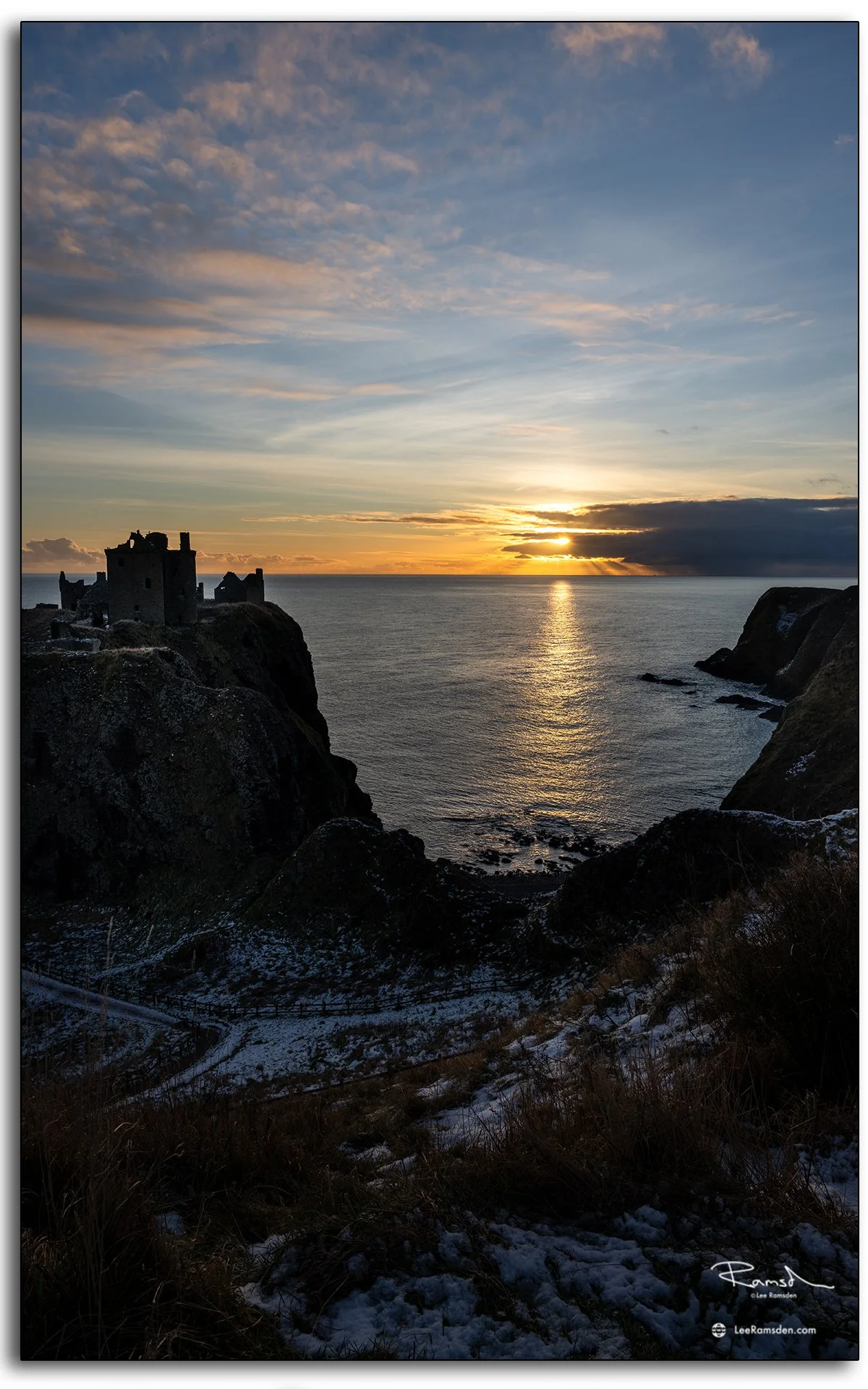
Drone photograph of Dunnottar Castle at sunrise in Stonehaven, Scotland, showing the ruins on cliffs above the North Sea.

Few locations on Scotland’s east coast carry as much atmosphere as Dunnottar Castle. Perched high above the North Sea, the ruins dominate the headland and remain one of the country’s most iconic coastal landmarks.

Captured by drone at sunrise, the first light revealed texture in the stonework and depth across the cliffs. The dramatic shadows emphasise both the scale of the castle and the rugged coastline that surrounds it.

The surviving buildings are largely from the 15th and 16th centuries, but the site is believed to have been fortified in the Early Middle Ages.

Dunnottar is best known as the place where the Honours of Scotland, the Scottish crown jewels, were hidden from Oliver Cromwell's invading army in the 17th century.

This work adds to my wider series on Scotland’s coastal landmarks, using drone photography to document places where history and landscape meet.

Rattray Head Lighthouse at Sunrise – Coastal Photography in Aberdeenshire

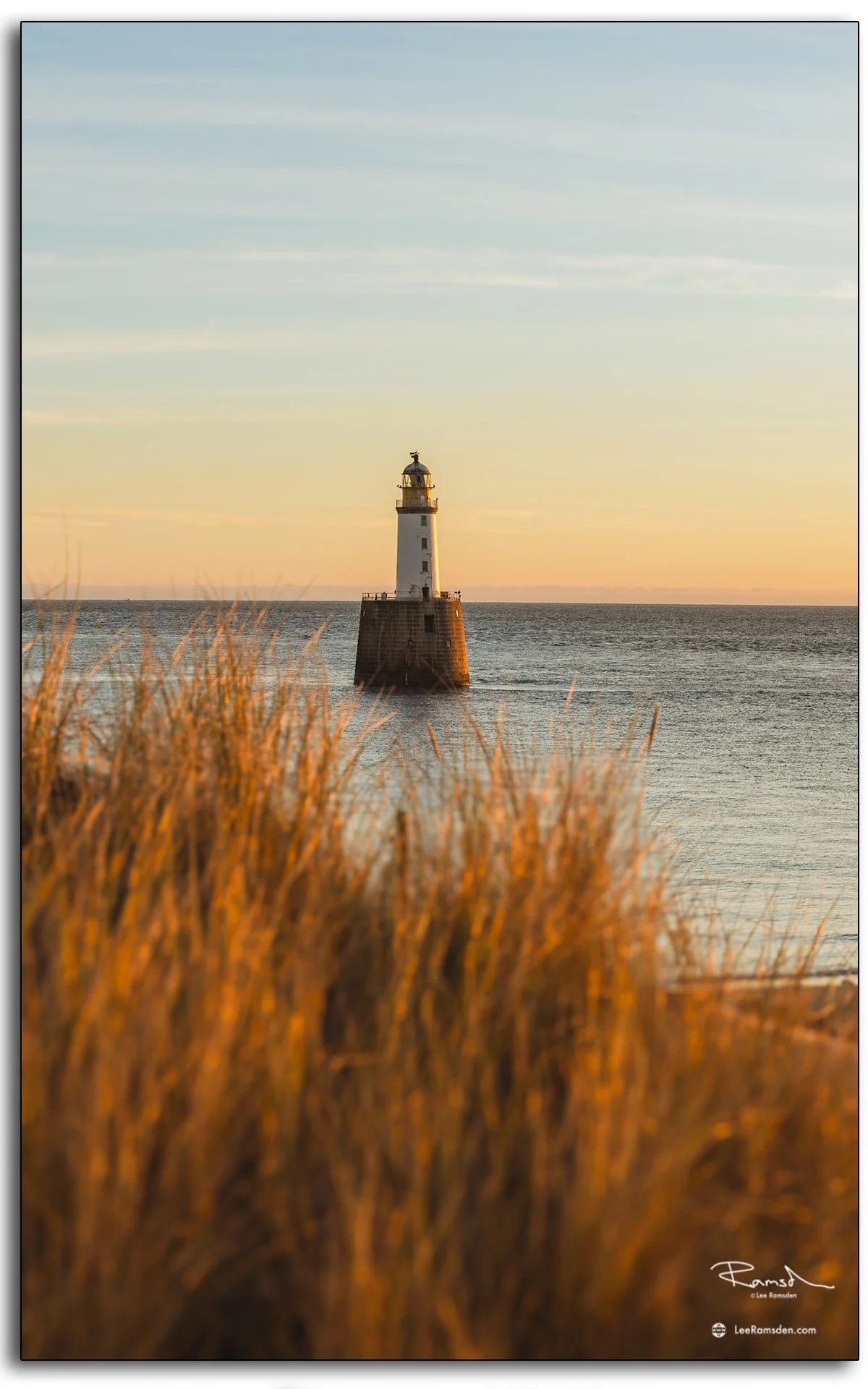
photograph of Rattray Head Lighthouse at sunrise, captured from the Aberdeenshire coast of Scotland.

Rattray Head Lighthouse sits on a low promontory on the Buchan coast of Aberdeenshire, standing in open water just offshore. Built in 1895 and reaching 120 feet in height, it has guided vessels navigating the treacherous sands around Rattray Head for over 130 years. The area around the head has a long history of shipwrecks, which drove the original decision to build the lighthouse.

These photographs were taken at sunrise, when the first light catches the tower and the surrounding sea is at its calmest. The conditions allowed for clear reflections and strong contrast between the white stonework and the water around the base.

Getting to the lighthouse on foot involves crossing tidal sands, so timing matters — and the reward is a perspective that most visitors to the Aberdeenshire coast never see. The lighthouse is now automated and managed by the Northern Lighthouse Board.

For more coastal and lighthouse photography from Scotland, visit the Places gallery.

St Mary’s Chapel, Rattray – Historic Church Photography in Aberdeenshire

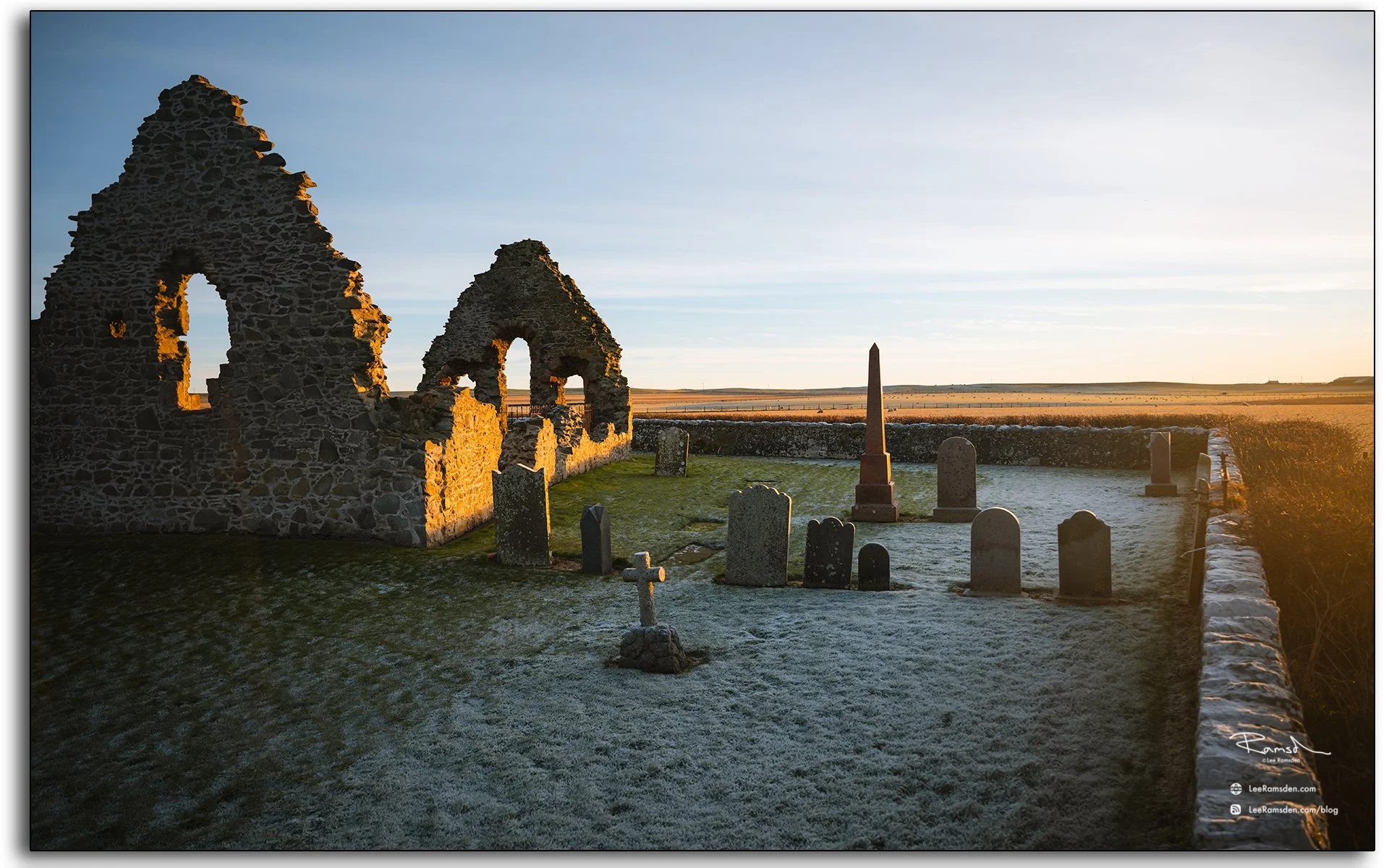
photograph of St Mary’s Chapel in Rattray, Aberdeenshire, Scotland, believed to date back to the early 13th century.

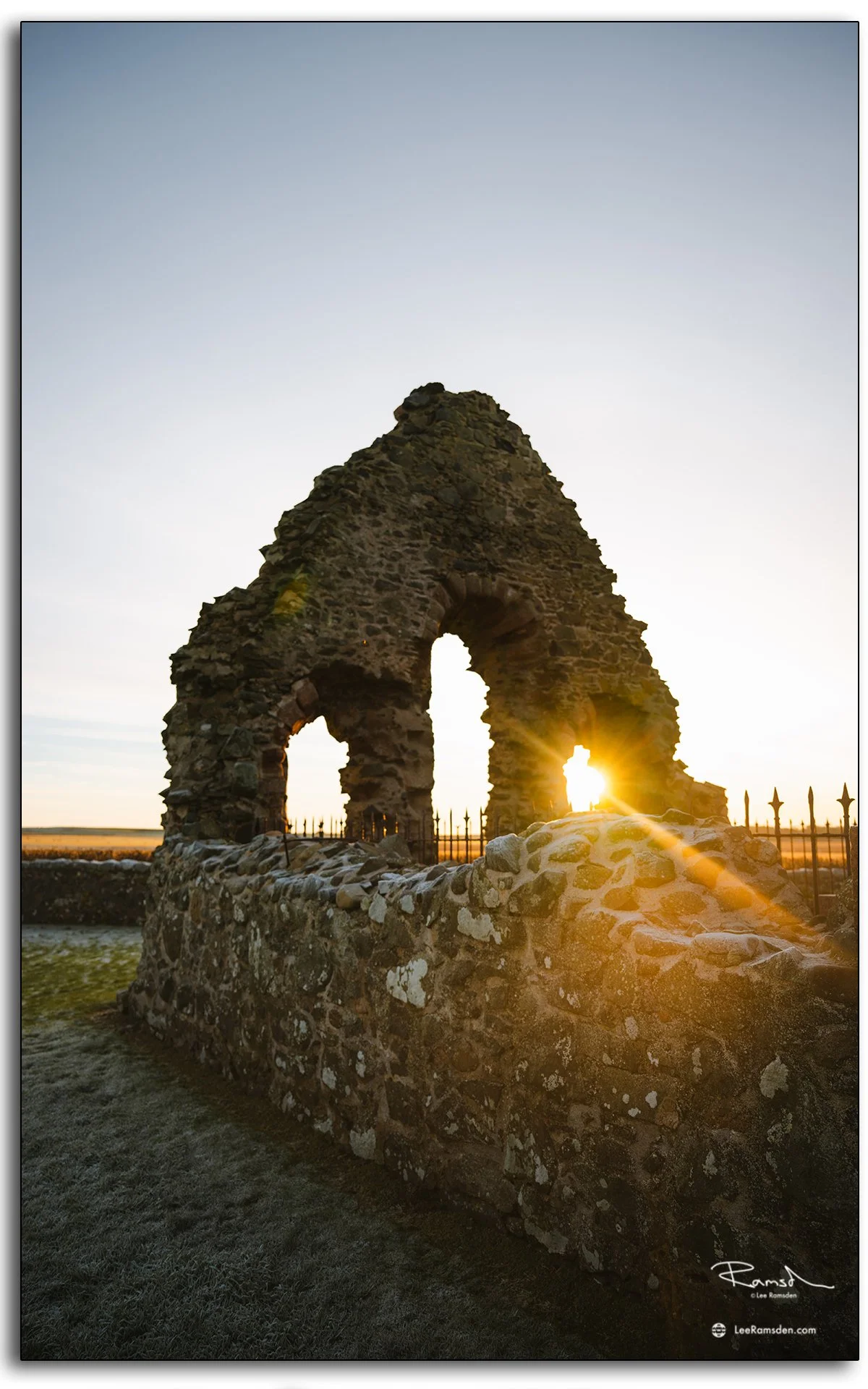
Tucked away in the Buchan countryside near Rattray, St Mary's Chapel is thought to date back to around 1214, making it one of the older surviving ecclesiastical ruins in the north-east of Scotland. Its weathered stone walls are a reminder of a time when this part of Aberdeenshire was a more substantial centre of local life.

These photographs focus on the texture of the stonework and the way the structure sits in the landscape — collapsed in places, but still carrying the proportions and form of a medieval chapel. The site has an unrestored quality to it that sets it apart from more managed heritage locations.

This visit forms part of an ongoing project documenting historic churches and chapels across Scotland, many of which sit quietly in the landscape with little formal recognition. For more church photography, see the Places gallery and the dedicated church posts in the blog.

Montrose Old and St Andrew’s Church – Drone Photography in Angus

Drone photograph of Montrose Old and St Andrew’s Church in Angus, Scotland, showing its tall spire above the town’s skyline.

The spire of Montrose Old and St Andrew's Church is one of the defining features of the Angus town's skyline. The current building dates from the late 18th century, with the distinctive steeple added in 1834. From street level it is striking; from the air the relationship between the church and the surrounding town becomes much clearer.

These drone photographs were taken to show the church in its wider urban setting — the way the spire anchors the High Street, the surrounding rooflines and the grid of the town below. The aerial perspective reveals the church's scale relative to the streets around it in a way that ground-level photography cannot.
Montrose itself has a long history as a trading port and market town, and the church reflects the civic ambition of a prosperous Angus community. It remains a working parish church and a significant local landmark.
This shoot is part of a continuing series on historic churches and town landmarks across Scotland

This work adds to my series on churches, using drone photography to show how historic buildings shape and define modern townscapes.

Helvellyn via Striding Edge – Winter Hike Photography in the Lake District

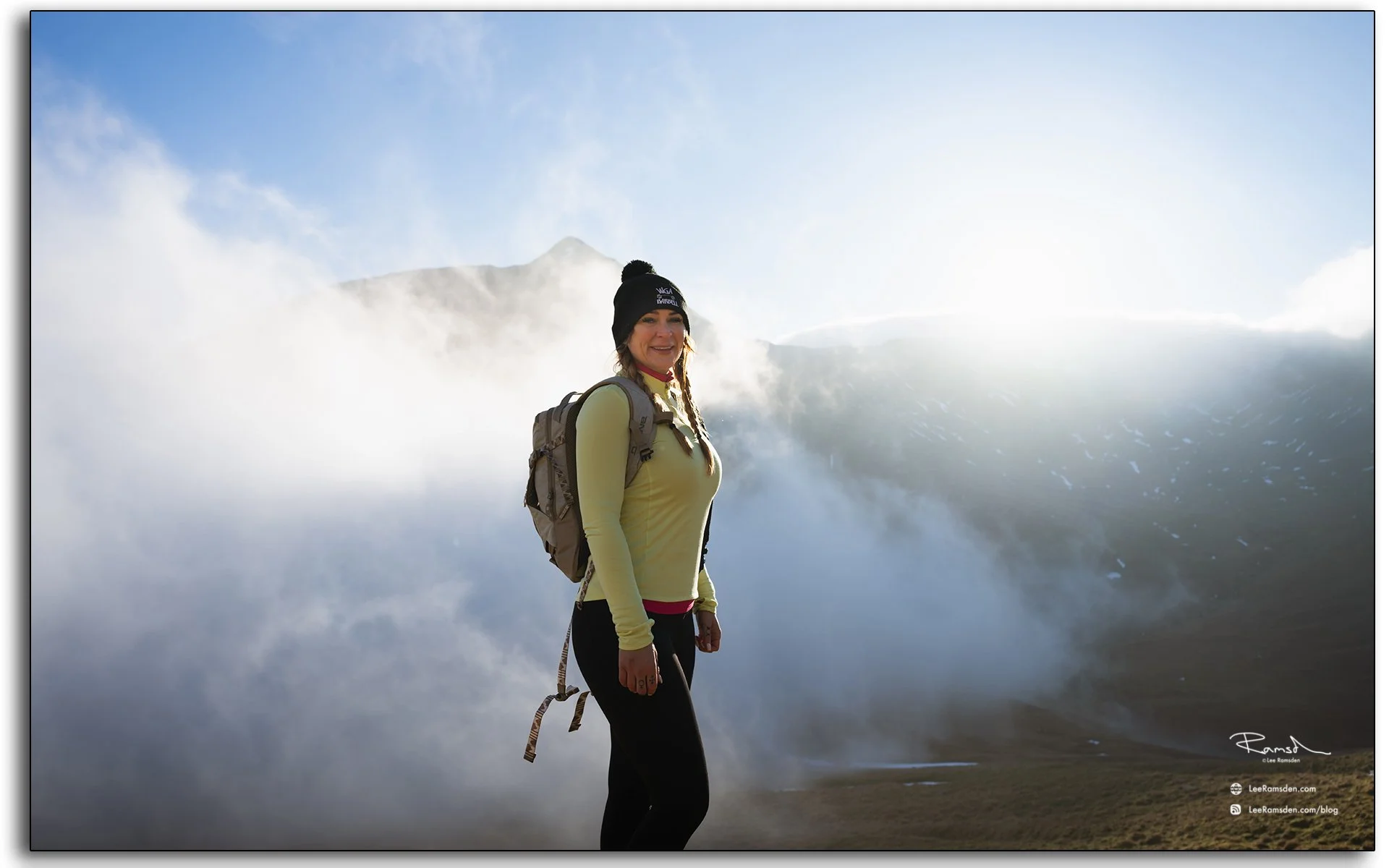
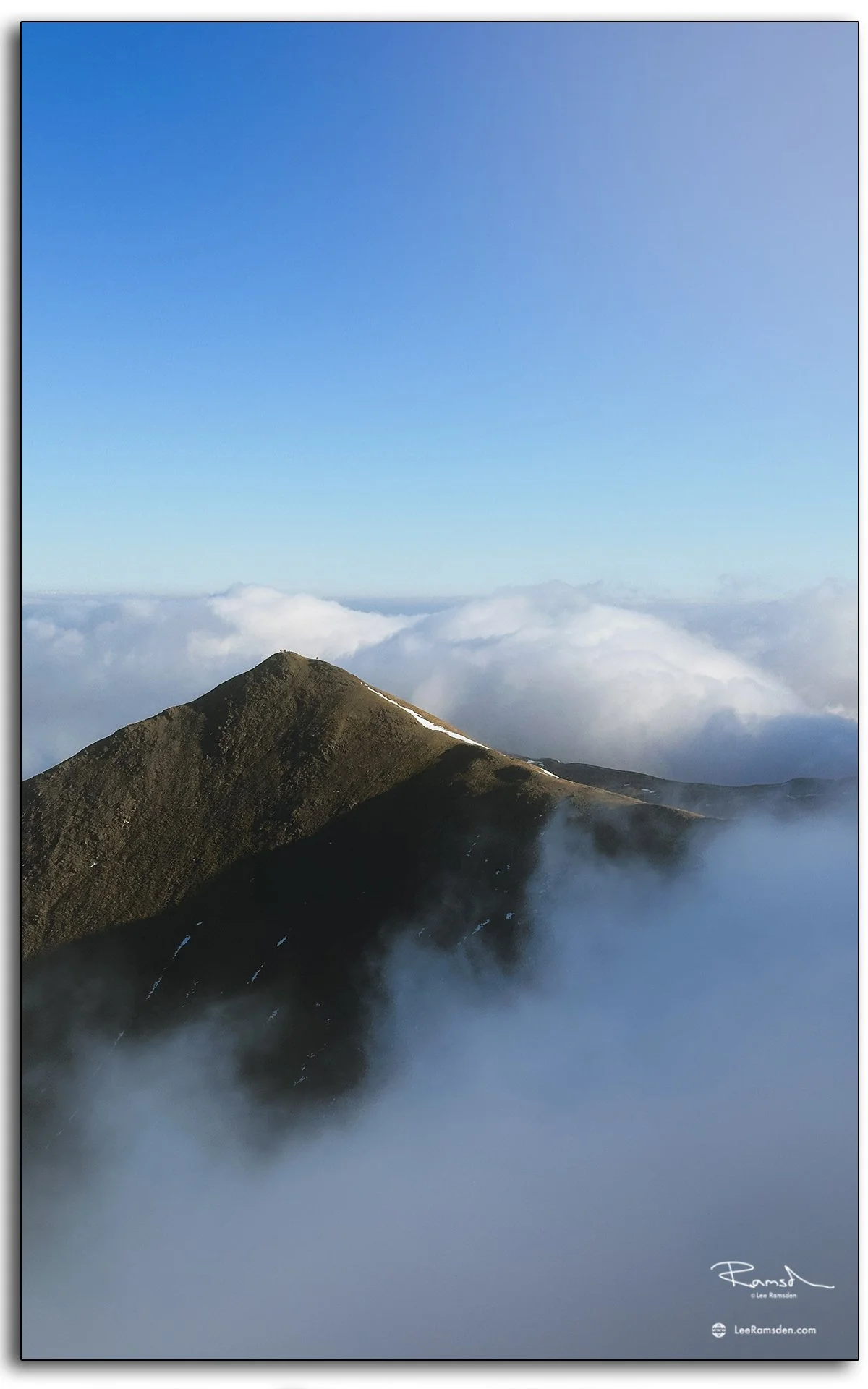
Winter hike photograph of Helvellyn and Striding Edge in the Lake District, showing snow and ice on the summit trig point.

Winter conditions can transform even familiar routes. On this hike, Striding Edge offered its usual exposure, but Helvellyn’s summit trig point was still iced over, changing the descent.

The route taken was

Glen Ridding car park,

up and over Striding edge.

The weather was nice on the route up, but unexpectedly Helvellyn's trig point was still very icey and snowy making the descent onto Swirrial edge dangerous without spikes so we walked Whiteside pass back to the car.

6 hours in total.

The photographs show both the sharp ridges and the snow-covered summit. Even with good weather on the climb, frozen ground demanded a change of route on the way down.

Hill walking isn’t just about the views — it’s about adjusting to conditions. These images document the challenges and rewards of winter routes in the Lake District.

Scurdie Ness Lighthouse – Coastal Photography in Montrose, Scotland

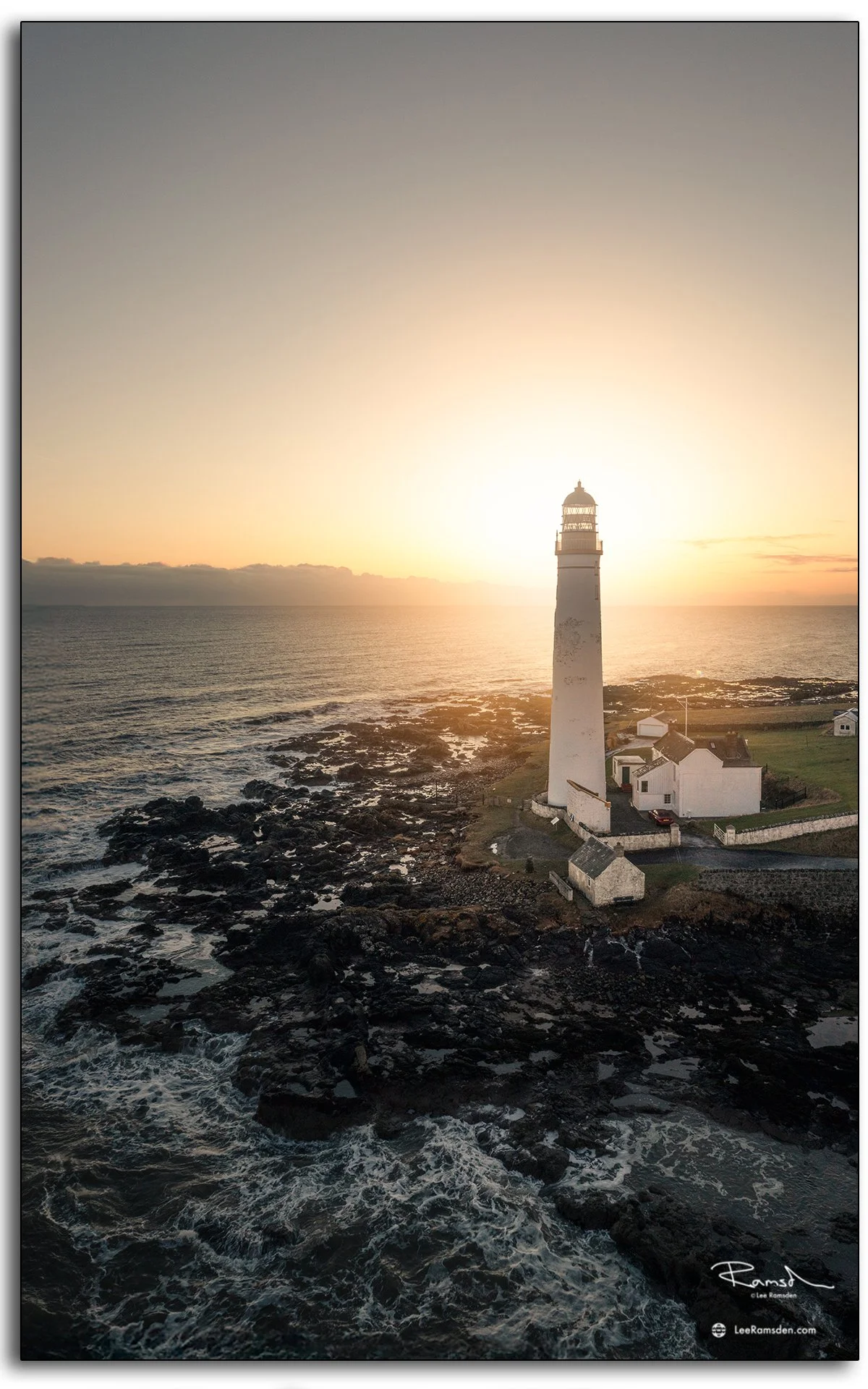
Drone photograph of Scurdie Ness Lighthouse on the Montrose coast, built in 1870 to prevent shipwrecks near the River South Esk.

Built in 1870 after numerous shipwrecks, Scurdie Ness Lighthouse stands at the mouth of the River South Esk, guiding vessels safely along the east coast of Scotland.

Photographed in freezing conditions, these images show the tower against clear skies, highlighting the engineering that still defines the Montrose shoreline today.

Scotland’s lighthouses remain some of the most practical yet visually striking coastal landmarks. This shoot adds to my ongoing series on maritime structures.

Blackpool Tower Sunrise – Coastal Photography in Lancashire

Blackpool Tower has been a landmark on the Lancashire coast since 1894. Photographed at sunrise, the tower rises above the quiet seafront before the town comes to life.

Sunrise photograph of Blackpool Tower and seafront promenade in Lancashire, England.

The images show both the tower itself and the open promenade below, with first light adding contrast and atmosphere.

This shoot continues my coastal series, recording familiar landmarks in changing light to highlight their place in the landscape.

Car Photography – Urban Automotive Study

Cars are as much a part of city life as the buildings and streets around them. This series focuses on the Audi S3 in an urban setting, using both colour and black and white to explore the relationship between the vehicle and its surroundings — reflection, surface texture and the contrast between machine and street.

The shoot was kept deliberately light and mobile, with equipment fitting into a single rucksack so the car could be moved between locations. That kind of constraint tends to produce more considered images — you work with what the location gives you rather than imposing a setup on it.

The S3 is a clean subject for this kind of work. The proportions are tight, the lines are direct, and the blacked-out details respond well to directional light. Both natural and mixed ambient light were used across the set.

Urban car photography in colour, showing reflections, movement, and vehicles in a city environment.

If you have a high-end or collectable car and are looking for professional photography, get in touch via the contact page or on Instagram at @lee_ramsden.

St Annes Beach Sunset Walk – Coastal Photography in Lancashire

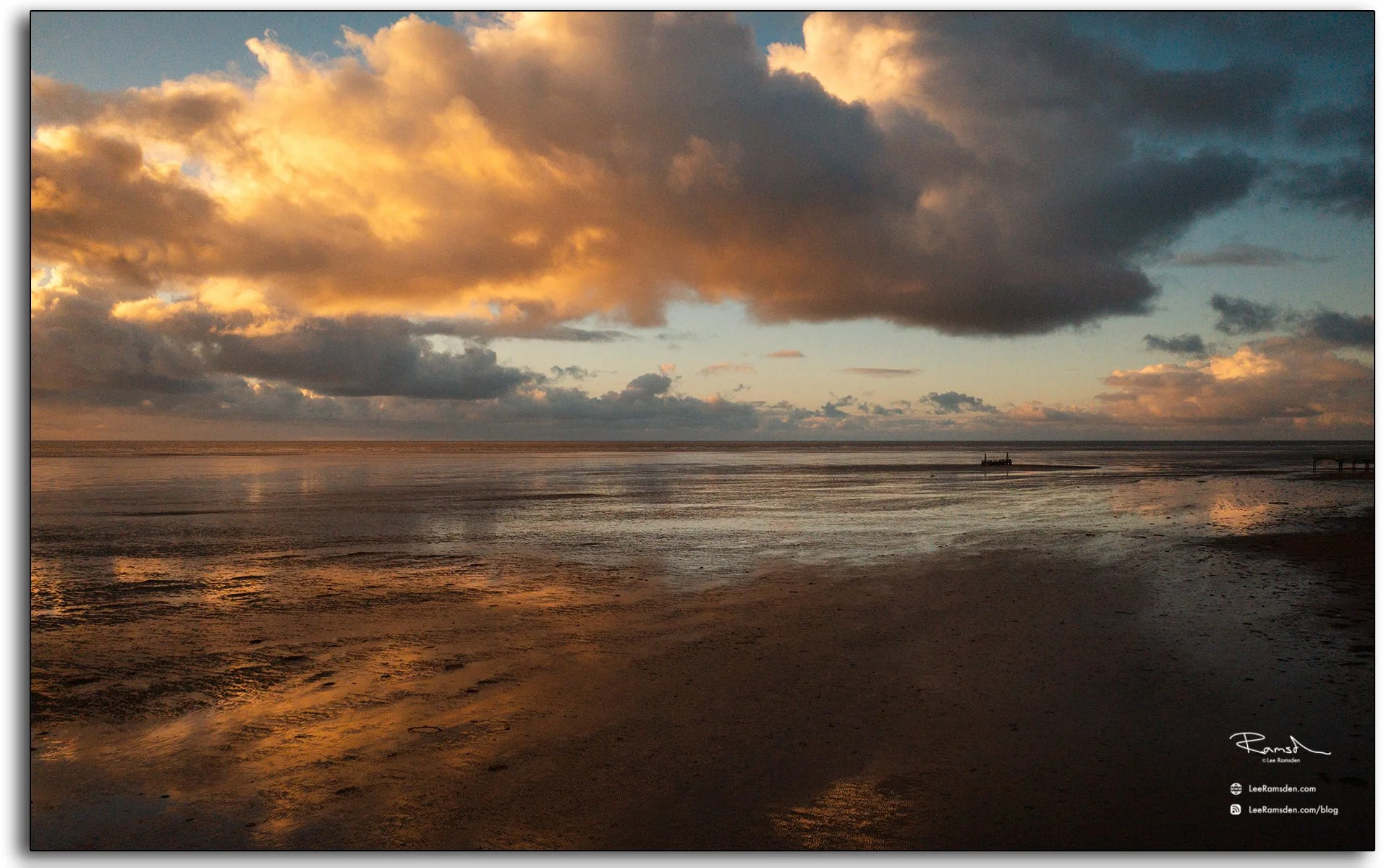
St Annes Beach stretches wide along the Fylde Coast, the sands running south from the pier towards the dunes. At sunset the light changes quickly — the sky shifts through orange and pink while the wet sand reflects colour back from below, and the wide beach gives walkers and silhouettes a scale that tighter shorelines cannot match.

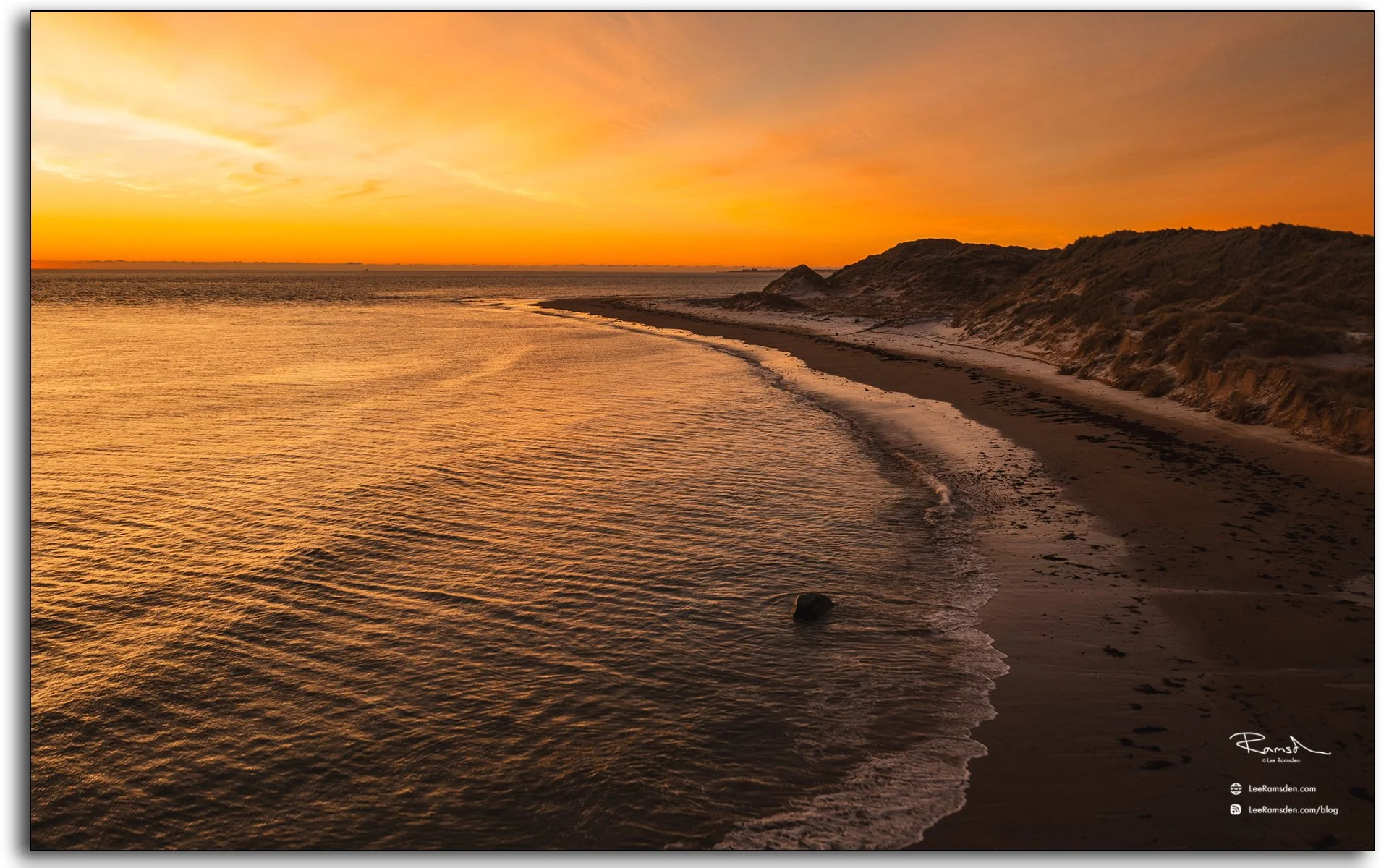
Sunset photography of St Annes Beach in Lancashire, England, showing wide sands, silhouettes, and warm evening light.

These drone images were taken in the early evening, hovering above the beach to capture the scale of the space and the figures moving through it. The Fylde Coast has a particular quality at this time of day — it is never frantic, and in summer the evening light rewards patience.

St Annes is one of the locations I return to regularly, both as somewhere to walk and somewhere to photograph. The beach and the estuary offer different conditions each time.

For more coastal photography from Lancashire and Scotland, visit the Places gallery.

The Importance of Revisiting a Site – Photography Practice in Scotland

Photography series showing the importance of revisiting locations in Scotland, capturing how changing light and weather affect results.

Returning to familiar locations often produces new results. Light, weather, and season all change, meaning a second or third visit can reveal details that weren’t there before.

This series shows how repeat visits create variety. The same place shifts character depending on the conditions, offering new compositions and perspectives.

Revisiting sites is part of my regular approach, ensuring subjects are documented in different moods and at different times. It keeps even familiar places fresh.